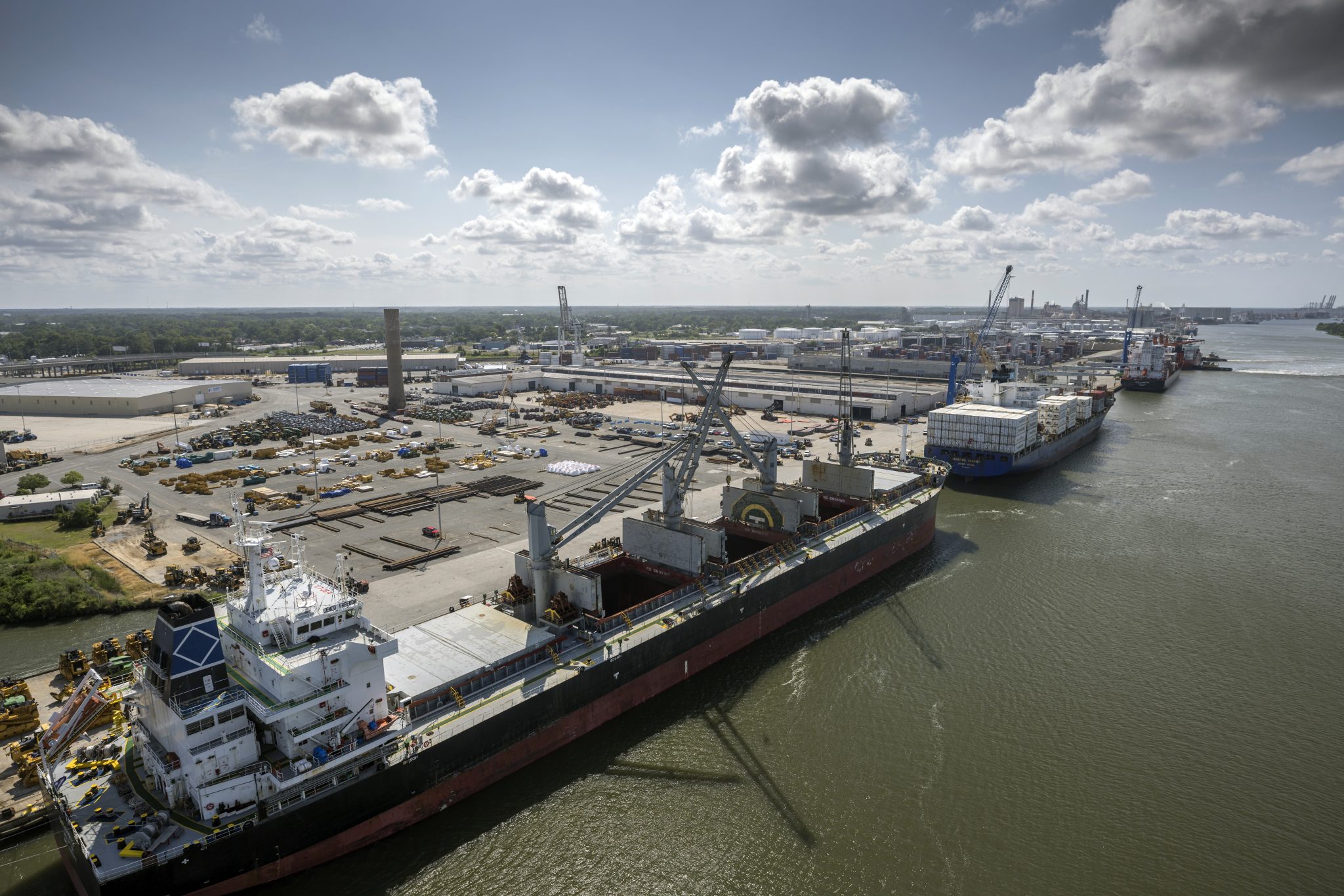
The Port of Brunswick in Georgia is preparing for more vehicle traffic with a major expansion of its shipping, storage, and rail infrastructure. The Georgia Ports Authority is building a $100 million fourth berth at the Colonel’s Island Terminal, increasing the port’s ability to handle large roll-on/roll-off vessels carrying automobiles and heavy equipment.
The investment comes as the facility maintains its position as America’s busiest automotive port. It handled 779,000 vehicles in 2025, alongside more than 53,000 units of heavy machinery.
New rail capacity and additional storage space are also intended to help manufacturers move vehicles between factories, ships, and dealerships more efficiently.
Port of Brunswick Builds a Fourth Berth to Handle More Vehicle Ships
The centerpiece of the expansion is a new fourth berth at Colonel’s Island Terminal. The approximately $100 million project will provide another docking position for roll-on/roll-off, or RoRo, vessels.
These specialized ships carry vehicles and heavy machinery that can be driven or rolled directly on and off the vessel, reducing the need for conventional container handling.
The new berth is designed to accommodate vessels up to 975 feet long. Georgia Ports Authority officials expect it to become operational in November 2027. Construction was approximately 30% complete in spring 2026, with major structural work progressing during the year.
The project is intended to help ships spend less time waiting to load or unload, improving scheduling flexibility for shipping companies and automotive customers.
The additional berth is important because Brunswick already handles substantial vehicle volumes through its three existing deepwater RoRo berths. In 2025, the port processed approximately 779,000 automobiles, retaining its position as the country’s busiest automotive port for a second consecutive year.
It also handled more than 53,000 units of heavy machinery and recorded 731 vessel calls during the calendar year.
These figures show that Brunswick is not simply preparing for a hypothetical increase in activity. It is already a major gateway for vehicles entering and leaving the United States.
The fourth berth is intended to provide room for further growth while allowing the port to handle larger vessels and more cargo without placing excessive pressure on its existing docking capacity.
The new berth will also have two access bridges, allowing more flexible operations involving vehicles and heavy equipment. That matters because RoRo terminals do not handle only passenger cars.
Agricultural machinery, construction equipment, trucks, and other oversized products also move through Brunswick. Some equipment requires additional processing or customization before it can be delivered to its final destination.
Georgia Ports Authority has also invested in vehicle storage and processing infrastructure. During fiscal year 2025, it completed $284 million in self-financed improvements at Brunswick.
These included additional covered storage for heavy equipment, more than 160 acres of outdoor vehicle storage, and expanded processing facilities. Colonel’s Island covers approximately 1,700 acres, with another 264 acres available for potential future development.
The port’s expansion is therefore broader than the construction of a single dock. Additional storage, processing space, and improved vessel access are being developed together to create a more capable automotive logistics operation.
Expanded Rail Capacity Connects Automakers With Inland Markets
Moving vehicles off a ship is only one part of the logistics process. After unloading, automobiles may need inspection, preparation, storage, or customization before being transported to dealerships and distribution centers.
Brunswick is strengthening its rail network to move more vehicles inland without relying entirely on trucks.
A major part of that effort is the Southside Railyard at Colonel’s Island. Phase I increased the port’s annual rail capacity from approximately 175,000 vehicles to 370,000. Phase II is planned to add another 250,000 units by 2029, bringing the combined annual capacity to approximately 620,000 vehicles when completed.
The additional rail capacity gives automotive manufacturers and logistics companies more options for transporting vehicles from the coast to inland markets. Rail can be particularly useful when moving large volumes over long distances, while trucks provide flexibility for shorter journeys and final delivery to dealerships.
Brunswick’s rail connections are important for manufacturers across the southeastern United States. The port’s location provides access to markets in Georgia, Florida, Alabama, Tennessee, and parts of the Carolinas.
Its connections with major rail networks also allow vehicles to move farther inland, expanding the range of manufacturers and dealers that can use the facility.
This infrastructure supports both imports and exports. Vehicles manufactured overseas can arrive at Brunswick before being processed and distributed to dealerships. U.S.-built vehicles can also travel to the port by rail before being loaded onto ships for international markets.
Georgia Ports Authority has previously reported that more than 90% of automobiles moved by rail at Colonel’s Island are U.S.-made exports, demonstrating the port’s importance to American vehicle shipments abroad.
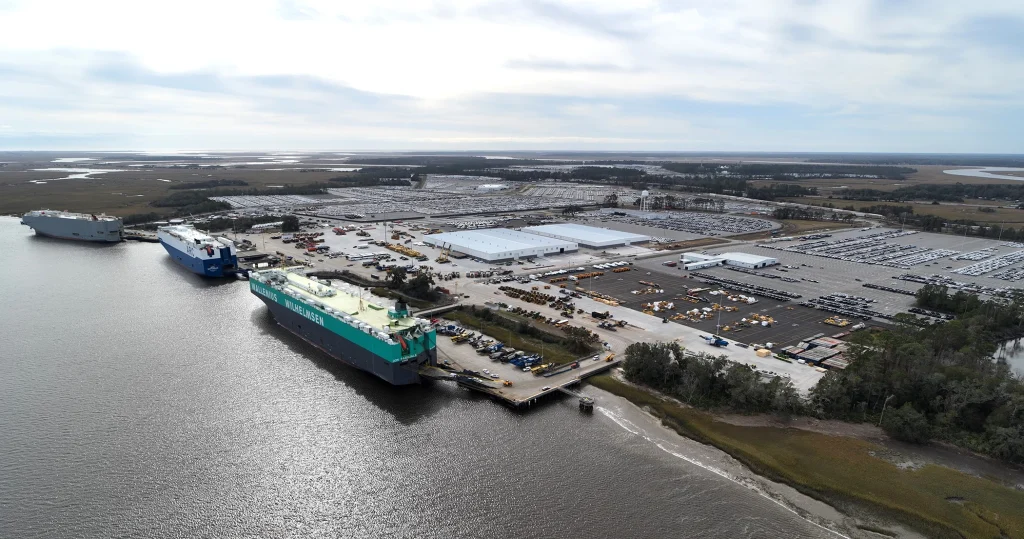
The port also provides specialized vehicle processing services. Companies operating at Colonel’s Island can inspect vehicles, carry out pre-delivery checks, and complete requested modifications before shipment to their final destinations. These activities can include checking vehicle condition and preparing equipment according to automaker requirements.
For manufacturers, this means the port can serve as more than a location where ships unload cargo. It becomes part of the wider distribution process, connecting production facilities with international shipping routes and regional dealership networks.
The planned rail expansion is especially relevant as automakers continue to adjust their manufacturing footprints across the Southeast. New and expanded vehicle production operations can generate demand for reliable transportation of finished vehicles, components, and equipment.
Brunswick’s infrastructure is being developed to serve that wider industrial network, although the port authority has not attributed the fourth berth to a single automaker or a specific factory expansion.
Why Brunswick Is Becoming More Important to the U.S. Automotive Industry
The Port of Brunswick’s growth reflects the changing geography of American automotive manufacturing. Georgia and neighboring southeastern states have attracted significant investment in vehicle assembly, batteries, and automotive components.
As production expands across the region, manufacturers need dependable routes for moving finished vehicles to domestic dealerships and overseas customers.
Brunswick is positioned to serve that demand because it specializes in RoRo cargo rather than competing primarily with container terminals. Its facilities are designed around the requirements of vehicle carriers, heavy machinery shipments, and specialized processing operations.
This specialization allows shipping companies and manufacturers to use infrastructure built specifically for wheeled and tracked cargo.
The port also benefits from its connections to international markets. Vehicles arrive from regions including Europe, Asia, and Mexico, while American-made automobiles are shipped overseas through the same terminal.
The combination of imports, exports, and inland distribution gives Brunswick a role at multiple stages of the automotive supply chain.
Harbor improvements are another important part of the expansion. The U.S. Army Corps of Engineers has been carrying out dredging work to restore the channel to its authorized depth.
A deeper channel allows fully loaded vessels to move through the harbor with fewer restrictions related to tides. Plans to widen key channel bends and expand the turning basin are also intended to improve navigation for larger ships serving Colonel’s Island.
These improvements matter because additional berth capacity is only useful if vessels can reach the terminal efficiently. Larger vehicle carriers need adequate channel depth, sufficient turning space, and reliable docking arrangements.
Coordinating harbor work with terminal construction helps ensure that the port’s marine access develops alongside its land-based facilities.
The investment is also part of a much larger infrastructure program. Georgia Ports Authority has outlined a 10-year investment plan worth approximately $5 billion across its port network.
The program includes projects in Savannah, Brunswick, and inland Georgia, with the objective of expanding cargo capacity and strengthening connections between transportation infrastructure and regional businesses.
For automakers, the benefits will depend on how effectively the expanded facilities reduce shipping delays and improve access to distribution markets.
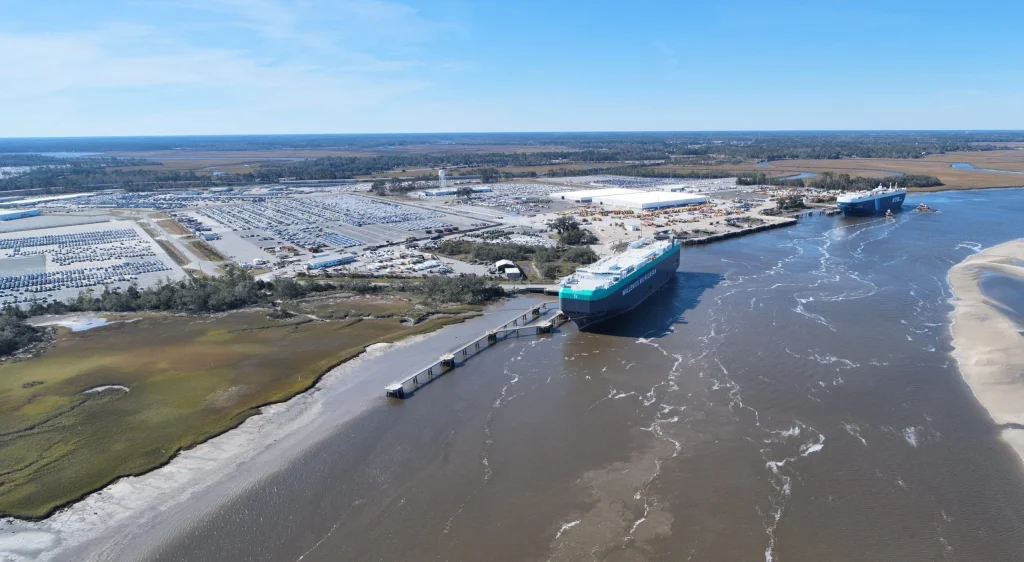
More vehicle storage, additional rail capacity, and another berth could make it easier to coordinate large shipments. However, the projects will take time to complete, and the full effect will become clearer once the new infrastructure enters service.
The next major milestone is the fourth berth’s expected opening in November 2027, followed by the planned completion of the second Southside Railyard phase in 2029. Together, these projects are intended to give Brunswick more room to handle vehicles and machinery as trade volumes change.
The port’s position as America’s leading automotive gateway is already established by its 2025 traffic figures. Its next challenge is maintaining that position while accommodating larger ships, growing storage requirements, and more complex vehicle distribution networks.
For the U.S. automotive industry, Brunswick’s expansion demonstrates that manufacturing growth requires more than new factories.
Ports, railways, storage facilities, and vehicle-processing operations must also have the capacity to move finished products efficiently from production lines to customers around the world.