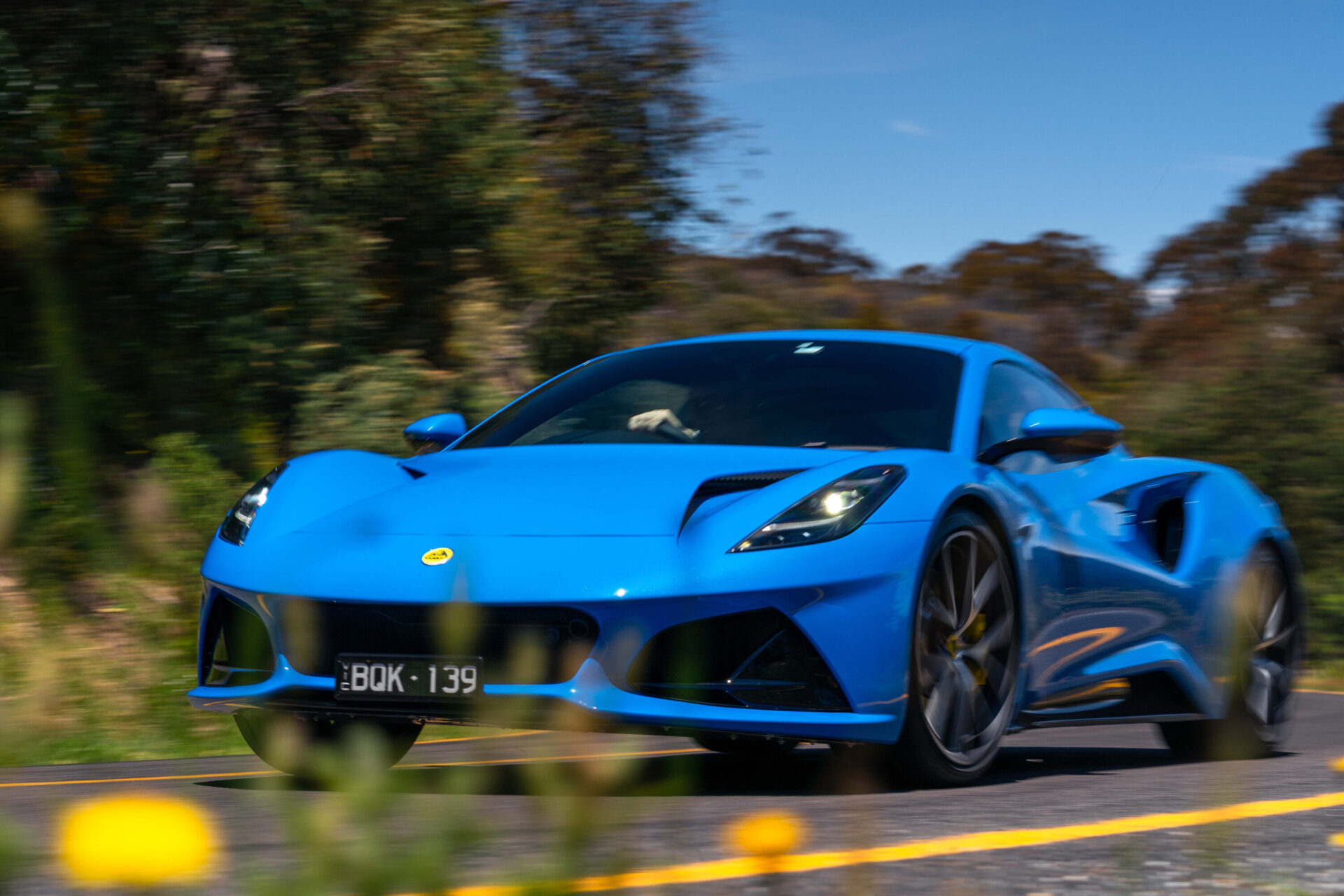
Lotus is moving closer to introducing its first V8-powered hybrid supercar, with Horse Powertrain revealing the engine that will power the upcoming Type 135. Called the HORSE W40, the new 4.0-liter twin-turbocharged V8 produces more than 671 horsepower and 590 lb-ft of torque on its own.
It will work with a newly developed eight-speed dual-clutch hybrid transmission, forming the combustion-engine foundation of Lotus’s next flagship performance car. The Type 135 is expected to reach the market in 2028, with Lotus targeting more than 1,000 horsepower from the complete hybrid system.
Horse Powertrain Introduces Its First V8 Engine for the Lotus Type 135
The HORSE W40 represents an important development for Horse Powertrain because it is the company’s first V8 engine. Revealed on November 10, 2026, the powerplant has been designed specifically around high-performance hybrid applications.
It will make its production debut in the Lotus Type 135, which the British automaker has confirmed as its upcoming supercar.
The engine has a 4.0-liter displacement and uses eight cylinders arranged in a V configuration. Horse has equipped it with two turbochargers mounted in a hot-V layout, placing the turbochargers between the cylinder banks.
This arrangement helps create a more compact package and shortens the intake path, an important consideration for a mid-engined supercar where space and weight distribution are critical.
Horsepower quotes peak output above 500 kW, equivalent to more than 671 horsepower, with maximum torque of 800 Nm, or approximately 590 lb-ft.
The engine weighs around 200 kilograms, equal to about 441 pounds. That is a significant figure for a high-output V8, particularly one intended to be combined with an electric propulsion system.
The W40 uses advanced direct fuel injection and lightweight construction techniques. Its shortened turbocharger intake arrangement is also intended to improve packaging and power delivery.
Horse describes the engine as a power-dense solution that could potentially serve other applications beyond sports cars, including pickups and off-road vehicles.
The engine’s torque output is just as important as its horsepower figure. Its 800 Nm maximum torque provides substantial pulling force, while the twin-turbo configuration is designed to deliver strong performance across the engine’s operating range.
For a supercar, this can help combine rapid acceleration with flexibility during cornering and everyday driving.
However, the 671-hp figure belongs to the combustion engine alone. It is not the confirmed total output of the Lotus Type 135.
The electric motor or motors in the hybrid system will contribute additional power, and Lotus has previously indicated that the complete vehicle will produce more than 1,000 PS. That distinction is essential when comparing the new Lotus with other hybrid supercars.
Horse Powertrain is a joint venture with operations across Europe, China, and the Americas. Its customers include Renault Group, Geely Auto, Volvo Cars, Proton, Nissan, and Mitsubishi Motors. The W40 could therefore become relevant to a wider range of manufacturers if the company develops additional versions for different vehicle platforms.
New Eight-Speed Hybrid Transmission Adds Electric Assistance
The W40 will not operate as an isolated engine installation. Horse has developed a dedicated eight-speed dual-clutch transmission called the HORSE 8LDCT to work with the V8 from the beginning. The gearbox is designed for high-performance hybrid vehicles and supports an input torque capacity of up to 1,050 Nm, approximately 774 lb-ft.
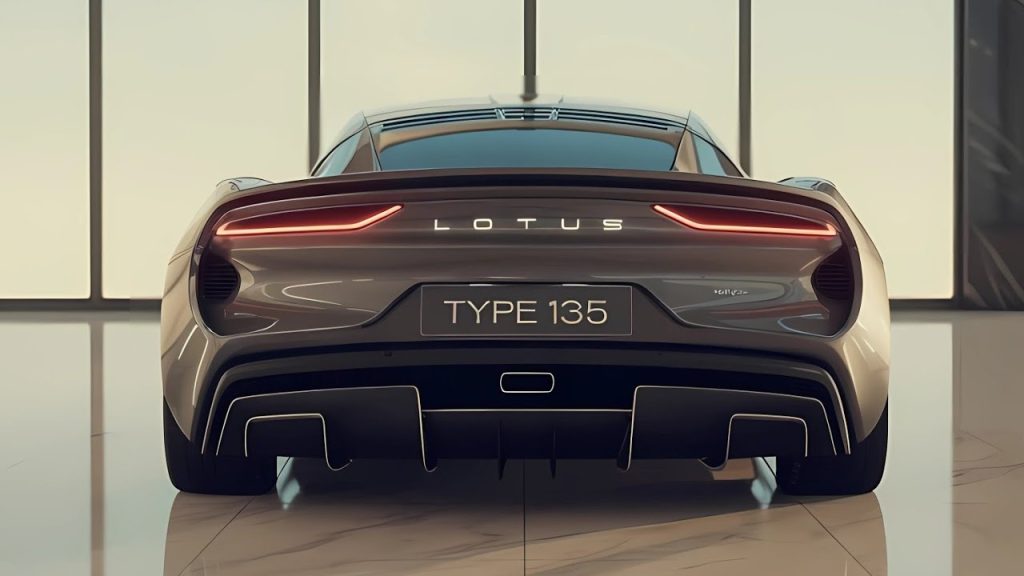
A dual-clutch transmission uses two clutches to manage different gear sets, allowing the next gear to be prepared while the current gear is engaged. This arrangement can produce rapid shifts with minimal interruption in power delivery. Horse says the 8LDCT has a pre-fill time below 50 milliseconds and a shift response below 20 milliseconds.
The transmission also incorporates a silicon-carbide control system and power module, along with a variable-displacement mechanical pump. These components support the gearbox’s electronic and hydraulic functions while helping it manage the demands of a high-output hybrid powertrain.
Its hybrid-first design is particularly significant. The transmission has been developed as part of an integrated powertrain package rather than as a conventional gearbox that receives electric assistance as an afterthought. The system includes an electric motor, although Horse has not released the motor’s individual output or detailed operating specifications.
For the Type 135, the electric element is expected to supplement the V8’s power delivery and help create the total output Lotus has targeted.
Hybrid assistance can provide additional torque during acceleration, while regenerative braking can recover some energy that would otherwise be lost as heat. The exact battery capacity, electric-only range, and charging capability have not been announced.
The transmission’s 1,050 Nm rating also provides some insight into the performance potential of the complete system.
It has been engineered to handle substantial torque, leaving room for the combined powertrain to deliver more than the V8’s standalone 800 Nm figure. However, the gearbox rating should not be confused with the final torque specification of the finished car.
Lotus has emphasized that the W40 and 8LDCT will be integrated with its own expertise in lightweight engineering and chassis dynamics. This is important because producing more than 1,000 horsepower is only one part of developing a competitive supercar. Managing that power through the tires, suspension, and electronic control systems will be just as important.
The Type 135 is expected to use a sophisticated hybrid arrangement, potentially with electric assistance at the front axle to provide all-wheel drive.
Lotus has discussed the potential benefits of electronically controlling power distribution between the front and rear wheels, but the final layout and technical specifications remain subject to confirmation.
Lotus Type 135 Could Revive the Esprit Name as a 1,000-PS Supercar.
The Type 135 is expected to become Lotus’s first entry into the modern supercar category. Although the company has not officially confirmed that the production vehicle will carry the historic Esprit name, several reports suggest it could revive the badge associated with one of Lotus’s most recognizable sports cars.
Lotus has already confirmed that the Type 135 will use a hybrid V8 powertrain and is planned for delivery in 2028. Its May 2026 Focus 2030 strategy announcement specified a system output exceeding 1,000 PS, equivalent to approximately 986 horsepower.
This means the complete vehicle is expected to produce substantially more power than the W40 engine alone.
The new supercar is expected to sit above the Emira in the company’s lineup and below the limited-production Evija hypercar. The Emira currently offers turbocharged four-cylinder and supercharged V6 powertrains, while the Evija uses a fully electric configuration.
A hybrid V8 would give Lotus a different performance proposition, combining traditional combustion-engine characteristics with electric assistance.
The Type 135 also reflects a change in Lotus’s wider powertrain strategy. The company previously placed considerable emphasis on fully electric vehicles, but its Focus 2030 plan adopts a multi-powertrain approach covering combustion engines, plug-in hybrids, and battery-electric vehicles.
Lotus says it intends to respond to different customer requirements and market conditions rather than relying on a single propulsion technology.
For the new supercar, the company is emphasizing lightweight construction, aerodynamics, and driver engagement. These are longstanding Lotus engineering priorities, and they will be especially important in a vehicle carrying a high-output hybrid powertrain.
Managing battery weight, cooling requirements, and the additional hardware associated with electrification will be a major engineering challenge.
Lotus has not yet published final acceleration figures, top speed, vehicle weight, battery capacity, or pricing. It has also not confirmed the production name, although the Esprit revival remains a strong possibility. The company has said the car will be manufactured in Europe, with further details expected as development progresses.
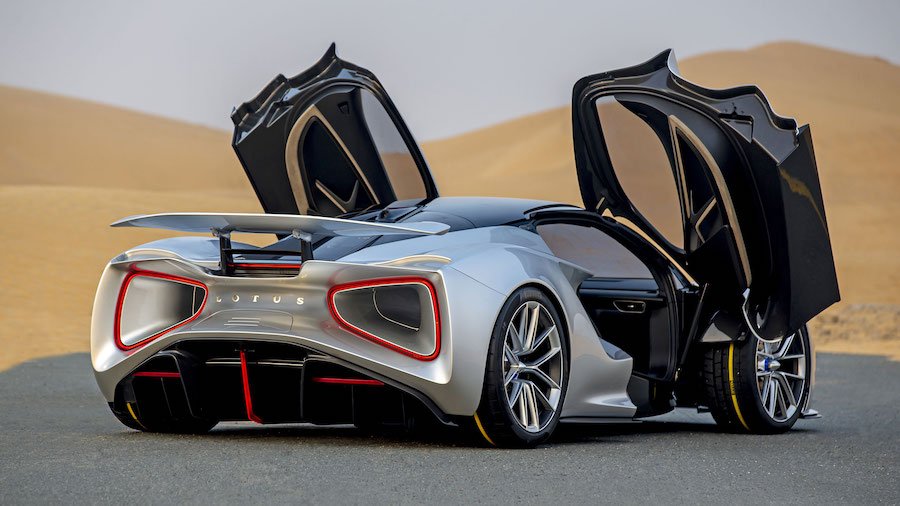
The competition will be demanding. The Type 135 is expected to target established hybrid supercars such as the Ferrari 296 GTB and Lamborghini Temerario, while Lotus has also identified the Ferrari 849 Testarossa as a performance benchmark.
Its competitiveness will depend on more than raw horsepower. Handling, braking performance, weight distribution, thermal management, and how engaging it is to drive will also influence how well it performs against rivals.
The arrival of the HORSE W40 gives the Type 135 a confirmed mechanical foundation. Its 4.0-liter twin-turbo V8, combined with the 8LDCT hybrid transmission, provides the basis for the more than 1,000-PS system Lotus has promised.
The next important reveal will be the complete vehicle and its electric components, which will show how the company intends to translate those figures into real-world performance.
For now, the W40 is the headline development. Horse Powertrain has delivered a 671-hp-class V8 designed specifically for hybrid integration, while Lotus gets a powertrain capable of supporting its return to the high-performance supercar segment.
If the finished Type 135 delivers the promised power while retaining the brand’s focus on handling and lightweight engineering, it could become a significant new chapter in Lotus’s history.