
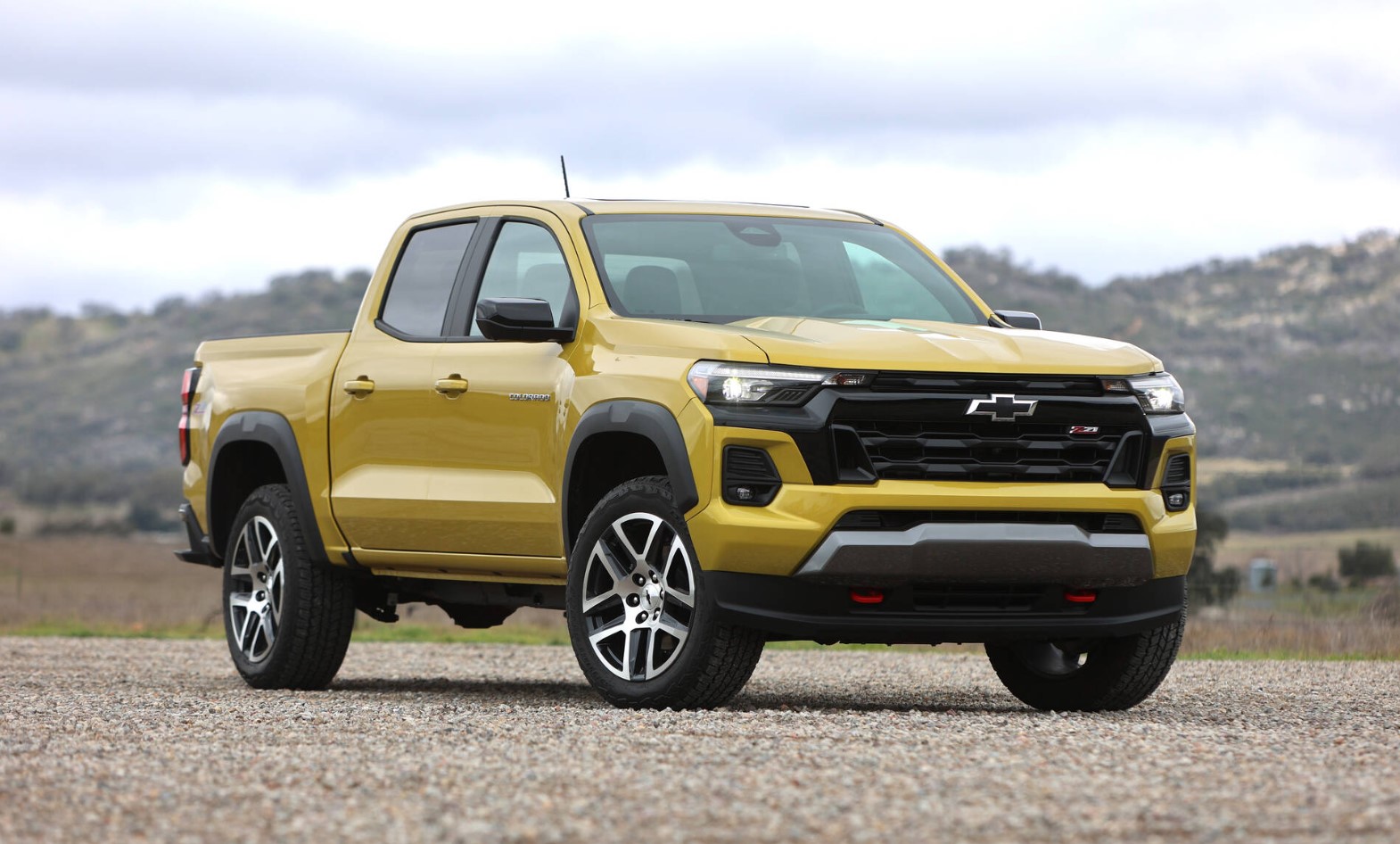
Chevrolet’s 2027 Colorado is gaining a more powerful version of its 2.7-liter TurboMax engine, but the extra performance comes with some changes to fuel economy. The updated four-cylinder produces 350 horsepower and 450 lb-ft of torque, increases of 40 horsepower and 20 lb-ft over the previous high-output version.
Newly published EPA ratings show that most Colorado configurations retain similar combined fuel economy, although city and highway figures vary depending on drivetrain and trim. The biggest efficiency penalty appears on the off-road-focused ZR2 Bison, which returns just 15 mpg combined.
Chevrolet’s Updated TurboMax Engine Delivers 350 Horsepower
The biggest mechanical change for the 2027 Colorado is the replacement of the previous L3B version of the 2.7-liter TurboMax engine with the revised L4B unit. Chevrolet has increased output from 310 horsepower and 430 lb-ft of torque to 350 horsepower and 450 lb-ft.
That is a meaningful improvement for a midsize pickup, particularly for drivers who regularly carry equipment, travel on difficult terrain, or tow trailers.
The engine remains a turbocharged inline-four rather than a V6. It uses revised hardware, including a different turbocharger, redesigned pistons, and updated fuel-injection components.
These changes help the engine produce more power without increasing displacement. Peak horsepower is now delivered at 5,200 rpm, while maximum torque arrives at 3,000 rpm.
The 450 lb-ft torque figure is particularly relevant to truck buyers. Torque influences the engine’s ability to move a vehicle under load, making it important during acceleration, towing, and climbing.
The increased output gives the Colorado a stronger powertrain specification than many competitors’ standard engines, although the Ford Ranger Raptor remains more powerful with its 405-hp twin-turbocharged V6.
Chevrolet pairs the updated engine with an eight-speed automatic transmission. Buyers can choose between rear-wheel drive and four-wheel drive, depending on the configuration. Four-wheel-drive models use different transfer-case and traction-control arrangements depending on trim, with the more specialized off-road versions receiving additional hardware.
Importantly, the power increase does not translate into higher towing capacity. Chevrolet continues to list a maximum towing rating of 7,700 pounds for appropriately equipped Colorado models.
The ZR2 is rated for up to 6,000 pounds, while the ZR2 Bison is limited to 5,500 pounds. Maximum payload remains as high as 1,710 pounds, depending on configuration. Buyers should check the specific vehicle’s rating because equipment and trim affect these limits.
This means the 2027 update is primarily about stronger engine performance rather than a major increase in the truck’s work capacity. The extra horsepower and torque may make the Colorado feel more responsive, but buyers should not assume that the upgraded engine automatically allows them to tow heavier trailers.
EPA Fuel Economy Ratings Show Differences Across the Colorado Lineup
The newly published EPA figures show that Colorado’s fuel economy remains relatively consistent in combined driving for most configurations. However, the individual city and highway ratings reveal some differences between rear-wheel-drive, standard four-wheel-drive, and off-road models.
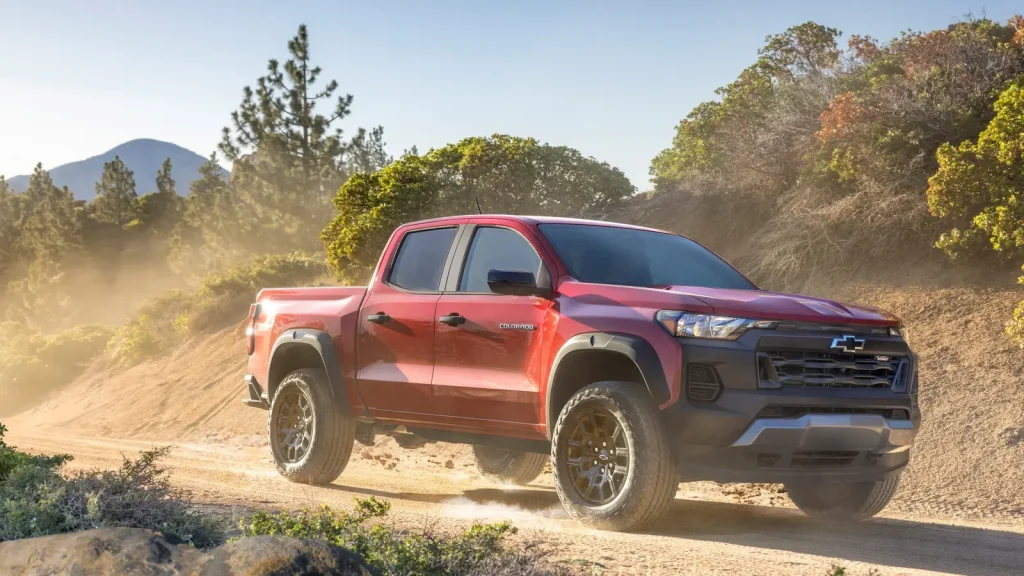
The official EPA database lists the 2027 rear-wheel-drive Colorado at 20 mpg in the city, 24 mpg on the highway, and 21 mpg combined. The standard four-wheel-drive version returns 18 mpg city, 20 mpg highway, and 19 mpg combined. The ZR2 is rated at 16 mpg city, 17 mpg highway, and 17 mpg combined.
The ZR2 Bison is the least efficient configuration. Its EPA rating is 16 mpg city, 14 mpg highway, and 15 mpg combined. That lower figure reflects its more specialized off-road equipment and heavier-duty setup. Buyers choosing the Bison are prioritizing trail capability over fuel savings, and its EPA numbers make that trade-off clear.
| 2027 Colorado configuration | City | Highway | Combined |
|---|---|---|---|
| Rear-wheel drive | 20 mpg | 24 mpg | 21 mpg |
| Standard 4WD | 18 mpg | 20 mpg | 19 mpg |
| ZR2 4WD | 16 mpg | 17 mpg | 17 mpg |
| ZR2 Bison 4WD | 16 mpg | 14 mpg | 15 mpg |
The rear-wheel-drive model offers the strongest fuel economy in the range, making it the more sensible choice for buyers who primarily use their truck on paved roads. Its 24-mpg highway rating is particularly useful for people who spend considerable time commuting or traveling between cities.
Moving to four-wheel drive reduces the combined rating to 19 mpg. That difference is understandable because four-wheel-drive hardware adds weight and mechanical resistance. The effect becomes more noticeable on off-road models, where larger tires, additional equipment, and specialized suspension components can further affect efficiency.
The ZR2’s 17-mpg combined rating is two mpg below the standard four-wheel-drive model. The Bison falls another two mpg, reaching 15 mpg combined. Its 14-mpg highway rating is especially notable because highway driving is normally where pickups achieve their best fuel economy.
These EPA figures are estimates produced under standardized testing conditions. Actual mileage can vary with driving speed, temperature, terrain, tire pressure, cargo, towing, and driving habits. A truck regularly used for off-road driving or pulling a trailer will generally consume more fuel than one driven lightly on paved roads.
Is the Extra Power Worth the Fuel Economy Trade-Off?
For buyers considering the 2027 Colorado, the decision is not simply about choosing the highest horsepower figure. The right configuration depends on how the truck will be used, how frequently four-wheel drive is needed, and whether off-road equipment justifies the additional fuel consumption.
The rear-wheel-drive Colorado is the logical option for drivers who want the updated 350-hp engine but do not need four-wheel-drive capability. Its 21-mpg combined rating makes it the most economical configuration in the lineup. It also offers the full 450 lb-ft of torque, so buyers do not have to choose a less powerful engine to obtain better fuel economy.
The standard four-wheel-drive model offers a compromise. Its 19 mpg combined rating is lower, but it provides additional traction for snow, slippery roads, and occasional rough surfaces. For owners who live in areas with challenging winter conditions or regularly travel on unpaved roads, that capability may be worth the difference.
The ZR2 and ZR2 Bison serve a more specialized audience. Their off-road hardware, suspension setups, and tires are intended for demanding terrain rather than maximum efficiency.
The Bison’s 15-mpg combined rating is a significant consideration for anyone who plans to use it as a daily commuter. Fuel expenses could add up quickly for drivers covering long distances every week.
The updated Colorado also remains competitive in power output. Its 350-hp engine gives it a stronger standard powertrain specification than several midsize rivals, including the Toyota Tacoma’s base 2.4-liter turbocharged engine and the standard Ford Ranger engine.
However, comparisons need to account for the different powertrain options available in each competitor’s lineup. The Ranger Raptor, for example, produces 405 horsepower from its twin-turbocharged V6.
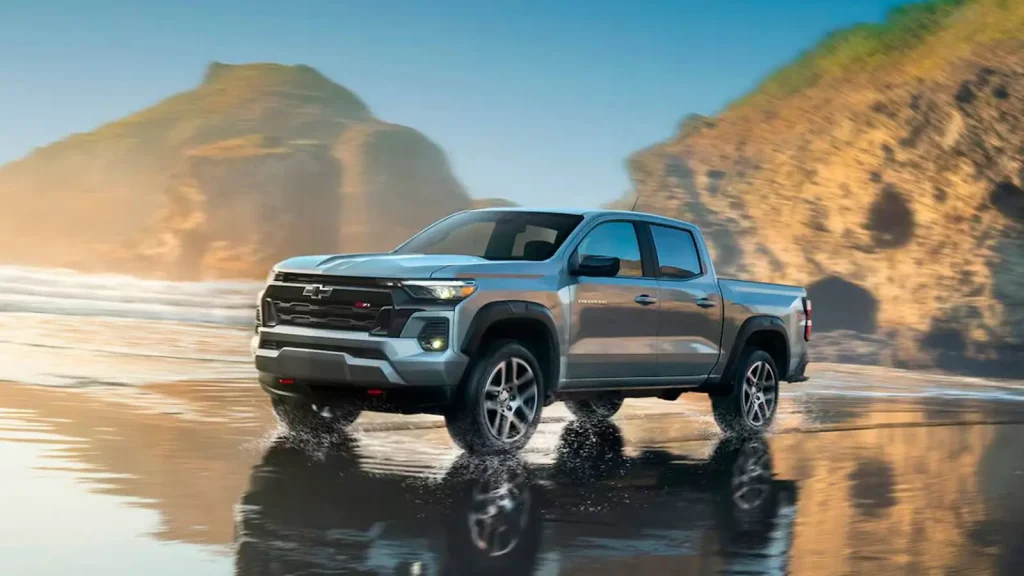
Another important consideration is that higher horsepower does not automatically mean lower fuel economy in every configuration. Chevrolet has increased engine output while retaining broadly similar combined EPA figures across much of the Colorado range.
The Bison is the clearest exception, with its off-road-focused configuration carrying the largest efficiency penalty.
For shoppers, the key is to compare the EPA rating of the exact trim and drivetrain rather than relying on a single fuel economy figure for the entire model. The difference between 21 mpg combined in the rear-wheel-drive truck and 15 mpg in the ZR2 Bison is substantial, despite both using the same basic engine family.
The 2027 Colorado’s power upgrade gives Chevrolet a stronger midsize pickup, but it does not fundamentally change the truck’s purpose or towing limits. Buyers get more horsepower and torque, while fuel economy remains dependent on the equipment they select.
The standard rear-wheel-drive model is the efficiency leader, whereas the Bison makes the clearest sacrifice at the pump in exchange for specialized off-road capability.
