
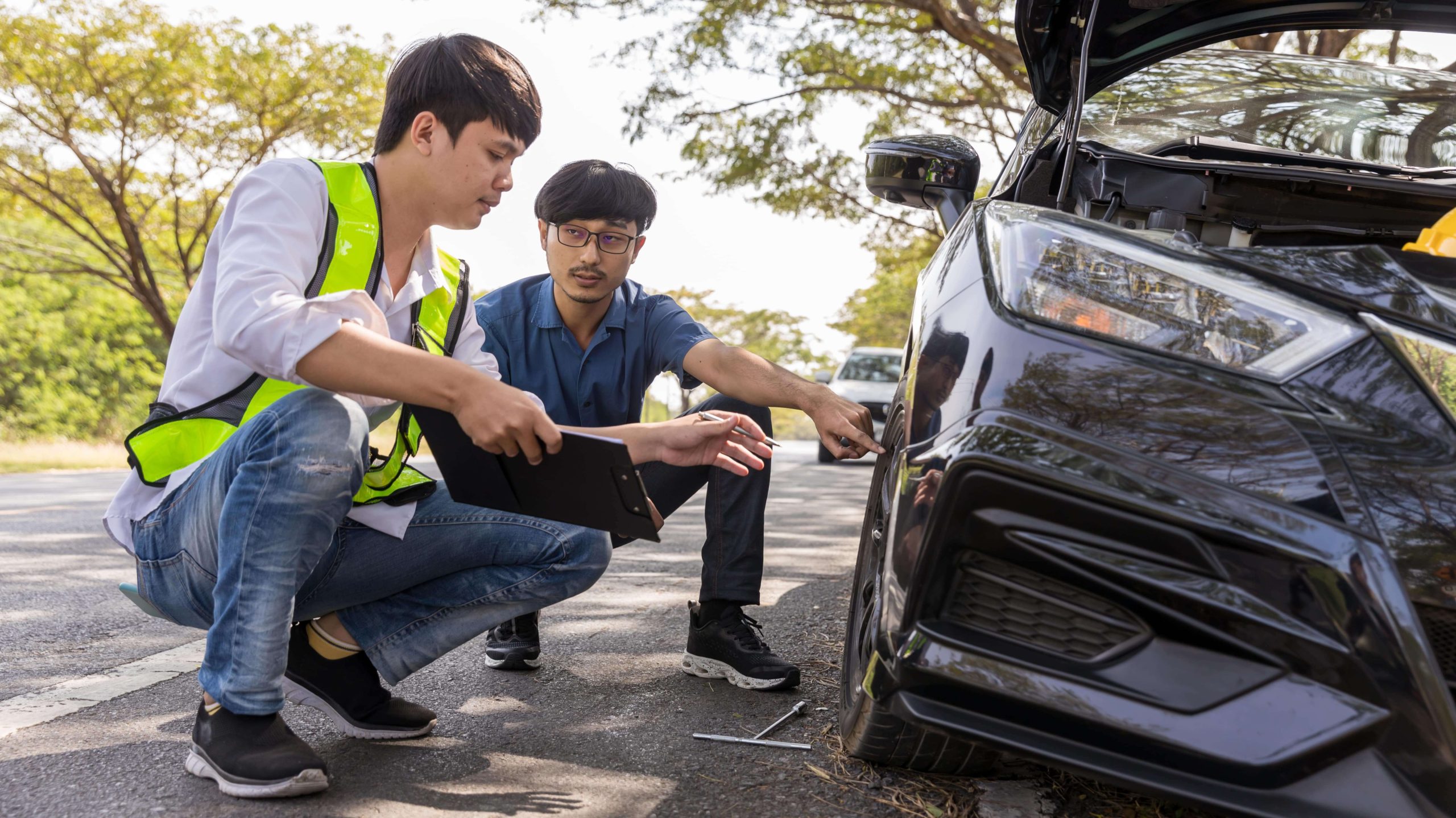
A vehicle breakdown is frustrating on any day, but it can become much more expensive when it happens during a major holiday. Christmas, Thanksgiving, New Year’s Day, and other busy travel periods can leave drivers competing for limited roadside assistance, repair appointments, and emergency services.
Some providers charge extra for after-hours, weekend, or holiday callouts, while others maintain fixed rates or membership benefits. Prices are not automatically doubled, and charges vary by location and provider.
Knowing which services may carry additional fees can help you avoid unnecessary expenses and prepare before your next holiday road trip.
1. Emergency Towing After a Breakdown
A breakdown on an ordinary weekday can be inconvenient, but needing a tow on Thanksgiving, Christmas, or New Year’s Day can create an expensive problem. Many repair shops operate with reduced holiday hours or close entirely, leaving drivers with fewer places to take a disabled vehicle.
If a tow operator is available, the final bill may include more than the basic towing charge, particularly when the call happens late at night or during a period of high demand.
Towing prices commonly depend on the service-call fee, distance, vehicle size, location, and type of equipment required. A standard passenger car may be suitable for a wheel-lift truck, while certain vehicles require a flatbed.
Long-distance towing, difficult recovery situations, and vehicles stuck off the roadway can increase the cost further. Holiday or after-hours surcharges depend on the individual provider’s pricing policy, so do not assume every company doubles its rates.
Roadside assistance memberships can help control this expense. For example, AAA’s published membership benefits include towing allowances that vary by plan.
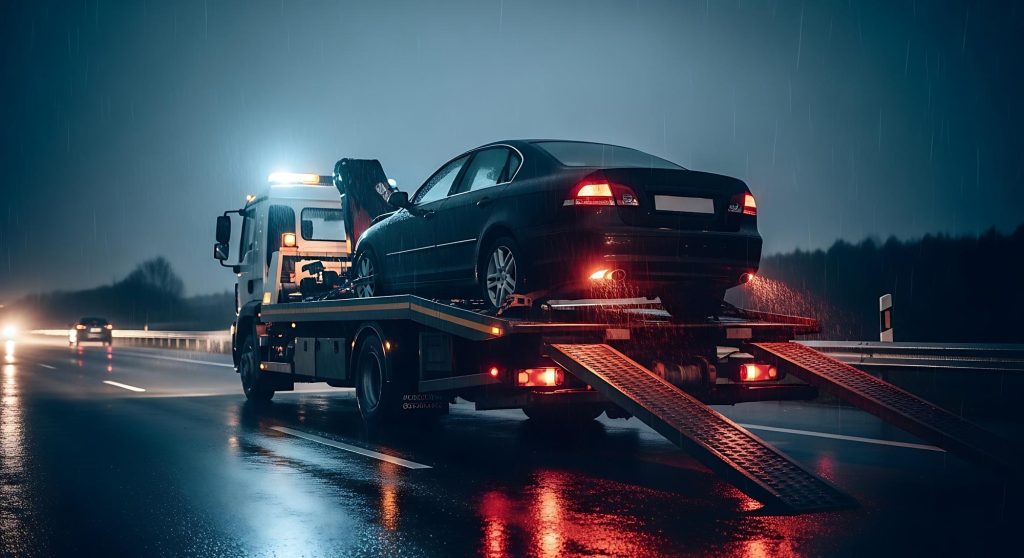
Its Classic plan provides up to 7 miles of towing, Plus offers up to 100 miles, and Premier includes one household tow of up to 200 miles, with other tows generally covered up to 100 miles. Conditions and service-call limits apply.
Before authorizing a tow, ask for the total estimated price, including mileage, holiday surcharges, storage, and any additional equipment charges. Confirm where the vehicle will be taken and whether the repair facility is open to receive it. A little planning can prevent a stressful breakdown from turning into an unexpectedly large bill.
2. Emergency Car Locksmith and Lockout Service
Locking your keys inside the car is frustrating at any time, but the situation becomes more stressful when it happens during a holiday trip. You may be parked outside a closed shopping center, at a roadside rest area, or far from home. If you need an emergency automotive locksmith, the price can rise because of the time, travel distance, and urgency involved.
The cost depends on the vehicle’s locking system and the type of assistance required. Unlocking an older vehicle may be relatively straightforward, while newer cars with advanced security systems, electronic keys, or damaged locks can require specialized equipment.
If you have lost the key entirely, replacing and programming a modern transponder or smart key can cost considerably more than simply opening a locked door.
After-hours pricing can be substantial. HomeAdvisor’s 2026 locksmith pricing guide reports that emergency calls outside normal working hours can add $150 to $250 to a bill. That figure is not a universal holiday surcharge or a guaranteed automotive-lockout price, but it demonstrates how much emergency timing can affect the final cost.

Before agreeing to service, request the company’s name, physical business details, estimated arrival time, and a complete price covering the service call, labor, and any replacement parts. Be cautious if the person refuses to provide a clear estimate or suddenly demands a much higher amount after arriving.
Check your roadside assistance benefits before paying independently. AAA, for example, provides locksmith assistance or reimbursement toward eligible lockout costs, with limits that vary by membership tier.
3. Flat Tire Replacement or Emergency Tire Change
A flat tire during a holiday journey can quickly become expensive, particularly when nearby tire shops are closed. If your vehicle carries a usable spare, a roadside technician may be able to install it. However, if the spare is missing, damaged, or incompatible, you may need mobile tire replacement or towing to a shop. That second option can cost considerably more.
The price depends on the vehicle, wheel size, tire availability, location, and whether the job involves seized lug nuts or damaged wheel components. After-hours service can add another charge.
For example, one Cincinnati roadside provider publicly lists its emergency after-hours used-tire installation starting at $249 for certain passenger-car sizes, compared with a daytime used-tire service fee starting at $159, with the tire and service details affecting the final amount. This is one provider’s pricing, not a national holiday rate.
Before calling for help, check whether your vehicle has a spare, a tire repair kit, or run-flat tires. Some newer vehicles do not include a conventional spare. If you have a temporary spare, follow its speed and distance restrictions in the owner’s manual. Never continue driving on a visibly damaged tire simply because a repair shop is several miles away.
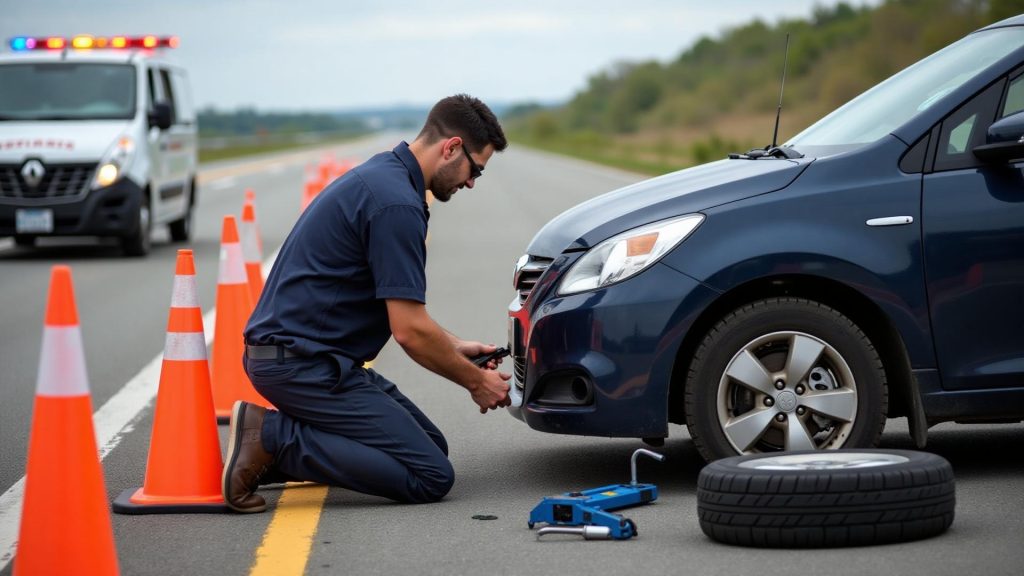
Roadside assistance coverage may include changing a flat when you have a serviceable spare. AAA, for instance, lists flat-tire assistance among its services, while USAA describes coverage for installing a spare when one is available.
To avoid a surprise bill, ask whether the quote includes labor, the replacement tire, disposal, travel distance, and any holiday or emergency fee. A quick check of your spare and roadside coverage before leaving home can prevent an expensive last-minute decision.
4. Emergency Battery Jump-Start or Replacement
Cold weather, an aging battery, or leaving electrical accessories running can leave a vehicle unable to start. During a holiday, finding an open auto parts store or repair shop may be difficult, so drivers sometimes rely on a mobile technician for a jump-start or battery replacement.
The urgency and limited availability of providers can make the service more expensive than arranging help during normal business hours.
A basic jump-start is generally less involved than replacing a battery. However, the price can increase when the vehicle has a difficult-to-access battery, multiple batteries, specialized electrical requirements, or a charging-system problem.
Some providers also charge separate fees for travel, after-hours attendance, or diagnostic testing. A published roadside price list from one Atlanta-area provider, for example, lists jump-starts at $60 during daytime hours and $85 after hours.
That illustrates a provider-specific difference, not a standard holiday surcharge across the United States.
Battery replacement can cost considerably more because the replacement part is charged separately from labor. Some vehicles also require battery registration or electronic-system procedures after installation. Before authorizing the work, request an itemized quote covering the battery, installation, testing, and any additional charges.
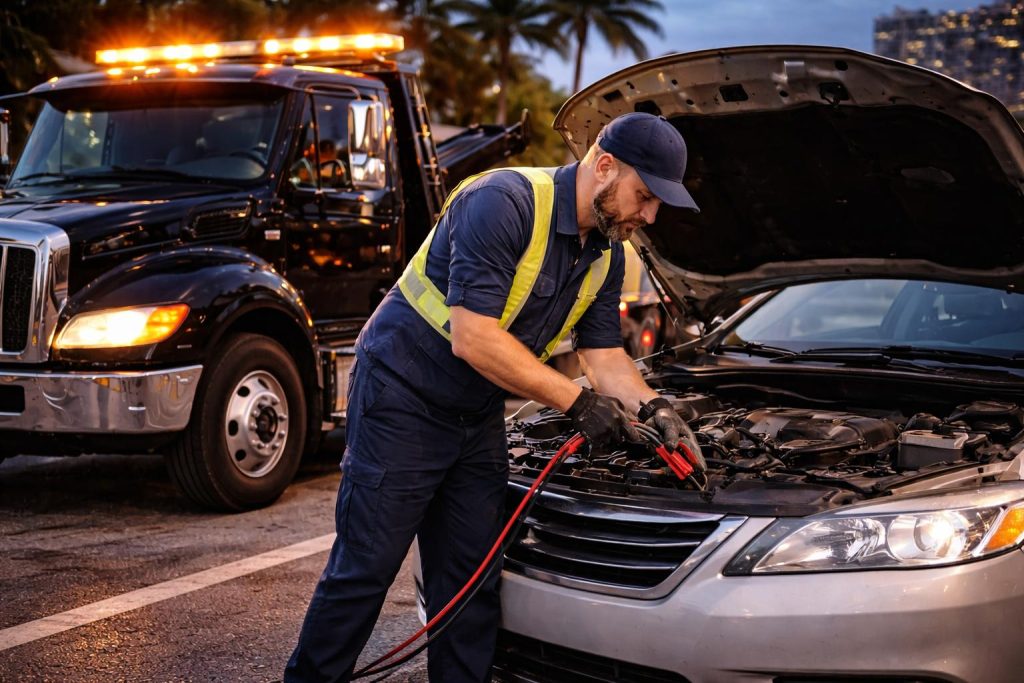
Roadside coverage may reduce the expense. USAA lists jump-start assistance among its covered services for eligible policyholders, while AAA offers battery testing and jump-start assistance through its roadside program. Coverage and replacement benefits depend on the plan and vehicle.
If your battery has repeatedly struggled to start the engine, have it tested before a major trip. Check the battery’s age and terminals, and avoid repeatedly attempting to start a vehicle with a suspected electrical fault. Planning is far cheaper than discovering a weak battery in a crowded holiday travel area.
5. Emergency Fuel Delivery When You Run Out of Gas
Running out of fuel during a holiday trip can leave you stranded miles from the nearest open gas station. If you are on a highway, an unfamiliar rural road, or stuck in traffic far from an exit, walking to find fuel may be unsafe.
Emergency fuel delivery solves the immediate problem, but the convenience can come with a higher service charge, especially when the provider operates overnight or during a holiday.
The final price may include a dispatch fee, travel distance, fuel cost, and any after-hours surcharge. One roadside provider, Bell’s Towing and Roadside, lists fuel delivery at $199 to $249, with its published pricing explaining that the first five miles are included and additional mileage costs extra.
By comparison, another provider in Cincinnati advertises two gallons delivered starting at $49, with distance and location potentially changing the quote. These are examples of individual companies’ rates, not a nationwide holiday price schedule.
Membership benefits can make a difference. AAA includes emergency fuel delivery in its roadside assistance plans. Classic members pay for the fuel, while Plus and Premier benefits include enough fuel to reach the nearest gas station, subject to membership terms.
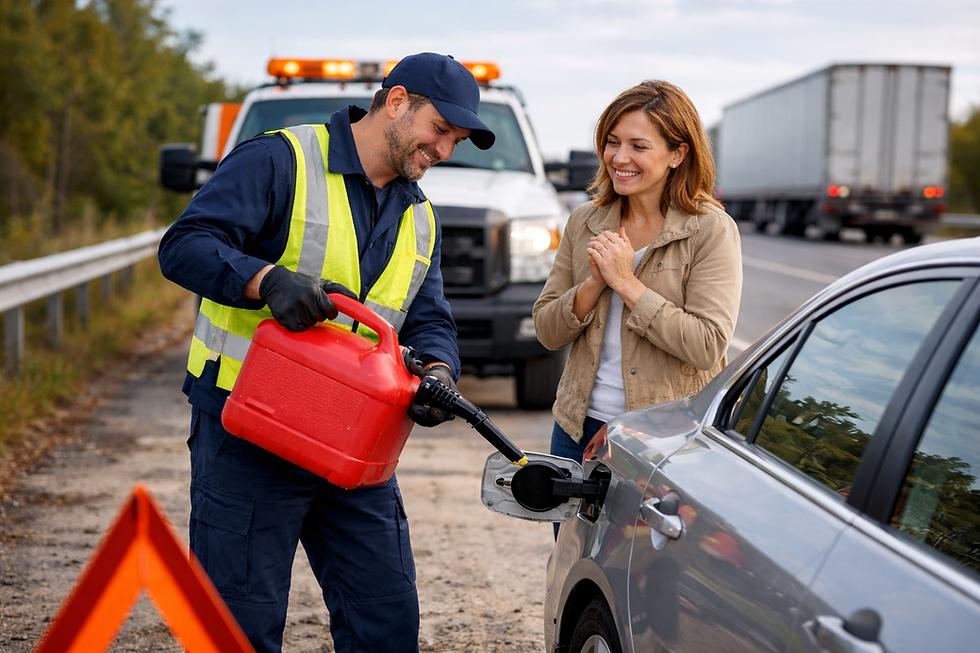
Before accepting a delivery, ask how much fuel will be brought, whether the fuel itself is included, and whether the quote contains travel or holiday charges. Also confirm that the provider can deliver the correct fuel type. Diesel vehicles and some specialty vehicles require different fuel, so explain your vehicle’s requirements clearly.
The easiest way to avoid this expense is to refuel before the tank becomes critically low, particularly when travelling through rural areas or on major holiday weekends. Check fuel availability along your route and avoid assuming every station will be open late.
6. Winch-Out and Vehicle Recovery From Mud, Snow, or a Ditch
Getting stuck in mud, snow, sand, or a roadside ditch can turn a holiday drive into a costly recovery job. Unlike a routine tow, winching requires the operator to secure the vehicle and pull it toward a safe surface.
The difficulty depends on how deeply the vehicle is stuck, the ground conditions, the distance from the road, and whether additional equipment or another recovery vehicle is needed.
A simple pull from a shallow roadside position may be relatively straightforward. A vehicle buried in deep snow or resting at an awkward angle can require more time, rigging, and specialized equipment.
Charges may also increase when the recovery takes place at night, during severe weather, or in an area where the tow truck cannot safely reach the vehicle.
Published rates show how widely prices can vary. Bell’s Towing and Roadside lists winch-out services from $285 to $585, with additional charges for difficult access and greater distance from the pavement.
Onward Roadside in Southwest Ohio lists standard winch-outs starting at $140, with higher prices for more involved recoveries. Neither company’s prices should be treated as a national average or a guaranteed holiday rate.
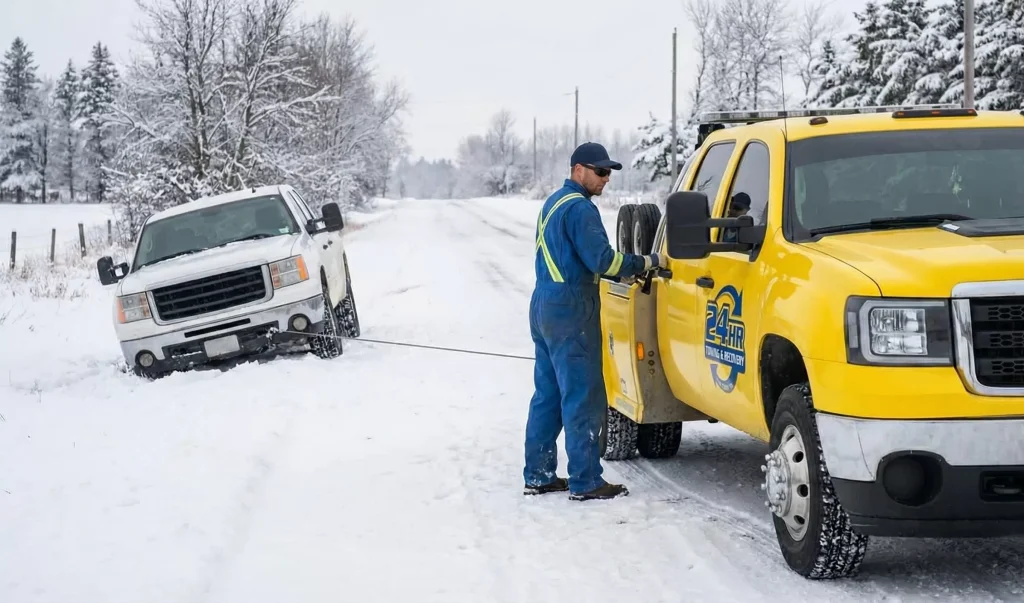
Roadside membership may include limited winching benefits. AAA lists winching among its services, but coverage and limitations depend on the membership plan and the conditions at the scene.
If your vehicle becomes stuck, avoid repeatedly spinning the wheels. That can dig the tires deeper and potentially cause damage. Stay clear of recovery straps and cables, which can be dangerous under tension. Request a full quote before authorizing the recovery, including equipment, distance, and any extra labor.
7. Mobile Mechanic Callouts for Emergency Repairs
A vehicle that suddenly develops an engine problem, overheating issue, or electrical fault can leave you stranded far from a repair shop. During a holiday, when many garages are closed, calling a mobile mechanic may seem like the quickest solution.
However, emergency visits can cost more than a scheduled appointment because the technician has to travel to your location and work outside normal business hours.
Mobile mechanic charges usually depend on the diagnostic work, labor time, replacement parts, travel distance, and complexity of the repair.
A simple battery connection problem may be manageable at the roadside, but an overheating engine, transmission fault, or serious electrical issue may require towing to a workshop. Some providers also charge a separate callout or diagnostic fee before beginning repairs.
Published prices illustrate the potential difference. Bell’s Towing and Roadside lists on-site mechanic service at $150 during daytime hours and $300 at night. That is a provider-specific example of a doubled overnight rate, not evidence that mobile mechanics nationwide double their prices on holidays.
Before approving a repair, ask what the initial diagnostic charge includes and whether it will be credited toward additional work. Request an itemized estimate covering labor, parts, travel, and any holiday or emergency surcharge.
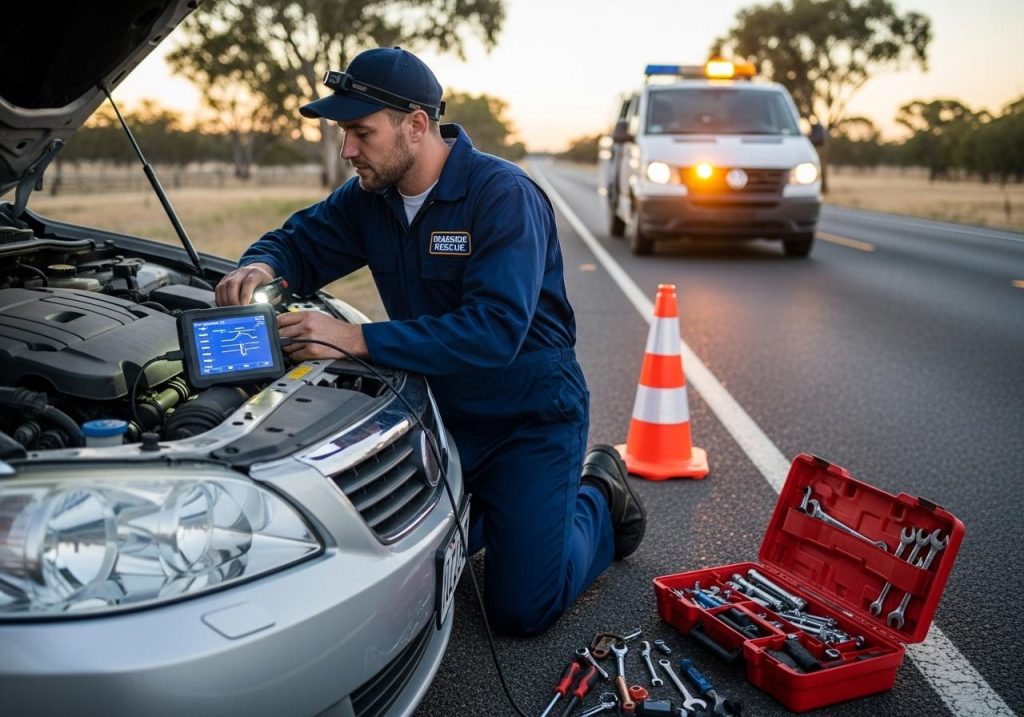
You should also confirm whether the technician is qualified to work on your vehicle and whether the proposed repair can safely be completed at the roadside.
AAA’s roadside assistance includes limited mechanical first aid, but that should not be confused with full mechanical repair coverage.
If the vehicle has a serious warning light, leaking fluid, smoke, or signs of overheating, do not insist on a roadside repair simply to avoid towing costs. A professional assessment can determine whether the vehicle needs to be transported to a proper repair facility.
8. Emergency Heavy-Duty Towing for RVs and Larger Vehicles
A breakdown involving an RV, motorhome, large pickup, or vehicle towing a trailer can be much more expensive than an ordinary passenger-car recovery. These vehicles may require specialized tow trucks, heavier equipment, additional operators, or a recovery company capable of handling their size and weight.
When the problem happens during a holiday, limited equipment availability can make finding suitable assistance even harder.
Heavy-duty towing is priced differently from standard passenger-car towing. The provider may consider the vehicle’s weight, length, drivetrain, axle configuration, location, towing distance, and whether the vehicle is loaded.
A motorhome that cannot move under its own power may need specialized recovery equipment rather than a conventional flatbed. If it is stuck off the roadway, the job may also require winching or additional recovery work.
Holiday and after-hours charges are not universal, but some providers explicitly publish higher night or weekend rates. For example, Bell’s Towing and Roadside states that nighttime and weekend service is charged at a higher rate, while its recovery pricing varies with access conditions and the equipment required.
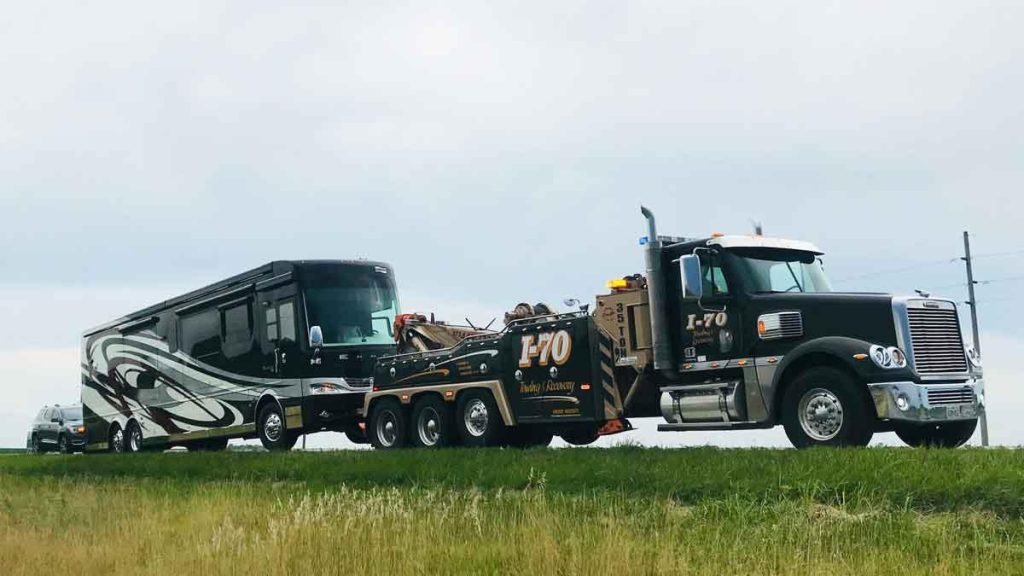
Check your RV or vehicle insurance policy before travelling. Standard roadside assistance memberships may have vehicle-type restrictions, weight limits, or different benefits for motorhomes and trailers. AAA, for example, lists RV coverage under its Premier plan, while other membership levels have different vehicle eligibility and service limitations.
Before authorizing a heavy-duty tow, confirm that the company has equipment suitable for your vehicle and can transport it to the destination you choose.
Ask whether the quote includes hookup, mileage, recovery equipment, and storage fees. RV owners should also check whether personal belongings, trailers, or additional vehicles are covered by the same service arrangement.
