
A holiday road trip is easier when your car is prepared for more than just the miles ahead. Traffic delays, sudden weather changes, a flat tire, or an unexpected overnight stop can turn a pleasant journey into a stressful one.
A few carefully chosen items can help you handle common problems without filling the trunk with unnecessary gear. From essential documents and basic medical supplies to practical tools for roadside emergencies, these are the things worth keeping within reach.
Some are useful every day, while others become especially valuable when holiday travel brings longer journeys and busier roads.
1. A Fully Charged Phone and Reliable Car Charger
A smartphone is more than a navigation device on a long holiday drive. If your vehicle breaks down, you have an accident, or traffic forces you to change your route, it may be your most important way to contact help.
Keep your phone charged before leaving and carry a dependable 12-volt car charger or USB adapter that is compatible with your device. A charging cable alone is not enough if your car has no suitable port, so check the connection before departure.
A portable power bank adds another layer of backup. It can keep your phone running if the engine is switched off, your vehicle’s electrical system fails, or you need to walk away from the car to find assistance.
Charge the power bank fully before the trip and store its cable alongside it. If you are travelling through areas with weak cellular coverage, download maps and important travel information in advance.
Offline navigation will not replace a working phone connection for emergency calls, but it can help you continue navigating when mobile data is unavailable.
Keep roadside assistance, insurance, and emergency contacts accessible. You should also know how to use your phone’s emergency calling features before setting off, rather than trying to learn them during a stressful situation.
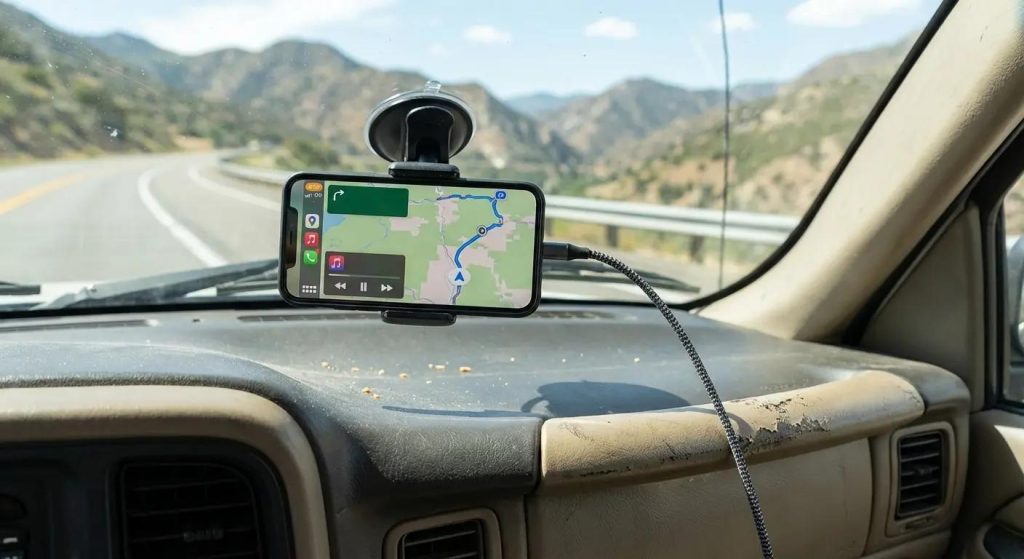
Keep your phone out of your hands while driving. Set your navigation and music before starting the journey, and rely on hands-free features when they are legally permitted.
The National Highway Traffic Safety Administration includes a cell phone and charger among its recommended roadside emergency supplies. That is sensible advice for holiday travel, when a dead battery can turn a manageable delay into a much bigger problem.
2. A Well-Stocked First-Aid Kit
A first-aid kit is easy to overlook when packing for a holiday, yet it can be useful for minor injuries that happen far from home. A scraped knee during a rest stop, a small cut while handling luggage, or a blister after an unexpected walk should not require searching unfamiliar shops for basic supplies.
Keep a compact, clearly organized kit in the vehicle where an adult passenger can reach it without unpacking the entire trunk.
A practical kit should contain adhesive bandages in different sizes, sterile gauze pads, medical tape, antiseptic wipes, disposable gloves, scissors, tweezers, and a small roll of medical dressing.
Include any personal medication that travelers may need, but keep prescription medicines in their original packaging and follow their storage instructions. If someone in the vehicle has a known allergy or medical requirement, make sure the supplies they rely on are packed separately and remain accessible.
Check the kit before every major trip. Adhesive products can deteriorate, antiseptic solutions and medicines can expire, and supplies may be missing after previous use. Heat inside a parked vehicle can also affect certain medicines, so do not leave temperature-sensitive products in the car unless their labels permit it.
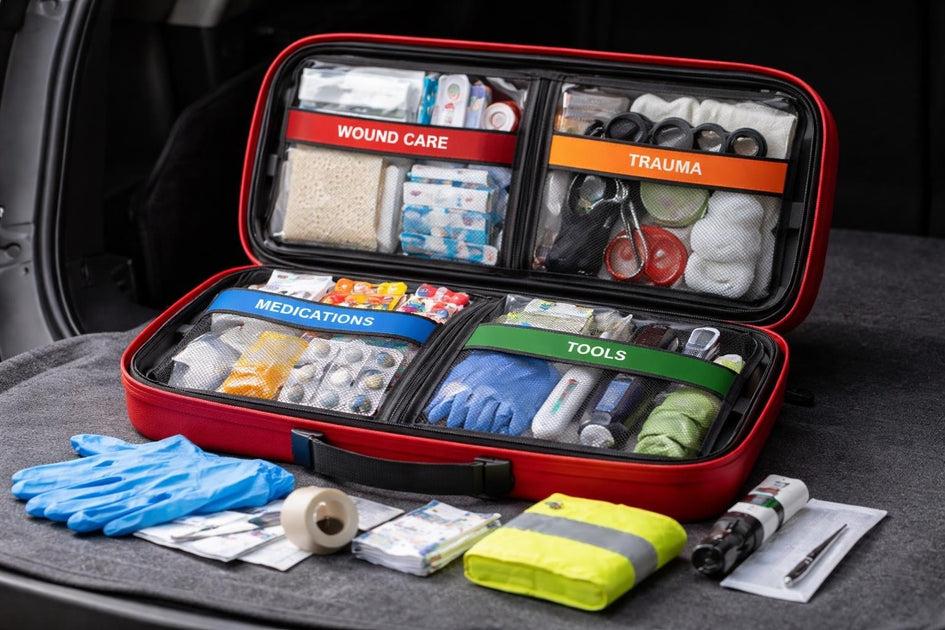
A first-aid kit is not a substitute for professional medical care. Serious bleeding, breathing difficulties, chest pain, or significant injuries require emergency assistance.
NHTSA specifically recommends carrying a first-aid kit in a vehicle emergency supply collection. Its guidance also identifies additional medical supplies, including a tourniquet, as items to consider. Only carry and use specialized equipment if you understand its purpose and have appropriate training.
3. A Dependable Flashlight With Spare Batteries
Using your phone’s flashlight might seem convenient, but it can drain the battery you may need to access navigation or contact emergency services. Keeping a separate flashlight in your vehicle is a more practical option, especially when you need to check a tire, inspect the engine compartment, or retrieve something from the trunk at night.
Choose a durable LED flashlight with a strong beam and simple controls. Keep spare batteries with it, or select a rechargeable model and check its charge before leaving. A headlamp is another useful option because it leaves both hands free while you work. Whichever style you choose, store it somewhere accessible rather than burying it beneath holiday luggage.
A flashlight becomes especially valuable if your vehicle stops on an unlit road or in poor weather. It can help you see where you are walking and make it easier to locate emergency equipment.
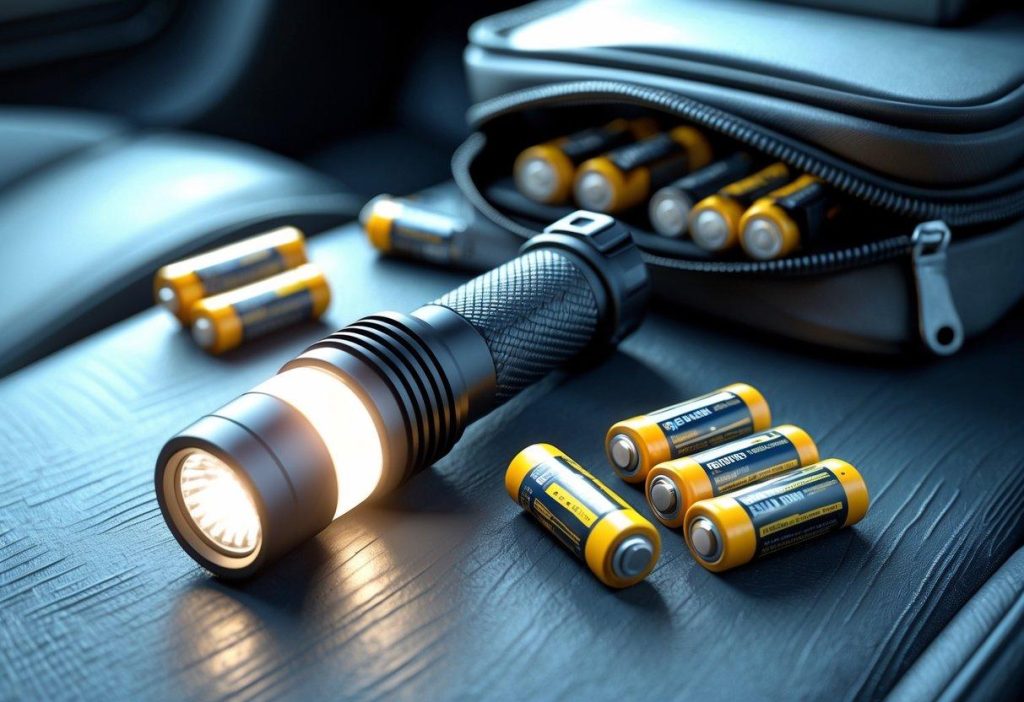
However, do not stand in a traffic lane to inspect the vehicle. Move to a safe location whenever possible and use hazard lights and appropriate warning devices to alert approaching drivers.
The National Highway Traffic Safety Administration specifically lists a flashlight among its recommended roadside emergency supplies. It is inexpensive, takes up very little space, and can remain useful long after the holiday trip ends. Test it periodically, because a flashlight with dead batteries is little more than extra luggage.
4. Drinking Water and Nonperishable Snacks
A traffic jam or vehicle breakdown can turn a short journey into several unexpected hours on the road. Keeping drinking water and a few nonperishable snacks in the car means passengers are not immediately dependent on the next gas station or roadside restaurant.
This is particularly useful when travelling with children or taking routes where services are spread far apart.
Pack sealed bottles of water and foods that can tolerate normal travel conditions, such as granola bars, crackers, nuts, or packaged dried fruit. Choose snacks that passengers can eat easily during a scheduled stop rather than while the driver is moving.
Avoid leaving chocolate, dairy products, or other heat-sensitive foods inside a parked vehicle for extended periods. High cabin temperatures can spoil food or make packaging messy.
The amount you carry should reflect the number of passengers, trip length, weather, and availability of services along the route.
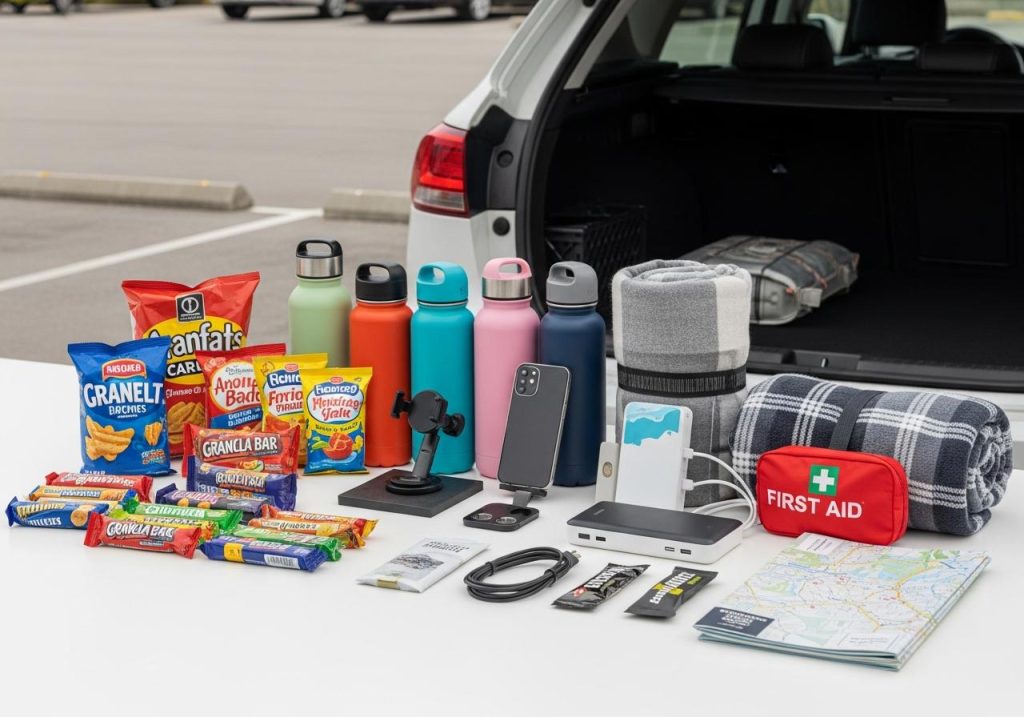
A small supply is better than none, but it should not replace proper meals and rest stops. Rotate stored food and water periodically, checking expiry dates and replacing anything damaged or past its recommended date.
NHTSA includes drinking water and nonperishable food in its recommended vehicle emergency supplies. The California Highway Patrol also lists bottled water and energy bars in its roadside kit guidance. These simple provisions can make an unexpected delay more manageable while you wait for assistance.
5. Jumper Cables or a Portable Jump Starter
A weak or dead battery can interrupt a holiday journey without warning, especially if the vehicle has been sitting unused or interior lights have accidentally been left on. Jumper cables are a useful item to carry because another motorist may be able to help restart your car.
However, they require a second vehicle with a compatible electrical system, and the connection procedure must follow the instructions for both vehicles.
A portable jump starter offers more independence. These compact battery packs can provide enough power to start many passenger vehicles without another car. Choose a model rated for your engine size, read its instructions carefully, and keep it charged.
Some units also include USB ports, built-in lights, or an air compressor, although those extras should not distract from checking the jump starter’s actual starting capacity.
Before connecting any equipment, consult your owner’s manual. Some vehicles have designated jump-start terminals or specific procedures, and incorrect connections can damage electrical components or create a safety hazard. Never attempt a jump-start if the battery is visibly damaged, leaking, swollen, or frozen.
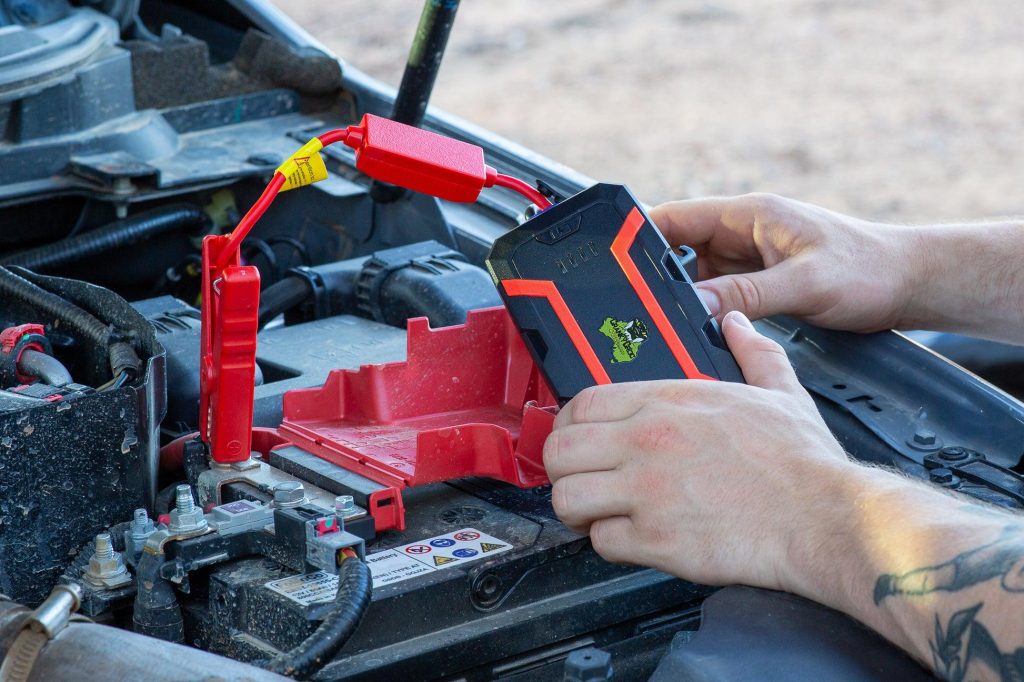
NHTSA recommends jumper cables as part of a roadside emergency kit, while the California Highway Patrol also lists them among its suggested supplies.
A portable jump starter is a practical alternative when you want to avoid depending on another driver. Whichever option you choose, make sure it is suitable for your vehicle and ready to use before leaving home.
6. Reflective Warning Triangles and a High-Visibility Vest
A breakdown is stressful, but being difficult for approaching drivers to see can make the situation considerably more dangerous. Reflective warning triangles and a high-visibility vest help make a stopped vehicle and anyone outside it more noticeable, particularly at night, in rain, or on poorly lit roads.
Keep a set of reflective warning triangles in the trunk and store a vest where it can be reached before stepping out of the vehicle. If you have to stop, switch on your hazard lights and move as far from moving traffic as possible.
Only place warning devices if it is safe to do so. Never walk along a busy highway or enter a traffic lane simply to position a triangle. If the shoulder is narrow or visibility is poor, remain in a safe location and contact roadside assistance.
The California Highway Patrol includes emergency reflector triangles in its roadside kit recommendations. The National Highway Traffic Safety Administration also lists flares and a white flag among suggested emergency supplies.
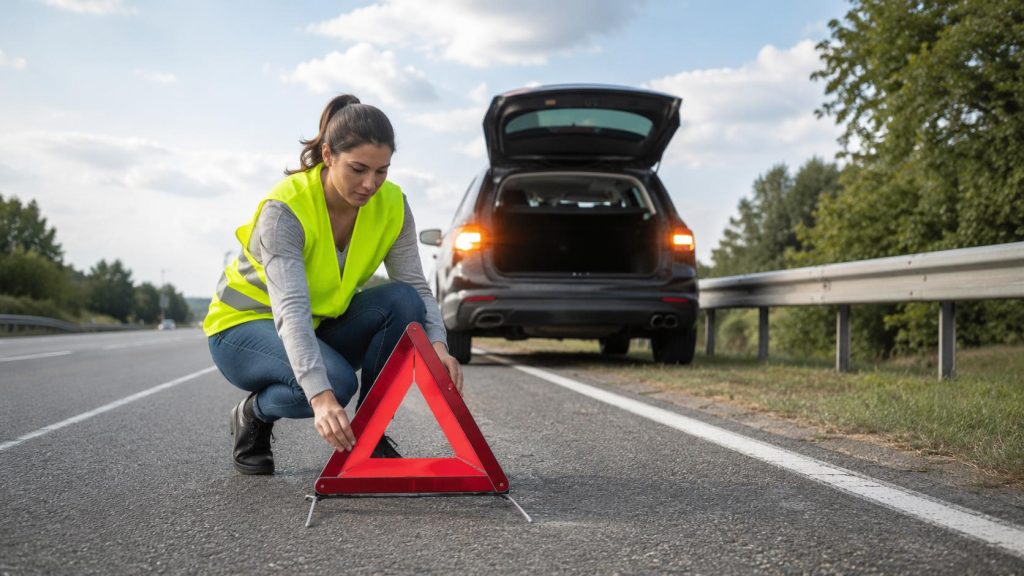
Reflective triangles are reusable and do not rely on batteries or flames, making them a practical choice for many drivers.
Check that the triangles are intact, fold correctly, and have reflective surfaces that are not cracked or heavily scratched. A vest should fit over your clothing and be easy to put on quickly. These items cannot eliminate roadside risk, but they can improve visibility when a vehicle becomes disabled.
7. A Tire Pressure Gauge and Portable Inflator
A tire that looks properly inflated may still be carrying too little air. That matters on a holiday drive because underinflation can affect handling, increase tire wear, and contribute to tire failure. Keeping a digital or dial tire pressure gauge in the car allows you to check pressure accurately instead of relying on appearance.
Choose a gauge that displays readings clearly and matches the pressure range required by your vehicle. A portable 12-volt inflator or rechargeable air compressor is a useful companion. It can restore pressure when a tire is slightly low, helping you avoid searching for an air pump immediately.
However, an inflator cannot repair a major puncture, sidewall damage, or a tire that is losing air rapidly. Those situations require professional attention or roadside assistance.
Check tire pressure when the tires are cold, ideally before driving or after the vehicle has been parked for at least three hours.
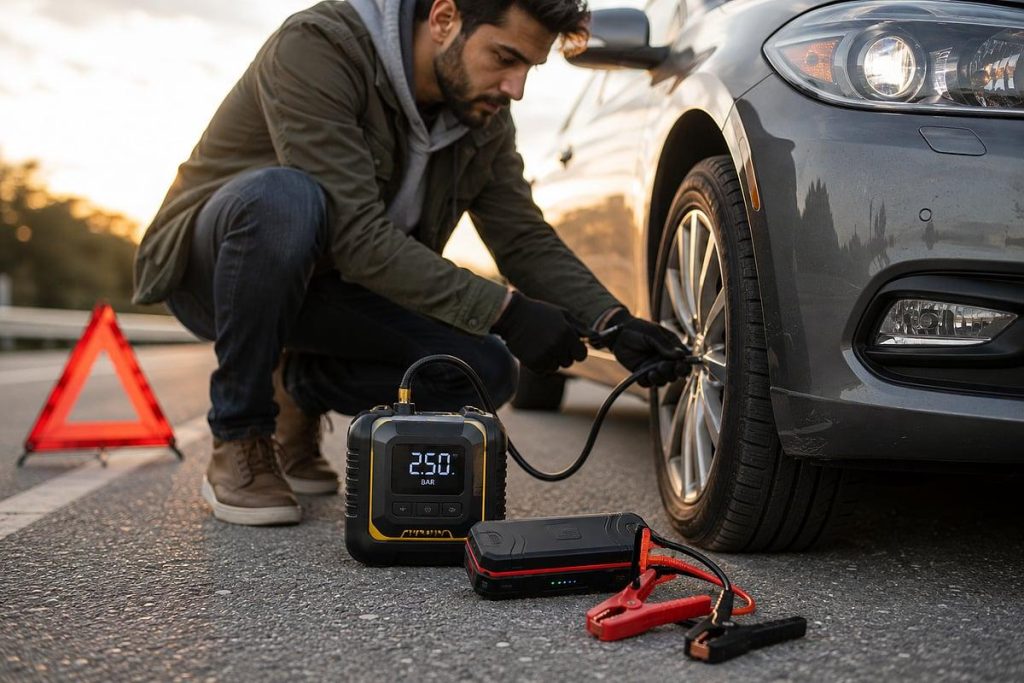
Follow the recommended pressure on the driver’s door-jamb label or in the owner’s manual, not the maximum pressure printed on the tire sidewall. Remember to check the spare if your vehicle has one.
NHTSA identifies a tire pressure gauge as a recommended roadside emergency supply and advises checking tires before long trips. A gauge and inflator are compact additions that can help you spot a problem before it becomes a roadside interruption.
8. A Warm Blanket and Weather-Appropriate Clothing
A blanket might seem unnecessary when the weather forecast looks comfortable, but conditions can change during a long drive. A breakdown, road closure, or unexpected overnight delay may leave passengers waiting in a vehicle for much longer than planned.
A warm blanket provides an extra layer of comfort if the temperature drops or the vehicle’s heating system is unavailable.
Pack at least one compact fleece blanket or emergency blanket, adjusting the quantity for the number of passengers and the season. For winter travel, add gloves, warm socks, a hat, and an extra layer of clothing.
These supplies are particularly useful if you are travelling through mountain areas or regions where temperatures can fall sharply after sunset. Keep them in a reachable storage bag rather than beneath heavy luggage.
An emergency blanket is lightweight and takes up little space, but it should not be treated as a replacement for proper winter clothing.
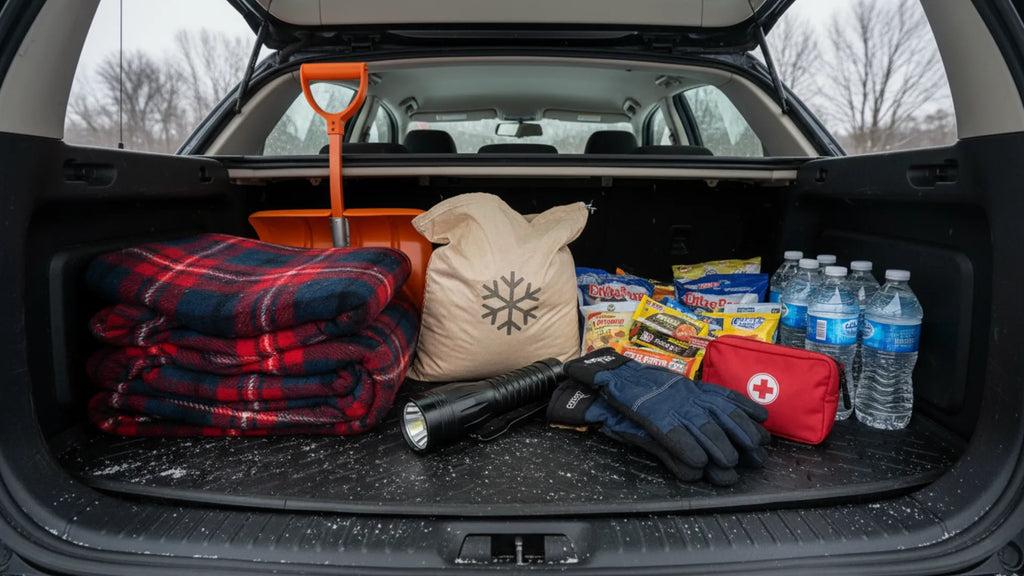
Likewise, do not run the engine continuously just to keep the cabin warm if the exhaust system is blocked by snow or if the vehicle is in an enclosed space. Carbon monoxide can be deadly and has no smell.
NHTSA includes emergency blankets, towels, and coats among its suggested vehicle emergency supplies.
The right clothing and a simple blanket can make an unexpected wait less uncomfortable, especially when several people are travelling together. Check the supplies before departure and replace anything that has become wet or damaged.
9. A Basic Tool Kit and Work Gloves
A small tool kit can be surprisingly useful when something minor comes loose or needs attention during a long journey. You do not need a professional mechanic’s collection.
A practical set containing screwdrivers, pliers, an adjustable wrench, a multipurpose tool, and a little duct tape can help with simple tasks such as tightening an accessible loose fitting or securing a temporarily displaced piece of trim.
Work gloves deserve a place beside the tools. They protect your hands from dirt, rough surfaces, and sharp edges when handling equipment or inspecting a problem. Choose durable gloves that fit properly and keep them in a sealed bag so they remain clean and dry.
A roll of paper towels or shop cloths is also useful for wiping your hands after checking under the hood.
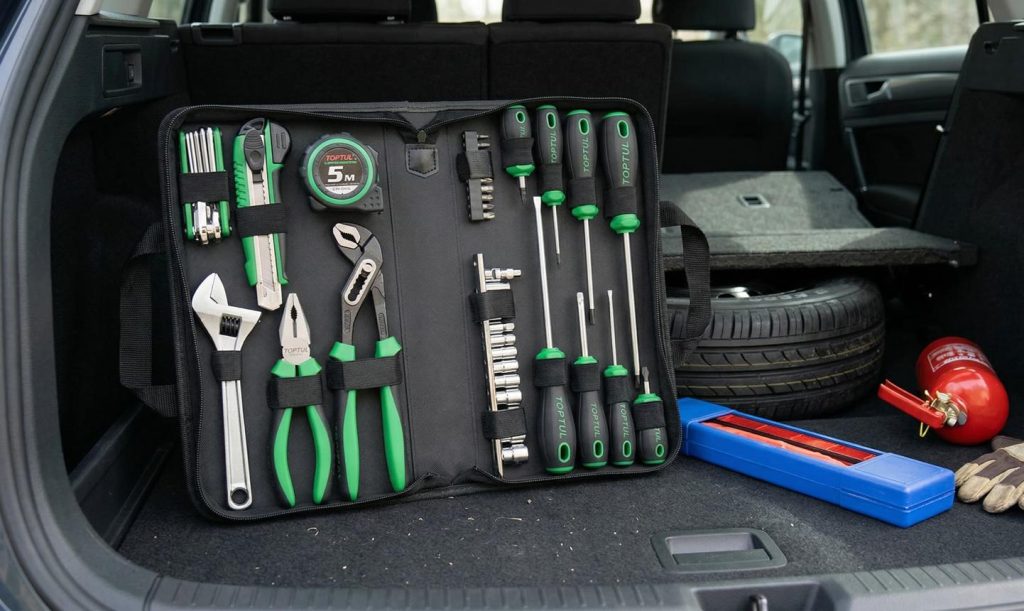
However, having roadside tools does not mean every repair should be attempted on the spot, especially near passing traffic. Never get underneath a vehicle supported only by a jack, and avoid handling hot engine parts or electrical components without proper knowledge. For major mechanical issues, it is safer to contact a qualified mechanic or roadside assistance.
NHTSA recommends carrying basic repair tools and duct tape as part of a roadside emergency kit. The Utah Division of Emergency Management also lists screwdrivers, a wrench, and a multitool among possible vehicle-kit supplies. Pack tools suited to your car rather than buying a large kit filled with equipment you cannot safely use.
10. Paper Maps and a Written Emergency Contact List
Digital navigation is convenient, but it depends on a working device, sufficient battery power, and sometimes a reliable data connection.
A paper road map provides a backup if your phone stops working, loses reception, or becomes unusable. It can also help passengers understand the route and identify alternative roads when traffic or weather causes delays.
Choose a current map that covers the states or regions on your itinerary. Mark your main route, planned overnight stops, and important junctions before departure.
A printed route summary can be helpful too, particularly if you are travelling through rural areas where mobile coverage may be inconsistent. Keep the map somewhere accessible, but never unfold or study it while driving.
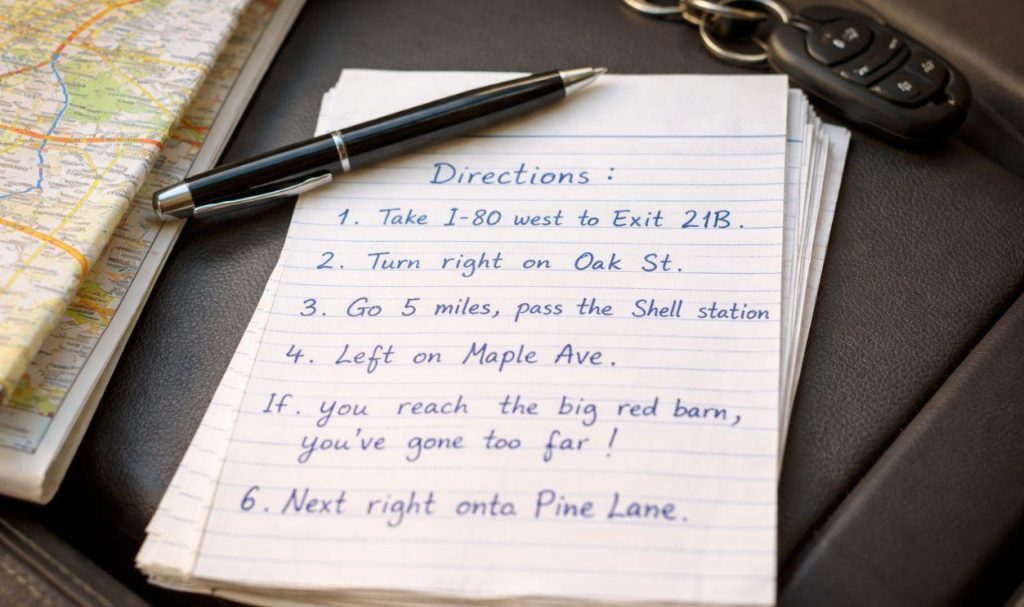
Alongside it, carry a written list of important phone numbers. Include family contacts, roadside assistance, your insurance provider, and any relevant medical contact. Store the list securely and avoid writing passwords or unnecessary sensitive information on it. If your phone is lost or its battery runs out, the paper copy can still help you reach someone.
NHTSA recommends carrying maps and reviewing directions before a trip, even when using GPS navigation. Utah’s emergency management guidance also includes road maps and a notepad among suggested vehicle supplies. A paper backup takes little room and gives you another option when technology lets you down.
11. A Seat-Belt Cutter and Window-Breaking Escape Tool
An emergency escape tool is a small item that could become important if a collision leaves a door difficult to open or a seat belt jammed.
Most combination tools include a guarded blade for cutting a seat belt and a hardened point designed to break certain types of vehicle glass. They are compact enough to store in the cabin without taking up valuable luggage space.
Placement matters more than size. Keep the tool secured within the driver’s or passenger’s reach, rather than buried in the trunk. In an emergency, you may not be able to reach equipment stored behind luggage or outside the vehicle.
Make sure every regular driver knows where it is and understands how it works. Read the manufacturer’s instructions before travelling.
These tools have limitations. Window breakers may not work on laminated side glass, which is increasingly used in some vehicles, and they should not be assumed to break a windshield. Check your vehicle’s glass markings or owner’s manual to understand which windows are suitable for emergency escape tools. Never test the device on your car.
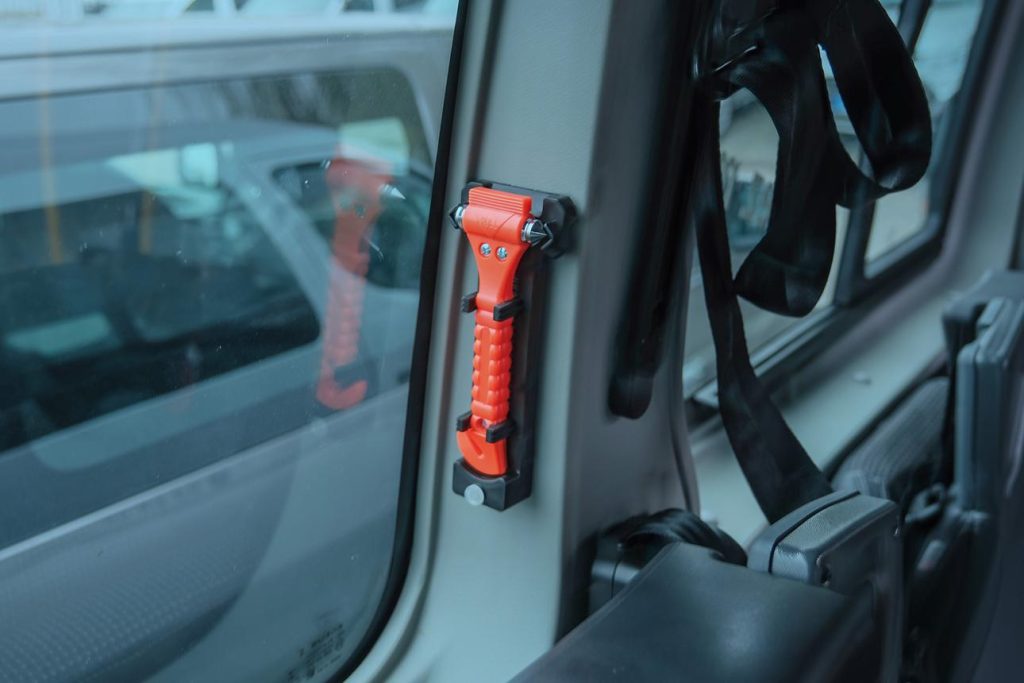
AAA recommends keeping an emergency escape tool with a seat-belt cutter and window breaker in the vehicle. Utah’s Division of Emergency Management also includes one in its vehicle emergency-kit checklist. It is a precaution, not a substitute for wearing seat belts correctly or following safe driving practices.
12. Extra Windshield Washer Fluid and Paper Towels
A dirty windshield can quickly become a visibility problem on a long drive. Road spray, dust, insects, and winter grime can build up on the glass, particularly when travelling behind trucks or through wet conditions.
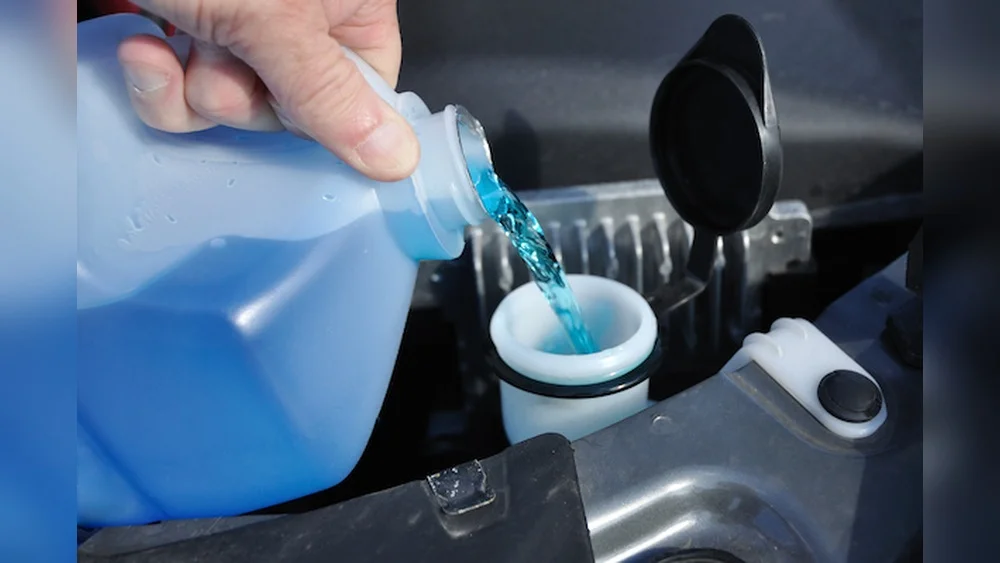
Keeping an extra bottle of the correct windshield washer fluid in the car means you can top up the reservoir when necessary instead of continuing with an empty system.
Choose washer fluid suitable for the temperatures and conditions you expect. In freezing regions, use a winter-rated formula with an appropriate freeze-protection rating. Plain water may freeze in the system during cold weather and is not a reliable replacement.
Check your owner’s manual for the correct filling location and avoid confusing the washer-fluid reservoir with other fluid containers under the hood.
Paper towels or clean microfiber cloths are useful for wiping the inside of the windshield, cleaning mirrors, and handling small spills. Store them in a resealable bag so they stay dry and do not collect dust. Do not wipe the glass with dirty cloths, which can spread grime and leave streaks that make glare worse.
NHTSA specifically includes extra windshield washer fluid among its recommended roadside supplies. Its guidance also lists water and paper towels for cleanup. These are simple provisions, but they can help you maintain clear visibility and deal with minor messes during a holiday journey.