
A long road trip is easier when a vehicle can cover hundreds of miles without frequent fuel stops. However, some cars have surprisingly small gas tanks, limiting how far they can travel before drivers need to find another station.
Fuel economy helps, but it cannot always compensate for limited fuel capacity, particularly when a vehicle has a thirsty engine or is driven at highway speeds.
This list examines U.S.-market vehicles with relatively small tanks and considers their EPA-rated fuel economy, estimated range, and practical road-trip implications. Actual distance varies with speed, traffic, weather, terrain, and driving habits.
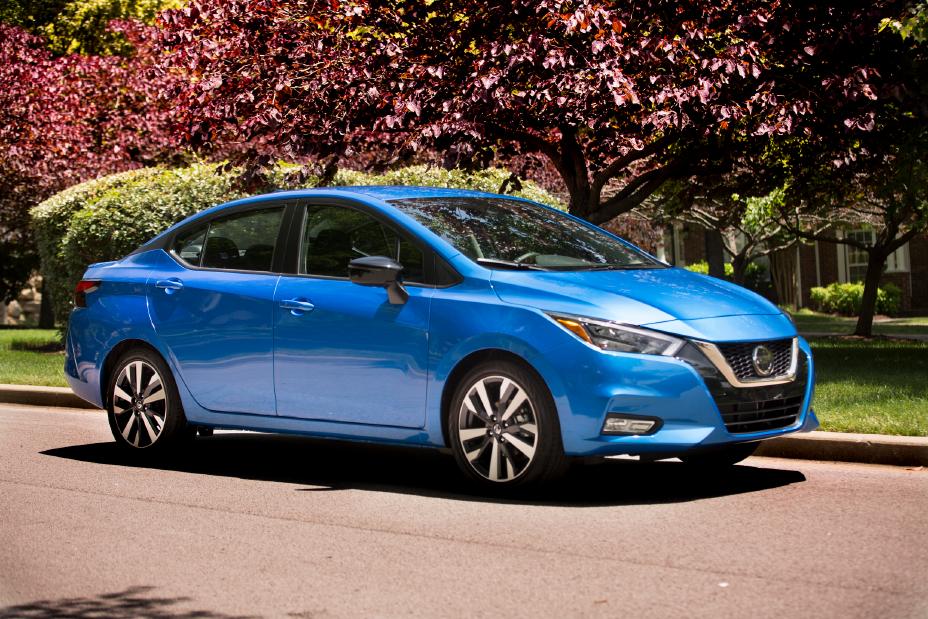
1. Nissan Versa
Fuel tank: 10.8 gallons | EPA combined: 30 MPG (manual) | Estimated range: 324 miles
The Nissan Versa has long appealed to budget-conscious drivers, but its small fuel tank becomes a noticeable limitation when the journey stretches beyond the daily commute. The 2025 model, the final model year for the Versa in the United States, carries a 10.8-gallon tank.
That is a modest capacity for a four-door sedan, especially when compared with larger compact cars designed to cover longer distances between fill-ups.
The five-speed manual version receives an EPA estimate of 27 MPG in the city, 35 MPG on the highway, and 30 MPG combined. Multiplying its 10.8-gallon capacity by the combined rating gives an estimated full-tank range of approximately 324 miles.
The highway figure suggests a longer theoretical distance under favorable conditions, but real-world results depend on speed, traffic, passenger weight, and air-conditioning use. Drivers should not plan a remote stretch of road around the maximum possible range.
There are practical advantages to the Versa. Its compact dimensions make it easy to maneuver, and its efficient four-cylinder engine keeps fuel consumption relatively low.
Nevertheless, the limited tank capacity means owners may need to stop more frequently than expected on extended journeys. That can be inconvenient when traveling through rural areas, where gas stations may be widely spaced or close earlier than expected.
For those shopping for a used Versa, it is worth remembering that good fuel economy does not necessarily translate into greater convenience on long trips. The car is capable of highway driving, but its limited fuel capacity makes planning refueling stops an important part of longer journeys.
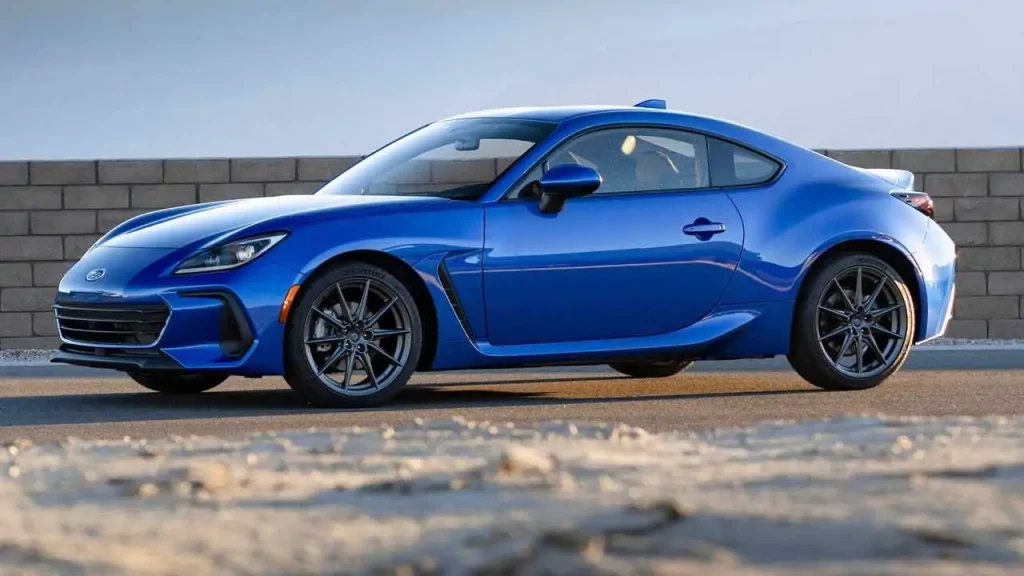
2. Subaru BRZ
Fuel tank: 13.2 gallons | EPA combined: 22 MPG (manual) | Estimated range: 290 miles
The Subaru BRZ demonstrates why tank capacity alone does not tell the complete story. Its 13.2-gallon tank is larger than the Versa’s, yet the sports coupe’s lower fuel economy gives it a shorter estimated range.
The 2026 manual-transmission model is rated at 20 MPG in city driving, 27 MPG on the highway, and 22 MPG combined by the EPA. At that combined rate, a full tank works out to approximately 290 miles.
That figure can make a difference when planning a long interstate journey. A driver covering several hundred miles may need to refuel sooner than expected, especially if the route includes mountain roads, heavy traffic, or extended periods of spirited driving.
The BRZ’s naturally aspirated 2.4-liter boxer engine produces 228 horsepower, and its performance-focused character encourages a different driving style from that of an economy sedan. Frequent acceleration and higher engine speeds can further reduce real-world mileage.
The car’s appeal, however, is not built around minimizing fuel stops. Rear-wheel drive, a low center of gravity, and responsive handling make it an engaging choice for drivers who value involvement behind the wheel.
Its compact cabin and limited luggage space also mean it is better suited to a light weekend getaway than a heavily loaded family road trip.
Subaru’s automatic version is more economical, with an EPA combined rating of 25 MPG, but the manual model is the less forgiving choice for long-distance range. Anyone planning a lengthy route should identify fuel stops in advance rather than assuming the BRZ can comfortably cover a full 300 miles between stations.
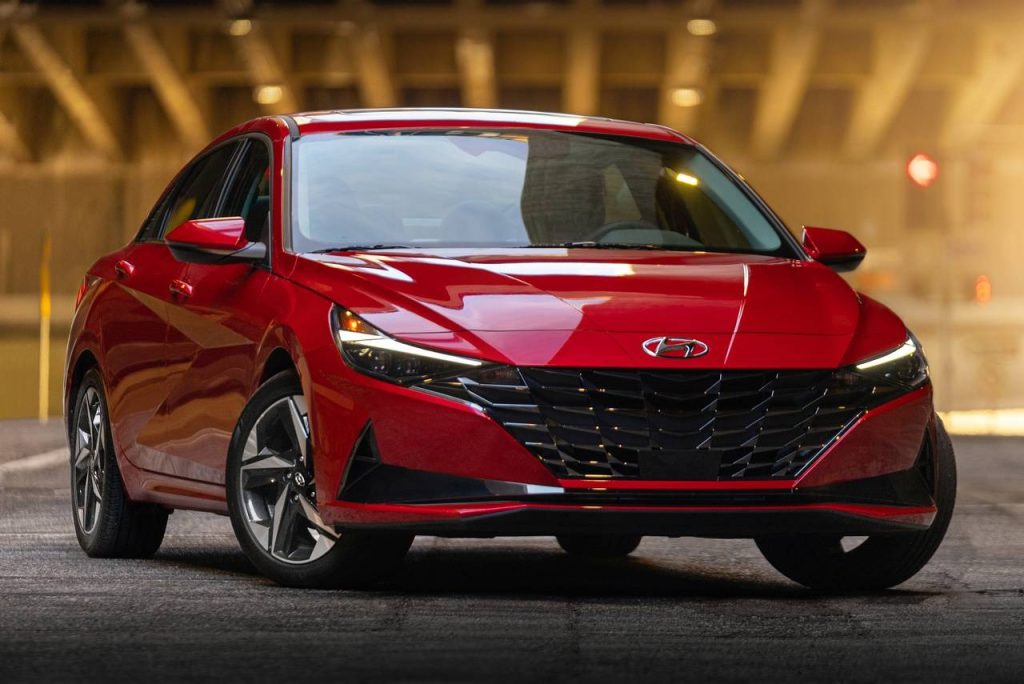
3. Hyundai Elantra N
Fuel tank: 12.4 gallons | EPA combined: 24 MPG (manual) | Estimated range: 298 miles
A performance sedan can make highway driving entertaining, but the Hyundai Elantra N requires more attention to fuel stops than many conventional compact sedans.
Its 2.0-liter turbocharged engine produces 276 horsepower and 289 lb-ft of torque, giving it plenty of acceleration for merging and passing. The trade-off is a relatively short driving range, partly because Hyundai equips it with a 12.4-gallon fuel tank.
For 2026, the six-speed manual version earns EPA ratings of 21 MPG in the city, 29 MPG on the highway, and 24 MPG combined. That works out to approximately 298 miles using the entire tank at the combined rating.
The automatic version is slightly less efficient, with a 23-MPG combined rating. Neither configuration offers the kind of extended range that makes it easy to drive across several states without planning fuel stops.
The Elantra N’s personality explains much of its appetite. Its turbocharged engine, performance-oriented suspension, electronically controlled limited-slip differential, and selectable drive modes are designed to deliver an engaging driving experience.
Drivers who frequently use the car’s acceleration or spend time on winding roads may see fuel economy fall below the EPA estimates.
Another factor to consider is that the car can handle highway cruising comfortably, but its performance-oriented setup does not prioritize maximum fuel economy. Drivers planning a 600-mile journey should expect to make at least one refueling stop, with additional stops possible depending on driving conditions.
The Elantra N is not unsuitable for road trips. However, its combination of modest tank capacity and performance-focused fuel consumption makes it less convenient for drivers who prefer long stretches between gas stations.
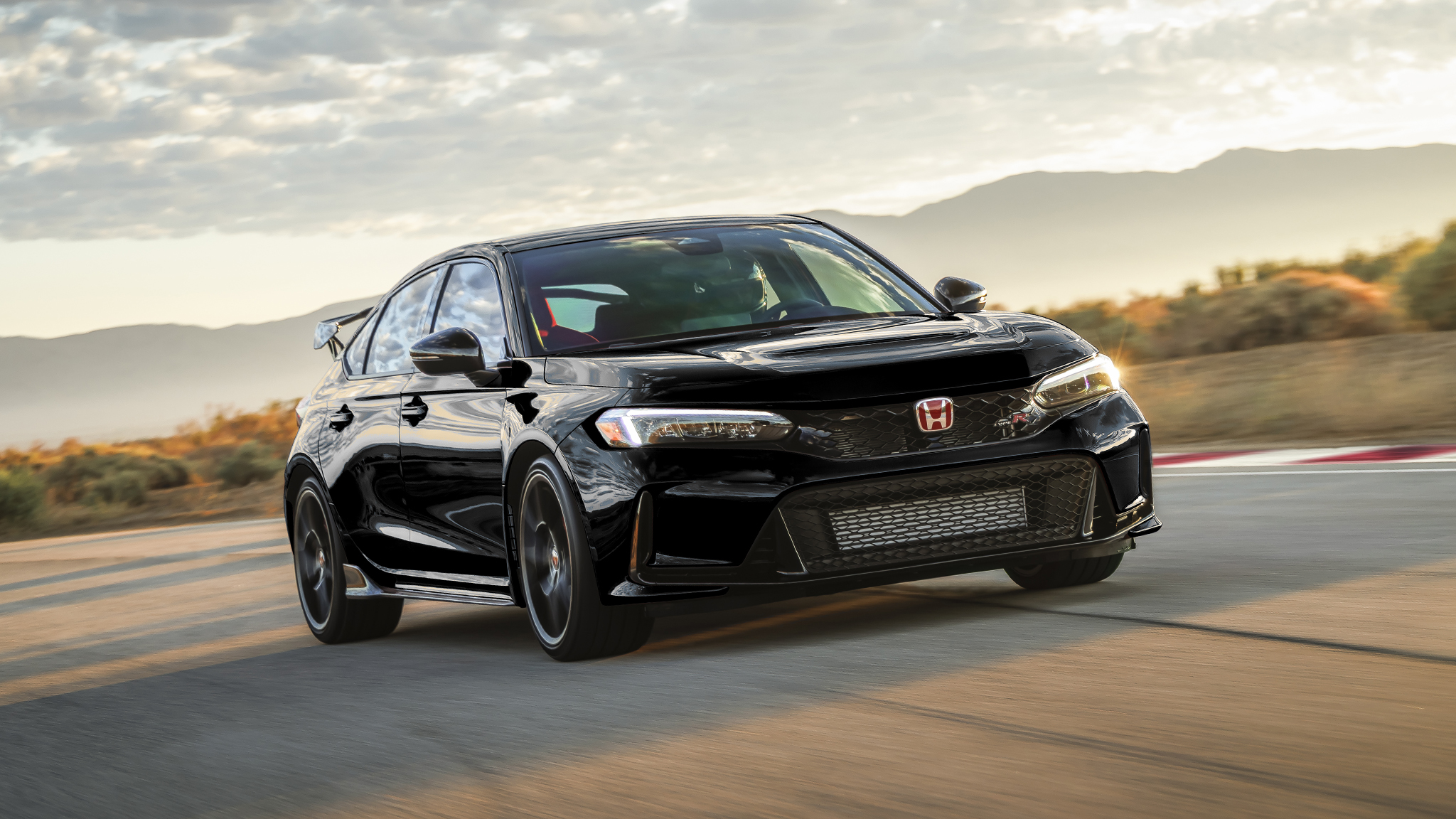
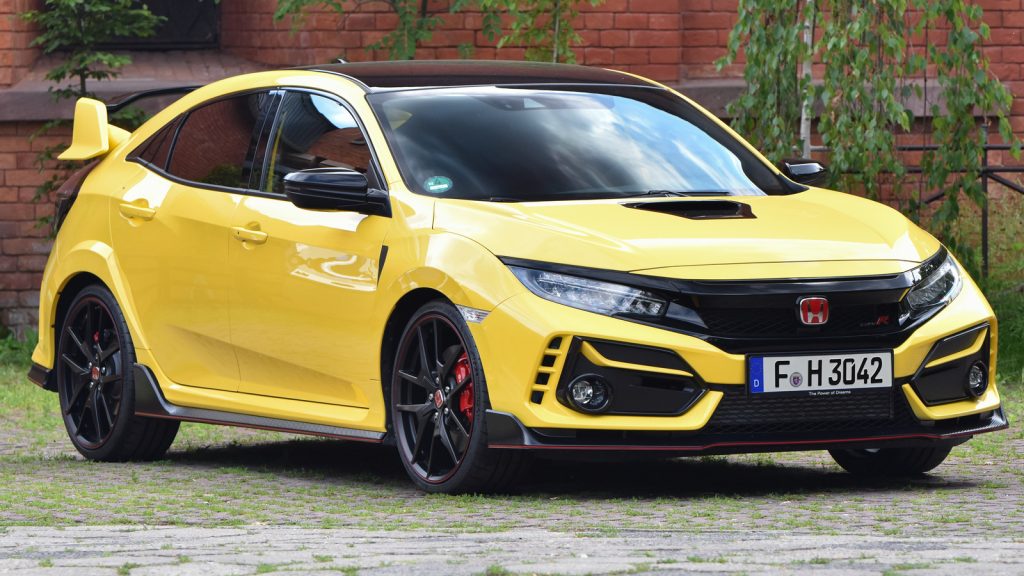
4. Honda Civic Type R
Fuel tank: 12.4 gallons | EPA combined: 24 MPG | Estimated range: 298 miles
The Honda Civic Type R has the equipment and practicality of a hatchback, but its fuel capacity is closer to what drivers might expect from a smaller commuter car.
Honda gives the 2026 model a 12.4-gallon tank, which is not particularly generous for a 315-horsepower performance vehicle. Its EPA-rated 24 MPG combined means the theoretical distance from a full tank is approximately 298 miles.
The official fuel-economy figures are 22 MPG in city driving and 28 MPG on the highway. Those numbers are respectable considering the Type R’s performance, but the limited tank capacity means drivers cannot rely on exceptionally long intervals between refueling.
On a lengthy interstate journey, a fuel stop before reaching 300 miles is a sensible expectation rather than an inconvenience to leave until the warning light appears.
Under the hood, the Type R uses a turbocharged 2.0-liter four-cylinder engine producing 315 horsepower and 310 lb-ft of torque. It is paired with a six-speed manual transmission, rev-matching technology, and a limited-slip differential.
These features make it a compelling driver’s car, although enthusiastic acceleration and frequent gear changes can affect actual fuel consumption.
There is a useful distinction between its highway rating and its combined estimate. At a consistent 28 MPG, the arithmetic suggests a theoretical 347-mile range, but that is not a promise of real-world distance. Traffic, elevation changes, weather, and driving style can all reduce it.
For someone planning a cross-country trip, the Civic Type R offers useful cargo space and a practical hatchback layout. Its short calculated range, however, means fuel stops need to be part of the itinerary.
5. Toyota GR Corolla
Fuel tank: 13.2 gallons | EPA combined: 24 MPG (manual) | Estimated range: 317 miles
Toyota’s GR Corolla is a small hatchback with serious performance hardware, including a turbocharged three-cylinder engine and GR-Four all-wheel drive.
Its 13.2-gallon fuel tank is not unusually tiny, but the car’s relatively high fuel consumption limits the distance available between fill-ups. The six-speed manual version is rated at 24 MPG combined by the EPA, giving it a calculated full-tank range of approximately 317 miles.
The EPA breaks that rating down into 21 MPG in the city and 28 MPG on the highway. Those figures are considerably lower than what drivers might expect from an ordinary Corolla hatchback.
The reason is the GR model’s performance-oriented powertrain. Its 1.6-liter turbocharged engine produces 300 horsepower, while the all-wheel-drive system distributes power to help maintain traction during acceleration and cornering.
This setup makes the car entertaining on demanding roads, but it also means fuel economy is not its strongest quality.
Drivers who regularly use the engine’s power, travel through mountainous regions, or carry several passengers and luggage may find themselves stopping more frequently. The automatic version is less efficient still, with an EPA combined rating of 22 MPG.
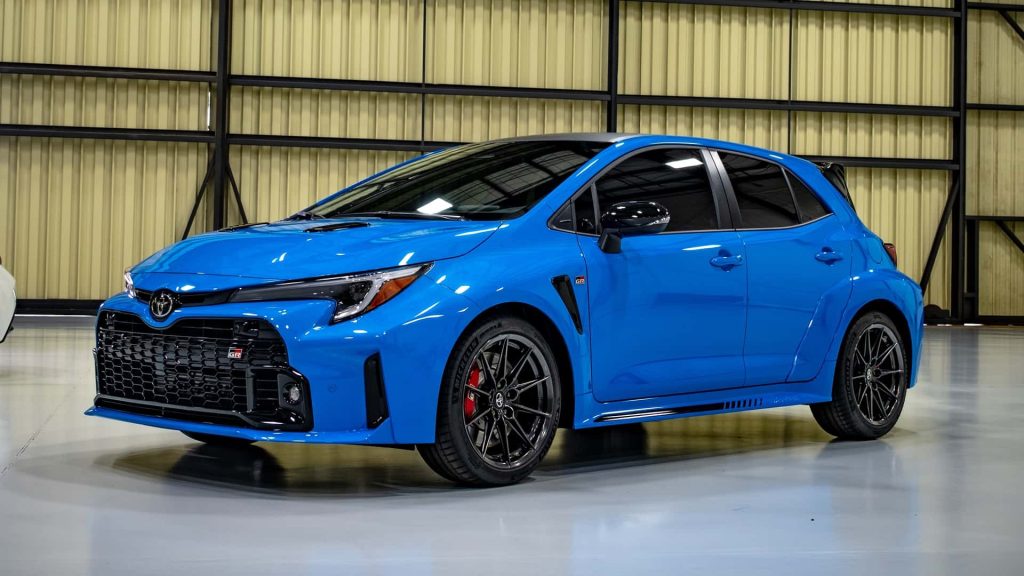
The GR Corolla’s hatchback design provides useful cargo space, making it more practical for carrying luggage than a conventional two-seat sports car. However, its limited driving range becomes more noticeable on longer trips. Despite offering the versatility needed for extended journeys, its fuel capacity and performance-oriented fuel consumption make advance refueling plans worthwhile.
For road trips through areas with plenty of gas stations, this is manageable. Routes through remote regions deserve more preparation, particularly when stations are separated by long distances.
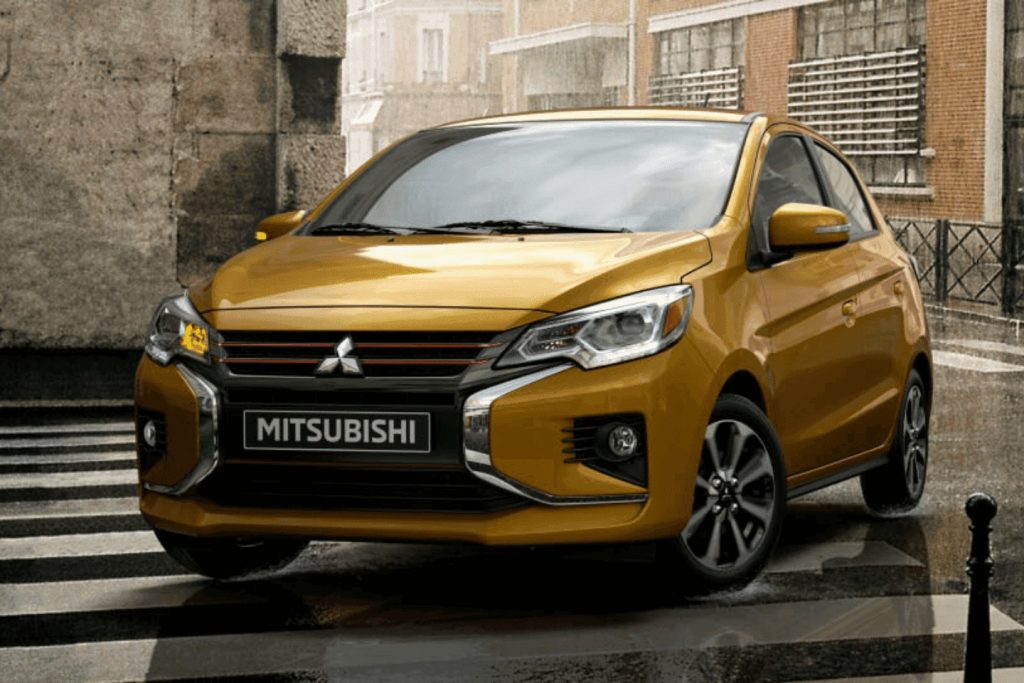
6. Mitsubishi Mirage
Fuel tank: 9.2 gallons | EPA combined: 39 MPG | Estimated range: 359 miles
The Mitsubishi Mirage has one of the smallest gasoline tanks in this group. Its 9.2-gallon capacity is unusually modest, even for an economical subcompact. The car compensates with excellent fuel efficiency, but the combination still produces a calculated range of approximately 359 miles using its EPA combined rating of 39 MPG.
The 2024 Mirage uses a 1.2-liter three-cylinder engine and a continuously variable transmission. According to the EPA, the hatchback achieves 36 MPG in the city and 43 MPG on the highway.
Those numbers make it economical to operate, particularly for drivers who spend much of their time commuting or traveling through urban areas. However, its small tank means it cannot take full advantage of that efficiency in the same way a more generously equipped vehicle could.
The distinction becomes important during long-distance travel. A driver might expect a car returning close to 40 MPG to cover a substantial distance without refueling. In the Mirage, the limited fuel reserve brings the next stop closer than its impressive economy initially suggests.
The EPA’s estimated range is 359 miles, assuming the entire tank is used. In practice, drivers should refuel before reaching that point.
Performance is another consideration. The three-cylinder engine is designed for efficiency rather than strong acceleration, so carrying passengers, climbing steep grades, or maintaining high highway speeds can make the car work harder. These conditions may also affect fuel consumption.
Mitsubishi discontinued the Mirage after the 2024 model year in the United States, making this an example relevant to used-car shoppers. Its low running costs remain appealing, but drivers who regularly undertake long road trips should account for its small tank when comparing alternatives.
7. Mazda MX-5 Miata
Fuel tank: 11.9 gallons | EPA combined: 29 MPG | Estimated range: 345 miles
The Mazda MX-5 Miata is built around lightweight engineering and driver involvement, not long-distance fuel capacity. Its 11.9-gallon tank is relatively small, and although its naturally aspirated engine delivers respectable fuel economy, the car’s calculated range remains around 345 miles.
That is enough for many weekend drives, but it can require more frequent stops during a longer interstate journey.
For the 2025 model, the automatic version receives an EPA estimate of 26 MPG in the city, 35 MPG on the highway, and 29 MPG combined.
The manual version has different ratings, so buyers should check the specific transmission before estimating their travel range. The automatic’s combined figure multiplied by its tank capacity produces approximately 345 miles.
The Miata’s 2.0-liter four-cylinder engine produces 181 horsepower and 151 lb-ft of torque. Its responsive character, rear-wheel-drive layout, and low curb weight make it particularly enjoyable on winding roads.
However, the compact two-seat cabin brings compromises that become more apparent when preparing for a multi-day trip. Luggage space is limited, and there is little room to carry additional supplies.
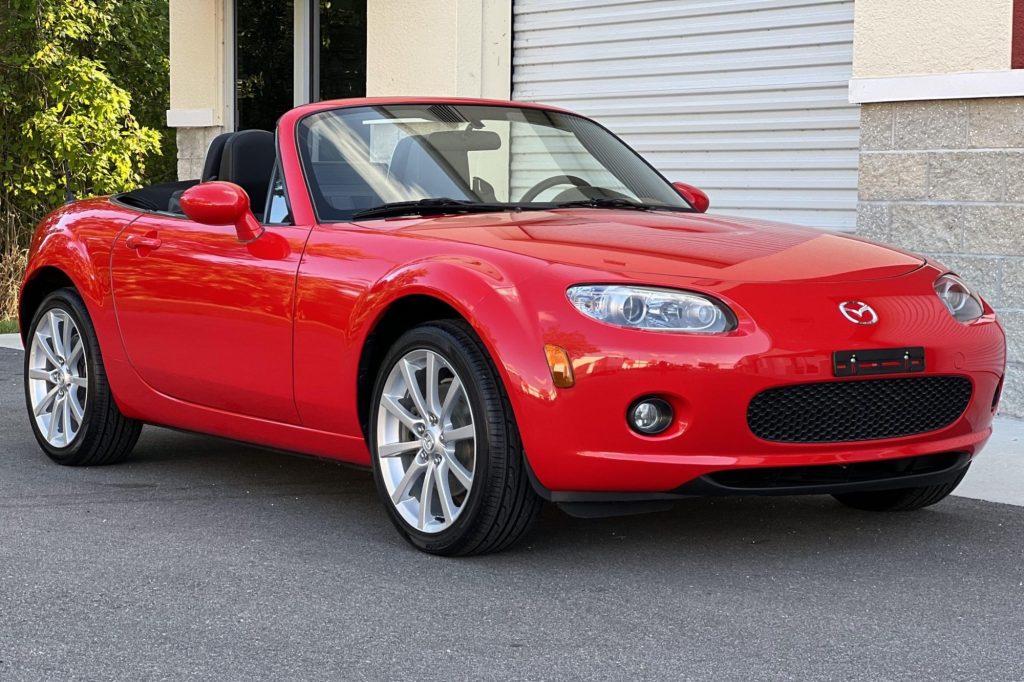
The fuel tank adds another planning requirement. Drivers traveling through rural highways or scenic mountain routes should identify gas stations before setting out, rather than assuming the car will comfortably cover long stretches. Frequent acceleration on twisty roads can also push real-world fuel economy below the official combined estimate.
None of this makes the Miata a poor road-trip vehicle for the right kind of journey. It can be an entertaining choice for a couple traveling light. But its compact fuel capacity and limited storage make it less convenient for extended touring than larger cars with bigger tanks.
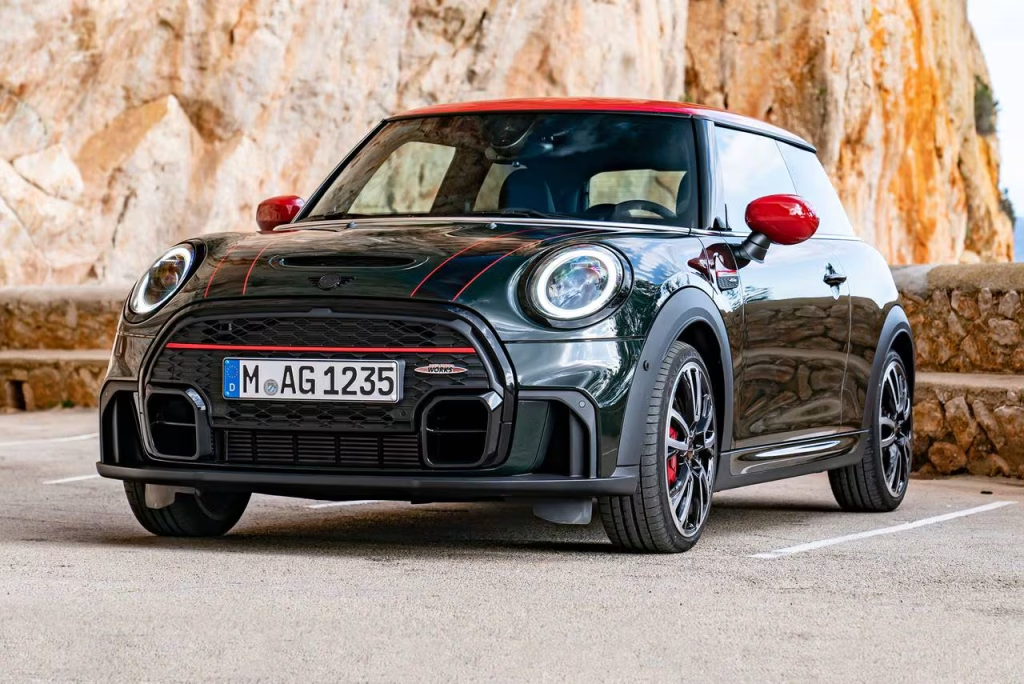
8. MINI John Cooper Works 2 Door
Fuel tank: 11.6 gallons | EPA combined: 30 MPG | Estimated range: 348 miles
The MINI John Cooper Works 2 Door shows how a relatively efficient engine can still leave drivers with a modest distance between refueling stops.
Its 11.6-gallon tank is small for a performance-oriented car, even though the EPA rates it at 30 MPG combined. Based on those figures, a full tank provides a calculated range of approximately 348 miles.
The 2026 model is powered by a 2.0-liter turbocharged four-cylinder engine and uses an automatic transmission. Its EPA ratings are 27 MPG in the city and 37 MPG on the highway. That highway figure is useful for longer journeys, but the small fuel tank remains a limiting factor when drivers want to cover several hundred miles without stopping.
The John Cooper Works version is designed to deliver more excitement than a standard MINI. Its turbocharged engine, sport-focused chassis, and front-wheel-drive layout give it a lively character.
Drivers who make frequent use of its acceleration may not achieve the EPA combined figure, particularly in congested traffic or on roads with repeated elevation changes.
The car’s size creates another consideration. It is easy to maneuver through crowded streets and narrow parking areas, but the two-door body and limited luggage space make packing for an extended holiday more challenging.
A couple traveling with light bags can manage, while passengers carrying bulky suitcases may find the available space restrictive.
The MINI is not necessarily inefficient for its performance category. Its issue is the relationship between fuel capacity and total range. Owners can enjoy reasonable highway economy, but they should still plan fuel stops instead of treating the theoretical 348-mile figure as a guaranteed distance.
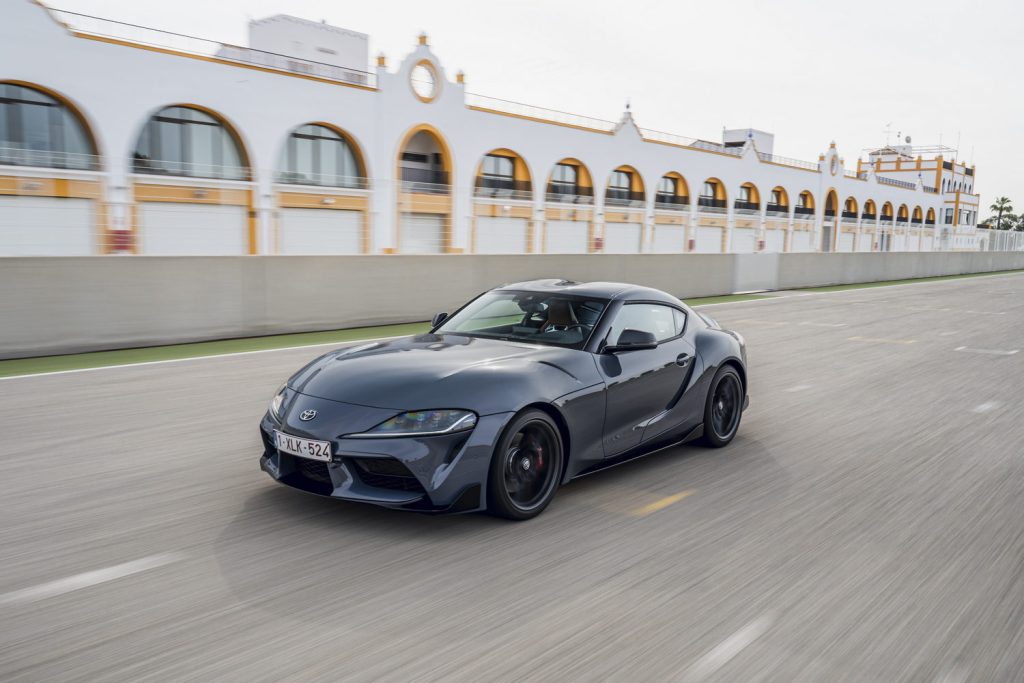
9. Toyota GR Supra 3.0 Manual
Fuel tank: 13.7 gallons | EPA combined: 21 MPG (manual) | Estimated range: 288 miles
The Toyota GR Supra 3.0 with the manual transmission is a reminder that a sports car does not need an exceptionally small tank to have a short driving range.
Its 13.7-gallon capacity is larger than several other vehicles on this list, but the manual model’s EPA-rated 21 MPG combined brings its theoretical range down to approximately 288 miles. That makes it one of the less convenient choices for drivers who want to minimize fuel stops.
Toyota’s published figures show 19 MPG in city driving and 27 MPG on the highway for the manual version. The automatic model is more economical, with a 26-MPG combined rating. Choosing the transmission therefore makes a meaningful difference to the distance available from a tank.
Power comes from a 3.0-liter turbocharged inline-six engine producing 382 horsepower and 368 lb-ft of torque. The engine gives the Supra strong acceleration and makes highway overtaking effortless. However, drivers who regularly use that performance should expect fuel consumption to vary considerably from the official estimate.
The two-seat cabin and 10.2-cubic-foot trunk also influence the car’s road-trip suitability. There is enough room for a carefully packed weekend trip, but it is not designed to carry the luggage of a family holiday. The combination of limited storage and a relatively short manual-transmission range makes route planning particularly important.
For a driver who enjoys sports-car performance, these compromises may be entirely acceptable. Yet someone planning a long journey through remote areas should pay close attention to station locations.
The automatic version offers more range, but the manual model makes more frequent refueling a realistic part of ownership.
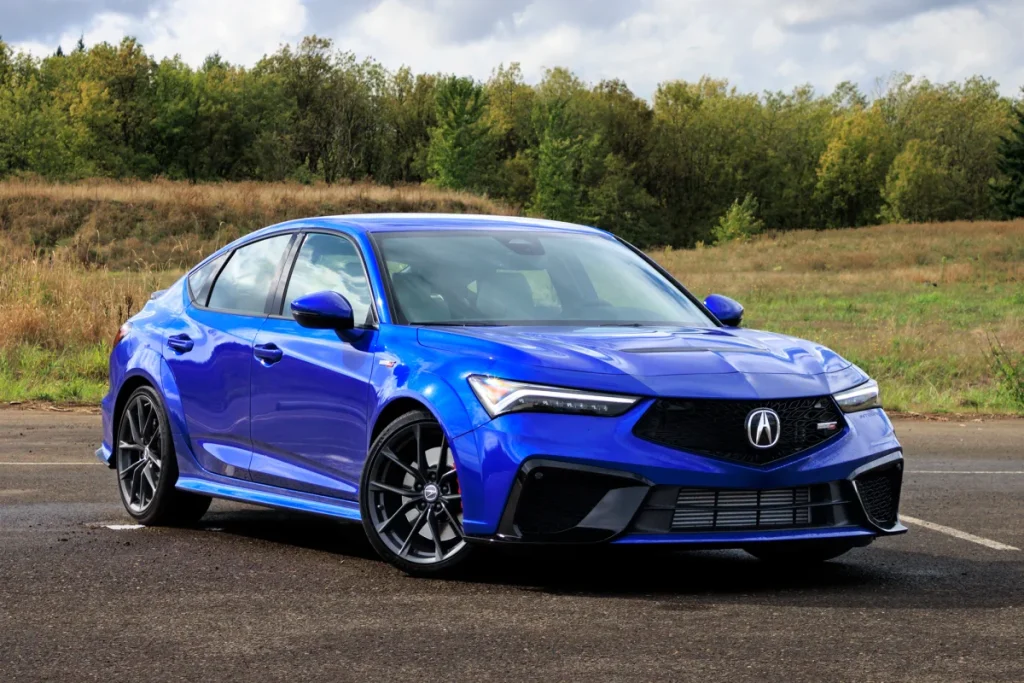
10. Acura Integra Type S
Fuel tank: 12.4 gallons | EPA combined: 24 MPG | Estimated range: 298 miles
The Acura Integra Type S combines hatchback practicality with the performance of a serious sport compact, but its fuel capacity is not especially generous. Acura equips the 2026 model with a 12.4-gallon tank, while its turbocharged engine returns an EPA-estimated 24 MPG combined.
Multiplying those figures gives a theoretical range of approximately 298 miles, meaning drivers should expect to refuel more frequently than they might with a conventional family hatchback.
Its EPA ratings are 21 MPG in the city and 28 MPG on the highway. The Type S uses a 2.0-liter turbocharged four-cylinder engine producing 320 horsepower and 310 lb-ft of torque.
A six-speed manual transmission sends power to the front wheels, while a limited-slip differential helps manage traction. This hardware makes the car quick and engaging, but its fuel economy reflects its performance priorities.
The Type S is more practical than many dedicated sports cars. It has four doors, a useful rear hatch, and 24.3 cubic feet of cargo volume. That gives it a genuine advantage when carrying luggage, shopping bags, or equipment for a weekend away. However, the larger cargo area does not solve the limited fuel range.
Long-distance drivers should also consider the recommended 93-octane premium fuel. Fuel availability is generally not a major concern on established highways, but remote routes can make finding the recommended grade less convenient. Enthusiastic driving, heavy loads, and steep climbs may further reduce the distance available between stops.
The Integra Type S can certainly handle a road trip, especially when its hatchback versatility is useful. Its short calculated range simply means drivers need to plan refueling into the journey rather than expecting long uninterrupted highway stretches.
