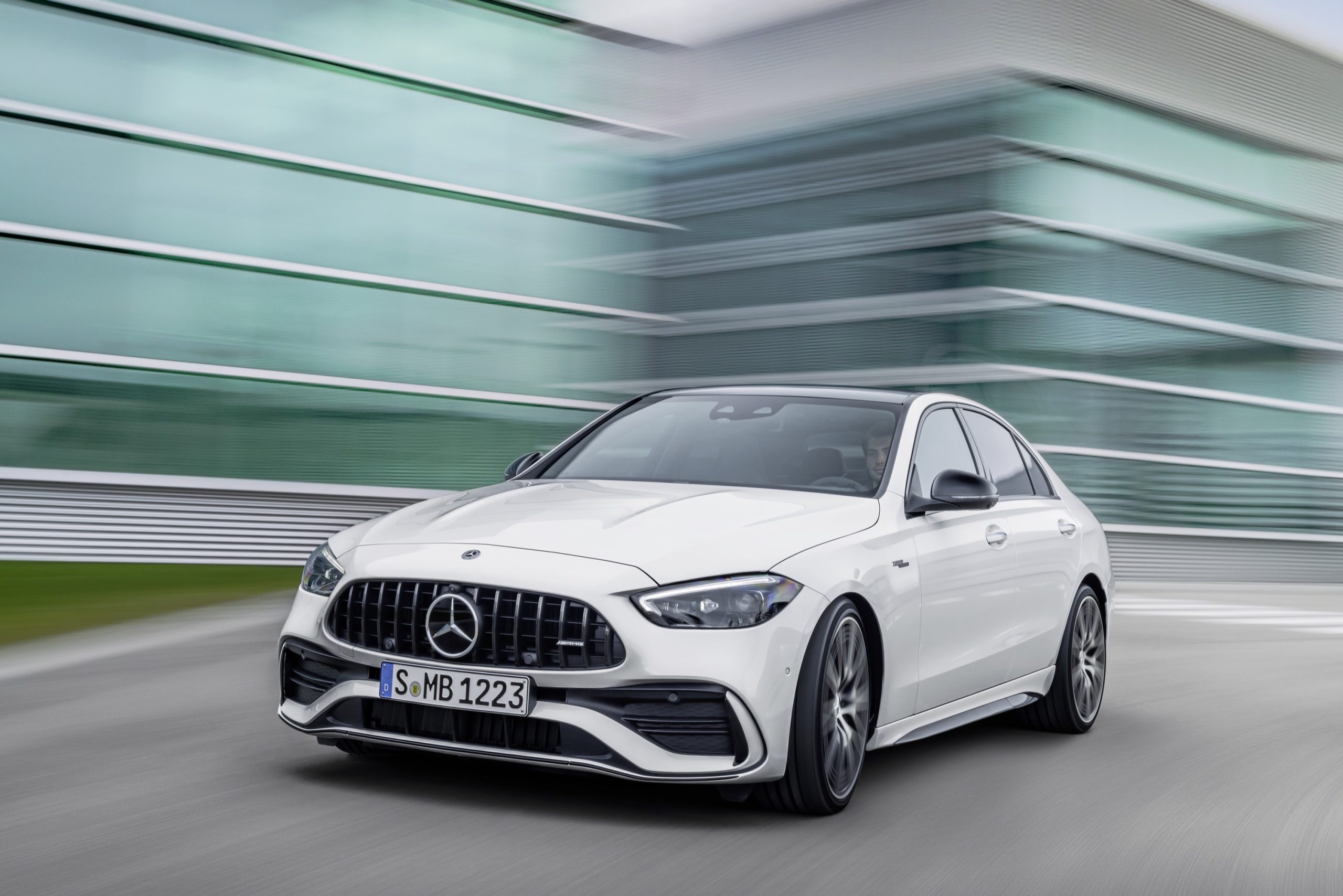
Regular gasoline may save a few dollars at the pump, but in certain performance-oriented vehicles, it can also mean sacrificing engine output. Modern turbocharged engines use sophisticated engine-management systems that adjust ignition timing and other operating parameters according to fuel quality.
When a manufacturer recommends premium gasoline, switching to 87-octane fuel can reduce the engine’s ability to deliver its advertised performance. Some automakers publish exact horsepower differences, while others simply warn that power will decrease.
This list focuses on American-market vehicles with documented fuel-related performance limitations, distinguishing measured horsepower losses from manufacturer warnings.
1. Mazda3 2.5 Turbo
2026 model | 227 hp on 87 octane | 250 hp on 93 octane
The Mazda3 Turbo provides one of the clearest examples of how gasoline selection can change a vehicle’s advertised horsepower. Its 2.5-liter turbocharged four-cylinder engine produces 250 horsepower and 320 lb-ft of torque when using premium 93-octane gasoline.
Switch to regular 87-octane fuel, and output drops to 227 horsepower and 310 lb-ft of torque. That is a measurable loss of 23 horsepower and 10 lb-ft of torque, according to Mazda’s published American specifications.
This difference is particularly relevant because the Mazda3 Turbo is not an expensive exotic sports car. It is a compact sedan or hatchback that attracts buyers looking for everyday practicality with stronger acceleration.
Its turbocharged engine provides considerably more performance than the naturally aspirated versions, but that advantage is partly dependent on fuel quality.
Mazda allows owners to use regular gasoline, so purchasing 87 octane does not automatically mean violating the engine’s minimum fuel requirement. However, the engine-management system adjusts its operation to accommodate the lower knock resistance of regular fuel. The result is reduced published horsepower and torque.
The turbocharged model also includes standard i-Activ all-wheel drive and a six-speed automatic transmission, making it an appealing combination of performance and everyday usability.
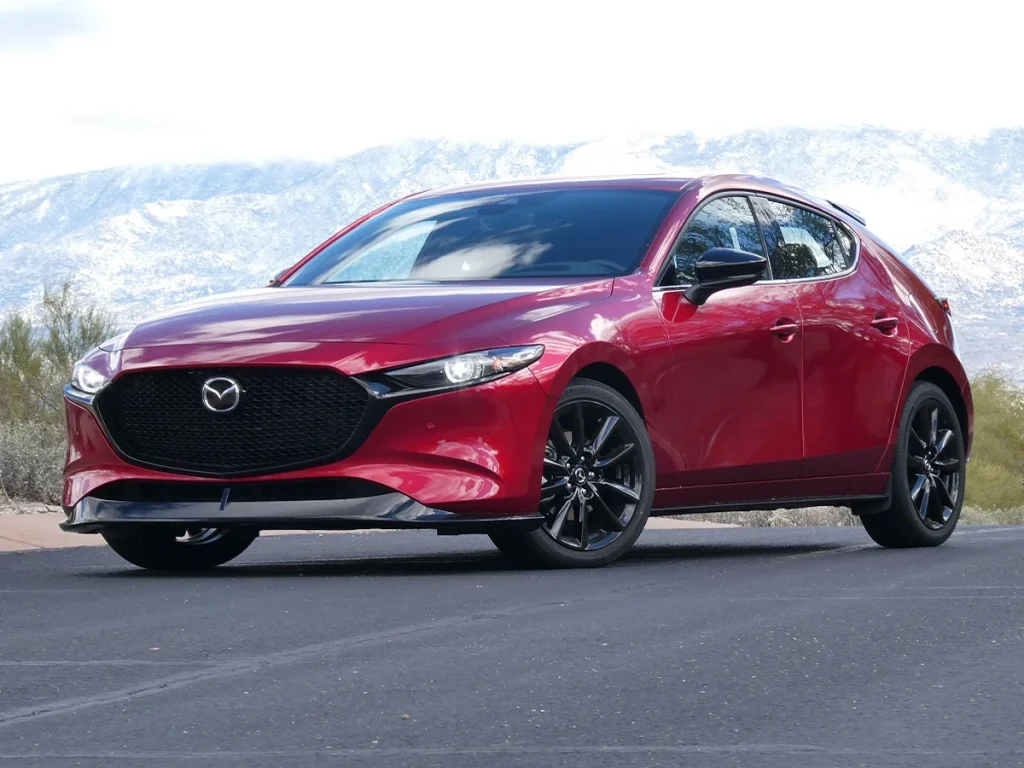
For buyers comparing the Turbo with the standard Mazda3, fuel expenses deserve attention. Someone who wants the full 250-horsepower rating should budget for premium gasoline. Those prioritizing lower fuel costs can use regular, but should understand that they are giving up 23 horsepower in the process.
2. Cadillac CT5 2.0T
2026 model | 237 hp rated with premium | Regular fuel reduces performance
The Cadillac CT5 demonstrates that the difference between regular and premium gasoline is not limited to expensive V8 sports cars. Its entry-level 2.0-liter turbocharged four-cylinder engine produces 237 horsepower and 258 lb-ft of torque.
Cadillac recommends premium gasoline with an octane rating of at least 91 for this engine. However, the 2026 owner’s manual also permits 87-octane gasoline when premium is unavailable, with an explicit warning that performance and drivability will be reduced.
This is an important distinction for buyers considering the CT5 as an everyday luxury sedan. The 2.0-liter engine offers a more accessible entry point into Cadillac ownership than the more powerful V-Series models, but its turbocharged design still benefits from higher-octane fuel.
Lower-octane gasoline has less resistance to engine knock, so the engine-management system may adjust its operation to protect the powertrain.
Cadillac does not publish a separate horsepower rating for the CT5 running on 87-octane gasoline. Therefore, it would be misleading to assign an exact horsepower loss. What the manufacturer confirms is that acceleration and drivability can suffer when regular gasoline is used instead of the recommended premium grade.

The distinction matters because the CT5 is often purchased for its combination of comfort, technology, and responsive performance. Drivers who frequently accelerate onto highways or travel with a full passenger load may notice the difference more than someone who uses the sedan primarily for relaxed commuting.
For the intended 237-horsepower performance, premium gasoline is the sensible choice. Regular fuel is an alternative when necessary, but Cadillac clearly explains that it comes with a performance compromise.
3. Hyundai Elantra N
2026 model | Maximum output: 276 hp | Premium recommended for full power
Hyundai takes a particularly interesting approach with the Elantra N because it openly acknowledges that regular gasoline reduces the engine’s horsepower. Its 2.0-liter turbocharged GDI four-cylinder produces 276 horsepower and 289 lb-ft of torque.
However, Hyundai specifically states that premium gasoline is necessary to achieve the estimated maximum horsepower. Drivers using regular gasoline should expect reduced output, although the manufacturer does not publish an exact alternative horsepower rating for 87-octane fuel.
There is an important distinction between this car’s fuel requirement and a vehicle that absolutely requires premium gasoline. According to Hyundai’s owner’s manual, the Elantra N can operate on regular unleaded gasoline with an octane rating of 87 or higher.
Premium fuel rated at 91 octane or above is recommended to improve performance. Therefore, owners do not necessarily need to purchase premium at every fill-up, but those interested in getting the complete performance package should use the higher grade.
The Elantra N also offers a choice between a six-speed manual transmission and an eight-speed wet dual-clutch automatic. Its electronically controlled suspension, electronically controlled limited-slip differential, and performance-oriented chassis make it considerably different from the standard Elantra.
These features are designed around enthusiastic driving, where the engine’s full output becomes particularly desirable.
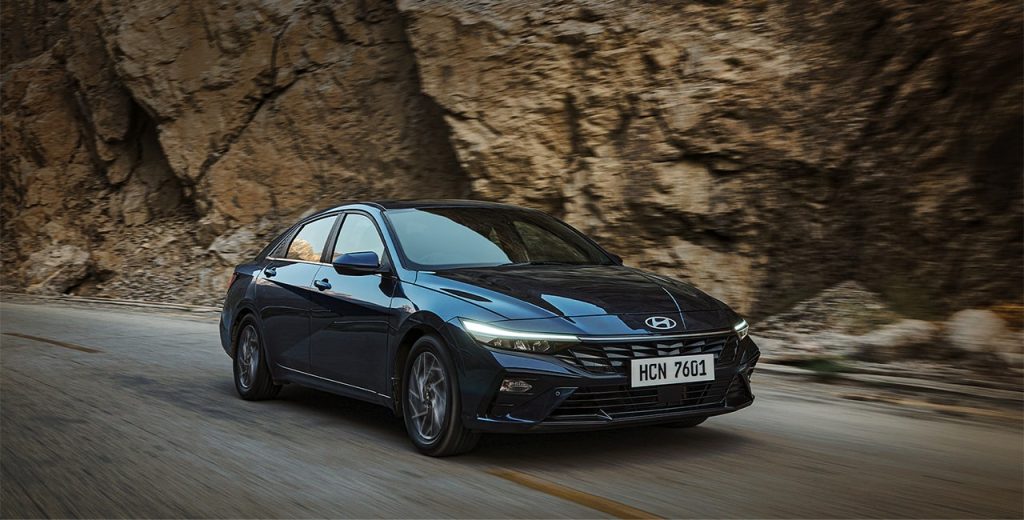
For buyers considering this sedan as a daily driver, the fuel decision depends on priorities. Regular gasoline provides an opportunity to reduce refueling expenses, but it comes with a performance compromise. Hyundai has made that trade-off clear in its own product information, making the Elantra N one of the strongest examples for this particular list.
4. Mercedes-AMG C43
2026 model | Maximum output: 416 hp | Premium: 91 AKI minimum
The Mercedes-AMG C43 shows how expensive performance engineering can become when the wrong gasoline is used. Its handcrafted 2.0-liter turbocharged four-cylinder engine combines an electric exhaust-gas turbocharger with a 48-volt mild-hybrid system.
The result is 416 horsepower and 369 lb-ft of torque, making this considerably more powerful than an ordinary compact luxury sedan. Mercedes-Benz specifies premium unleaded gasoline for the vehicle, with at least 91 AKI required under its fuel guidance.
What happens if regular gasoline is the only option available? Mercedes-Benz allows it as a temporary measure, provided the fuel meets the minimum octane requirement stated on the vehicle’s fuel-filler information label.
However, the manufacturer explicitly warns that using regular gasoline can reduce engine output and increase fuel consumption. It also advises drivers to avoid maximum-speed driving and sudden acceleration when operating on the temporary lower-grade fuel.
The C43’s electrically assisted turbocharger is an important part of its character. An electric motor helps the turbocharger build boost quickly, reducing the delay traditionally associated with turbocharged engines. This technology contributes to the sedan’s strong response, but the high-performance powertrain is engineered around premium fuel.
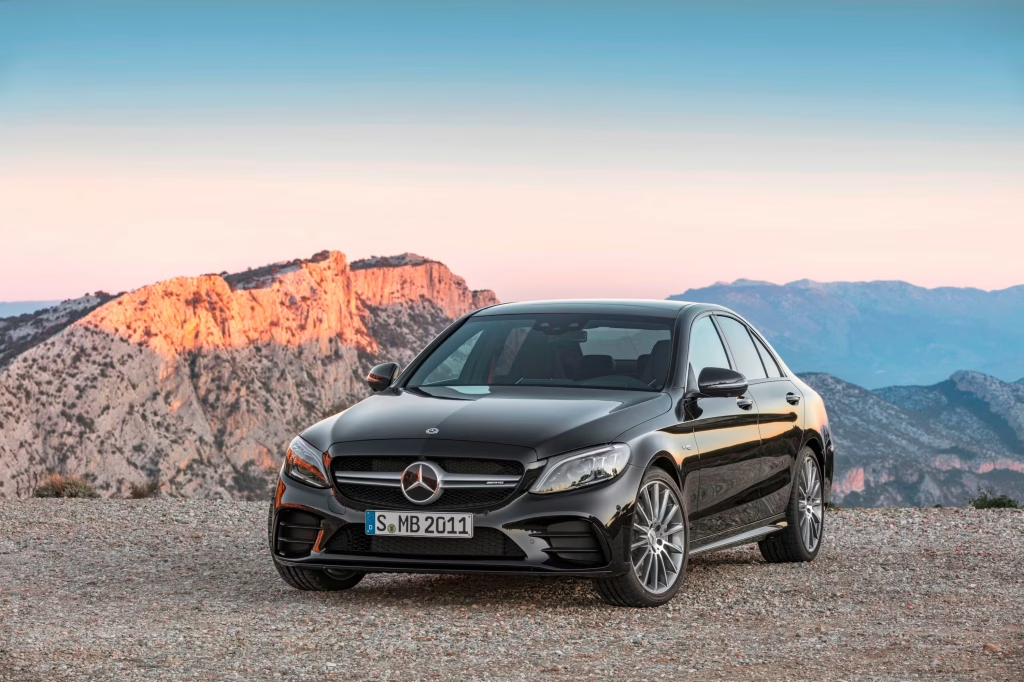
Mercedes-Benz does not publish a separate horsepower figure for operation on regular gasoline. Therefore, claiming that the C43 loses a specific number of horsepower would be inaccurate. What is confirmed is that engine output decreases.
For someone purchasing an AMG vehicle, premium fuel should be considered a regular ownership expense rather than an optional luxury. The C43 can temporarily accommodate regular gasoline, but its full performance and intended operating conditions depend on using the recommended grade.
5. Audi A5
2025-2026 generation | 268 hp | Premium recommended for rated output
Audi’s redesigned A5 illustrates why buyers should pay attention to the small details in an owner’s manual. Its turbocharged 2.0-liter four-cylinder engine produces 268 horsepower and 295 lb-ft of torque in the American-market model.
Audi recommends premium gasoline with a minimum rating of 91 AKI to achieve the engine’s rated horsepower and torque. However, the owner’s manual also permits regular 87-octane gasoline in configurations carrying the appropriate regular-fuel specification, while warning that engine power will decrease slightly.
This is not a situation where every A5 owner can automatically switch between fuel grades. Audi identifies different minimum fuel requirements according to the specific engine configuration and the label inside the fuel-filler door.
Buyers must check their individual vehicle before choosing regular gasoline. For the applicable 87-AKI configuration, premium is recommended for maximum performance rather than being an absolute requirement.
The distinction becomes particularly relevant because the A5 is positioned as a premium daily driver. It combines a comfortable interior, advanced infotainment, and a turbocharged engine designed to deliver strong acceleration without requiring a large six-cylinder powerplant. Its advertised output is intended to be achieved with the recommended fuel.

Audi does not provide a precise alternative horsepower rating for operation on 87-octane gasoline. Consequently, the manufacturer only confirms a slight reduction in engine power rather than a specific number of horsepower lost. That is an important distinction for readers who want accurate comparisons instead of estimated figures.
For someone purchasing the A5, the fuel-filler label deserves attention before the first visit to a gas station. Premium gasoline helps the engine deliver its rated performance, while the permitted regular grade offers a lower-cost alternative with a modest performance compromise.
6. Ford Mustang EcoBoost
2026 model | 315 hp | Premium recommended for best performance
The Ford Mustang EcoBoost is an interesting inclusion because it proves that choosing regular gasoline does not necessarily mean a vehicle will stop delivering its advertised performance entirely. Its 2.3-liter turbocharged four-cylinder engine produces 315 horsepower and 350 lb-ft of torque.
Ford bases its published performance figures on the use of 93-octane gasoline, although the owner’s manual states that 87-octane regular fuel is the minimum requirement. For optimal engine performance, however, the manufacturer recommends using premium gasoline with an octane rating of at least 91.
The turbocharged engine gives the EcoBoost Mustang a different character from the traditional 5.0-liter V8 GT. It offers substantial torque at relatively low engine speeds and is paired with a 10-speed automatic transmission.
For buyers who want Mustang styling and rear-wheel-drive performance without purchasing the larger V8 model, it provides an alternative with relatively accessible fuel requirements.
Ford notes in its owner’s manual that the benefits of using premium gasoline become more apparent in hot weather and under other demanding driving conditions.
This suggests that drivers who regularly accelerate hard or operate the engine under heavy loads may benefit more from the higher octane rating than those who drive gently.
Ford does not publish a separate horsepower figure for the EcoBoost when using 87-octane fuel. Therefore, it would be inaccurate to claim that regular gasoline reduces its output by a particular number of horsepower.
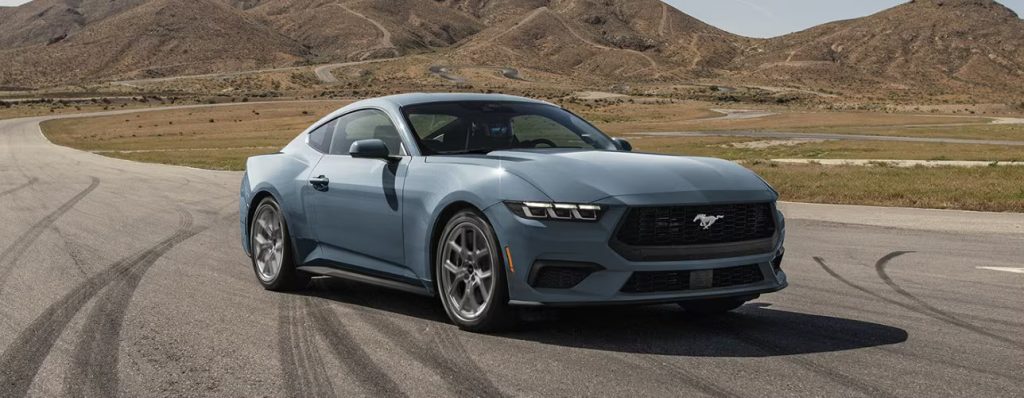
The confirmed information is that 315 horsepower is rated using 93-octane fuel and that premium is recommended for optimal performance.
For everyday owners, regular gasoline is an approved option. But drivers who purchased the EcoBoost specifically for its strongest performance should consider using premium fuel, particularly during demanding driving conditions.
7. BMW 330i
2026 model | 255 hp | 91 AKI recommended
The BMW 330i is a luxury sports sedan that demonstrates why a vehicle’s minimum acceptable octane rating and its recommended fuel grade are not always the same. Its 2.0-liter turbocharged four-cylinder engine produces 255 horsepower and 295 lb-ft of torque.
BMW recommends gasoline rated at 91 AKI for the regular 3 Series models, although its owner’s manual identifies 87 AKI as the minimum acceptable grade. Using the lower rating can produce knocking noises and negatively affect drivability, particularly in hot weather.
This distinction is important because the 330i is designed to balance everyday efficiency with responsive performance. Its turbocharged engine delivers substantial torque without requiring a larger six-cylinder powertrain. The eight-speed automatic transmission also contributes to its smooth acceleration and comfortable highway behavior.
BMW does not publish a separate horsepower figure for the 330i operating on 87-octane gasoline. Consequently, it would be misleading to claim that the engine loses a specific number of horsepower.
The manufacturer’s warning instead focuses on possible knocking and reduced driving quality when the minimum fuel grade is used under demanding conditions.
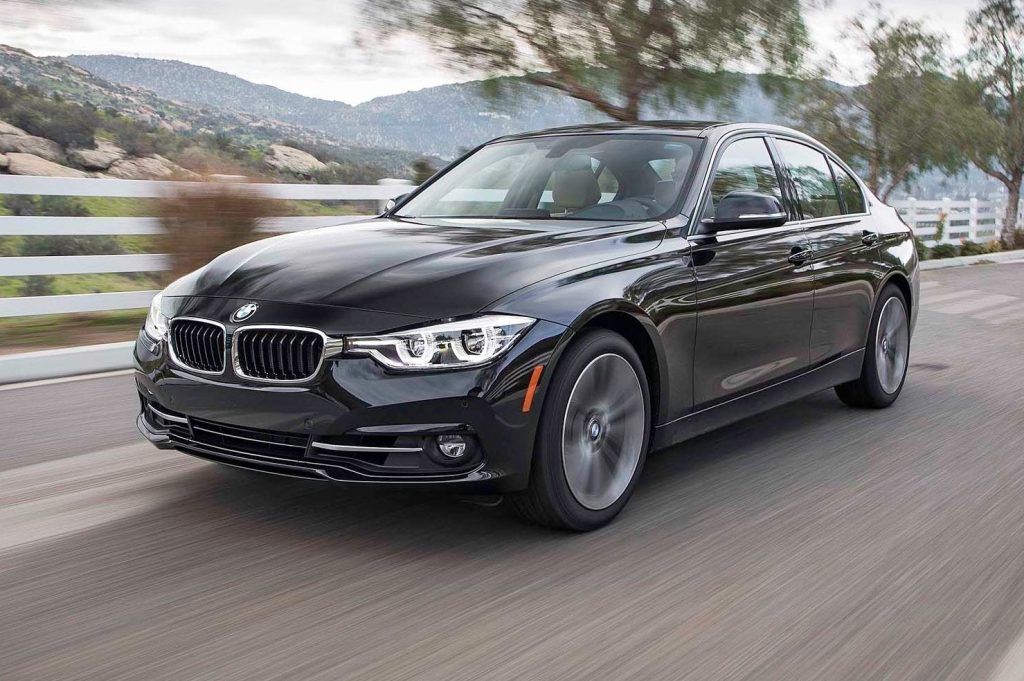
Drivers who frequently travel in hot climates or accelerate aggressively should pay particular attention to BMW’s recommendation. Premium gasoline provides a greater margin against engine knock and supports the operating conditions for which the powertrain was designed.
The 330i remains a practical choice for someone who wants a premium sedan without purchasing a full M performance model. However, its fuel instructions deserve attention. Buyers should not confuse the ability to run on 87-octane gasoline with a guarantee that every performance characteristic will remain unchanged.
8. Volkswagen Golf GTI
2026 model | 241 hp | 91 AKI recommended for rated output
The Volkswagen Golf GTI has built its reputation around combining everyday hatchback practicality with genuinely entertaining performance. Its 2.0-liter turbocharged TSI four-cylinder engine produces 241 horsepower and 273 lb-ft of torque in the 2026 American-market model.
Volkswagen recommends premium gasoline rated at 91 AKI to achieve the engine’s rated horsepower and torque. This makes fuel selection particularly relevant for drivers who want the full performance promised by the GTI’s specifications.
The GTI is not a vehicle that automatically becomes unsuitable for regular gasoline. Volkswagen identifies 87 AKI as the minimum acceptable rating for applicable configurations, while recommending premium to achieve the advertised performance.
The manufacturer’s owner’s manual explains that the preferred higher-octane fuel helps the engine deliver its rated output. Buyers should still verify the fuel information label on their specific vehicle before refueling.
Its front-wheel-drive layout is paired with a seven-speed DSG dual-clutch automatic transmission in the 2026 US lineup. The electronically controlled limited-slip differential helps manage torque delivery through the front wheels, particularly during acceleration out of corners. These features make the GTI more than an ordinary economical hatchback.
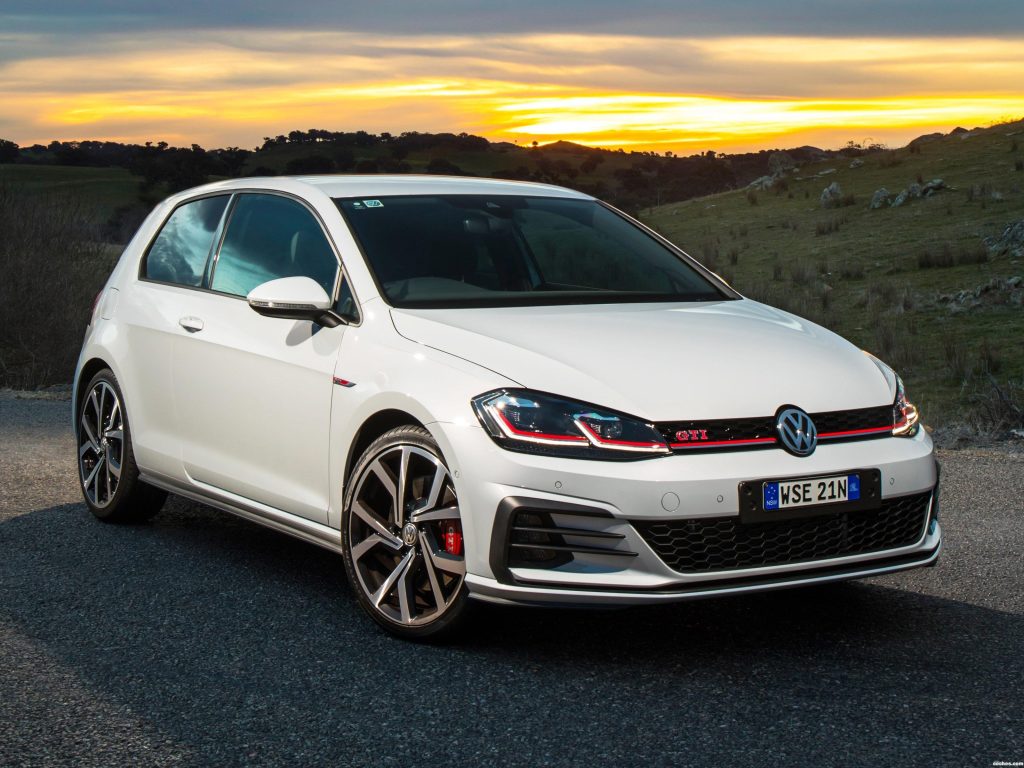
Volkswagen does not provide a separate horsepower figure for 87-octane operation, so an exact power loss should not be assumed. Nevertheless, the manufacturer explicitly connects premium fuel with achieving the published horsepower and torque ratings.
For buyers who regularly enjoy the GTI’s performance, premium gasoline is worth considering as part of the ownership budget. Those who prioritize everyday commuting can follow the approved minimum fuel specification, but should understand the potential performance compromise.