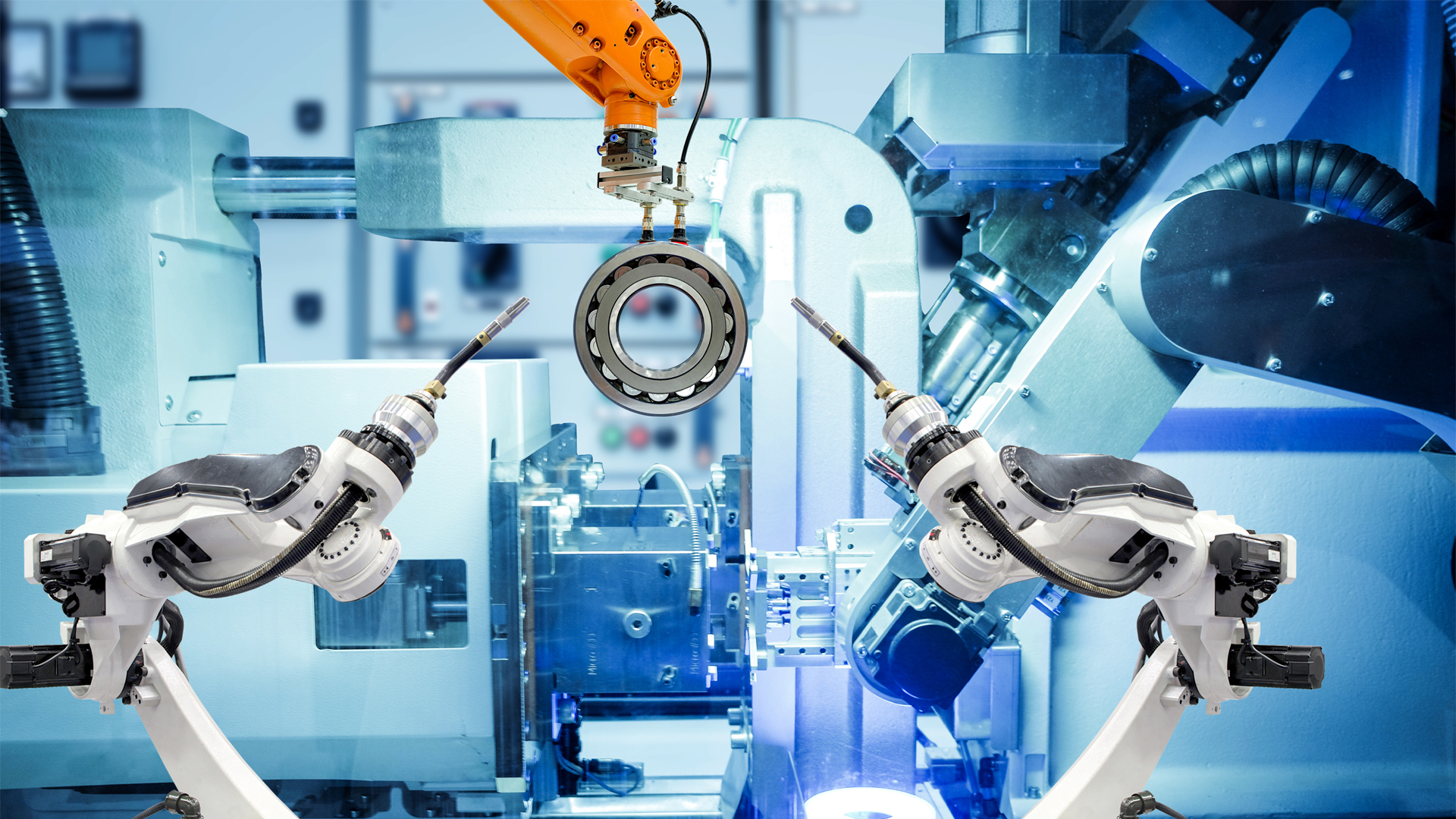
Automakers are investing in artificial intelligence, robotics, and connected factory systems to make vehicle production more efficient and control rising operating costs. These technologies are changing how manufacturers inspect components, manage inventory, move materials, and maintain production equipment.
The shift is not limited to installing more robotic arms on assembly lines. Companies are increasingly connecting machines, software, and supply-chain information so that factories can respond faster to problems and reduce unnecessary work.
Recent developments at Toyota, Nissan, Audi, and other manufacturers show how digital manufacturing is becoming an important part of the automotive industry’s cost-reduction strategy.
AI Is Changing How Automakers Manage Factory Operations
Vehicle manufacturing involves thousands of individual operations, from stamping metal panels and welding body structures to painting, assembling components, and conducting final quality inspections.
A delay or equipment failure at one stage can affect production further down the line. Artificial intelligence can help manufacturers identify problems earlier by analyzing information collected from machines, sensors, and production systems.
One important application is predictive maintenance. Traditional maintenance often follows fixed schedules or begins after equipment develops a fault.
AI-supported systems can monitor operating conditions, identify unusual patterns, and alert technicians when machinery may require attention. This can help factories plan maintenance before a failure interrupts production.
AI can also improve quality control. Camera-based inspection systems can examine components for surface defects, incorrect dimensions, and assembly problems.
Unlike manual inspection, automated systems can process large quantities of visual information consistently. Human workers remain important for reviewing unusual cases and deciding how to address more complicated defects.
A separate opportunity involves production planning. AI systems can analyze manufacturing schedules, equipment availability, and material requirements to identify potential bottlenecks. This information can help managers adjust production sequences and use factory resources more effectively.
A 2026 analysis by Boston Consulting Group describes how generative AI can support manufacturing through predictive process control, automated inspection, maintenance planning, and production scheduling.
The firm estimates that wider adoption across automotive operations could deliver substantial productivity and cost improvements, although actual results depend on implementation and the quality of the underlying data.
Manufacturers are also applying AI beyond the factory floor. Procurement teams can use software to evaluate supplier information, monitor potential shortages, and identify purchasing risks.
This matters because a missing electronic component or delayed shipment can interrupt vehicle production even when the assembly plant itself is operating normally.
A Manufacturing Dive report on an October 2026 Xometry survey found that more than half of the 150 manufacturing executives surveyed expected AI to have its greatest impact on manufacturability and costing in 2027.
Quality control and inspection ranked next, cited by 47% of respondents, while 32% identified factory-floor production execution. The findings suggest that manufacturers increasingly see AI as a tool for improving decisions before and during production, rather than simply automating physical tasks.
Robotics and Connected Factories Are Reducing Repetitive Work
Robotics remains one of the most visible parts of automotive manufacturing. Industrial robots already perform repetitive operations such as welding, painting, material handling, and component installation. Newer systems are becoming more flexible through improved sensors, computer vision, and AI-based control.
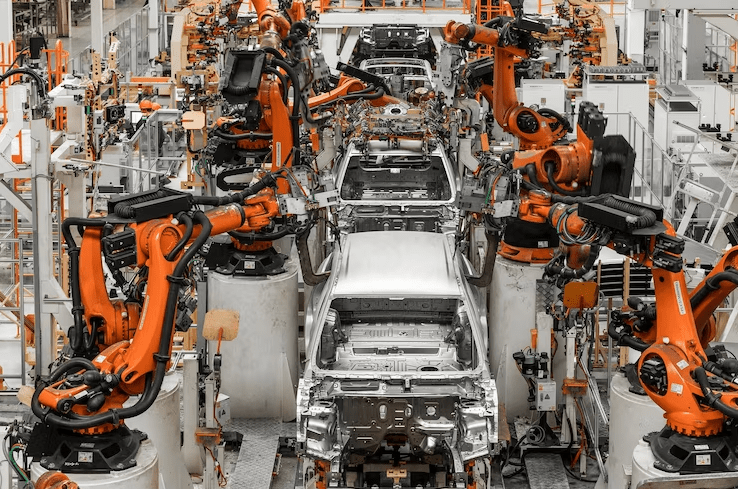
Toyota provided a major example of this direction in November 2026. At an event in Michigan, the company presented technologies involving artificial intelligence, robotics, and next-generation manufacturing.
Its approach focuses on using automation to support employees and improve the Toyota Production System rather than simply replacing human workers.
Toyota outlined three stages of factory automation. The first uses conventional robots for repetitive tasks. The second connects automation across production and logistics, allowing materials and manufacturing processes to operate in a more coordinated way.
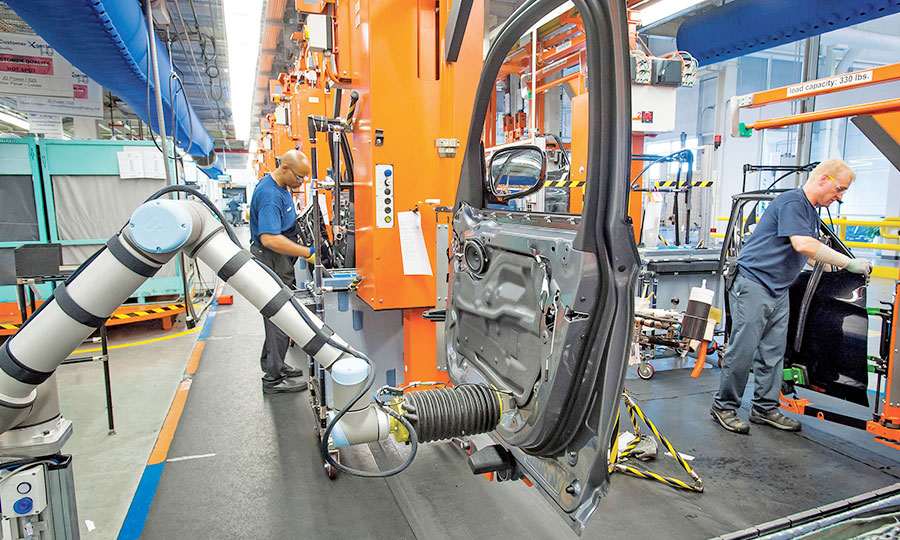
The third focuses on people and robots working alongside each other to improve productivity and support more complex tasks.
The company also said Toyota and its suppliers expect to invest approximately 1 trillion yen, equivalent to around $6.3 billion, annually from 2028 onward to renew production equipment.
Toyota described plans involving approximately 150,000 robots across its own operations and group companies, with another 250,000 expected at suppliers. These are planned investment and deployment figures, not robots already installed.
Nissan is applying robotics to material transportation at its Smyrna, Tennessee, manufacturing facility. The automaker has been rolling out autonomous mobile robots that transport parts around the body shop, reducing the need for some forklift and tug operations.
The robots use sensors to navigate factory spaces and can carry loads of approximately 4,190 pounds. They also coordinate with production equipment and can redistribute tasks when another unit falls behind. The deployment is part of Nissan’s effort to reduce production costs and improve the efficiency of its U.S. operations.
Importantly, Nissan has said that 64 employees currently involved in forklift and tug operations will move into other plant roles rather than lose their employment.
The company is considering whether similar automation could be extended to stamping and general assembly, although additional applications will depend on cost and technical suitability.
Connected factory systems are equally important because individual robots cannot deliver their full potential if machines and software operate in isolation. Manufacturers need systems that allow production equipment, logistics platforms, quality-control tools, and supply-chain software to exchange useful information.
BMW, for example, uses digital twins to plan factory layouts and production processes before making physical changes. Its FactoryExplorer platform allows planners to examine virtual factory environments, test equipment placement, and coordinate production and logistics decisions.
NVIDIA, which supports the platform through its Omniverse technology, says BMW projects 30% savings through improved factory planning and more efficient processes. This is a projected benefit, not a verified saving across all BMW plants.
Cost Savings Depend on Integration, Skilled Workers, and Reliable Data
Although AI and robotics offer opportunities to reduce manufacturing costs, introducing new technology is not automatically profitable. Automakers must consider installation expenses, software integration, employee training, equipment maintenance, and the time required to adapt existing production lines.
A robot may perform well in a demonstration but struggle when introduced into a factory with older machinery or inconsistent production data. AI systems also depend on reliable information. If equipment records are incomplete or different departments use disconnected software, automated decision-making can produce inaccurate recommendations.
This challenge was highlighted by Andre Marino, Schneider Electric’s senior vice president of industrial automation for North America, in a September 2026 interview with Manufacturing Dive.
He argued that manufacturers should focus on connecting factory systems and building a software-defined automation structure before expecting advanced AI to coordinate entire operations.
Marino also cautioned against treating humanoid robots as a solution for every manufacturing problem. Different tasks require different types of automation.
Robotic arms, autonomous mobile robots, and collaborative robots can each be more appropriate depending on the work involved. The priority should be identifying the production problem first and selecting technology that addresses it.
The skills required to operate these systems are another concern. The October Xometry survey found that 34% of respondents considered AI and automation operators among the hardest manufacturing positions to fill. Quality engineers and maintenance technicians were also difficult to recruit, cited by 31% and 29%, respectively.
This means automation does not eliminate the need for skilled employees. Instead, it changes the work involved. Factories need technicians who can maintain robotic equipment, engineers who can interpret production data, and operators who understand how automated systems interact with the wider manufacturing process.
Cost pressures are helping accelerate investment. An ABB Robotics survey published in March 2026 found that 33% of automotive manufacturers identified improved cost control as their top strategic priority.
Meanwhile, 31% identified increased investment in automation and robotics as a key response to competitive pressures. Energy and material costs were also significant concerns, showing why manufacturers are looking beyond labor savings alone.
Cybersecurity is another issue as more factory equipment becomes connected. Production systems that were previously isolated can become exposed to digital threats when linked to wider networks. Manufacturers therefore need security controls, software updates, access restrictions, and recovery plans to protect operations from disruptions.
For automakers, the objective is not simply to build factories with more robots. It is to connect equipment, employees, production schedules, and supply-chain information in ways that improve the entire manufacturing process.
Toyota’s planned automation investments, Nissan’s autonomous material-handling systems, and BMW’s virtual factory planning demonstrate different approaches to that objective.
AI and robotics are unlikely to deliver identical savings across every plant. Their value will depend on production volumes, equipment requirements, labour availability, and how effectively manufacturers integrate the technology.
However, as vehicle development and manufacturing become more complex, connected factories are likely to play a larger role in controlling costs, improving quality, and keeping production running efficiently.