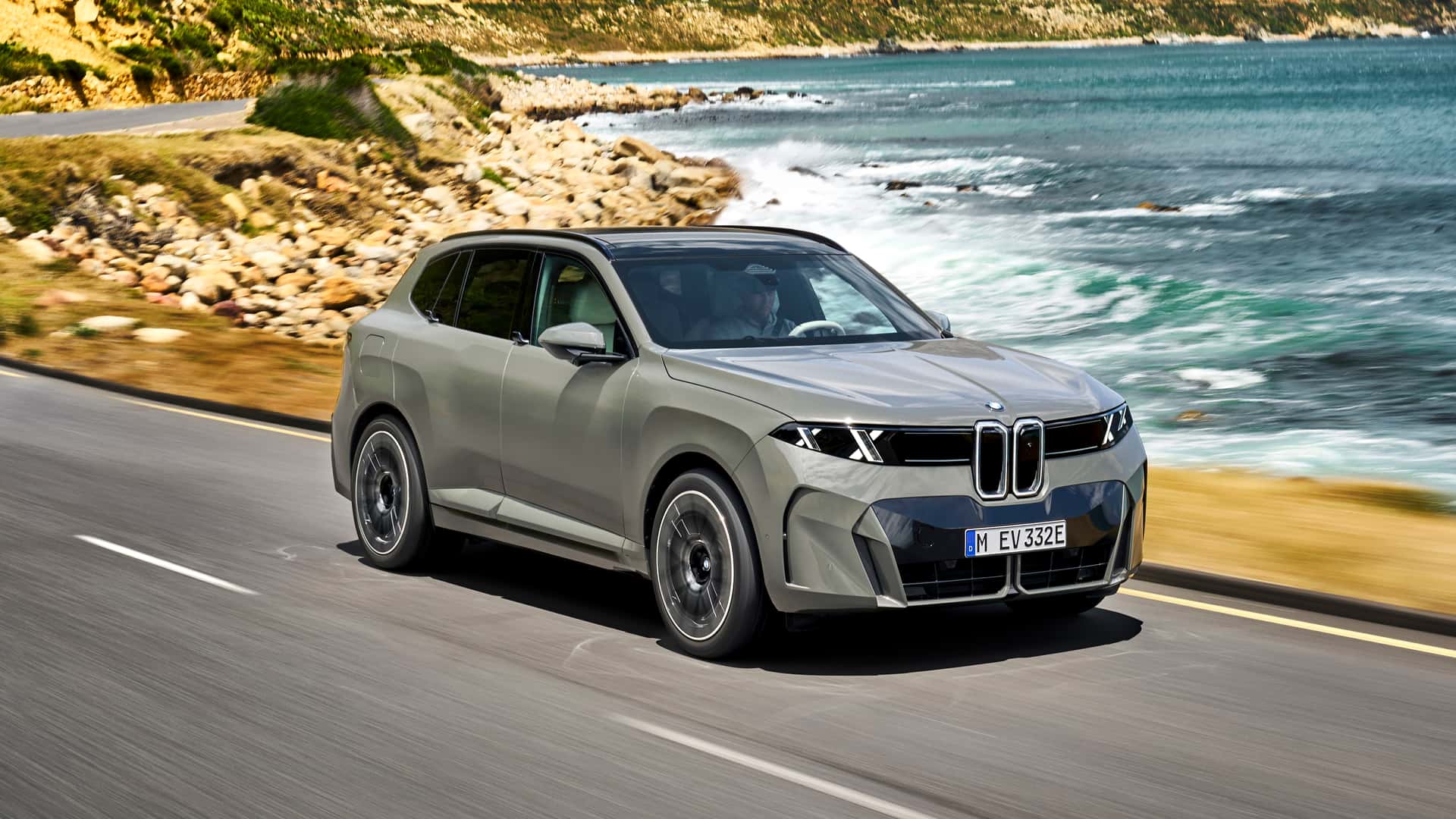
BMW has officially opened its $700 million battery assembly facility in Woodruff, South Carolina, marking a major step in the company’s American electric vehicle manufacturing strategy.
The plant began series production of sixth-generation (Gen6) high-voltage battery packs on November 13, 2026. These batteries will power the upcoming BMW iX5, which will become the company’s first fully electric vehicle assembled in the United States.
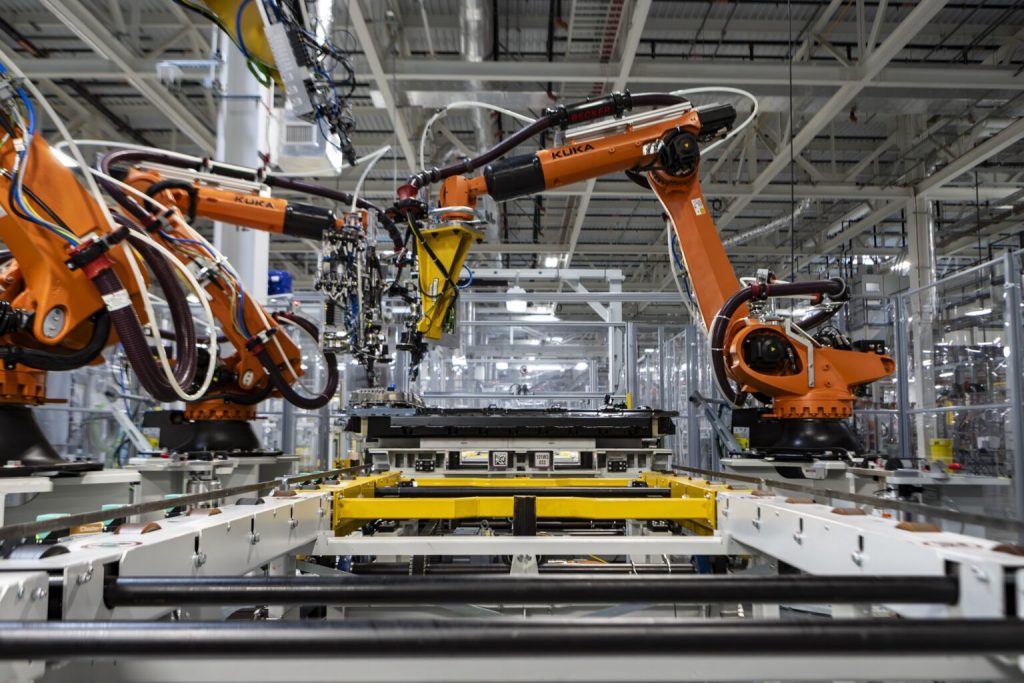
With more than 300 employees and approximately 250 robots, the facility combines advanced automation, artificial intelligence, and virtual reality training to support BMW’s next generation of electric SUVs.
BMW Opens Its $700 Million Battery Assembly Facility in South Carolina
BMW officially inaugurated Plant Woodruff on November 13, 2026, marking the beginning of series production of Gen6 high-voltage battery packs. Located in Woodruff, South Carolina, the facility sits approximately 15 miles from BMW’s existing vehicle manufacturing plant in Spartanburg.
Its primary purpose is to assemble batteries for the upcoming electric BMW iX5 and future electric vehicles produced at the nearby factory.
The project represents a $700 million investment in battery assembly operations. BMW announced the facility in October 2022, broke ground in June 2023, and began construction in September of that year.
Manufacturing equipment installation started in September 2024, while the first test and pre-production batteries came off the assembly line during summer 2025.
The November opening marks an important transition from testing to regular production. BMW says more than 300 employees work at the Woodruff facility alongside approximately 250 robots. The company has not disclosed the plant’s annual battery production capacity.
The location is particularly important to BMW’s manufacturing strategy. Instead of transporting completed battery packs across long distances, the company is assembling them close to the vehicles that will use them. This follows its “local for local” approach, which places battery production near vehicle manufacturing operations in major markets.
The Woodruff facility supplies Plant Spartanburg, one of BMW’s largest manufacturing locations worldwide. The approximately 15-mile distance allows finished battery packs to be transported directly to the vehicle assembly operation.
This arrangement can simplify logistics and help coordinate battery production with vehicle manufacturing schedules.
BMW’s broader investment in South Carolina is larger than the Woodruff project alone. The company has committed approximately $1.7 billion to its South Carolina operations, including $700 million for the battery facility and around $1 billion to prepare Plant Spartanburg for electric vehicle production.
The upcoming iX5 will be BMW’s first fully electric vehicle assembled in the United States. The company has also announced plans to assemble at least six fully electric models at Spartanburg by 2030.
This makes Woodruff an important part of a longer-term manufacturing expansion rather than a facility dedicated to only one vehicle.
Woodruff serves as a battery assembly plant rather than a battery-cell manufacturing facility. BMW sources cylindrical cells from specialized suppliers and assembles them into complete high-voltage battery packs at the South Carolina site. The cells are produced externally according to BMW’s specifications.
Gen6 Battery Technology Promises Greater Energy Density and Faster Charging
The Woodruff facility is dedicated to BMW’s sixth-generation high-voltage battery technology, known as Gen6. It introduces cylindrical battery cells and a cell-to-pack construction method. Instead of first arranging individual cells into conventional modules, BMW integrates the cells directly into the finished battery pack.
This approach is intended to improve packaging efficiency by reducing the need for intermediate structures. It allows more of the available battery space to be used for energy storage and supports a revised battery architecture for future electric vehicles.
BMW says its Gen6 cylindrical cells offer more than 20% higher energy density compared with the previous generation. The company also claims charging times can be reduced by up to 30% and driving range increased by approximately 30% compared with Gen5 technology.
These are manufacturer-stated technology improvements, not guaranteed gains for every vehicle. Actual results will depend on battery size, vehicle weight, charging equipment, temperature, and driving conditions.
The battery assembly process involves several carefully controlled stages. When the cylindrical cells arrive at Woodruff, they undergo inspections and measurements, including voltage checks. They are then grouped into clusters and connected to cooling components designed to manage battery temperatures.
The cell clusters and electrical contact systems are cleaned before being joined through precision laser welding. BMW uses inline inspection systems to monitor weld quality during production. This is important because the electrical connections must remain reliable under repeated charging cycles, temperature changes, and vehicle operating conditions.
An additional foaming process helps protect the assembled components and provides mechanical stability. The battery housing is subsequently closed, sealed, and riveted. The final assembly stage includes installation of BMW’s Energy Master control unit, which manages important battery functions.
Every completed battery undergoes an end-of-line inspection. BMW says manufacturing operations are continuously monitored and documented in real time, allowing potential irregularities to be identified during production.
The company has also highlighted environmental improvements in its Gen6 battery cells. They use a higher proportion of secondary materials in their cobalt, lithium, and nickel content. Renewable electricity is also used in producing the anode and cathode materials and during cell manufacturing.
BMW reports that the Gen6 cells used in the iX5 have approximately 28% lower carbon dioxide equivalent emissions per watt-hour than the previous Gen5 cells used in the iX. This figure relates to battery-cell production emissions, not the complete vehicle’s lifetime carbon footprint.
AI, Robotics, and Virtual Reality Support BMW’s Production Strategy
Plant Woodruff is designed around more than automated assembly equipment. BMW has incorporated artificial intelligence, digital twins, and virtual reality into its manufacturing operations to improve production planning, quality control, and employee training.
Approximately 250 robots work alongside more than 300 employees at the facility. BMW has developed its own AI assistants and agents to analyze information collected from production equipment and inspection systems. The technology helps monitor manufacturing processes, identify irregularities, and support consistent battery quality.
The company describes its objective as zero-defect production. Every stage is monitored, and information is recorded in real time. This gives production teams a detailed record of how individual battery packs were assembled and inspected.
AI also helps improve equipment effectiveness (OEE), a key manufacturing metric that measures equipment availability, operating performance, and production quality.
By analyzing production data, AI systems can help employees identify interruptions and areas where equipment performance could improve.
Digital twins played an important role before the plant became operational. A digital twin is a virtual representation of a physical facility or production system. Engineers can use it to plan factory layouts, examine equipment arrangements, and evaluate manufacturing processes before making changes to the actual facility.
Virtual reality is another part of BMW’s training program. Every production employee at Woodruff completes a VR training program developed specifically for the facility. Inside a virtual factory, workers can practice manufacturing operations and become familiar with equipment before using it on the actual production line.
Woodruff is part of BMW’s broader Gen6 battery production network, which also includes facilities in Debrecen, Hungary, Irlbach-Straßkirchen, Germany, and Shenyang, China. It is the fourth site in the network to begin series production. BMW expects its fifth facility, located in San Luis Potosí, Mexico, to become operational in 2027.
The network is designed to support regional battery assembly close to vehicle factories. It also allows BMW to share manufacturing knowledge and production processes across different locations.
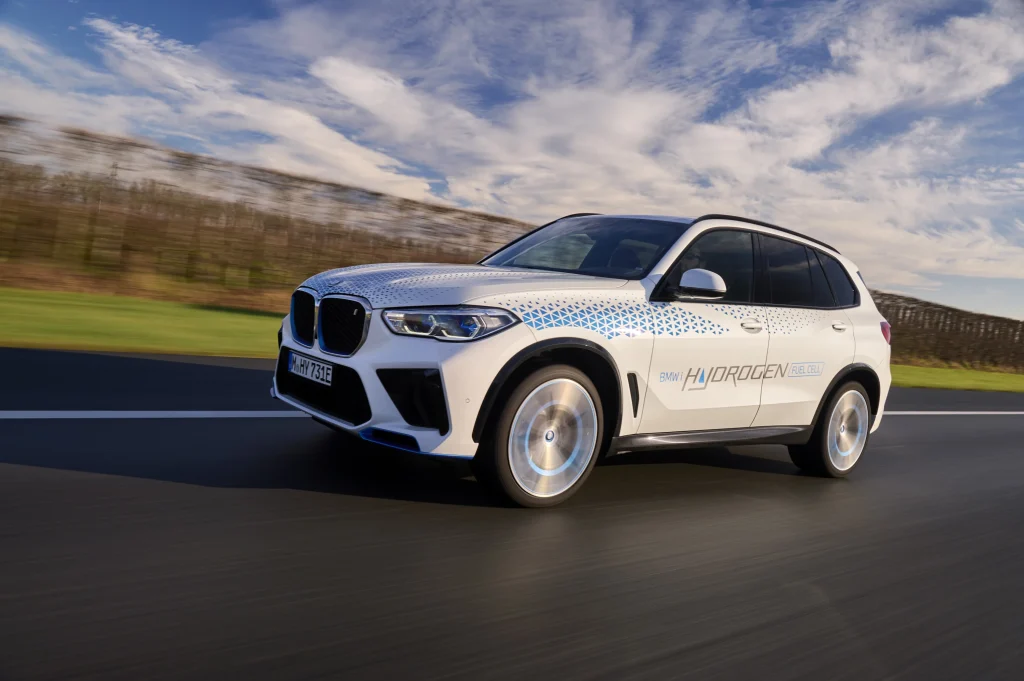
For American buyers, the most immediate result will be the upcoming iX5. BMW has confirmed that the vehicle will be assembled at Plant Spartanburg, with battery packs supplied from Woodruff. The company has committed to beginning fully electric vehicle production in the United States before the end of 2026.
BMW’s longer-term target of at least six fully electric models at Spartanburg by 2030 gives the battery facility an important role in its plans. While the company has not disclosed Woodruff’s annual output capacity, the investment establishes a dedicated local battery assembly operation for its expanding electric SUV lineup.
The opening of Plant Woodruff therefore represents more than a new manufacturing site. It connects battery assembly, vehicle production, and advanced factory technology within South Carolina.
With Gen6 production underway and the iX5 approaching U.S. assembly, BMW is building the manufacturing infrastructure needed to expand its electric vehicle business in America.