
Buying a vehicle is only the beginning of its financial commitment. Maintenance, unexpected repairs, replacement parts, and routine servicing can add thousands of dollars to ownership expenses over a decade.
For buyers looking beyond the showroom price, understanding long-term maintenance costs can make a significant difference. Data from CarEdge provides a model-by-model comparison of projected 10-year maintenance and repair expenses, while Consumer Reports offers additional insight into how costs accumulate across different manufacturers.
The following vehicles stand out for their relatively low projected upkeep costs, making them worth considering for budget-conscious American drivers.
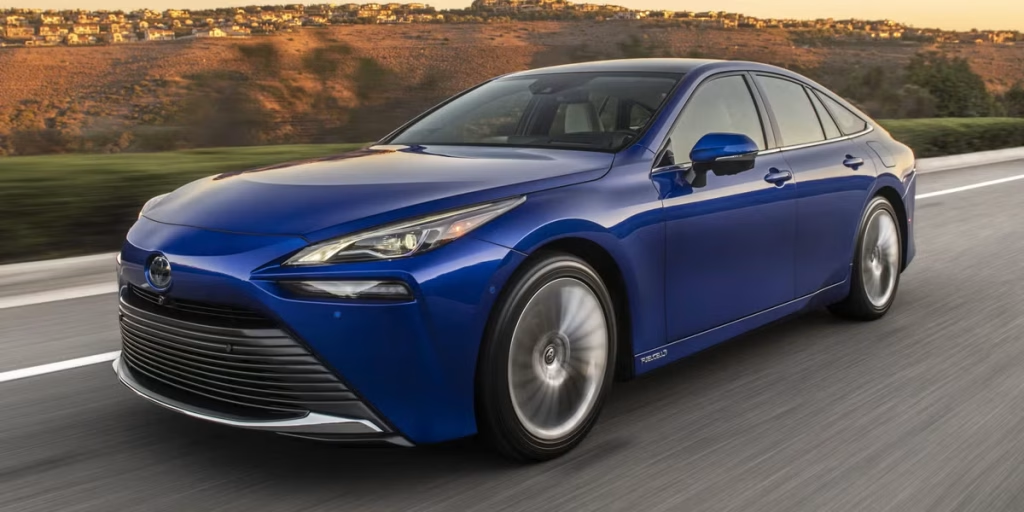
1. Toyota Mirai
CarEdge projected a 10-year maintenance cost of $3,179.
The Toyota Mirai occupies the first position in CarEdge’s published model-level ranking, with projected maintenance and repair expenses of approximately $3,179 over ten years.
That figure makes it the least expensive vehicle on the company’s current list, although buyers should understand that the Mirai operates very differently from conventional petrol-powered sedans.
It uses hydrogen fuel-cell technology to generate electricity, which powers an electric motor rather than relying on a traditional internal-combustion engine.
One advantage of this arrangement is the absence of several maintenance requirements associated with petrol engines. Owners do not need conventional engine oil changes, spark plug replacements, or exhaust-system servicing in the same way they would with a gasoline-powered vehicle.
Regenerative braking can also reduce wear on the conventional friction braking system, depending on driving conditions. These characteristics help explain why fuel-cell vehicles can have comparatively modest routine maintenance requirements.
However, the Mirai’s low projected upkeep figure should not be confused with a universally inexpensive ownership experience. Hydrogen refueling infrastructure remains limited across the United States, particularly outside California.
Access to a reliable hydrogen station is therefore a much more important purchasing consideration than it would be for a conventional hybrid or gasoline sedan. Fuel availability, insurance, depreciation, and potential repair expenses also need separate consideration.
Toyota’s fuel-cell technology gives the Mirai a distinctive position in the American passenger-car market. Its CarEdge estimate is attractive, but it is most relevant to buyers who have dependable access to hydrogen refueling and understand the practical limitations of owning a fuel-cell vehicle.
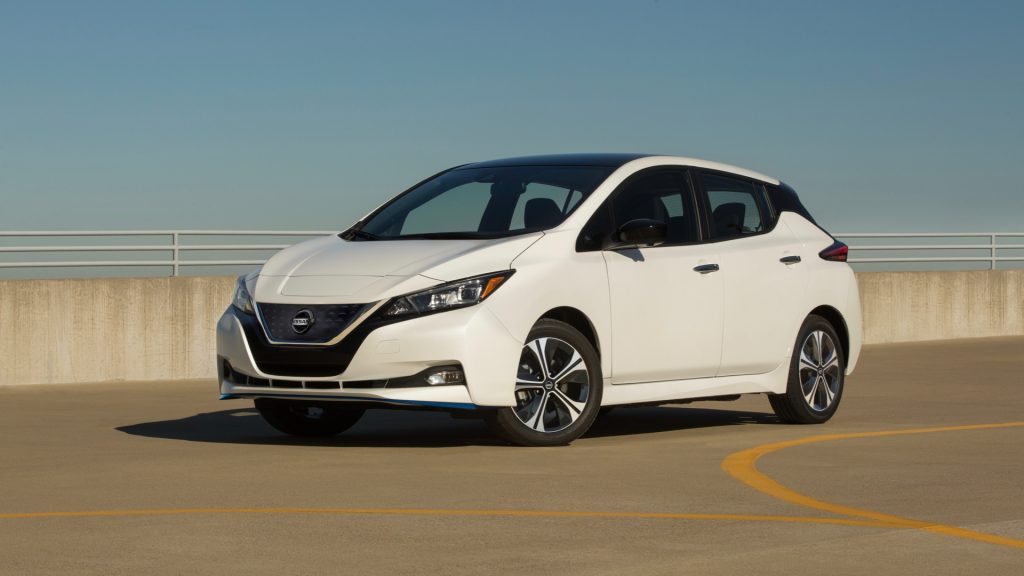
2. Nissan LEAF
CarEdge projected a 10-year maintenance cost of $3,216.
With a projected 10-year maintenance and repair expense of $3,216, the Nissan LEAF takes second place in CarEdge’s ranking. Its position is particularly interesting because it demonstrates how a fully electric powertrain can reduce certain long-term servicing requirements compared with a conventional gasoline vehicle.
Unlike traditional cars, the LEAF does not have an engine that requires regular oil changes, fuel-filter replacements, spark plug servicing, or conventional transmission maintenance.
The vehicle’s electric motor and comparatively simple drivetrain eliminate several components that can require attention as a gasoline-powered car accumulates mileage. Regenerative braking also helps recover energy during deceleration while potentially reducing the frequency of brake-pad replacements.
These characteristics make the LEAF an appealing option for drivers who want to keep routine workshop visits and scheduled servicing expenses under control.
Battery condition, however, deserves particular attention when considering a used LEAF. Lithium-ion batteries gradually lose capacity through aging, charging habits, temperature exposure, and usage.
Reduced battery capacity can affect driving range, which becomes especially important for owners who regularly travel longer distances. Buyers should examine the battery’s condition, available charging options, and remaining warranty coverage before purchasing a used example.
Another consideration is the LEAF’s CHAdeMO fast-charging connection on relevant model years, as charging compatibility and public-station availability can vary by location. Its suitability depends partly on the charging infrastructure available in the buyer’s area.
CarEdge’s $3,216 projection places the LEAF just $37 above the Mirai. That is a remarkably narrow difference in the ranking, although neither figure includes every possible ownership expense.
For American drivers with convenient home charging and relatively predictable daily journeys, the LEAF offers a practical route to lower routine maintenance spending.
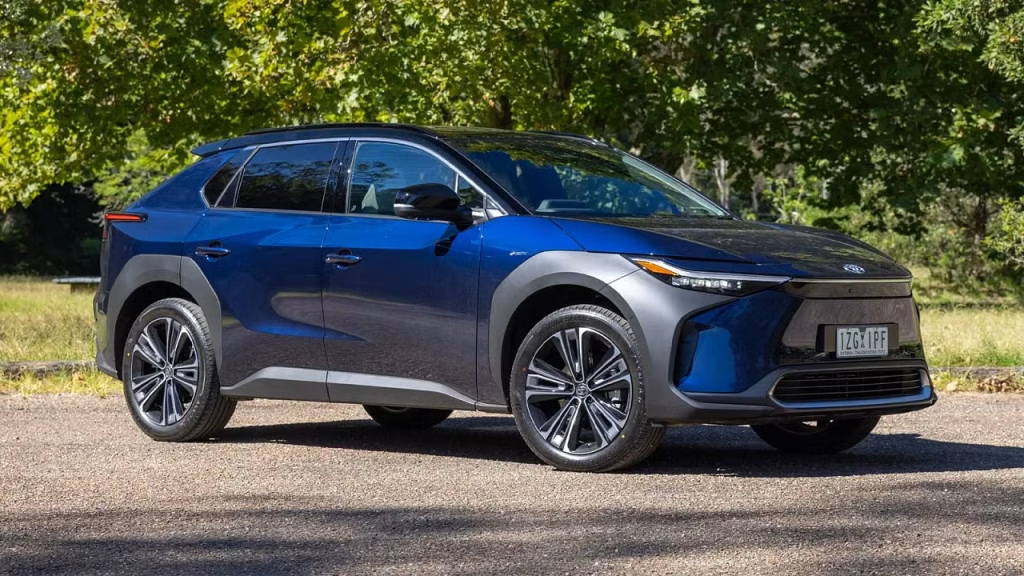
3. Toyota BZ4X
CarEdge projected 10-year maintenance cost: $3,479.
The Toyota bZ4X earns third place with an estimated $3,479 in maintenance and repair expenses over ten years, according to CarEdge. As an all-electric SUV, it benefits from a drivetrain that requires fewer routine mechanical services than a conventional gasoline-powered vehicle.
There is no traditional engine oil to replace, no spark plugs to maintain, and no conventional multi-speed automatic transmission requiring the same type of servicing found in many petrol vehicles.
For families and commuters, the bZ4X offers something beyond its projected maintenance savings: the practicality of an electric crossover. Its SUV-style body provides a useful passenger compartment, while its electric powertrain delivers quiet operation and immediate torque.
Regenerative braking is another helpful feature because it converts some of the vehicle’s slowing energy into electricity, potentially reducing the workload on its conventional brakes.
Toyota has also provided battery-related warranty coverage for the American market. For the 2025 model year, its battery warranty covers 10 years or 150,000 miles, whichever comes first, against excessive capacity loss, subject to the manufacturer’s stated conditions.
This provides an additional layer of reassurance for long-term buyers, although warranty protection should never be interpreted as a guarantee that the battery will retain its original capacity indefinitely.
Charging arrangements are an important part of the ownership calculation. Drivers with home charging facilities can avoid frequent public charging visits, while those depending entirely on public stations may face greater inconvenience. Electricity prices, tire replacement, insurance, and potential collision repairs also remain separate expenses.
The bZ4X demonstrates why electric vehicles are increasingly relevant to conversations about affordable long-term maintenance. Its CarEdge projection is considerably lower than many conventional SUVs, making it an interesting choice for buyers who value reduced routine servicing and want an electric family vehicle.
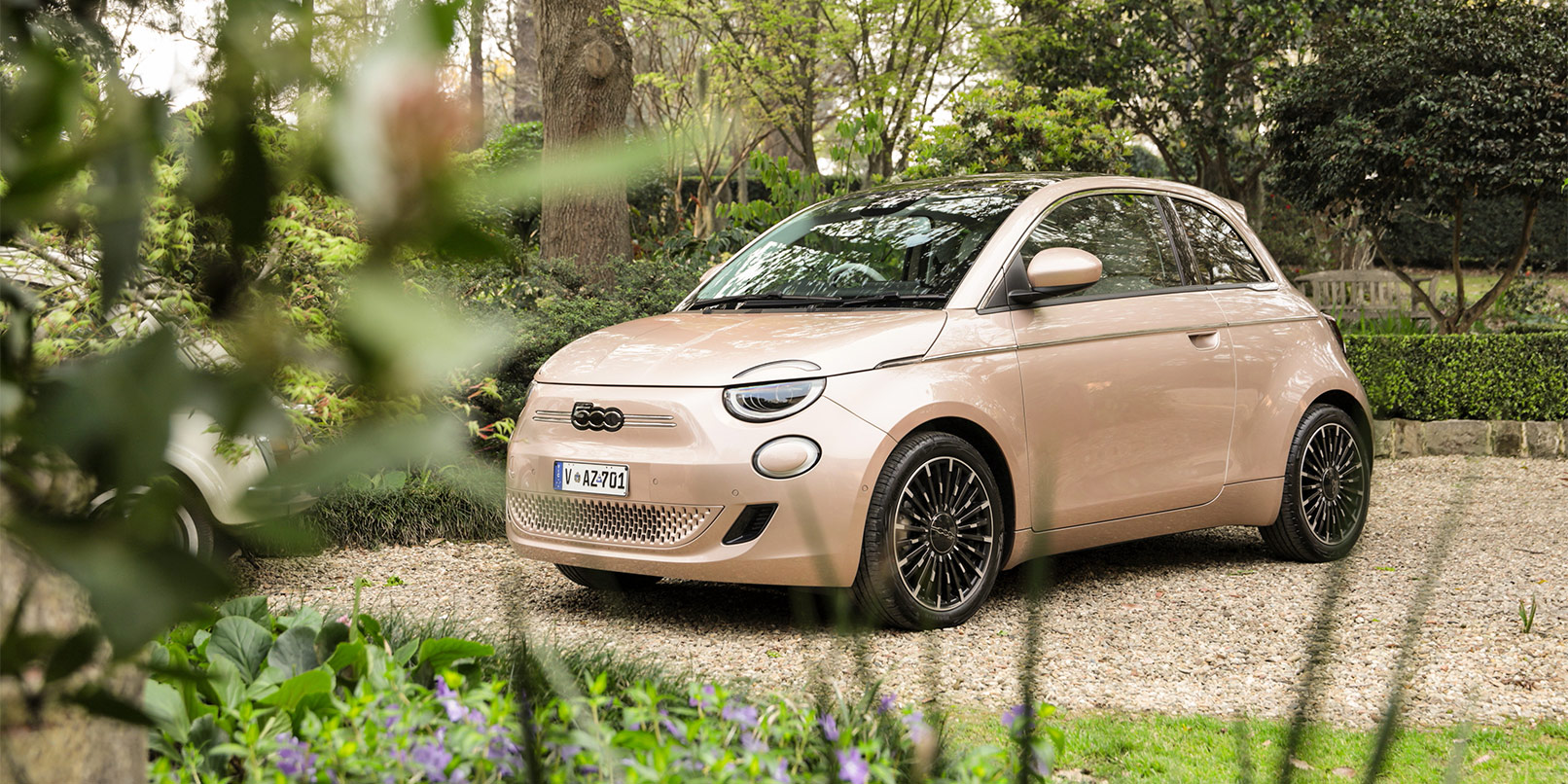
4. FIAT 500e
CarEdge projected a 10-year maintenance cost of $3,517.
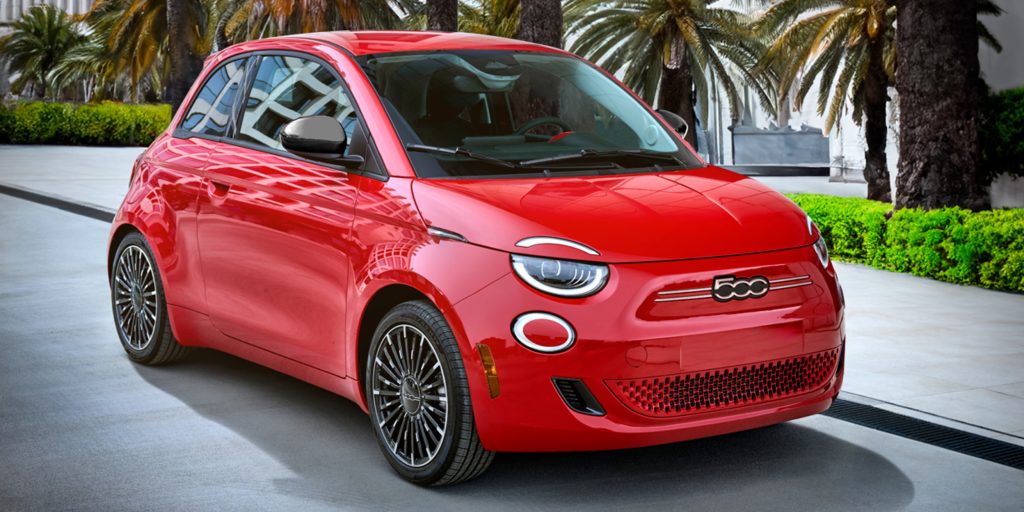
A compact electric vehicle can make financial sense for drivers who spend most of their time navigating urban streets, and the FIAT 500e illustrates that approach.
CarEdge estimates its 10-year maintenance and repair expenses at $3,517, placing it fourth among the 186 models in its published ranking. Its projected cost is only $38 higher than the Toyota bZ4X, showing how closely positioned the two vehicles are despite serving very different customer groups.
The 500e’s strongest ownership advantage comes from its electric drivetrain. Without a conventional gasoline engine, it avoids routine oil changes, spark plug replacements, fuel-system servicing, and several other maintenance operations associated with combustion-powered vehicles.
Its regenerative braking system can also help reduce friction-brake wear during normal driving. For someone commuting relatively short distances, these characteristics can make regular vehicle upkeep less demanding.
There is another side to its ownership appeal. The American-market 500e is designed around compact dimensions, making parking and navigating crowded streets easier than with larger crossovers.
Its relatively small footprint suits city residents, apartment-dwellers with accessible charging, and households looking for a second vehicle rather than a long-distance touring car.
However, prospective buyers should consider its limited driving range compared with larger electric vehicles. The 2024 U.S. model was advertised with an EPA-estimated range of up to 149 miles, depending on configuration.
Battery condition, charging access, tire wear, and replacement-part availability should all be considered when evaluating a used example.
The FIAT 500e’s ranking is impressive, but its low projected maintenance expense does not automatically make it the cheapest vehicle to own. Buyers must also account for purchase price, insurance, depreciation, and charging costs.
For urban motorists with suitable charging arrangements, however, it presents a distinctive combination of compact practicality and comparatively inexpensive projected upkeep.
5. Hyundai IONIQ 6
CarEdge projected 10-year maintenance cost: $3,893.
The Hyundai IONIQ 6 secures fifth place with an estimated $3,893 in maintenance and repair costs over ten years. Its position is notable because it is a midsize electric sedan rather than a small city-focused vehicle.
Buyers receive a more spacious passenger car with an electric drivetrain while benefiting from the reduced number of routine mechanical services generally required by battery-electric vehicles.
Hyundai designed the IONIQ 6 around its dedicated E-GMP electric vehicle platform. This architecture supports an 800-volt electrical system, allowing compatible charging equipment to deliver considerably faster charging than conventional lower-voltage systems.
The aerodynamic body is another important feature. Its streamlined shape helps reduce air resistance, which contributes to its driving efficiency and makes it particularly suitable for drivers who regularly cover longer distances.
From a maintenance perspective, the absence of a conventional combustion engine removes several familiar workshop expenses. There are no routine engine oil changes, spark plug replacements, or conventional exhaust-system repairs.
Regenerative braking can also help reduce friction-brake usage. Nevertheless, electric vehicles still require attention to tires, suspension components, cabin filters, brake fluid, and other equipment.
Battery warranty coverage is another consideration for American buyers. Hyundai’s EV battery warranty generally provides coverage for 10 years or 100,000 miles, whichever comes first, subject to the applicable warranty terms. This offers useful protection, but buyers should still investigate battery condition when purchasing a used vehicle.
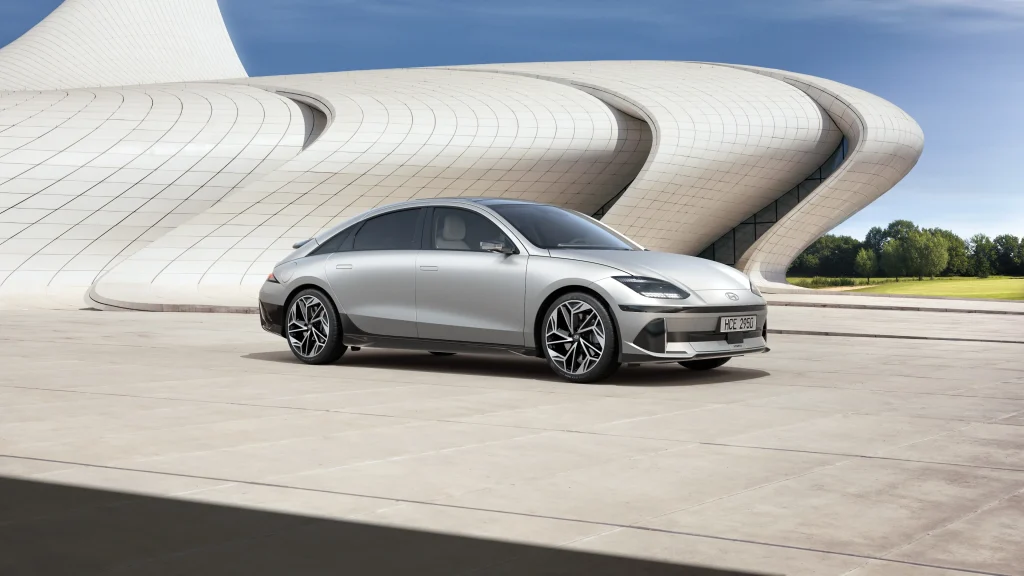
The IONIQ 6 makes a compelling case for drivers who want an electric sedan without accepting the compromises of a smaller urban car. Its CarEdge estimate places it among the least expensive models to maintain over a decade, although insurance, depreciation, electricity prices, and repair costs outside the estimate must also be considered.
6. Toyota Corolla Hatchback
CarEdge projected 10-year maintenance cost: $4,198
Not every inexpensive vehicle to maintain needs an electric motor or an advanced alternative-fuel system. The Toyota Corolla Hatchback demonstrates that a conventional gasoline-powered car can still deliver attractive long-term maintenance projections. CarEdge places it sixth, estimating approximately $4,198 in maintenance and repair expenses over ten years.
The hatchback’s appeal comes from its relatively straightforward mechanical package and practical design. It uses a naturally aspirated 2.0-liter four-cylinder gasoline engine in the current American-market generation, paired with a continuously variable automatic transmission or a six-speed manual transmission on selected versions.
This familiar configuration avoids the additional mechanical complexity associated with some turbocharged powertrains and more elaborate performance systems.
Toyota’s established presence in the United States also gives owners access to a large dealer network and an extensive independent repair market. That matters when a vehicle becomes older and requires replacement components.
Routine jobs such as oil changes, tire rotations, brake inspections, and fluid servicing remain necessary, but they are familiar procedures for most American repair shops.
The hatchback body style adds another practical advantage. Its rear cargo area and folding rear seats provide flexibility for groceries, luggage, and everyday equipment without requiring buyers to move into a larger SUV. Drivers who want manageable dimensions and conventional refueling may find this combination particularly appealing.
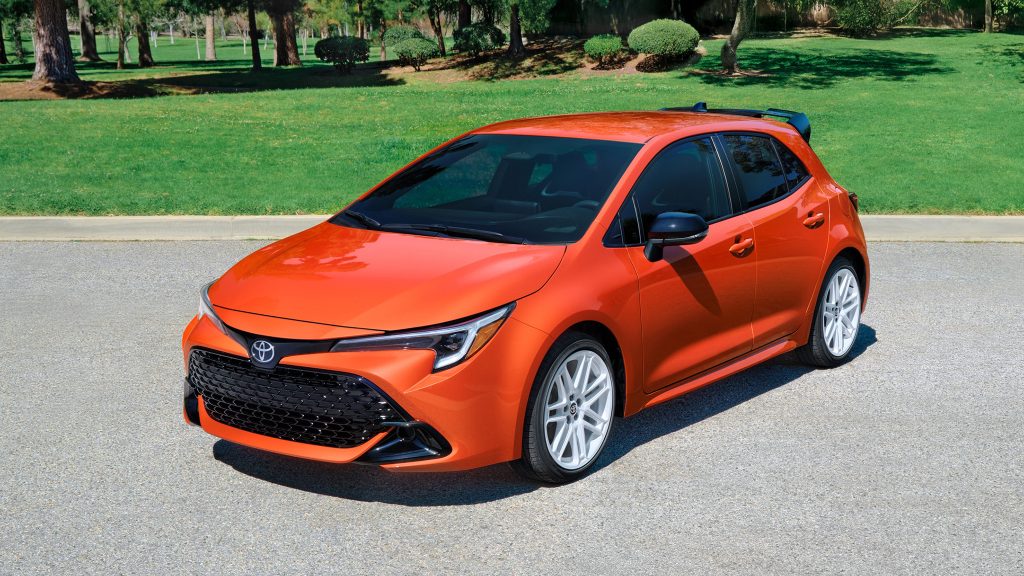
There is an important distinction between a low projected maintenance bill and guaranteed reliability. Even a well-maintained Corolla can eventually require suspension work, brake replacements, battery service, or unexpected repairs. Driving conditions, annual mileage, maintenance history, and replacement-part prices all influence actual expenditure.
At $4,198, the Corolla Hatchback remains one of the more financially attractive conventional cars in CarEdge’s ten-year comparison. It is especially relevant to buyers who prefer gasoline convenience but still want to keep long-term workshop expenses under control.
7. Toyota Prius
CarEdge projected 10-year maintenance cost: $4,359
The Toyota Prius ranks seventh, with CarEdge projecting $4,359 in maintenance and repair expenses over ten years. Its position reflects the appeal of a conventional hybrid system, which combines a gasoline engine with electric motors to improve efficiency without requiring drivers to depend on external charging infrastructure.
For American motorists who want better fuel economy without switching to a fully electric vehicle, the Prius remains a particularly practical option.
One of the most interesting aspects of the Prius is how its hybrid system manages everyday driving. At lower speeds and under suitable conditions, the vehicle can operate using electric power, while the gasoline engine contributes when additional power is required.
Regenerative braking captures energy during deceleration and sends it back to the hybrid battery. This arrangement can reduce the workload on conventional brakes and helps the vehicle use fuel more efficiently.
Toyota’s hybrid technology also avoids some of the mechanical complications associated with certain conventional automatic transmissions.
The Prius uses an electronically controlled continuously variable transmission, commonly known as an e-CVT, designed specifically for its hybrid powertrain. Its naturally aspirated gasoline engine also avoids the additional hardware associated with turbocharging.
However, hybrid ownership is not maintenance-free. Engine oil, coolant, filters, tires, brake components, and other consumables still require attention. The hybrid battery and associated electrical components should also be considered when evaluating an older or high-mileage example.
Toyota provides a 10-year or 150,000-mile hybrid battery warranty on qualifying newer hybrid vehicles, subject to applicable conditions.
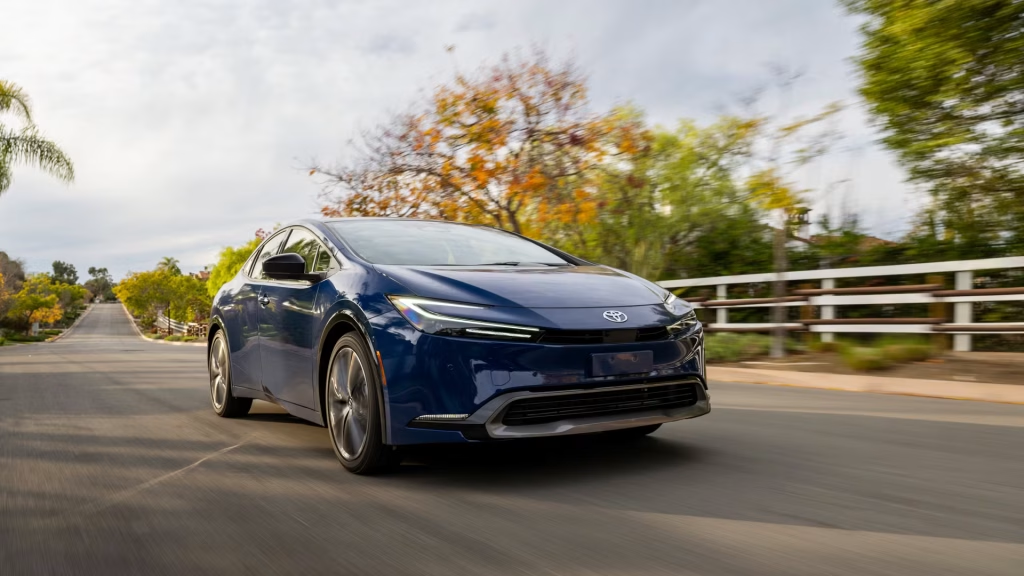
The Prius is particularly attractive for commuters, rideshare drivers, and households that accumulate substantial annual mileage.
Its combination of fuel efficiency, established hybrid engineering, and relatively modest projected upkeep makes it a strong long-term candidate. The $4,359 estimate reinforces its position among the less expensive vehicles to maintain in CarEdge’s comparison.
8. Toyota Prius Prime
CarEdge projected 10-year maintenance cost: $4,427
The Toyota Prius Prime takes eighth place with projected ten-year maintenance and repair expenses of $4,427. Although it shares its basic hybrid philosophy with the standard Prius, the Prime adds a larger rechargeable battery that allows drivers to complete certain journeys using electricity alone.
This makes it particularly interesting for people who have access to home or workplace charging but still want the flexibility of a gasoline engine for longer journeys.
Unlike a fully electric vehicle, the Prius Prime does not depend entirely on charging stations. Once its available electric driving range is used, the vehicle can continue operating as a conventional hybrid.
This dual capability is valuable for American households that regularly make short commutes during the week but occasionally travel longer distances between cities.
Its plug-in hybrid arrangement does introduce additional equipment, including a larger battery and charging hardware. Consequently, it is not accurate to assume that every plug-in hybrid will automatically cost less to maintain than a standard hybrid.
However, CarEdge’s projection places the Prius Prime only $68 above the regular Prius over ten years, a relatively small difference in the published estimates.
Regenerative braking contributes to its efficiency by recovering energy during deceleration. The vehicle also retains the familiar gasoline-engine servicing requirements, including periodic oil changes, filter replacements, and inspections.
Owners should follow Toyota’s recommended maintenance schedule rather than treating the electric driving capability as a reason to skip routine servicing.
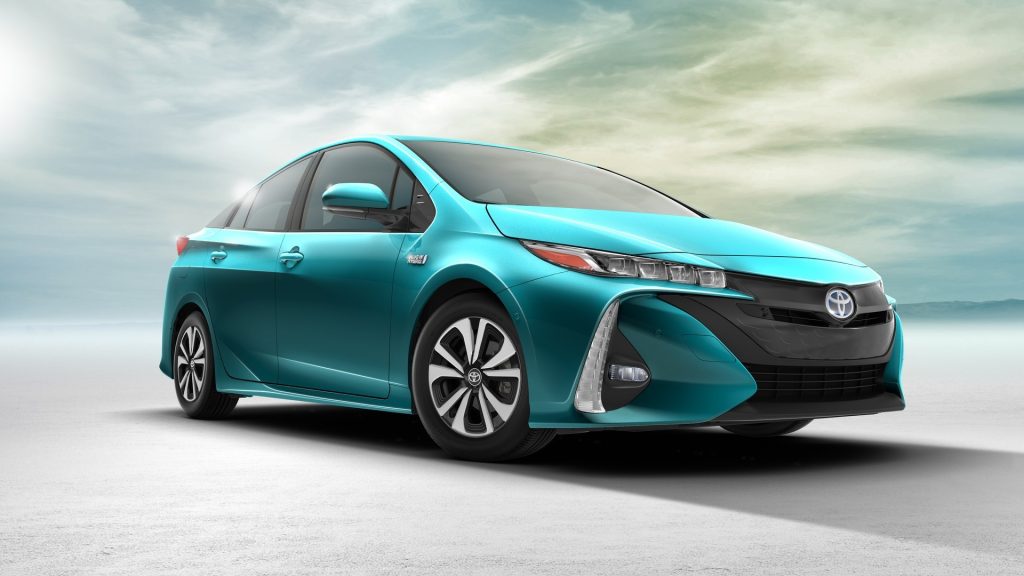
Battery warranty coverage is another important consideration. Toyota’s newer hybrid vehicles generally receive 10-year or 150,000-mile coverage for the hybrid battery, whichever comes first, subject to the applicable warranty terms.
For drivers who can charge regularly, the Prius Prime offers an appealing balance between electric commuting and gasoline-powered flexibility. Its projected maintenance expense is slightly higher than the standard Prius, but its additional charging capability may justify that difference for households with suitable daily driving patterns.
9. Toyota Corolla
CarEdge projected 10-year maintenance cost: $4,434
The standard Toyota Corolla takes ninth place, with CarEdge estimating $4,434 in maintenance and repair expenses over ten years. Its position is especially significant because it represents a familiar, gasoline-powered compact sedan rather than an electric or hydrogen-powered vehicle.
For buyers who prefer traditional refueling and straightforward daily transportation, the Corolla offers a combination of practical engineering and relatively low projected servicing expenses.
Under the hood, the American-market 2025 Corolla offers a 2.0-liter four-cylinder engine in its conventional gasoline configuration.
It produces 169 horsepower and 151 lb-ft of torque, providing sufficient performance for commuting, highway travel, and everyday errands. Its continuously variable transmission is designed to prioritize smooth operation and fuel efficiency rather than aggressive acceleration.
One reason the Corolla remains attractive to long-term owners is the availability of replacement components and repair expertise throughout the United States.
Toyota’s extensive dealer network and the model’s widespread presence also give independent repair shops considerable familiarity with its mechanical systems. This can make routine servicing and sourcing commonly needed components more convenient.
Unlike electric vehicles, the Corolla requires conventional engine maintenance. Oil and filter changes, coolant inspections, transmission-fluid servicing, spark plug replacement, and brake maintenance all remain part of ownership.
Following Toyota’s recommended service intervals is essential to protecting the engine and transmission as mileage increases.
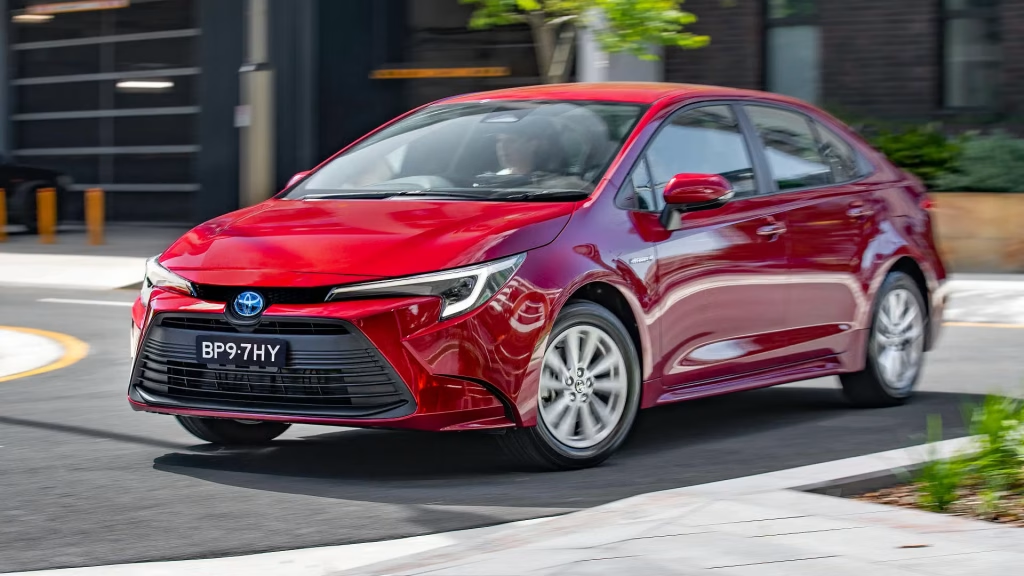
The Corolla also benefits from a straightforward cabin layout, manageable exterior dimensions, and a reputation for practical everyday transportation. However, individual repair costs can vary according to mileage, driving conditions, maintenance history, and local labor rates.
At $4,434, its projected ten-year maintenance expense is only $7 higher than the Prius Prime. That narrow difference makes the Corolla an interesting alternative for buyers who want a conventional gasoline sedan without accepting substantially higher projected maintenance costs.
10. Toyota GR Corolla
CarEdge projected 10-year maintenance cost: $4,566
Finishing the list is the Toyota GR Corolla, with CarEdge estimating $4,566 in maintenance and repair expenses over ten years. Its inclusion makes this ranking particularly interesting because the GR Corolla is not designed as an ordinary economy hatchback.
It is a performance-oriented model developed with motorsport-inspired engineering, a powerful turbocharged engine, and a sophisticated all-wheel-drive system.
Power comes from a turbocharged 1.6-liter three-cylinder engine producing 300 horsepower and 273 lb-ft of torque in the 2025 U.S. specification. Toyota pairs this engine with a six-speed manual transmission, while an eight-speed automatic became available for selected configurations.
The GR-Four all-wheel-drive system can distribute power between the front and rear axles to improve traction under different driving conditions.
Performance equipment naturally introduces additional considerations when it comes to ownership. Turbocharged engines operate under greater thermal and mechanical demands than many naturally aspirated commuter-car engines.
Performance tires, brake components, and drivetrain servicing can also become more expensive, particularly when the vehicle is driven enthusiastically or regularly used on a track.
Nevertheless, its CarEdge estimate remains below $5,000 for the projected ten-year maintenance and repair period. That is an appealing figure for a vehicle delivering this level of performance, although it should not be interpreted as evidence that the GR Corolla will have the same running expenses as a standard Corolla.
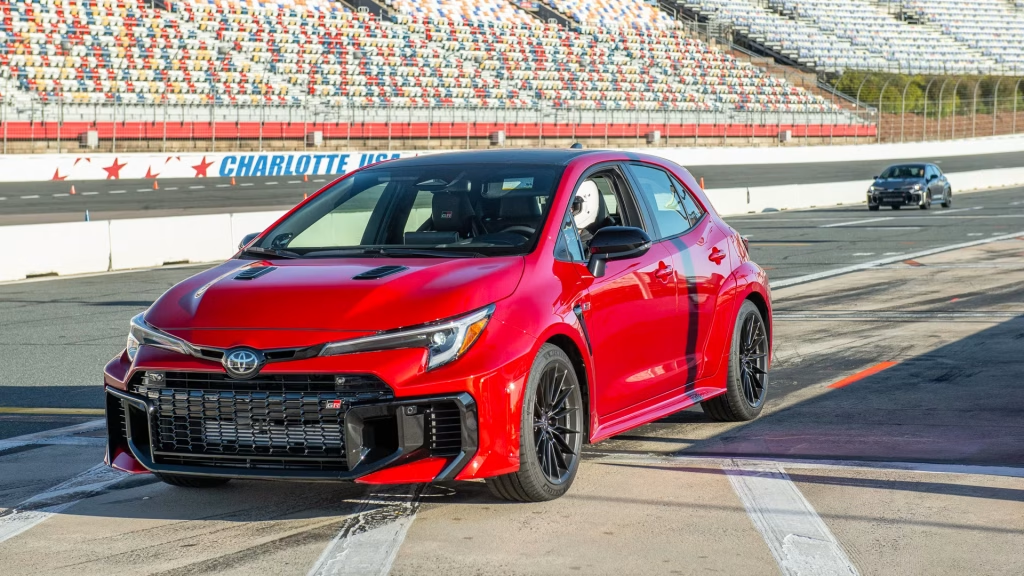
Buyers should also distinguish between maintenance estimates and the complete cost of performance-car ownership. Insurance, fuel, tires, depreciation, and repairs resulting from aggressive driving can significantly affect the final bill.
The GR Corolla rounds out the ranking with a rare combination of strong performance and relatively low projected long-term maintenance costs. It is worth considering for enthusiasts looking for an engaging all-wheel-drive hatchback without moving into a significantly more expensive performance segment.
