
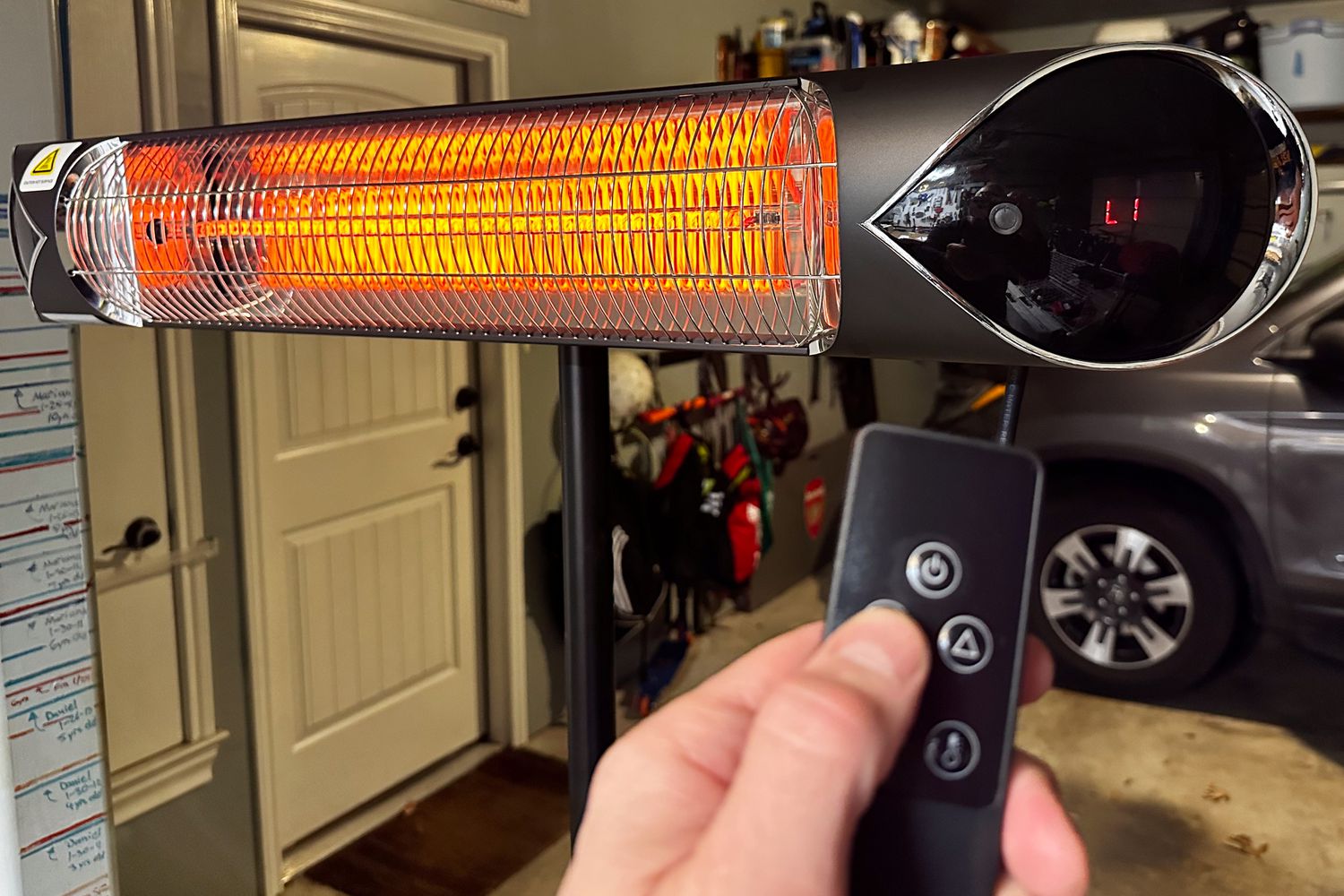
A cold garage can make even a simple oil change or brake job uncomfortable. Numb fingers, stiff tools, and long warm-up times can turn a weekend repair into an unpleasant task.
The right garage heater makes the workspace more usable, but the best choice depends on garage size, insulation, electrical capacity, fuel availability, and the kind of work being done.
A compact portable heater may be enough for a workbench, while a two-car garage may need a dedicated 240-volt unit or a properly vented gas heater. These ten options cover different workshop needs and heating methods.
1. Comfort Zone Ceiling-Mounted Industrial Heater
A home mechanic needs more than a heater that simply blows warm air in one direction. The Comfort Zone ceiling-mounted industrial heater is designed to provide heat from above, keeping the floor and work area free from a portable unit that could get in the way of toolboxes, jacks, and vehicle movement.
Bob Vila named this model its top garage-heater pick in its October 2026 review after testing several heaters. The publication highlighted its flexible installation options, strong heat output, and accessible maintenance.
The ceiling-mounted design is especially useful in a busy garage because it keeps the heater away from accidental impacts and leaves more room for working around a vehicle.
Comfort Zone sells multiple industrial heater models, so buyers should check the exact model number before relying on a wattage or electrical specification. The CZ220, for example, is a 5,000-watt, 240-volt fan-forced heater.
At that rating, it produces approximately 17,060 BTU per hour. It requires an appropriate dedicated electrical circuit, not an ordinary household outlet.
For mechanics, forced-air heating offers a practical advantage because it distributes warm air throughout the workspace instead of heating only the area directly in front of the unit. Adjustable louvers also allow users to direct the airflow toward specific work areas.
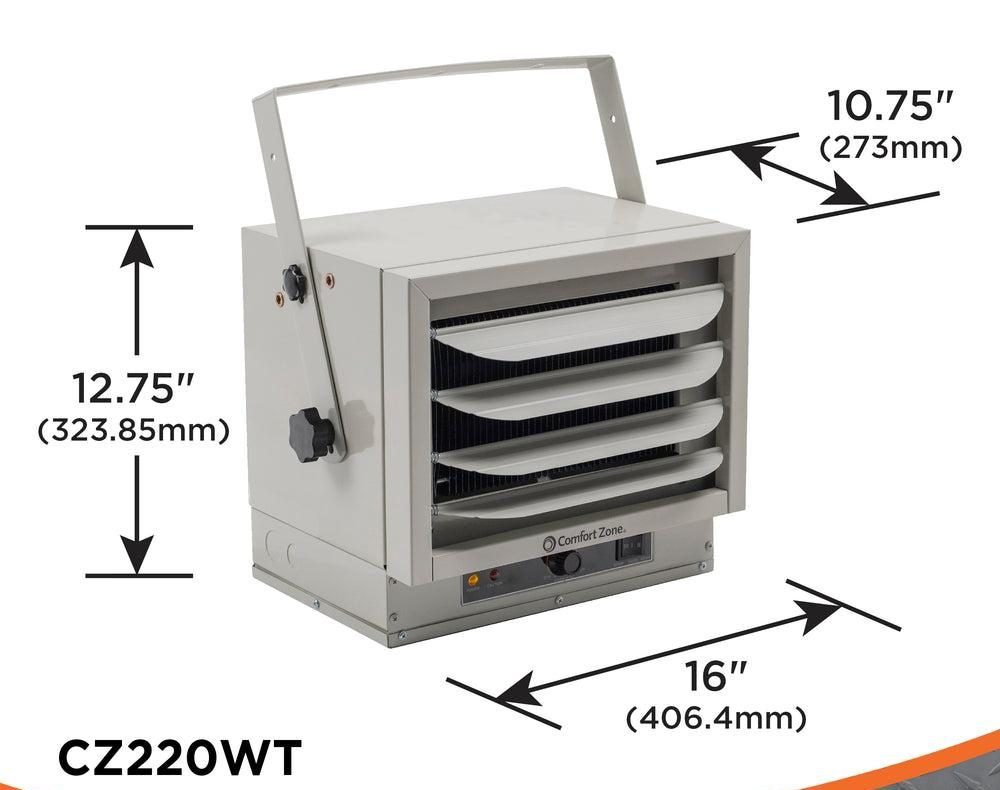
The installation requirement is the main drawback. A 240-volt heater needs suitable wiring and mounting, so an electrician may be necessary. It should also be positioned according to the manufacturer’s required clearances from vehicles, shelves, and combustible materials.
For a regularly used home workshop with suitable electrical service, this ceiling-mounted design is a strong starting point.
2. Lasko Digital Ceramic Space Heater With Remote
Not every home mechanic needs to heat an entire two-car garage. If the main goal is to keep hands comfortable while changing a component at a workbench or organizing tools, a smaller portable heater can be more practical. The Lasko Digital Ceramic Space Heater is designed for that kind of localized warmth.
It runs on standard 120-volt household electricity and has a maximum output of 1,500 watts. Its ceramic heating element works with a fan to distribute warm air, while the oscillation function helps spread that warmth across a wider area. A remote control allows adjustments without having to stop a task and walk over to the heater.
Bob Vila tested this model and found it surprisingly powerful and quiet for its size. The reviewers particularly liked its ability to make a noticeable difference around a workbench or small working area. They also praised its cool-touch exterior, overheating protection, and timer function. However, they found that it could not heat the entire garage.
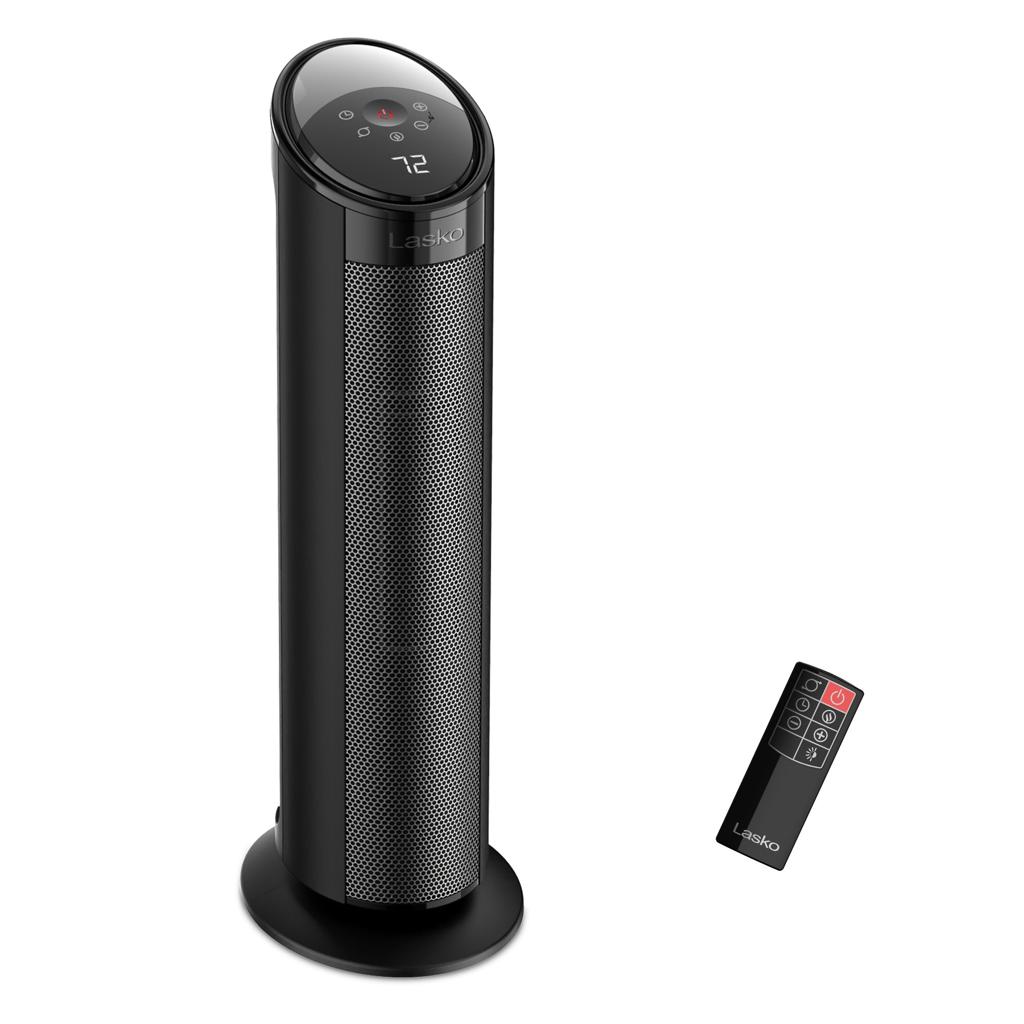
There is one safety limitation worth taking seriously: the tested model did not have tip-over protection. That makes placement especially important in a garage where extension cords, tools, vehicle parts, and people are constantly moving around. Keep it on a stable, level surface and well away from flammable liquids, gasoline, solvents, and combustible materials.
Its 1,500-watt output is also modest compared with dedicated 240-volt garage heaters. It is not the right solution for rapidly warming a large, poorly insulated workshop.
For a mechanic who spends most of the day at one bench, however, Lasko offers convenient, adjustable heat without requiring electrical upgrades or permanent installation.
3. Fahrenheat FUH Electric Garage Heater
A permanent heating solution makes sense for a mechanic who spends several hours a week in the garage. The Fahrenheat FUH is built for that kind of regular use. Its compact metal housing and adjustable mounting bracket allow it to be installed overhead, keeping valuable floor space available for tool cabinets, rolling jacks, and vehicle work.
The FUH model reviewed by Bob Vila is rated at 5,000 watts and 240 volts, equivalent to approximately 17,060 BTU per hour. It uses a fan-forced heating system, with adjustable louvers that direct warm air toward the floor or a particular work area.
A built-in thermostat lets users regulate the temperature, while a thermal safety shutoff protects against overheating.
Installation is where buyers need to plan ahead. The tested unit did not include a power cord and must be directly wired to a dedicated 240-volt circuit. Bob Vila specifies a 30-amp breaker for this installation. The mounting bracket itself was straightforward to install during testing, and the heater’s angle could be adjusted by loosening its mounting nuts.
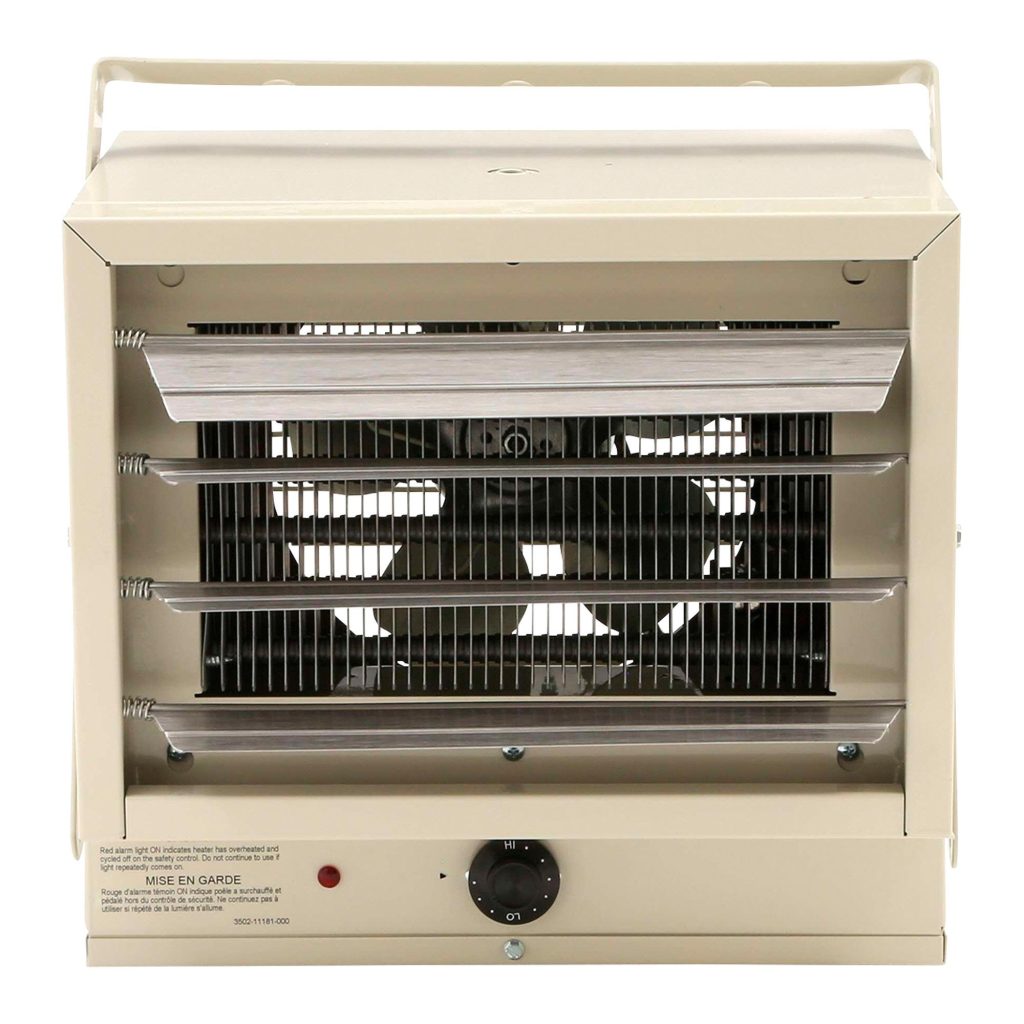
For a home mechanic, overhead placement is particularly convenient. The heater does not occupy a corner of the garage where it could obstruct a vehicle door or become a tripping hazard. Its directed airflow can also help warm the space beneath it.
The trade-off is that it requires electrical work rather than simply plugging into a standard outlet. Have the circuit, wiring, mounting height, and required clearances checked by a qualified electrician. For a frequently used workshop with suitable electrical service, the Fahrenheat FUH is a practical permanent heating choice.
4. Dr. Infrared Heater DR-988 Portable Industrial Heater
Some mechanics want the flexibility to move their heater closer to the vehicle, then reposition it near a workbench when the job changes. The Dr. Infrared Heater DR-988 is designed for that kind of portable workshop use. Unlike a conventional fan heater, it combines radiant infrared heat with forced-air circulation.
The two heating methods serve different purposes. Infrared energy warms people and nearby objects, including tools and work surfaces, while the fan distributes heated air through the surrounding space. That combination can be useful when a mechanic is moving between a workbench and a vehicle rather than staying in one spot.
The DR-988 operates on 208-volt or 240-volt electricity and can deliver up to 5,600 watts, equivalent to approximately 19,110 BTU per hour. Its thermostat can be adjusted from 37 to 113 degrees Fahrenheit. In Auto mode, the heater cycles to maintain the selected setting.
Bob Vila selected it as its best infrared option after testing. Reviewers praised its solid construction, simple controls, and substantial heat output. They also identified an important inconvenience: the heater uses a NEMA 6-30P plug, and the necessary compatible outlet or adapter may not already be available in a home garage.
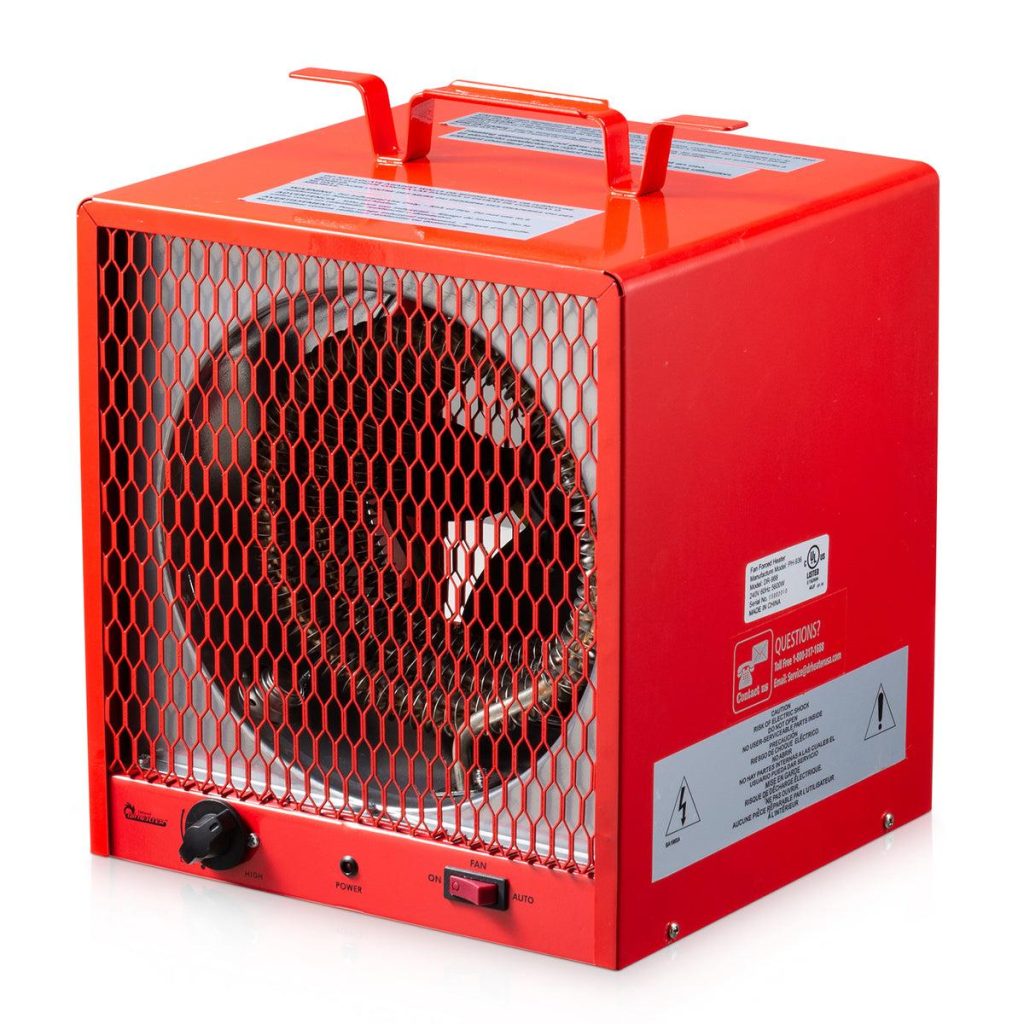
That electrical requirement should be checked before buying. Do not attempt to run it from an unsuitable household outlet or an improvised adapter. Position the heater on a stable surface, maintain the manufacturer’s clearances, and keep it away from gasoline, solvents, paint, and other flammable materials.
For a mechanic who needs portable but powerful electric heat, the DR-988 offers an interesting combination of radiant warmth and air circulation.
5. Mr. Heater MH200CVX Propane Convection Heater
A large detached workshop or barn needs a different heating approach from a small residential garage. The Mr. Heater MH200CVX is designed for substantial open spaces, with a high-output propane convection system that circulates warmth through the surrounding air.
Its adjustable output ranges from 75,000 to 200,000 BTU per hour, making it one of the most powerful heaters in this selection. Bob Vila tested the unit and reported that it raised the temperature in its small test garage by 15 degrees Fahrenheit in approximately 20 minutes.
However, the reviewers also pointed out that even its lowest setting produces too much heat for many small garages.
The barrel-style construction is intended for larger spaces, and its upper section collapses over the lower section to make storage easier. Another practical advantage is its piezo ignition system, which means it does not require an electrical connection to ignite. A thermoelectric safety valve shuts off the fuel supply if the flame goes out.
For a home mechanic, the high output can be useful when working in a large detached building with adequate ventilation. It is not a sensible choice for a tightly enclosed single-car garage. The minimum 75,000-BTU setting may quickly make a small space uncomfortable, and combustion heaters introduce carbon monoxide and fire risks.
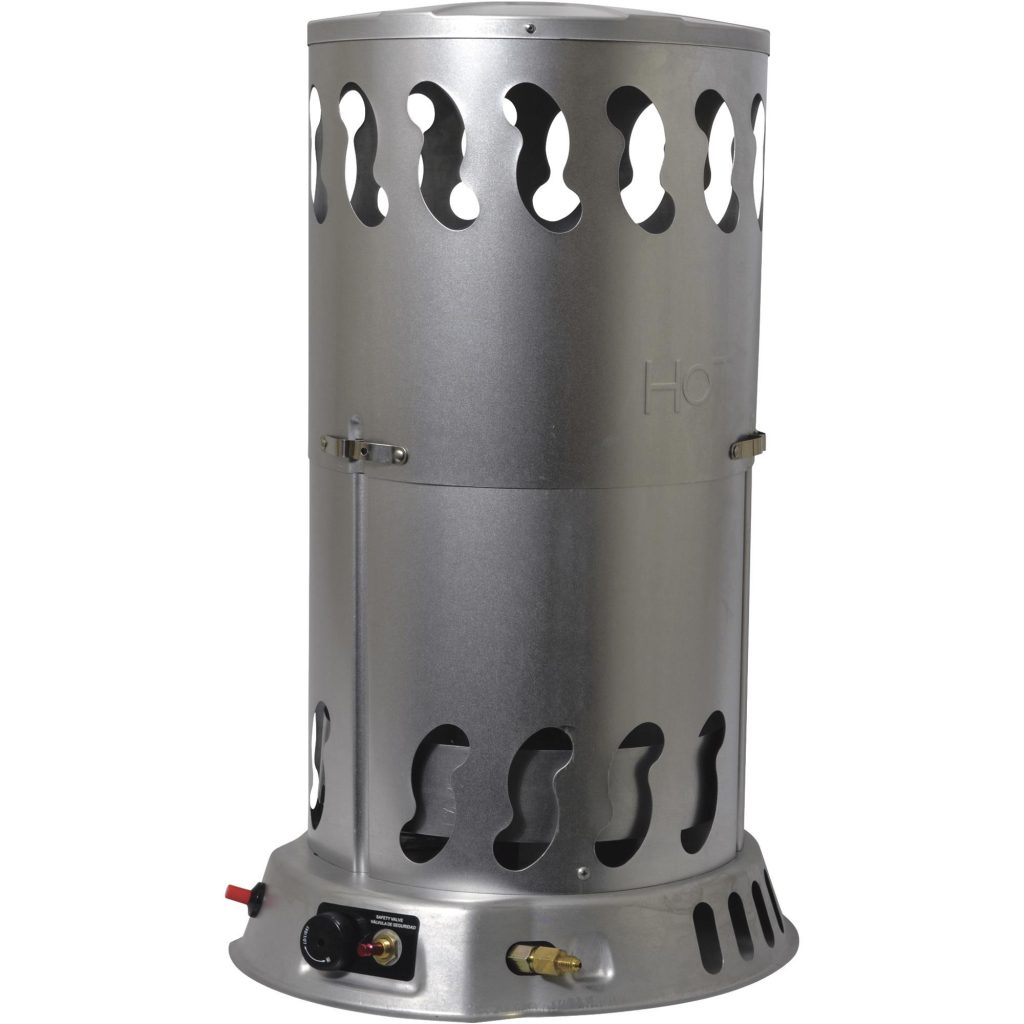
This is an unvented fuel-burning heater, so never assume that opening a garage door slightly makes every installation safe. Follow the exact manufacturer’s instructions and applicable local fire and building codes. Keep it away from gasoline, solvents, paint, and other combustible materials.
The MH200CVX is best reserved for large, appropriately ventilated workshop environments rather than routine heating in an attached residential garage.
6. Dr. Infrared Heater DR-966 Commercial Heater
For a mechanic who wants a permanent heating system rather than a portable appliance, the Dr. Infrared Heater DR-966 is a strong commercial-style option. Its wall- or ceiling-mounted design keeps the unit away from floor-level equipment, while its forced-air system distributes heat throughout the working area.
The DR-966 offers two output settings: 3,000 watts and 6,000 watts. It operates on 240-volt electricity and uses a built-in adjustable thermostat. The unit also has adjustable louvers, allowing the airflow to be directed downward or toward a particular section of the garage.
One detail makes this heater especially interesting for a home workshop: it is designed to be hardwired rather than plugged into a standard household receptacle. That creates a cleaner permanent installation, but it also means the electrical circuit must be appropriate for the heater’s requirements.
A qualified electrician should confirm the wiring, breaker, mounting position, and required clearances before installation.
Bob Vila’s testing highlighted its smooth construction, substantial hardware, and easy-to-adjust mounting knobs. The reviewers found that the larger adjustment controls made it easier to lock the heater into the desired angle than some competing units.
They also noted that the product description suggested a separate wall thermostat was included, but their tested sample did not have one.
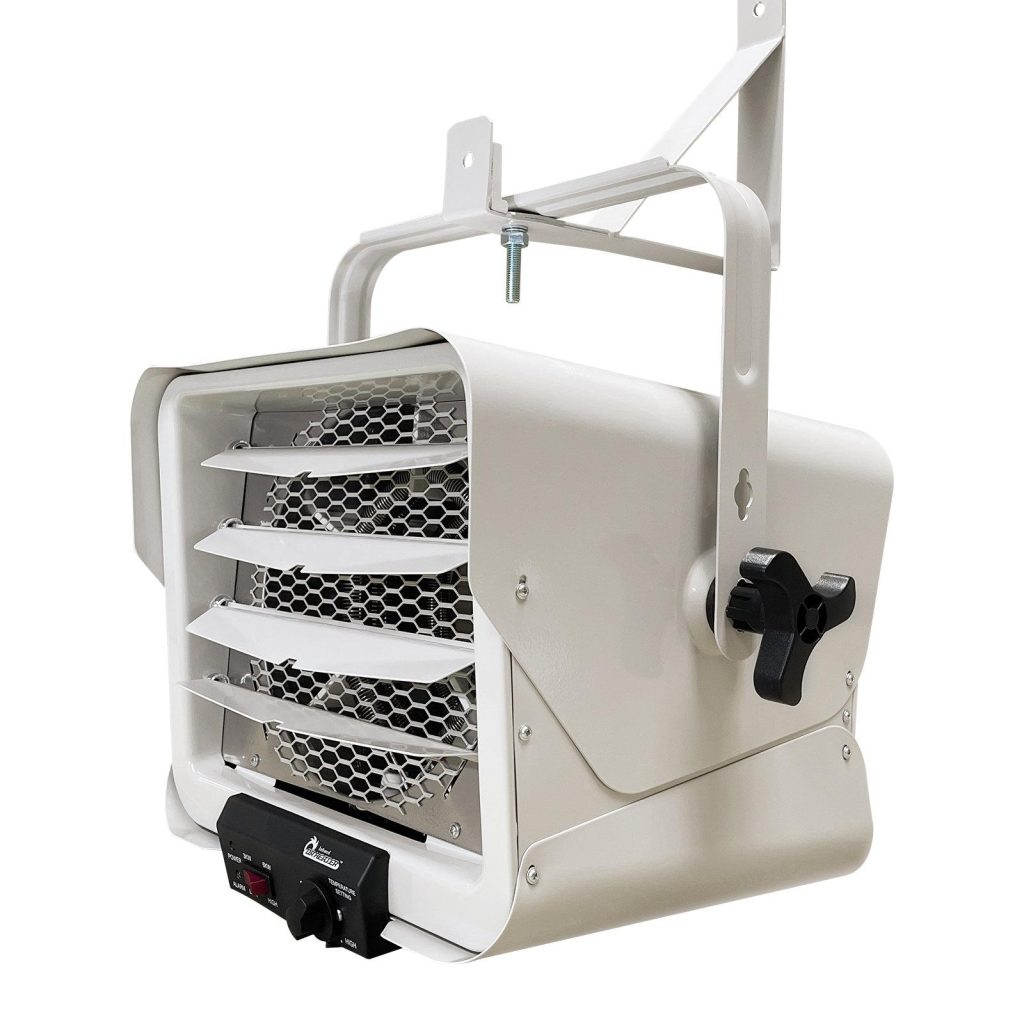
The DR-966 is not the most convenient option for someone who only needs occasional warmth. It requires a permanent electrical setup and takes planning before installation. However, for a frequently used home workshop, its two power settings provide flexibility.
Its main advantage is consistent, directed electric heat without introducing combustion fumes into the garage. It is worth considering when the electrical infrastructure can support it.
7. Briza Infrared Carbon Indoor/Outdoor Heater
A home mechanic does not always need to warm every cubic foot of the garage. When most repairs happen beside one workbench or along one side of a vehicle, radiant heating can be more useful than a large fan heater. The Briza Infrared Carbon Heater is designed for this kind of targeted warmth.
It operates on a standard 120-volt electrical supply and offers three heat settings, including 750 watts on low and 1,500 watts on high. Instead of relying on a fan to push warm air around the room, its infrared element transfers heat directly to people and nearby objects within its heating range.
Its installation flexibility is a major selling point. Briza supplies hardware for wall or ceiling mounting, along with a telescoping tripod stand for portable use. This allows a mechanic to position the heater near a workbench or mount it above a regular working area. A remote control provides access to the settings and timer.
During testing, Bob Vila reviewers found that the heater produced substantial warmth when standing in front of it. They also appreciated its quiet operation and the flexibility of the tripod.
The main drawback was the lack of a thermostat, meaning the heater cannot automatically cycle on and off to maintain a selected room temperature.
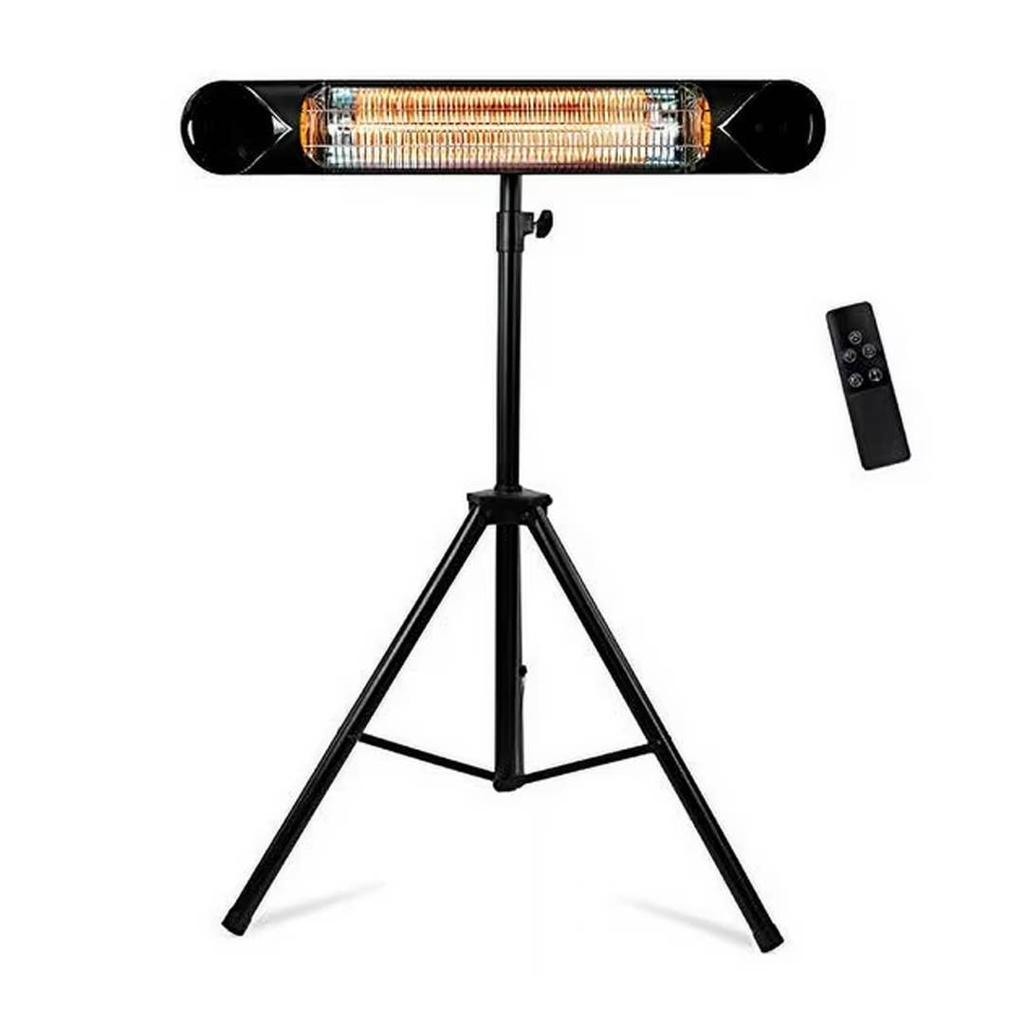
Infrared heating is useful for spot warmth, but it will not necessarily raise the temperature throughout a large garage. The direction of the heater also matters. A mechanic who moves around a vehicle may find that some work positions receive little direct heat.
For someone who spends long periods at a fixed bench, Briza offers a convenient electric solution. Its indoor/outdoor rating does not remove the need to follow the specified mounting clearances and keep it away from flammable materials.
8. Bio Green Palma Greenhouse Fan Heater
Not every garage needs to feel like a heated living room. Some home mechanics mainly want to prevent freezing temperatures from damaging plumbing, stored liquids, or equipment. The Bio Green Palma is better suited to maintaining a low background temperature than delivering intense warmth for a full day of mechanical work.
This compact fan heater runs on 110-volt electricity and produces 1,500 watts, equivalent to approximately 5,118 BTU per hour. Its digital thermostat can maintain temperatures around 48 degrees Fahrenheit, which is lower than the minimum settings found on many conventional space heaters.
That low-temperature control is its defining feature. A garage containing water lines or other vulnerable plumbing may benefit from maintaining a temperature above freezing without continuously heating the entire building to a comfortable working temperature.
The fan-forced design circulates warm air, while its stainless-steel housing is built for a demanding utility environment.
Bob Vila’s testing found that the Palma operated quietly and maintained low temperatures effectively. Reviewers also noted that the unit was splash-resistant, which can be useful in damp utility areas. However, it does not have a tip-over safety switch, and the tested heater produced an off-gassing smell when first switched on.
For a mechanic, this is not the strongest choice for warming cold hands while working underneath a vehicle. Its value is more about freeze protection and maintaining a modest ambient temperature.
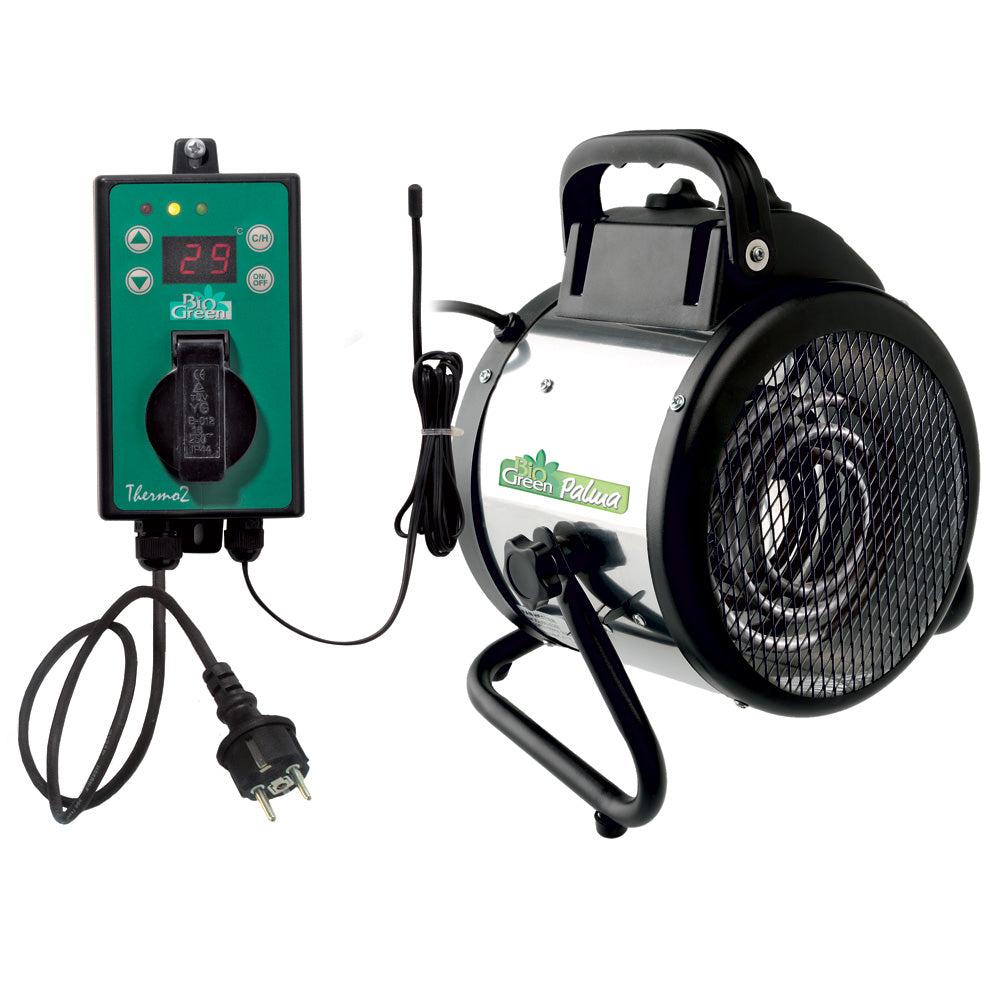
Place it on a stable surface, keep the air intake and outlet unobstructed, and follow the manufacturer’s clearance instructions. It should not be positioned where oil, fuel, cleaning chemicals, or workshop debris can accumulate around it.
If the main goal is protecting a cold garage rather than heating a mechanic directly, the Palma has a more specialized role than many conventional space heaters.
9. Flame King Portable Propane Forced-Air Heater
When a workshop needs rapid heat and does not have a suitable high-capacity electric circuit, a propane forced-air heater may appear attractive. The Flame King portable model offers adjustable output between 30,000 and 60,000 BTU per hour, giving it considerably more heating capacity than a typical household plug-in unit.
The heater uses propane for combustion and an electrically powered fan to push warm air into the surrounding space. It has an electronic ignition system, an adjustable output control, and several safety features. Bob Vila lists a low-oxygen fuel shutoff, fire-detection system, and tip-over switch among its protections.
Portability is another advantage. The heater can be moved around a suitable work area, and the reviewers found it relatively lightweight and straightforward to set up. During their testing, the garage began to feel comfortable after approximately 25 minutes.
They also reported that a 20-pound propane tank lasted around eight hours in their test conditions. Actual runtime will vary with the selected output, temperature, and fuel conditions.
There are two significant compromises. First, forced-air propane heaters are noisy compared with electric infrared models. Second, this is a combustion heater, so exhaust and carbon monoxide must be taken seriously. Safety switches do not make it suitable for every enclosed garage.
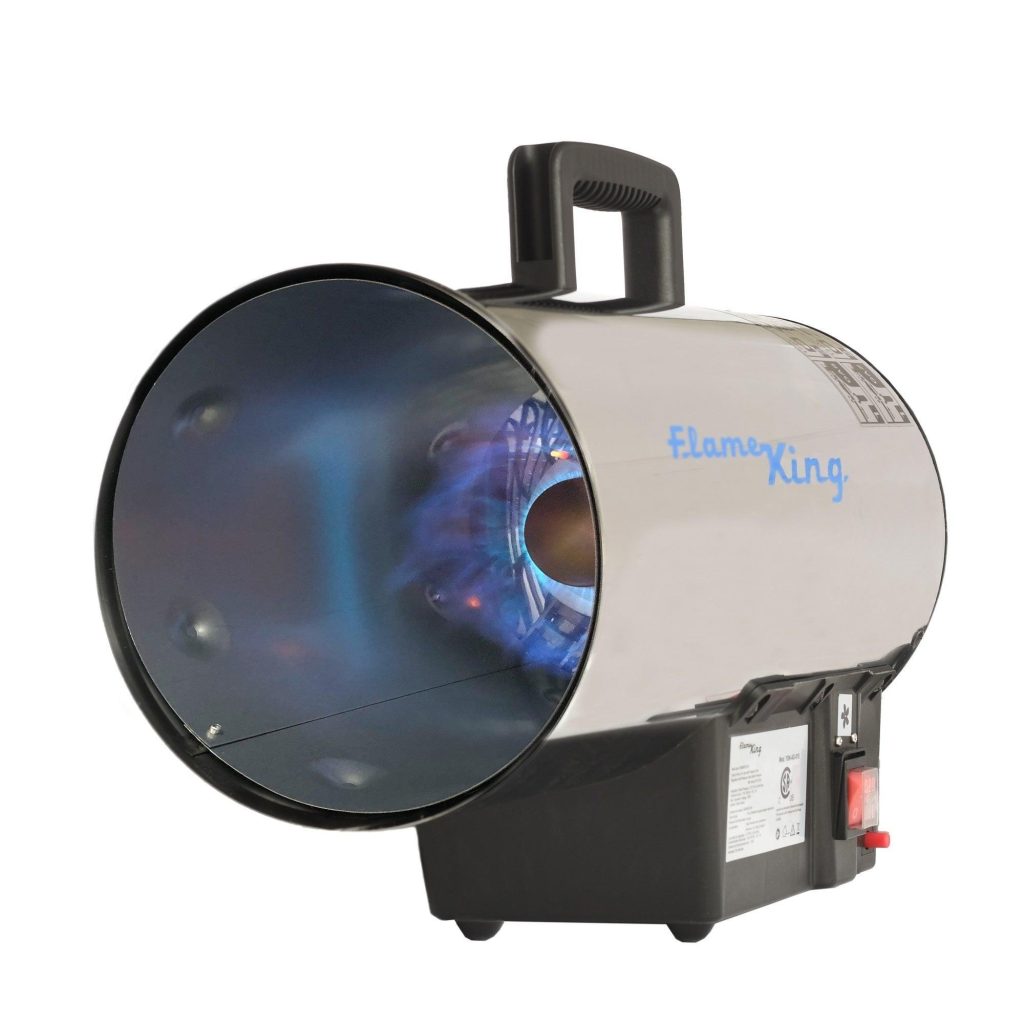
Never use it in an attached residential garage or any space where its manual or local codes prohibit operation. Keep it away from vehicles, fuel containers, paint, solvents, and other flammable materials. Follow ventilation requirements exactly and use a working carbon monoxide alarm.
For a large, appropriately ventilated workshop, Flame King provides high heat output and easy repositioning. It is not a casual indoor space heater.
10. Mr. Heater Big Buddy MH18B
A mechanic who works in a smaller garage may not need a permanently mounted 240-volt heater or a large propane unit. The Mr. Heater Big Buddy MH18B is a portable radiant propane heater designed to deliver substantial warmth from a compact footprint.
It offers three heat settings: 4,000, 9,000, and 18,000 BTU per hour. According to Car and Driver, the manufacturer rates it for spaces up to approximately 450 square feet. It can run from one or two 1-pound propane cylinders, or connect to a larger propane tank using the separately purchased hose and filter specified for the heater.
Its radiant heating system warms people and nearby objects rather than relying on a fan to circulate heated air. That can be useful when a mechanic is working at a fixed location and wants warmth directed toward the body. The lack of a fan also means there is no forced-air noise.
Car and Driver tested the Big Buddy and praised its simple operation, portability, and heat output. The reviewers also identified a limitation: heat rises rather than being actively circulated, so its performance depends on ceiling height and where the heater is positioned.
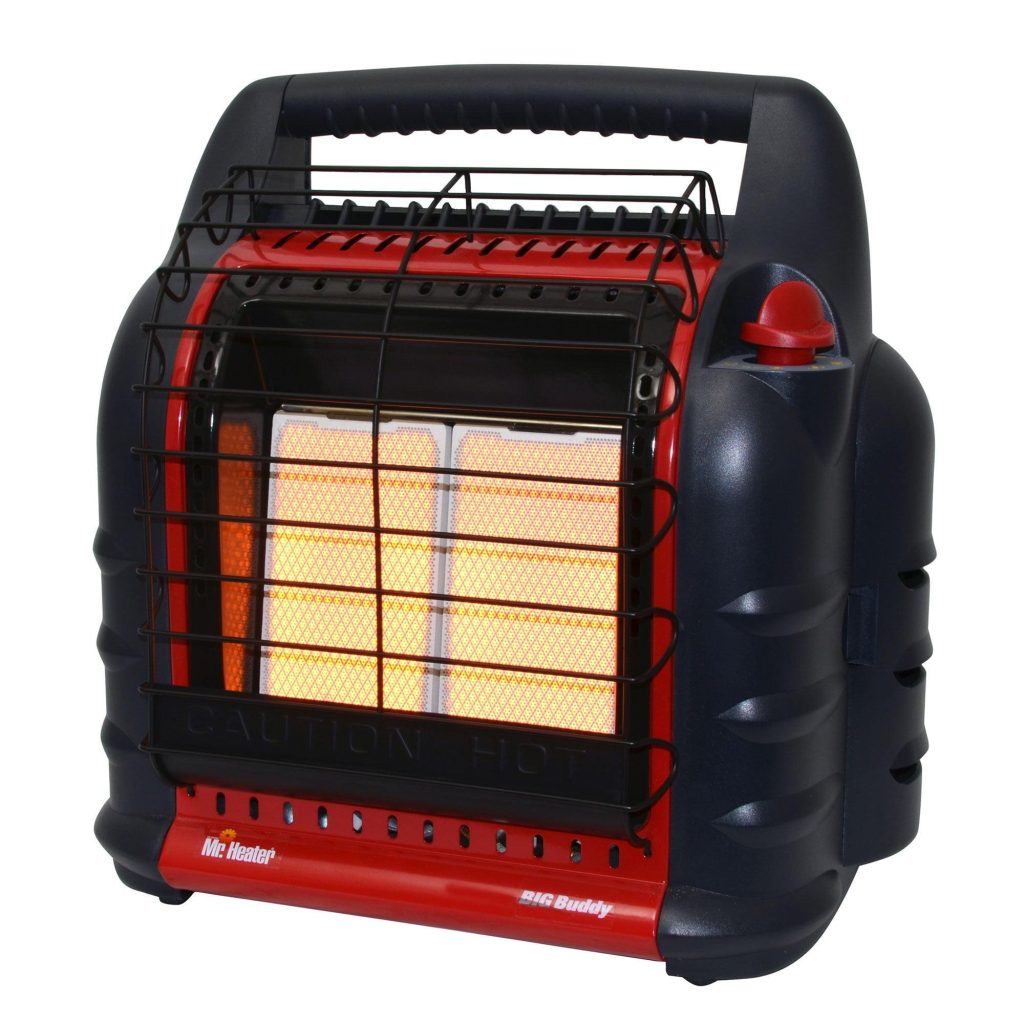
Three safety systems are listed for this model: an emergency low-oxygen safety system, a tip-over switch, and a thermal shutoff. These features are important, but they do not eliminate the risks associated with propane combustion.
Before using it in a garage, check the exact model’s current manual and restrictions. Never operate it near gasoline, solvent vapors, open fuel containers, or other flammable materials. Follow ventilation instructions and use carbon monoxide detection. If the manual or local rules prohibit use in the garage, choose an electric heater instead.
For suitable spaces and approved use, the Big Buddy offers portable radiant heat without requiring a dedicated 240-volt circuit.
