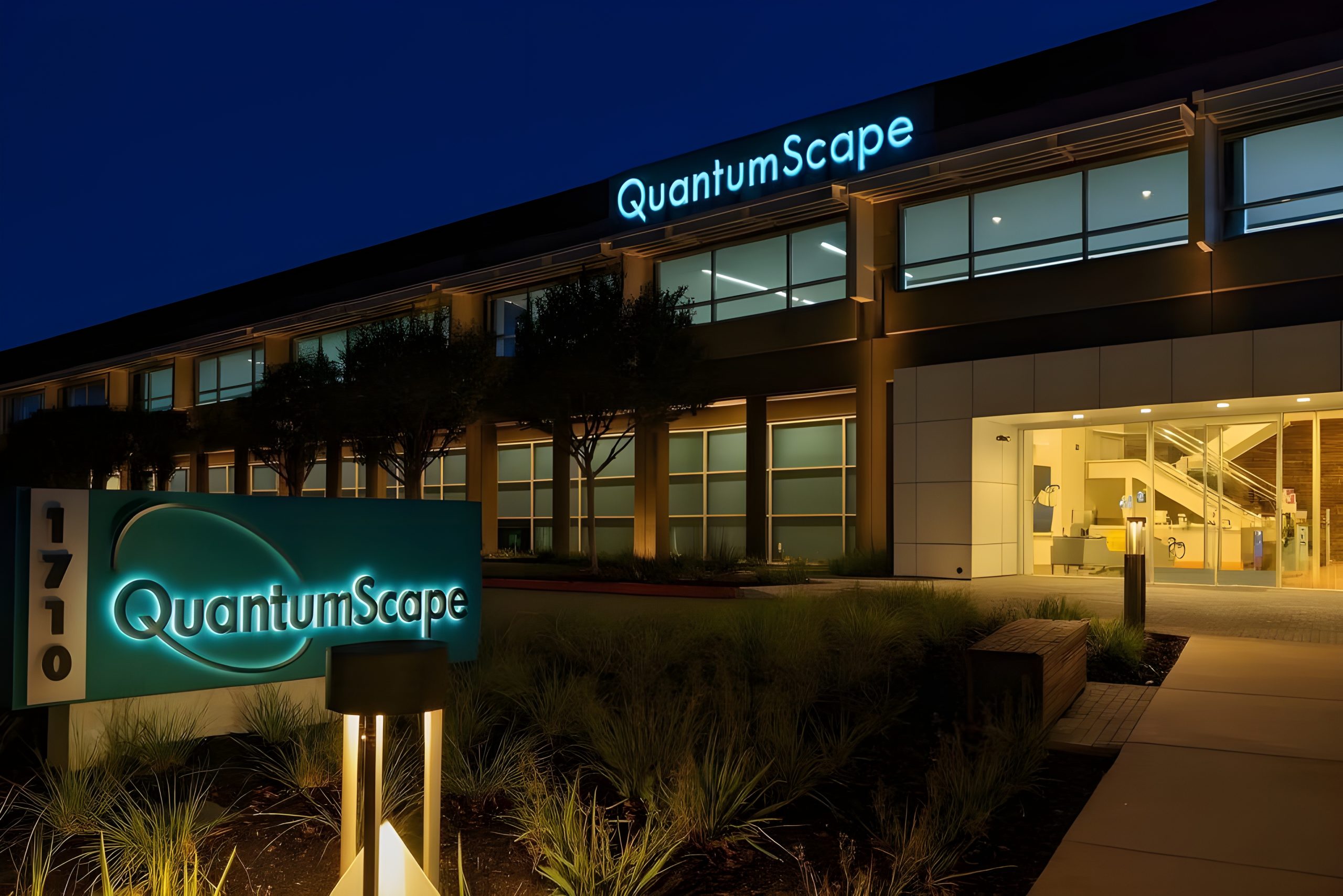
QuantumScape has introduced Osprey, a new all-solid-state battery development platform that could address some of the biggest technical challenges facing next-generation electric vehicle batteries.
Announced on November 11, 2026, the platform combines the company’s ceramic separator and anode-free lithium-metal design with a solid cathode. Early laboratory testing reportedly achieved 1,000 full charging cycles while retaining approximately 80% of the cell’s original capacity.
QuantumScape also demonstrated charging from 10% to 80% in around five minutes. Although these results are promising, Osprey remains a development technology, and larger cells, manufacturing scalability and real-world vehicle performance still require substantial validation.
QuantumScape Introduces Its Osprey All-Solid-State Platform
The Osprey announcement represents an expansion of QuantumScape’s solid-state battery development program. The California-based company has spent years developing lithium-metal battery technology, with the aim of improving energy density, charging speed, and battery performance compared with conventional lithium-ion designs.
Osprey builds on the company’s existing QSE architecture but introduces an important change. It combines QuantumScape’s proprietary ceramic separator and anode-free lithium-metal design with a solid cathode containing a sulfide-based solid electrolyte.
This creates an all-solid-state cell rather than a design that still depends on liquid electrolyte within the cathode.
The difference matters because solid-state batteries are intended to replace liquid electrolyte components with solid materials. This could offer improvements in energy storage and safety, although the technology presents difficult engineering challenges.
Solid materials must maintain stable contact with one another during charging and discharging, while the battery must also manage expansion, contraction, and chemical reactions over repeated cycles.
Sulfide-based materials have attracted considerable attention because of their high ionic conductivity and potential for battery manufacturing. However, they have faced problems involving chemical compatibility with lithium metal and the pressure required to maintain stable cell operation.
QuantumScape says Osprey combines its ceramic separator with a sulfide-based solid cathode to address these limitations.
The platform is also designed to support different cathode chemistries. QuantumScape says it has tested Osprey using solid cathodes developed internally as well as materials supplied by automotive customers.
This flexibility is important because battery manufacturers and vehicle companies may want to retain control over their own cathode materials while adopting another company’s separator or cell architecture.
Osprey is therefore not being presented simply as a finished battery that automakers can immediately install in production vehicles. Instead, QuantumScape describes it as an open development platform that could support licensing agreements and joint engineering programs with battery developers and automotive manufacturers.
The announcement also expands the company’s commercial approach. QuantumScape says cells based on its QSE platform are already being shipped to customers, while Osprey represents a longer-term technology pathway for all-solid-state battery development. The company is already working with automotive partners on Osprey-related development.
The central question is whether the architecture can maintain its reported performance when developed into larger cells and eventually complete battery packs.
The 1,000-Cycle Result and Five-Minute Charging Claim
The most notable part of QuantumScape’s announcement is the reported combination of battery longevity, charging speed, and low operating pressure. According to the company’s published results, Osprey cells completed 1,000 full charge cycles while retaining approximately 80% of their initial capacity.
Battery cycle life is an important measurement because it indicates how well a cell maintains its ability to store energy after repeated charging and discharging. For electric vehicle owners, better capacity retention could mean that a battery maintains more of its original driving range over years of use.
However, the testing conditions matter. QuantumScape specifies that its 1,000-cycle result was achieved at room temperature, using 1C charging and discharging rates, 100% depth of discharge, and cathode loading above 5 mAh per square centimeter. The tests were conducted under approximately one atmosphere of pressure.
This is a laboratory result, not a confirmed lifespan for a complete vehicle battery pack. Real-world battery performance depends on temperature changes, charging habits, driving conditions, cell design, and thermal management. Automakers would need extensive additional testing before making reliable vehicle-life claims.
The charging result is another major part of the announcement. QuantumScape reports that Osprey cells can charge from 10% to 80% in approximately five minutes. If comparable performance could eventually be achieved in production-sized automotive battery packs, it could significantly reduce charging stops during longer journeys.
Fast charging is particularly important because many electric vehicle buyers remain concerned about the time required to recharge. Conventional battery systems often need considerably longer than five minutes to reach 80%, depending on the vehicle, charger, battery temperature, and charging conditions.
However, a cell-level demonstration does not guarantee that a complete electric vehicle will charge at the same speed. A production battery pack contains many interconnected cells, cooling systems, electrical connections, and control hardware. Its charging rate must also account for heat generation, charging infrastructure, and long-term durability.
QuantumScape also highlights Osprey’s ability to operate at low pressure. The company reports that the cells achieved the 1,000-cycle result under approximately one atmosphere of pressure. This is significant because some solid-state battery designs require substantial external pressure to maintain contact between their internal materials.
Reducing that requirement could simplify battery-pack engineering. Heavy compression equipment can add weight, complexity, and cost, making it more difficult to integrate solid-state cells into passenger vehicles.
The company has additionally demonstrated operation at temperatures down to -20°C, or -4°C. Cold-weather performance is important because low temperatures can reduce battery power and usable capacity.
However, the published result establishes laboratory operation at that temperature, not a guaranteed range or charging performance for a complete electric vehicle.
QuantumScape also projects volumetric energy density of up to approximately 1,100 watt-hours per liter for an energy-optimized design. This is a projected figure, not a verified specification for a production battery pack.
Commercial Production and Automotive Applications Still Face Challenges
Despite the promising test results, Osprey is not ready for mass production. QuantumScape’s own technical paper acknowledges that significant engineering work remains before the platform can reach commercial manufacturing scale.
One major challenge involves cell size. Much of the published performance data comes from two-layer unit cells with an area comparable to the company’s QSE-5 design.
Automotive manufacturers generally prefer larger-format prismatic cells with greater individual capacity. Developing those cells requires additional layers, larger active areas, and reliable manufacturing processes.
Moving from small laboratory cells to larger formats is not a simple matter of increasing dimensions. Engineers must ensure that materials remain evenly distributed, internal interfaces stay stable, and performance remains consistent throughout the cell. Small manufacturing variations can become more significant as battery dimensions increase.
Manufacturing speed is another obstacle. QuantumScape says the fundamental process for producing Osprey cells has been demonstrated at a laboratory scale, but higher-throughput processes are still under development.
A technology that performs well in controlled experiments must also be capable of producing large quantities of consistent cells at a commercially viable cost.
The company believes its existing work on sulfide cathode manufacturing could help reduce some development requirements.
Osprey is designed to allow battery developers to use their own solid cathode materials while benefiting from QuantumScape’s ceramic separator and anode-free architecture. This could create opportunities for collaboration instead of requiring every partner to adopt an identical battery chemistry.
Licensing and joint development are therefore important parts of the platform’s commercial strategy. Rather than depending exclusively on selling complete battery cells, QuantumScape could work with manufacturers that want to incorporate its technology into their own development programs.
For automakers, the potential benefits are significant if the results translate into production vehicles. Higher energy density could allow a vehicle to store more energy within a given battery volume. Faster charging could improve convenience, while lower operating pressure could reduce some packaging and engineering requirements.
However, no production vehicle equipped with an Osprey battery has been announced. QuantumScape has not provided a confirmed commercial launch date, production capacity, or final battery cost. It has also not disclosed a vehicle-specific range figure based on the new platform.
Safety will require further validation as well. Solid-state designs are often promoted for their potential safety advantages, but a complete battery pack must undergo testing for thermal stability, mechanical damage, electrical faults, and performance under demanding conditions.
QuantumScape reports a favourable safety profile for its ceramic separator, but that should not be confused with certification of a finished automotive battery system.
The next stage will involve working with automotive partners to develop larger cells and improve manufacturing processes. Those steps will determine whether Osprey can move beyond laboratory demonstrations and become a practical option for future electric vehicles.
For now, QuantumScape has demonstrated progress in several areas that have challenged solid-state battery developers. The combination of 1,000-cycle performance, five-minute charging and operation at low pressure makes Osprey an important development.
Nevertheless, the technology still needs to prove that it can deliver similar results in larger cells, at production scale and under everyday driving conditions.