
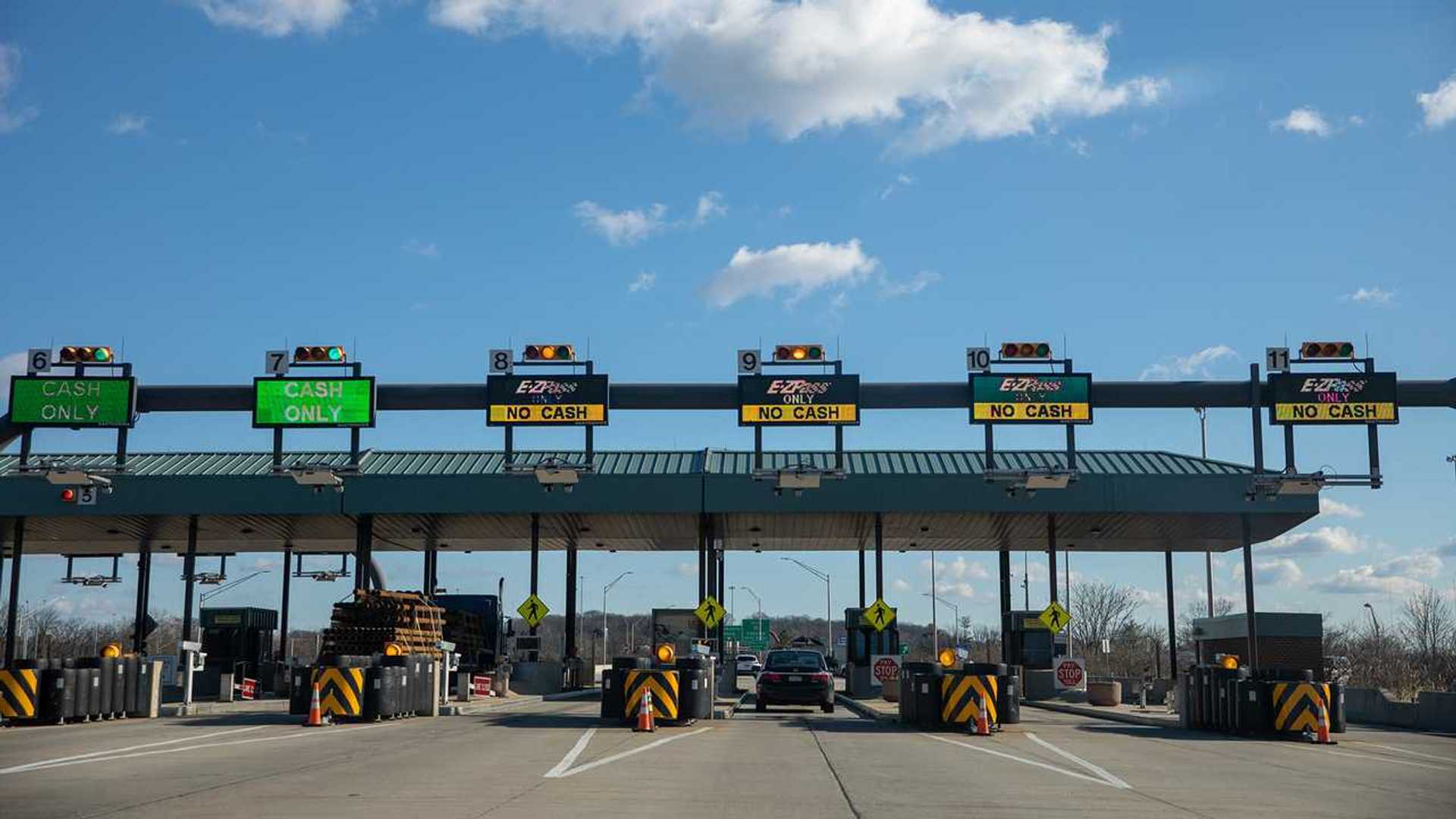
Driving through an electronic toll system without paying may seem like a minor oversight, but repeated unpaid tolls can create much bigger problems.
In several U.S. states, tolling authorities can report outstanding debts to motor vehicle agencies, potentially leading to registration suspension, renewal restrictions, or additional administrative penalties.
The rules differ considerably: some states use a minimum unpaid balance, while others count the number of violations or require repeated notices before taking action. Understanding these laws can help drivers avoid losing registration privileges over bills they could have resolved much earlier.
1. Pennsylvania
Pennsylvania has a specific legal threshold for drivers who repeatedly ignore toll invoices. Under Section 1380 of the Pennsylvania Vehicle Code, the Pennsylvania Department of Transportation can suspend a vehicle’s registration when the registered owner has four or more unpaid toll invoices or owes at least $250 in unpaid tolls, administrative fees, and costs.
The $250 threshold applies regardless of how many invoices are outstanding. This means a driver does not necessarily need to accumulate four separate violations before facing registration consequences.
The Pennsylvania Turnpike Commission must provide written notice of its intention to seek suspension and an opportunity for the vehicle owner to respond through an administrative proceeding.
Drivers should not assume that an unpaid invoice will immediately result in a suspension. However, ignoring the notices can allow the process to advance to PennDOT.
A suspension can create problems beyond the original toll debt. The registration remains suspended until the commission confirms compliance and the owner satisfies the applicable restoration requirements.
A restoration fee may also be required. If additional unpaid tolls accumulate while the registration is already suspended, Pennsylvania law allows another suspension period.

The practical lesson is to address disputed invoices early rather than wait until registration renewal. Owners should check that their license plate and mailing address are recorded correctly, retain payment receipts, and contact the Pennsylvania Turnpike Commission if an invoice appears incorrect.
Pennsylvania’s rules make repeated nonpayment a registration issue, not simply an unpaid bill.
2. New Jersey
New Jersey has strengthened its enforcement rules for drivers who accumulate unpaid toll violations. Under New Jersey Administrative Code Section 16:3-5.1, the Motor Vehicle Commission may suspend an owner’s vehicle registration or deny registration privileges when a tolling authority reports qualifying unpaid debts.
The rules establish two key thresholds. Drivers must have accumulated at least $500 in unpaid tolls and fees over a three-year period, or have six or more unpaid toll violations, with at least one occurring after January 16, 2024.
Failing to follow an agreed payment arrangement can also trigger registration enforcement. This means a driver who negotiates a repayment plan but subsequently stops making the required payments may still face consequences.
The regulation also allows action based on qualifying reports from reciprocal tolling entities, making the issue relevant to certain out-of-state toll debts as well.
There are procedures before a suspension takes effect. New Jersey’s framework provides for notice and an opportunity to dispute the reported debt. Drivers should use that opportunity if the vehicle was sold, the plate was recorded incorrectly, or the toll charges do not belong to them. Simply ignoring correspondence can make the situation more difficult to resolve.

The regulation limits penalties, excluding the toll amounts themselves, to $100 for the first violation and $600 for each subsequent violation.
These amounts are separate from the registration consequences and should not be confused with the original toll bill. Anyone receiving a pending suspension notice should contact the named tolling authority promptly and retain written confirmation of any settlement.
3. New York
New York can suspend a vehicle’s registration when its owner repeatedly fails to respond to toll violations. Under Section 127.14 of the New York Codes, Rules and Regulations, the Department of Motor Vehicles can initiate a proposed suspension when a tolling authority reports at least three unpaid toll violations within five years.
The violations must arise from toll transactions occurring on different days. This means three notices connected to separate days can trigger the process, while multiple charges from one day do not automatically satisfy the same threshold.
There is a separate rule for commercial vehicles. A commercial vehicle registrant can face a proposed suspension when unpaid tolls, fees, and other charges reach at least $200 within five years.
The regulation gives the registrant the right to request an administrative hearing before the proposed suspension takes effect. Ignoring the notice or missing the response deadline can result in the suspension proceeding.
The restriction can remain in place until the tolling authority confirms that the outstanding tolls, fees, and charges have been paid or otherwise resolved. New York’s tolling system includes facilities operated by different authorities, so drivers should carefully identify which agency issued the violation.

For motorists, the practical risk is not limited to the original toll amount. Unresolved notices can accumulate, become harder to track, and eventually affect the legal ability to operate a registered vehicle.
Check the violation details, transaction dates, and license plate information as soon as a notice arrives. If the vehicle was sold, stolen, or incorrectly identified, use the official dispute procedure rather than simply withholding payment.
4. Maryland
Maryland has a particularly direct system for connecting unpaid toll violations with vehicle registration. Under the state’s regulations, the Maryland Transportation Authority can ask the Motor Vehicle Administration to refuse registration renewal or transfer when a vehicle has at least one unpaid final toll violation.
This is different from a system that waits for several unpaid bills to accumulate. A final violation must first go through the required notice and citation process.
The state also distinguishes between registration refusal and suspension. Under COMAR 11.07.07.08, a vehicle with unpaid final toll violations can be referred for registration refusal. For registration suspension, the relevant threshold is at least $1,000 in unpaid final toll violations.
The authority must send a past-due notice, and the owner generally has 15 days from its mailing date to pay before the referral proceeds.
Once the MVA receives the required notification, it can refuse renewal or transfer or suspend the registration depending on the applicable enforcement route. Payment or an approved resolution must be reported by the toll authority before the restriction can be lifted. The rules also provide for collection through Maryland’s Central Collection Unit in qualifying cases.

This makes checking toll notices especially important for Maryland drivers. A bill that appears small at first can become more serious after civil penalties and additional charges are included.
Keep the vehicle registration address current, review video-toll notices, and challenge incorrect charges within the stated deadline. Maryland’s rules also contain reciprocal provisions, so certain out-of-state vehicle owners may be affected where an agreement applies.
5. Virginia
Virginia drivers can face registration problems after receiving multiple unpaid toll notices. The Virginia Department of Motor Vehicles operates a Vehicle Registration Withholding program that allows toll facility operators to restrict the reissuance or renewal of registration for a vehicle involved in toll violations.
According to the DMV, receiving invoices for two or more unpaid tolls can be enough for a toll operator to request this restriction.
The process is not necessarily an immediate suspension after the first missed payment. The toll operator reports the outstanding obligation to the DMV, which then notifies the vehicle owner.
The owner must contact the reporting toll facility and either pay the outstanding tolls and administrative fees or formally contest liability. If neither action is taken, the registration restriction can prevent the vehicle’s decals from being renewed.
Virginia also has a separate provision for unpaid toll debts incurred in certain other states. Under Section 46.2-819.10 of the Virginia Code, the DMV can refuse to issue or renew registrations or license plates after receiving qualifying notice from a state that has a reciprocal agreement with Virginia.
The restriction remains until that state confirms that the outstanding tolls, fees, and penalties have been paid. A $40 processing fee applies under this provision.

Drivers should pay attention to the distinction between an in-state toll violation and an out-of-state debt. The legal route and the vehicles affected can differ. If you receive a notice for a vehicle you no longer owned or were not driving, submit the required evidence promptly.
Virginia’s DMV advises motorists to resolve the reported debt directly with the authority that placed the registration hold.
6. Florida
Florida’s toll-enforcement rules allow unpaid toll violations to affect a driver’s ability to obtain or renew vehicle registration documents. Under Florida Statutes Section 316.1001, failure to pay a required toll is a noncriminal traffic infraction.
The law allows toll enforcement officers to issue citations, including by mail to the registered vehicle owner. It also establishes procedures for identifying the person responsible when someone other than the registered owner had control of the vehicle.
The registration consequence is set out in subsection (4). Governmental entities can provide the Florida Department of Highway Safety and Motor Vehicles with information about people who have one or more outstanding toll violations.
The department may then refuse to issue a license plate or validation sticker for a vehicle associated with the reported outstanding violation.
This makes Florida’s system important even for drivers who believe a small toll charge is not worth addressing. An unpaid amount can progress through notices and enforcement procedures, potentially creating a registration problem when the owner tries to renew.
The law does not require a driver to reach a particular dollar threshold before the information can be reported under this provision.

There are also procedures for owners who were not responsible for the vehicle at the time of the violation. For example, an owner may submit an affidavit identifying the person who had care, custody, or control of the vehicle, or provide a police report if it was stolen. Deadlines matter, so the notice should be reviewed carefully.
Florida motorists should use the official tolling authority’s payment or dispute process and keep confirmation numbers. Resolving the underlying violation before registration renewal is much easier than discovering a hold when a new plate or validation sticker is needed.
7. Texas
Texas does not automatically block registration because a driver misses one toll payment. Its law targets people who meet the state’s definition of a habitual toll violator.
Under Transportation Code Section 372.106, a registered vehicle owner can meet that definition after receiving at least two written notices of nonpayment containing a combined total of 100 or more nonpayment events within one year, provided the amounts due remain unpaid and the required warnings have been issued.
Once the owner has been finally determined to be a habitual violator, Section 502.011 allows a county tax assessor-collector or the Texas Department of Motor Vehicles to refuse registration or renewal after receiving written notice from the toll project entity.
This can prevent the owner from renewing the affected vehicle’s registration until the toll debt is resolved under the applicable rules.
The process includes opportunities to challenge the habitual-violator determination. Toll authorities provide notice, and drivers can dispute the account or pursue the applicable hearing process.
Some authorities also offer payment arrangements. For example, the North Texas Tollway Authority explains that a registration block can be applied after the habitual-violator process and may be cleared when the balance is paid, or an acceptable payment arrangement is made.

Texas drivers should not confuse ordinary late fees with the much higher habitual-violator threshold. The registration penalty is intended for repeated, substantial nonpayment rather than an isolated missed toll.
Nevertheless, ignoring successive notices can allow a manageable account to become a serious administrative problem. Review the vehicle’s toll account regularly, especially if you use multiple toll roads or drive in different parts of the state.
8. Colorado
Colorado allows unpaid toll debts to affect vehicle registration when the debt has reached the required legal stage. Under Colorado Revised Statutes Section 43-3-302, a court or toll road or highway company can report certain outstanding judgments, warrants or failures to pay tolls, fees and civil penalties to the Department of Revenue.
When the department receives a certified report confirming an unpaid final order, it must refuse to renew the registration of the vehicle until the amount due is paid in full.
The reference to a final order is important. A driver should not assume that every initial toll invoice automatically creates a registration block.
The enforcement provision applies after the required toll-evasion process has resulted in a final order and the unpaid obligation is properly reported. The reported debt can include the toll itself, associated fees and a civil penalty.
For drivers, the consequences may only become apparent when it is time to renew their vehicle registration. The vehicle can still be used for regular trips until the owner discovers that the outstanding violations prevent the renewal from being processed.
That is why it is important to respond to notices rather than leave them unopened or assume that an old toll bill has disappeared.

If you believe a toll charge is incorrect, follow the toll operator’s dispute procedure and keep copies of the evidence submitted. If the vehicle was sold or the license plate was recorded incorrectly, provide documentation as early as possible.
Once a final order has been entered, resolving the matter may require dealing with the authority or court involved, not simply paying a new toll invoice.
Colorado’s rule is a reminder that toll enforcement can eventually reach the registration system, even when the original charge was relatively small.
