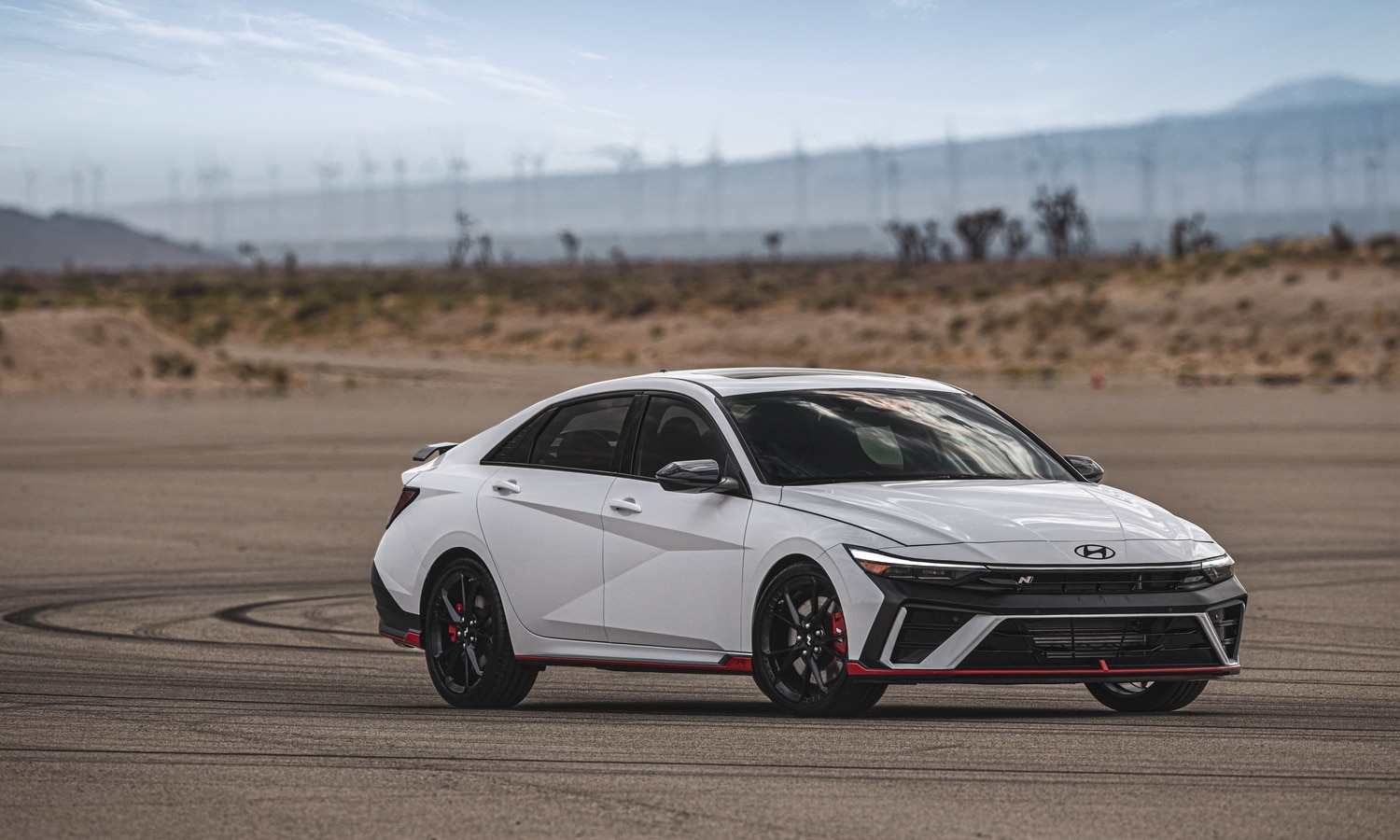
Hyundai is preparing to introduce its next-generation Elantra to American buyers, confirming that the redesigned compact sedan will make its U.S. debut at AutoMobility LA on November 19, 2026.
The announcement reinforces the company’s commitment to traditional passenger cars at a time when SUVs and crossovers dominate much of the American market. The new Elantra is expected to arrive as a 2027 model, while the redesigned hybrid is scheduled to carry a 2028 model-year designation.
With updated styling, improved cabin technology, and revised powertrain options, Hyundai is preparing to compete again with the Toyota Corolla and Honda Civic.
Hyundai Confirms the New Elantra for the American Market
Hyundai announced on November 17 that the all-new Elantra will make its debut at AutoMobility LA in Los Angeles on November 19. The presentation is scheduled to begin at 9:05 a.m. Pacific Time and will be livestreamed on Hyundai’s official YouTube channel.
The event will introduce the 2027 Elantra and 2028 Elantra Hybrid, confirming that both versions are planned for the U.S. market.
The American announcement follows the earlier introduction of the eighth-generation Elantra in South Korea, where the sedan is sold under the Avante name. That version provides an indication of the direction Hyundai is taking with its compact sedan, although the final American specifications, equipment, and pricing have not yet been announced.
The redesigned model represents an important update for Hyundai because the Elantra remains one of its established passenger cars in the United States. While many manufacturers have reduced their sedan offerings to concentrate on SUVs, Hyundai continues to see demand for a relatively affordable four-door vehicle.
The sales figures support that decision. Hyundai sold 140,614 Elantras in the United States between January and October 2026, an increase of 11% compared with the same period in 2025. October alone accounted for 12,011 units, making the Elantra the company’s third-best-selling model for that month, behind the Santa Fe and Tucson.
These numbers give Hyundai a reason to invest in a complete redesign rather than simply continue selling the existing generation with minor updates.
The compact sedan segment remains competitive, but the Elantra has maintained a customer base among buyers who value fuel economy, manageable dimensions, and a lower purchase price than many SUVs.
Hyundai has also confirmed that the new Tucson will appear at the same Los Angeles event. Both vehicles are important parts of the company’s next-generation product plans, although the Elantra announcement is particularly notable because it demonstrates that Hyundai is not abandoning conventional passenger cars.
The reveal will include Hyundai Motor North America executives, including President and CEO Randy Parker, design chief Brad Arnold, and product planning executive Olabisi Boyle. Their participation is expected to provide more information about the company’s design direction and product strategy.
For now, the November 19 presentation is the key date for American buyers. Hyundai has confirmed the U.S. debut, but dealership arrival dates, final pricing, and the complete list of available trims remain undisclosed.
Sharper Exterior Styling and a More Modern Interior
The eighth-generation Elantra introduces a noticeable change in Hyundai’s design approach. The outgoing model uses prominent creases and angular bodywork, while the redesigned sedan adopts a cleaner, more geometric appearance.
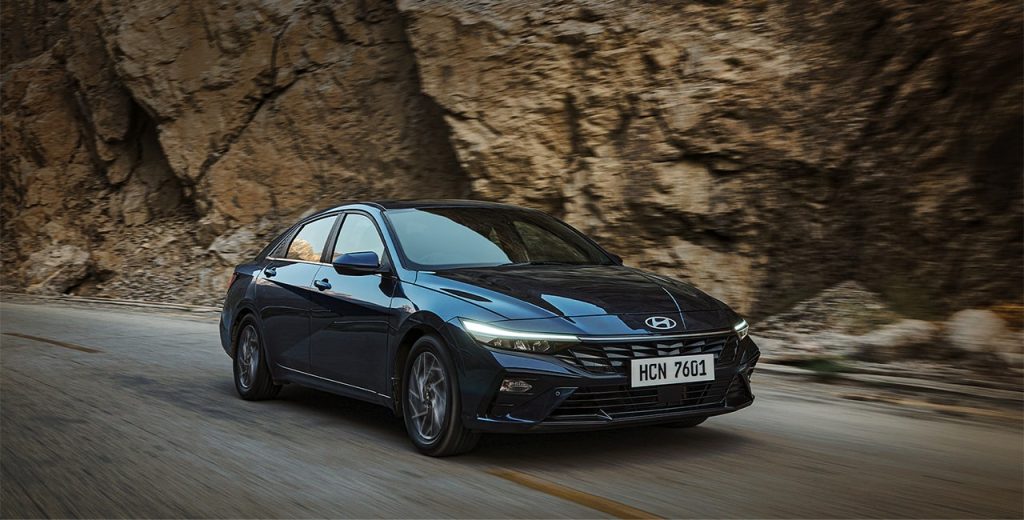
Its styling follows Hyundai’s newer Art of Steel design language, with a squared-off front end, sharper lighting elements, and more defined body proportions.
The South Korean version offers a preview of what American customers can expect. The front design features a more structured appearance, with narrow lighting elements and a wider-looking grille area. The rear also receives revised lighting and bodywork, creating a more mature appearance than the previous generation.
The new car has a longer wheelbase than its predecessor, which could benefit passenger space. The Korean-market version measures approximately 108.3 inches between the axles, compared with 107.1 inches for the outgoing model.
This increase could provide additional room for rear passengers, although the final U.S. dimensions have not yet been confirmed.
Inside, Hyundai has made substantial changes to the dashboard and technology layout. The Korean model features a large central infotainment display running the company’s Android-based Pleos Connect system.
The software includes an application marketplace and Gleo, an artificial-intelligence assistant designed to respond to voice commands and help with vehicle functions and information searches.
A separate digital instrument display sits closer to the driver’s line of sight. Hyundai has also retained physical controls for important functions, including climate adjustments.
Keeping conventional buttons and dials alongside digital displays could make everyday operation more straightforward for drivers who do not want every function hidden inside touchscreen menus.
The cabin appears more premium than the previous generation, with revised materials, a cleaner dashboard design, and improved presentation. However, Hyundai has not confirmed which interior features or display sizes will be standard on American-market versions.
Equipment could vary between trims, and the Korean specification should not automatically be treated as the final U.S. package.
Technology will be an important part of the new Elantra’s appeal. Compact sedan buyers increasingly expect smartphone connectivity, useful driver-assistance systems, and modern infotainment features even in relatively affordable vehicles.
Hyundai will need to balance those expectations with pricing if it wants to maintain the model’s value-focused position.
The redesigned exterior and interior suggest that the Elantra is moving toward a more refined identity rather than relying on dramatic styling alone. The final American version will reveal how much of the Korean-market equipment and design carries over.
Gasoline and Hybrid Models Will Challenge the Corolla and Civic
Hyundai has confirmed two different model-year introductions for the American market. The gasoline-powered Elantra is expected as a 2027 model, while the hybrid will carry a 2028 model-year designation.
This staggered approach gives the company an opportunity to introduce the conventional version first and expand the lineup with an electrified option.
In South Korea, the redesigned Elantra is offered with a naturally aspirated 2.0-liter four-cylinder gasoline engine producing 147 horsepower and 132 lb-ft of torque. The engine is paired with a continuously variable transmission. These figures provide a reference for the new generation, but Hyundai has not yet published the final U.S. powertrain specifications.
The Korean-market hybrid uses a 1.6-liter gasoline engine combined with an electric motor. Its reported combined output is 155 horsepower, an improvement over the previous generation’s 138-hp hybrid system.
The hybrid also uses a dual-clutch transmission and is designed to improve fuel efficiency without requiring owners to plug the car into an external charger.
Korean-market fuel-economy figures indicate an improvement over the outgoing hybrid, but American EPA ratings have not been announced. Differences in equipment, testing procedures, and market-specific powertrain calibration mean those figures should not be treated as U.S. estimates.
The hybrid could become particularly important in the American compact sedan segment. Buyers who want lower fuel consumption without switching to a fully electric vehicle have increasingly more options.
Toyota already offers the Corolla Hybrid, while Honda competes with the Civic Hybrid. Hyundai will need competitive pricing and efficiency to attract customers considering those established alternatives.
The Elantra also has a potential performance future. Hyundai’s N division has been associated with the high-performance version of the current model, and development of a next-generation Elantra N has attracted attention.
Reports suggest that a future version could use a 2.5-liter turbocharged engine, but Hyundai has not confirmed its final output, transmission, or American availability.
The company’s wider plans include expanding its N performance lineup to more than seven models by 2030. That target demonstrates that Hyundai intends to continue investing in performance vehicles alongside its mainstream and electrified products. However, the standard Elantra and hybrid will be the main focus of the upcoming U.S. introduction.
Competition will remain intense. The Toyota Corolla benefits from a long-standing reputation and an established hybrid offering, while the Honda Civic attracts buyers with multiple powertrain and body-style choices.
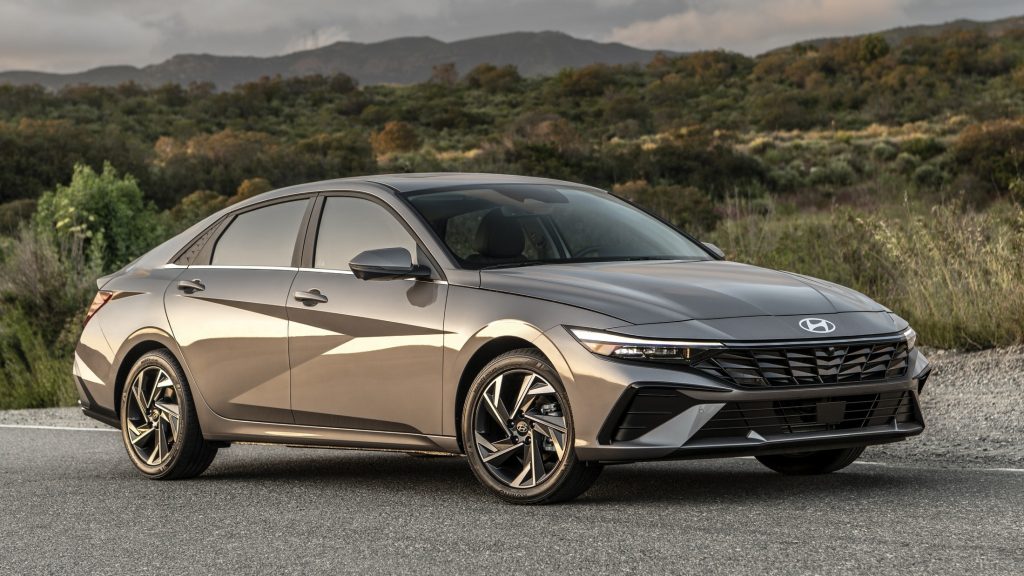
Hyundai’s response will depend on how effectively the new Elantra combines interior space, technology, efficiency, and pricing.
The November 19 debut is expected to clarify several key details about the U.S. lineup, including final engine specifications, available trims, standard equipment, and pricing. Until then, the Korean-market version provides a useful preview but should not be treated as a complete guide to what American buyers can expect.
Hyundai’s decision to introduce another generation of the Elantra shows that the company still sees a meaningful place for compact sedans in America. SUVs may dominate sales across much of the industry, but the Elantra’s 2026 performance demonstrates that affordable passenger cars continue to attract customers.
The redesigned model will now have to build on that demand while facing two well-established rivals in the Corolla and Civic.