
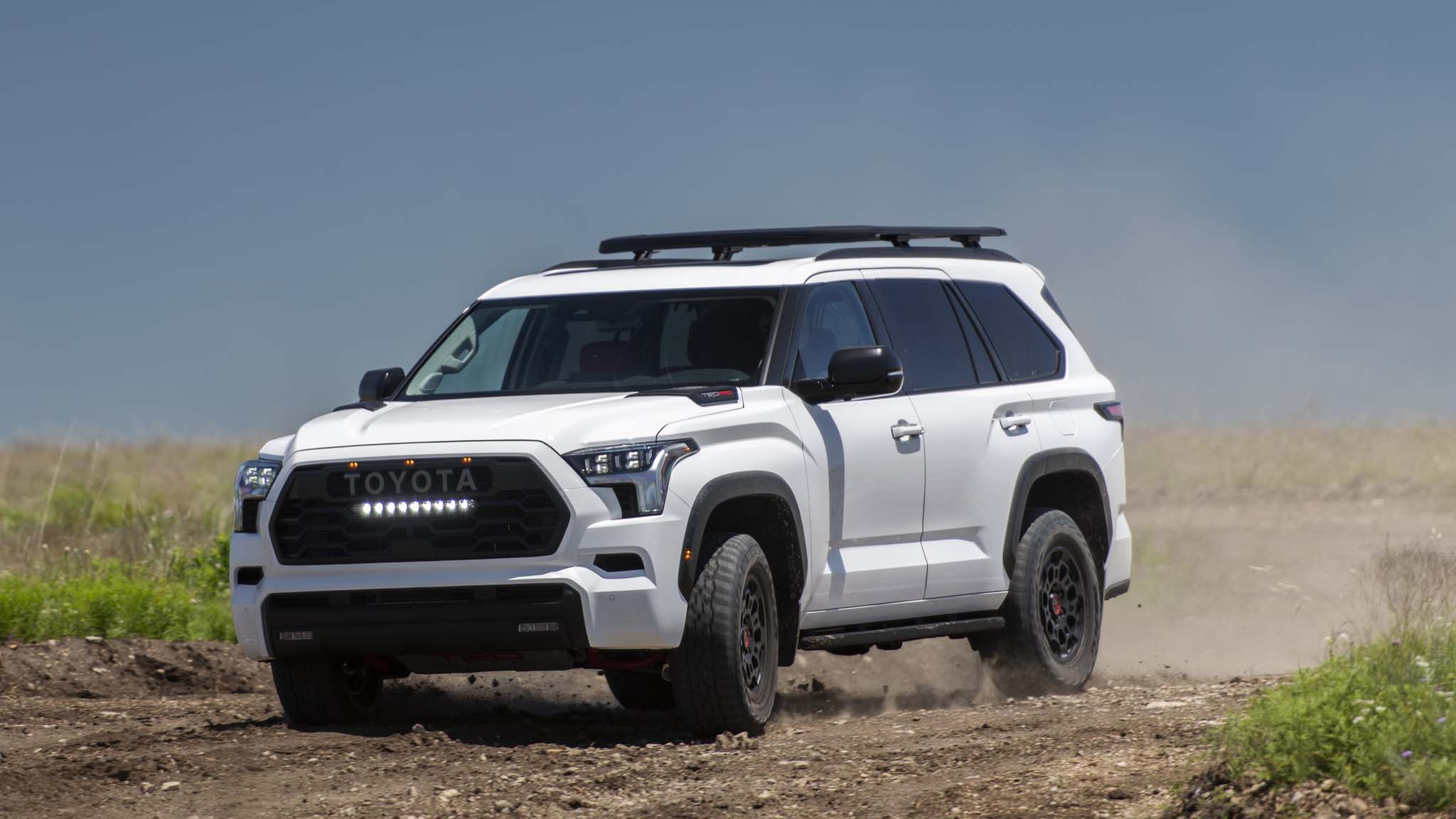
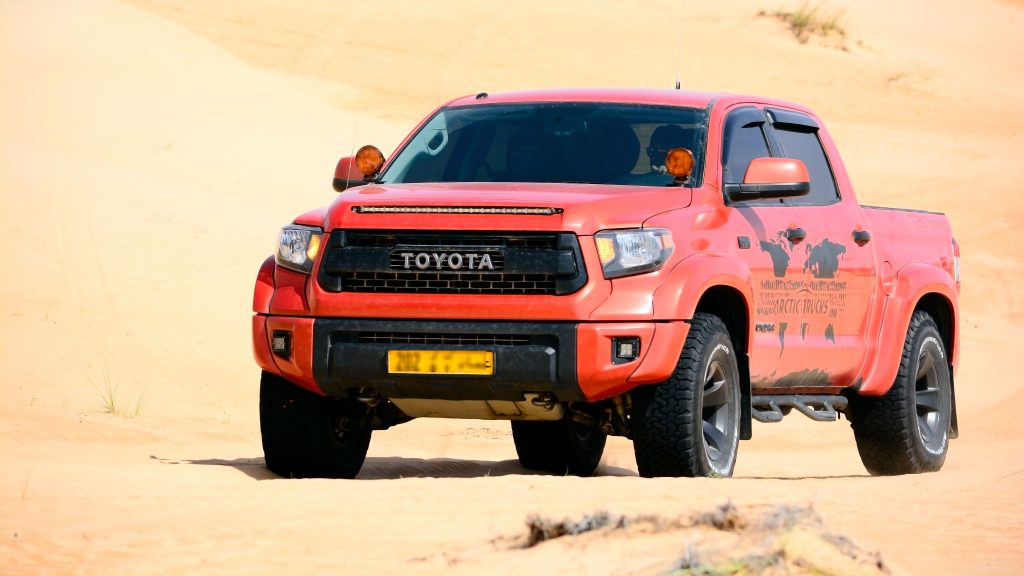
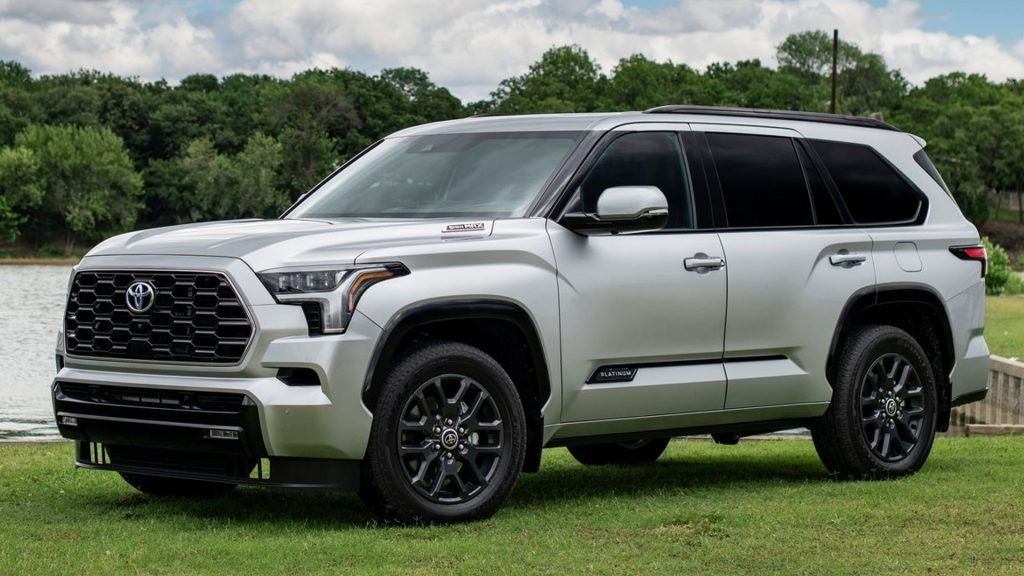
Toyota is giving its full-size Tundra pickup and Sequoia SUV substantial mid-cycle updates for the 2027 model year, with a particular focus on towing assistance, cabin technology, and off-road equipment.
Both vehicles gain a new suite of trailer-focused driver-assistance features, including automated trailer detection and an improved backup guide. The Tundra can tow up to 12,000 pounds, while the Sequoia reaches a maximum of 9,520 pounds, depending on configuration.
The updates also bring a standard 14-inch multimedia display, a digital instrument cluster, and Toyota Safety Sense 4.0, giving the two truck-based models a broader technology package.
Toyota Adds More Intelligent Towing Technology
The most significant change for both vehicles is the introduction of Toyota’s Trailer Advanced Driver Assistance Systems, or TADAS. The package is designed to make towing less complicated by helping drivers monitor a trailer, maintain their position on the road, and reverse into tighter spaces.
These systems do not replace careful driving or proper trailer setup, but they add information and steering assistance that can be useful when maneuvering a large load.
Automated Trailer Detection uses the rear radar and camera systems to identify when a trailer is connected and estimate its physical dimensions. The vehicle can then add the trailer information to a redesigned Trailer Garage menu within the multimedia display.
Moving these controls from the instrument cluster to the central screen gives drivers a larger interface for managing trailer settings.
The trailer blind spot monitor extends the vehicle’s blind-spot monitoring area to account for the trailer’s length and surrounding space. This is important because a trailer can occupy a lane long after the towing vehicle has moved ahead.
The system is designed to provide warnings when another vehicle enters the monitored area, helping the driver judge lane changes more carefully.
Trailer Lane Trace Assist is another addition. It adapts Toyota’s lane-centering assistance for towing conditions and can provide steering support to help keep the vehicle and trailer within lane markings.
Toyota says the system can respond to lane splits, uneven road surfaces, and certain wind disturbances. It is an assistance feature, not autonomous driving, and the driver remains responsible for steering and controlling the combination.
The revised Trailer Backup Guide is intended to make reversing more manageable. It uses dynamic on-screen guidelines and a slider interface, with semi-automated steering support to help guide the truck or SUV toward a desired trailer path.
Toyota says the system can also help detect the risk of jackknifing when the trailer turns sharply relative to the towing vehicle.
These features target common towing challenges, from judging a trailer’s blind spots to reversing in a crowded storage area.
They combine camera and radar information with steering assistance, although drivers remain responsible for controlling the vehicle and trailer. Availability can vary by grade and configuration, so buyers should check the exact equipment list.
Tundra and Sequoia Gain Larger Screens and Updated Safety Features
The technology changes extend beyond towing. Both 2027 models receive Toyota’s latest Audio Multimedia system with a standard 14-inch touchscreen. The interface includes a configurable home screen and a Quick Control menu that keeps frequently used functions accessible.
The system also supports AT&T 5G connectivity, subject to network availability and the relevant connected-services terms.
A 12.3-inch digital instrument display is now standard, replacing smaller driver-information displays on earlier configurations. The larger screen can present vehicle information in a more configurable format, including details relevant to towing.
Toyota has also integrated a built-in Drive Recorder function that uses the vehicle’s external cameras to save short clips. Drivers can manually record events, while the system can also capture certain triggered events. Recorded footage can be played back through the central display.
Digital key functionality is included through Toyota’s connected services, allowing compatible smartphones to be used for vehicle access.
The new Arene software platform, developed by Woven by Toyota, supports improvements to voice recognition, connectivity, safety functions, and over-the-air software updates. Availability of connected features depends on compatible devices, subscriptions, and network coverage.
Both vehicles also receive Toyota Safety Sense 4.0 as standard equipment. The suite includes a pre-collision system with pedestrian detection, full-speed dynamic radar cruise control, lane departure alert with steering assist, automatic high beams, lane tracing assist, road sign assist, and proactive driving assistance.
Additional convenience and safety features include a panoramic view monitor, safe exit alert, and rear camera detection.
The Sequoia adds an advanced rear seat reminder system for 2027. A millimeter-wave radar sensor concealed in the headliner can detect movement in the second and third rows under certain conditions after the vehicle has been parked and the driver has exited.
If movement is detected, the vehicle can issue escalating alerts, including hazard lights, chimes, and the horn. With an active Safety Connect service and network access, notifications may also be sent through the app, text message, or an automated phone call.
The larger display makes trailer settings easier to view, while the recorder and driver-assistance systems add functions expected in modern full-size vehicles. The Sequoia’s rear-seat reminder addresses a separate concern for families travelling with children or other passengers.
Power, Towing Capacity, and New Off-Road Packages
The Tundra continues to offer Toyota’s twin-turbocharged 3.4-liter V6 powertrains. The available i-FORCE MAX hybrid produces a combined 437 horsepower and 583 lb-ft of torque. With the right configuration, the 2027 Tundra can tow up to 12,000 pounds.
Maximum capacity depends on cab, bed, drivetrain, and equipment, so the headline figure does not apply to every version.
Toyota has also made a 32.2-gallon fuel tank standard across the Tundra lineup, along with a tow hitch and 7/4-pin connector. An available 2.4-kilowatt inverter can provide power for tools, equipment, or outdoor activities.
The truck’s updated adaptive variable suspension and optional air-suspension combination are intended to improve ride control and support load leveling when towing or hauling.
The 2027 Sequoia uses the i-FORCE MAX hybrid powertrain as standard across the range. Its 3.4-liter twin-turbo V6 and electric motor produce 437 horsepower and 583 lb-ft of torque. Maximum towing capacity is 9,520 pounds, depending on configuration.
Although the two vehicles share the same power output figures, this does not mean the SUV offers the same towing capacity as the Tundra. Differences in vehicle weight, chassis design, and configuration all influence the maximum towing capability.
Both models also expand their off-road offerings with a Trailhunter package. On the Tundra, the package is based on the SR5 and adds Old Man Emu suspension, Michelin all-terrain tires, front recovery hooks, underbody protection, bronze-finish wheels, and off-road systems including Crawl Control, Multi-Terrain Select, and a locking rear differential.
The Sequoia’s Trailhunter treatment similarly adds upgraded suspension, skid protection, recovery hooks, all-terrain tires, and distinctive bronze wheels.
The Tundra TRD Pro receives newly tuned FOX QS3 adjustable shocks, red tow hooks, and an available Honeycomb exterior color. The Sequoia TRD Pro also gains vehicle-specific FOX QS3 shocks and red tow hooks.
These changes are intended to improve control over rough terrain, while keeping the two TRD Pro models distinct from the slower-speed, overlanding-focused Trailhunter versions.
The updated Tundra has a starting U.S. MSRP of $42,890 before delivery, processing, and handling charges. Toyota lists the 2027 Sequoia with a starting MSRP of $69,900, also before destination and handling.
The Sequoia’s higher price reflects its three-row SUV layout and standard hybrid powertrain, while the Tundra offers a wider range of work-oriented configurations.
Neither vehicle receives a complete redesign. Toyota is adding towing assistance, updated cabin technology, and factory off-road choices while retaining the existing powertrain architecture.
Trailer detection and backup assistance are the key changes for frequent tow-ers, while families may value the Sequoia’s rear-seat reminder. The updates’ appeal will depend on trim availability, final pricing, and real-world performance.
