
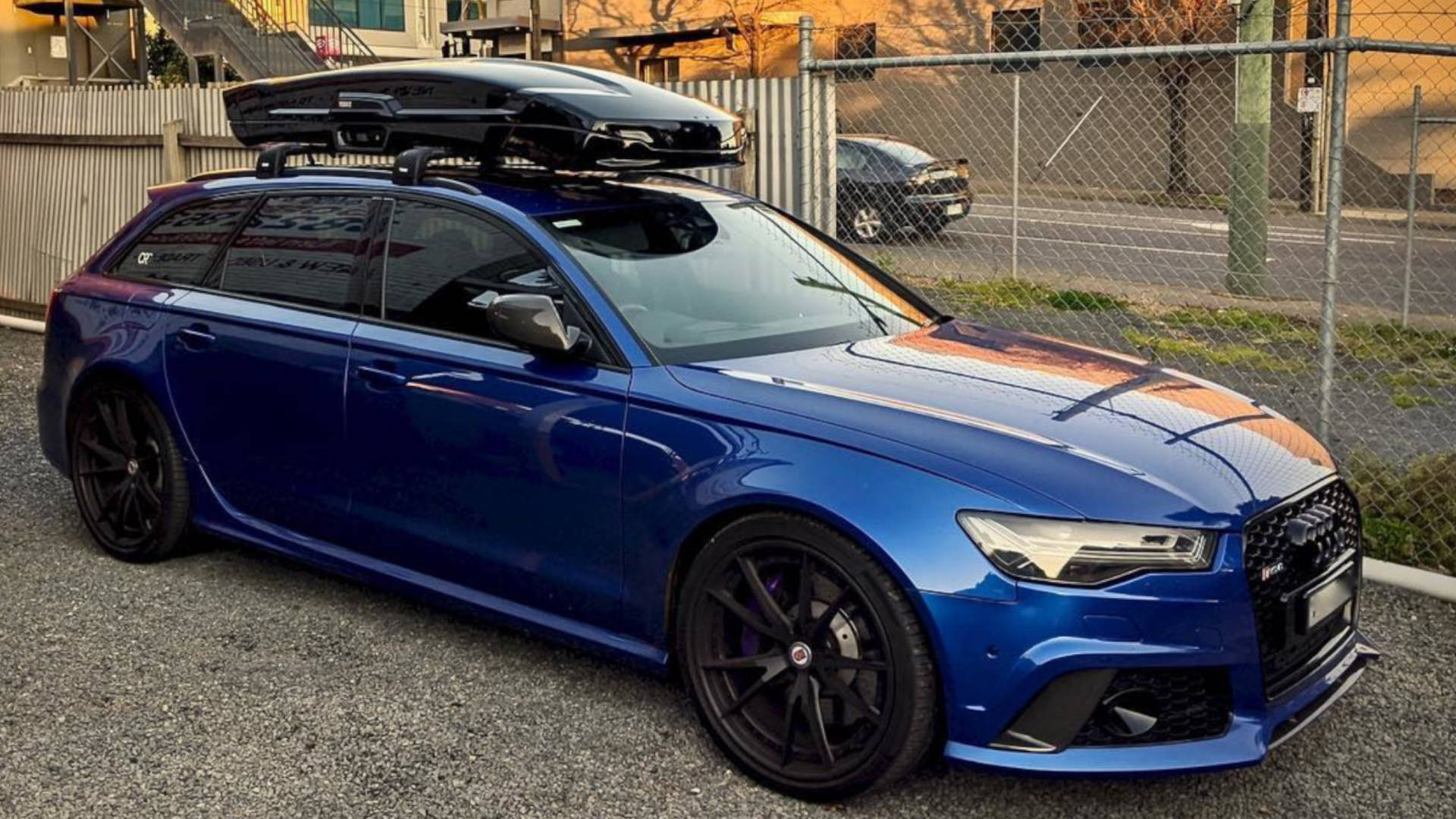
Roof racks make it easier to transport bulky equipment, luggage, bicycles, and outdoor gear without sacrificing passenger space. However, loading your vehicle’s roof is not simply a matter of fitting everything securely.
U.S. traffic laws regulate how cargo is fastened, how far it can extend beyond a vehicle, and whether it creates visibility or safety hazards.
An overloaded or improperly secured roof rack can result in a traffic citation, financial penalties, or even a serious road accident. Before carrying anything on your roof, understand these eight cargo restrictions that American drivers should know.
1. Unsecured Luggage, Boxes, and Other Loose Cargo
Strapping luggage onto a roof rack without properly securing it can turn an ordinary road trip into a traffic violation. Suitcases, cardboard boxes, camping equipment, and plastic storage containers may appear stable when the vehicle is stationary, but wind resistance and sudden braking can cause them to shift or fall.
If an object enters the roadway, it can endanger other motorists and create a serious collision hazard.
The National Highway Traffic Safety Administration (NHTSA) warns that unsecured loads contribute to approximately 850 deaths and nearly 19,000 injuries annually in crashes involving objects on the road.
Passenger vehicles account for approximately 73% of the vehicles involved in these crashes. NHTSA also confirms that all 50 states and the District of Columbia have laws addressing unsecured loads.
The legal requirements differ between states. Commercial vehicles are subject to specific federal cargo-securement standards under 49 CFR §393.100, which require loads to be secured against leaking, spilling, blowing, or falling.
These particular federal standards apply to commercial motor vehicles, not automatically to every privately owned passenger car. Private motorists remain subject to applicable state load-security and safe-operation laws.
Oregon, for example, prohibits operating a vehicle when its load is distributed or inadequately secured in a way that prevents safe operation under Oregon Administrative Rule 735-128-0010.

Use suitable ratchet straps, cargo nets, and secure mounting points rather than relying on elastic cords or a single loose rope. Check the straps after loading and again during longer journeys.
A roof rack is designed to carry cargo, but it does not make unsecured objects legal. Anything that can shift, blow away, or fall onto the road needs proper restraint before the vehicle moves.
2. Oversized Cargo Extending Beyond the Sides of the Vehicle
Carrying plywood, building panels, long furniture, or other oversized materials on a roof rack can become illegal when the load extends beyond the permitted width of the vehicle.
Drivers sometimes focus on whether the cargo fits on the roof without considering how far it projects toward neighboring traffic. A load that extends too far sideways can strike another vehicle, cyclist, pedestrian, or roadside object.
Pennsylvania establishes a specific restriction under Title 75, Section 4925. It prohibits operating a passenger-type vehicle on a highway with a load extending beyond the vehicle’s left side or more than 12 inches beyond its right side. Emergency vehicles are exempt from this particular provision.
The state also establishes a general maximum outside vehicle width of 8 feet 6 inches, including the load, under Section 4921, subject to statutory exceptions. These measurements matter when carrying wide construction materials or furniture that extends beyond the roof rack.
Washington takes a different approach to marking projecting cargo. Under Revised Code §46.37.140, loads extending more than four inches beyond either side of a vehicle must display red or orange fluorescent warning flags measuring at least 18 inches square to mark their extremities.
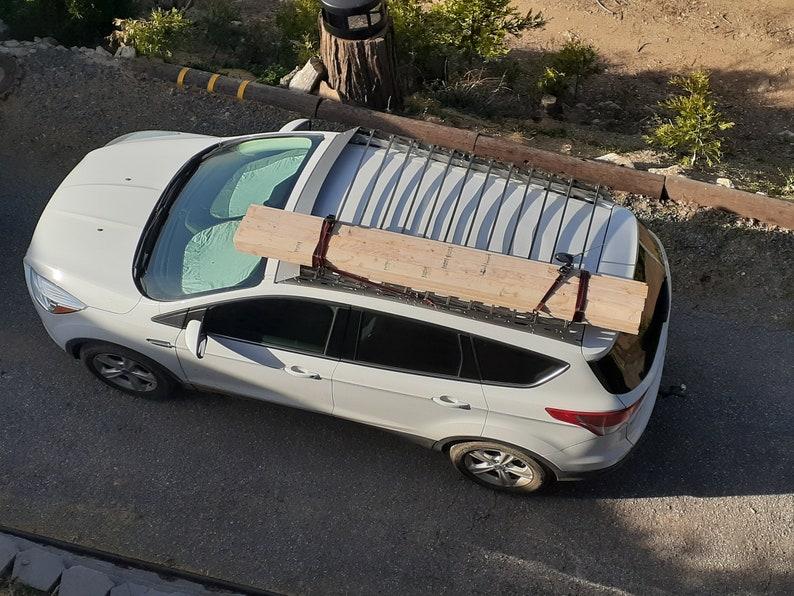
However, adding warning flags does not automatically make an excessively wide load legal. The cargo must still comply with the applicable maximum-width restrictions.
Before transporting wide materials, measure the entire loaded vehicle rather than just the roof rack. Check whether your state permits the projection and whether additional markings or special permits are required.
A sheet of plywood may look manageable on top of an SUV, but if it extends beyond the legal limits, the trip could result in a citation.
3. Long Pipes, Lumber, and Other Loads Extending Too Far Behind
Transporting long timber, metal pipes, ladders, or construction materials on a roof rack requires more attention than simply tying them down.
When cargo extends beyond the rear of a vehicle, state laws may require warning flags or lights to make the projecting end visible to approaching motorists. Ignoring these requirements can result in a traffic citation.
Pennsylvania addresses projecting loads under Title 75, Section 4924. The law generally prohibits a load from extending more than three feet beyond the foremost part of the vehicle or more than six feet beyond the rear of the vehicle’s bed or body, subject to specified exceptions.
When a load extends more than four feet beyond the rear, a red flag or cloth measuring at least 12 inches square must be displayed at its end. During darkness, a red light must replace the flag.
Virginia Code §46.2-1121 also requires a red flag measuring at least 12 inches in both length and width when a noncommercial vehicle carries a load extending more than four feet beyond its rear bed or body. Between sunset and sunrise, a red light must be displayed at the end of the load.
These provisions are especially relevant when carrying long materials on roof racks that extend beyond the rear bumper.
However, the measurement and applicable warning requirements depend on the wording of the particular state law. A load projecting from the roof is not automatically measured from the same reference point in every jurisdiction.
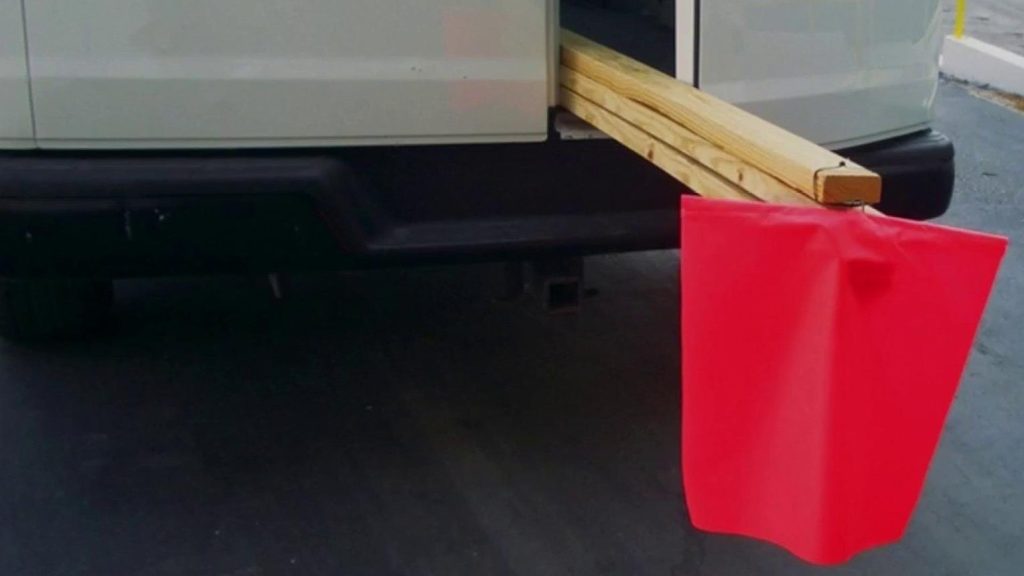
Drivers should measure the complete projection before departure and attach the required warning device to the extreme rear end, not somewhere along the middle of the material.
If the load exceeds the state’s maximum permitted length, a flag alone will not make the journey legal. Check the permitted dimensions before attempting to transport unusually long materials.
4. Heavy Rooftop Cargo That Exceeds the Vehicle’s Rated Capacity
A roof rack may look strong enough to support several heavy suitcases, coolers, tools, or camping supplies, but its appearance does not determine how much weight it can safely carry. Every vehicle and roof-rack system has specific load limitations.
Exceeding those limits can affect handling, braking, stability, and the structural components supporting the cargo.
The important distinction is between the roof’s permitted load and the vehicle’s total payload capacity. The roof-load limit is generally specified by the vehicle manufacturer and may differ between stationary and moving conditions.
The rack manufacturer can also establish a separate limit. Drivers must follow the applicable restrictions rather than automatically assuming that the higher figure is acceptable.
Oregon provides a legal example under Oregon Administrative Rule 735-128-0010. It prohibits operating a vehicle loaded beyond its safe carrying capacity. It also prohibits driving when cargo is distributed or inadequately secured in a way that prevents safe operation.
This does not establish one nationwide roof-load limit in pounds. A particular SUV may have a different roof rating from another vehicle, even when both use similarly sized roof racks.
Heavy cargo also raises the vehicle’s center of gravity. That can make sudden lane changes, sharp turns, and emergency maneuvers more difficult, particularly when the load is positioned high above the vehicle.
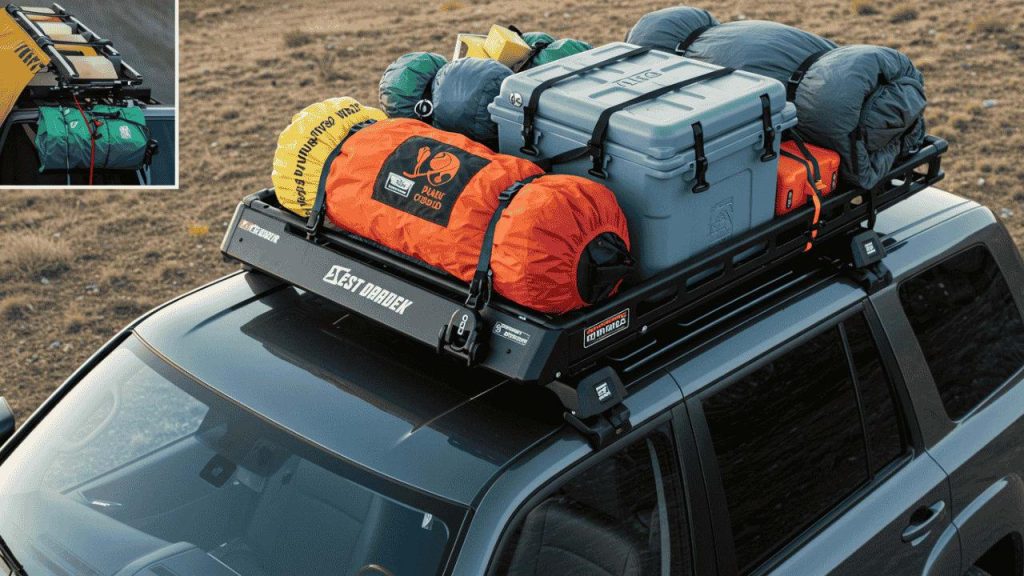
Check the owner’s manual for the manufacturer’s maximum roof-load rating and the rack manufacturer’s instructions. Include the weight of the rack and its accessories when calculating the cargo allowance if the stated limit requires it.
Do not assume that a vehicle can carry its full advertised payload on the roof. Roof capacity is a separate limitation, and exceeding it can make the vehicle unsafe and potentially violate applicable state operating laws.
5. Cargo That Obstructs the Driver’s Forward or Side View
A roof rack should never carry cargo that interferes with the driver’s ability to see the road. Large furniture, tall boxes, improperly positioned ladders, and oversized equipment can create serious visibility problems if they extend over the windshield or block the driver’s view toward the sides.
Even when an object is securely attached, its placement can make operating the vehicle unlawful.
Oregon Revised Statutes §815.270 specifically addresses operating a vehicle loaded or equipped in a way that obstructs the driver.
It prohibits operating a vehicle when cargo or another obstruction substantially blocks the driver’s view to the rear through mirrors, obstructs the view to the front or sides, or interferes with vehicle control. The offense is classified as a Class C traffic violation.
California has a related restriction under Vehicle Code §26708(a)(1). It prohibits driving with an object or material placed, displayed, installed, or attached inside or upon a vehicle in a way that obstructs or reduces the driver’s clear view.
The law includes specific exceptions, but it does not provide a general exemption for roof-mounted cargo.
The distinction is important because a driver may believe that a roof-mounted item cannot affect visibility simply because it sits outside the passenger compartment. However, exceptionally large or poorly positioned loads can extend into the driver’s viewing area or interfere with mirrors.
A long ladder positioned incorrectly, for example, could create a blind spot or prevent the driver from checking traffic approaching from the side.
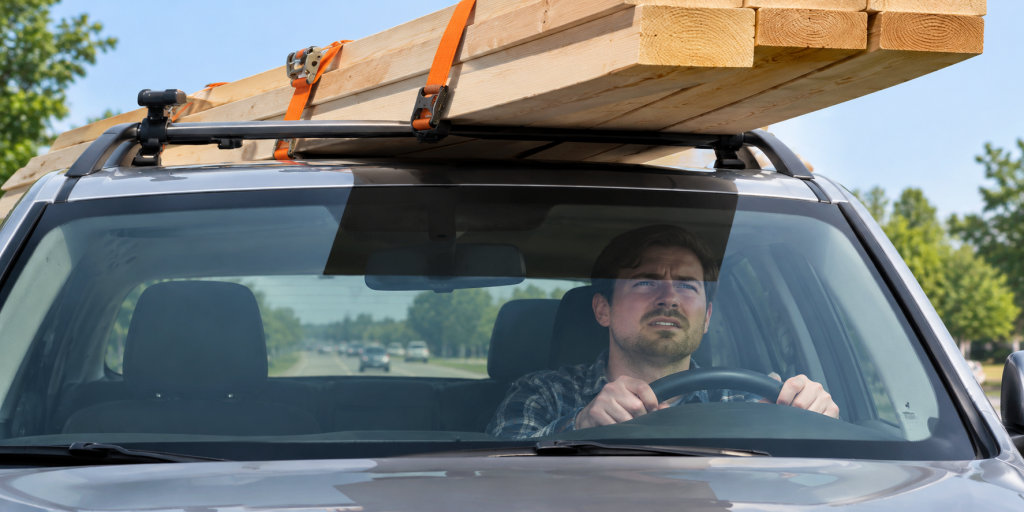
Before leaving, sit in the driver’s seat and check the forward and side views. Make sure the cargo does not interfere with mirrors, controls, or safe vehicle operation.
A securely fastened load is not necessarily a legally acceptable load if it compromises the driver’s ability to see the road.
6. Cargo That Pushes the Vehicle Beyond the Legal Height Limit
Loading camping gear, bulky suitcases, kayaks, or building supplies onto a vehicle roof may seem convenient, but it can lead to an overlooked issue involving overall vehicle height. Even an empty roof rack increases the vehicle’s height, while additional cargo can make it exceed the legal height limits allowed on public roads.
Pennsylvania establishes a maximum vehicle height of 13 feet 6 inches under Title 75, Section 4922. The measurement includes the load, not just the vehicle’s original roofline. Operating a vehicle taller than this limit without a valid permit can result in a $500 fine under the statute.
This restriction is particularly important for drivers carrying bulky rooftop equipment. A tall storage box, stacked luggage, or oversized recreational equipment can increase the vehicle’s total height considerably. Drivers who normally operate a standard SUV may not realize how much additional clearance their loaded vehicle requires.
Another risk is that meeting the state’s legal height limit does not guarantee a vehicle can safely pass beneath every overhead structure. Low bridges, parking garage entrances, and other overhead obstacles may still pose a hazard. Pennsylvania law also makes it clear that public authorities are not obligated to ensure enough vertical clearance for all vehicles that fall within the permitted height limit.
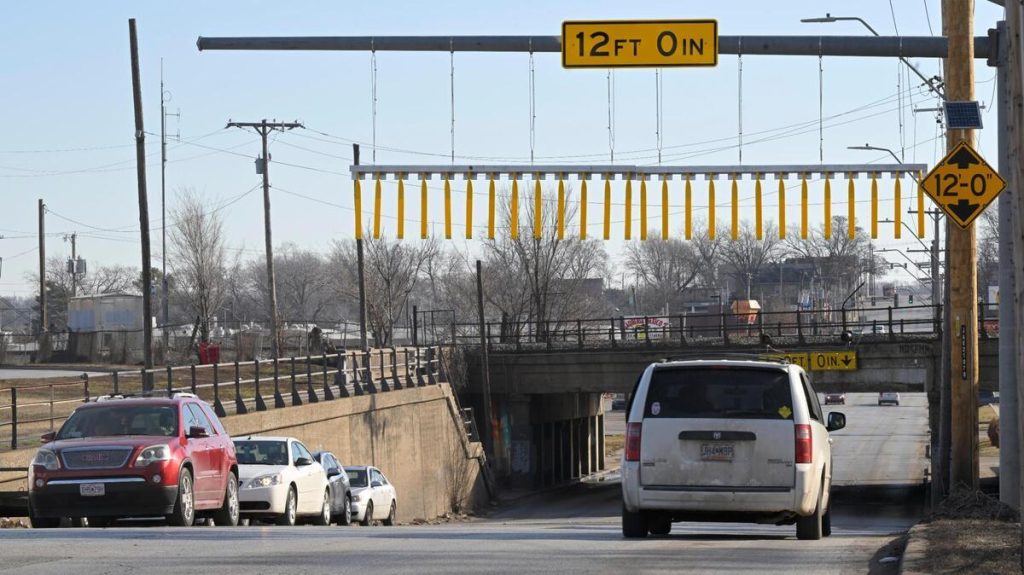
That means the maximum legal height should never be treated as a guaranteed safe clearance measurement.
Before travelling, measure your vehicle from the ground to the highest point of the loaded roof rack. Check posted bridge and garage clearance signs along your route, especially when travelling through older urban areas.
Remember that height restrictions differ between states, and some oversized vehicles require special permits. A roof rack does not exempt a passenger vehicle from dimensional regulations.
7. Cargo That Covers the License Plate or Required Vehicle Lights
A roof rack loaded with long equipment can sometimes extend so far toward the rear that it interferes with the visibility of the vehicle’s license plate, brake lights, or turn signals. This is not simply an inconvenient arrangement. Required vehicle identification and lighting equipment must remain visible and functional under applicable state regulations.
California Vehicle Code §5201 requires license plates to be securely attached, clearly visible, and legible. Although the statute primarily governs the positioning and condition of the plates themselves, other vehicle-equipment provisions also require drivers to maintain functioning rear lighting.
A particularly useful example comes from New York. Vehicle and Traffic Law §375(2) establishes requirements for rear lamps, including the visibility and placement of required lighting equipment. A load that physically blocks required lamps can create an equipment-compliance issue.
Washington also regulates projecting loads under Revised Code §46.37.140. When a load extends four feet or more beyond the rear of the vehicle’s bed or body, the law requires additional rear lighting and reflectors during specified hours. These requirements are designed to make the extended cargo visible to following traffic.
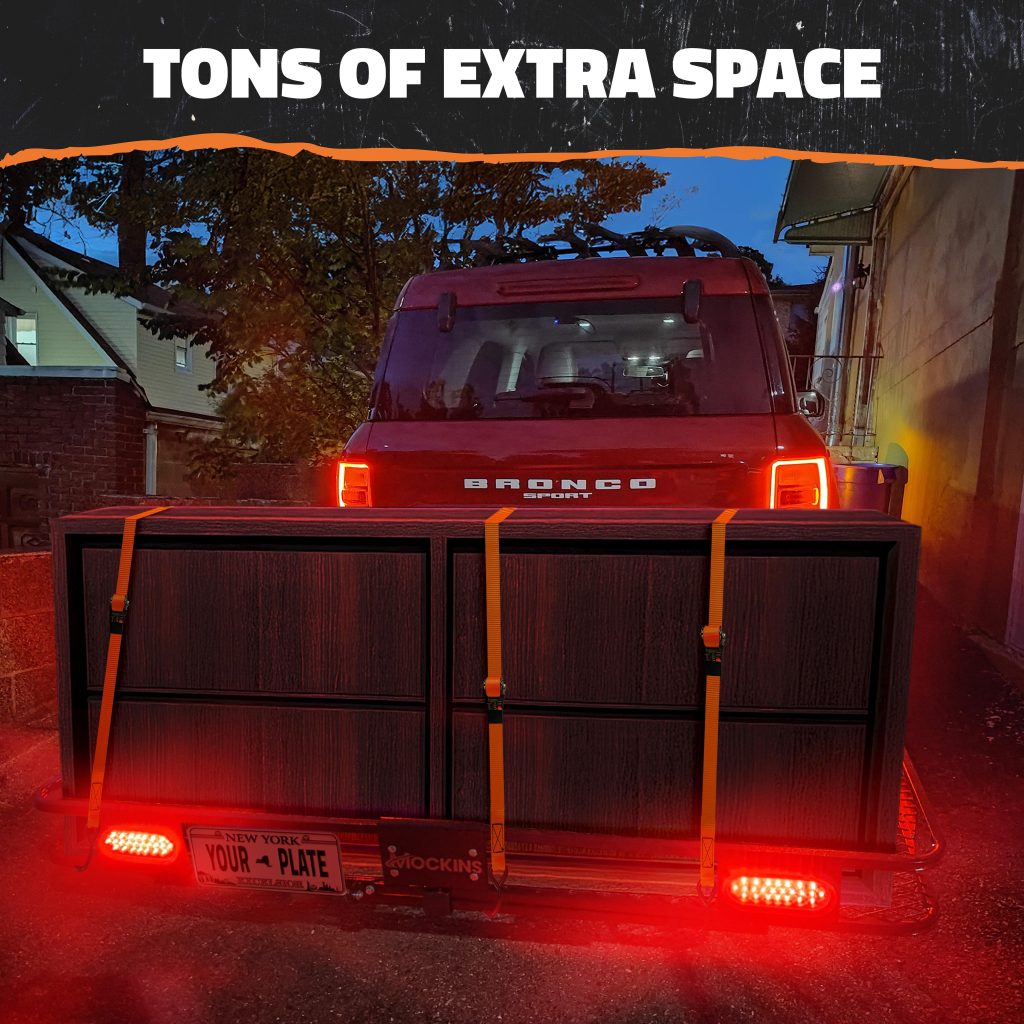
The important distinction is that an item on the roof is not automatically illegal because it sits above the rear of the vehicle. The violation arises when its placement conceals required equipment or when the load fails to meet applicable projecting-load requirements.
Before driving, check the rear of the vehicle from several angles. Make sure the license plate, brake lights, turn signals, and required reflectors remain visible.
If a particular load requires additional lighting or warning equipment, install it according to the applicable state rules rather than assuming the vehicle’s original lights are sufficient.
8. Leaking Fuel Containers and Improperly Packaged Hazardous Materials
Transporting gasoline containers, propane cylinders, chemicals, and other potentially hazardous materials on a roof rack requires particular care. These items can present fire, leakage, and impact hazards if their containers are damaged or improperly secured.
However, it is important to distinguish between personal transportation and commercial hazardous-material shipments because U.S. federal regulations treat them differently.
The Department of Transportation’s Pipeline and Hazardous Materials Safety Administration (PHMSA) confirms that hazardous materials transported by individuals in private vehicles for personal, noncommercial purposes are generally outside the scope of the federal Hazardous Materials Regulations.
This means a homeowner carrying gasoline for personal use does not automatically need commercial hazmat placards or shipping documentation.
Commercial transportation is different. Businesses transporting hazardous materials in commerce must follow applicable federal requirements, unless a specific exception applies.
Under 49 CFR §173.6, the materials-of-trade exception allows certain limited quantities of hazardous materials to be transported under specified conditions. Packages must be leak-tight, securely closed, protected against damage, and secured against shifting.
For example, the regulation allows qualifying Division 2.1 or 2.2 gas cylinders with a gross weight of up to 220 pounds under the relevant materials-of-trade provisions. Other limits and packaging conditions also apply.
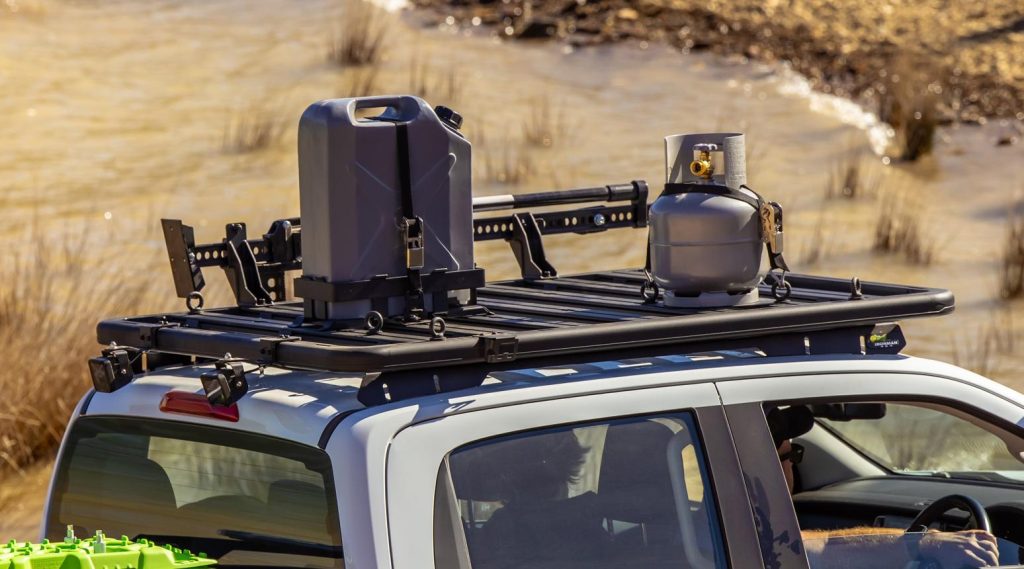
A roof rack does not automatically qualify as an approved way to transport every hazardous material. The container, load, transport purpose, and applicable regulations all matter.
Never carry a leaking gasoline can, damaged cylinder, or unsecured chemical container on your vehicle. Check the manufacturer’s transportation instructions and applicable state requirements before moving these materials.
The key takeaway is that hazardous materials are not universally banned from roof racks, but transporting them in violation of applicable packaging, securement, or safety requirements can create serious legal consequences.
