
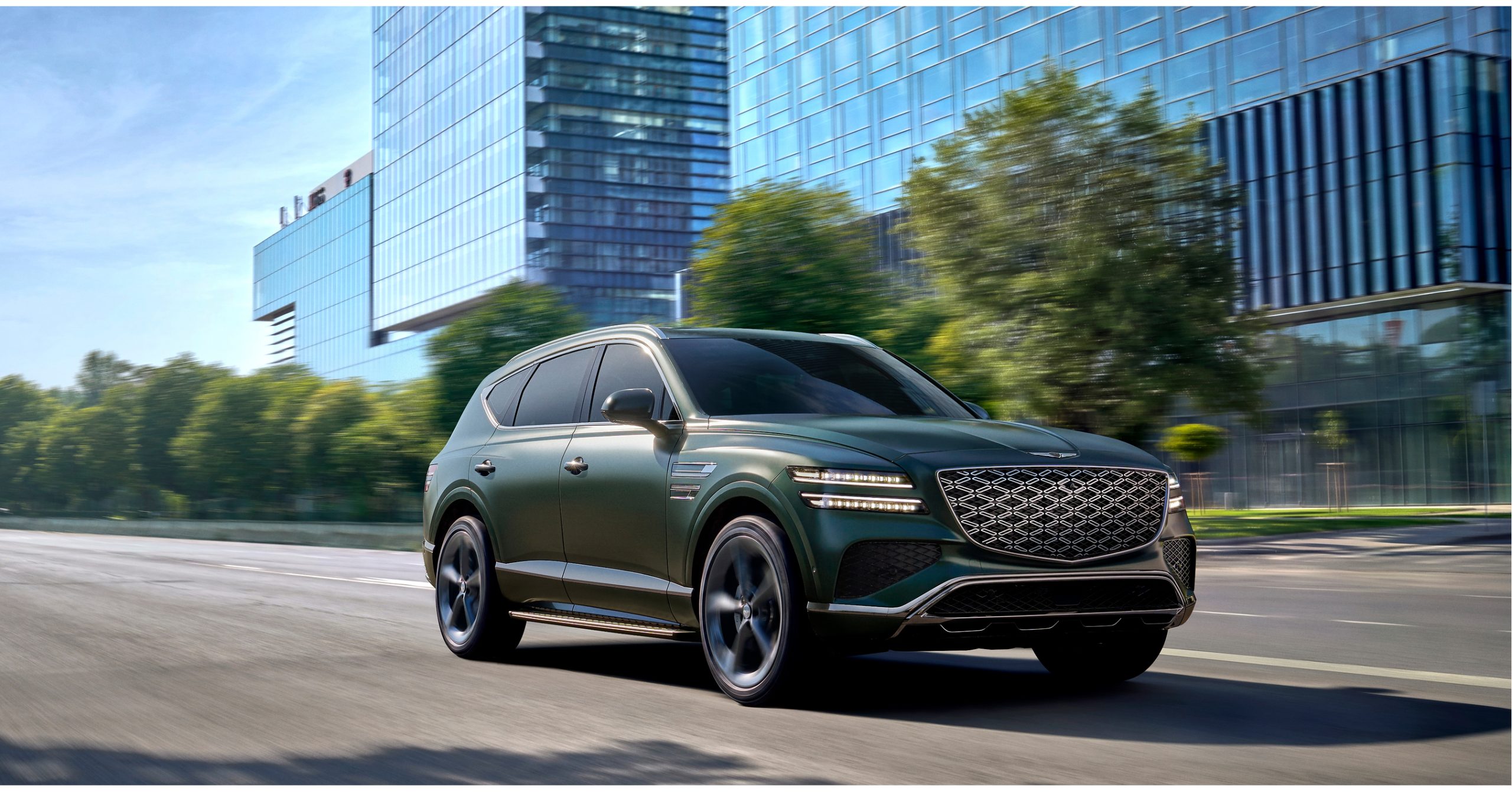
Genesis is expanding its electrified lineup beyond fully electric vehicles with the introduction of the GV80 Hybrid, the luxury brand’s first hybrid SUV. Revealed for North America in Los Angeles on November 18, 2026, the new model combines a 2.5-liter turbocharged gasoline engine with two electric motors to produce 347 horsepower and 391 lb-ft of torque.
It is designed to deliver stronger performance alongside improved fuel efficiency compared with the conventional GV80. The hybrid is offered with rear-wheel drive and all-wheel drive in its Korean market lineup, while North American pricing, final specifications, and availability remain unannounced.
Genesis Introduces Its First Hybrid SUV With a New Powertrain
The GV80 Hybrid represents an important change in Genesis’s powertrain strategy. Until now, the brand’s electrified offerings have focused primarily on battery-electric models, including the GV60 and Electrified GV70. The new hybrid adds another option for buyers who want improved fuel economy without relying entirely on external charging.
At the center of the SUV is the Genesis 2.5 Turbo Hybrid System. It pairs a 2.5-liter turbocharged four-cylinder gasoline engine with two electric motors in a parallel hybrid arrangement.
One motor functions as a starter-generator, while the second provides propulsion assistance and regenerative braking. Both motors work with the gasoline engine through a newly developed seven-speed automatic transmission.
The combined system produces 347 horsepower and 391 lb-ft of torque. Genesis says this output is nearly 16% higher than that of the comparable gasoline-powered models. The torque figure is particularly notable because it matches the output of the brand’s 3.5-liter twin-turbocharged V6 engine.
The electric drive motor can contribute additional power during acceleration, helping the SUV respond more quickly when pulling away or gaining speed.
The system is also designed to increase electric motor involvement across a wider range of driving conditions. This can reduce the need for the gasoline engine to operate continuously, helping improve efficiency and cabin refinement.
Genesis has paired the hybrid system with a seven-speed automatic transmission rather than a continuously variable transmission.
The setup includes adjustable regenerative braking, allowing drivers to select how strongly the vehicle recovers energy when slowing down. A smart setting can also adjust regenerative braking according to navigation information and traffic conditions.
The GV80 Hybrid is based on Genesis’s longitudinal, rear-wheel-drive-oriented architecture. In South Korea, buyers can choose rear-wheel drive or all-wheel drive, with different seating configurations also available.
The North American announcement confirms the model’s regional debut but does not yet provide a complete U.S. configuration list. Buyers will need to wait for the final market-specific specifications.
The new powertrain is intended to deliver a more responsive driving experience without sacrificing the smoothness expected from a luxury SUV.
Genesis has also worked on reducing vibration and engine noise through revised clutch control and a new crankshaft damper pulley. These changes are designed to make transitions between electric and gasoline power less noticeable.
Liquid-Cooled Battery and Improved Fuel Efficiency
One of the most important technical features is the hybrid system’s liquid-cooled battery. Genesis says this is the first hybrid battery using liquid cooling across Hyundai Motor Group.
Compared with a conventional air-cooled arrangement, liquid cooling provides more precise temperature management, helping the battery deliver higher discharge power and supporting greater use of electric assistance.
Battery temperature is important because hybrid systems repeatedly charge and discharge their batteries during normal driving. Managing heat can help maintain consistent performance, particularly when the vehicle accelerates frequently or operates under demanding conditions.
The cooling system is designed to support the battery’s ability to provide electrical power when the driver needs it.
The SUV also includes several hybrid-specific operating functions. Stay Mode allows the climate-control and multimedia systems to operate without starting the gasoline engine. This can be useful when occupants are waiting inside the vehicle and want to use its comfort features without keeping the engine running.
Hierarchical Predictive Control uses route and road information to manage the battery’s state of charge. By considering conditions ahead, the system can prepare the battery for situations where electric assistance may be more useful.
Smart Regenerative Braking similarly uses navigation and traffic information to adjust energy recovery while slowing down.
Genesis estimates that the GV80 Hybrid will deliver up to 24% better fuel efficiency than comparable gasoline-powered versions.
The company also estimates more than 500 miles of driving range on a full tank. Both figures are based on internal testing, and official U.S. EPA fuel-economy and range ratings are still pending certification.
The Korean-market figures provide some additional context. The rear-wheel-drive five-seat version is rated at approximately 28.2 mpg under South Korea’s testing system, while the all-wheel-drive version is rated at approximately 24.7 mpg.
These figures should not be treated as U.S. EPA ratings because testing procedures differ between markets.
The fuel-efficiency improvement could make the hybrid particularly attractive to buyers who regularly drive long distances or use their SUVs for family travel. Unlike a plug-in hybrid, the GV80 Hybrid does not require owners to connect it to an external charger. Its battery is charged through the vehicle’s hybrid system and regenerative braking.
However, the actual efficiency advantage will depend on driving conditions, wheel selection, drivetrain configuration, and vehicle use. The final EPA figures will provide a more useful basis for comparing the U.S. model with the existing gasoline GV80.
Updated Design, Interior Technology, and U.S. Availability
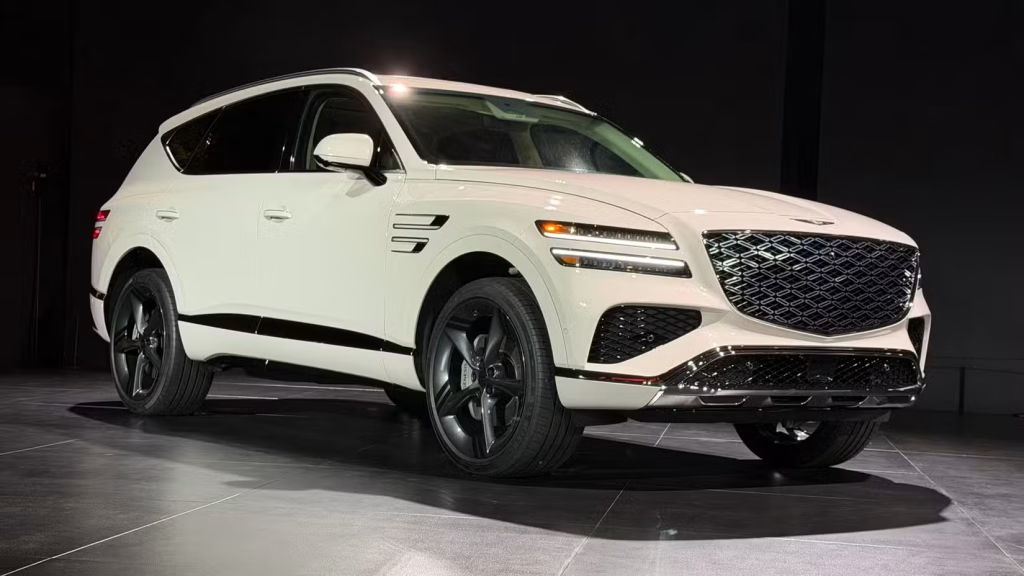
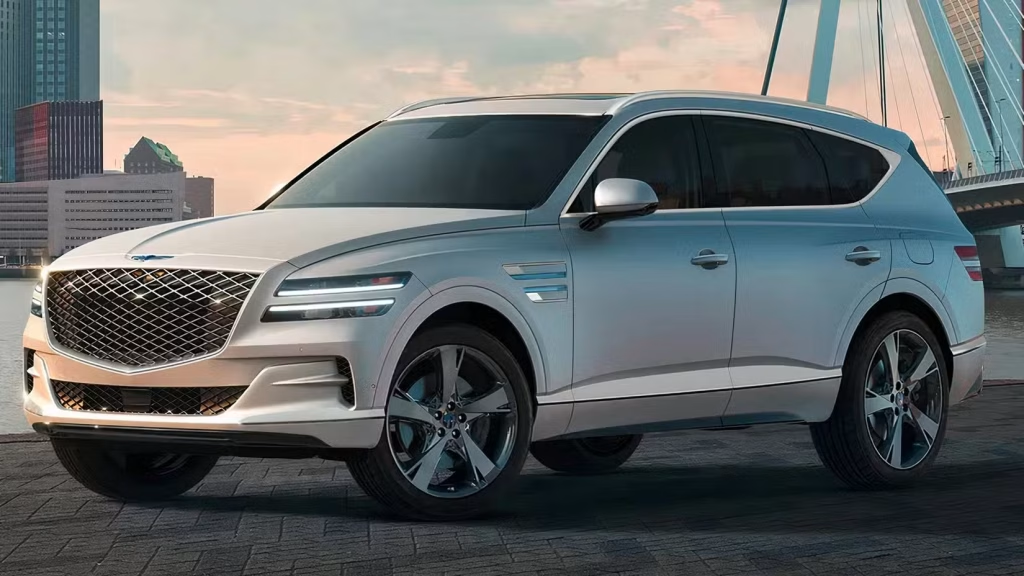
Genesis has made several design changes to distinguish the hybrid GV80 from the standard gasoline model. The front grille receives a three-dimensional G-Matrix pattern, while the SUV gains dedicated 19-inch, 20-inch, and 22-inch wheel designs.
Buyers can also choose from three additional exterior finishes, namely Seychelles Beige, Cardiff Green, and Brunswick Green Matte.
The changes are intended to give the hybrid a distinctive appearance without abandoning the GV80’s established design identity. Its overall shape and luxury-focused proportions remain familiar, while the revised grille and wheel options provide visual differences.
Inside, the SUV receives additional color and trim choices. Genesis has introduced four new two-tone interior combinations, new real-wood trim options, and revised seat quilting patterns.
Nappa leather upholstery is available on selected configurations. Buyers can also choose a Prestige Black version featuring Black Ash Wood and an all-black interior and exterior treatment.
Technology remains a major part of the package. The cabin features a 27-inch OLED display that combines the instrument cluster and navigation functions. Available equipment includes Bang & Olufsen premium audio, Genesis Digital Key 2 Premium, and Active Noise Control-Road, which is designed to reduce unwanted road noise inside the cabin.
The GV80 Hybrid can also be equipped with heated and ventilated second-row seats, Mood Curator, a Digital Center Mirror, and Remote Smart Parking Assist 2. These features strengthen its position as a luxury family SUV, particularly for buyers who prioritize rear-seat comfort and convenience.
Driver-assistance equipment includes Forward Collision-Avoidance Assist 2, Lane Keeping Assist, Lane Following Assist 2, Blind-Spot Collision-Avoidance Assist, and Highway Driving Assist. 2. Additional parking and visibility systems are available depending on configuration.
The hybrid’s North American debut took place at an exclusive Genesis event in Los Angeles on November 18, ahead of the 2026 Los Angeles Auto Show.
The same event also introduced the G80 Hybrid globally, marking an important expansion of the brand’s electrified vehicle range. Both models use the new 2.5-liter turbocharged hybrid system, but the GV80 is the first SUV to receive it.
Genesis has not yet announced U.S. pricing, final EPA ratings, or a confirmed dealership arrival date for the GV80 Hybrid. The company says those details will be released closer to launch. Its Korean-market version went on sale in October 2026, providing an early indication of the available powertrain and equipment, but U.S. specifications may differ.
The launch also reflects a broader change in Genesis’s approach to electrification. Rather than relying exclusively on battery-electric vehicles, the company is adding hybrid options to serve customers who want better fuel economy while retaining the convenience of gasoline refueling.
The strategy gives Genesis another way to compete with established luxury SUV manufacturers that already offer hybrid powertrains.
For American buyers, the GV80 Hybrid’s appeal will ultimately depend on its pricing, EPA fuel-economy ratings, and available configurations. Its 347-horsepower output, 391 lb-ft of torque, and estimated efficiency improvement give it a strong starting point.
If the final U.S. version retains the features announced for the North American debut, it could become an important addition to the luxury hybrid SUV segment.
