
Semiconductor manufacturer ONI Semi has introduced EliteSiC M4, its fourth-generation silicon carbide technology platform, designed to improve efficiency and power density in electric vehicles and other high-power applications.
Announced on November 10, 2026, the platform uses a new trench-based architecture and promises up to 30% higher power density and 35% lower power losses compared with the previous generation.
The technology is aimed at helping automakers develop smaller, more efficient power electronics, particularly for electric vehicle traction inverters. Its first 750-volt automotive product is already available, while additional voltage options are planned for 2027.
EliteSiC M4 Introduces a New Semiconductor Architecture
The central change in Onsemi’s fourth-generation platform is its move to a trench-based silicon carbide architecture. This design improves how electrical current moves through the semiconductor, helping reduce resistance and switching losses.
The company says the new structure delivers better conduction and switching performance than its previous EliteSiC generation.
Silicon carbide, commonly shortened to SiC, is a wide-bandgap semiconductor used in high-voltage power electronics. Compared with conventional silicon components, it can operate efficiently at higher temperatures and voltages while supporting faster switching.
These characteristics make it particularly useful in electric vehicles, where power electronics must handle substantial electrical loads without wasting too much energy as heat.
The technology is especially important in traction inverters. An inverter converts direct current from an EV’s battery into alternating current used by its electric motor.
It also controls how much electrical power reaches the motor, influencing acceleration, efficiency, and power delivery. Reducing losses inside this component can help an automaker improve the efficiency of the electric drivetrain.
Onsemi says the EliteSiC M4 can deliver up to 30% higher power density and 35% lower losses compared with its previous generation. Higher power density means engineers can potentially handle more electrical power within a similar physical space. Lower losses mean less energy is wasted during power conversion.
The company also reports a 20% to 50% reduction in specific on-resistance, a measurement of how effectively a semiconductor conducts current relative to its active area. This improvement can help designers reduce the amount of semiconductor material needed for a particular power requirement or increase output within an existing design.
Switching performance has also been improved. Onsemi reports a 67% improvement in hard-switching figures of merit and a 50% improvement in soft-switching figures of merit.
These measurements relate to the energy lost when semiconductor devices switch between conducting and non-conducting states. Better switching performance can support more efficient power conversion and potentially smaller system designs.
These figures are manufacturer-reported comparisons, not guaranteed improvements in every vehicle. Actual results will depend on the complete inverter design, electrical architecture, cooling system, operating conditions, and the way automakers integrate the components.
How the Technology Could Improve Electric Vehicle Performance
The biggest automotive application for EliteSiC M4 is the traction inverter, one of the most important power-electronic components in an electric vehicle. Every time an EV accelerates, the inverter manages the electrical energy flowing from the battery to the motor. Its efficiency affects how much of the battery’s stored energy becomes useful driving power.

Reducing inverter losses can help limit energy waste and heat generation. This matters because excess heat must be managed through cooling systems, which add weight, complexity, and cost.
If semiconductor improvements allow an inverter to operate more efficiently, engineers may have greater flexibility when designing its cooling hardware and packaging.
There is also a potential connection to the driving range. An EV’s range depends on several factors, including battery capacity, motor efficiency, aerodynamics, vehicle weight, tyres, and driving conditions.
Improving inverter efficiency could reduce the energy required for propulsion, leaving more battery energy available for driving. However, Onsemi has not announced a specific range improvement for any production vehicle using M4.
Higher power density may also help manufacturers develop more compact electric drivetrains. Packaging is a major engineering challenge because automakers need to fit batteries, motors, inverters, cooling equipment, and other high-voltage components into increasingly demanding vehicle platforms.
Smaller power electronics could provide additional design flexibility or help manufacturers increase power output without expanding the system’s physical footprint.
The benefits could extend beyond conventional battery-electric vehicles. High-efficiency power electronics are also relevant to plug-in hybrids, where electrical components must work alongside an internal-combustion engine.
onsemi has previously collaborated with Schaeffler on silicon carbide technology for a traction inverter intended for a plug-in hybrid platform.
That earlier relationship demonstrates the company’s existing involvement in electrified powertrain development, although it does not establish that the same vehicle program will use M4.
Charging systems are another important part of the EV power-electronics market. Onboard chargers convert electricity from an external AC power source into the DC electricity required by the battery.
Silicon carbide can be useful in these systems because its switching characteristics can support efficient, compact power conversion.
However, onsemi’s initial M4 announcement specifically identifies the 750-volt bare die for automotive traction inverters. It has not announced a specific M4 onboard-charger product or confirmed a vehicle application for one.
The platform is not limited to vehicles. Onsemi is also targeting AI data centers, industrial equipment, and energy infrastructure. These applications increasingly require power systems capable of handling higher electrical loads while controlling heat and energy losses.
A common semiconductor platform can give the company opportunities across several industries, although individual products and packaging will differ according to application requirements.
Product Availability and What Comes Next for Onsemi
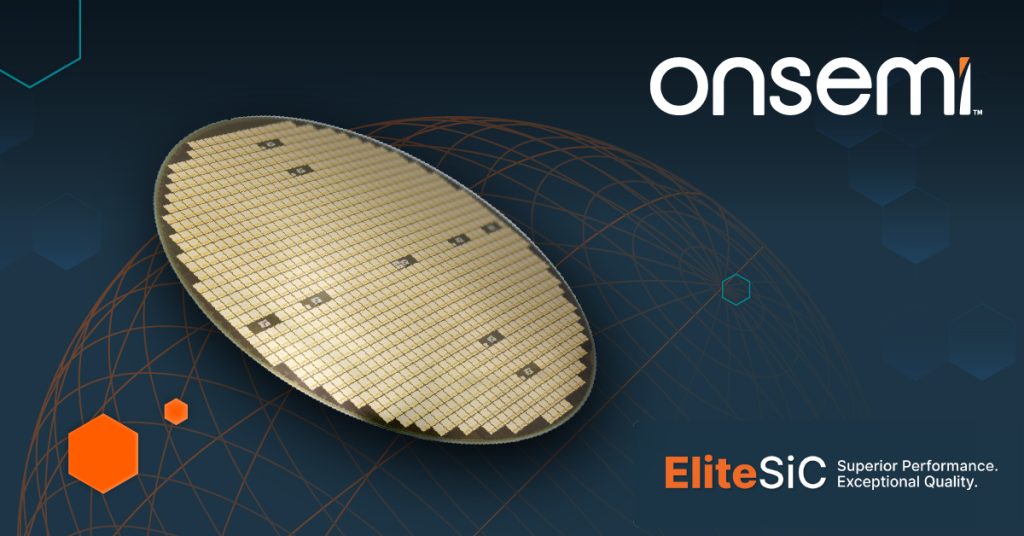
Onsemi has confirmed that the first EliteSiC M4 product is a 750-volt bare die designed for automotive traction inverters. It is available now, allowing automotive suppliers and engineering teams to evaluate the technology for future powertrain designs.
A bare die is the semiconductor chip before it is integrated into a finished packaged component or power module. This gives customers and module manufacturers flexibility to develop their own packaging and electrical configurations.
It also means that availability of the bare die does not automatically indicate that complete production-ready inverter systems are available for installation in vehicles.
The company plans to expand the product family with additional voltage options reaching up to 1,200 volts, beginning in 2027. These future offerings should give designers more choices when developing high-voltage systems for different electric vehicle platforms and industrial applications.
Packaging flexibility is another part of the M4 strategy. onsemi says the technology is designed to work with existing package formats, including top-side-cooled surface-mount packages and high-power modules.
This matters because automotive suppliers often have established cooling arrangements and manufacturing processes. Compatibility with familiar packaging approaches could make it easier to evaluate the new semiconductor technology without redesigning every part of an electrical system.
Thermal performance remains essential in high-voltage applications. Onsemi says the platform’s qualification supports temperatures of 185 degrees Celsius and above. This is a component-level qualification claim, not a statement that an entire vehicle inverter can operate continuously at that temperature.
The ability to withstand demanding thermal conditions can nevertheless help engineers design power electronics for challenging operating environments.
Reliability is another area the company highlights. Onsemi says its EliteSiC technology has accumulated more than 16 billion miles of real-world operation in vehicles. This figure refers to the company’s broader silicon carbide experience, rather than mileage accumulated by the newly introduced M4 platform.
That distinction is important because the fourth-generation technology is newly introduced and still needs to be adopted and validated in customer applications.
The company has not named an automaker that will use EliteSiC M4 in a production vehicle, announced a vehicle launch date, or disclosed pricing.
Automakers and Tier 1 suppliers typically evaluate semiconductor components through extensive testing before approving them for production. Electrical performance, durability, thermal behavior, manufacturing consistency, and long-term supply all influence those decisions.
The launch also comes as automakers continue looking for ways to improve the cost and efficiency of electric powertrains. Battery packs remain a major expense, and improving the efficiency of supporting components can help manufacturers get more useful performance from the energy already stored onboard.
Semiconductor advances are one part of that effort, alongside improvements in electric motors, battery chemistry, charging systems, and vehicle software.
For suppliers, the challenge is turning laboratory and component-level improvements into measurable benefits in production vehicles.
A semiconductor that offers lower losses on paper must still work reliably within a complete inverter, withstand automotive operating conditions and be manufactured at a cost that makes sense for vehicle programmes.
Automakers will also need to assess whether the technology offers enough improvement to justify changing existing designs.
onsemi’s fourth-generation platform therefore represents a significant development in its silicon carbide portfolio, but its real impact will depend on customer adoption.
The 750-volt traction bare die provides the first route into automotive applications, while the planned expansion to higher voltage options in 2027 should broaden its potential uses.
For EV manufacturers, the technology offers several potential benefits, including more efficient power conversion, lower heat generation, and greater design flexibility for compact drivetrains. If these advantages carry over to production vehicles, EliteSiC M4 could help improve the efficiency of future electric vehicles.
For now, however, the announced performance figures remain on onsemi’s technology claims rather than confirmed improvements in the range, charging speed or performance of a specific vehicle.