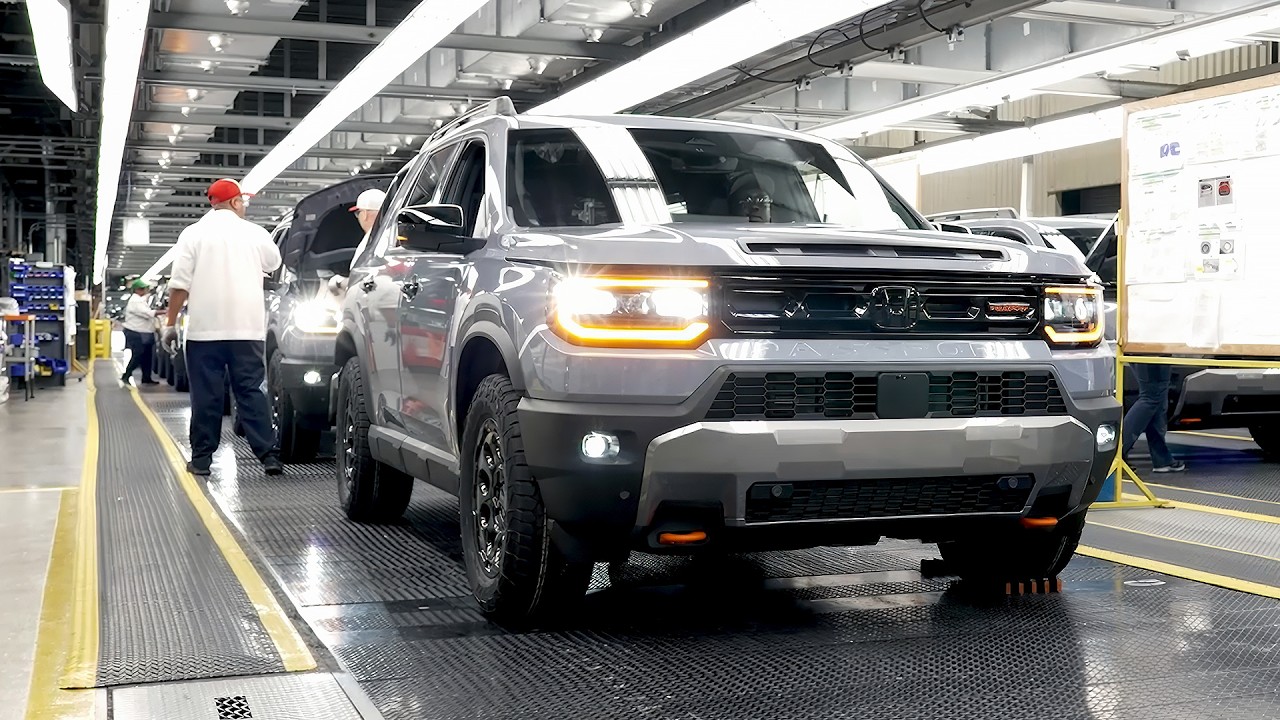
Honda is investing $462 million in its Alabama Auto Plant, adding approximately 200 jobs as the facility marks 25 years of vehicle production.
Announced on November 17, 2026, the investment will expand production of high-demand vehicles, establish a new assembly line for a V6 hybrid engine, and give the factory greater flexibility to build multiple models on the same line.
Located in Lincoln, Alabama, the plant is already one of Honda’s most important North American manufacturing sites. The latest spending also forms part of a wider strategy to increase hybrid production and strengthen the company’s U.S. manufacturing network.
What Honda’s $462 Million Alabama Investment Will Fund
The new investment is intended to increase the Alabama plant’s ability to build vehicles and powertrains as demand and product plans change.
Honda says the money will support higher production of popular models, a new V6 hybrid engine assembly line, and equipment that allows different vehicles to be assembled on the same production line.
The new hybrid engine line is a central part of the announcement. Honda has not disclosed the engine’s displacement, output figures, vehicle applications, or the exact date production will begin. It has also not identified which future models will receive the new V6 hybrid system.
The confirmed detail is that the facility will expand its ability to manufacture a new V6 hybrid engine, supporting the automaker’s wider electrification plans.
The ability to build multiple models on one line is another important change. Flexible production systems can help an automaker adjust output between vehicles without relying on entirely separate assembly operations.
That can be useful when demand shifts between SUVs, minivans, and pickups, or when a manufacturer introduces updated models.
Honda has not published a specific production-volume increase resulting from the project, so the investment should not be interpreted as a confirmed increase beyond the plant’s existing stated capacity.
The project is expected to create 200 additional jobs. Honda’s Alabama Auto Plant already employs more than 5,000 associates, making it the largest Honda manufacturing facility in North America by employment and production volume, according to the company.
The additional positions will support the expanded manufacturing operations, although Honda has not provided a detailed breakdown of job types or a hiring timetable.
The announcement comes as the factory reaches a significant milestone. The first Honda Odyssey minivan rolled off the production line on November 14, 2001.
Since then, the plant has produced more than 7 million vehicles and nearly 6.6 million V6 engines. Honda says the facility has received approximately $3.2 billion in cumulative capital investment, including the latest commitment.
The Alabama plant currently has an annual production capacity of 340,000 vehicles and 340,000 engines. Those figures describe its existing capacity, not a confirmed post-expansion target. Honda has not yet stated how much the new equipment will raise annual output or when the expanded line will be fully operational.
Which Honda Vehicles and Engines Are Built in Alabama?
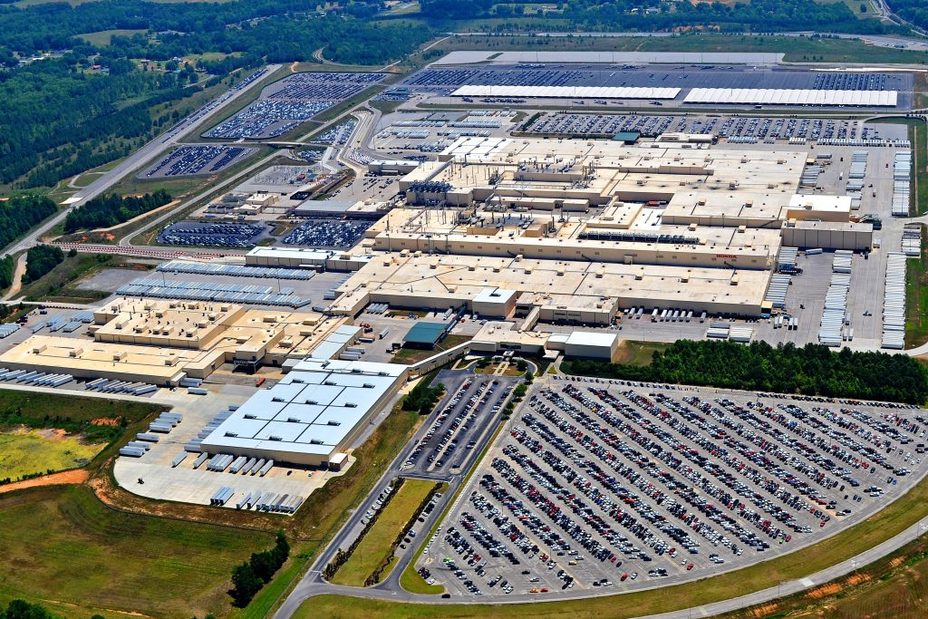
Honda’s Lincoln facility plays a major role in its North American production operations. It serves as the exclusive global manufacturing site for four light-truck models, namely the Odyssey minivan, Pilot and Passport SUVs, and Ridgeline pickup.
That makes the plant important not only to U.S. sales but also to Honda’s supply of these vehicles in other markets.
The Odyssey is Honda’s family minivan, while the Pilot is a three-row SUV designed for larger households. The Passport is a two-row SUV, and the Ridgeline provides a pickup option with unibody construction.
These vehicles serve different customer needs, but their shared manufacturing location allows Honda to coordinate production, suppliers, and workforce expertise at one site.
The factory is also unusual within Honda’s U.S. manufacturing network because it builds both complete vehicles and engines at the same location. Honda describes it as the only U.S. facility where the company produces automobiles and engines together.
This integration is particularly relevant to the new investment because the plant will add a dedicated line for a V6 hybrid engine alongside its vehicle-production operations.
Honda says nearly 15 percent of all Honda and Acura vehicles built in North America since the Alabama plant opened have come from the facility. The figure illustrates the plant’s long-term contribution to the company’s regional production network.
Its workforce, suppliers, and manufacturing equipment have supported a substantial share of Honda’s output over the past quarter-century.
The new investment is also connected to the company’s effort to increase hybrid availability. Honda has identified North America as a primary market for many of its upcoming hybrid models.
Expanding V6 hybrid engine production in Alabama could give the company another domestic source of powertrains for future vehicles, although the automaker has not yet named the models that will use this engine.
The timing is important because Honda is preparing for a broader change in its U.S. manufacturing footprint. On November 10, the company announced a separate $3 billion investment to build a new vehicle plant in central Ohio, with production expected to begin in 2029.
That proposed facility is planned to add capacity for up to 240,000 vehicles annually and create more than 2,000 jobs. It is a separate project from the $462 million Alabama expansion and should not be counted as part of its budget.
Honda has also outlined investments across existing operations in Ohio, Alabama, and Georgia to strengthen production of hybrid vehicles, engines, and hybrid systems.
Together, the projects are intended to increase U.S. vehicle production capacity to approximately 1.3 million units annually and North American capacity to around 1.9 million.
Alabama’s Economic Impact and Honda’s U.S. Manufacturing Strategy
The Alabama Auto Plant has a significant economic role beyond the vehicles that leave its assembly lines. Honda cited a study conducted by the University of Alabama’s Center for Business and Economic Research for the Economic Development Partnership of Alabama.
The study estimated that the plant generated $8.5 billion in economic output in Alabama during 2024.
When the economic activity of Honda’s Tier 1 suppliers is included, the combined impact rises to an estimated $11.7 billion in state economic output.
The study also calculated that Honda’s Alabama operations and those suppliers supported nearly 47,000 direct and indirect jobs and approximately $2.4 billion in earnings. These are estimates of the wider economic footprint, not the number of people employed directly by Honda.
The distinction is important. More than 5,000 people work at the plant itself, while the broader employment figure includes jobs at suppliers and other businesses connected to Honda-related activity.
The study found that more than 70 percent of the supported jobs were indirect positions outside the factory. Supplier purchases, transportation, services, and local spending all contribute to the wider economic effect.
The new 200 jobs will add to the plant’s direct workforce, while the additional manufacturing activity could also benefit businesses supplying components and services.
The precise number of indirect jobs created by this particular expansion has not been announced, so it would be premature to treat the statewide employment estimate as a forecast for the new project.
Honda’s Alabama investment also reflects a decision to continue developing existing U.S. manufacturing facilities while preparing new capacity for future products.
Rather than relying on a single plant or powertrain type, the company is investing across vehicle assembly, engine production, and hybrid systems. This approach gives it more flexibility as customer demand changes and as hybrid models become a larger part of its lineup.
The company has not provided a detailed construction schedule, hiring calendar, or model-by-model production plan for the Alabama project. It has also not confirmed the exact vehicles that will use the new V6 hybrid engine.
Those details will determine how quickly the investment translates into additional output and new products for buyers.
For now, the $462 million commitment strengthens a factory that has been central to Honda’s U.S. operations for 25 years. The addition of a V6 hybrid engine line, a more flexible vehicle assembly, and 200 jobs gives the Lincoln facility a larger role in the automaker’s next phase of production.
It is also a clear signal that Honda intends to keep building key vehicles and powertrains in the United States as it expands its hybrid strategy.