When a person dies while still paying off a vehicle, the car loan does not simply disappear. The remaining balance, the vehicle itself, and responsibility for future payments can become part of the estate and may affect surviving borrowers, co-signers, and heirs.
What happens next depends on the loan agreement, whether another person is legally responsible, the estate’s finances, and state law.
Some families can keep the vehicle by continuing payments or refinancing, while others may need to sell it or return it to the lender. Here are eight important things families should understand when a car-loan borrower dies.
1. The Remaining Loan Balance Does Not Automatically Disappear
A car loan is not automatically canceled when the person who borrowed the money dies. The outstanding balance remains a debt, and the lender does not have to forgive it simply because the borrower is no longer alive. The loan agreement continues to matter, including the amount owed, interest, payment schedule, and the lender’s rights over the vehicle.
In most cases, the unpaid balance becomes a debt of the deceased person’s estate. The estate includes assets left behind, such as money in bank accounts, investments, and property that legally belongs to the deceased.
The executor or court-appointed administrator is generally responsible for handling the estate’s financial obligations under applicable state probate rules.
This does not mean a family member must immediately take money from their personal savings to clear the loan. The Consumer Financial Protection Bureau explains that relatives are generally not responsible for a deceased person’s debt unless they shared legal responsibility or another state-law exception applies.
If the estate does not have enough assets to pay its debts, some obligations may remain unpaid.
For example, imagine someone dies with $12,000 remaining on a financed vehicle. The lender can still claim the outstanding amount, but the next steps depend on the estate, the vehicle’s value, any co-borrower or co-signer, and state law.

The family should contact the lender, provide the requested death documentation, and ask for the current payoff balance and available account options.
The important distinction is that death does not erase the contract. It changes how the debt is handled and who is authorized to deal with the lender. Families should avoid assuming that the balance has vanished or that they personally have to pay it.
2. The Estate May Have to Pay the Outstanding Debt
After a borrower dies, the estate may become responsible for settling the unpaid car loan. This is one reason an executor or administrator should identify all outstanding debts before distributing the deceased person’s assets to beneficiaries.
A vehicle loan is usually secured by the car, meaning the lender has a legal interest in the vehicle until the debt is satisfied.
The estate representative should contact the lender or loan servicer and explain that the borrower has died. The lender may request a certified death certificate, proof of authority to act for the estate, and other documents before discussing account details or accepting instructions.
The executor should also request a written payoff statement showing the remaining principal, accrued interest, and any applicable fees.
The order in which debts are paid is governed by state probate law. An executor should not assume that the car loan can simply be paid ahead of every other obligation, nor should they distribute estate property without understanding the estate’s liabilities. Some states provide simplified procedures for smaller estates, while others require a more formal probate process.
Consider an estate that contains savings and a vehicle worth more than the remaining loan balance. The executor may decide, subject to legal authority and the estate’s circumstances, to use estate funds to pay off the loan and transfer the vehicle.

If the estate has limited money, selling the vehicle may be more practical. The lender’s lien still has to be addressed as part of the transaction.
The Federal Trade Commission states that debts are generally paid from the deceased person’s estate, and relatives usually do not have to use their own money unless an exception applies.
Executors should keep records of payments, lender communications, and title documents. Because probate rules differ between states, legal advice can help prevent mistakes that could expose an estate representative to personal liability.
3. A Joint Borrower May Still Have to Make the Payments
A car loan taken out by two people is different from a loan held only in the deceased person’s name. If both individuals signed the financing agreement as borrowers, the surviving borrower may remain legally responsible for the unpaid balance. The death of one borrower does not normally remove the other person’s contractual obligation.
This situation commonly occurs when spouses purchase a vehicle together or when two family members apply jointly to qualify for financing. Both borrowers may have agreed to repay the full debt, not merely half of each monthly payment.
The exact responsibility depends on the contract, but a joint borrower should not assume that the lender will divide the remaining balance or cancel the deceased person’s share.
For example, suppose two spouses jointly finance a vehicle and have $18,000 left to pay. If one spouse dies, the surviving spouse may still be required to keep making the scheduled payments under the loan agreement.
The lender may continue reporting the account according to its normal credit-reporting practices, and missed payments can create financial problems for the surviving borrower.
It is also important to distinguish a joint borrower from someone listed only as an authorized driver or registered owner. Being allowed to drive the vehicle, appearing on an insurance policy, or being named on a title does not automatically make someone responsible for the loan. The signed financing documents are central to determining who owes the money.

The surviving borrower should contact the lender promptly, confirm how the account is recorded, and ask whether the payment method or account access needs to be updated. If the family wants to keep the vehicle, continuing payments may be the simplest option, but the lender should confirm the arrangements in writing.
A joint borrower should also review the title and registration separately because loan responsibility and vehicle ownership are related but distinct legal matters.
4. A Co-Signer Can Still Be Responsible for the Loan
A co-signer may face a serious financial obligation when the primary borrower dies. When someone co-signs an auto loan, they agree to be legally responsible for repayment if the primary borrower does not pay. That responsibility does not automatically end when the borrower passes away.
Parents sometimes co-sign loans for adult children, and relatives may do the same when a borrower has limited credit history or insufficient income.
Although the co-signer may not regularly use the vehicle, the loan agreement can make them responsible for the outstanding debt. If payments stop after the borrower’s death, the lender may seek payment from the co-signer under the contract.
The Consumer Financial Protection Bureau warns that co-signers are legally obligated to repay a loan if the primary borrower cannot. It also explains that a co-signer may not have the same rights to the vehicle as the primary borrower.
This distinction matters because financial responsibility does not necessarily provide ownership or automatic authority to sell the car.
Imagine a parent co-signs a $25,000 vehicle loan for an adult child. The child dies while $14,000 remains unpaid. If the parent is a co-signer, the lender may be able to require the parent to continue making payments, even if the vehicle is in the deceased borrower’s possession or is part of the estate.

The parent should review the signed agreement and obtain written information from the lender before making decisions.
A co-signer should not assume that the estate will pay the debt before the lender contacts them. Nor should they assume that returning the vehicle will erase the balance. If the vehicle is sold for less than the amount owed, a remaining deficiency may still be collectible from a person legally responsible for the loan, subject to the contract and state law.
5. Heirs Usually Do Not Have to Pay From Their Own Money
One of the biggest concerns after a family member dies is whether children, siblings, or other heirs must take responsibility for the deceased person’s car loan.
In most situations, simply inheriting from someone does not make a person personally liable for that person’s individual debts. The debt is generally handled through the estate rather than automatically becoming the heir’s personal obligation.
The Federal Trade Commission and Consumer Financial Protection Bureau both explain that relatives usually do not have to pay a deceased person’s debts from their own funds. There are important exceptions, however.
Someone who co-signed or jointly borrowed the loan may remain responsible. A surviving spouse may also have obligations under certain state laws, including community-property rules in some states.
This distinction is particularly important when a debt collector contacts a grieving relative. A collector may be allowed to contact an executor, administrator, or another authorized person to discuss payment from estate assets.
That does not mean the person receiving the call must pay the balance personally. Collectors generally cannot mislead relatives into believing they are legally required to use their own money when they are not.
For instance, if a parent leaves behind a vehicle with $9,000 still owed, an adult child who did not sign the loan is not automatically responsible for that $9,000 merely because the child is an heir.

The estate may need to address the debt, and the lender may have rights against the vehicle. If the child wants to keep the car, however, they will need to work out an acceptable arrangement with the lender rather than assuming inheritance alone transfers the loan.
Because state laws can create exceptions, surviving spouses and estate representatives should obtain advice based on the deceased person’s state of residence and the loan documents. Do not agree to pay a debt or sign a new financing agreement simply because a collector says the family must do so.
6. The Lender Can Still Have the Right to Repossess the Vehicle
An auto loan is generally secured by the vehicle itself. When a borrower finances a car, the lender typically receives a security interest, often reflected as a lien on the vehicle’s title. That interest gives the lender rights against the car if the loan goes into default. The borrower’s death does not automatically remove the lien or cancel the lender’s security interest.
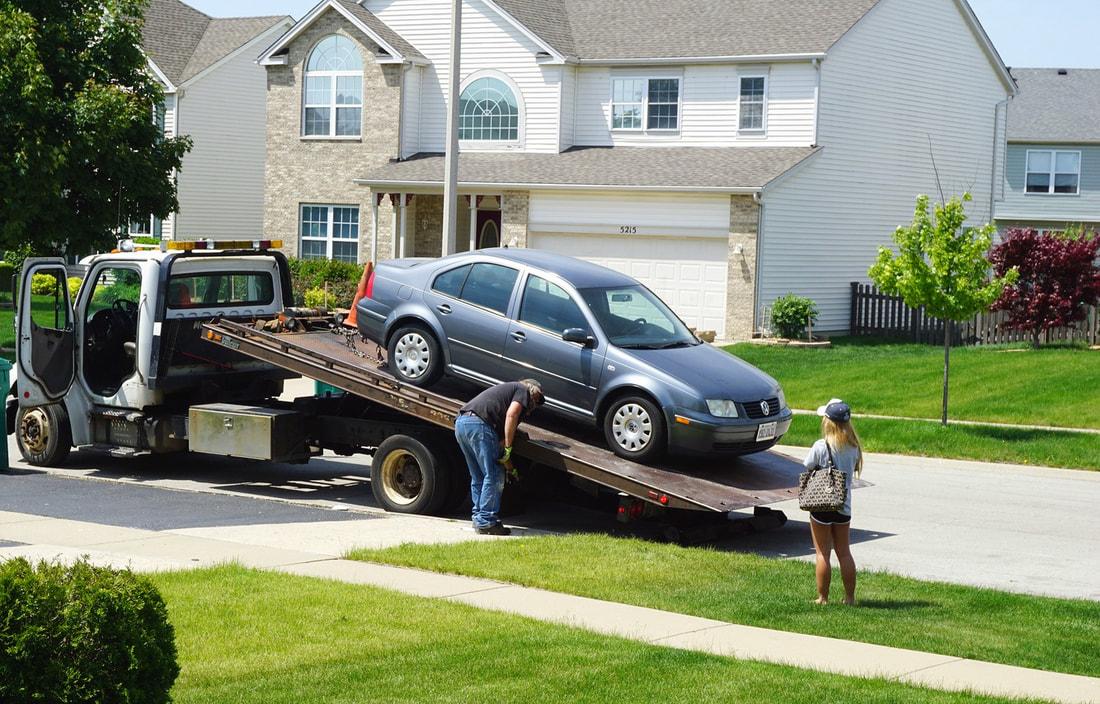
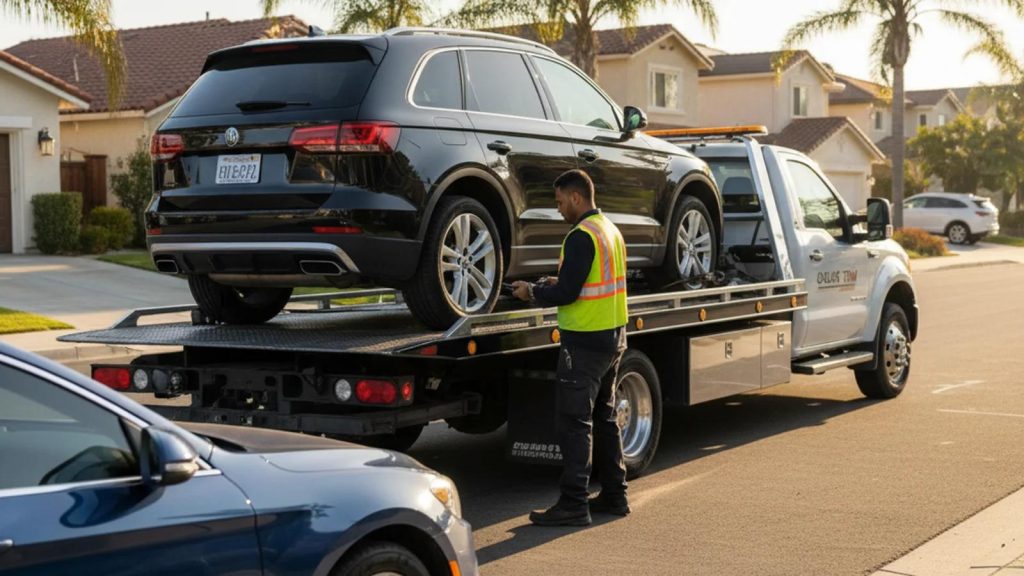
If payments stop and the account enters default under the contract, the lender may eventually pursue repossession. The exact process depends on state law and the financing agreement.
The CFPB explains that in many states a lender may repossess a vehicle after default without first obtaining a court order or giving warning, while other states require particular notices or procedures.
This does not mean a lender can simply take the car immediately after learning that the borrower has died. The account’s payment status, contract terms, applicable law, and any arrangements made with the estate or surviving borrower all matter.
Families should contact the lender quickly rather than leaving letters unanswered or assuming that the vehicle is safe from repossession while probate is underway.
Suppose the deceased borrower had missed several payments before passing away. The account may already be delinquent, and the lender may have begun default procedures.
The executor or legally responsible borrower should ask for the exact amount needed to bring the loan current and whether the lender will consider a temporary arrangement while the estate is being administered. Any agreement should be documented in writing.
If repossession does occur, the vehicle’s sale may not completely settle the debt. When the sale proceeds are lower than the loan balance and permitted costs, a deficiency may remain. The lender’s rights and the estate’s obligations will depend on the applicable law and who is legally liable for the loan.
7. The Vehicle’s Title Must Be Handled Separately From the Loan
Families sometimes assume that a vehicle automatically becomes theirs when the owner dies. In reality, transferring ownership and dealing with the outstanding loan are separate matters.
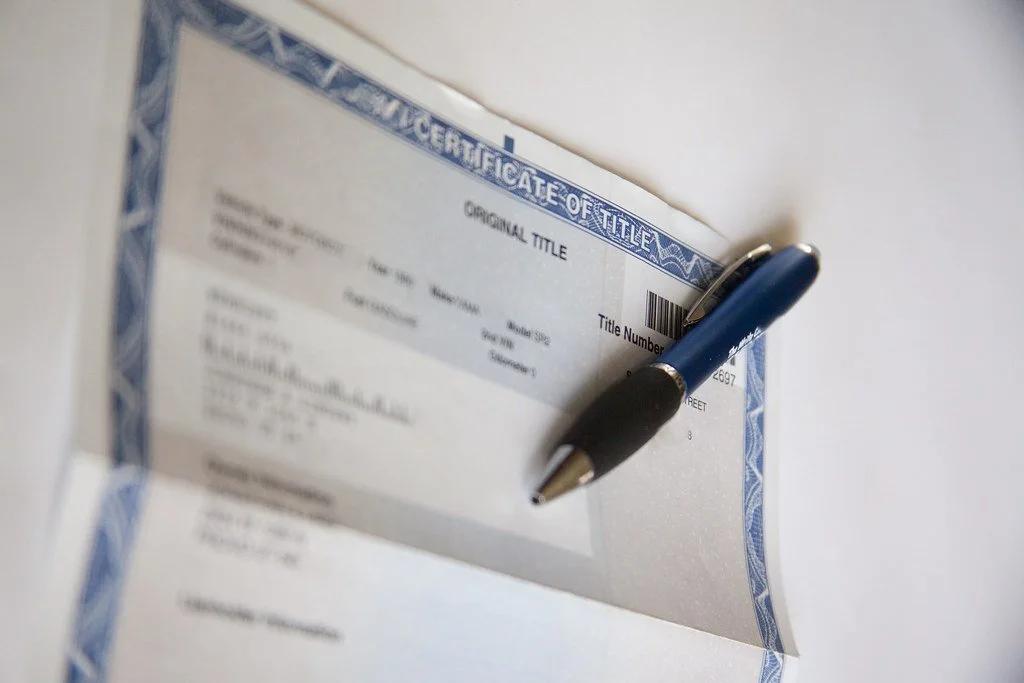
A will, probate order, beneficiary arrangement, or state-specific transfer procedure may determine who receives the vehicle, but an existing lender lien generally remains attached until it is released or otherwise resolved.
The process varies by state and by how the vehicle was titled. A vehicle owned solely by the deceased may require an executor or administrator to provide probate documents, a death certificate, and the existing title before the state motor vehicle agency will process a transfer.
A jointly titled vehicle may follow a different procedure, particularly if the title includes a right of survivorship.
Maryland’s Motor Vehicle Administration, for example, explains that the documents required to transfer a deceased person’s vehicle depend on whether there was a will, how the vehicle was titled, and who is seeking the transfer.
Its guidance also addresses lien information and the need for a lien release or authorization in certain transactions. Other states have their own rules and forms, so families should check the relevant state DMV rather than relying on another state’s process.
Even if an heir is legally entitled to receive the car, that does not mean the heir has automatically taken over the financing. The lender may require the loan to be paid off, refinanced, or otherwise handled under an approved arrangement before releasing its lien.
A person who wants to keep the vehicle should ask the lender whether it permits an assumption or requires a new loan application.
Before selling, gifting, or registering the vehicle, the estate representative should confirm who has legal authority to transfer it and how the lien will be satisfied. A title transfer alone does not erase the debt, and an unpaid loan can complicate any attempt to sell the car.
8. Credit Life Insurance May Pay Some or All of the Loan
Some borrowers purchase credit life insurance when financing a vehicle. This optional coverage is designed to pay the lender if the insured borrower dies while the loan is outstanding.
Depending on the policy, the benefit may cover the entire remaining balance or only a portion of it. If the policy pays the full eligible amount, it can prevent the estate or a surviving co-borrower from having to cover that insured portion of the debt.
The Consumer Financial Protection Bureau identifies credit life insurance as a type of optional credit insurance that pays off all or part of an auto loan when the insured borrower dies.
The National Association of Insurance Commissioners also explains that credit life insurance benefits are generally paid directly to the creditor. The exact amount and eligibility conditions depend on the policy.
Families should not assume that every car loan includes this protection. Credit life insurance is optional, and it is different from ordinary auto insurance and GAP coverage.
Standard collision or comprehensive insurance generally addresses vehicle damage or loss, while GAP coverage is designed for certain differences between an auto insurer’s settlement and the loan balance after a covered total loss. Neither should be confused with a death benefit.
The executor or surviving borrower should check the original financing paperwork, monthly statements, and any separate insurance certificate. If coverage exists, contact the insurer or the lender’s insurance administrator and ask how to submit a claim.

The insurer may require a death certificate, policy details, and loan-account information. Keep making any payments that are contractually due unless the lender or insurer confirms a different arrangement in writing.
It is also worth checking whether the policy has exclusions, waiting periods, age limits, or other restrictions.
A claim may not cover every circumstance or the entire balance. Written confirmation of the approved benefit and the remaining payoff amount is essential before the family makes decisions about keeping or selling the vehicle.