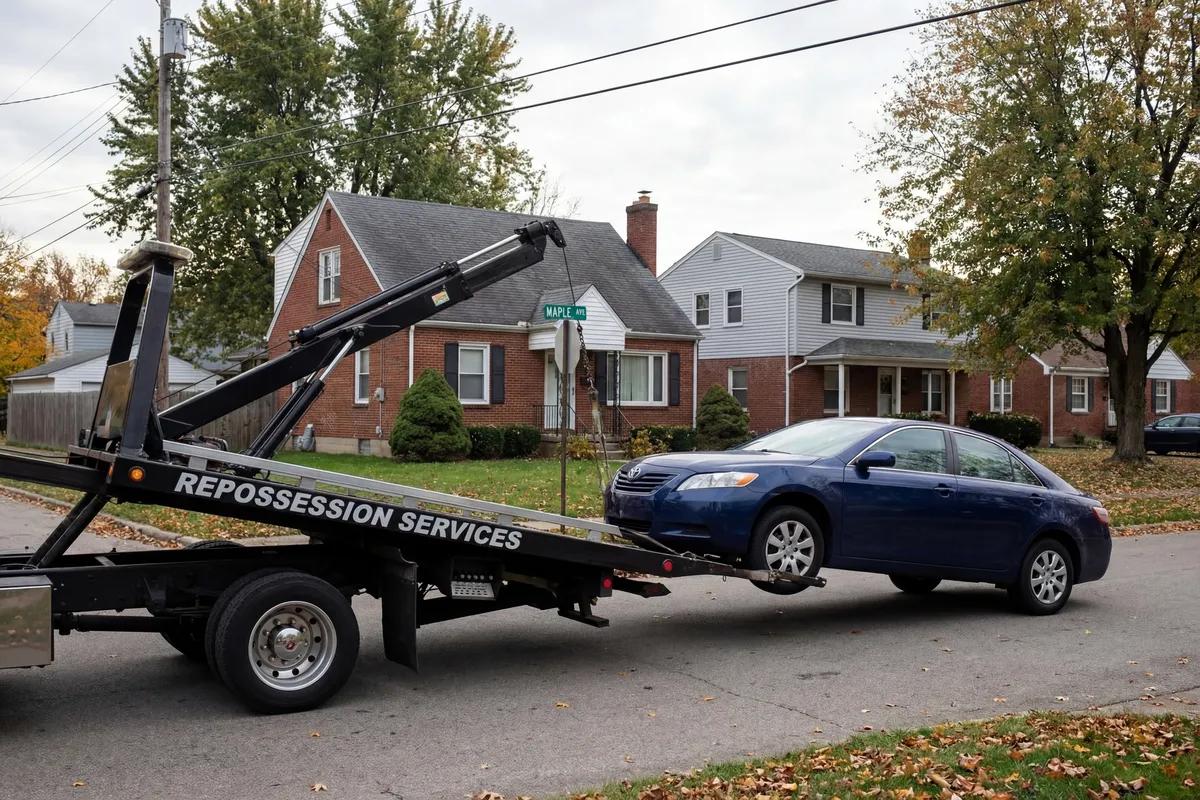
Having a car repossessed can turn an already difficult financial situation into a major disruption. For many Americans, a vehicle is essential for commuting, managing family responsibilities, and handling everyday expenses.
When loan payments fall behind and the lender takes back the vehicle, the consequences can extend far beyond losing transportation. Borrowers may face additional charges, credit damage, outstanding debt, and legal complications.
However, repossession does not mean every financial right disappears. Understanding what happens afterward can help vehicle owners protect themselves, recover personal belongings, and make informed decisions about their remaining financial obligations.
1. You Immediately Lose Access to Your Vehicle
The most immediate consequence of repossession is losing access to the vehicle, often without having much time to prepare. When a borrower defaults on an auto loan, the lender may authorize a repossession company to recover the vehicle.
In many US states, this can happen without warning or a court order, provided the lender follows applicable laws and the repossession does not involve a breach of the peace.
For someone who depends on a car for commuting, the disruption can be substantial. Getting to work, taking children to school, attending appointments, and completing everyday errands may suddenly become difficult. Borrowers who live in areas with limited public transportation can face particularly challenging circumstances.
Another important detail is that repossession does not necessarily happen at the borrower’s home. A recovery company may locate the vehicle at a workplace, shopping center, or another accessible parking location. However, repossession agents cannot use prohibited force or breach the peace to take it. The exact legal boundaries depend partly on state law.
The Federal Trade Commission explains that lenders in many states can repossess vehicles after a default without first notifying the borrower. Some states provide additional notice requirements, so the rules are not identical nationwide.
It is also important to understand that a repossessed vehicle is not automatically sold immediately. The lender generally has to follow applicable procedures before disposing of it, and borrowers may have opportunities to recover it.
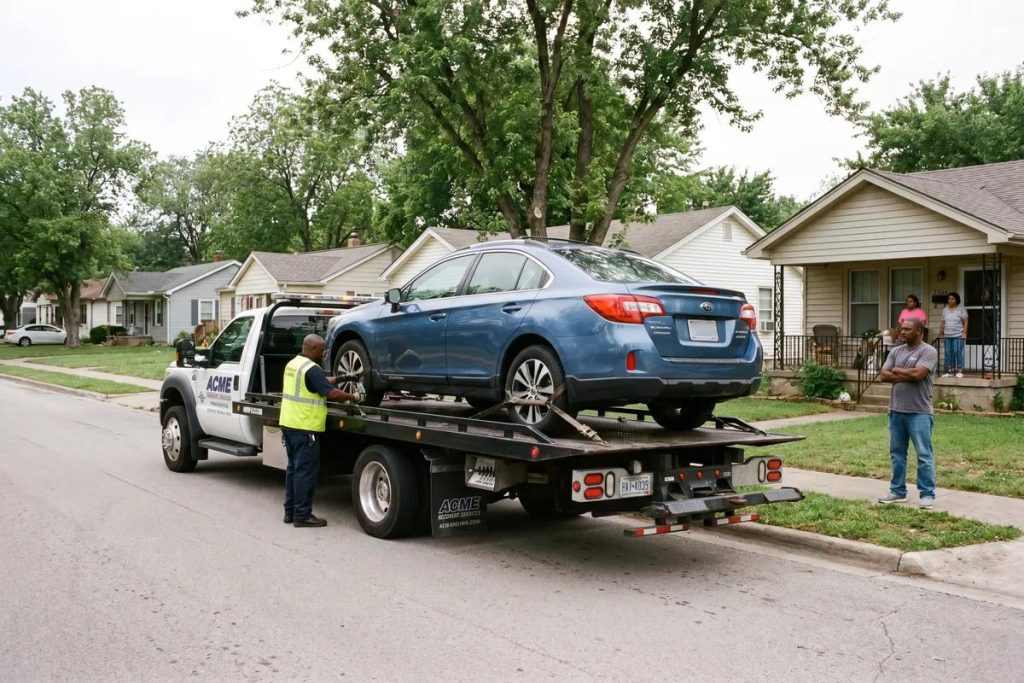
If you believe your vehicle was taken despite the account being current or an agreed payment arrangement being followed, contact the lender immediately. Request the repossession details and keep records of payments and communications.
The loss of transportation is only the beginning of the process. What happens next depends on the loan agreement, state requirements, and whether the borrower can exercise available rights before the vehicle is sold.
2. Your Personal Belongings May Be Removed From the Vehicle
A repossessed vehicle may contain much more than items belonging to the lender. Drivers often leave sunglasses, clothing, electronic devices, important documents, children’s belongings, and work equipment inside their cars.
When the vehicle is taken, these personal possessions may also become temporarily inaccessible. However, repossession does not transfer ownership of those belongings to the lender.
Personal property inside a repossessed vehicle generally remains the borrower’s property. The lender or repossession company must follow applicable state procedures for handling and returning those items.
Depending on the state, borrowers may receive a written inventory, instructions for collection, or information about where their belongings are being stored.
It is important to distinguish personal belongings from equipment that forms part of the vehicle. For example, a laptop, backpack, or pair of sunglasses would generally be considered personal property. Factory-installed navigation equipment, permanent audio systems, and standard vehicle equipment are different because they are part of the collateral.
California provides a specific example of how these protections work. Its Bureau of Security and Investigative Services states that licensed repossession agencies must inventory personal belongings found in a repossessed vehicle and send a notice within 48 hours explaining how they can be recovered. That 48-hour requirement is California-specific, not a nationwide rule.
Borrowers should contact the lender or repossession company promptly instead of assuming their possessions will automatically be returned. Prepare a written list of missing items, identify valuable belongings, and request clear instructions for collection. Keep copies of correspondence and any inventory provided.
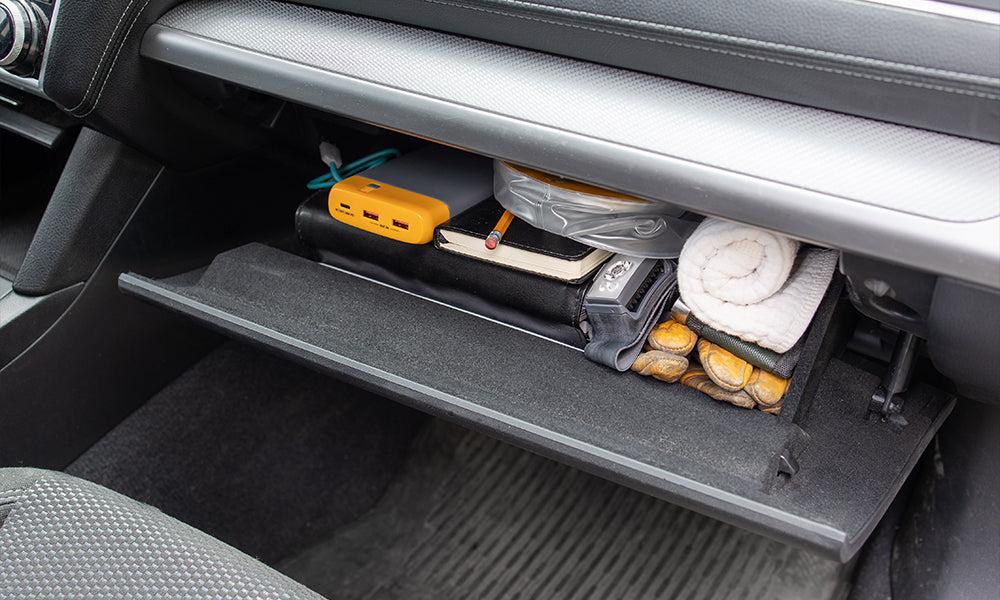
If personal property is missing, damaged, or being withheld improperly, contact the relevant state consumer protection agency or seek legal assistance.
The important point is that losing possession of a financed vehicle does not mean losing ownership of everything stored inside it.
3. You May Be Charged Additional Repossession and Storage Fees
Getting a vehicle repossessed does not necessarily end the financial charges associated with the loan. In fact, borrowers may discover additional expenses after the vehicle has been recovered.
These can include reasonable repossession charges, towing costs, storage fees, and expenses associated with preparing the vehicle for sale. Depending on the financing agreement and applicable state law, these amounts may be added to the outstanding debt.
The repossession company typically charges the lender for recovering and transporting the vehicle. If the car remains at a storage facility, additional expenses may accumulate. The lender may also incur costs for inspecting, cleaning, repairing, or preparing the vehicle before selling it.
However, borrowers should not assume that every amount appearing on a statement is automatically valid or legally recoverable.
The Consumer Financial Protection Bureau (CFPB) explains that lenders generally charge repossession fees, but those fees must be reasonable. What qualifies as reasonable can depend on the vehicle, recovery circumstances, and location. Borrowers can request an itemized breakdown showing how the charges were calculated.
Consider someone who owes $14,000 on a financed vehicle. Following repossession, the lender adds permitted recovery and storage expenses to the outstanding account. Even before the vehicle is sold, the amount needed to settle the debt may therefore increase.
Another important distinction concerns retrieving personal belongings. Some states permit reasonable storage charges associated with personal property, but the rules and collection procedures vary.
A borrower should ask for the exact requirements rather than assuming that the vehicle’s entire outstanding loan balance must be paid simply to collect personal possessions.
Review every repossession-related charge carefully. If a fee appears excessive, unexplained, or inconsistent with the contract, request supporting documentation and consider contacting your state attorney general or a consumer law attorney.
Keeping copies of the original loan agreement, repossession notices, and payment records can help resolve disputes.
4. The Lender Must Follow Procedures Before Selling the Vehicle
Once a vehicle has been repossessed, the lender generally moves toward recovering the outstanding debt by disposing of the collateral. This often involves selling the vehicle through an auction. However, a lender cannot simply ignore the applicable legal procedures and sell a repossessed car without considering the borrower’s rights.
Under Article 9 of the Uniform Commercial Code (UCC), which has been adopted in some form throughout the United States, secured creditors generally must provide reasonable notice before disposing of repossessed collateral.
For consumer transactions, the notice normally explains the intended method of sale and provides important information about the borrower’s rights. State-specific rules can affect the required timing and contents.
The distinction between public and private sales matters. If the lender plans a public auction, the notice generally must identify the time and place so the borrower has an opportunity to attend and bid. For a private sale, the notice generally identifies the date after which the vehicle may be sold.
Receiving this notice does not necessarily mean the borrower has lost every opportunity to recover the car. Depending on the circumstances, the borrower may still be able to redeem the vehicle before the sale or exercise a reinstatement right available under state law.
For example, someone who discovers that a repossessed vehicle is scheduled for auction should not ignore the notice. They should immediately contact the lender, request the exact redemption amount, and establish the deadline for completing any available payment arrangement.

The Federal Trade Commission and CFPB both explain that borrowers generally have rights to receive information before a repossessed vehicle is sold. These protections are important because they provide an opportunity to review the debt, challenge potential errors, or arrange to recover the vehicle.
If a lender fails to follow the required sale procedures, that may create legal issues affecting its ability to collect a deficiency balance.
5. You May Have an Opportunity to Get Your Car Back
Having a vehicle repossessed does not always mean the borrower has permanently lost it. Depending on the loan agreement and state law, there may still be an opportunity to recover the vehicle before the lender completes its sale. Two important legal concepts are redemption and reinstatement, although they do not mean the same thing.
Redemption generally involves paying the full secured debt, together with permitted repossession expenses, accrued interest, and other allowable charges, before the vehicle is sold or the lender enters into a contract for its disposition. This can be expensive because the borrower may need to pay considerably more than just the missed monthly installments.
Reinstatement is different. Where state law or the financing agreement permits it, the borrower may be able to restore the original loan by paying overdue installments and certain repossession-related expenses.
The regular repayment schedule then continues under the applicable arrangement. However, reinstatement rights are not available in every state or every situation.
For example, a borrower who owes $16,000 on a vehicle may be able to redeem it by paying the required full amount plus permitted expenses. If reinstatement is available, the required payment might instead involve overdue installments and eligible recovery costs. The exact amount depends on the contract, applicable law, and account status.
Timing is extremely important. Redemption rights generally expire when the vehicle is sold or the lender enters into a qualifying sale contract. Waiting until the last moment can therefore eliminate an opportunity to recover the car.

The Federal Trade Commission explains that borrowers may have redemption rights and that some states also provide reinstatement protections. The CFPB similarly advises consumers to request information about their available options after repossession.
If you want your vehicle back, immediately ask the lender for the redemption amount, reinstatement eligibility, payment deadline, and required method of payment. Request everything in writing before sending money. Do not assume that paying one missed installment will automatically release the vehicle.
6. Your Vehicle May Be Sold at Auction for Less Than You Expected
After repossession, the lender may sell the vehicle to recover as much of the outstanding loan balance as possible. In many cases, this happens through a wholesale vehicle auction rather than a traditional retail dealership. One important consequence is that the vehicle may sell for less than the amount its previous owner believes it is worth.
Wholesale auctions operate differently from ordinary dealership sales. Vehicles are often purchased by dealers, wholesalers, and other eligible buyers who intend to resell them. The sale price can depend on mileage, condition, accident history, demand, vehicle age, and the number of competing bidders.
For example, imagine a borrower whose vehicle has an estimated retail value of $18,000. That does not mean the lender will receive $18,000 when selling it at auction. Wholesale pricing, mechanical problems, damage, and market conditions can produce a lower sale amount.
However, lenders cannot simply dispose of repossessed collateral in any manner they choose. Under UCC Article 9, the sale must generally be conducted in a commercially reasonable manner. This requirement concerns the method, timing, and circumstances of the sale, rather than guaranteeing that the vehicle achieves a particular retail valuation.
The CFPB explains that lenders must sell repossessed vehicles through a commercially reasonable process. Borrowers who believe the vehicle was sold improperly or for an unreasonably low amount should request the sale records and seek legal advice.
Another important detail is that the lender must account for the sale proceeds when calculating the remaining debt. It cannot simply ignore the money received from the auction and demand the entire original loan balance.

If your vehicle has been sold, request the final sale price, an itemized expense statement, and a calculation showing how the proceeds were applied to your account. These documents will help you understand whether a remaining balance exists and whether the calculation is accurate.
7. You Could Still Owe Thousands of Dollars After the Sale
One of the biggest surprises after repossession is discovering that losing the vehicle does not necessarily eliminate the loan. If the lender sells the car and the proceeds are insufficient to cover the outstanding debt and permitted expenses, the borrower may still owe the difference. This remaining amount is called a deficiency balance.
The calculation generally starts with the outstanding loan obligation and adds allowable repossession, storage, and sale-related expenses. The lender then subtracts the net proceeds received from disposing of the vehicle. The remaining amount may become the borrower’s responsibility, subject to the financing agreement and applicable law.
Consider a borrower who owes $21,000 when the vehicle is repossessed. The lender incurs $1,000 in permitted expenses and eventually receives $15,000 from the sale. The resulting deficiency would be approximately $7,000, assuming those figures represent the relevant amounts after applicable credits and adjustments.
This can create a difficult financial situation because the borrower no longer has the vehicle but still has a debt to repay. If the deficiency remains unpaid, the lender may assign or sell the debt to a collection agency or pursue legal action to recover it.
However, borrowers should not automatically accept every deficiency calculation. They can request an itemized accounting showing the original balance, fees, sale proceeds, and any other adjustments. Errors in these calculations or failures to follow required repossession and sale procedures may provide grounds to challenge the amount.
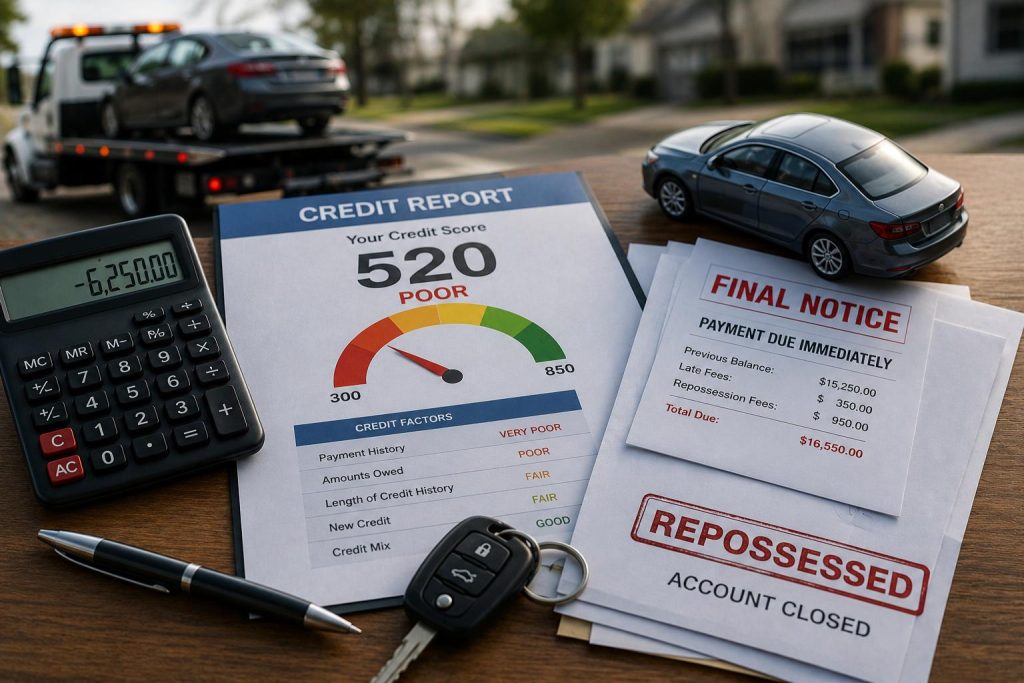
The Federal Trade Commission explains that creditors in most states may sue to collect a valid deficiency balance if they comply with applicable legal requirements. The CFPB also confirms that borrowers may remain responsible for a shortfall after repossession.
If you receive a deficiency demand, review the documents carefully and consider seeking legal assistance before agreeing to a repayment arrangement.
8. Your Credit Report Could Show the Repossession for Years
A repossession can have consequences long after the vehicle has disappeared from the driveway. One of the most significant is its effect on the borrower’s credit history. When an auto loan becomes seriously delinquent and the lender reports the repossession, negative information can appear on credit reports maintained by Equifax, Experian, and TransUnion.
The damage is not limited to the repossession notation itself. Previous late payments, the account’s default status, and any remaining deficiency balance may also be reported, depending on the account’s reporting history. These entries can make it harder to qualify for another auto loan, credit card, mortgage, or other financing.
The Fair Credit Reporting Act generally allows most negative account information to remain on consumer credit reports for up to seven years. For accounts placed for collection or charged off, the reporting period generally runs from the date of the delinquency that immediately preceded the collection or charge-off.
A repossession does not automatically create a fresh seven-year period simply because the vehicle was taken.
The financial impact varies between borrowers. Someone with an otherwise strong credit history may experience a significant setback, while another person with several previous delinquencies may see a different change. There is no universal number of credit-score points that every repossession removes.
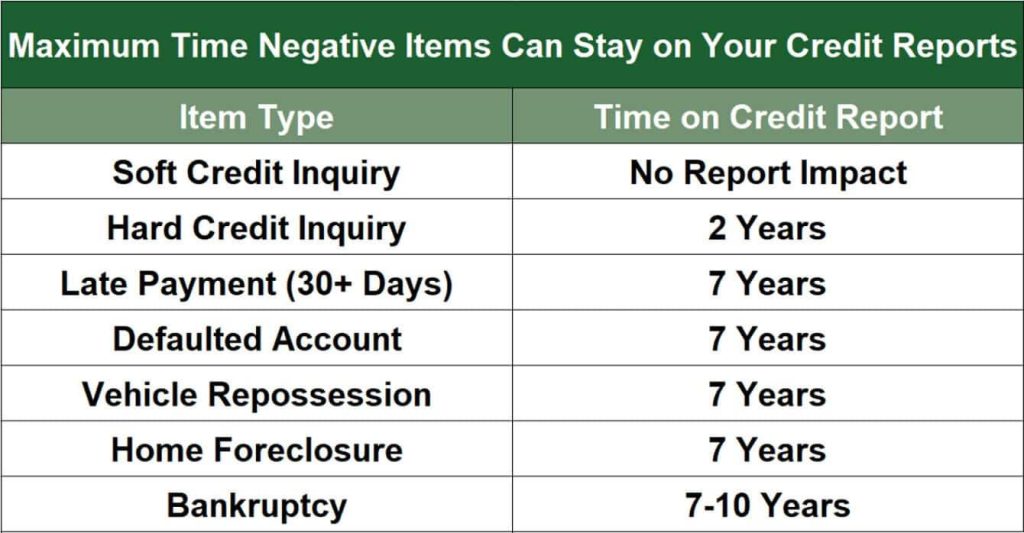
Another important point is that paying the deficiency balance does not automatically erase accurate historical repossession information. However, resolving the debt can prevent additional collection complications and may improve the borrower’s financial position over time.
Consumers should regularly review their credit reports through AnnualCreditReport.com and check whether the lender has reported accurate balances, payment dates, and account statuses.
If information is incorrect, borrowers have the right to dispute it with the credit reporting company and the company that supplied the information.