

Towing a trailer for the first time can be more challenging than many drivers expect. Even experienced motorists need to adjust their driving habits when pulling additional weight behind their vehicle.
From choosing an unsuitable hitch to distributing cargo incorrectly, small mistakes can affect stability, braking performance, and control. A trailer also changes how a vehicle accelerates, turns, reverses, and responds to sudden road conditions.
Understanding the equipment and preparation required before setting off can prevent expensive damage and dangerous situations. Here are eight common mistakes first-time trailer owners and drivers should avoid when towing on American roads.
1. Ignoring the Vehicle’s Maximum Towing Capacity
One of the biggest mistakes first-time trailer owners make is assuming their vehicle can tow any trailer that physically fits onto its hitch. A vehicle may look powerful enough to pull a camper, boat, or cargo trailer, but appearance alone says nothing about its actual towing capability.
Every vehicle has manufacturer-specified weight limits, and exceeding them can place excessive stress on the engine, transmission, suspension, tires, and braking system.
The first figure to check is the Gross Combined Weight Rating (GCWR). This represents the maximum allowable combined weight of the loaded tow vehicle and trailer. Drivers should also understand the Gross Vehicle Weight Rating (GVWR), which limits the loaded weight of the tow vehicle itself.
The trailer’s loaded weight must remain within the vehicle’s rated towing capacity, while passengers, cargo, accessories, and trailer tongue weight must also be accounted for within the applicable vehicle limits.
Another commonly overlooked specification is the hitch rating. Even if a vehicle can tow a particular trailer, its installed hitch and other towing components must be rated for the actual load. The lowest applicable rating in the complete towing system determines the usable limit.
For example, a pickup advertised with a 10,000-pound maximum towing capacity cannot automatically tow a 10,000-pound trailer in every configuration. Engine choice, axle ratio, cab style, drivetrain, payload, and installed equipment can change the manufacturer’s rating.
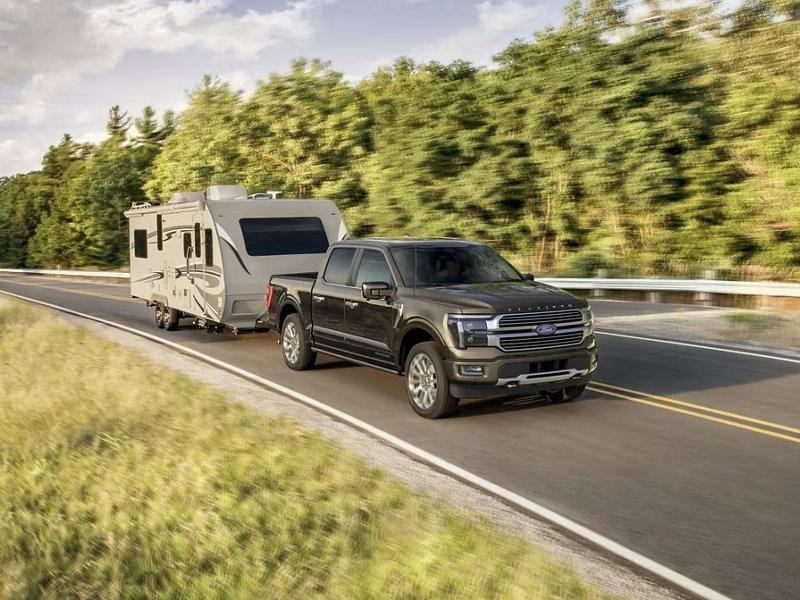
Before purchasing or connecting a trailer, consult the vehicle’s owner’s manual and manufacturer’s towing guide. Never rely solely on a dealership advertisement or a general model specification.
Matching the loaded trailer weight to the actual vehicle configuration is essential for maintaining control and avoiding unnecessary mechanical strain.
2. Loading the Trailer With Too Much Weight at the Rear
How cargo is distributed inside a trailer can be just as important as how much it weighs. A common mistake among first-time tow-truck drivers is placing heavier objects toward the rear because that area appears easier to access or offers more storage space.
Unfortunately, an incorrectly distributed load can make a trailer unstable, increasing the possibility of dangerous side-to-side movement at highway speeds.
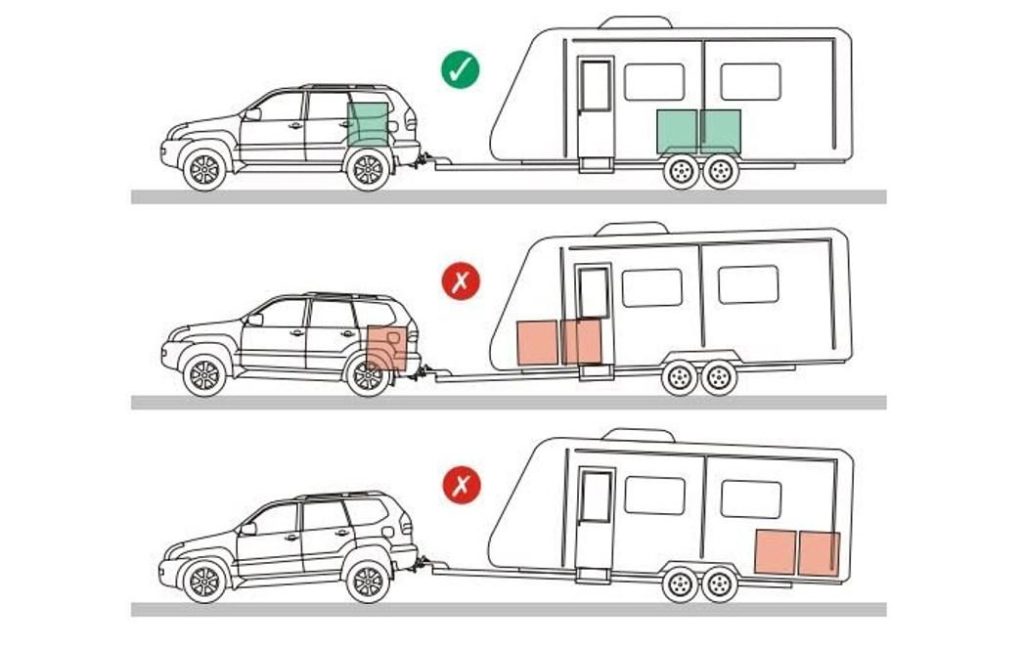
Trailer stability depends partly on tongue weight, which is the downward force the loaded trailer applies to the hitch. For many conventional bumper-pull trailers, a commonly recommended starting range is approximately 10% to 15% of the loaded trailer weight.
However, the correct target depends on the trailer design and manufacturer instructions. Too little tongue weight can encourage sway, while excessive tongue weight can overload the tow vehicle’s receiver, rear axle, or payload capacity.
U-Haul recommends positioning approximately 60% of cargo weight in the front half of its rental cargo trailers. This is a specific loading recommendation for its equipment, not a universal rule for every trailer.
Drivers should follow the trailer manufacturer’s loading guidance and verify tongue weight rather than relying on cargo placement alone.
Consider a trailer carrying furniture, boxes, and household appliances. Placing the heaviest items near the rear can reduce the downward load on the hitch and make the combination more difficult to control. A better arrangement generally places heavier cargo low and appropriately forward, with the remaining weight distributed evenly.
Cargo must also be secured using suitable tie-downs so it cannot shift during acceleration, braking, or cornering. Even a correctly balanced trailer can become unstable if its contents move while travelling.
Before departure, check the loaded trailer’s weight and tongue weight using appropriate weighing equipment. Never assume that an apparently level trailer is automatically balanced correctly.
3. Using the Wrong Hitch or Trailer Ball Size
A trailer hitch may appear to be a straightforward connection, but choosing the wrong equipment can create a serious safety hazard. First-time tow-in users sometimes assume that any hitch ball will work as long as it fits inside the trailer coupler.
In reality, trailer couplers and hitch balls are designed for specific dimensions and weight ratings. A mismatch can prevent the coupler from locking securely, increasing the risk of the trailer separating while travelling.
Common hitch ball diameters in the United States include 1-7/8 inches, 2 inches, and 2-5/16 inches. These sizes are not interchangeable. The correct diameter must match the marking on the trailer coupler.
Drivers should also check the ball’s weight rating, the receiver’s rating, and the capacity of the ball mount. Every component must be suitable for the intended loaded trailer weight.
Another mistake is overlooking the height of the hitch. If the ball mount is too high or too low, the trailer may sit at an improper angle when connected. Depending on the trailer design, this can affect weight distribution and handling.
Use the appropriate ball mount to achieve the trailer manufacturer’s recommended towing position, which is commonly level or slightly nose-down when specified.
The connection itself deserves careful attention. After lowering the coupler onto the ball, engage its locking mechanism fully and install the required retaining pin or lock. A quick visual inspection should confirm that the coupler is properly seated and secured.
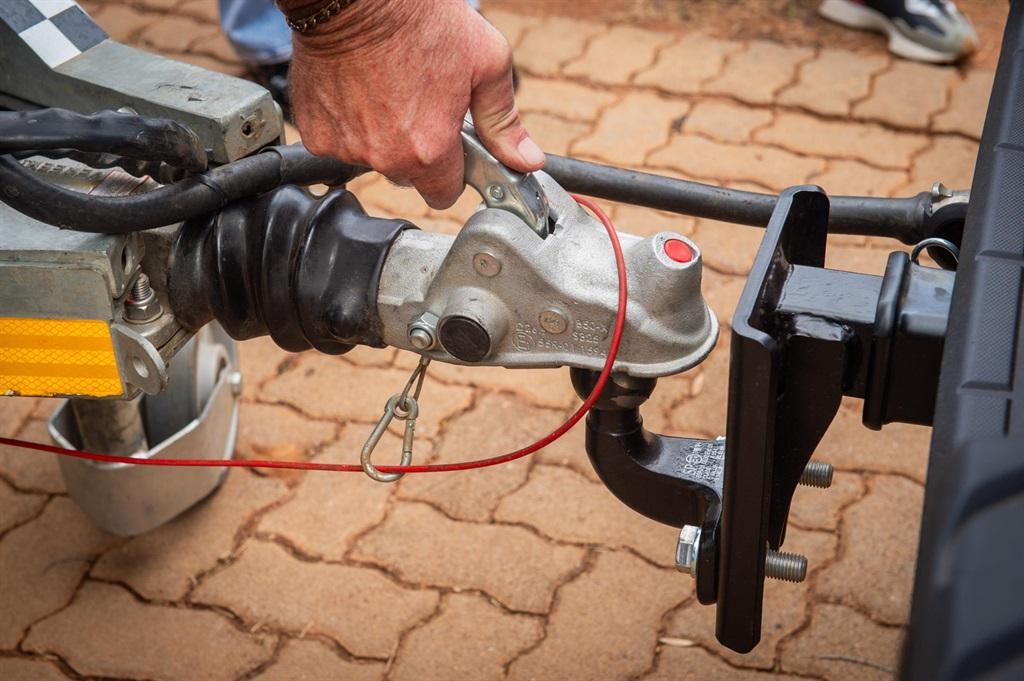
NHTSA’s vehicle towing guidance emphasizes matching towing equipment to the trailer and vehicle requirements. U-Haul also instructs users to inspect the hitch, ball, and coupler connection before departure.
Never choose a hitch component simply because it looks strong enough. Check the stamped ratings and manufacturer specifications before connecting anything. A correctly matched towing system provides the foundation for a secure trailer connection.
4. Forgetting to Connect the Safety Chains Correctly
Safety chains are among the most important parts of a trailer connection, yet inexperienced drivers sometimes treat them as optional accessories.
These chains provide a secondary connection between the trailer and tow vehicle if the primary hitch connection separates. They are not designed to replace a properly secured coupler, but they can help prevent a detached trailer from immediately travelling independently.
A frequent mistake is attaching the chains to an unsuitable location, such as a bumper section that is not designed for towing loads. They should be connected to the designated safety-chain attachment points on the towing vehicle’s hitch structure.
Both chains must be appropriately rated and installed according to the hitch and trailer manufacturer’s instructions.
For many conventional trailers, crossing the chains underneath the trailer tongue is recommended. This arrangement can help form a supporting cradle if the coupler separates from the hitch ball. However, drivers should not cross chains blindly if the equipment manufacturer specifies another arrangement.
Chain length is another important consideration. Chains that are too short can restrict turning movements, while excessively long chains may drag on the road and become damaged. Adjust them to provide sufficient slack for normal turning without allowing them to contact the pavement.
The electrical connection also requires attention. Drivers should verify that the trailer wiring plug is properly connected and that brake lights, turn signals, and running lights work correctly. Safety chains do not provide electrical or braking functions, so these systems must be checked separately.
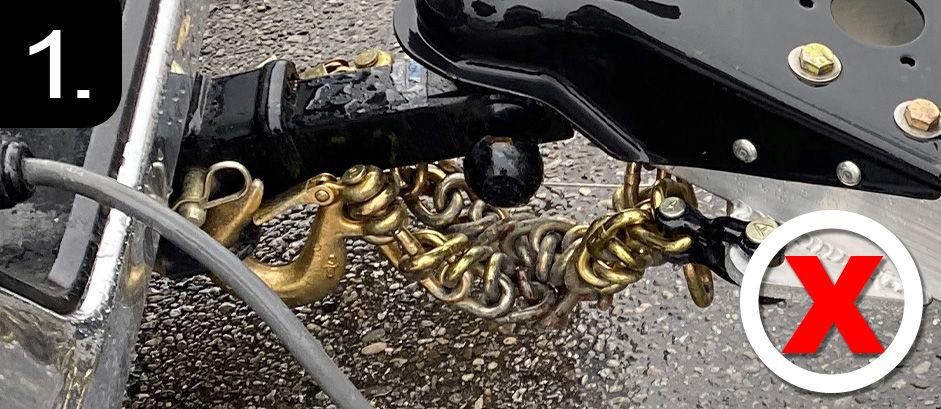
U-Haul’s trailer instructions include properly attached safety chains in its pre-towing checklist. NHTSA towing guidance also stresses using designated attachment points and allowing enough chain slack for turns.
Before driving, physically inspect both chains, their hooks, and their attachment points. Never assume they are secure simply because they were connected during the initial hookup.
5. Skipping the Trailer Tire and Brake Inspection
A trailer can appear perfectly ready for a journey while hiding problems that are difficult to notice from the driver’s seat. One mistake first-time tow trucks make is checking only the tow vehicle’s tires and brakes while forgetting that the trailer has its own running gear.
Trailer tires and braking components carry additional responsibility, particularly when transporting heavy cargo or travelling at highway speeds.
Begin by checking the inflation pressure of every trailer tire, including the spare. Use the pressure specified by the trailer or tire manufacturer, rather than automatically copying the pressure printed on the tow vehicle’s tire placard.
Trailer tires can have different load requirements and operating specifications. Underinflation can increase heat buildup and contribute to tire failure, while excessive pressure can affect tire performance and wear.
Inspect the sidewalls and tread for cuts, cracks, bulges, exposed cords, and other visible damage. Tire age also matters because rubber deteriorates over time, even when a trailer is driven infrequently. Check the manufacturer’s recommendations for tire replacement and do not rely exclusively on tread depth to judge suitability.
Brakes deserve equal attention. If the trailer is equipped with electric brakes, confirm that the brake controller is properly connected and adjusted according to the manufacturer’s instructions.
Test the braking system in a safe location before entering traffic. Trailers equipped with surge brakes or other systems require their own specified inspection procedures.
Another easily overlooked component is the breakaway system. On trailers equipped with one, its switch and battery must be maintained so the emergency braking system can operate if the trailer separates from the tow vehicle. Do not use the breakaway switch as an ordinary parking brake.
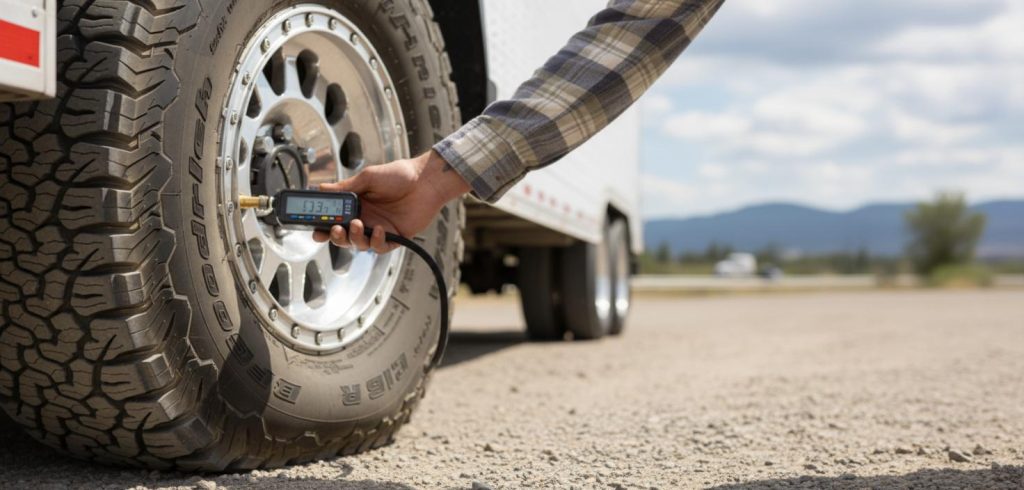
U-Haul recommends checking trailer tire pressure and inspecting equipment before towing. Federal regulations also establish breakaway-braking requirements for certain commercial trailers, although private recreational trailer requirements vary by state.
A complete inspection before departure is much safer than discovering a damaged tire or malfunctioning brake system halfway through a journey.
6. Driving at Normal Speeds and Following Too Closely
One of the biggest adjustments when towing a trailer is changing the way you drive. Some first-time drivers continue using the same speed, following distance, and braking habits they use when travelling without additional weight.
This can be dangerous because a trailer changes the vehicle combination’s acceleration, handling, and stopping characteristics.
The additional mass means the tow vehicle needs more time and distance to slow down. Applying the brakes suddenly can also place unnecessary stress on the braking system and destabilize the trailer, especially on wet or uneven roads.
Drivers should anticipate traffic changes, begin slowing earlier, and maintain a larger following distance than they normally would.
U-Haul recommends maintaining at least four seconds between its rental towing combinations and the vehicle ahead. Its more recent general towing guidance recommends at least five seconds.
These are company recommendations rather than universal legal requirements, and additional distance may be necessary in poor weather, heavy traffic, or with a particularly heavy trailer.
Speed is another important consideration. Never assume that the posted highway speed limit is automatically an appropriate towing speed. Follow the vehicle and trailer manufacturers’ limits and applicable state laws.
U-Haul, for example, recommends a maximum of 55 mph when towing its rental trailers. That figure should not be treated as a universal limit for every trailer.
Cruise control also deserves caution. Some rental and vehicle manufacturers advise against using it while towing because manually controlling speed provides greater flexibility when approaching hills, traffic, and changing road conditions.
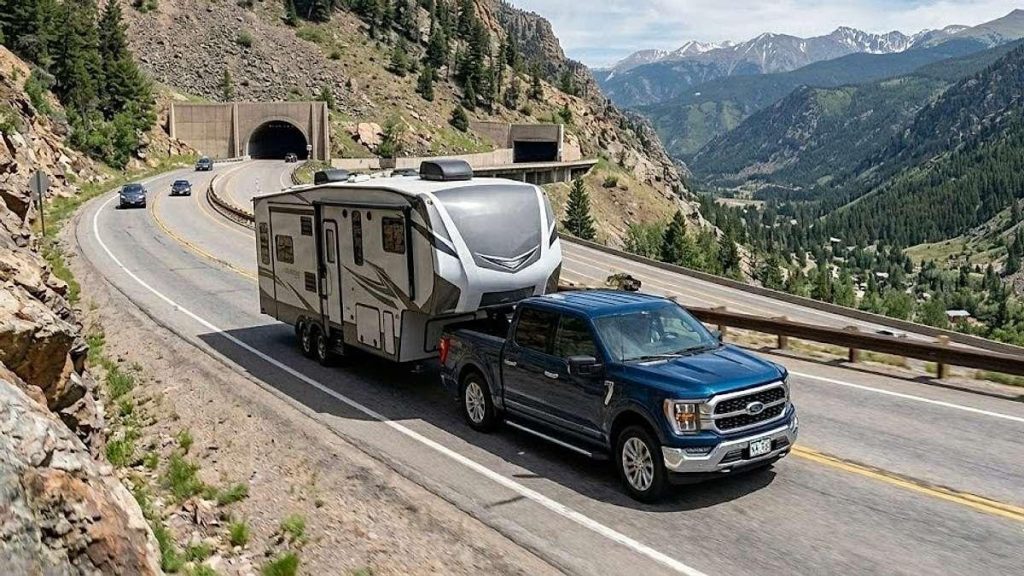
Before a long downhill section, reduce speed and select an appropriate lower gear where recommended. This can help limit excessive reliance on the service brakes.
A smooth driving style, generous following distance, and controlled speed make towing more predictable. Your goal should be maintaining stability and having enough room to react, not keeping pace with traffic travelling without trailers.
7. Making Sharp Turns Without Allowing for the Trailer’s Extra Length
A turn that feels completely normal when driving a regular car can become surprisingly difficult when a trailer is attached. First-time towing often underestimates how much space the entire combination needs to complete a corner.
Because the trailer follows a different path from the tow vehicle, its wheels can move closer to the inside of a turn, potentially striking curbs, parked vehicles, road signs, or other obstacles.
This behavior is commonly known as trailer off-tracking. It becomes particularly noticeable when making tight right turns, entering fuel stations, navigating residential streets, or manoeuvring through crowded parking lots.
A driver who turns at the same point and angle as usual may find that the trailer cuts across the curb or approaches an obstacle.
The solution is to reduce speed before turning and plan the manoeuvre early. Allow enough room for the trailer to follow its intended path without crossing into another traffic lane or striking roadside objects. Do not swing excessively wide into neighbouring lanes, as this can create a collision risk for other motorists.
Mirror use is particularly important. Check the trailer’s position throughout the manoeuvre rather than concentrating exclusively on the front of the tow vehicle. Properly adjusted towing mirrors can improve visibility, especially when the trailer is wider than the vehicle.
U-Haul’s towing instructions specifically warn that trailers track inside the turning path of the tow vehicle. Its guidance recommends allowing additional room and avoiding unnecessarily sharp corners.
Long trailers and multi-axle configurations may behave differently, so practising with the actual trailer is useful. An empty parking lot offers a safer environment to understand its turning radius before entering heavy traffic.

Remember that the rear of the trailer also swings outward during certain manoeuvres. Watch both sides and avoid making sudden steering corrections. Taking a few extra seconds to position the combination properly can prevent costly bodywork damage and dangerous roadside incidents.
8. Practising Reversing Only After Reaching a Tight Parking Space
Reversing with a trailer is one of the most intimidating parts of towing for beginners. A common mistake is waiting until reaching a crowded campsite, driveway, or storage facility before attempting the manoeuvre for the first time.
Unlike reversing a normal vehicle, the trailer responds differently to steering inputs and can begin moving in an unexpected direction if the driver makes large corrections.
When reversing, the trailer generally moves opposite to the direction the rear of the tow vehicle is steered. This can initially feel confusing because the driver is accustomed to controlling the direction of the vehicle itself rather than a separate unit behind it.
A useful beginner technique is placing one hand at the bottom of the steering wheel. Moving that hand toward the direction you want the trailer to travel can make the steering response easier to understand. However, small movements are essential.
Large or sudden steering inputs can quickly produce an excessive angle between the tow vehicle and trailer, potentially resulting in jackknifing.
Mirrors should be adjusted before attempting to reverse. Both sides of the trailer should remain visible, allowing the driver to monitor its movement and surroundings. Never rely exclusively on a rearview camera because it may not show every obstacle or the full trailer position.
Having a spotter outside the vehicle can make reversing safer, provided the driver and spotter agree on clear signals beforehand. The spotter should remain visible to the driver and stay away from the trailer’s path. If communication is lost, stop immediately.
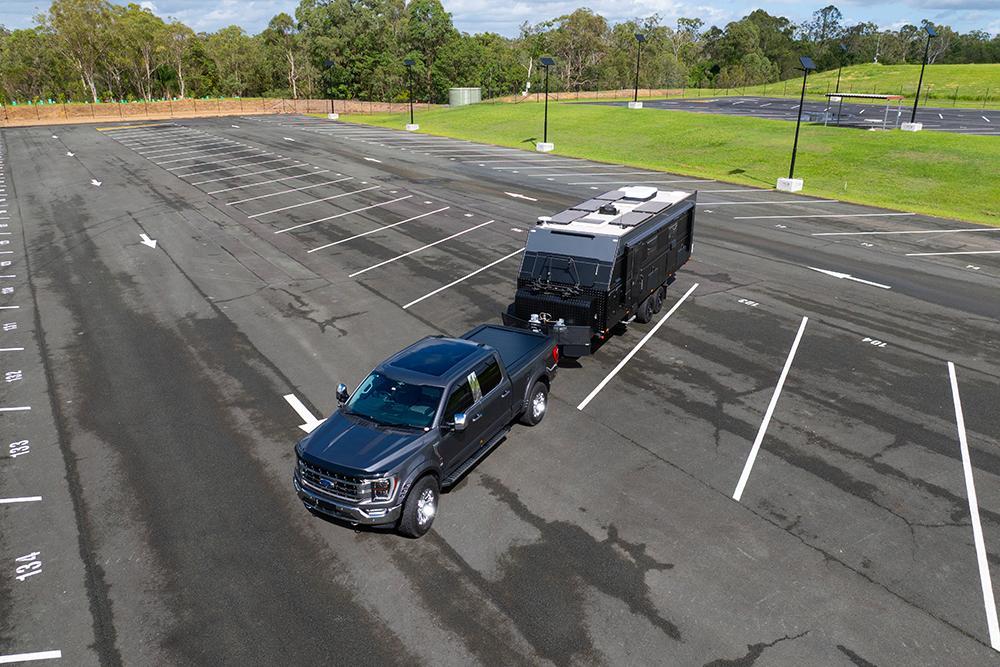
U-Haul recommends practising in an open area and stopping to pull forward whenever the trailer begins moving in the wrong direction. This allows the combination to straighten before another attempt.
Practise straight-line reversing and gradual turns in an empty parking lot before attempting tight spaces. There is no advantage in rushing. Several small corrections are much safer than one aggressive steering movement.
