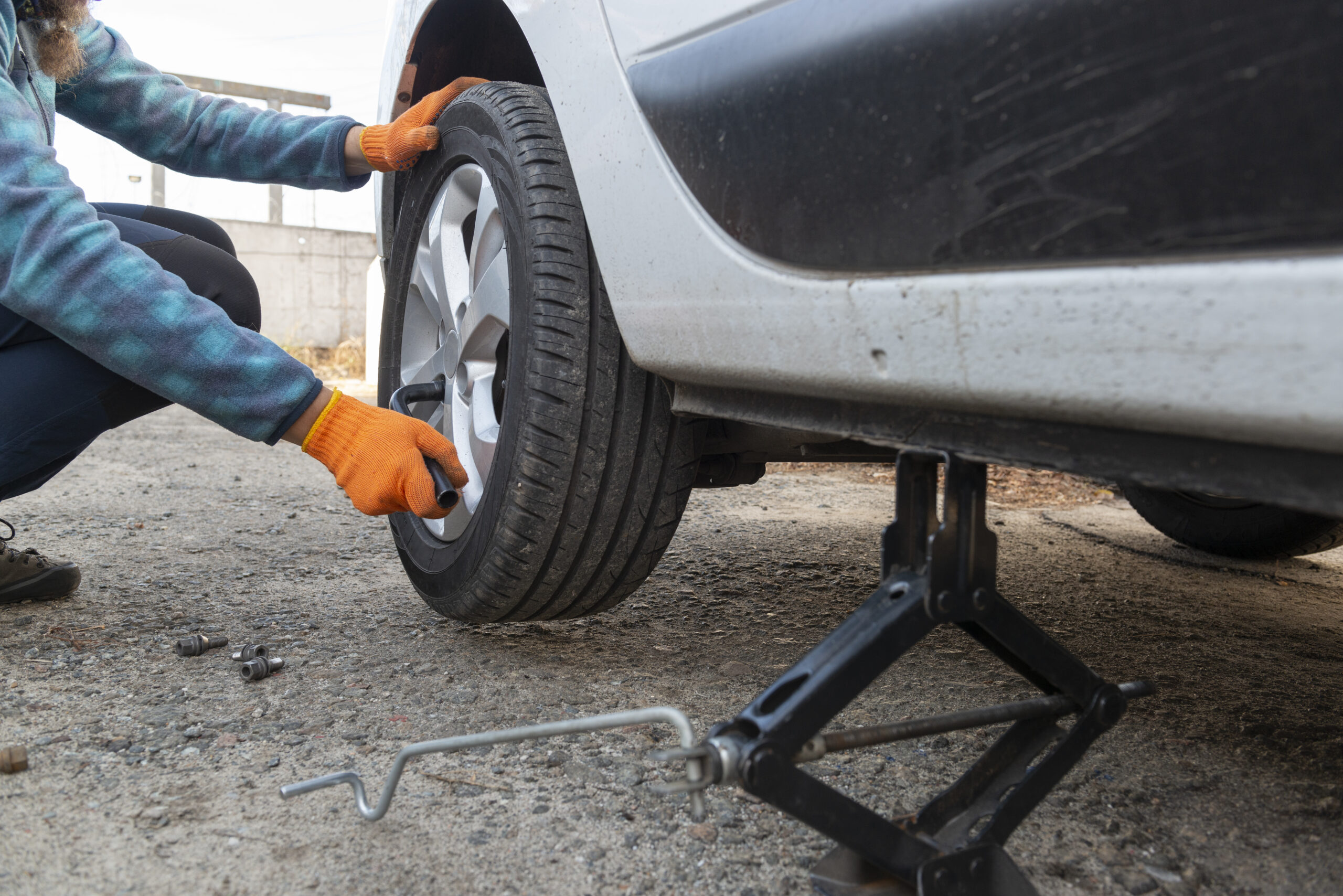
A flat tire can happen without warning, leaving drivers stranded on a highway shoulder, parking lot, or quiet roadside. Although changing a tire is a basic vehicle maintenance skill, doing it incorrectly can cause serious injuries, damage the vehicle, or create dangerous situations around moving traffic.
From choosing an unsuitable parking spot to tightening wheel nuts incorrectly, several seemingly minor mistakes can turn a straightforward repair into a costly problem.
Understanding the correct procedure is essential, even for experienced drivers. Here are seven common mistakes people make when changing a flat tire and how to avoid them.
1. Changing the Tire Too Close to Moving Traffic
One of the most dangerous mistakes drivers make is attempting to change a flat tire without first finding a sufficiently safe location. When a tire loses pressure, the immediate temptation is to stop wherever the vehicle comes to a halt and begin replacing it.
However, stopping close to moving traffic exposes the driver and passengers to passing vehicles, particularly on highways where traffic travels at high speeds.
If a tire becomes flat while driving, avoid sudden braking or sharp steering movements. Maintain control, reduce speed gradually, activate the hazard warning lights, and move toward a safe stopping location.
Whenever possible, leave the roadway completely and choose a firm, level area away from traffic. A nearby parking lot or designated stopping area is generally preferable to a narrow highway shoulder.
Drivers should also remember that switching on hazard lights does not make roadside work automatically safe. Other motorists may not notice a stationary vehicle in time, especially during darkness, heavy rain, or poor visibility.
If the vehicle cannot reach a safe location, attempting a roadside tire change may create more danger than arranging professional assistance.
Once stopped, passengers should move away from traffic and wait in a protected location where possible. On a highway, follow local roadside safety guidance and avoid standing between the vehicle and approaching traffic.
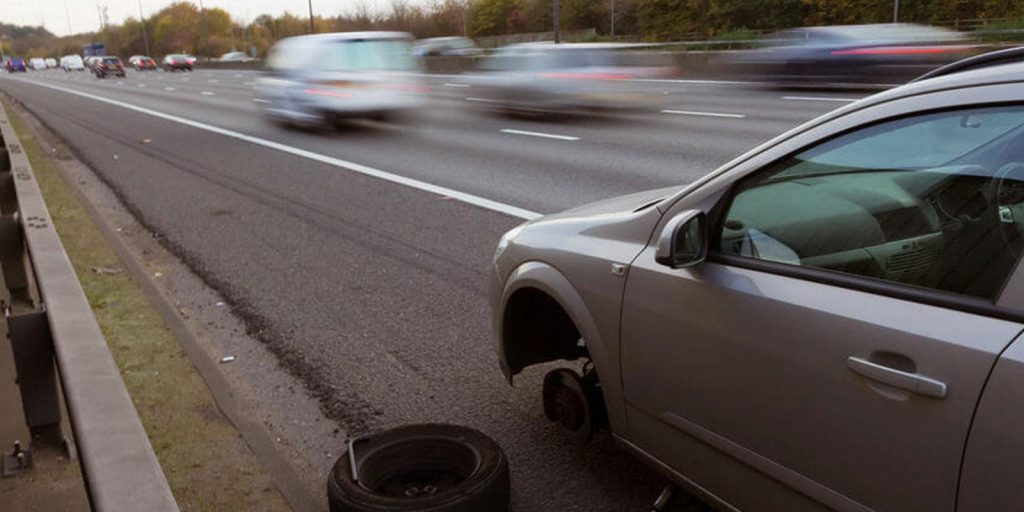
Do not position yourself behind the vehicle simply to place warning equipment if doing so requires entering a dangerous traffic area.
According to AAA’s tire-changing guidance, drivers should prioritize getting away from traffic before beginning the replacement process. If the shoulder is narrow or the vehicle is positioned dangerously, contact roadside assistance instead of attempting the repair.
2. Forgetting to Secure the Vehicle Before Using the Jack
A vehicle must remain completely stationary before anyone attempts to lift it. Unfortunately, some drivers concentrate so heavily on removing the damaged wheel that they overlook basic precautions that prevent the vehicle from rolling.
Even a small movement can destabilize a jack, potentially causing the vehicle to fall and injure someone working nearby.
Start by placing an automatic transmission in park. For a manual transmission, follow the manufacturer’s instructions, which commonly specify first or reverse gear. Apply the parking brake firmly and switch off the engine. These steps reduce the possibility of unwanted movement while the vehicle is being raised.
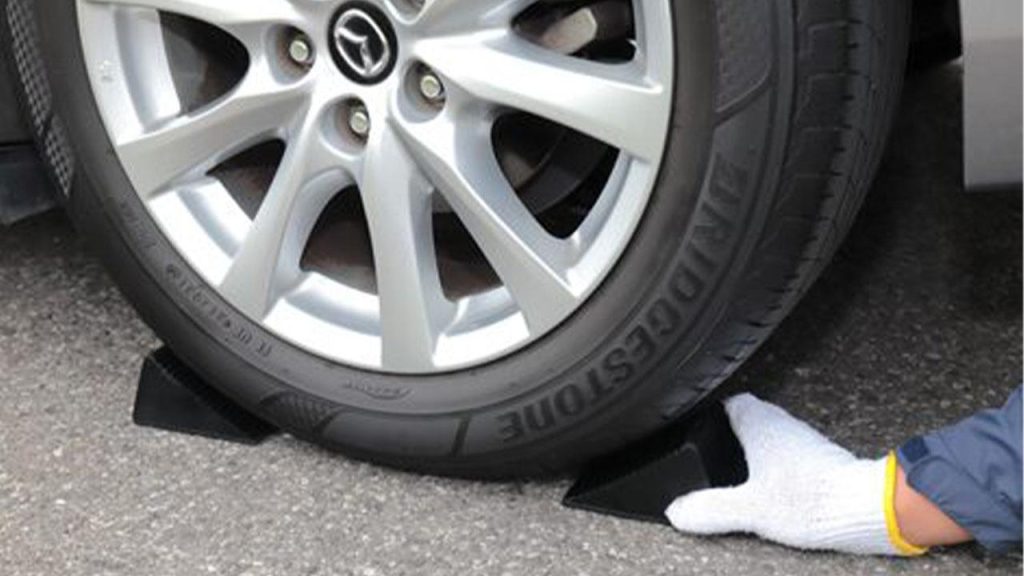
Wheel chocks provide another important layer of protection. They are wedges designed to prevent wheels from moving and should be positioned according to the vehicle manufacturer’s instructions.
When changing one wheel, AAA recommends securing the wheel diagonally opposite the damaged tire. For example, when replacing a front-left tire, the rear-right wheel is the diagonal opposite.
A common mistake is assuming that the parking brake alone provides sufficient protection. Although it helps prevent movement, it should not replace proper wheel chocking, particularly when working on uneven ground or dealing with a vehicle that has unusual parking-brake arrangements.
Never attempt to change a tire on a slope if you can avoid it. A sloping surface increases the possibility of movement and makes it harder for the jack to remain stable. If the vehicle cannot be moved to firm, level ground, professional roadside assistance is the safer choice.
Drivers should also remove passengers and unnecessary cargo before lifting the vehicle. Vehicle occupants should never remain inside while a standard emergency jack is supporting the car. Following these precautions helps create a stable working environment before the wheel replacement begins.
3. Placing the Jack in the Wrong Position
Using a jack incorrectly is one of the most serious mistakes someone can make while changing a flat tire. Many drivers assume that any strong-looking section underneath the vehicle can support its weight.
That assumption is dangerous because modern vehicles have specific lifting points designed to withstand the concentrated force produced by a jack. Placing it elsewhere can damage the vehicle or cause it to slip.
Every vehicle has its own recommended jack locations, which are generally identified in the owner’s manual. Depending on the design, these points may be reinforced sections along the frame or specially shaped areas beneath the body.
Some vehicles also have markings or notches that help drivers identify the correct position. Never rely on guesswork when locating them.
Another common mistake is placing a jack underneath plastic trim, floor panels, suspension components, or other parts that are not designed to support the vehicle’s weight. These components can bend, crack, or become displaced when pressure is applied. Even if the jack initially appears stable, it may shift as the vehicle rises.
The surface underneath the jack matters just as much. Soft soil, gravel, mud, and uneven pavement can allow the jack to sink or tilt. A firm, level surface provides better stability. Never attempt to compensate for unsuitable ground by stacking loose bricks, stones, or other unstable objects underneath the jack.
NHTSA’s published tire-changing instructions specifically emphasize using the designated jacking point and ensuring the vehicle is on firm, level ground. They also warn that a vehicle can fall from a jack and cause serious injuries.
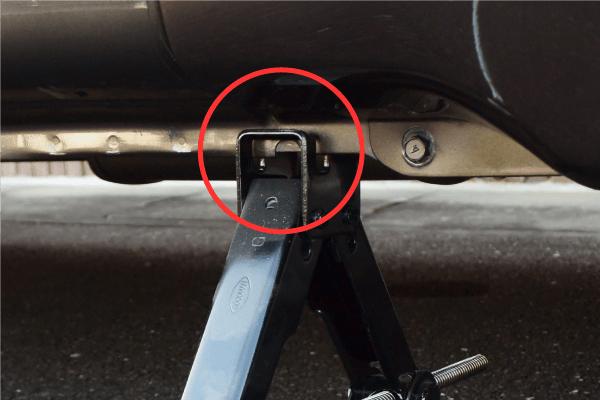
Before lifting anything, inspect the jack for visible damage and make sure it is compatible with the vehicle. If you cannot identify the correct lifting point or the supplied equipment appears damaged, stop and seek professional assistance rather than risking an unstable lift.
4. Removing the Lug Nuts Before Loosening Them on the Ground
Wheel nuts, commonly called lug nuts, hold the wheel securely against the vehicle’s hub. Removing them in the wrong sequence can make a tire change unnecessarily difficult and introduce avoidable safety risks.
One frequent mistake is raising the vehicle with the jack before loosening the wheel nuts. Once the tire is suspended above the ground, it can rotate while the driver applies force to the wrench.
The vehicle’s weight normally helps keep the wheel stationary, making it easier to break the initial resistance of tightly secured nuts. Therefore, the recommended approach is to loosen each lug nut slightly while the tire is still touching the ground.
A quarter or half turn is often sufficient to break the initial resistance. The nuts should remain attached at this stage.
Drivers should use the correct lug wrench or wheel-changing tool supplied for their vehicle. An incorrectly sized tool may damage the nut’s edges, making removal considerably harder. Some wheels also use locking lug nuts that require a special key. This key should be located before beginning the replacement process.
Another mistake is applying excessive force without considering the vehicle’s stability. Jumping on a wrench or using an improvised extension can create uncontrolled movement. If the nuts will not loosen with the correct equipment and reasonable force, roadside assistance is a better option than risking injury.
After loosening the nuts, position the jack correctly and raise the vehicle until the flat tire clears the ground. Only then should the lug nuts be removed completely.
AAA’s tire-changing instructions recommend loosening the wheel nuts before lifting the vehicle. This simple sequence makes the job easier and reduces the chance of disturbing the vehicle while it is supported by a jack.
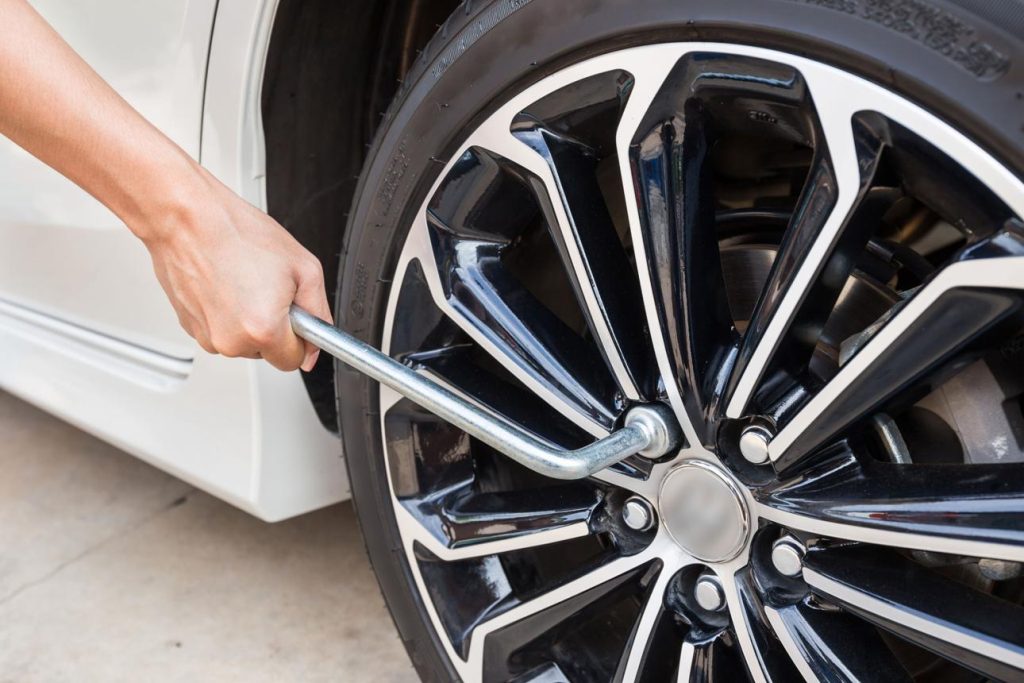
Keep in mind that loosening the lug nuts and tightening them for the final time are two separate steps. Loosen them while the tire is still on the ground to prevent the wheel from spinning. Once the replacement wheel is installed and the vehicle has been safely lowered, tighten the lug nuts to the manufacturer’s recommended torque specification.
5. Getting Underneath the Vehicle While It Is Supported Only by a Jack
Reference image concept: A clear safety demonstration showing a raised vehicle on an emergency jack, with a warning symbol indicating that nobody should go underneath it.
A vehicle supported only by an emergency jack should never be treated as a safe structure to work underneath. Nevertheless, some drivers make the dangerous mistake of reaching beneath the vehicle to retrieve a dropped tool, inspect a component, or reposition equipment.
Even a properly positioned jack can fail, shift, or become unstable without warning. Most factory emergency jacks are designed for a specific purpose: raising one side of the vehicle sufficiently to remove and replace a wheel.
They are not intended to support the vehicle while someone performs work underneath it. Their compact construction makes them convenient to carry, but it does not make them suitable substitutes for professionally rated support equipment.
The danger is not limited to a complete mechanical failure. A jack may move because the supporting surface is uneven, the lifting point is incorrect, or the vehicle shifts during the repair. If that happens, the vehicle can descend rapidly, leaving anyone underneath with little opportunity to escape.
Drivers should also avoid placing their hands, legs, or other body parts beneath the vehicle while removing the damaged wheel. Keep your working position outside the vehicle’s underside and maintain a stable posture while handling the tire. If a tool falls underneath, do not crawl beneath the raised vehicle to retrieve it.
Some roadside instructions recommend positioning the removed wheel beneath the vehicle’s side as an additional precaution. However, this should never be interpreted as permission to work underneath a vehicle supported by a jack. The wheel is not a substitute for properly rated jack stands.
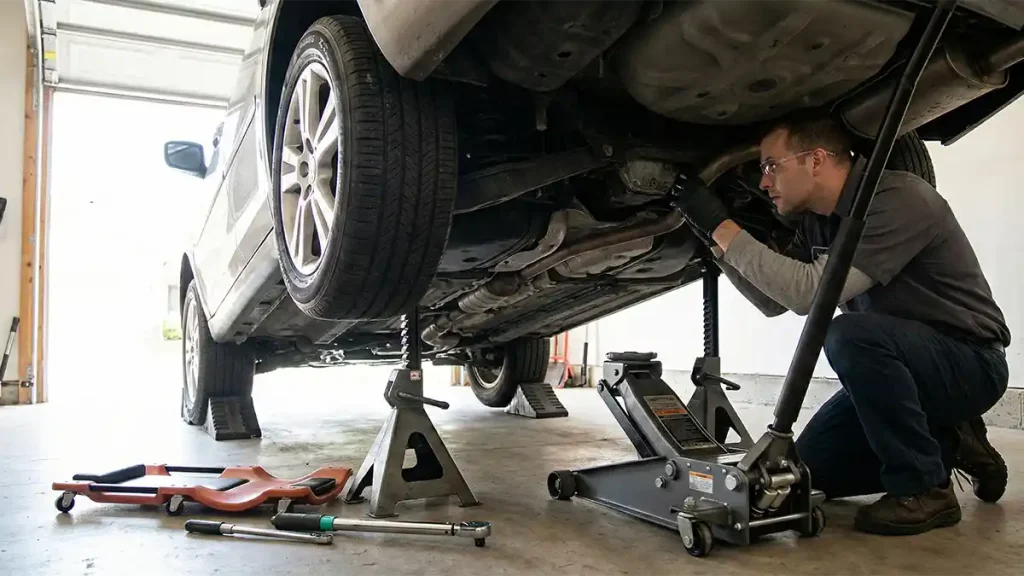
NHTSA explicitly warns drivers never to get underneath a vehicle supported only by a jack. Its guidance also says not to enter the vehicle or leave people or luggage inside while the jack is being used.
If a repair requires access underneath the vehicle, use appropriate lifting equipment and correctly rated support stands on suitable ground. For an ordinary roadside tire replacement, there is no reason to crawl underneath the vehicle at any stage.
6. Installing the Spare Tire Without Checking Its Condition
Finding a spare tire in the trunk does not automatically mean it is ready for use. Many drivers assume that because a spare has never been used, it must be in good condition.
Unfortunately, spare tires can gradually lose air pressure, develop age-related deterioration, or suffer damage while being stored. Installing one without checking its condition can create another roadside problem.
Before fitting the spare, inspect its tread and sidewalls for visible cracks, cuts, bulges, and other signs of deterioration. Check the inflation pressure using a tire pressure gauge and compare it with the specification provided by the vehicle manufacturer or printed on the spare tire.
Do not assume that the spare requires the same pressure as the regular road tires. Compact temporary spares often have substantially different pressure requirements.
Drivers should also understand the difference between a full-size spare and a temporary compact spare. A full-size replacement may resemble the regular tires, although its suitability for continued use still depends on its condition and specifications.
A compact spare, sometimes called a donut, is designed for limited emergency use rather than normal everyday driving.
For example, Toyo Tires specifies that its temporary spare tires should not exceed 50 mph. This is a manufacturer-specific instruction, not a universal speed limit for every spare. The correct restriction depends on the particular tire and vehicle. Always check the warning label and owner’s manual before driving.
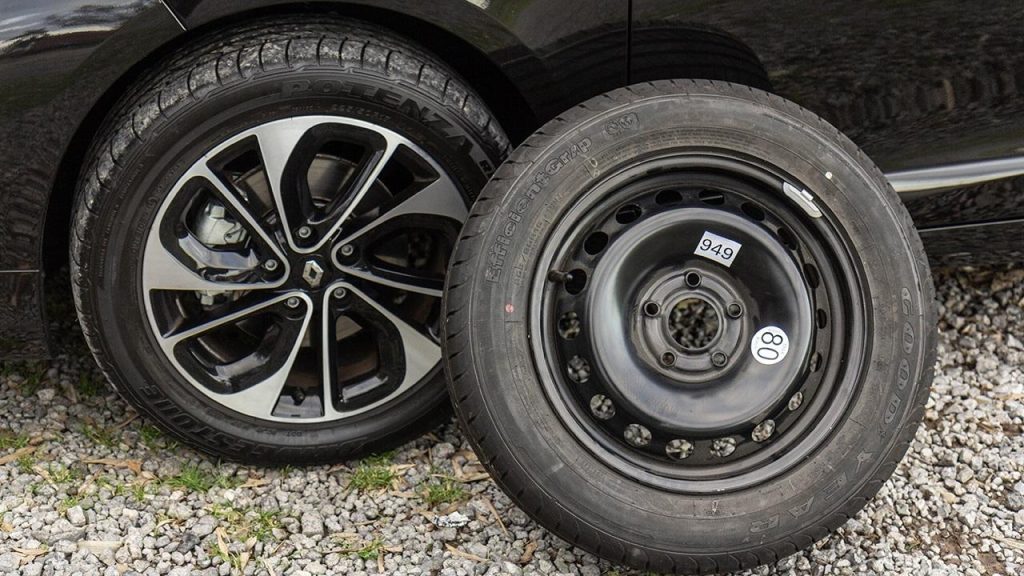
Another mistake is overlooking compatibility. The spare must be suitable for the vehicle, including its wheel mounting arrangement and other required specifications. An unsuitable replacement can affect handling, braking, and vehicle stability.
If the spare is underinflated, visibly damaged, or incompatible, do not install it simply because it is available. Contact roadside assistance instead. Checking the spare before fitting it takes only a little time and can prevent another potentially dangerous tire failure.
7. Driving Away Without Properly Tightening the Lug Nuts
Reference image concept: A mechanic tightening wheel lug nuts with a calibrated torque wrench using a star-shaped tightening sequence.
Successfully installing a spare tire does not mean the job is finished. One of the most overlooked mistakes is driving away without properly tightening the lug nuts. These fasteners keep the wheel secured against the hub, and incorrect tightening can cause the wheel to become loose, potentially resulting in serious damage or an accident.
After positioning the spare on the wheel hub, install the lug nuts by hand first. This helps ensure that the threads engage correctly rather than becoming cross-threaded.
Tighten them gradually in a star-shaped or crisscross sequence, depending on the wheel’s number of fasteners. Working across opposite nuts helps the wheel seat evenly against the hub instead of pulling unevenly toward one side.
Once the nuts are hand-tightened, partially lower the vehicle until the replacement tire makes contact with the ground and cannot rotate freely. Use the correct lug wrench to tighten the nuts further in the recommended sequence. Lower the vehicle completely and follow the manufacturer’s instructions for final tightening.
A major mistake is relying entirely on physical strength or guessing how tight the nuts should be. Different vehicles require different wheel-fastener torque specifications, usually expressed in pound-feet (lb-ft).
A calibrated torque wrench is the appropriate tool for achieving the specified value. Do not assume that one torque setting applies to every vehicle.
Drivers should also avoid using impact tools indiscriminately. An impact wrench can overtighten fasteners if its output is not properly controlled. Excessive tightening may damage wheel studs, fasteners, or wheel components, while insufficient tightening can allow the wheel to loosen.
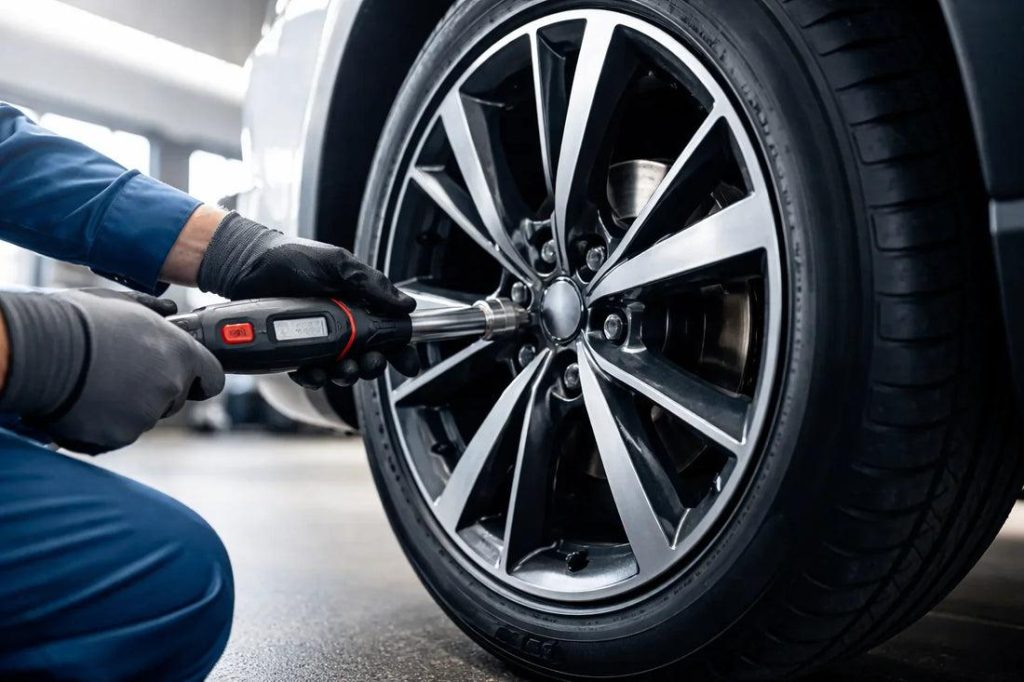
Before driving, check that all tools are removed and the wheel is properly seated. Follow the vehicle manufacturer’s instructions regarding torque verification after installation. If you do not have the correct equipment or cannot confidently secure the wheel, arrange professional assistance.
A spare tire is an emergency solution, not a reason to skip proper installation procedures. Taking the extra time to secure the wheel correctly is essential for safe driving.