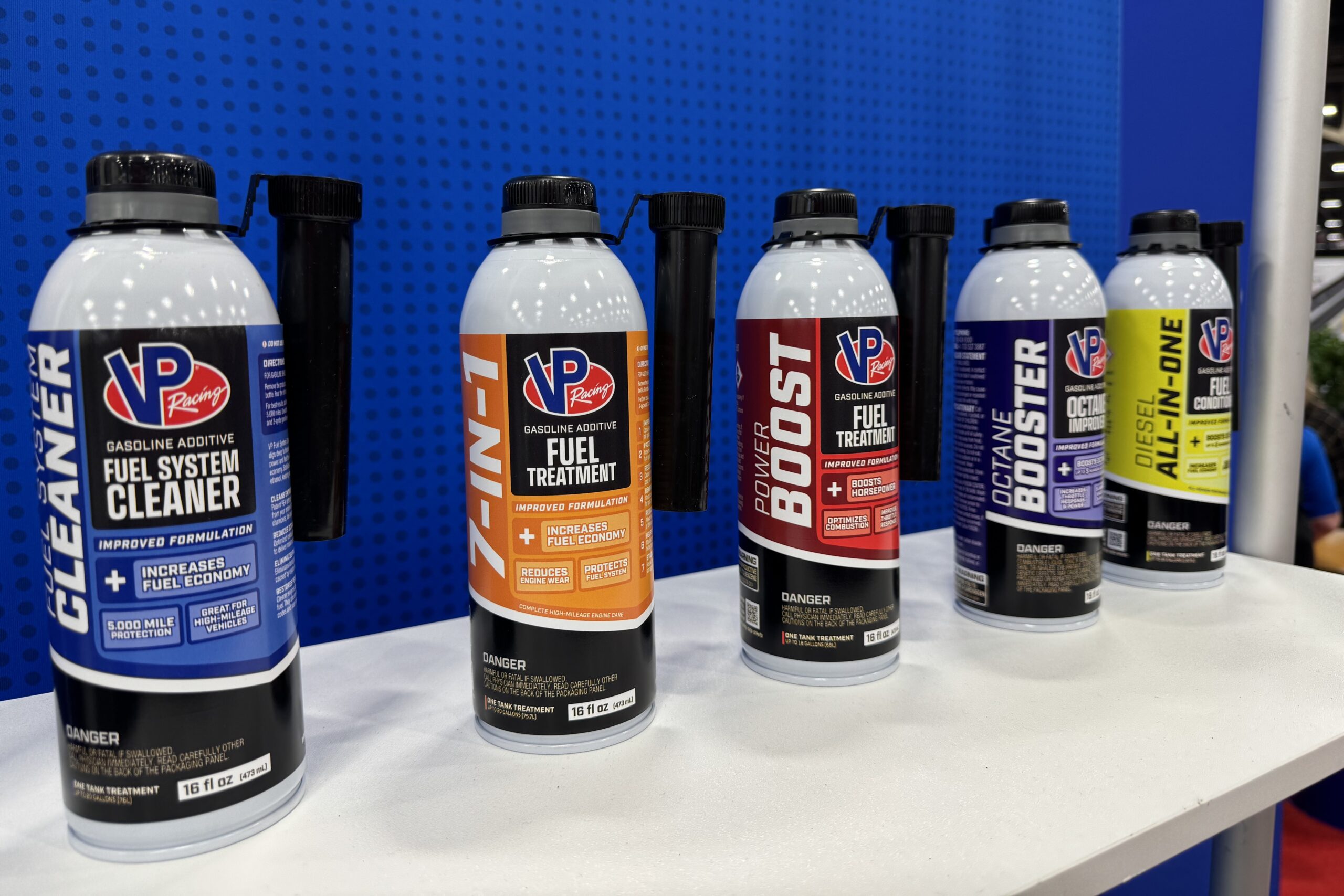
Fuel additives promise everything from better gas mileage and increased horsepower to cleaner injectors and longer engine life. Walk into an American auto-parts store, and you will find dozens of bottles claiming to improve fuel efficiency, remove carbon deposits, or protect expensive engine components.
However, many of these products offer limited benefits when used in properly maintained vehicles running on suitable fuel. Some treatments are useful for specific mechanical problems, but others simply add unnecessary expenses to routine maintenance.
Understanding which additives actually serve a purpose can help drivers avoid wasting money on products that deliver little measurable improvement.
1. Fuel Additives That Promise Dramatically Better Gas Mileage
Fuel additives advertised as mileage boosters are among the easiest automotive products to oversell. Their packaging often promises improved combustion, reduced fuel consumption, and more miles from every gallon.
For drivers spending hundreds of dollars annually at American gas stations, even a small improvement sounds attractive. However, there is little reason to expect dramatic fuel savings simply by pouring a bottle of additive into the tank.
The US Department of Energy’s FuelEconomy.gov specifically addresses this claim. Its guidance states that aftermarket additives and devices generally do not improve fuel economy in properly functioning vehicles.
Some products may even damage engines or increase tailpipe emissions. This is an important distinction because an additive that cleans certain deposits is not necessarily capable of improving a vehicle’s miles per gallon.
Consider a vehicle that already achieves 30 mpg under normal driving conditions. An additive claiming to increase mileage by 10% would theoretically raise efficiency to 33 mpg. However, without credible independent testing under controlled conditions, that advertised improvement should not be treated as a realistic expectation.
There are legitimate ways to improve fuel economy, including maintaining correct tire pressure, replacing worn components, following scheduled maintenance, and avoiding unnecessary acceleration. These measures address actual operating conditions rather than relying on an unverified chemical solution.
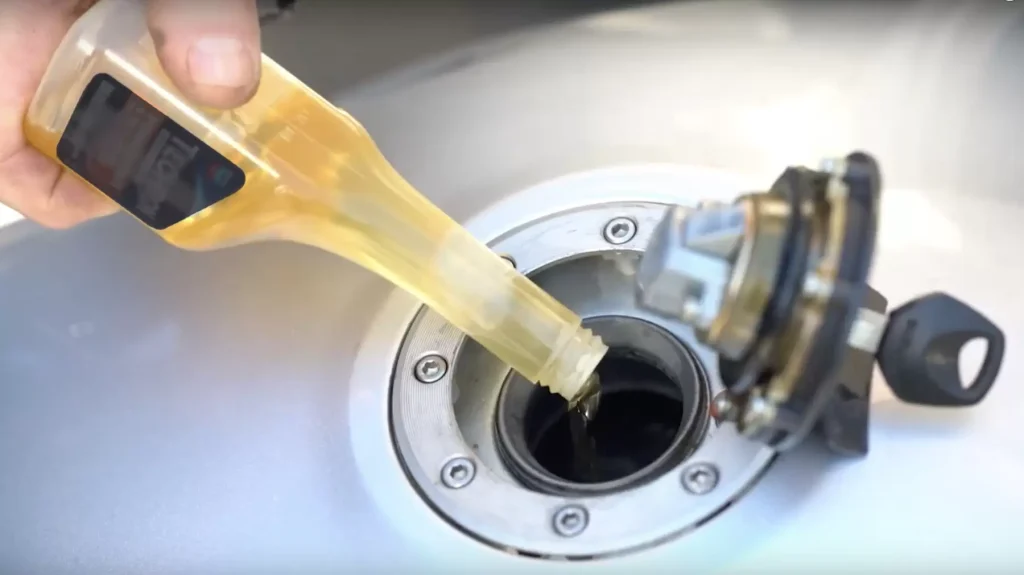
The EPA also clarifies that registering a fuel additive does not mean the agency has verified its advertised fuel-economy benefits. Registration concerns chemical composition and emissions-related requirements, not proof of improved mileage.
Unless a product has convincing independent test results for your particular engine, paying extra for a mileage booster is difficult to justify.
2. Octane Booster for Cars That Already Use the Correct Gasoline
Octane boosters are frequently marketed to drivers who want additional engine protection, smoother acceleration, or improved performance. These products increase gasoline’s resistance to engine knock, which occurs when the air-fuel mixture burns abnormally inside the combustion chamber.
However, buying an octane booster for a vehicle already using its manufacturer’s recommended fuel is often unnecessary.
In the United States, gasoline octane ratings are displayed using the Anti-Knock Index (AKI), calculated from the Research Octane Number and Motor Octane Number.
Regular gasoline is commonly rated at 87 AKI, while premium fuel generally carries ratings of 91-93 AKI. The correct requirement depends on the vehicle’s engine design and manufacturer recommendations.
For example, if a manufacturer specifies 87-octane gasoline, adding an octane booster does not automatically create additional horsepower or improve fuel economy.
The engine’s computer is already calibrated to operate with the recommended fuel. Increasing octane beyond the required level generally provides no meaningful advantage in an engine that does not need it.
The US Department of Energy’s FuelEconomy.gov explains that using premium gasoline does not normally improve fuel economy in vehicles designed for regular gasoline, unless the engine has a specific requirement or experiences severe knocking.
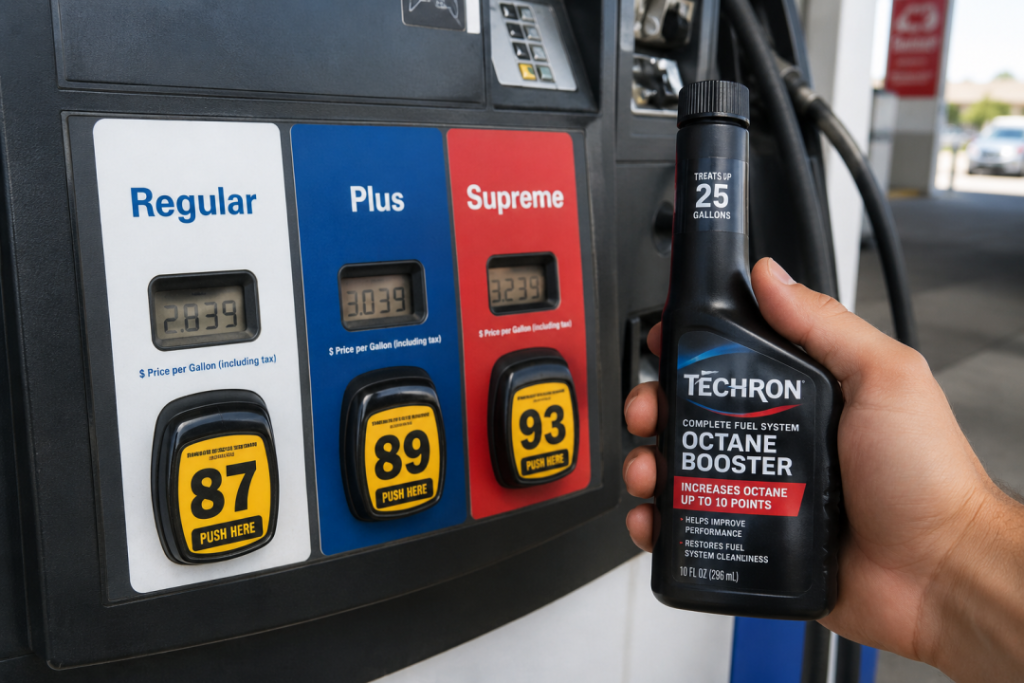
There are legitimate situations where octane boosters may be useful, particularly when a vehicle experiences fuel-quality-related knock or requires a particular octane level. However, the product must actually deliver the necessary increase, and it must be compatible with the engine and emissions equipment.
Before purchasing one, check the owner’s manual for the minimum required octane rating. If your vehicle runs correctly on the recommended gasoline, spending extra on an octane booster is rarely a worthwhile routine expense.
3. Fuel Injector Cleaners for Engines That Do Not Need Cleaning
Fuel injector cleaners are among the most recognizable products in automotive stores, often advertised as an easy solution for rough idling, reduced acceleration, and poor fuel economy. These products contain detergent chemicals intended to help remove deposits from fuel-system components.
While cleaning deposits can be useful in certain circumstances, regularly purchasing injector cleaner for an engine that is already running properly may provide little noticeable benefit.
Modern gasoline sold in the United States already contains detergent additives. The Environmental Protection Agency requires gasoline manufacturers to include certified detergent additives that help control deposits in fuel systems. This means drivers are not starting with completely untreated fuel every time they fill their tanks.
Some gasoline brands also participate in the TOP TIER Detergent Gasoline program, which establishes detergent-performance standards beyond the federal minimum. Using quality gasoline consistently can therefore reduce the need for routine aftermarket cleaning products.
That does not mean injector cleaners are useless. A compatible detergent product may help with certain deposit-related problems, particularly when a vehicle has experienced inconsistent fuel quality or has accumulated deposits.
However, an additive cannot reliably repair a mechanically damaged injector, restore a failed fuel pump, or correct an electrical problem.
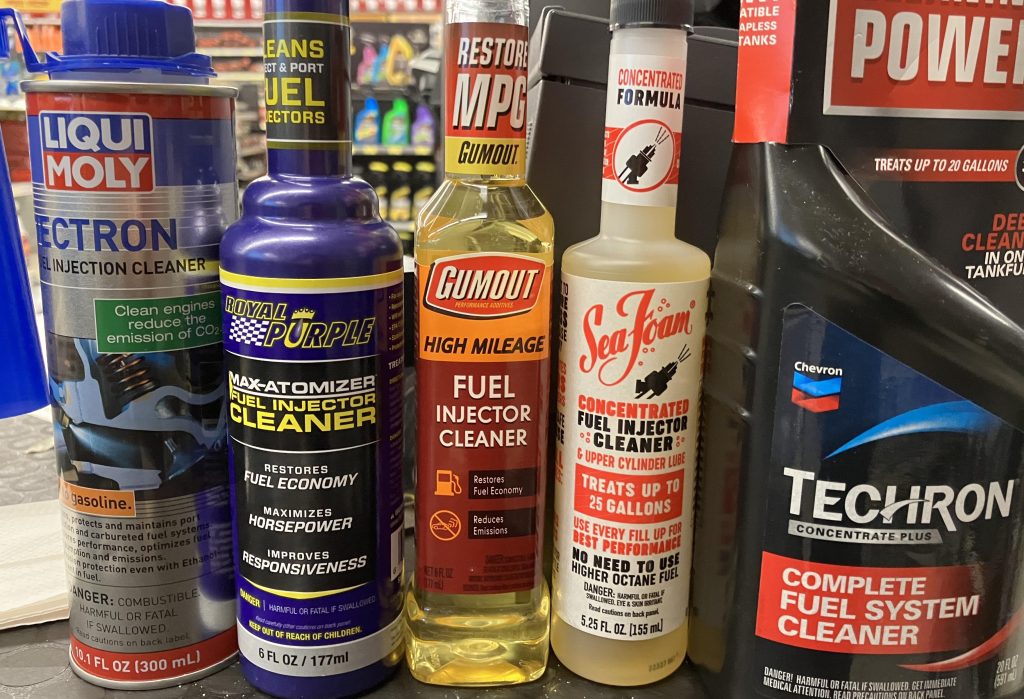
The distinction is especially important with direct-injection engines. Fuel travels directly into the combustion chamber rather than washing over the intake valves, so a tank additive cannot directly clean those valve surfaces. Different deposits require different cleaning methods.
Before buying an injector cleaner, check the owner’s manual and investigate the actual symptoms. If the engine has misfires, poor acceleration, or an illuminated check-engine light, a diagnostic scan is a better starting point than repeatedly pouring chemicals into the fuel tank.
4. Fuel Additives Promising to Remove Carbon From Intake Valves
Products claiming to remove heavy carbon deposits from intake valves without mechanical cleaning deserve particular scrutiny. This is especially relevant to owners of gasoline direct-injection engines, which have a different fuel-delivery arrangement from older port-injected designs.
In a direct-injection engine, gasoline enters the combustion chamber directly rather than passing over the intake valves. As a result, fuel-borne detergent additives cannot directly wash those valve surfaces.
Over time, oil vapors from the crankcase ventilation system and other combustion-related materials can contribute to deposits on intake valves.
In some engines, excessive buildup can interfere with airflow and contribute to rough idling, hesitation, or misfires. However, the severity varies by engine design, maintenance history, and operating conditions.
The problem with many aftermarket tank additives is that their cleaning chemicals travel through the fuel system. They do not follow the airflow path needed to reach the back of the intake valves in a conventional direct-injection setup.
Consequently, an additive that cleans fuel injectors should not automatically be advertised as a reliable solution for heavy intake-valve carbon deposits.
Professional cleaning methods may include specialized intake-system cleaning procedures or mechanical removal using equipment such as walnut-shell blasting. The appropriate approach depends on the manufacturer’s service recommendations and the engine’s construction.
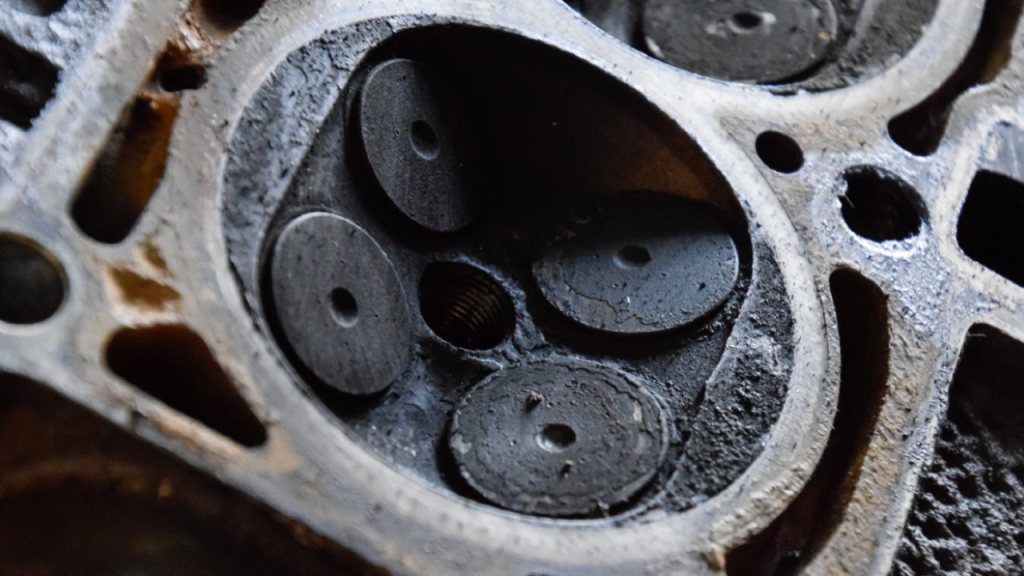
This does not mean every direct-injection engine needs periodic walnut blasting. Preventive maintenance requirements differ between manufacturers, and cleaning should be based on actual symptoms or inspection findings.
Before purchasing a bottle promising complete carbon removal, establish where the deposits are located. If the problem involves intake valves, a tank additive may simply send your money through the fuel system without addressing the affected surfaces.
5. Water Remover and Gas-Line Antifreeze for Every Fill-Up
Water-removing fuel additives, sometimes marketed as dry gas or gas-line antifreeze, are designed to address moisture inside the fuel system. These products generally contain alcohol-based ingredients that help disperse small quantities of water so they can pass through the fuel system.
They can be useful under certain conditions, but routinely adding them to every gasoline tank is unnecessary for most modern American vehicles.
One reason is that much of the gasoline sold in the United States already contains ethanol. Regular E10 gasoline contains up to 10% ethanol, and ethanol can hold small amounts of water in solution.
Consequently, drivers using properly stored, uncontaminated gasoline generally do not need an additional chemical treatment after every fill-up.
Research published by the University of Nebraska-Lincoln examined several commercially available products marketed as water removers. Its testing found that only two of the eight tested additives increased the amount of water that ethanol-blended gasoline could hold in solution.
Several products advertised as water removers produced no measurable improvement in that particular test.
This does not mean water contamination should be ignored. Significant quantities of water can cause starting difficulties, poor engine operation and fuel-system problems.
However, adding a bottle of dry gas is not a dependable solution for a heavily contaminated tank. Professional fuel-system inspection and removal of contaminated fuel may be necessary.
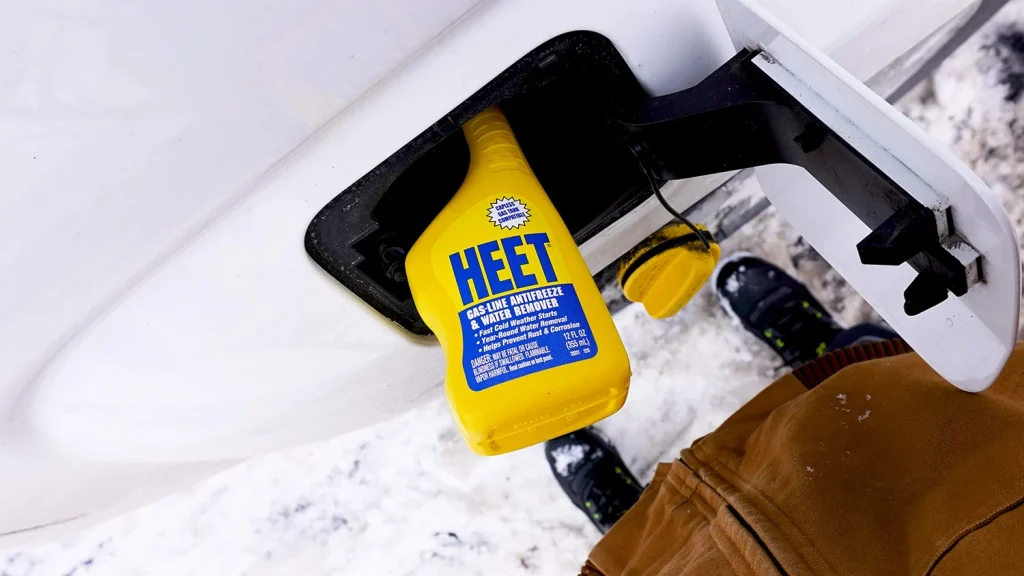
For ordinary commuters using fresh gasoline from reputable stations, buying water remover regularly offers little justification. Check the fuel cap, avoid contaminated fuel sources and follow the manufacturer’s recommendations instead.
These products are better viewed as occasional problem-specific treatments rather than routine maintenance purchases.
6. Fuel Stabilizers for Cars Driven Every Day
Fuel stabilizers are useful products, but their benefits are frequently misunderstood by ordinary vehicle owners. These additives are formulated to slow fuel degradation during extended storage by helping limit oxidation and the formation of gum and varnish deposits.
They are particularly relevant to seasonal vehicles, collector cars, motorcycles, lawn equipment and generators that may remain unused for extended periods.
However, a car driven regularly has a different storage situation. Its gasoline is continually consumed and replaced with fresh fuel, meaning the owner generally has little reason to purchase a stabilizer for every tank.
Adding the product repeatedly does not automatically improve combustion, increase horsepower or provide a measurable fuel-economy advantage.
A technical study published in 2022 and available through FuelEconomy.gov evaluated three commercially available gasoline stabilizers. These included Lucas Oil Safeguard Ethanol Fuel Conditioner with Stabilizers, STA-BIL 360 Protection Ethanol Treatment and Stabilizer, and Star Tron Enzyme Fuel Treatment.
The study examined their effectiveness in preserving gasoline under controlled storage conditions. It is important to recognize that the research concerned fuel stabilization, not proof that these products improve the performance of a regularly driven vehicle.
For an American driver who uses a car for daily commuting, purchasing fresh gasoline and following normal maintenance recommendations is generally more sensible than continuously adding storage chemicals.
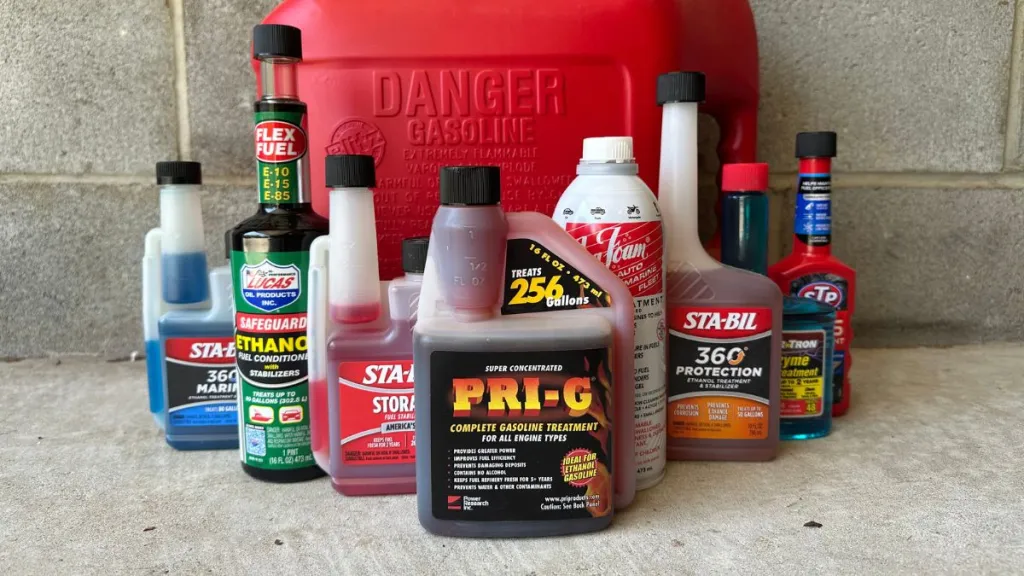
There is one important exception. If you plan to leave a vehicle parked for several months, a compatible stabilizer may help preserve the fuel. Follow the product’s treatment instructions and the vehicle manufacturer’s storage recommendations.
The value of this additive depends on how the vehicle is used. Buying it for a car that runs several times every week is usually an unnecessary expense.
7. Lead-Replacement Additives for Modern Gasoline Engines
Lead-replacement additives are another product category that most modern car owners can comfortably avoid. These treatments are primarily associated with older gasoline engines originally designed to operate on leaded fuel.
Their purpose is to provide some protection against valve-seat wear in certain engines that were manufactured before hardened valve seats became common.
The United States phased out leaded gasoline for on-road vehicles, with the EPA’s final prohibition taking effect on January 1, 1996.
Modern gasoline engines are designed to operate on unleaded fuel and do not require routine lead-replacement treatments. Adding these products to a contemporary sedan, SUV, or pickup generally provides no meaningful maintenance advantage.
The distinction becomes important when dealing with classic vehicles. Certain older engines, particularly those with original valve-seat designs, may experience valve-seat recession under demanding operating conditions when running unleaded gasoline.
In such cases, an appropriate lead-replacement product may be considered after consulting a specialist familiar with the engine.
However, pouring an additive into the tank without checking its ingredients can create additional problems. Some metallic fuel additives contain compounds such as manganese or iron.
Certain manufacturers specifically warn against these ingredients because they can contribute to combustion deposits, misfires or damage to emissions-control equipment.
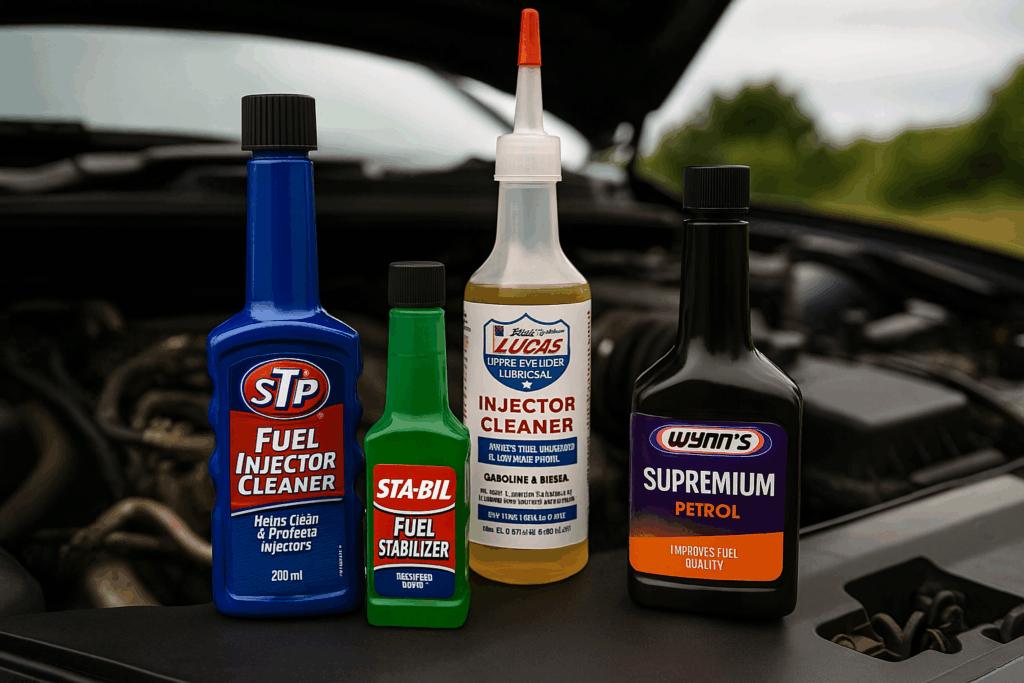
For example, Hyundai’s US-market owner guidance warns against metallic additives, including manganese- and iron-based products, because they may cause poor acceleration, engine stalling, catalytic-converter damage and other powertrain problems.
Before purchasing a lead substitute, establish whether the engine actually needs additional valve-seat protection. If you own a modern gasoline vehicle with an emissions-control system, following the manufacturer’s fuel recommendations is generally the better choice.
This is a specialized product for certain older engines, not a routine treatment for everyday modern transportation.
8. Upper-Cylinder Lubricants Promising Extra Engine Protection
Upper-cylinder lubricant additives are marketed with claims that they reduce friction, protect moving engine components and extend engine life. Some products suggest that adding a small quantity to gasoline creates an additional lubricating layer inside the combustion chamber.
Although lubrication is essential to engine durability, these claims should be examined carefully before spending money on another bottle.
Modern gasoline engines are engineered with dedicated lubrication systems. Engine oil circulates through the crankshaft bearings, camshafts and other critical components, while the fuel system supplies gasoline for combustion.
The engine’s design, recommended oil specification and maintenance schedule are intended to provide the necessary protection during normal operation.
Adding an aftermarket lubricant to gasoline does not automatically improve the lubrication of components already protected by the engine’s oil system.
Some products may contain ingredients that are incompatible with specific fuel systems or emissions equipment. Depending on their chemical composition, excessive or unsuitable additives could contribute to deposits or interfere with emissions-control components.
The US Environmental Protection Agency’s fuel-additive registration program does not establish that a product improves engine life or delivers the performance benefits advertised on its packaging. Registration is not an endorsement of those claims.
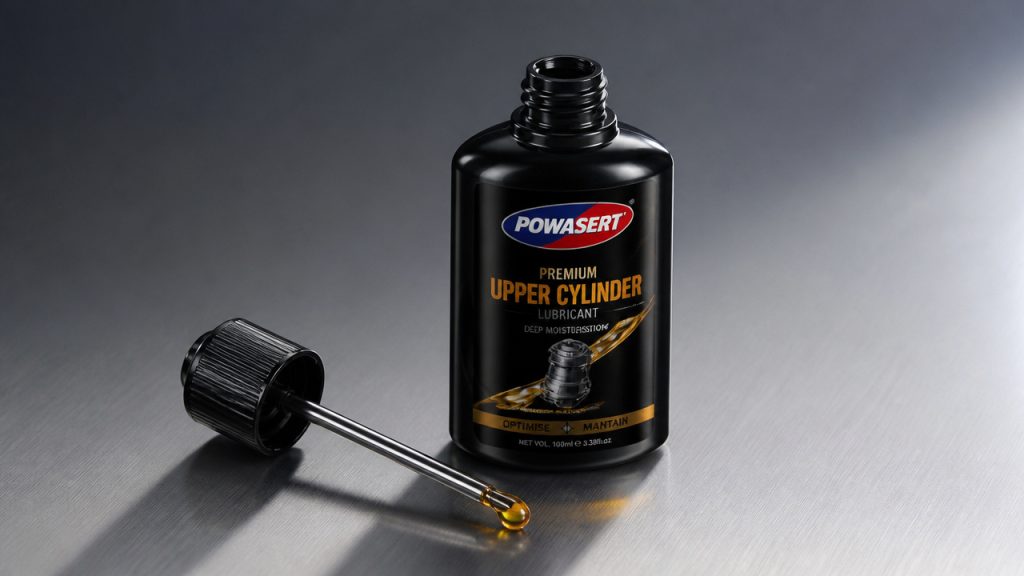
There may be specialized applications where a manufacturer-approved additive serves a particular purpose. However, this is different from routinely adding an unverified lubricant to every tank of gasoline.
If your engine produces unusual noises, consumes excessive oil or experiences mechanical wear, investigate the underlying problem instead of attempting to solve it with a fuel treatment. Check the oil level, use the manufacturer-recommended viscosity and investigate any warning lights.
For most modern American passenger vehicles, regular oil changes and proper maintenance offer a more dependable approach to engine protection than buying upper-cylinder lubricants without a demonstrated need.
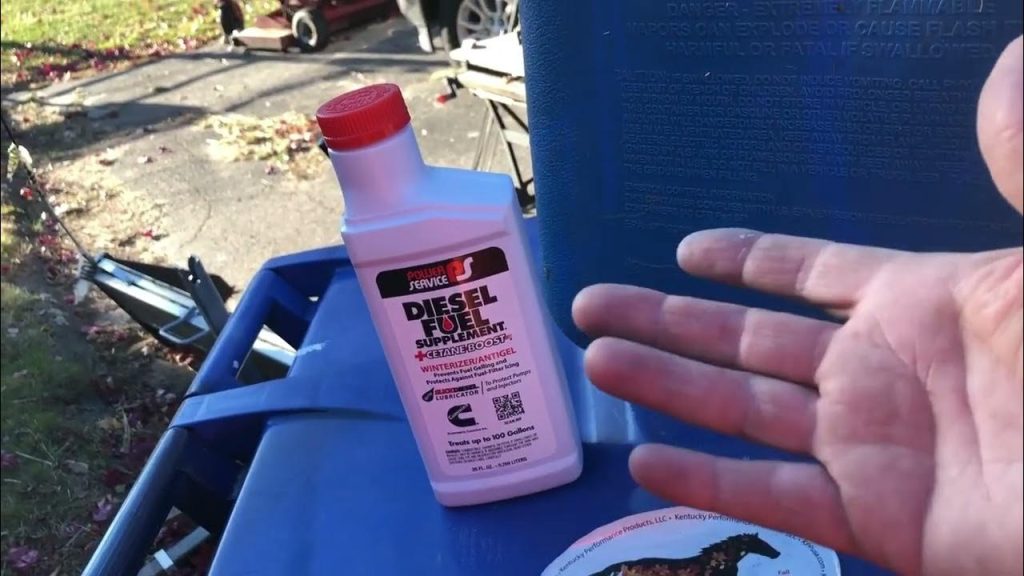
9. Diesel Cetane Boosters for Engines That Do Not Need Them
Diesel cetane boosters are marketed to improve ignition quality, reduce combustion noise and make diesel engines operate more smoothly. Cetane rating measures how readily diesel fuel ignites under compression.
A higher cetane number can shorten ignition delay, but that does not mean every diesel vehicle benefits noticeably from an aftermarket booster.
In the United States, ASTM International’s D975 specification establishes requirements for conventional diesel fuel, including a minimum cetane number of 40 for the applicable grades.
Fuel suppliers must meet the relevant specifications, so drivers purchasing compliant diesel from reputable stations are not automatically starting with unsuitable fuel.
A cetane booster may have a legitimate application when a particular engine manufacturer recommends one or when fuel quality is a documented concern. Certain commercial diesel operators also use carefully selected additives for specific operating conditions.
However, adding a booster to every tank of an ordinary diesel pickup or SUV is unlikely to deliver a meaningful improvement when the fuel already meets the vehicle’s requirements.
Buyers should also distinguish cetane improvement from other diesel additive functions. A cetane booster does not automatically provide winter anti-gel protection, remove significant water contamination or repair worn fuel injectors. These are separate problems requiring different solutions.
The National Highway Traffic Safety Administration is not responsible for evaluating fuel-additive performance, and EPA registration does not establish that a product increases horsepower or fuel economy.
Before purchasing a cetane treatment, consult the diesel vehicle’s owner’s manual and check the fuel specification recommended by its manufacturer. If the engine already operates smoothly on compliant fuel, paying for additional ignition-quality enhancement may provide little practical return.
For most ordinary diesel drivers, selecting suitable fuel and maintaining the injection system correctly are more important than routinely purchasing cetane boosters.