
Buying a vehicle through a dealership often involves more than choosing a model and agreeing on its price. The monthly loan payment depends on several financial factors, including the interest rate, loan term, down payment, vehicle price, and additional charges included in the financing agreement.
Many buyers focus on the monthly amount without examining how the dealership calculates it. This can lead to higher payments and greater borrowing costs than expected. Understanding the factors that influence dealer financing helps buyers make informed decisions, negotiate confidently, and avoid unnecessary expenses. Here are nine things that can increase your dealer loan payment.
1. A Higher Interest Rate
The interest rate is among the most important factors affecting a dealer loan payment. It determines how much you pay the lender for borrowing money to purchase your vehicle. Even a small difference in the annual percentage rate (APR) can increase your monthly payment and the total amount paid over the loan period.
Dealership financing may involve several lending options, but the rate offered depends on factors such as credit history, income, existing debt, and the lender’s requirements. Buyers with lower credit scores may receive higher interest rates because lenders consider them more likely to miss payments.
A higher APR means a larger portion of each monthly payment goes toward interest, particularly during the early stages of the loan. This can make vehicle financing more expensive than buyers initially expect.
For example, borrowing $30,000 at 5% interest for 60 months results in a lower monthly payment than financing the same amount at 9% for the same period. The difference becomes even more noticeable when calculating the total interest paid over five years.
Some buyers accept the dealership’s first financing offer without comparing it with other lenders. This can limit their ability to secure a competitive rate. Banks, credit unions, and online lenders may offer different terms depending on their lending policies.
Getting preapproved for an auto loan before visiting a dealership provides a useful reference point. It allows you to compare the dealership’s financing offer with an existing option and negotiate from a stronger financial position.
It is also important to distinguish between the interest rate and APR. The APR generally reflects the yearly borrowing cost, including certain financing fees, making it a more useful figure for comparing loan offers.
Before signing the agreement, review the APR, monthly payment, loan duration, and total interest. A lower interest rate can reduce borrowing costs, but the complete financing arrangement should always guide your decision.
2. A Longer Loan Term
The length of your vehicle loan has a direct effect on your monthly payment. Many dealerships offer extended financing periods to make expensive vehicles appear more affordable. While longer terms can reduce the required monthly amount, they usually increase the total interest paid throughout the loan.
Common auto loan terms include 36, 48, 60, 72, and 84 months. Some lenders may offer even longer repayment periods. Choosing an extended term means spreading the borrowed amount across more monthly payments.
For instance, financing $35,000 over 48 months generally produces a higher monthly payment than financing the same amount over 72 months. However, the longer agreement may result in significantly more interest expenses.
A longer loan can also create problems when the vehicle loses value faster than the outstanding loan balance decreases. This situation is commonly called negative equity or being upside down on a car loan.
Vehicle depreciation begins as soon as a car enters regular use. If the loan balance remains higher than the vehicle’s market value, selling or trading it can become financially difficult.
Dealerships may emphasize the lower monthly payment associated with an extended loan without giving enough attention to the total repayment amount. Buyers should calculate both figures before making a decision.
A shorter repayment period can help reduce interest costs, provided the monthly payment fits comfortably within your budget. It may also allow you to build equity in the vehicle sooner.
When comparing financing options, request a breakdown of payments for different loan terms. This makes it easier to understand how repayment length affects your monthly expenses and long-term financial commitments.

3. A Small or No Down Payment
A down payment is the amount you pay upfront when purchasing a vehicle. It reduces the money you need to borrow from the lender. When buyers make a small down payment or choose zero-down financing, the remaining loan balance becomes larger, which can increase the monthly payment.
For example, consider a vehicle priced at $32,000 before taxes and additional charges. A buyer who contributes $6,000 upfront needs to finance less than someone who makes no down payment.
A larger financed amount generally results in higher monthly payments when the interest rate and loan term remain unchanged. It can also increase the total interest paid over the repayment period.
Some dealerships promote zero-down financing to attract buyers who do not have enough savings for an upfront contribution. This arrangement can be convenient, but it does not mean the vehicle costs less.
The absence of a down payment may also increase the risk of negative equity. Since the buyer starts with a larger loan balance, vehicle depreciation can quickly exceed the amount of equity built through repayment.
Trading in an existing vehicle can sometimes help reduce the amount financed. However, buyers should understand the trade-in value and check whether any outstanding loan balance is being added to the new agreement.
Before accepting a financing offer, consider how much you can comfortably contribute without exhausting your emergency savings. A reasonable down payment can reduce borrowing costs and make the loan easier to manage.
The best approach is to balance your upfront contribution with your monthly budget. Avoid borrowing more than necessary simply to keep the initial purchase affordable.

4. Additional Dealer Fees and Charges
Dealerships may include several fees and charges in the final vehicle purchase price. Some are required by law or connected to registration, taxes, and documentation. Others relate to dealership services or optional products.
When these expenses are added to the financed amount, the total loan balance increases. This can raise the monthly payment even when the vehicle’s advertised price remains unchanged.
Documentation fees are commonly charged for preparing and processing vehicle purchase paperwork. The amount varies depending on the dealership and applicable regulations.
Other charges may include registration fees, title fees, delivery expenses, and electronic filing costs. Buyers should request an itemized breakdown to understand exactly what they are paying for.
Some dealerships may also include optional accessories or service packages in the final agreement. Examples include paint protection, window tinting, fabric protection, and additional equipment.
These products may have individual prices, but buyers sometimes overlook them when reviewing the complete financing package. When added to the loan, they can increase both the principal balance and interest expenses.
Ask the dealership to separate mandatory charges from optional products. You should also confirm whether each optional service can be removed before the financing agreement is finalized.
Reviewing the purchase order carefully helps prevent unexpected expenses. Never rely entirely on the advertised vehicle price when calculating how much financing you will need.

5. Optional Add-On Products
Dealerships frequently offer additional products during the vehicle financing process. These products may provide useful protection or convenience, but they can also increase the total loan amount when purchased through the financing agreement.
Extended warranties are a common example. They may cover certain mechanical or electrical repairs after the manufacturer’s original warranty expires. However, coverage varies by provider, vehicle, and contract.
Guaranteed Asset Protection, commonly called GAP insurance, is designed to cover certain differences between the vehicle’s insurance settlement and outstanding loan balance after a covered total loss. Its value depends on the buyer’s financial situation and existing insurance coverage.
Some dealerships also offer tire and wheel protection, paint protection, key replacement plans, and prepaid maintenance packages. Each product comes with specific conditions, exclusions, and costs.
The problem occurs when buyers accept several add-ons without checking whether they need them. Financing these products increases the amount borrowed and may result in additional interest over the loan period.
For example, adding $2,000 worth of optional products to a vehicle loan means the buyer is financing more than the vehicle itself. The monthly payment will reflect those extra expenses.
Before purchasing any add-on, ask for its individual price, coverage details, cancellation policy, and claim requirements. Compare the dealership’s offer with independent providers when appropriate.
Remember that optional products are generally negotiable. You can decline coverage that does not suit your needs, and you should not feel pressured to accept additional services simply because they are presented during the financing process.
6. Negative Equity From a Previous Vehicle
Negative equity can significantly increase the cost of financing a new vehicle. It happens when the outstanding balance on your current auto loan is higher than the vehicle’s actual market or trade-in value.
For example, suppose your existing vehicle is worth $15,000 as a trade-in, but you still owe $19,000 on the loan. The difference is $4,000 in negative equity.
If a dealership agrees to accept your vehicle and includes the remaining $4,000 in your new financing agreement, that amount becomes part of the next loan. You are effectively borrowing money to cover debt from your previous vehicle.
This increases the principal balance and can raise the monthly payment. You may also pay interest on the amount carried forward from the earlier loan.
Rolling negative equity into a new loan can create a continuing cycle of vehicle debt. If the replacement vehicle depreciates quickly, you may find yourself owing more than its market value again.
Buyers sometimes overlook this issue because the dealership focuses on the new vehicle’s monthly payment. A seemingly manageable payment may hide the additional debt included in the contract.
Before trading in a financed vehicle, request its current payoff amount from your lender. Compare that figure with realistic trade-in offers to determine whether you have positive or negative equity.
If possible, consider paying down the existing balance before purchasing another vehicle. Waiting until your loan balance is closer to the vehicle’s value may help reduce the amount you need to finance.
7. A More Expensive Vehicle or Unnecessary Upgrades
The vehicle’s purchase price forms the foundation of your dealer loan payment. Choosing a more expensive model, higher trim level, or additional features increases the amount you may need to borrow.
Dealerships often display several versions of the same vehicle. A base model may have a relatively affordable price, while higher trims include larger screens, upgraded interiors, advanced technology, and additional convenience features.
These upgrades can make the vehicle more appealing, but they also increase the purchase price. If you finance the extra cost, your monthly payment will rise.
For example, upgrading from a vehicle priced at $28,000 to a similar version costing $34,000 adds $6,000 to the purchase price before taxes and other expenses.
Accessories can also contribute to a higher loan balance. Floor mats, roof racks, premium audio systems, upgraded wheels, and appearance packages may seem inexpensive individually, but several additions can create a substantial increase.
Another consideration is whether the features provide genuine value for your driving habits. Paying extra for equipment you rarely use may not make financial sense.
Buyers should establish a realistic spending limit before visiting the dealership. This helps prevent emotional decisions during negotiations and keeps attention on the total purchase price.
Compare different trims and review their standard equipment carefully. You may discover that a less expensive version already includes the features you actually need.
A vehicle should meet your transportation requirements without creating unnecessary financial pressure. Choosing a suitable model at a manageable price is an effective way to control your dealer loan payment.
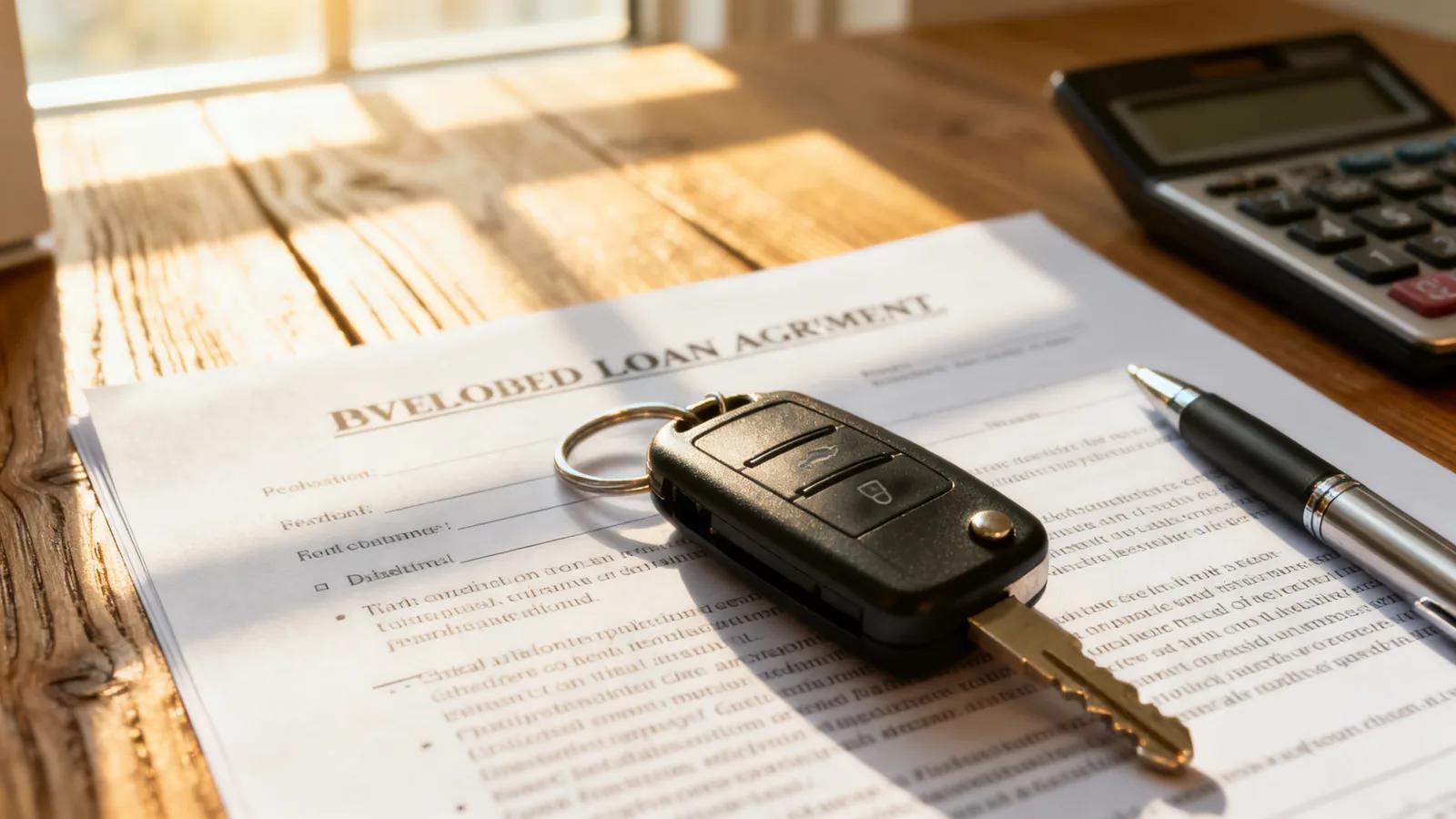
8. Sales Tax, Registration, and Other Government Charges
Taxes and government-related charges can increase the amount financed when purchasing a vehicle. These expenses are often calculated separately from the advertised price, so buyers may not immediately recognize how much they add to the final cost.
Sales tax is a major example. Depending on the location, vehicle purchases may be subject to state, provincial, or local taxes. The applicable rate and calculation method vary by jurisdiction.
For a vehicle with a purchase price of $30,000, a sales tax rate of 7% would add $2,100 before considering other applicable charges. If the buyer finances this amount, the monthly payment will increase.
Registration and title fees may also be included in the purchase agreement. These charges cover administrative requirements associated with legally registering and documenting the vehicle.
Some locations impose additional vehicle-related taxes or fees based on factors such as vehicle value, weight, emissions, or registration category. Buyers should check the requirements that apply in their area.
Dealerships generally calculate these expenses as part of the final purchase transaction. However, the exact amounts should be visible in the itemized paperwork.
It is important to understand whether taxes and fees are being paid upfront or included in the loan. Financing them may reduce the immediate amount you need to pay, but it increases the total borrowing amount.
Ask the dealership for a full out-the-door price before discussing monthly payments. This figure includes the vehicle price and applicable taxes and fees, providing a clearer picture of the actual purchase cost.
Understanding these charges helps buyers avoid confusion when comparing dealership offers. Two vehicles with similar advertised prices may have different final costs because of taxes, registration requirements, and other applicable expenses.

9. A Larger Loan Amount Due to Financing Miscalculations
The final factor that can inflate a dealer loan payment is the total amount being financed. Buyers sometimes concentrate on the monthly payment while overlooking how the dealership arrives at that figure.
A dealer loan calculation generally considers the vehicle’s selling price, applicable taxes, fees, optional products, down payment, trade-in equity, interest rate, and repayment term.
If any additional cost is included in the financing agreement, the amount borrowed may become higher than expected. Even small additions can affect the payment when combined with interest.
For example, a buyer may believe they are financing a $27,000 vehicle. However, after taxes, documentation charges, accessories, and optional coverage are added, the actual financed amount could be substantially higher.
Another issue involves focusing exclusively on the monthly payment during negotiations. A dealership may adjust the repayment period or include additional products to reach a payment figure that appears affordable.
This can make it difficult to recognize the true cost of the transaction. A lower monthly payment does not necessarily mean you are receiving a better financing deal.
Buyers should request a complete breakdown showing the vehicle’s selling price, down payment, trade-in allowance, outstanding trade-in balance, taxes, fees, optional products, APR, and total amount financed.
Check the final contract against the figures discussed during negotiations. Make sure there are no unexplained charges or products that you did not agree to purchase.
It is also helpful to calculate the total repayment amount by multiplying the monthly payment by the number of scheduled payments, then accounting for any separate upfront costs. This provides a better understanding of the financial commitment.
Careful document review can prevent misunderstandings and help ensure that the loan reflects the actual agreement between you and the dealership.