A low monthly car payment can make an expensive vehicle appear surprisingly affordable, but the financing agreement may tell a very different story.
Long-term auto loans can stretch payments across six, seven, or even eight years, increasing the amount of interest buyers pay and the time they remain financially tied to a depreciating vehicle.
Some agreements also include expensive add-ons, unfavorable interest rates, and negative equity from previous purchases. Understanding these warning signs before signing is essential. Here are nine auto-loan problems American car buyers should recognize before committing to years of payments.
1. A Loan Term That Extends to 84 or 96 Months
An 84-month auto loan can make an expensive vehicle appear affordable by spreading payments across seven years. However, that smaller monthly obligation can hide a much higher borrowing cost.
Some lenders also offer 96-month financing, extending the repayment period to eight years. For buyers who plan to keep their vehicles for a long time, this arrangement may appear convenient, but it introduces several financial risks.
The Consumer Financial Protection Bureau (CFPB) explains that longer repayment periods generally increase total interest expenses and the possibility of negative equity.
Negative equity occurs when the outstanding loan balance exceeds the vehicle’s current market value. Because vehicles typically depreciate over time, borrowers using extended financing can remain underwater for considerable periods.
Consider the CFPB’s published example involving a $20,000 loan at 4.75% APR. A 36-month agreement produces approximately $1,498 in interest, while a 72-month agreement increases the interest expense to approximately $3,024. The monthly payment falls from roughly $597 to $320, but the borrower pays more than twice as much interest.
That example demonstrates why buyers should examine the complete repayment schedule rather than celebrating a lower payment.
An 84-month agreement is not automatically abusive or unsuitable. However, it deserves additional scrutiny, particularly when financing a vehicle that may require expensive repairs before the loan ends.

Before signing, request quotes for 48-, 60-, and 72-month terms. Compare the monthly payment, APR, and total interest for each option. If the dealership only emphasizes the smallest payment while avoiding discussion of the total repayment amount, treat that as a warning sign.
2. An APR That Is Significantly Higher Than Competing Offers
The interest rate on an auto loan determines how expensive it is to borrow money, and even a relatively small difference can add hundreds or thousands of dollars to the repayment total. One warning sign is accepting the dealership’s financing offer without comparing it against banks, credit unions, and other lenders.
The Annual Percentage Rate (APR) is particularly important because it reflects the borrowing cost, including certain lender fees. According to the CFPB, borrowers should compare APR, loan length, interest rate, and the total amount financed rather than judging an offer solely by its monthly payment.
For example, consider a hypothetical $30,000 loan over 72 months. At a 6% APR, the monthly payment is approximately $497, with total interest of about $5,770. At 12% APR, the payment rises to approximately $587, and total interest reaches approximately $12,260. That is roughly $6,490 more in interest for the same amount borrowed and repayment period.
The difference illustrates why an apparently convenient dealership offer deserves closer examination.
A higher APR is not automatically evidence of wrongdoing. Lenders consider factors such as credit history, income, existing debt, loan amount, and vehicle characteristics when determining financing terms. However, buyers should question an offer when another lender provides a substantially lower rate for comparable conditions.

There is also a practice known as dealer markup, where a dealership may arrange financing at a rate above the lender’s underlying offer. The CFPB recommends obtaining preapproval from banks or credit unions before visiting a dealership so buyers have a competing offer.
Ask for the APR in writing and compare the same loan amount and repayment period across lenders. If the dealer refuses to explain the difference between the offered rate and competing quotations, consider taking your business elsewhere.
3. The Monthly Payment Hides a Large Balloon Payment
A particularly dangerous financing arrangement is a loan that advertises unusually small monthly payments but requires a substantial final payment.
This is commonly called a balloon payment. Instead of gradually paying off the entire vehicle balance through regular installments, the borrower pays a smaller portion during the loan term and faces a much larger amount at the end.
The problem becomes apparent when buyers focus exclusively on affordability today. A $350 monthly payment may look attractive compared with a conventional $550 payment, but the remaining balance can create a serious financial challenge several years later.
For example, consider a hypothetical $35,000 vehicle financed over 60 months with a $10,000 balloon payment. The borrower must still arrange that final $10,000 when the agreement ends, even after making five years of payments. If the vehicle’s resale value has fallen below the remaining obligation, selling it may not generate enough money to settle the debt.
There is another complication. Some borrowers assume they can simply refinance the balloon amount. However, refinancing is not guaranteed. Approval depends on future creditworthiness, income, lender policies, and the vehicle’s value at that time. Interest rates may also be higher when the refinancing application is submitted.
The CFPB advises consumers to understand the complete repayment structure before accepting vehicle financing. A balloon payment should never be treated as a minor contractual detail.

Read the agreement carefully and identify the exact final payment amount, its due date, and the consequences of failing to pay. Ask whether refinancing is optional or whether the agreement requires a different settlement arrangement.
If a dealership advertises an unusually low installment but avoids explaining the final balance, consider that a major warning sign. A manageable monthly payment does not necessarily mean the vehicle is affordable.
4. You Are Rolling Negative Equity From Your Previous Car
Trading in a vehicle that still has an outstanding loan can become expensive when its market value is lower than the amount owed. This situation is called negative equity, and transferring that unpaid balance into a new auto loan is one of the most common ways borrowers become trapped in long-term financing.
Imagine that your current vehicle is worth $18,000, but your remaining loan balance is $23,000. You have $5,000 in negative equity. If you trade it in and the dealership adds that $5,000 to your next vehicle’s financing, you are borrowing money for a car you no longer own.
The Federal Trade Commission (FTC) warns consumers about dealership practices involving negative equity and trade-in financing. A dealer may advertise that it will pay off the existing loan, but that does not necessarily mean the outstanding balance disappears. The amount may simply be included in the new agreement.
This becomes particularly problematic when combined with an 84-month repayment period. The new vehicle begins depreciating immediately, while the borrower starts with an inflated loan balance.
Consider a hypothetical $32,000 vehicle purchase with $5,000 in rolled-over negative equity. Before taxes, fees, or a down payment, the new loan could already reach $37,000. The buyer is therefore financing more than the replacement vehicle’s purchase price.
There are several ways to reduce this risk. Obtain an independent estimate of your existing vehicle’s value, request the exact loan payoff amount from your lender, and compare trade-in offers from multiple dealerships. If possible, pay the negative-equity difference separately rather than adding it to the new loan.

Never accept a verbal promise that the dealership will eliminate your old debt. Check the new contract to see exactly how the previous balance is handled.
5. The Dealer Adds Unnecessary Products to the Loan
A vehicle’s purchase price is not necessarily the final amount appearing on its financing agreement. Dealership finance offices frequently offer additional products such as extended warranties, paint protection, tire-and-wheel coverage, maintenance packages, and credit insurance.
Some products provide genuine benefits, but adding several of them to a long-term loan can substantially increase borrowing costs.
The concern is not simply that these products exist. It is whether the buyer understands their prices, exclusions, cancellation rules, and actual value.
Consider a hypothetical financing agreement that includes $2,500 in optional protection products. If that amount is financed over 84 months at 8% APR, it can add approximately $39 per month and nearly $800 in interest over the repayment period. The customer ultimately pays substantially more than the original product price.
The Consumer Financial Protection Bureau has highlighted concerns involving add-on products and their effects on auto-loan balances. These products can also make it harder for consumers to understand the actual cost of their vehicle purchase.
GAP coverage is one example that deserves careful comparison. It can help cover the difference between an insurance settlement and the outstanding loan balance after a covered total loss. However, its usefulness depends on the borrower’s situation, existing insurance policy, and contractual terms.
Extended warranties also require scrutiny. Check what components are covered, the deductible, repair-location restrictions, and the length of protection. Avoid paying for overlapping coverage when an existing manufacturer’s warranty already provides similar benefits.

Before signing, request an itemized breakdown showing the vehicle price, taxes, registration charges, dealer fees, and every optional product. You should be able to identify exactly which items are included voluntarily.
If the finance representative cannot explain why a product is necessary or refuses to provide a separate price, pause the transaction. Optional products should never be confused with mandatory financing requirements.
6. You Are Paying More Than the Vehicle’s Actual Value
Financing a vehicle above its fair market value can create problems before the first payment is even due. Although dealerships are allowed to set their own asking prices, buyers should understand whether the purchase price is reasonable compared with similar vehicles in the same market.
The danger becomes greater when the transaction includes dealer-installed accessories, expensive protection packages, inflated documentation charges, and other items added to the amount financed. These costs can push the loan balance substantially above the vehicle’s realistic resale value.
For example, imagine a used SUV with a market value of $25,000 being sold for $29,000. If another $2,000 in optional products and fees is financed, the buyer could begin with a $31,000 balance before accounting for taxes and registration. Selling that SUV shortly afterward may not generate enough money to repay the loan.
This is especially concerning with 72-, 84-, or 96-month agreements because depreciation continues while interest accumulates.
The FTC recommends researching vehicle prices before visiting a dealership and reviewing the contract carefully for additional charges. Kelley Blue Book, J.D. Power, and comparable local listings can help buyers establish a reasonable price range. However, valuations should be adjusted for mileage, condition, trim, accident history, and regional demand.
One useful strategy is to negotiate the vehicle’s purchase price separately from the financing terms. Otherwise, a dealership may make an inflated price appear more attractive by extending the repayment period or lowering the monthly installment.

Request the out-the-door price in writing. This figure should include the vehicle price, applicable taxes, registration, and dealer fees. Compare it with competing offers for similar vehicles.
A lender may approve a loan even when the purchase price is unfavorable to the buyer. Loan approval should never be treated as proof that a vehicle represents good value.
7. The Contract Contains Prepayment Penalties or Unclear Early-Payoff Terms
Many borrowers assume they can pay off an auto loan early whenever they have extra money available. Although many U.S. auto loans allow early repayment without penalties, buyers should never assume every agreement follows the same rules.
A prepayment penalty is a charge that may apply when a borrower pays off a loan before the scheduled end date. Depending on the contract and applicable state law, this charge can reduce the financial benefit of making additional payments or refinancing.
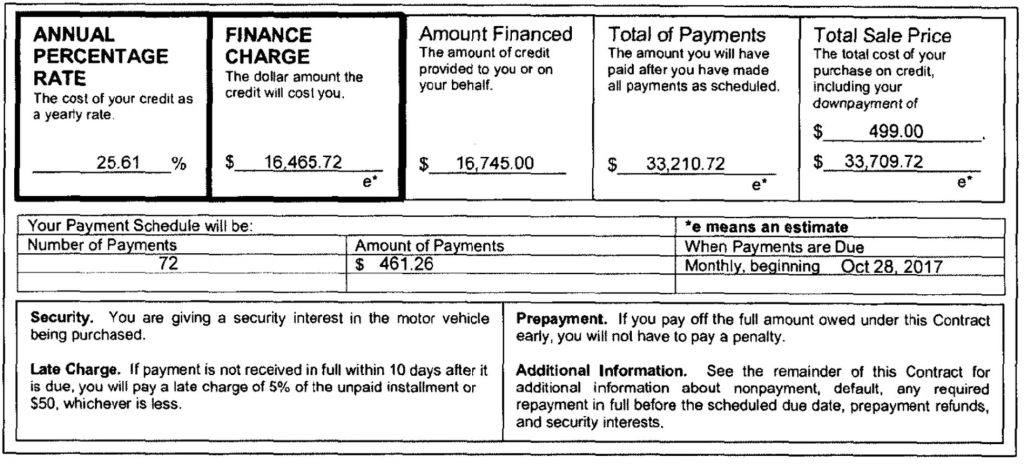
The Truth in Lending Act requires creditors to disclose important credit terms, including the APR, finance charge, amount financed, total of payments, and payment schedule. Reviewing these disclosures helps borrowers understand the financial consequences of the agreement.
Another important distinction is how simple-interest and precomputed-interest loans treat early repayment. With a simple-interest loan, interest typically accumulates based on the remaining principal balance, meaning paying off the debt sooner can reduce the total interest owed.
Paying down principal earlier can therefore reduce future interest. Precomputed-interest agreements calculate finance charges differently, and early payoff may involve a rebate calculation under applicable law and contract terms.
Consider someone who receives a $5,000 bonus and wants to reduce a vehicle loan balance. If the agreement includes an applicable prepayment charge or an unfavorable payoff calculation, the savings may be smaller than expected.
Before signing, ask the lender whether extra payments go directly toward principal, whether early payoff carries a fee, and how the payoff amount is calculated. Obtain the answers in writing.
A long-term loan should not prevent you from making sensible financial decisions later. If the lender cannot clearly explain the early-payoff provisions, compare its offer with another financing option.
The ability to repay a vehicle loan early can provide valuable flexibility, particularly when borrowers improve their financial position before the original maturity date.
8. The Dealership Says Financing Is Approved Before It Actually Is
One of the most concerning situations in auto financing occurs when a dealership allows a buyer to drive home before the financing agreement is fully finalized. This practice is commonly known as spot delivery or conditional financing. It can become particularly problematic when the dealer later claims that the original loan terms were not approved.
The Consumer Financial Protection Bureau (CFPB) warns about a practice known as yo-yo financing. A buyer signs paperwork, takes the vehicle home, and then receives a call days later claiming that the financing fell through. The dealership may demand a new agreement with a higher APR, larger down payment, or longer repayment period.
Consider a hypothetical example. A customer signs a 72-month agreement at 7% APR and drives away believing the deal is complete. Several days later, the dealership requests a replacement agreement at 12% APR. On a $30,000 loan, that difference could add thousands of dollars in interest over the repayment period.
The CFPB recommends confirming that financing is final before taking the vehicle home. Buyers should specifically ask whether the contract is fully approved and whether any financing conditions remain outstanding.
The Federal Trade Commission also advises consumers to obtain written confirmation of the final agreement and carefully review any replacement paperwork.

If the dealership contacts you with different financing terms, do not automatically sign. Compare the new agreement with the original documents and understand your contractual rights under applicable state law.
A dealership’s verbal assurance is not enough. Keep copies of every signed document, including the retail installment contract, down-payment receipt, and trade-in paperwork.
The safest approach is to arrange independent preapproval or wait until the dealer confirms that the financing is final. Never let the excitement of driving a new vehicle distract you from checking whether the loan is actually secured.
9. The Contract Does Not Clearly Show the Total Amount You Will Pay
A long-term auto loan should never be signed without understanding the complete repayment obligation. One major warning sign is a dealership presenting several pages of paperwork without clearly explaining the total amount financed, finance charges, and final repayment figure.
Under the federal Truth in Lending Act (TILA), creditors must provide important financing disclosures before the borrower signs. These include the annual percentage rate, finance charge, amount financed, payment schedule, and total of payments.
The total of payments is particularly important because it shows how much you will pay through scheduled installments over the life of the loan. It helps reveal the difference between the vehicle’s financed amount and the additional cost of borrowing.
For example, imagine a buyer financing $35,000 over 84 months at 9% APR. The monthly payment would be approximately $563, but the total scheduled payments would reach roughly $47,300. That means approximately $12,300 would go toward interest.
A monthly payment that initially appears manageable can therefore represent a considerably more expensive purchase.
Another issue involves incomplete or inconsistent paperwork. If the APR, loan term, down payment, or amount financed differs from what the dealership previously quoted, stop and request an explanation. The CFPB specifically advises consumers to obtain completed disclosures and compare them with the terms they agreed to.
Pay particular attention to optional products, dealer fees, and taxes. Confirm that every financed charge is legitimate and that the final paperwork reflects your understanding of the transaction.
Never sign blank forms or rely on a finance manager’s verbal explanation when the written agreement says something different.
A responsible buyer should leave the dealership with a complete copy of the signed contract and all relevant disclosures. If the dealership refuses to provide them or pressures you to sign before reviewing the figures, walking away is a sensible decision.