Driving after sunset can become challenging when headlights fail to illuminate distant objects, poorly marked roads, or sharp bends. For SUV buyers, headlight performance deserves as much attention as engine power, ground clearance, and safety technology.
Some modern SUVs deliver impressive nighttime visibility through carefully designed LED lighting, high-beam assistance, and effective beam patterns. The Insurance Institute for Highway Safety (IIHS) independently evaluates these systems by measuring illumination distances and checking glare.
The following seven SUVs have earned strong headlight ratings in IIHS testing, making them noteworthy choices for drivers who frequently travel after dark.
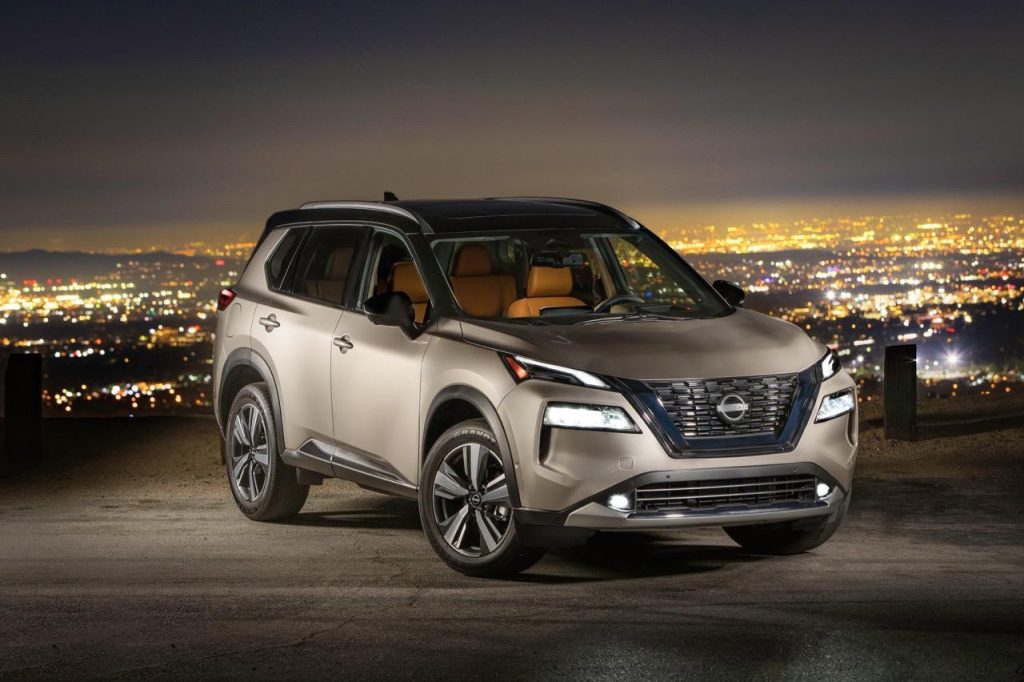
1. Nissan Rogue (2025)
The Nissan Rogue makes a strong case for nighttime driving with its standard LED headlight system. Unlike SUVs that reserve their best lighting equipment for expensive packages, the 2025 Rogue received a Good IIHS headlight rating across all trims.
Its LED reflector headlights are used for both low and high beams, while automatic high-beam assistance helps drivers manage changing traffic conditions.
The actual IIHS measurements provide a clearer picture of its capabilities. On straight roads, the low beams maintained useful illumination for approximately 395 feet along the right edge and 189 feet along the left edge.
Under high beams, those distances increased to approximately 565 feet and 518 feet, respectively. These measurements represent the distance at which illumination reaches the institute’s 5-lux threshold, rather than a manufacturer’s advertised maximum beam distance.
Curved roads present a different challenge, but the Rogue performs respectably there too. Its low beams achieved approximately 251 feet on the right side of a gradual right curve and 163 feet on the left side of a sharper left curve. The system did not exceed IIHS glare limits during low-beam testing.
Another useful feature is its high-beam assist, which automatically helps compensate for situations where low-beam coverage becomes insufficient. This is particularly helpful on darker highways with limited street lighting.
For buyers who want dependable lighting without upgrading to a premium trim, the Rogue deserves consideration. Its consistent equipment availability and independently verified performance make it a practical option for regular nighttime commuting.
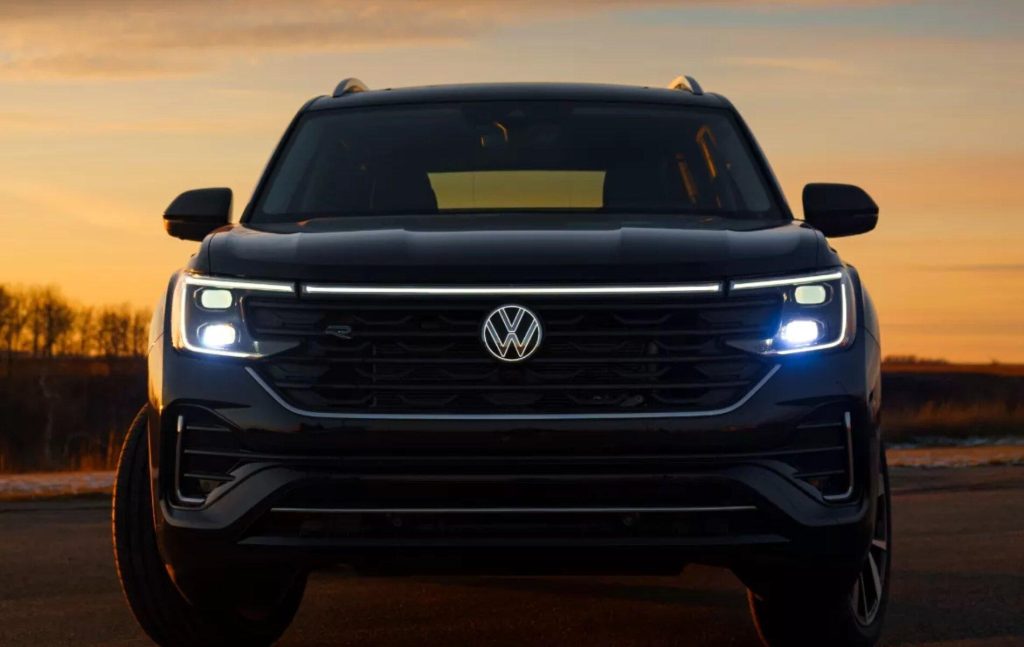
2. Volkswagen Atlas (2025)
A three-row SUV needs headlights that can handle more than brightly illuminated suburban streets. The Volkswagen Atlas offers a particularly interesting lighting setup because its IIHS-tested configurations received Good ratings, although the equipment varies between trim levels.
The 2025 model uses LED projector headlights, with curve-adaptive functionality and high-beam assistance included in the tested configurations.
The SE configuration uses LED projector low beams and LED reflector high beams, while the SEL and SEL Premium configurations received their own separate evaluation. Both configurations earned Good ratings.
However, their individual visibility results differ, so buyers should not assume every version produces identical illumination.
In the SEL configuration, IIHS recorded approximately 320 feet of useful low-beam illumination along the right edge of a straight road and 186 feet along the left edge.
High-beam measurements increased to approximately 525 feet on the right and 596 feet on the left. These figures demonstrate why the distinction between low and high beams matters when evaluating nighttime visibility.
The Atlas also benefits from curve-adaptive headlights. Rather than directing all illumination straight ahead, this technology helps the beam follow the direction of a bend, improving the driver’s view of the road as the vehicle turns. That advantage becomes particularly relevant on winding rural roads.
High-beam assistance provides another layer of convenience by helping compensate for limitations in low-beam coverage. The system received a Good rating without exceeding the applicable glare limits in the SEL testing.
For families who regularly travel on unlit highways, the Atlas combines useful lighting technology with three-row practicality. Its strongest appeal is that the tested configurations achieved good headlight performance without relying on an aftermarket lighting upgrade.
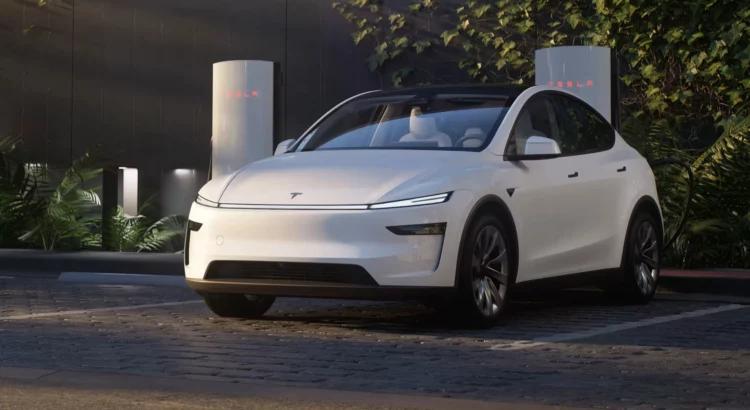
3. Tesla Model Y (2025)
Electric vehicles are often discussed in terms of driving range, charging speed, and acceleration, but nighttime visibility is another area worth examining. The 2025 Tesla Model Y delivers a strong result in this department, earning a Good headlight rating from the Insurance Institute for Highway Safety (IIHS).
An important advantage is that this rating applies to all trims, rather than being restricted to a premium configuration.
Tesla equips the Model Y with LED projector headlights for both low and high beams. The system also includes automatic high-beam assistance, which helps drivers benefit from stronger illumination when approaching stretches of road without sufficient lighting.
Although the headlights are not curve-adaptive, their measured performance on bends is noteworthy.
IIHS testing recorded approximately 319 feet of useful low-beam illumination along the right edge of a straight road and 242 feet along the left edge. High beams extended those measurements to approximately 548 feet and 511 feet, respectively.
These figures are based on the distance at which illumination reaches at least 5 lux, the institute’s testing threshold.
The results become particularly interesting when examining curved-road performance. Low beams provided good visibility in all four curve evaluations, including sharper bends. That is an important advantage for drivers who regularly encounter winding roads outside major cities.
Glare control is another strength. During IIHS testing, the Model Y’s low beams never exceeded the institute’s glare limits. This matters because powerful headlights should illuminate the road without unnecessarily affecting drivers approaching from the opposite direction.
There are limitations worth acknowledging. High-beam visibility was only fair on the sharper left and right curves, so drivers should not expect identical coverage in every situation.
Nevertheless, the combination of consistent low-beam performance, projector LEDs, and automatic high-beam assistance makes the Model Y a compelling electric SUV for nighttime travel.
4. Ford Explorer (2025)
The 2025 Ford Explorer demonstrates why buyers should pay attention to production dates and trim-specific equipment when comparing headlights. IIHS testing identifies several configurations with Good-rated lighting, but the rating does not automatically apply to every Explorer built during the model year.
The strongest results apply to Active, ST-Line, and ST models manufactured after June 2025. The Platinum trim also received a Good rating in its separate evaluation. Buyers considering an earlier-built example should verify its exact headlight configuration rather than assuming it has the same performance.
For the qualifying Active, ST-Line, and ST configurations, Ford uses LED reflector headlights for both low and high beams. Automatic high-beam assistance is included, although the system is not curve-adaptive.
The Platinum configuration uses LED projector headlights with curve-adaptive functionality, providing a different lighting arrangement.
The measurements from the qualifying reflector-headlight configuration are particularly useful. On a straight road, low beams delivered approximately 326 feet of useful illumination along the right edge and 190 feet along the left edge. High beams extended those distances to approximately 576 feet and 521 feet, respectively.
The institute also evaluated visibility on bends. Low beams performed well on both right-hand curves, although visibility was inadequate on the gradual left curve. High beams delivered good visibility in all four curve evaluations, demonstrating the benefit of switching to stronger illumination when road conditions permit.
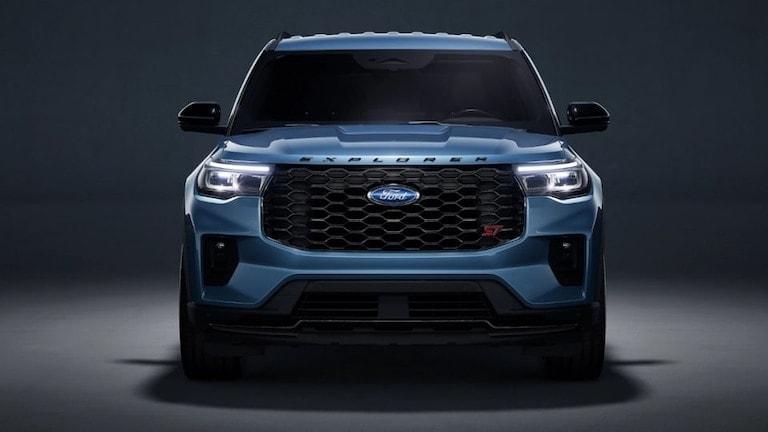
Another positive finding concerns glare. The qualifying reflector-headlight configuration never exceeded IIHS glare limits during testing. That is reassuring for drivers who frequently encounter two-way traffic on unlit roads.
The Explorer is worth considering for families who need three-row seating without sacrificing attention to nighttime safety. However, the manufacturing-date restriction is essential. Before purchasing, check the vehicle’s certification label and confirm that its headlights match the IIHS-tested configuration.
5. Mazda CX-90 (2025)
The Mazda CX-90 takes a more sophisticated approach to nighttime illumination, particularly in its higher-performance Turbo S configurations. Its headlight performance is not identical across the entire lineup, which makes trim selection especially important.
According to IIHS, the 3.3 Turbo S Premium and 3.3 Turbo S Premium Plus versions earned a Good headlight rating, while several other configurations received Acceptable ratings.
The top-rated versions use LED projector headlights for both low and high beams. They also feature curve-adaptive functionality, allowing the lighting system to adjust its direction when the SUV travels through bends. Automatic high-beam assistance adds another useful feature for journeys along poorly illuminated roads.
The IIHS measurements reveal some impressive numbers. On a straight road, the low beams delivered approximately 363 feet of useful illumination along the right edge and 178 feet along the left edge.
High beams extended the coverage to approximately 585 feet on the right and 547 feet on the left. These results are based on the institute’s 5-lux illumination threshold.
The CX-90 also performed well during high-beam curve testing. Visibility was rated Good in all four curve evaluations, including sharper bends. This is particularly useful when driving through winding country roads where obstacles may appear outside the immediate forward direction.
However, there is an important qualification. The low beams created some glare during testing, exceeding the threshold in certain curve measurements. This means the system’s strong reach does not translate into a completely flawless result.
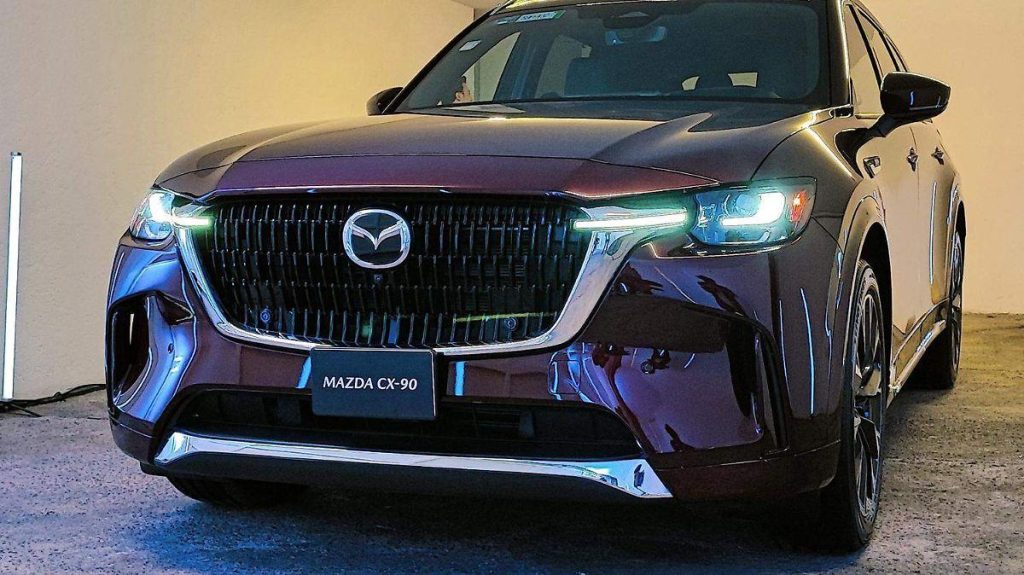
Buyers should also avoid assuming that every CX-90 delivers the same lighting performance. The Turbo Select, Turbo Preferred, Turbo Premium Sport, and Turbo Premium Plus configurations received Acceptable ratings in the IIHS evaluation.
For drivers prioritizing nighttime visibility, the Turbo S Premium and Turbo S Premium Plus are the versions worth investigating. Their combination of adaptive LED projectors and strong high-beam measurements makes them particularly interesting among three-row SUVs.
6. Volvo XC90 (2025)
Luxury SUVs frequently offer advanced lighting equipment, but the Volvo XC90 demonstrates why the manufacturing date can be just as important as the vehicle’s badge.
Its 2025 model-year headlight results differ significantly depending on when the SUV was built. IIHS awarded a Good rating to models manufactured after December 2024, while earlier-built examples received an Acceptable rating.
The improved configuration uses LED projector headlights for both low and high beams. Automatic high-beam assistance is also included, helping drivers make better use of available illumination when travelling along dark roads. Interestingly, the updated headlights are not curve-adaptive, despite the vehicle’s premium positioning.
The measured results provide a useful indication of their reach. During straight-road testing, the low beams delivered approximately 295 feet of illumination along the right edge and 230 feet along the left edge. High-beam performance increased to approximately 514 feet on the right and 317 feet on the left.
Curved-road performance was more mixed. The low beams achieved Good visibility on the sharp left and both right curves, while the gradual left curve received a Fair assessment. High beams also performed well on the right-hand curves, although visibility was Fair on both left-hand curves.
One particularly reassuring detail is glare management. The updated projector-headlight configuration never exceeded IIHS glare limits during low-beam testing. This is important because nighttime visibility should not come at the expense of other road users.
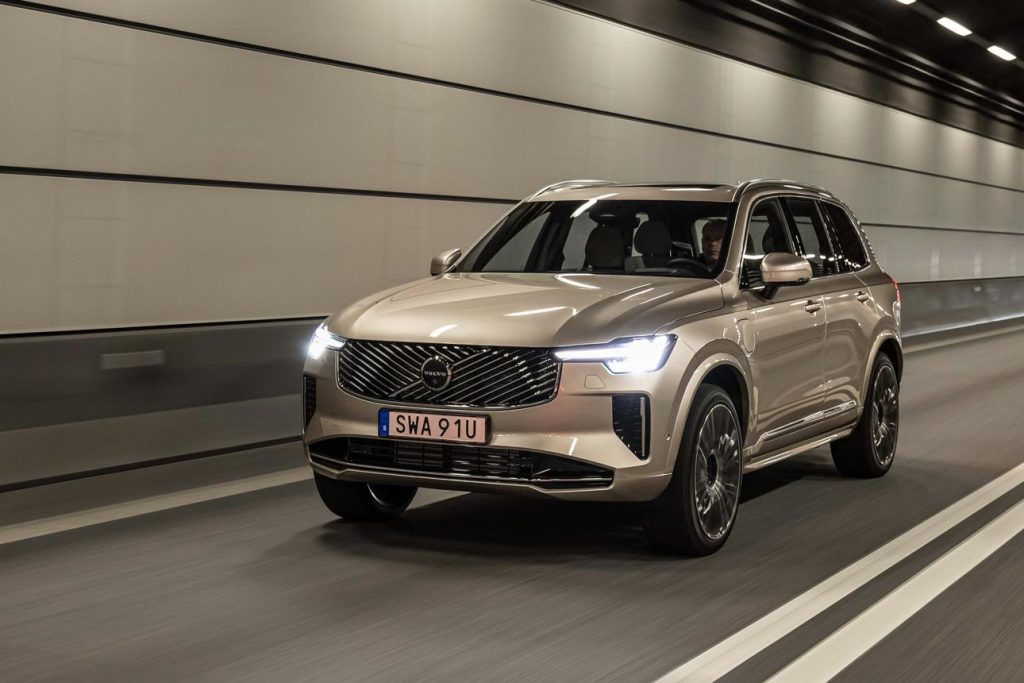
The earlier-built XC90s used LED reflector headlights and received an Acceptable rating. Consequently, buyers shopping for a used or remaining-stock 2025 model should check the manufacturing date rather than relying solely on the model year.
The XC90 remains an appealing choice for families seeking luxury, three-row practicality, and independently evaluated lighting performance. Just make sure the vehicle was built after December 2024 if the Good-rated headlight setup is a priority.
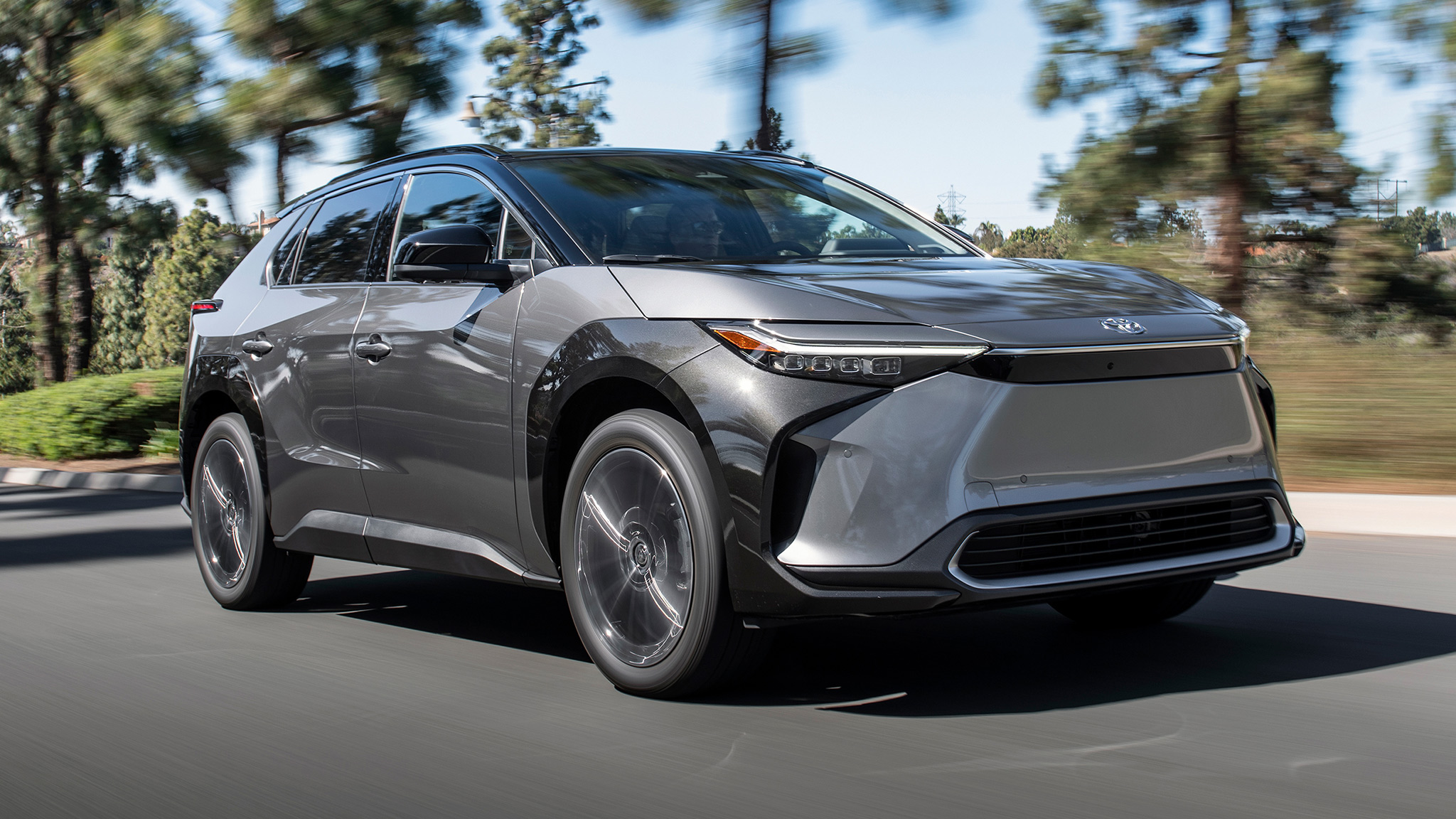
7. Toyota bZ4X (2025)
The Toyota bZ4X deserves a place on this list because its lighting performance shows that an electric SUV does not need an expensive luxury badge to deliver dependable nighttime visibility.
However, as with several other vehicles in this article, the exact trim and manufacturing date determine whether buyers receive the strongest available headlight configuration.
The 2025 bZ4X Limited earned a Good IIHS headlight rating, as did XLE models manufactured after December 2024. Earlier-built XLE versions received a Marginal rating, making the production-date distinction particularly important.
Both Good-rated configurations use LED projector headlights for low and high beams. Automatic high-beam assistance is also included, although the headlights are not curve-adaptive. The system compensates for some limitations of low-beam illumination by automatically helping drivers access stronger lighting when appropriate.
The Limited configuration produced approximately 303 feet of low-beam illumination along the right edge of a straight road and 202 feet along the left edge. Its high beams extended those distances to approximately 578 feet and 533 feet, respectively.
The updated XLE configuration also delivered respectable results. Its low beams reached approximately 315 feet on the right and 187 feet on the left during straight-road testing. However, its high beams measured approximately 446 feet on the right and 411 feet on the left.
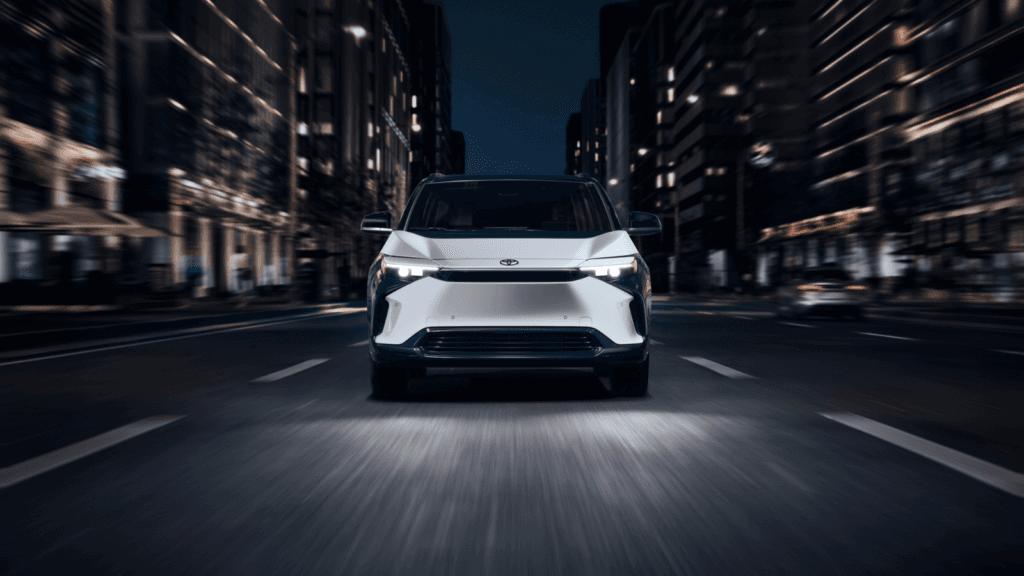
Curve testing provides another reason to consider the updated versions. The Limited achieved Good visibility on the gradual left and both right-hand curves, while the sharp left curve received a Fair assessment. The updated XLE delivered Good visibility on both right-hand curves, with Fair results on the left.
Both configurations also avoided exceeding IIHS glare limits during low-beam testing. That makes the bZ4X a worthwhile option for drivers who frequently travel after sunset.
For buyers comparing electric SUVs, the bZ4X offers a practical combination of useful lighting technology and independently verified performance. The Limited is particularly attractive for nighttime driving, while updated XLE examples are also worth considering.