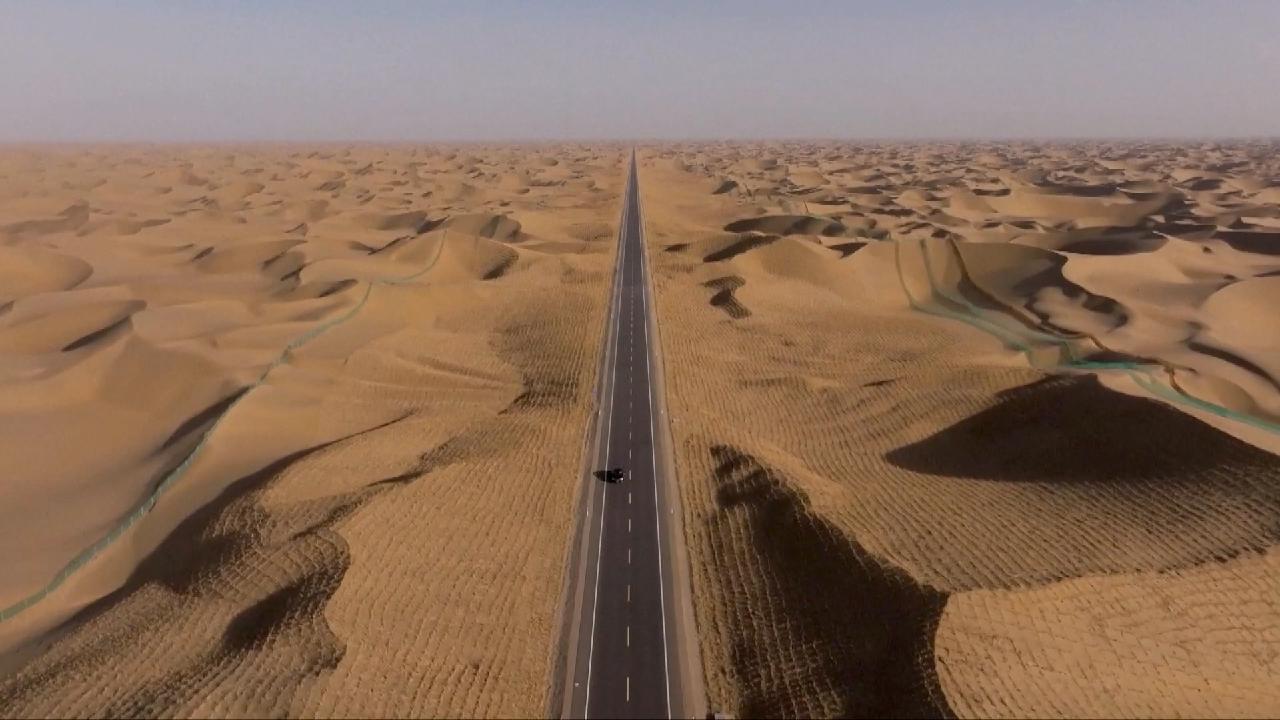
A desert highway can look like an easy, open road, but long distances between services, extreme temperatures, loose sand, and limited cell coverage can turn a minor problem into a serious situation.
Before setting off, drivers should prepare for more than an ordinary road trip. A healthy vehicle, sufficient water, reliable navigation, and a plan for emergencies can make a major difference if conditions change or a breakdown occurs far from help.
These eight checks focus on practical precautions for U.S. desert routes, including highways crossing Arizona, Nevada, California, New Mexico, and other arid regions.
1. Tires, Pressure, and Spare Tire Condition
A tire problem becomes much more serious when the nearest repair shop is dozens of miles away. Before entering a desert highway, inspect all four tires carefully, including their sidewalls and tread. Look for cracks, bulges, cuts, embedded objects, and uneven wear.
A tire that appears acceptable during a quick glance may still have damage that increases the risk of failure at highway speeds.
Pressure deserves particular attention. NHTSA recommends checking tires when they are cold, ideally after the vehicle has been parked for at least three hours. Use the pressure listed on the driver’s door-jamb placard or in the owner’s manual, not the maximum pressure printed on the tire sidewall.
Underinflation is a leading cause of tire failure, and driving on hot pavement with incorrectly inflated tires can increase the danger.
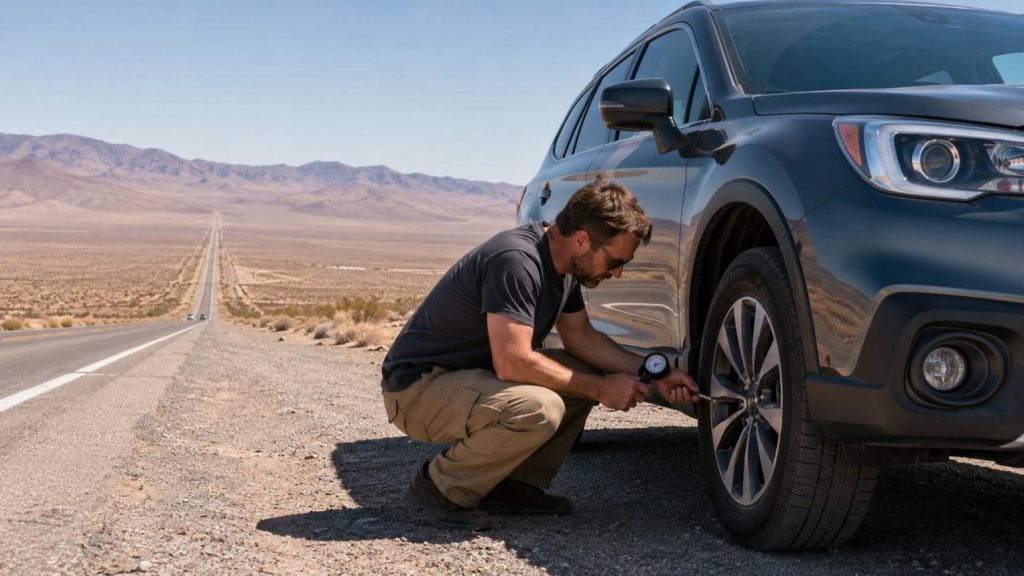
Do not forget the spare. Check its pressure, condition, and compatibility with your vehicle. If your car uses a temporary spare, understand its speed and distance restrictions before an emergency occurs. Also confirm that the jack, lug wrench, and any locking-wheel-nut key are present. A spare tire is of little help if you cannot install it safely.
Tread depth is another important check. NHTSA identifies 2/32 of an inch as the minimum legal tread depth in many U.S. situations, but replacing tires before they reach that limit can provide a useful safety margin, particularly when rain is possible. If the tires show damage or questionable wear, have a professional inspect them before departure.
2. Engine Cooling System, Battery, and Air Conditioning
A vehicle that performs perfectly during a short commute may struggle during hours of driving in extreme desert temperatures. That is why the cooling system should be inspected before departure, especially if the car has an older radiator, aging hoses, or a history of running hot.
Check the coolant reservoir when the engine is completely cold and make sure the level is within the manufacturer’s recommended range. Look for leaks, damaged hoses, loose clamps, and signs of dried coolant around connections.
Never remove a radiator cap while the engine is hot. Pressurized coolant can escape and cause serious burns. If the vehicle has been losing coolant or its temperature gauge has been rising, have the problem diagnosed rather than simply topping up the reservoir and hoping for the best.
Arizona’s Department of Transportation specifically recommends checking coolant and other vital fluids before driving in extreme heat.
The battery deserves similar attention. High temperatures can shorten battery life, and a weak battery may fail when you least expect it. ADOT recommends considering a battery test, particularly when the unit is three or more years old. Ask a repair shop to check its condition and charging system before a long trip.
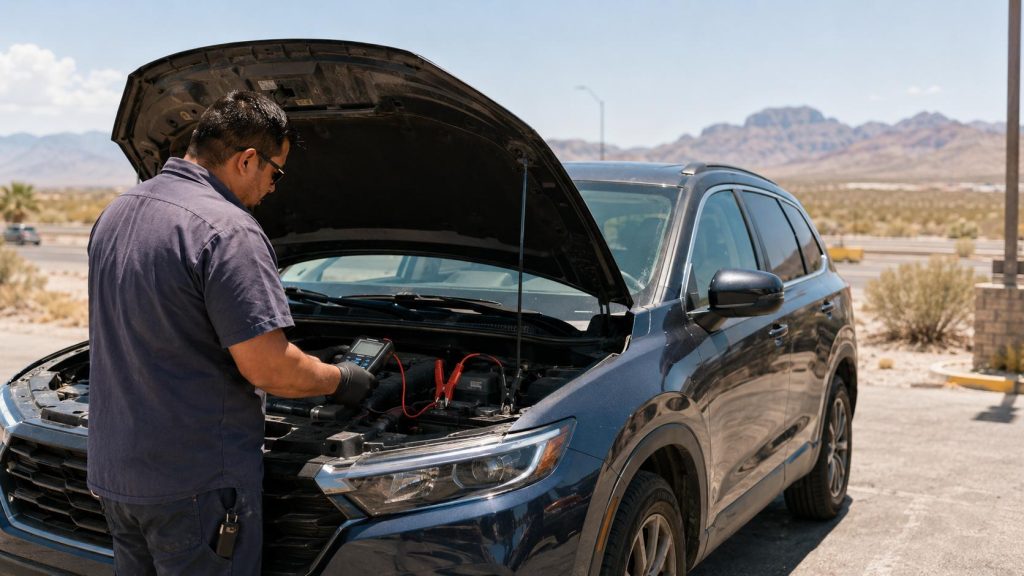
Finally, test the air conditioning before leaving. It is not merely a comfort feature when temperatures exceed 100 degrees Fahrenheit. If the system blows warm air, makes unusual noises, or cools inconsistently, arrange an inspection.
A breakdown in extreme heat can expose passengers to dangerous conditions while they wait for help. Make sure the cabin ventilation works properly and carry drinking water even when the A/C seems perfectly healthy.
3. Fuel Range and Refueling Plan
A fuel gauge showing half a tank may not seem alarming on an ordinary commute, but it deserves more attention when driving through remote desert areas.
Gas stations can be widely spaced, and an unexpected road closure, traffic delay, or detour can add considerable distance to a journey. Running out of fuel in extreme heat can leave occupants exposed to dangerous conditions while they wait for assistance.
The Arizona Department of Transportation recommends filling the tank before travelling and trying to keep it at least three-quarters full. This is a useful precaution on desert routes, particularly during hot weather.
Rather than planning to reach a station when the warning light comes on, identify refueling opportunities before leaving and top up whenever a convenient, operating station is available.
Do not judge fuel availability only by the distance shown on a navigation app. Check the route for actual fuel stops, their operating hours, and whether they are located directly along your planned road.
A station marked on a map may be closed, temporarily unavailable, or require a significant detour. If your journey crosses isolated stretches, calculate the distance between reliable stops and leave a generous reserve.
Drivers should also consider how terrain, vehicle load, air-conditioning use, and driving conditions can affect fuel consumption. A heavily loaded vehicle travelling at highway speeds may not achieve the range shown by its dashboard estimate. Treat that figure as an estimate, not a guarantee.
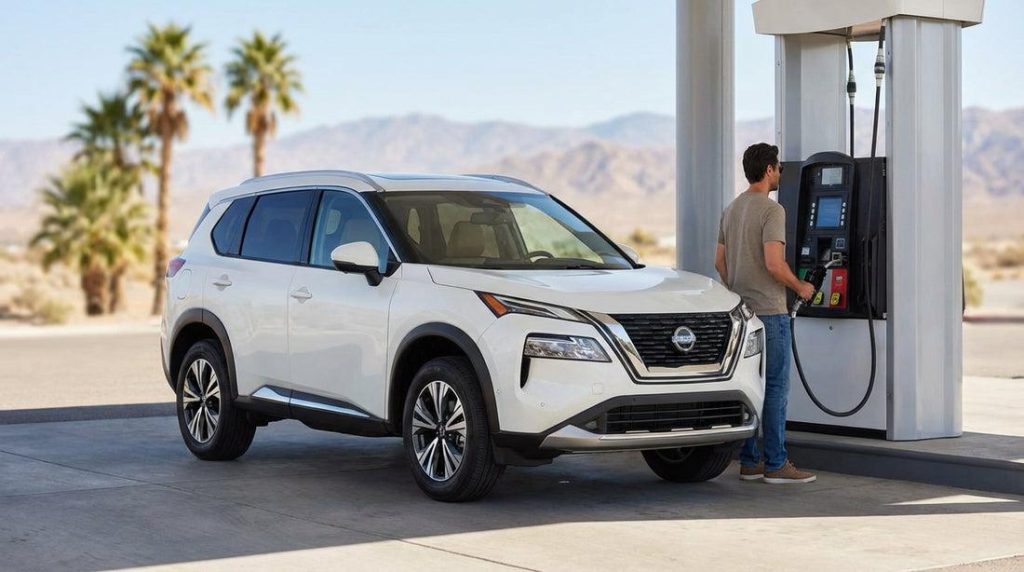
Before departure, check the fuel gauge, make sure the fuel cap is secure, and identify at least one alternative refueling point where possible. If traffic or weather conditions change your route, reassess the remaining fuel before continuing. A little extra planning can prevent a manageable delay from turning into a roadside emergency.
4. Drinking Water and Hydration Supplies
Water should be treated as essential travel equipment, not an optional item to pick up if a convenience store appears along the way.
Desert temperatures can rise sharply, and a breakdown or traffic closure may keep passengers in or near a vehicle much longer than expected. Even a relatively short delay becomes more concerning when drinking water is limited.
The Arizona Department of Health Services recommends packing at least one gallon of water per person as part of an emergency travel supply. The Arizona Department of Transportation also advises carrying extra drinking water for every passenger, including pets.
These are useful minimum planning references, not a reason to limit supplies when the journey is long, temperatures are extreme, or access to services is uncertain.
Pack water in a cooler or insulated container so it remains more comfortable to drink during hot weather. Keep some bottles within easy reach of passengers rather than placing every supply beneath luggage in the trunk.
If you are travelling with children, older adults, or pets, make sure their needs are included in the quantity you carry. Frozen bottles can also help keep a cooler cold and provide drinking water as they thaw, a method suggested by ADOT.
Do not assume that a nearby town, rest stop, or roadside business will always be open. Remote stretches may offer few services, and a detour can extend the time between reliable stops. Carry enough water for the planned journey and a reasonable unexpected delay.
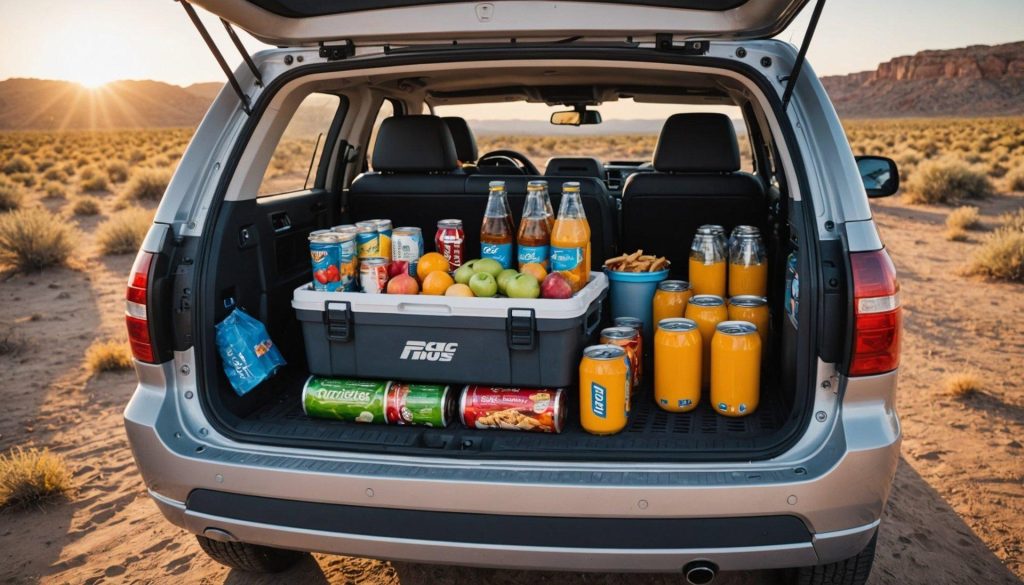
Drink water regularly instead of waiting until you feel very thirsty. Keep in mind that air-conditioning does not remove the need for hydration, particularly if the vehicle becomes disabled and passengers must wait outside.
Water is one of the simplest supplies to carry, but it can become one of the most important if a desert trip does not go according to plan.
5. Navigation, Offline Maps, and a Paper Backup
A navigation app can make an unfamiliar highway easier to follow, but relying on a phone as your only source of directions is a risky approach in remote desert country.
Mobile coverage can disappear between towns, leaving drivers unable to load maps, check alternate routes, or contact someone. Some navigation applications may also suggest roads that are unsuitable for ordinary vehicles or do not reflect current closures.
The National Park Service specifically warns visitors to the Mojave National Preserve that GPS and automated mapping applications do not always work reliably in the area.
It recommends carrying a paper map or atlas as a backup and checking updated road conditions before travelling. Although that advice is aimed at a national preserve, the same preparation is sensible for remote desert highways and less-travelled routes.
Before departure, download offline maps covering the entire route, including the areas around fuel stops and possible alternate roads. Check that the downloaded maps are available without an internet connection.
A paper road map provides another layer of protection if your phone loses power, becomes damaged, or cannot access its saved information. Keep it somewhere the driver or passenger can reach without unpacking the vehicle.
Route planning should also include a communication check. Tell a trusted person where you are going, which roads you expect to use, and when you anticipate arriving. ADOT recommends sharing the route, destination, and projected arrival time before travelling. If your plans change significantly, update that person when you have a safe opportunity.
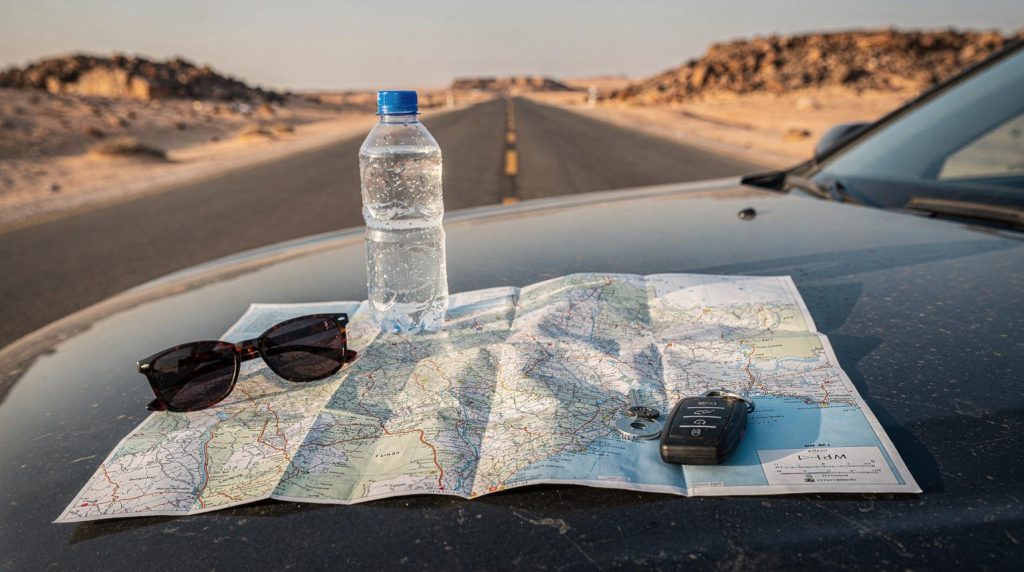
Finally, check official road-condition information before setting off. In Arizona, travelers can use the state’s 511 service and the AZ511 website for highway updates. Do not assume a route is passable simply because it appears on a map.
Closures, construction, severe weather, and other disruptions can change the safest way forward. A phone is useful, but a backup plan is what makes navigation more dependable when the signal disappears.
6. Emergency Kit, First Aid, and Sun Protection
An emergency kit is most valuable when it contains supplies suited to the conditions you may face. A basic roadside kit designed for a short city commute may not be enough when a vehicle breaks down far from a service station in intense desert heat.
The aim is to have essential items ready before a problem occurs, rather than searching through luggage or hoping a nearby shop is open.
The Arizona Department of Transportation recommends carrying a fully charged phone and charger, drinking water, healthy snacks, a first-aid kit, prescription medication, a flashlight with spare batteries, jumper cables, a small tool kit, and a road map. It also lists safety flares and extra radiator water among useful supplies.
Sun protection deserves its own space in the kit. Pack sunscreen, sunglasses, a wide-brimmed hat, and lightweight clothing that covers exposed skin. An umbrella can provide temporary shade if passengers have to leave the vehicle.
These supplies matter because a disabled car may not provide a safe or comfortable place to wait, especially if its air-conditioning stops working. ADOT specifically includes sun protection in its extreme-heat road kit guidance.
Check the first-aid kit before every major trip. Replace expired products, restock used bandages, and include any medication that passengers may need during an unexpected delay.
Keep a power bank charged and make sure the charging cable is compatible with your phone. A flashlight should be tested before departure rather than discovered to have dead batteries after dark.
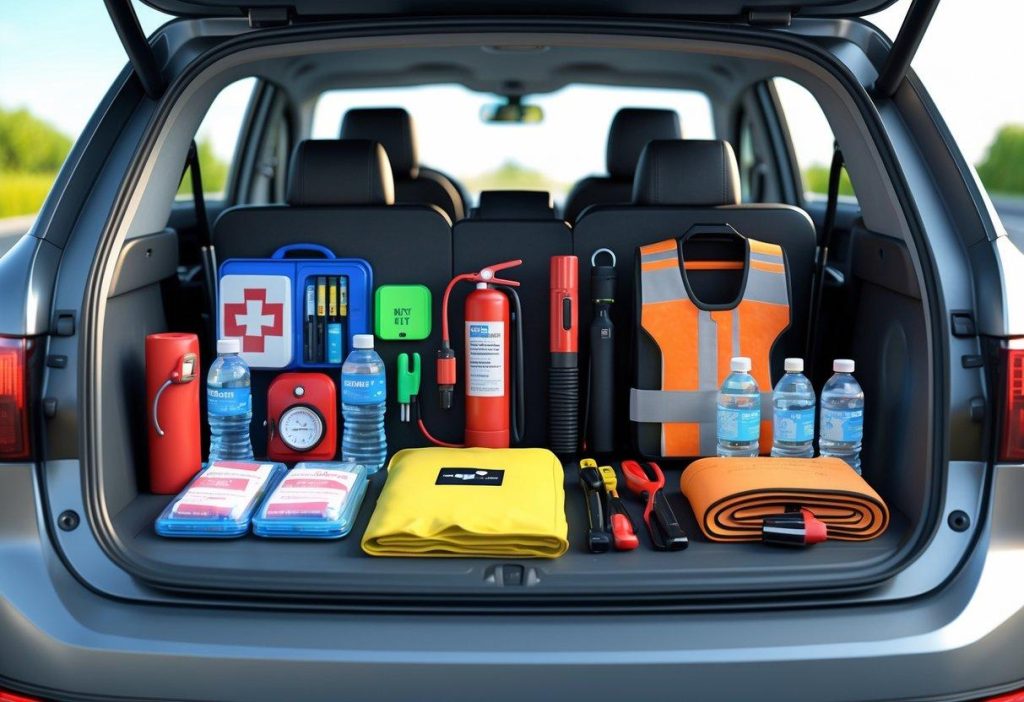
Store the kit where it can be reached without unloading the entire vehicle. Secure loose equipment so it does not move around while driving. The supplies should also be appropriate for the number of passengers and the length of the journey.
A well-prepared kit cannot prevent every breakdown, but it can make an unexpected stop safer and easier to manage.
7. Weather Forecast, Dust Storms, and Flash-Flood Risks
Clear skies at the start of a desert journey do not guarantee safe conditions for the entire drive. Desert weather can change quickly, particularly during periods of intense heat and seasonal storms.
Dust storms, sudden downpours, strong winds, and flash flooding can create dangerous conditions even on highways that normally offer excellent visibility.
Arizona experiences seasonal monsoon conditions that can bring dust storms and heavy rainfall. ADOT advises motorists to prepare for these changing conditions and check road and weather information before travelling. Its guidance also recommends checking windshield wipers before a trip so they are ready if monsoon weather develops.
A dust storm can reduce visibility dramatically. If you encounter one, avoid driving into the dust cloud when possible. Follow official traffic and weather instructions, slow down safely, and look for a suitable place to leave the roadway if visibility becomes too poor.
Do not stop in an active traffic lane or assume that other drivers can see your vehicle. Sudden braking and abrupt steering can create additional hazards when visibility is already limited.
Flash flooding requires a different precaution. Desert washes and low-lying crossings can fill rapidly during heavy rainfall, including rain that falls some distance away.
Never drive through water covering a road if you cannot determine its depth or the condition of the surface beneath it. Turn around and find another route rather than attempting to cross. A vehicle can lose traction or be swept away in moving floodwater.
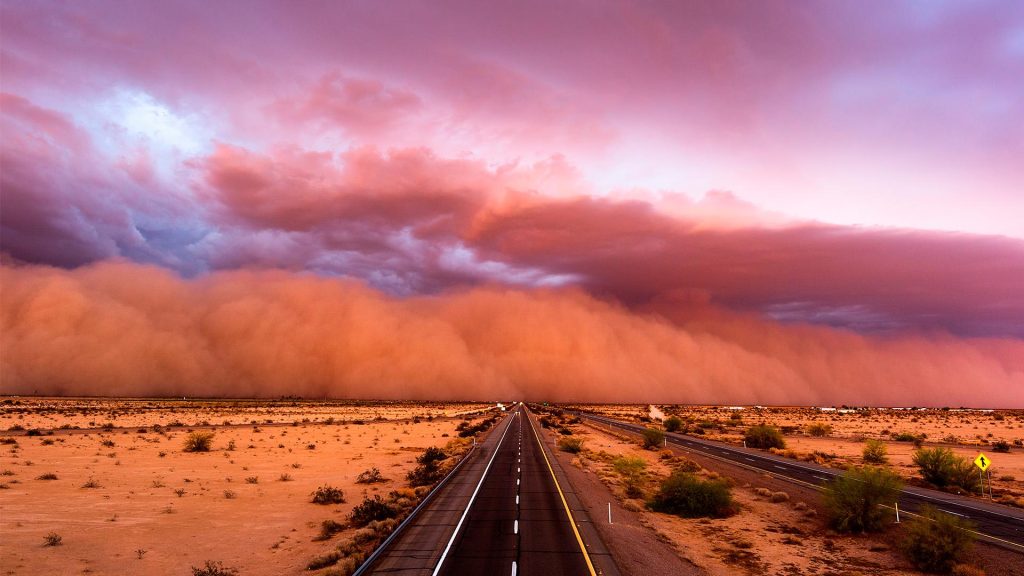
Check the forecast for the entire route, not just the departure point. Review official highway updates before leaving and again when safely stopped during a long journey. If severe weather is expected, consider delaying the trip or choosing a safer route.
A few minutes spent checking conditions can prevent a driver from entering an area where visibility, road surfaces, or water levels make travel unsafe.
8. Breakdown Procedures and a Safe Place to Stop
Knowing what to do after a breakdown is just as important as checking the vehicle before departure. A mechanical problem on a busy highway can expose occupants to passing traffic, while an isolated desert road can leave them waiting in intense heat.
The priority is to protect everyone inside the vehicle and contact help, not to attempt a difficult repair beside the road.
If the vehicle is still controllable, move it out of the travel lanes and into a safe stopping area. Avoid stopping in tall, dry brush because hot vehicle components can ignite vegetation, a risk specifically highlighted in ADOT’s extreme-heat guidance.
Once safely stopped, activate the hazard lights. If the vehicle is disabled, raising the hood can also help signal to other motorists and emergency responders that assistance is needed.
Call 911 when there is an immediate threat to life, a serious injury, or another emergency requiring urgent assistance. For a mechanical breakdown without an immediate medical emergency, contact roadside assistance or the relevant highway service.
Share your location as accurately as possible, using a map reference or road marker if available. Do not wait until the situation becomes more serious before requesting help.
Avoid walking along the highway in search of a service station or help. The National Park Service warns desert travellers that people have died from exposure after leaving their vehicles and attempting to walk back to paved roads. Staying with the vehicle is generally the safer choice when stranded in a remote desert area.
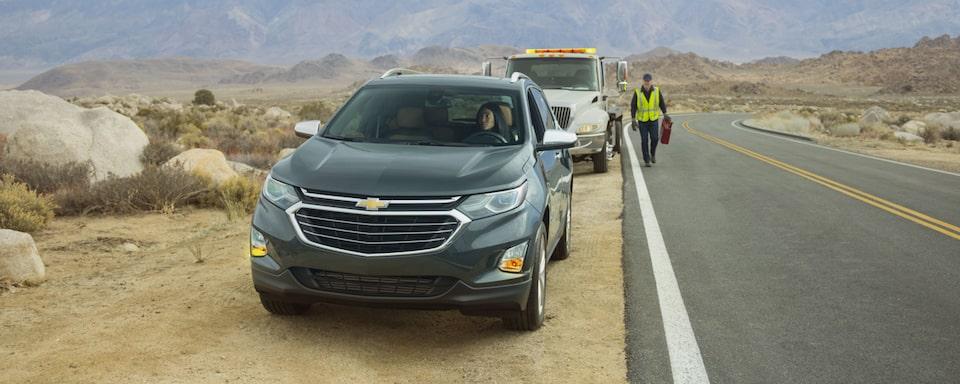
Heat can make remaining inside a disabled vehicle dangerous if its air-conditioning is not working. Follow emergency guidance, drink water, and seek shade if occupants must leave the vehicle. Move well away from moving traffic and never stand in a travel lane. Keep children and pets under close supervision, and do not leave them unattended in a hot vehicle.
A breakdown may be unavoidable, but a clear response plan can reduce the danger. Knowing where to stop, whom to call, and how to stay protected makes a difficult situation more manageable.