When it comes to buying a hybrid vehicle, one of the biggest concerns for most drivers is battery longevity. After all, the battery is the heart of a hybrid system — and replacing it can cost thousands of dollars.
Some hybrid models have earned a reputation for outlasting expectations, quietly crossing the 200,000-mile mark without so much as a hiccup. Others, unfortunately, are known for draining fast, racking up expensive repair bills and leaving owners frustrated far sooner than they expected.
In this article, we’re cutting through the hype and marketing fluff to bring you the real-world data and owner experiences that matter. We’ve rounded up five hybrid vehicles that are proven battery-life champs, consistently delivering long-term reliability and low-maintenance performance.
Hybrids With 200k+ Battery Life
Then, on the flip side, we’ll highlight five hybrids that have struggled with battery degradation, premature failure, or high replacement costs — the kind of issues you’ll want to know before signing any paperwork.
Whether you’re a daily commuter looking for a long-haul companion or a used car buyer trying to avoid a money pit, this guide will give you the inside scoop. Let’s dive into the hybrids that go the distance — and the ones that don’t.
1. Toyota Prius (2004–2015)
The second- and third-gen Prius models set the gold standard for hybrid longevity. Toyota’s nickel-metal hydride (NiMH) battery packs in these years are known to last beyond 200,000 miles with proper maintenance and mild driving habits.
While the Prius wasn’t the very first hybrid to hit the market, it was the first to combine hybrid efficiency with the practicality of a standard economy car, offering four doors, a roomy trunk, and space for four passengers.
The second-generation Prius builds on this foundation by offering even more: a roomier cabin, hatchback-style versatility, updated interior features, and a hybrid drivetrain that is both more powerful and environmentally friendly than its predecessor.
For those unfamiliar, a hybrid drivetrain pairs a compact gasoline engine with an electric motor, allowing the car to deliver power while keeping emissions low and fuel consumption efficient.
When the driver accelerates fully, both motors engage simultaneously to produce maximum power. However, during lighter demands — such as city driving or traffic conditions — the Prius toggles between the gas and electric motors, and frequently runs solely on electric power.
The regenerative braking system recaptures energy usually wasted as heat during braking, converting it into electricity that recharges the battery — eliminating the need to ever plug the car in. A monitor on the dashboard provides real-time updates on which motor is active and the amount of energy being used, among other metrics. Toyota has dubbed the Prius’ newest system the Hybrid Synergy Drive.
Though similar in function to the first-generation model, this updated system provides significantly more power while producing fewer emissions. According to Toyota, the new drivetrain reduces exhaust emissions by 30 percent compared to the earlier version, earning it both SULEV (Super Ultra Low-Emission Vehicle) and PZEV (Partial Zero Emissions Vehicle) certifications.
With a combined fuel economy rating of 55 miles per gallon in city and highway driving, the 2004 Toyota Prius stands out as the most fuel-efficient midsize sedan currently available. Despite its outstanding efficiency, the Prius can still achieve 0 to 60 mph in a respectable 10 seconds.
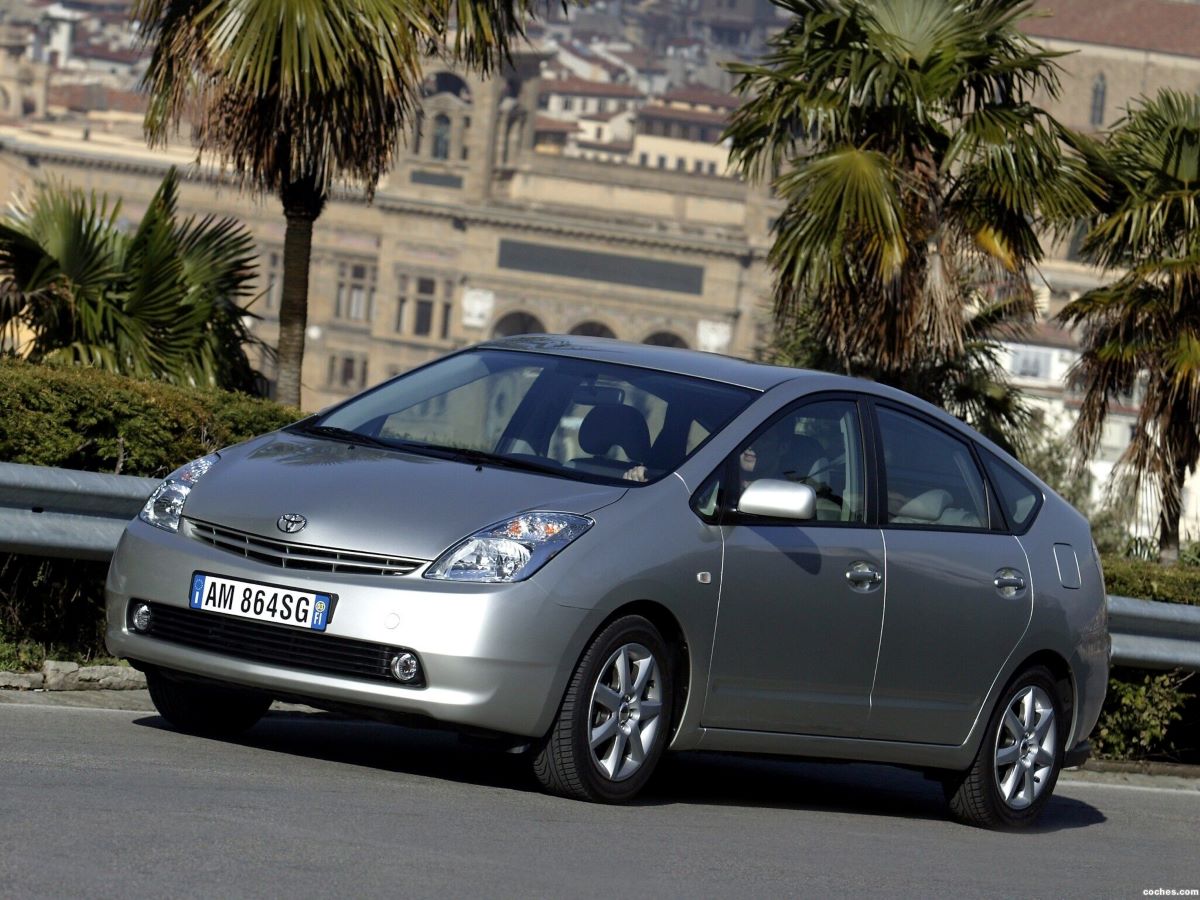
Beyond its innovative drivetrain, the Prius provides a comfortable experience for up to four adults. While it’s slightly more compact than traditional midsize sedans, even taller rear-seat passengers will find ample leg and headroom.
The cabin features upgraded materials and a distinctive layout that gives it a fresh, unconventional vibe — all without compromising on expected amenities. New optional features for this model include a keyless ignition system, a DVD-based navigation system, and xenon headlights.
The hatchback configuration makes it easy to load bulkier items into the cargo area, and with 16.1 cubic feet of available space, it rivals the trunk size of a Toyota Camry. Unlike the original Prius, which felt more like an experimental concept than a real-world vehicle, this redesigned version is a truly viable family sedan.
It delivers on all the fundamentals — such as solid construction and refined performance — and surprises with a starting price of just $20,000. When you combine its impressive fuel economy with a long list of standard equipment, it becomes clear why the 2004 Toyota Prius is destined to be one of the year’s most talked-about vehicles.
Their thermal management system is robust, and replacement parts are widely available and affordable. Taxi fleets and Uber drivers have routinely clocked over 300,000 miles on original batteries. Owners report little to no noticeable degradation before the 200k mark.
Also Read: 5 Cars With Reliable Infotainment Systems and 5 That Glitch Nonstop
2. Lexus RX 400h / RX 450h
These luxury crossovers use a similar hybrid system to the Prius but with more power. The NiMH batteries are housed in well-ventilated areas, which helps with cooling and prolongs lifespan.
When it made its debut two years ago, the Lexus RX 400h ushered in a new era by bringing more fuel-efficient hybrid technology to the luxury SUV market, which had long been known for its high fuel consumption.
While Toyota and Ford had already introduced more budget-friendly hybrid utility vehicles years earlier, and larger luxury SUVs from GM and Chrysler are now entering the hybrid scene, the 2008 Lexus RX 400h still stands as the only “green” option available within the midsize luxury SUV category.
The RX 400h utilizes full-hybrid technology, enabling its gasoline-electric powertrain to function in three different modes: gasoline-only, electric-only, or a blend of both, depending on driving conditions. At the core of the system is a V6 engine paired with an electric motor-generator, which powers the front wheels.
The vehicle stores energy in a nickel metal hydride battery pack, which is conveniently located beneath the rear seats without compromising interior space. Working in harmony, these components deliver up to 268 horsepower, and the RX 400h is capable of reaching 60 mph in under 8 seconds.
During periods of light acceleration or when the vehicle is coasting, it conserves fuel by relying entirely on battery power. The result is acceleration performance that rivals some V8-powered SUVs, while also achieving top-tier fuel efficiency for its class.
Naturally, these technological benefits come with a significant price tag. A well-equipped RX 400h will cost nearly $50,000, which is approximately $4,000 more than a comparably outfitted RX 350. Even when gas prices exceed $3 per gallon, it would take substantial mileage and years of use to offset that higher initial cost.
And from a strictly “save the planet” perspective, opting for a Prius remains the more logical and impactful choice. That said, the RX 400h still manages to be an extremely appealing vehicle. With its combination of speed, fuel economy, and luxury, it offers a well-rounded package that will resonate with nearly every luxury SUV shopper.
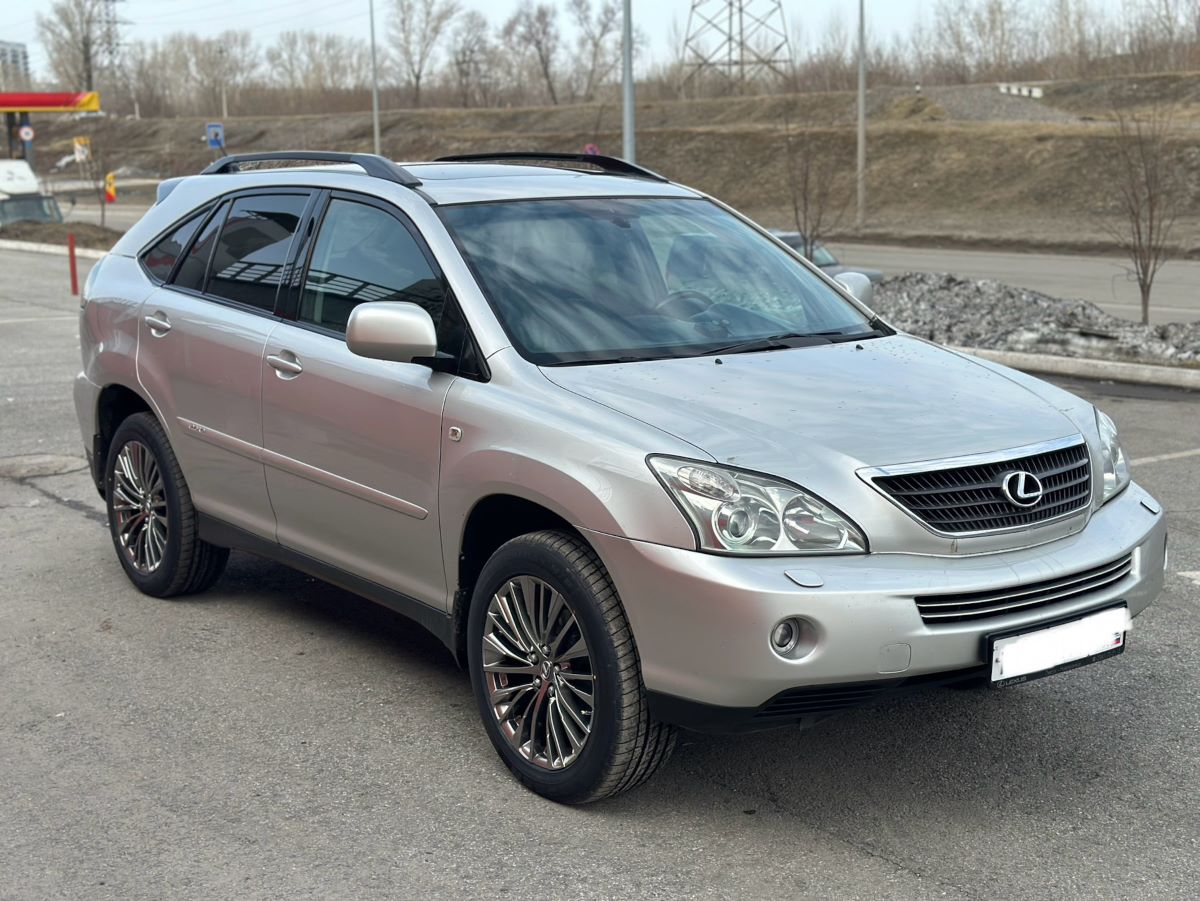
The hybrid powertrain of the Lexus RX 400h combines a 3.3-liter V6 gasoline engine with multiple electric motor-generators that support both the drivetrain and various vehicle systems. In front-wheel-drive versions, two motor-generators are used — one functions as a starter while the other delivers driving power.
All-wheel-drive models include a third electric motor, which powers the rear wheels for enhanced traction. This hybrid system is capable of producing up to 268 horsepower and is paired with a specialized continuously variable transmission (CVT).
According to Lexus, the front-wheel-drive RX 400h accelerates from 0 to 60 mph in 7.5 seconds, while the all-wheel-drive model completes the same sprint slightly quicker at 7.3 seconds. Both variants offer a towing capacity of 3,500 pounds when properly equipped, identical to the non-hybrid RX 350.
Fuel efficiency, as estimated by the EPA, is considerably better than what’s typically found in gasoline-only V6 and V8 competitors. The front-wheel-drive RX 400h is rated at 27 mpg in the city and 24 mpg on the highway, making it as fuel-efficient — or in some cases more efficient — than many smaller SUVs powered by four-cylinder engines.
Many RX hybrids from 2006–2013 are still on the road today with original packs crossing 200,000 miles with no significant drop in performance.
3. Honda Accord Hybrid (2018–Present)
Honda reworked its hybrid strategy with the latest Accord, switching to a more efficient and thermally stable lithium-ion battery design.
These batteries are engineered with fewer stress cycles and smoother load handling.
Early models from 2018 are consistently surpassing 150,000–200,000 miles without battery issues, a dramatic improvement over earlier Honda hybrids.
The Honda Accord Hybrid has long been a leader in its class, recognized for delivering outstanding fuel efficiency, a spacious interior, and performance that exceeds expectations when it comes to both handling and acceleration.
For the 2018 model year, the Accord Hybrid becomes even more appealing. It has undergone a full redesign—just like its non-hybrid counterpart—and now offers additional interior room, a refreshed and modern exterior design, and new technology and safety features.
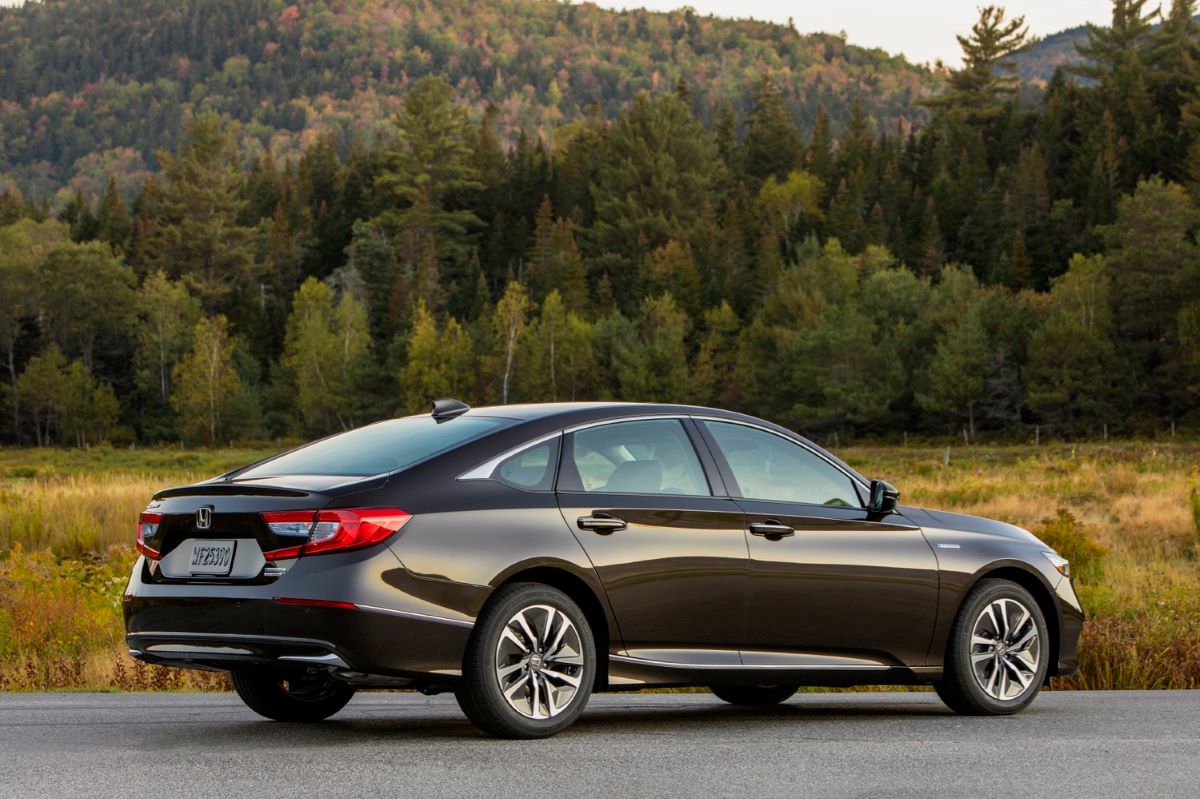
The addition of now-standard safety features—such as “adaptive cruise control, forward collision mitigation, blind-spot monitoring and lane departure warning”—adds significant value to the base trim of the Accord Hybrid. Thanks to a redesigned battery pack layout, the 2018 model also benefits from increased cargo flexibility.
Previously, the hybrid battery placement prevented the rear seat from folding down, limiting cargo options. That’s no longer the case. The latest Accord Hybrid now includes a “60/40-split folding rear seat” and offers “the same cargo space as the standard Accord: 16.7 cubic feet.”
Beneath the surface, the 2018 Accord Hybrid retains the same powertrain as the previous model year: a “2.0-liter four-cylinder engine mated to a pair of electric motors.”
The transition to the new model year has resulted in a minor dip in fuel efficiency—moving from an “EPA-estimated 48 mpg combined in 2017 to 47 mpg combined this year.” Despite the slight reduction, the Accord Hybrid still delivers outstanding efficiency for a midsize sedan of its size.
4. Toyota Camry Hybrid (2012–2017)
Like the Prius, the Camry Hybrid from this era uses Toyota’s proven Hybrid Synergy Drive and NiMH battery tech. The sedan’s conservative tuning means the battery isn’t over-stressed.
There’s little to complain about when it comes to the 2016 Toyota Camry Hybrid. It boasts a spacious cabin and delivers an exceptionally quiet ride, though it doesn’t stand out in terms of sporty performance. That said, this midsize sedan ensures a comfortable drive while being remarkably fuel-efficient.
Powering the 2016 Toyota Camry Hybrid is a 2.5-liter four-cylinder engine paired with an electric motor, combining to produce “200 horsepower.”
While driving, the hybrid system shifts seamlessly between gasoline and electric power, maintaining a smooth experience. However, a slight vibration is noticeable when the gas engine restarts after being idle for a period. The vehicle comes standard with a continuously variable automatic transmission.
Designed primarily for comfort, the Camry Hybrid’s 2016 model offers improved handling compared to earlier versions. Even so, it still doesn’t quite measure up to competitors such as the “2016 Chevrolet Malibu Hybrid” in terms of driving dynamics. Unlike some other hybrids, the Camry Hybrid’s brakes can feel abrupt and grabby when applied with force, and somewhat soft or spongy under regular pressure.
The base “Camry Hybrid LE gets an EPA-estimated 42 mpg in the city and 38 mpg on the highway,” which places it firmly in the respectable range for a hybrid sedan. Meanwhile, the “Camry Hybrid SE and XLE models offer 40 mpg in the city and 37 on the highway.”
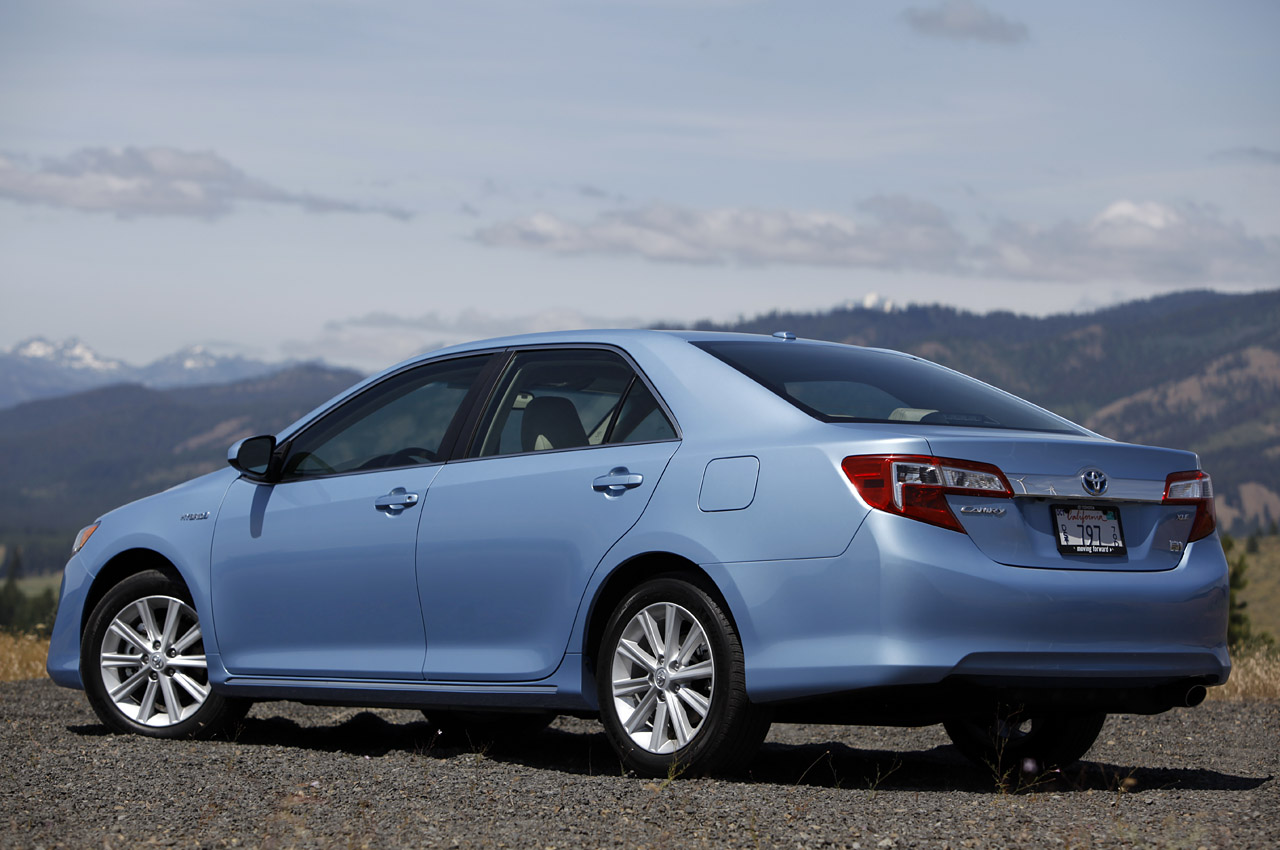
Inside, the Camry Hybrid offers seating for five and includes a power-adjustable driver’s seat as standard. Optional amenities include a power-adjustable front passenger seat, leather upholstery, and heated front seats. Both the front and rear seats provide good comfort and ample legroom for rear passengers.
For families, the Camry Hybrid features complete “LATCH child-seat connectors in the outboard rear seats, as well as a middle-seat tether anchor.” Installing rear-facing infant seats is straightforward, but the “fixed headrests interfere with front-facing car-seat installation.”
Standard tech features in the Camry Hybrid include “dual-zone automatic climate control, Bluetooth, and Toyota’s Entune audio system with a 6.1-inch touch screen.”
Optional features expand the appeal further and include a sunroof, satellite radio, an “upgraded Entune system with navigation and smartphone app integration,” “wireless smartphone charging,” and a “JBL audio system.”
Many Camry Hybrids from this generation are pushing 250k miles on their original batteries, especially in regions with mild climates.
Also Read: 5 Engines That Never Burn Coolant and 5 That Always Need Top-Ups
5. Ford Escape Hybrid (2005–2012)
Ford’s early hybrids, developed in partnership with Toyota, benefit from a well-built thermal management system and reliable battery chemistry.
The Ford Escape Hybrid made history as the first hybrid SUV to hit the market, and even in 2008, it continues to hold its crown as the most fuel-efficient option in its class. Although new EPA testing methods have slightly lowered its official mileage numbers, the “2008 Ford Escape Hybrid remains one of the few sport-utilities capable of returning 30 mpg in real-world driving.”
At the same time, it still delivers plenty of space and comfort for a family of four—and even the family dog. The takeaway? Choosing a hybrid doesn’t require you to sacrifice practicality, and that’s exactly what gives this Escape its edge.
Like its gas-only counterpart, the Escape Hybrid gets a makeover for 2008. The fresh, squared-off styling gives it a more rugged, assertive look. Inside, the updates are more than just cosmetic. The dashboard layout is cleaner, especially the arrangement of the climate and stereo controls, and the overall design now feels more upscale—“replete with ice-blue lighting at night.”
Ford also stepped up its game with the navigation system, which now runs off DVDs and is displayed on a larger touchscreen, making it much more worthwhile as an optional feature.
In an effort to reduce cabin noise, Ford revamped the roof structure and added a laminated windshield, an acoustic headliner, and thicker carpeting—all of which contribute to a quieter highway experience.
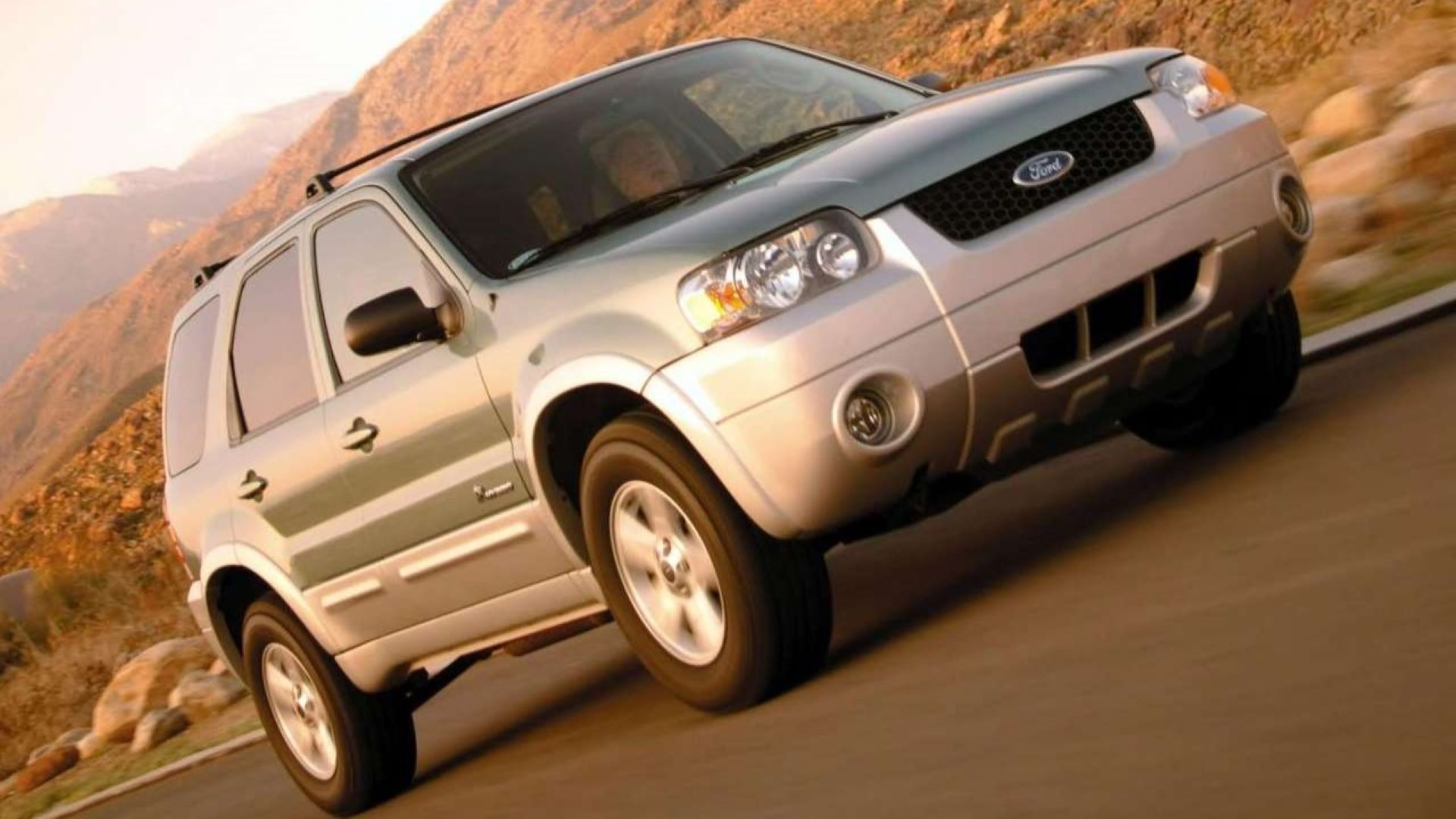
The Escape Hybrid is driven by a powertrain that combines a 2.3-liter gasoline four-cylinder engine with two electric motor/generators. Together, they produce a “net output of 155 hp.”
While Ford labels the setup a CVT, it’s not your traditional belt-driven transmission. Instead, it uses a planetary gear system, where the electric motors and gas engine coordinate to deliver smooth and efficient power. For the driver, it’s as simple as putting the shifter in “D” and stepping on the gas.
If you opt for the AWD version of the Escape Hybrid, there’s a third electric motor that powers the rear wheels when extra traction or acceleration is needed. However, “it’s not a true all-wheel-drive system,” and those dealing with frequent heavy snow would still be better off with the conventional gasoline-powered Escape.
According to the EPA’s revised 2008 estimates, “the front-drive Escape Hybrid comes in at 34 mpg city, 30 mpg highway, while the AWD version is listed at 29/27.” That makes it one of the few small SUVs that blends real-world utility with real-world savings at the pump.
First-gen Escape Hybrids often exceed 200,000 miles with original batteries. They were a favorite among municipal fleets for this very reason.
Hybrids That Drain Fast
In this article, we’re diving into the disappointing side of hybrid ownership — the hybrids that drain fast. These are the models that fall short of expectations, guzzle more gas than they should, or rely too heavily on their internal combustion engines.
If you’re shopping for a hybrid or just curious about which ones don’t quite make the grade, keep reading — because sometimes, going green isn’t as simple as it seems.
1. Nissan Pathfinder Hybrid (2014–2015)
This short-lived model used a lithium-ion battery that was under-engineered for the SUV’s weight. Heat management was poor, and the system frequently over-cycled the battery. Nissan’s Pathfinder underwent a complete transformation for the 2013 model year, redesigned to better suit the demands of contemporary drivers.
Gone was the rugged, truck-based DNA that had long defined it — including the traditional ladder-frame chassis, the bold, angular exterior styling, and the well-regarded 4.0-liter V-6 engine. In its place came a unibody structure, a sleeker, more rounded exterior, and a smaller engine mounted transversely to accommodate, believe it or not, front-wheel drive.
Much like other legacy nameplates seeking a modern identity in the 21st century, the next logical step in the Pathfinder’s evolution was the addition of a hybrid powertrain — which brings us to the 2014 Nissan Pathfinder Hybrid featured here. Our test model, dressed in a striking Black Obsidian finish, came equipped in Platinum trim — a $2,300 upgrade.
This package includes an array of family-friendly features like dual seven-inch entertainment screens mounted in the front-seat headrests, two wireless headphones, a remote control, and an auxiliary input jack, making it easy to keep rear-seat passengers quietly entertained. If the tranquility happens to wear off, a dual-panel panoramic moonroof provides passengers with a relaxing view of the sky.
The Platinum trim also adds an eye-catching set of 20-inch twin-spoke aluminum wheels wrapped in 235/55 all-season tires. Complementing the upscale touches, a set of $200 premium floor mats rounded out the amenities found in our hybrid test vehicle.
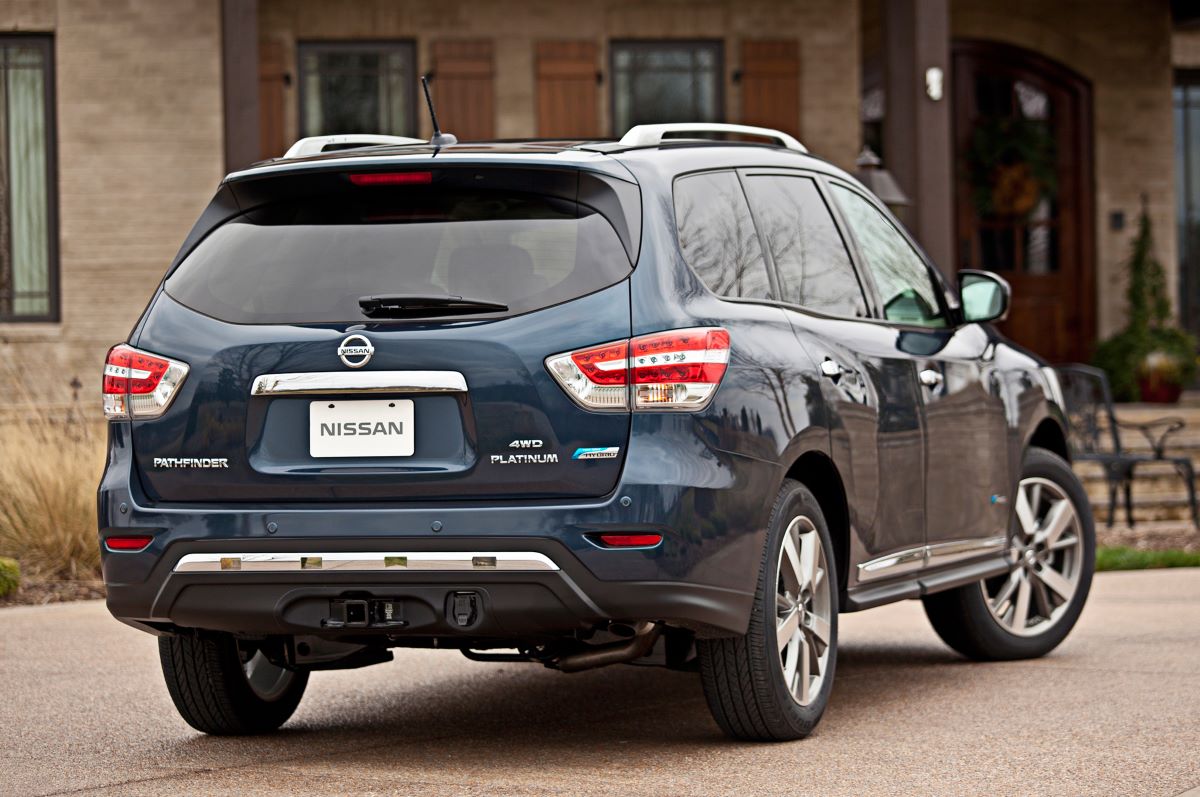
Judged purely on its own merits — we’ll get to the hybrid powertrain specifics shortly — this Pathfinder maintains the core attributes we’ve come to appreciate in the standard V-6 model we previously tested long-term. Its three-row configuration provides ample seating for seven passengers and plenty of room for their gear.
The second-row seats tilt and slide to allow easier access to the third row, which, notably, still folds completely flat despite being positioned over the hybrid’s lithium-ion battery pack. According to Nissan, the battery is compact enough that it doesn’t intrude into passenger or cargo space.
As part of the Platinum trim, the front seats are both heated and cooled, offering comfort and ergonomic support well-suited for suburban commuting. Across the board, all Pathfinder Hybrids come standard with an eight-way power driver’s seat, rearview camera, a seven-inch central infotainment screen, and Nissan’s Intelligent Key system with push-button start.
While the gauge cluster closely resembles that of the gasoline-only Pathfinder, a 4.2-inch display located between the speedometer and tachometer provides hybrid-specific information, such as battery charge status and the real-time activity of the electric motor
Many owners report failures before 100,000 miles. Replacement battery costs are extremely high, and the hybrid system is hard to repair or refurbish.
2. Hyundai Sonata Hybrid (2011–2014)
These early Sonata Hybrids used lithium-polymer batteries, which degrade faster when exposed to high heat. Combined with poor battery cooling and early software glitches, they often need replacement prematurely.
The 2012 Hyundai Sonata Hybrid may not be the first eco-conscious family sedan to hit the market, but it represents a strong initial effort from the Korean automaker. With eye-catching styling, an extensive list of standard equipment, and some notable technological advancements under the hood, it brings a lot to the table.
Among the key innovations in the powertrain is Hyundai’s in-house hybrid system, which uses a lithium-polymer battery pack. This battery is both lighter and more compact than the nickel-metal hydride batteries typically found in competing hybrids.
Additionally, the electric motor is positioned between the four-cylinder gasoline engine and a conventional six-speed automatic transmission. This layout delivers a more familiar driving experience, particularly when compared to the often drone-heavy operation of rivals equipped with continuously variable transmissions (CVTs).
Additionally, the system shows its rough edges during low-speed acceleration, which can feel jittery and uneven. Brake feel is another weak spot, with a touchy and unnatural response that detracts from the overall refinement.
In contrast, competitors such as the Ford Fusion Hybrid and Toyota Camry Hybrid avoid these kinds of drawbacks. Adding to the Sonata Hybrid’s challenges is the pricing gap between it and the standard Sonata, which already delivers an impressive 35 mpg on the highway. From a cost-efficiency standpoint, that makes the hybrid variant a tougher sell.
Overall, the 2012 Hyundai Sonata Hybrid is a respectable option for those seeking a fuel-efficient midsize sedan, but it has room for improvement before it earns the same level of recommendation as its non-hybrid counterpart.
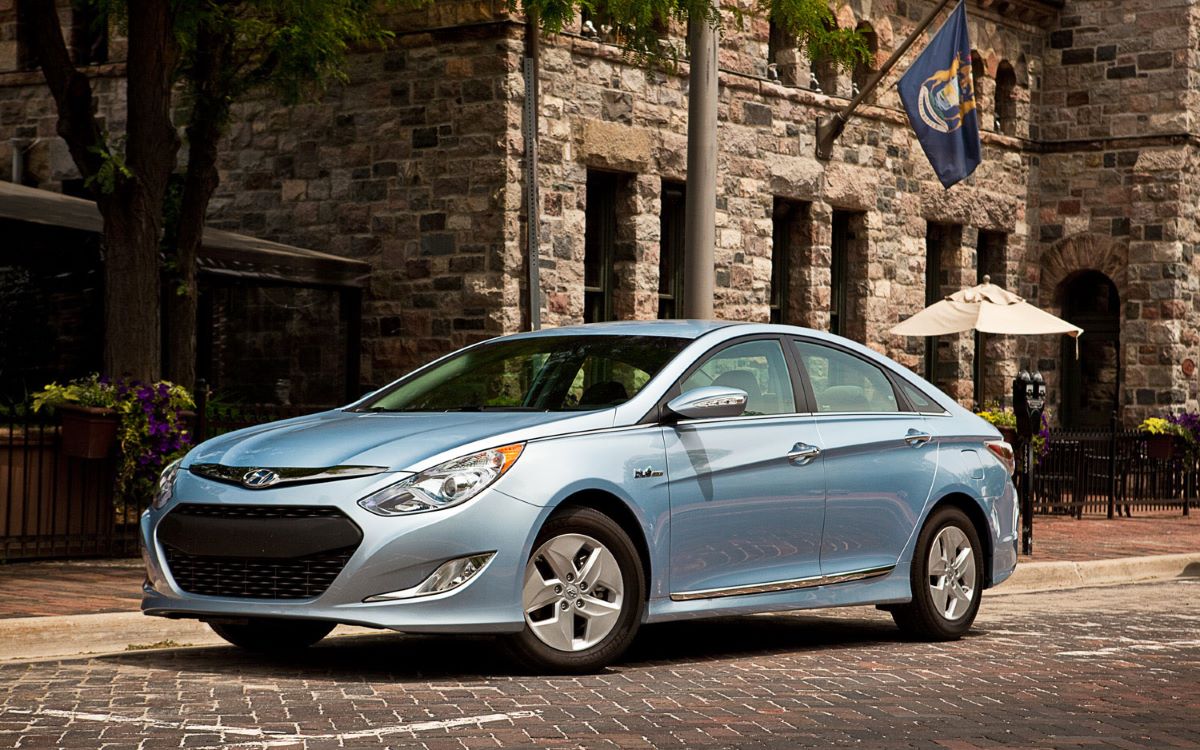
Battery replacement around 90,000–120,000 miles is common. Some owners also report drop-offs in fuel economy and charge retention well before that.
3. Chevrolet Tahoe Hybrid (2008–2013)
GM’s two-mode hybrid system was innovative but complex and poorly integrated into a heavy vehicle like the Tahoe. The hybrid components, especially the battery pack, were overburdened.
For a full-size SUV riding on a traditional truck-based platform, the 2010 Chevrolet Tahoe Hybrid delivers surprisingly strong fuel economy. The credit goes to its two-mode gas/electric hybrid system.
The vehicle’s pair of 60-kilowatt electric motors can drive it solo under low-speed, light-load conditions, helping it achieve a remarkable 21 mpg in city driving — a number virtually unheard of in this segment. When more muscle is required, a 6.0-liter V8 engine steps in.
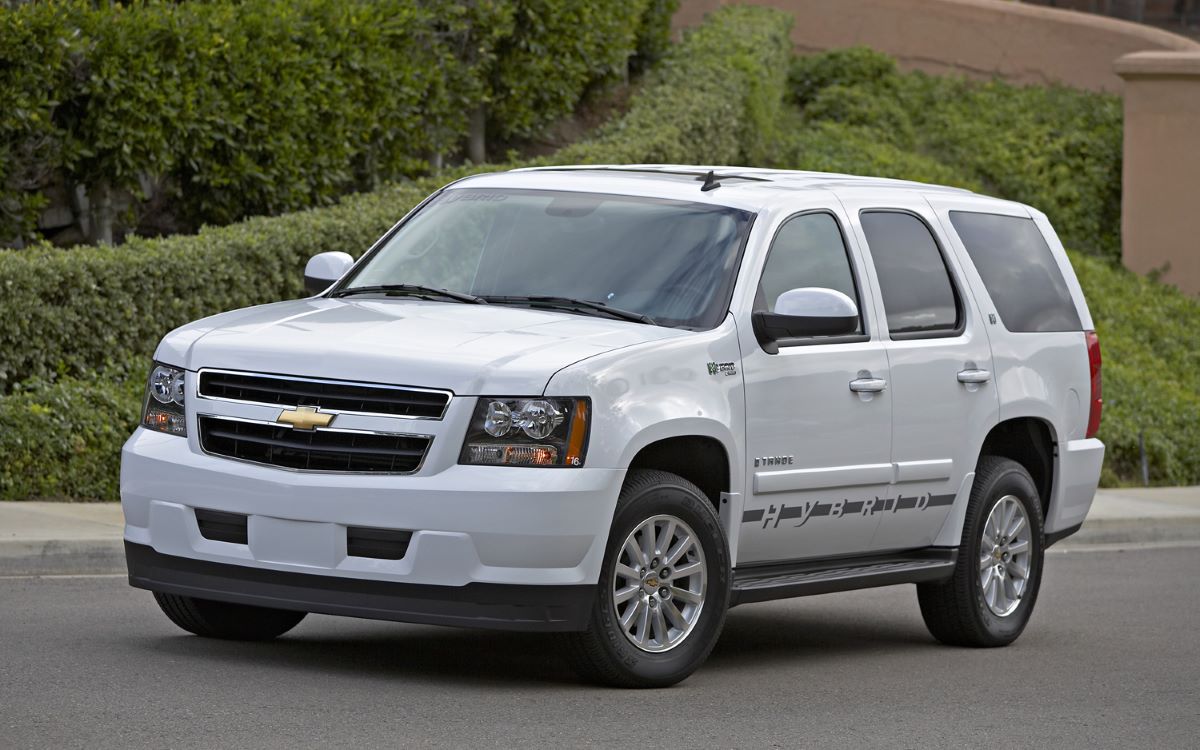
Still, it’s worth noting that it falls short compared to the standard Tahoe, which boasts an 8,400-pound towing limit and starts at a price roughly $13,000 less. While the conventional Tahoe may sacrifice 4 to 5 mpg in efficiency, the savings in upfront cost could cover a substantial amount of fuel.
It’s also important to factor in other premium options in the same price range — namely, diesel-powered three-row crossovers like the Audi Q7 TDI and the BMW X5 xDrive35d. Though these alternatives seat seven rather than eight, their third-row seats fold flat, offering added convenience for hauling cargo. In contrast, the Tahoe’s third-row must be physically removed.
Even so, the Tahoe does offer significantly more maximum cargo space. Where the diesel European crossovers excel, however, is in their refined driving dynamics, which far surpass the Tahoe’s. Their towing ability and fuel economy are in the same ballpark, making them serious contenders for buyers looking at practicality, performance, and efficiency in one package.
Many Tahoe Hybrids require battery replacement around 100k–120k miles. The cost often outweighs the value of keeping the vehicle on the road.
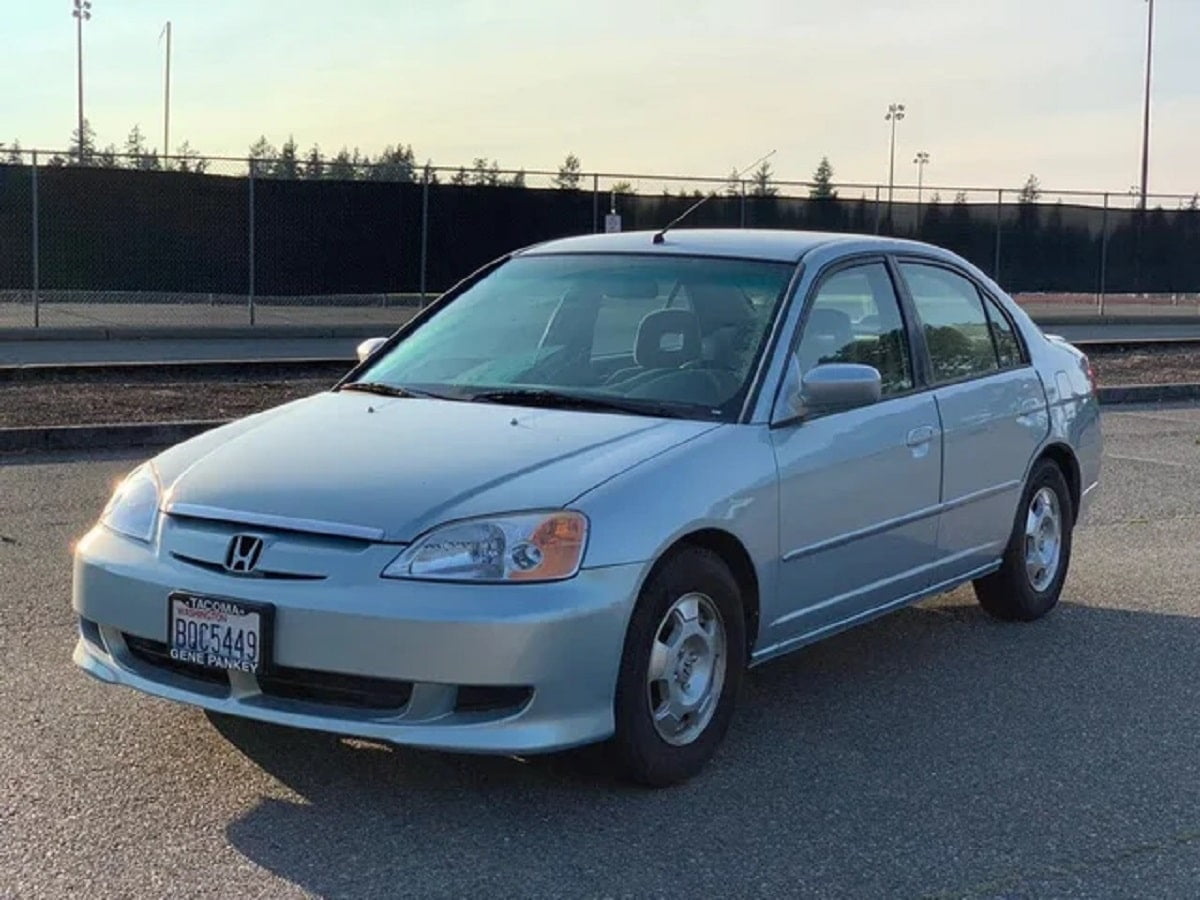
4. Honda Civic Hybrid (2003–2011)
Early Honda hybrids used NiMH batteries with subpar thermal regulation and an overly aggressive charging algorithm. Battery degradation was accelerated by aggressive regenerative braking cycles.
The 2008 Honda Civic is significantly heavier and more refined than its compact predecessors. It’s no longer Honda’s smallest offering — that title now belongs to the Fit.
Still, for typical small car buyers, the Civic remains the go-to option. We hold the current-generation Civic in high regard — it was last overhauled in 2006 — and it continues to rank as one of the best-selling vehicles in the U.S.
There are numerous compelling reasons to consider the Civic. Chief among them is its extensive lineup. Unlike many compact cars, the Civic is available as both a sedan and a more aggressive-looking coupe. With a straightforward trim structure that spans from the entry-level DX to the well-equipped EX, buyers can navigate the lineup with ease.
The Civic lineup also includes niche models like the Si, Hybrid, and GX. The Si variant stands out as one of the most performance-oriented small cars in its price range, while the Hybrid version — thanks to its gasoline/electric powertrain — can return more than 40 mpg in real-world conditions.
Then there’s the Civic GX, a true outlier in the market. It runs on natural gas and can be refueled at home using a special “Phill” device. It’s the priciest Civic you can buy, but in return, it offers the cleanest tailpipe emissions of any mass-produced vehicle in the country.
A notable addition for 2008 is the Honda Civic Mugen Si sedan. Based on the Civic Si, this version is tuned by Mugen — Honda’s renowned motorsports and aftermarket performance partner.
It includes a specially tuned suspension, 18-inch lightweight forged alloy wheels with performance tires, a complete aerodynamic body kit featuring an adjustable rear wing spoiler and rear diffuser, and a sport-tuned exhaust. Only 1,000 units will be available, and they command a hefty $30,000 price tag — a figure that stands out in the Civic lineup.
Regardless of which version you choose, the Civic continues to deliver in core areas like comfort, interior design, and safety. It also boasts strong resale value and a longstanding reputation for reliability.
While it’s always wise to compare alternatives — such as the sporty Mazda 3, value-packed Hyundai Elantra, or the refined Volkswagen Rabbit and Jetta — the 2008 Honda Civic still holds its ground as a smart pick in the compact car market, whether you’re after a sedan or coupe.
The DX, LX, and EX trims of the Civic are equipped with a 1.8-liter four-cylinder engine producing 140 horsepower and 128 lb-ft of torque. Power is directed to the front wheels through either a five-speed manual transmission or an optional five-speed automatic.
The GX variant also uses a 1.8-liter engine, but it’s designed to run on compressed natural gas, delivering 113 hp. While its driving range is limited to 200 miles, owners can conveniently refuel at home with Honda’s Phill system.
For performance enthusiasts, the Civic Si packs a 2.0-liter engine rated at 197 horsepower, paired exclusively with a six-speed manual transmission and a limited-slip front differential to enhance traction.
Fuel economy is another strong point. The 1.8-liter gasoline engine achieves EPA estimates of 24 mpg in the city and 36 mpg on the highway when equipped with an automatic transmission. The GX delivers the same figures.
5. Chrysler Aspen Hybrid / Dodge Durango Hybrid (2009)
Built for only one model year, these hybrids were part of Chrysler’s short-lived hybrid experiment. They used GM’s two-mode system in a poorly optimized setup.
e 2009 Chrysler Aspen Hybrid isn’t merely a forgotten experiment tucked away in automotive footnotes — it stands out as a fascinating anomaly that dared to swim against the current.
Produced for just a short two-month stretch in 2008 and limited to only a few hundred units, this hybrid SUV showcases Chrysler’s bold, albeit brief, foray into hybrid technology. While opinions on its exterior design were mixed at best, the real story lies under the sheet metal — a compelling tale of collaborative engineering that deserves attention.
Under the hood, the Aspen Hybrid houses a 5.7-liter HEMI V8 engine, integrated with an advanced hybrid system developed through an unprecedented partnership between Chrysler, General Motors, Mercedes-Benz, and BMW. This collaboration yielded the world’s first two-mode full hybrid system — a setup that embeds electric motors inside a standard automatic transmission.
Chrysler described it in a press release as “a sophisticated fuel-saving system incorporating four fixed-gear ratios for high efficiency and power-handling capabilities.” A full-size SUV tipping the scales at nearly 6,000 pounds achieving over 20 mpg combined — a near-revolutionary feat for a vehicle of this class and weight.
The hybrid system’s two operational modes were specifically tuned for urban and highway driving. In city traffic, the Aspen could run purely on electric power, with its twin 87-horsepower electric motors propelling it without any contribution from the HEMI. This made stop-and-go commutes far more fuel-efficient.
At higher speeds, the system seamlessly transitioned into a blend of electric assistance and V8 muscle, thanks to the engine’s Multi-Displacement System (MDS), which allowed it to alternate between four- and eight-cylinder operation.
This two-mode functionality was the backbone of the Aspen’s improved fuel economy. It kept the thirsty HEMI in its fuel-saving four-cylinder mode for longer stretches than a conventional setup could manage.
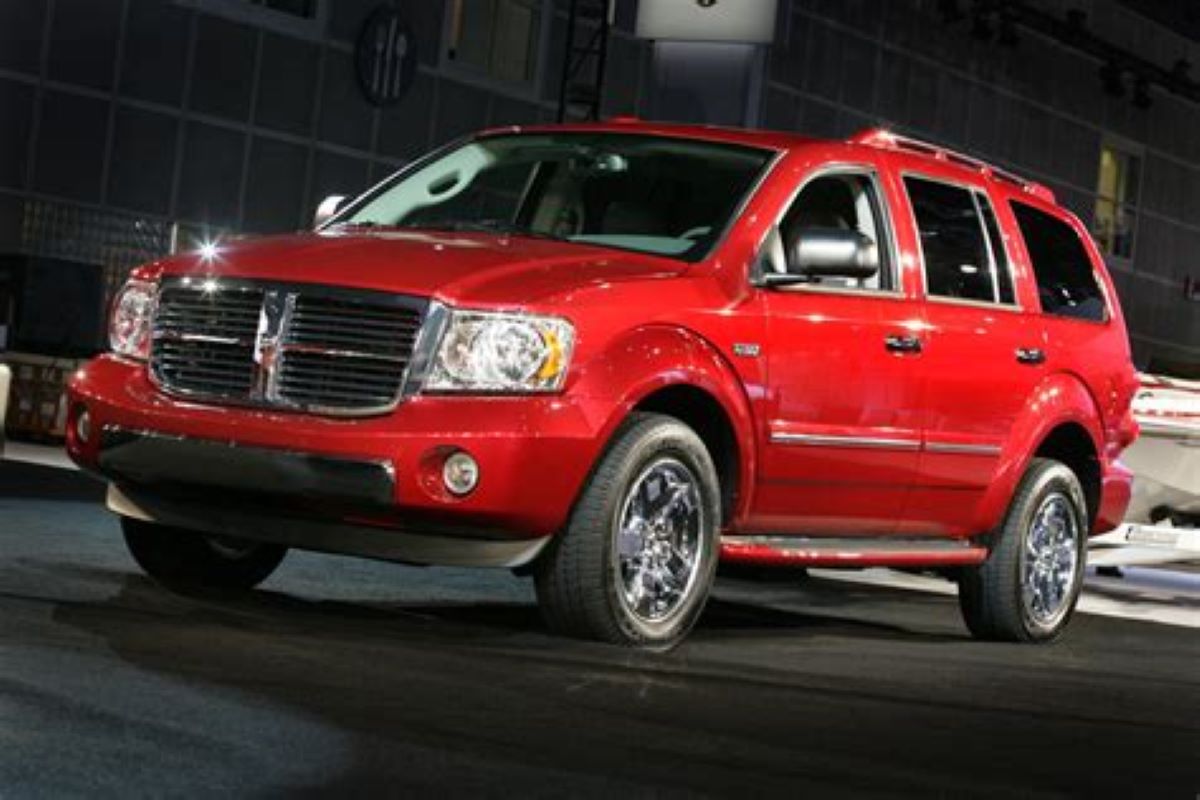
Battery failures are common before 100k miles, and sourcing replacement parts is a nightmare. The rarity of the system also means repairs are often prohibitively expensive.
If you’re considering a used hybrid, battery longevity should be a top concern. Models like the Toyota Prius and Camry Hybrid have a well-earned reputation for going the distance, often without touching the battery pack.
On the flip side, hybrids like the early Honda Civic Hybrid or Nissan Pathfinder Hybrid can turn into expensive headaches far too soon.
Always check battery health, ask for service history, and when possible, opt for models with proven long-term reliability in their hybrid systems.