
Automotive auctions have become the stage where cars prove their desirability, historical significance, and investment value.
Some models dazzle collectors and consistently generate headlines for their soaring sale prices, while others struggle to achieve reserve, their appeal lost among bidders who value pedigree, exclusivity, or a unique backstory.
The line between success and disappointment at auction is rarely thin; rather, it is shaped by a blend of craftsmanship, pop culture resonance, design ethos, rarity, and market timing.
Today, auction results serve as a barometer for shifting tastes and preferences in the collector market. Every car that achieves a record-breaking sale tells a story of fervent demand, emotional attachment, or brilliant engineering.
Conversely, the vehicles that struggle often reveal as much, pointing toward bloated production numbers, rapidly depreciating reputations, or changes in buyer demographics.
This article meticulously examines both ends of the spectrum: the cars that repeatedly set auction rooms abuzz, and the models whose values fizzle on the block.
Tracing the factors that propel certain vehicles to stardom while others languish, this guide reveals what attracts top bidders, what makes an automobile a collectible darling, and what qualities leave others overlooked and undervalued.
Through this analysis, enthusiasts, collectors, and casual admirers alike can better understand why some cars command astronomical figures while others fall flat, despite high hopes and occasionally optimistic sellers.
Also Read: 5 Cars With Zero Known Electrical Issues and 5 That Always Have One
5 Auction Stars
There is a select group of automobiles that have become synonymous with auction success. These cars are not simply expensive; they gather a following that transcends typical buyer demographics and geographic boundaries.
Some set records, thanks to their heritage and scarcity, while others rise because of a perfect harmony between timeless aesthetics and superior engineering.
Generally, auction houses anticipate a heightened sense of drama when these lots are offered, as competitive bidding ignites between passionate collectors.
The triumphs attributed to these models are never a fluke. Their stories are woven through motorsport, design milestones, and a level of desire that fuels intense competition.
The following five cars are chosen because they consistently outperform estimates, spark intense interest, and often become centerpieces at prestigious auctions.
Examining them reveals common threads in what drives demand and how legacy, provenance, and cultural impact contribute to value.
Each of these cars is included not just for staggering price tags, but for the way they have shaped collector car culture, inspired imitators, and defined what “success” means at auction.
Their names have become shorthand for desirability, and understanding their appeal allows one to appreciate the criteria that define the most sought-after vehicles at auction.
1. Ferrari 250 GTO
The Ferrari 250 GTO commands an extraordinary reputation that few cars can rival. Produced between 1962 and 1964 with only 36 units crafted, this car embodies rarity in its purest form.
The 250 GTO was designed primarily for racing, yet it features an elegance and subtlety in design that has aged remarkably well. Its competitive record in racing, including victories in the FIA’s World Sports Car Championship, cements its legacy as more than a mere showpiece.
Auction results speak to its stature. The 250 GTO set records with a private sale rumored at more than $70 million, while public auctions have routinely seen figures over $40 million. These staggering prices rest on more than just exclusivity: provenance, such as original ownership and race pedigree, can send a specific chassis well above expectations.
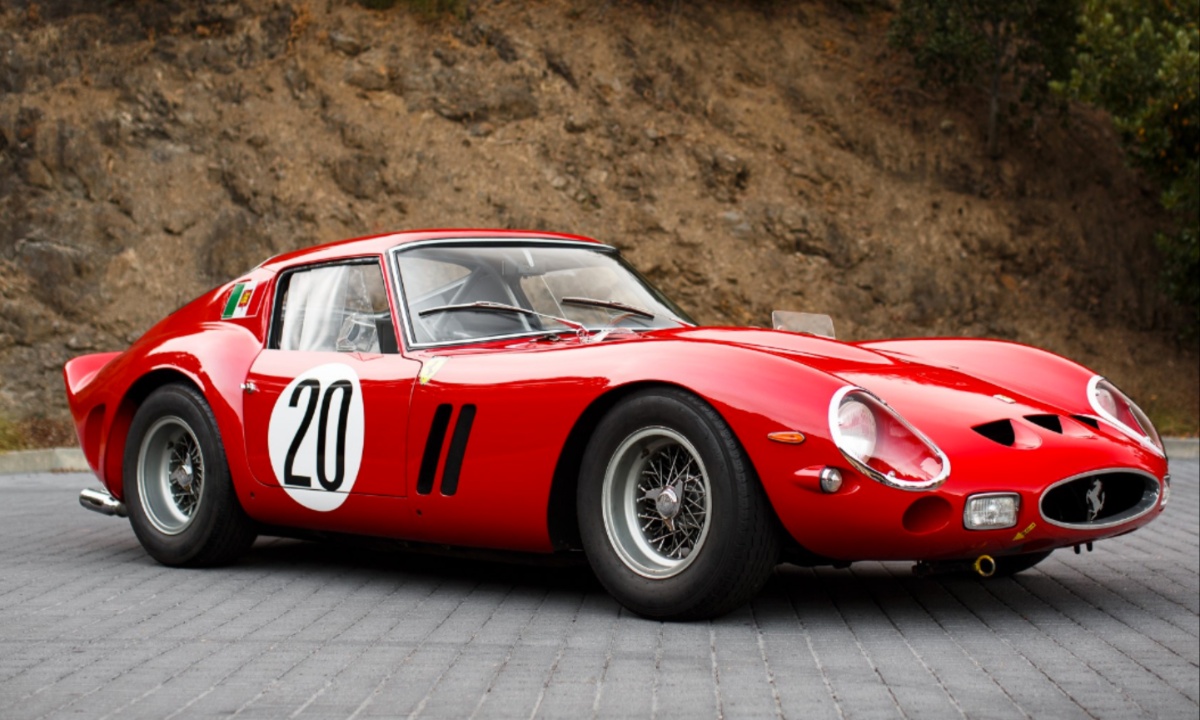
Selecting the 250 GTO as an auction star is justified by its almost mythical standing among enthusiasts and investors alike. Demand far surpasses availability, creating fierce competition each time one reaches the auction stage.
Ultimately, the 250 GTO’s blend of competitive success, limited production, and ongoing influence on Ferrari’s identity means it defines what an auction star car truly is. When enthusiasts reference “the holy grail” of collector cars, they often have the Ferrari 250 GTO in mind.
2. Mercedes-Benz 300SL Gullwing
The Mercedes-Benz 300SL Gullwing initially shocked the automotive world on its debut in the 1950s, blending advanced engineering with an audaciously beautiful design.
Its distinct gullwing doors, lightweight tubular chassis, and innovative fuel injection system positioned it ahead of its time. Fewer than 1,400 units were built, heightening its collectible allure.
What sets the 300SL Gullwing apart isn’t just its technical prowess; it is also its appeal to a wide range of buyers, from historic racing aficionados to those who appreciate classic luxury.
Auction results reflect this sustained demand, with prime examples regularly achieving prices from $1.2 million to nearly $2 million, or more for cars with unique provenance or factory options.
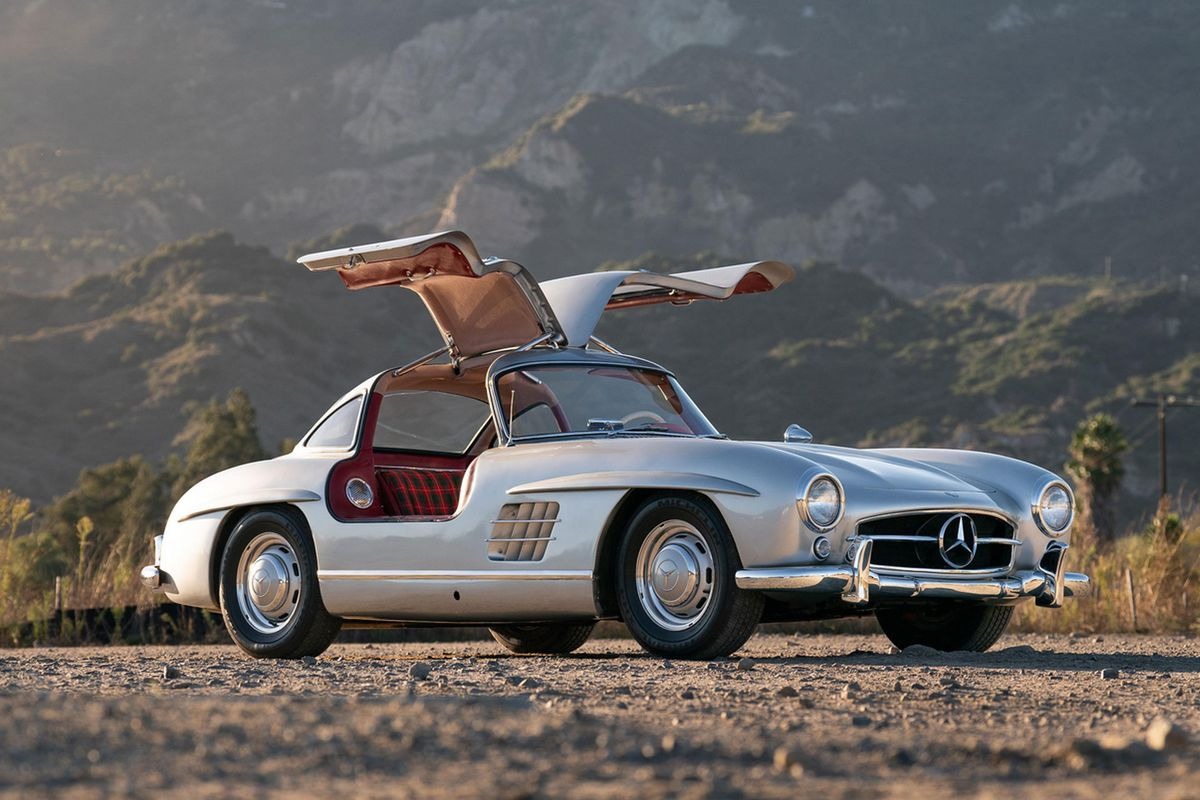
Including the Gullwing among the auction stars highlights how historic achievement in racing, breakthrough design, and an enduring pop culture presence combine to drive high auction results.
This car’s aura is such that it remains both an icon and a benchmark for future generations. The 300SL Gullwing embodies innovation and grace, earning every headline it creates at auction. Each sale reinforces its standing as an aspirational artifact rather than mere mechanical commodity.
3. Shelby Cobra 427
The Shelby Cobra 427 occupies a unique position at auction because it represents the convergence of American ingenuity and raw power with British roadster aesthetics.
Carroll Shelby’s vision involved combining a lightweight British chassis with a brutal American V8, and the result was both a motorsport legend and a collector’s fantasy.
Original Shelby Cobras, especially the 427 models, are exceedingly rare, with only shy of 350 made. Bidders flock to auction houses when an authentic chassis number is verified, often pushing sale prices past $1.5 million and, in exceptional cases, much higher.
The Cobra’s star status is maintained by both genuine racing credentials and its cultural symbolism as the quintessential American sports car.
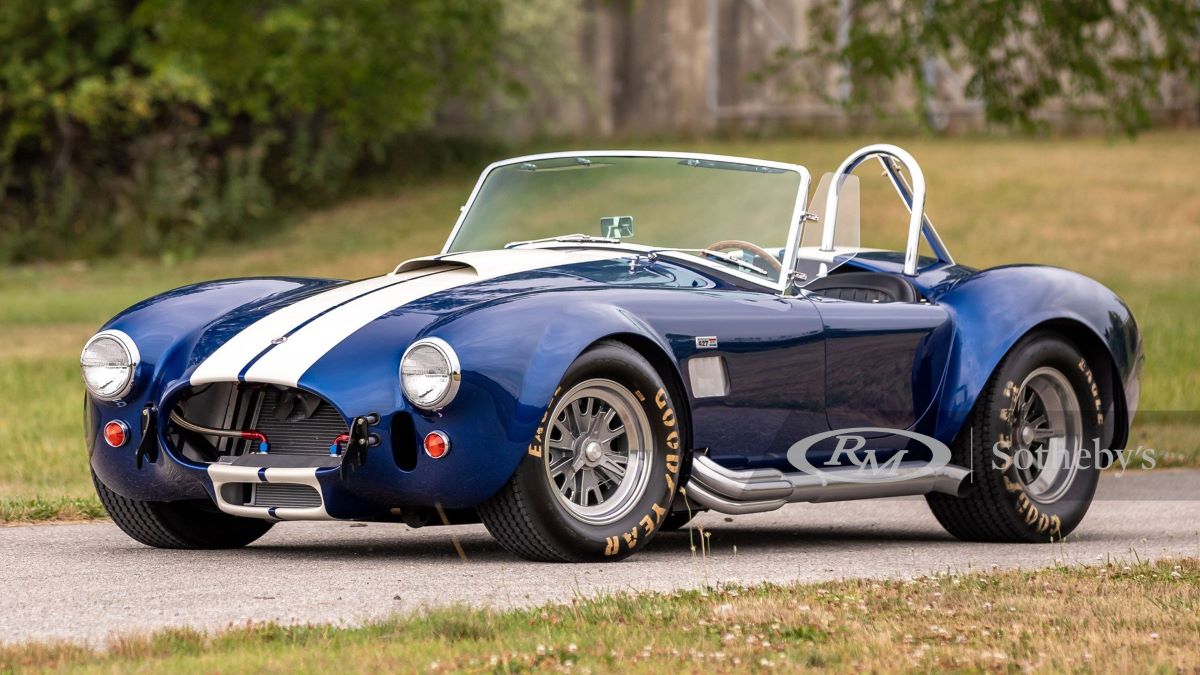
The reason for its inclusion as an auction star rests on this duality: it is at once a finely engineered automobile and an emblem of 1960s racing rivalry.
Beyond the numbers, the Cobra’s volatility on the road and thrilling performance have made it a poster child for automotive adventure. Each sale at auction only amplifies the aura of excitement and nostalgia surrounding the Shelby Cobra 427.
4. Porsche 911 Carrera RS 2.7
Few cars have shaped public perception of a brand as profoundly as the Porsche 911 Carrera RS 2.7. Launched in 1973 as a homologation special, this model is famed for its lightweight construction, signature ducktail spoiler, and track-focused dynamics.
Only 1,580 units were built, but their public and motorsport exploits quickly turned the RS 2.7 into a legend.
Auction interest in the Carrera RS 2.7 has grown steadily in recent decades, with top-condition examples regularly commanding $500,000 to $1.5 million, depending on originality and specification.
Its inclusion as an auction star is justified not merely by price, but by the car’s impact on the Porsche brand and the shape of high-performance sports cars that followed.
This Porsche remains relevant because it appeals to both die-hard marque loyalists and investors seeking a proven performer in value retention. With every publicized sale, the RS 2.7 strengthens its position as the archetype of collectible classic 911s.

The enduring fascination with this model at every major auction demonstrates how agility, heritage, and understated design maintain a car’s star status for generations.
5. Bugatti Type 57SC Atlantic
The Bugatti Type 57SC Atlantic stands among the most revered pre-war cars ever to reach auction.
Crafted with art deco styling and advanced engineering, only four Atlantics were produced, and their whereabouts and condition are closely monitored by the collector community.
Its aerodynamic curves and unique riveted body panels make each remaining example a singular work of automotive art.
Auction appearances are exceedingly rare, but whenever a Type 57SC emerges, it commands astronomical prices, with private sales reported to have breached the $40 million mark. The car’s combination of technical bravery, limited production, and provenance, often tied to a roster of significant owners, ensures its star billing.
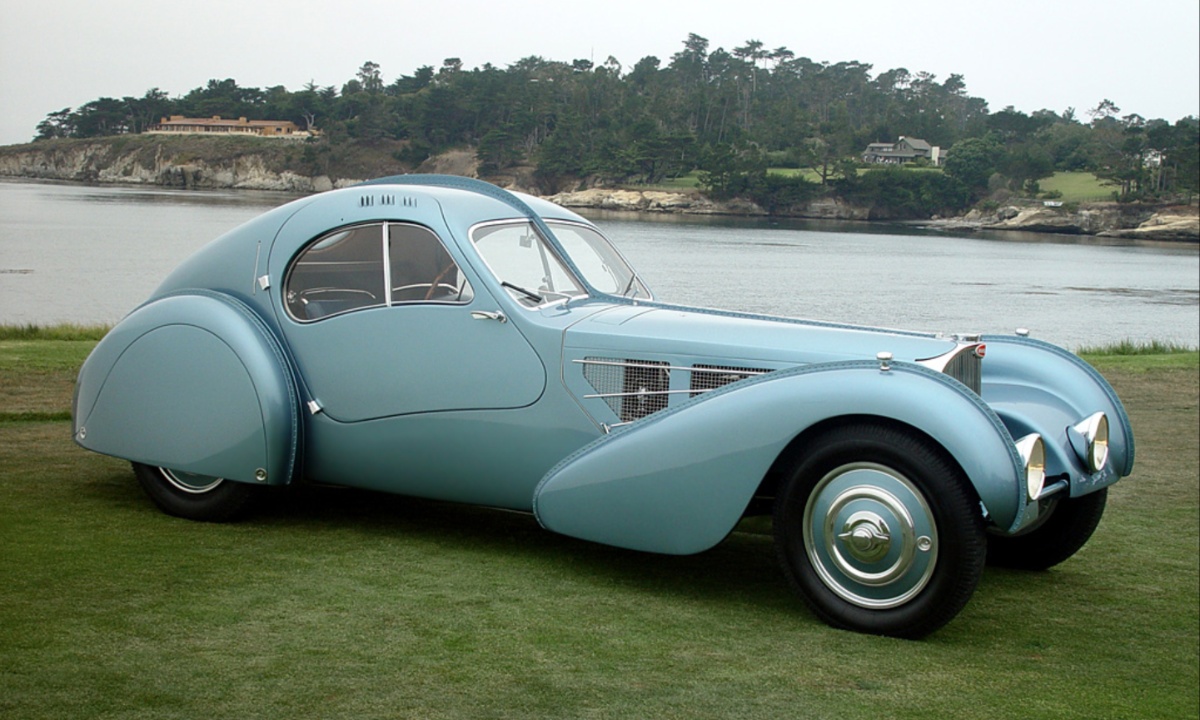
Selecting the Atlantic for this auction star category reflects the importance of rarity and artistic achievement in defining collector value.
The Type 57SC’s reputation has only grown with time, with each reemergence stirring anticipation and setting new benchmarks for the entire auction field.
This Bugatti isn’t merely bought, it is cherished as the centerpiece of any collection fortunate enough to house it.
5 Car Models That Flop at Auction
Automotive auctions occasionally highlight models initially hyped as future collectibles, only to see them falter dramatically when gavel meets wood.
These cars attract fewer bids, frequently get passed over after failing to meet their reserve price, or command prices far below the seller’s expectations and market predictions.
Failures at auction highlight important lessons in overproduction, shifting trends, misunderstood appeal, and the pitfalls of believing promotional hype over sustained desirability.
Several key factors explain why certain cars struggle at auction: changing generational tastes, a lack of historic pedigree, overzealous initial pricing, or simply an image that cannot shake past failures.
Analyzing these underperforming models offers valuable insight for buyers, collectors, and even manufacturers seeking to gauge what drives passion and value in the secondary market.
The five examples chosen illustrate a variety of pitfalls: brand miscalculations, overestimation of future demand, design controversies, or simply too many similar examples for sale.
Each serves as a case study in dashed hopes and unintended lessons, helping clarify why certain vehicles consistently underwhelm or even embarrass at auction.
Knowing which models falter at auction provides a vital counterpoint to the usual headlines of rarities and record-breakers, equipping enthusiasts with greater market savvy.
1. Pontiac Aztek
Few modern vehicles have endured the kind of criticism and notoriety attached to the Pontiac Aztek. Launched in 2000, the Aztek was GM’s attempt to anticipate crossover demand with a bold, unconventional design.
Instead, it became infamous for polarizing styling and awkward proportions, overshadowing its practical features and utility-focused concept.
At auction, Azteks typically languish, selling for a fraction of their original price. With their image damaged almost from day one, these vehicles rarely attract collectors except for reasons of irony or pop culture trivia.
The mere association with “worst car design” lists has marred long-term desirability, and only a brief stint as Walter White’s vehicle in the popular television show “Breaking Bad” offered a fleeting spike in attention.
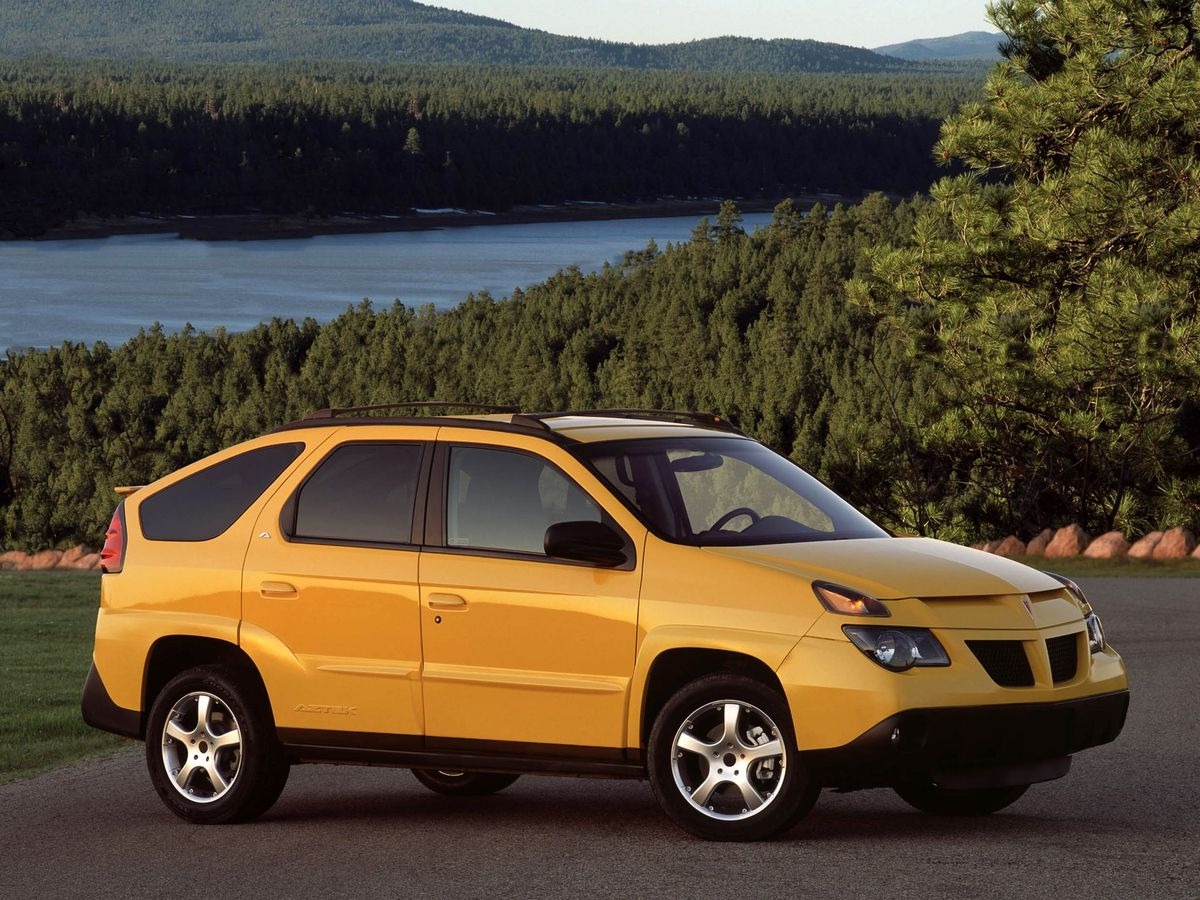
The Aztek is included as a model that consistently struggles at auction because its story is one of failed innovation and a disconnect between consumer expectations and manufacturer vision.
Even well-kept, low-mileage examples cannot inspire serious bidder competition. Beyond teaching valuable lessons about the dangers of design miscalculation and the limits of pop culture redemption, the Aztek underscores how negative reputation hardens market resistance and solidifies its place as a persistent auction flop.
2. DeLorean DMC-12
The DeLorean DMC-12 famously whisked Michael J. Fox “back to the future,” yet as a collector car, it struggles to translate this fame into genuine value at auction.
Despite its time-traveling credentials and breathtaking stainless steel panels, the DMC-12’s lackluster performance and limited build quality continuously disappoint enthusiasts when it comes time to sell.
Auction results frequently reflect modest prices, rarely exceeding $40,000 to $60,000, a fraction of what its notoriety in film might suggest.
This dissonance highlights a persistent challenge: widespread recognition does not necessarily translate to collector enthusiasm, particularly when mechanical reputation lags behind the headlines.
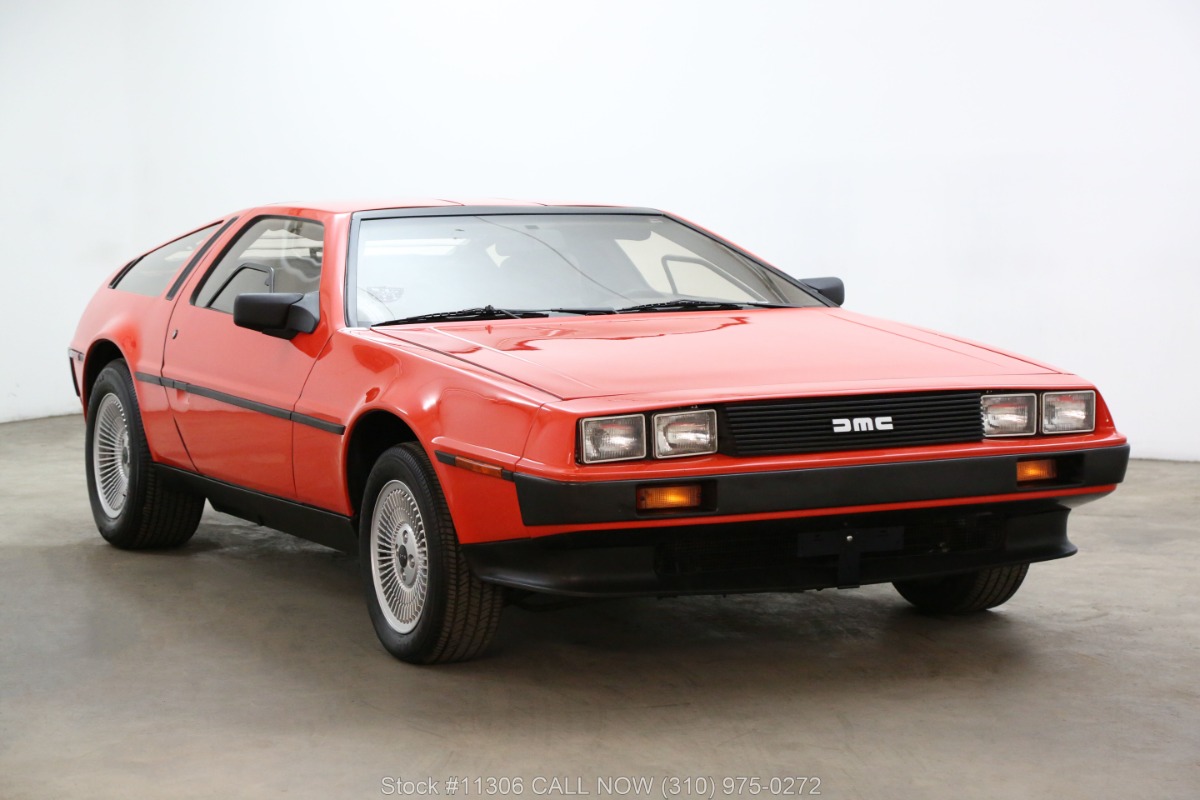
The reason for including the DeLorean DMC-12 as an auction loser is precisely this conundrum. It is a lasting lesson that cultural imprint and nostalgia can only carry a car so far when flaws in engineering and driving enjoyment linger.
Despite near-universal name recognition, bidders tend to view the DMC-12 as more of a novelty purchase than the foundation of a serious collection, contributing to its regular underperformance at auction.
3. Maserati Biturbo
Rarely has a name so consistently disappointed enthusiasts as the Maserati Biturbo. Debuting in the early 1980s, the Biturbo suffered from widespread reliability issues, quality control lapses, and an uninspiring ownership experience.
Even though Maserati’s badge provided a certain cachet, the reality was a succession of breakdowns, recalls, and costly repairs.
At auction, the Biturbo’s reputation results in limited interest even among those seeking an affordable entry point to Italian exotica. Sale prices often hover barely above salvage value, and buyers are largely deterred by the prospect of looming mechanical bills.
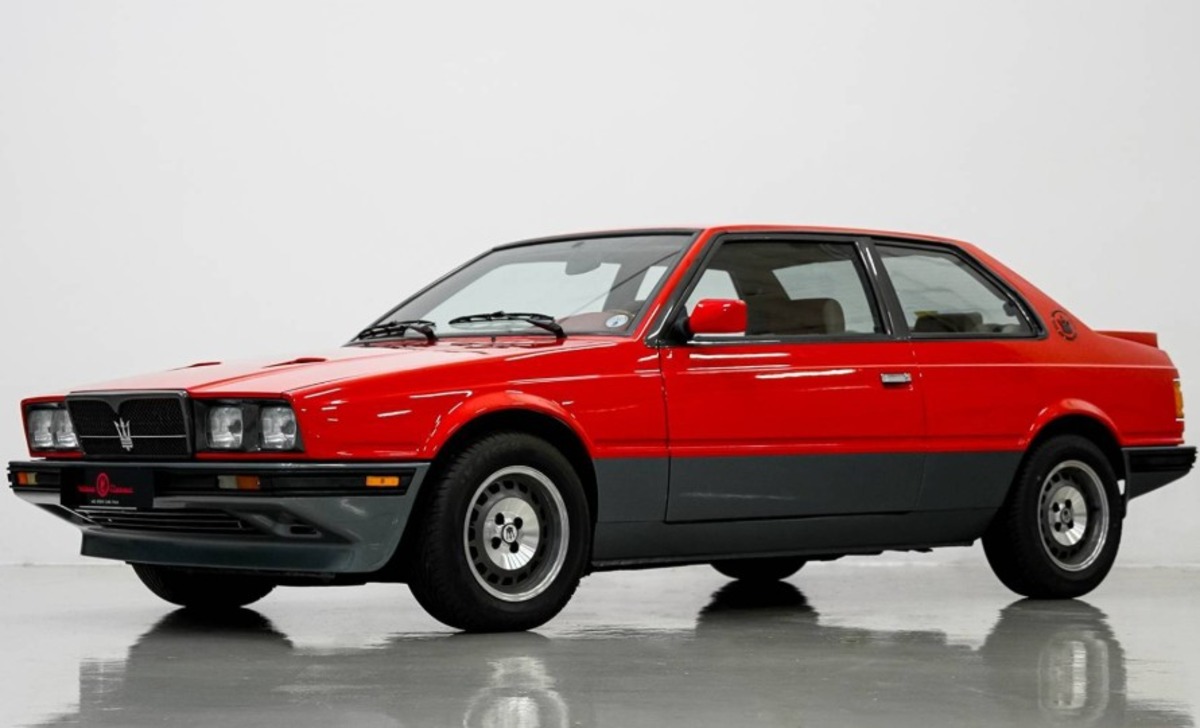
Collectors have not been kind to the Biturbo, and any appreciation in value has not materialized, contributing to tepid bidding and consistent underachievement.
This inclusion serves as a reminder of how flaws in durability and execution can undermine even the most storied brands.
The Biturbo’s story offers a cautionary tale for would-be collectors who prioritize badge over substance and underscores the importance of robust engineering in ensuring long-term auction appeal.
4. Jaguar XJ220
The Jaguar XJ220 was once hailed as the fastest production car on the planet, yet its auction journey has been marked by unfulfilled expectations and persistent disappointment.
Initially conceived as a V12 supercar with advanced all-wheel drive, the production version launched in 1992 featured a V6 engine and rear-wheel drive, leading to widespread buyer dismay and canceled orders.
Auction appearances tend to attract attention, yet hammer prices remain lackluster relative to its supercar status and initial sale price—often far below modern peers or what buyers originally paid in the early ’90s.
Issues with maintenance complexity, limited parts availability, and a reputation marred by the production change further suppress demand among serious collectors.
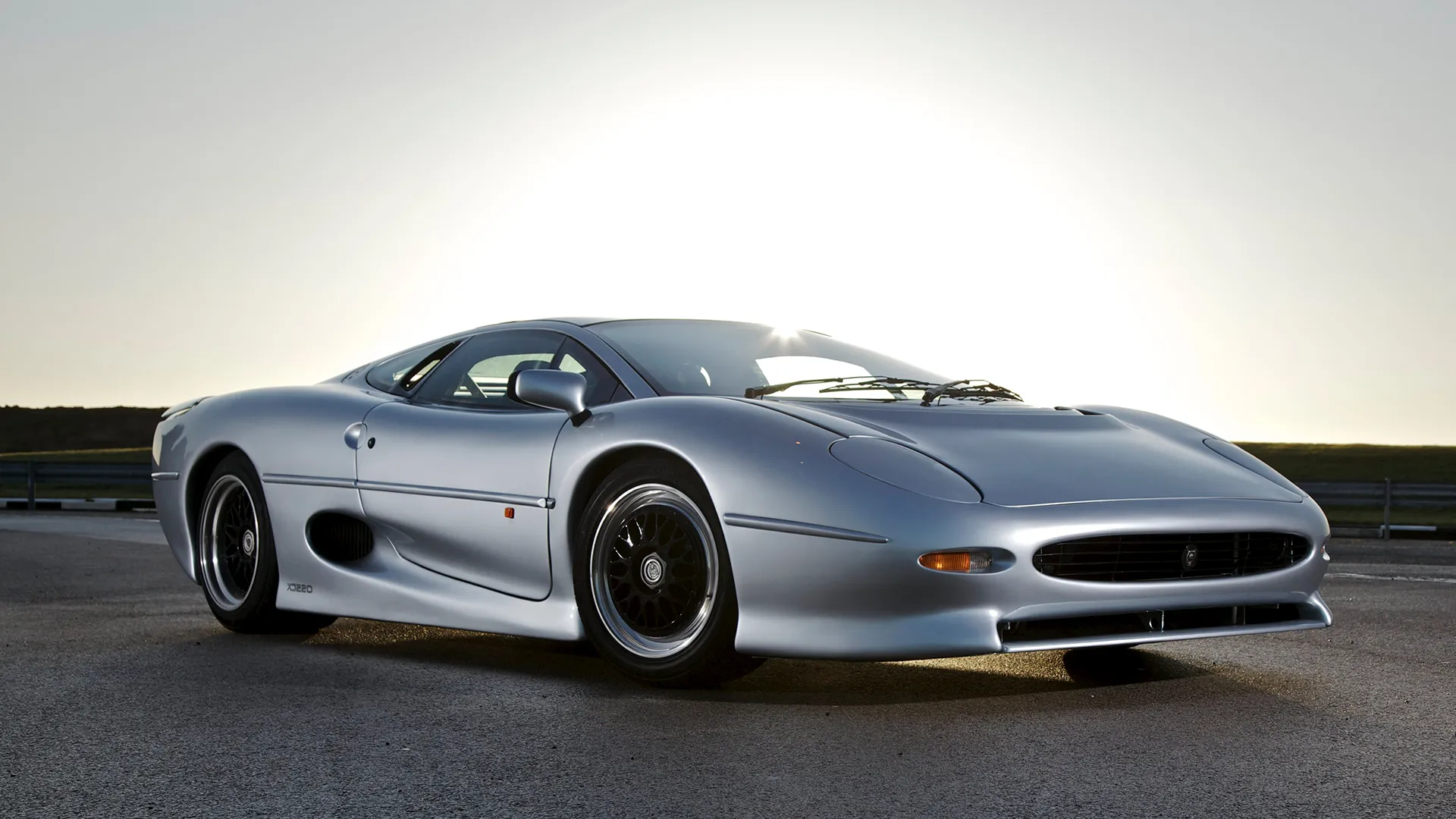
The XJ220 is featured on this list because it perfectly demonstrates how unmet promises and brand missteps can tarnish collector enthusiasm for years, if not decades.
Despite once being a symbol of British supercar ambition, the XJ220’s ongoing struggles at auction reveal how a mismatch between initial hype and delivered product can shape a car’s entire legacy.
5. Chrysler TC by Maserati
The Chrysler TC by Maserati was intended to compete with luxury convertibles while injecting Italian flair into an American chassis.
Produced from 1989 to 1991, the partnership ultimately failed, offering neither the sophistication of a true Maserati nor the broad appeal of a mainstream convertible.
At auction, the TC is usually overlooked, frequently fetching prices only marginally above average used cars, if it sells at all.
The muddled branding, lackluster performance, and confusion about audience prevented the TC from achieving any degree of cult following or collector interest. Stories of quality issues and vague desirability contribute to its forgettable auction presence.
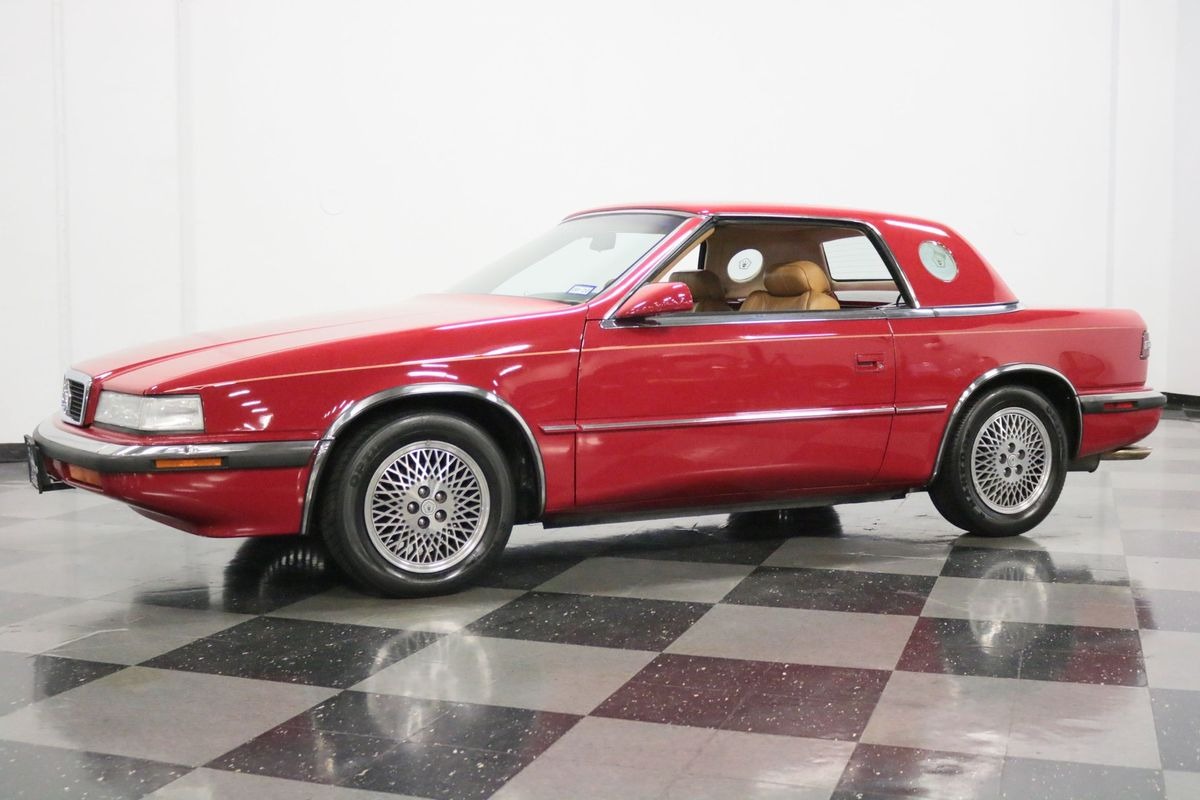
Including the Chrysler TC by Maserati demonstrates how branding experiments that lack clarity or true innovation can backfire spectacularly.
For collectors and buyers attending auctions, the TC remains a symbol of missed opportunity and the hazards of relying on badge engineering over authentic shared strengths.
Its auction woes serve as an object lesson in why genuine synergy between brands is crucial for long-term success and collector viability.
Automotive auctions are arenas where dreams and reality collide, a stage where the legacy of a car is tested not by glossy brochures or marketing slogans, but by the passion and discernment of those who bid.
Examining both celebrated auction stars and consistent auction flops paints a vivid picture of how nuanced, sometimes surprising, and always revealing this automotive marketplace truly is.
The journey through both categories offers far more than a record of hammer prices; it reveals enduring truths about desirability, legacy, engineering excellence, and the shifting sands of taste.
The five auction stars, Ferrari 250 GTO, Mercedes-Benz 300SL Gullwing, Shelby Cobra 427, Porsche 911 Carrera RS 2.7, and Bugatti Type 57SC Atlantic, stand as monuments to what can make a car iconic.
They combine rarity, storied histories, motorsport victories, and emotional resonance with design and craftsmanship that inspire awe decades or even nearly a century after their creation.
They have set benchmarks in auction houses, not simply for their price tags but for the excitement they generate and the reverence they command in halls filled with seasoned collectors.
Their stories serve as proof that greatness is built over time, not through hype but through real achievement, visionary design, and unassailable provenance.
Each auction star reflects how a car becomes more than just transportation; it becomes a repository for nostalgia, aspiration, and culture.
Collectors are drawn to more than performance figures or brand prestige; they seek artifacts that vividly narrate motoring’s greatest moments.
The Ferrari 250 GTO, with its legendary racing exploits, and the Bugatti Type 57SC Atlantic, with its sculptural beauty, embody the heights that thoughtful design, meticulous engineering, and competitive spirit can take a machine.
For those who chase such cars, ownership is as much about stewardship of history as about personal enjoyment or investment.
On the other hand, examining the auction flops is equally instructive. Models like the Pontiac Aztek, DeLorean DMC-12, Maserati Biturbo, Jaguar XJ220, and Chrysler TC by Maserati all started with ambition but fell victim to misreading the market, flaws in execution, or simple overestimation of their long-term allure.
Their presence on the auction stage reminds us that failure often has as much to teach as success.
These vehicles reveal the dangers of design overreach, the lasting impact of flawed engineering, and how quickly reputations built on hype can unravel when faced with the unforgiving scrutiny of auction participants.
Unlike their star counterparts, auction flops rarely acquire redemption with time. Even when pop culture attaches some novelty value, as with the DeLorean DMC-12, the underlying issues remain too significant to grant them higher status or sustained demand.
For car enthusiasts and buyers, understanding these failures offers valuable lessons in what not to prioritize—style over substance, badge over quality, or novelty over usability.
The contrast between these two sets of cars reveals several broader truths. Authenticity, consistency, and tangible accomplishment matter.
Collectors reward cars that represent the best of automotive ambition, seen in engineering breakthroughs, wins on legendary tracks, and aesthetic milestones that stand the test of time.
Conversely, the market penalizes anything that feels forced, unfinished, or unearned. Ambitious projects that stumble on execution, overpromise and underdeliver, or simply misjudge their place in automotive history find little mercy under the bright lights of the auction stage.
As car culture evolves, new models and brands will inevitably try for stardom or, perhaps, fall into the same pitfalls as those that went before. Yet the lessons remain constant.
The collector car world is not a static museum but a vibrant, ever-shifting marketplace shaped just as much by collective memory, emotional connection, and engineering integrity as by numbers on a production sheet.
For enthusiasts, investors, and dreamers alike, understanding the reasons behind auction success or failure enriches appreciation for cars not just as objects, but as living expressions of human creativity, aspirations, and sometimes, our capacity for missteps.
In the end, auctions do far more than set prices, they write and rewrite the stories of automotive history.
They elevate true legends while exposing pretenders. For anyone fascinated by the dance of desire, nostalgia, and investment that defines the car world, the lessons to be found amid the gavel strikes and bidding wars are as enduring as the cars themselves.
Also Read: 5 Timeless Designs vs 5 That Feel Obsolete Quickly
