The auto industry constantly evolves, with new technologies, design trends, and safety standards prompting automakers to retire even well-loved models.
But just because a car has been discontinued doesn’t mean it has lost its value. In fact, some discontinued vehicles offer exceptional reliability, performance, or uniqueness that modern models struggle to match and often at a lower price.
Whether you’re looking for a dependable daily driver, a weekend cruiser, or a hidden gem to add to your collection, these 10 discontinued models are still well worth seeking out.
1. Toyota FJ Cruiser (2007–2014)
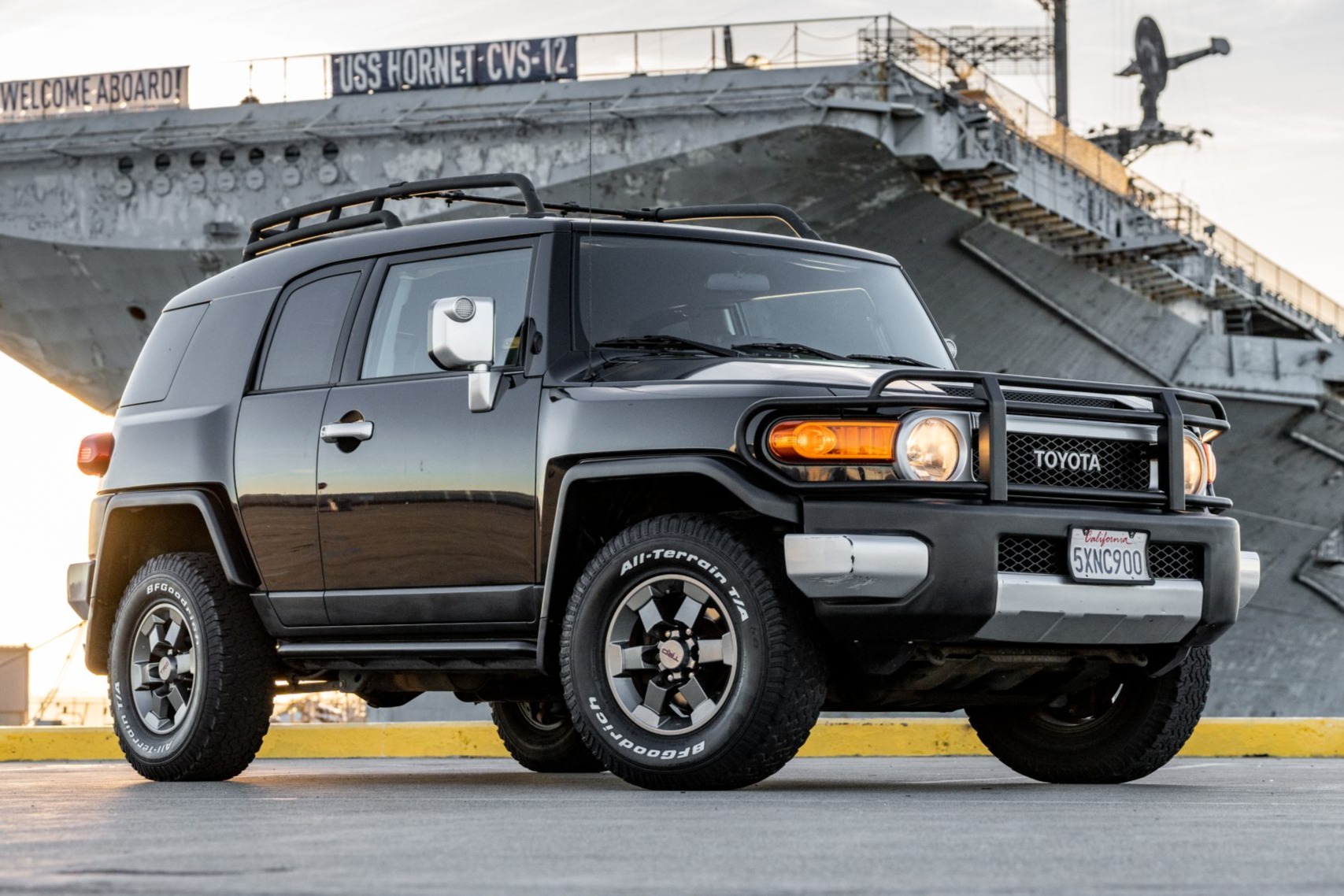
The Toyota FJ Cruiser may have been polarizing in terms of design, but off-road enthusiasts saw it for what it really was: a capable, reliable, and rugged 4×4.
Based on the same platform as the Toyota Land Cruiser Prado, the FJ was essentially a modernized classic, with a bulletproof 4.0-liter V6, retro styling, and Toyota’s famed reliability.
Despite its short production run, the FJ Cruiser retains strong resale value and has become something of a cult classic for good reason.
The FJ Cruiser has a long heritage, with “FJ” serving as the Land Cruiser’s internal code name for more than 50 years. Toyota boldly states that the 2007 version is “the most distinctive and capable 4×4 in the Toyota lineup.” This is a strong claim, considering Toyota also builds the current Land Cruiser and 4Runner, both of which are excellent off-roaders.
Drawing inspiration from the legendary FJ40 of decades past, the 2007 Toyota FJ Cruiser incorporates several classic design cues, including its compact dimensions and aggressive approach and departure angles. However, unlike the rugged workhorses of old, this modern version packs more power under the hood along with the contemporary features that today’s consumers expect.
While the FJ Cruiser’s styling is unmistakably retro, its mechanical components are thoroughly modern. Buyers can choose from several drive configurations, including a “Pre-Runner” style two-wheel-drive version and two four-wheel-drive variants.
Every model is equipped with Toyota’s proven DOHC 4.0-liter V6 engine, which is also used across many of the brand’s other trucks.
Transmission options include a five-speed automatic or a six-speed manual. Four-wheel-drive models feature low-range gearing, a locking center differential, and a traction-control system with a brake-based electronic differential lock. For those seeking maximum capability, a mechanically locking rear differential is available as an option.
The 2007 Toyota FJ Cruiser successfully honors its legendary predecessors with exceptional off-road ability while significantly improving comfort and amenities.
Few shoppers are likely to compare the old and new models directly, but the 2007 FJ Cruiser competes closely with rivals like the Hummer H3, Jeep Wrangler Unlimited, and Nissan Xterra. Among these, the Xterra offers a slight edge in on-road performance and versatility, yet its conservative styling falls short of the FJ’s bold, retro appeal.
For buyers seeking an affordable SUV that delivers standout style, strong performance, and serious off-road capability, the new FJ Cruiser is an excellent choice.
Also Read: 10 Best Car Models That Improved in New Generations
2. Honda Element (2003–2011)
The Honda Element was ahead of its time a boxy, modular SUV aimed at active lifestyles, complete with clamshell doors, water-resistant floors, and a spacious interior.
Both interpretations perfectly capture the essence of the 2009 Honda Element, a compact crossover SUV that offers a back-to-basics approach to this vehicle segment.
Since its debut in 2003, the Element’s tall and uniquely funky body has become a familiar sight, especially in areas where outdoor activities dominate. Despite its age, this quirky yet highly functional cube on wheels continues to attract those who value practicality and youthful energy, regardless of their age.
Although the 2009 Honda Element remains a strong contender for buyers seeking a versatile compact utility vehicle, there are other noteworthy options in this category. Those interested in a similarly funky alternative may find the less expensive Scion xB appealing.
For shoppers who prefer more traditional designs with easier rear-seat access and greater seating capacity, models like the Toyota RAV4, Subaru Forester, or Honda’s own CR-V might be a better fit.
One trade-off with the Element is its powertrain, it only offers a naturally aspirated four-cylinder engine, while many rivals come with stronger engine options. Nevertheless, the Element delivers impressive versatility, making it a solid choice for those willing to accept its compromises.
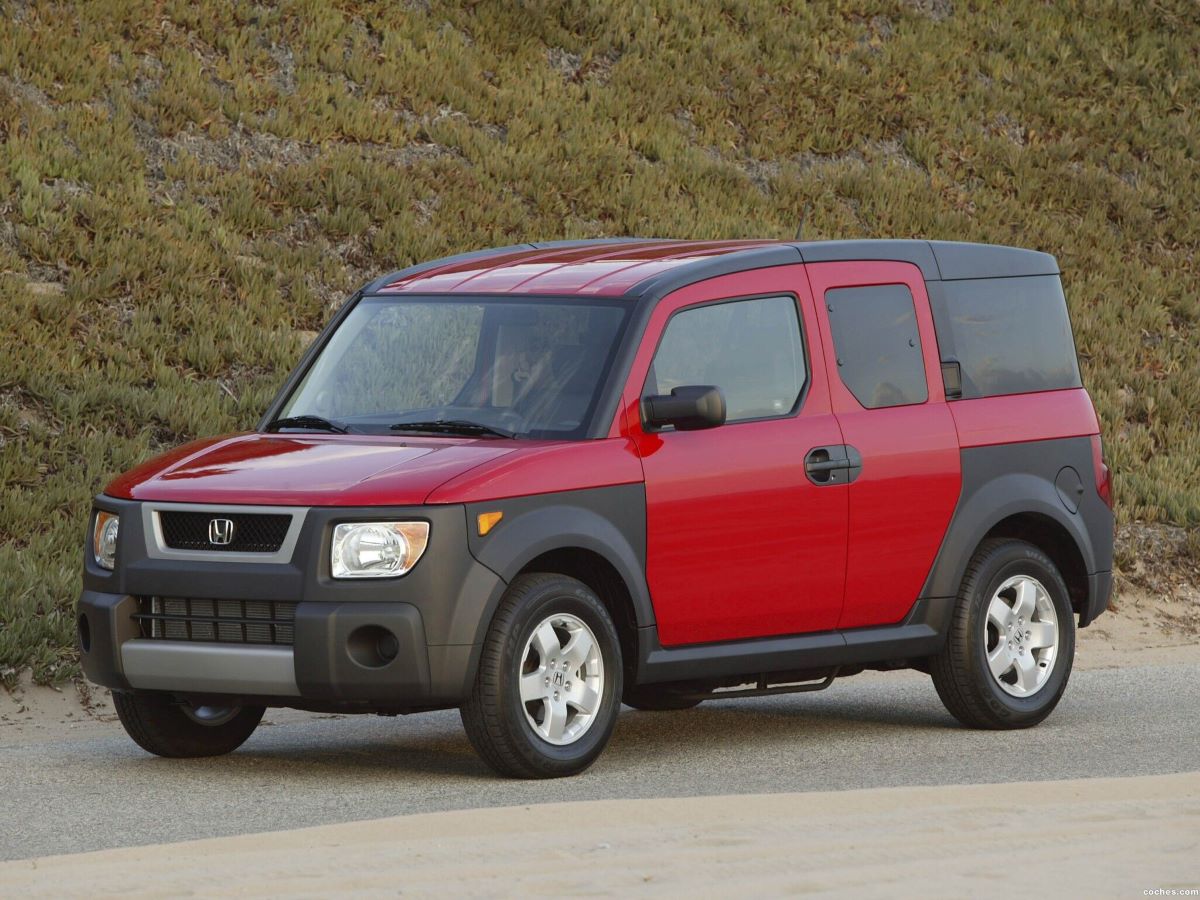
It wasn’t the prettiest thing on the road, but it was insanely practical, easy to maintain, and built on Honda’s CR-V platform, ensuring long-term reliability.
As a used car, it’s ideal for dog owners, campers, or DIYers who need flexibility and durability.
3. Chevrolet SS (2014–2017)
If you’re a driving enthusiast, the Chevrolet SS is a hidden gem. This Australian-imported sports sedan packed a 6.2-liter V8 under the hood, rear-wheel drive, and magnetic ride control all disguised in the shell of an unassuming four-door family car.
Only around 12,000 units were sold in the U.S., making it a rare find. It’s basically a Corvette with back seats, and that’s no exaggeration.
To clarify, the SS is not simply a slightly revised G8 GXP, even though both vehicles are rebadged versions of the Holden Commodore from GM’s Australian division.
The SS is built on the current-generation Commodore VF platform, while the G8 was derived from the previous-generation Commodore VE. This distinction gives the SS a smoother, albeit to some eyes more generic, exterior design, along with an updated interior featuring significantly improved materials and a standard 8-inch touchscreen interface.
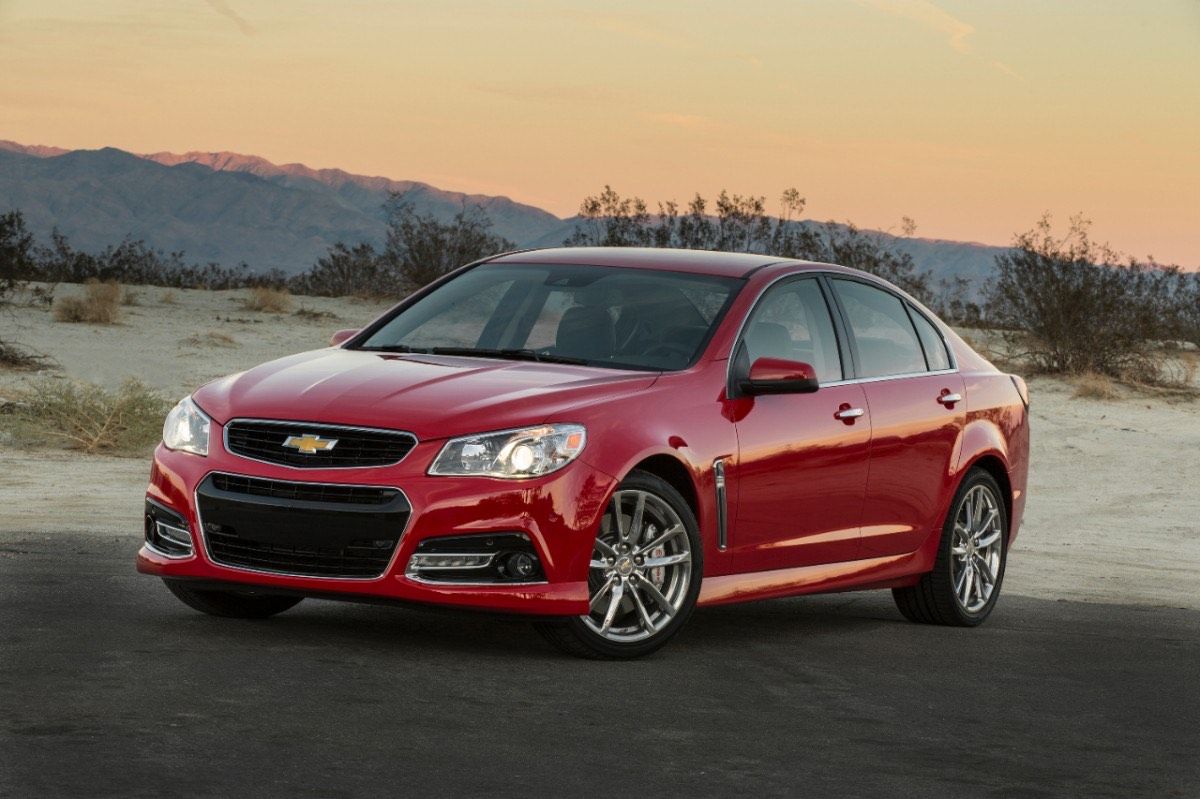
The same 6.2-liter V8 engine carries over, now producing an additional 13 horsepower for the SS. Considering this engine was also standard in the previous-generation Corvette, it’s more of a bragging right than any point of criticism.
On the road, the 2015 SS proves to be far more than just an old-school muscle car, despite what its specifications may suggest. While it can effortlessly shred tires with burnouts, it also delivers handling precision that rivals European sports sedans.
This capability is enhanced in the 2015 model by the newly standard Magnetic Ride Control suspension, which offers three selectable driving modes to balance cornering agility with smooth ride comfort. The previous year’s fixed suspension leaned heavily toward performance, so this year’s more forgiving ride represents a notable upgrade.
4. Ford Flex (2009–2019)
Don’t let its quirky, wagon-like design fool you the Ford Flex is one of the most underrated family haulers ever made.
With three rows of seating, tons of cargo space, and an available twin-turbo EcoBoost V6, the Flex offers SUV utility with car-like handling.
Its boxy shape makes for easy packing and excellent visibility, and its discontinuation in 2019 has only made it more desirable among fans of practical family vehicles.
Power for the Ford Flex continues to be provided by two engine choices. The standard 3.5-liter V6 delivers 287 horsepower and 254 pound-feet of torque, offering performance that is competitive within the traditional three-row SUV category.
For those seeking additional power, the optional turbocharged engine boosts output to an impressive 365 horsepower and 350 pound-feet of torque, making the Flex stand out in its segment.
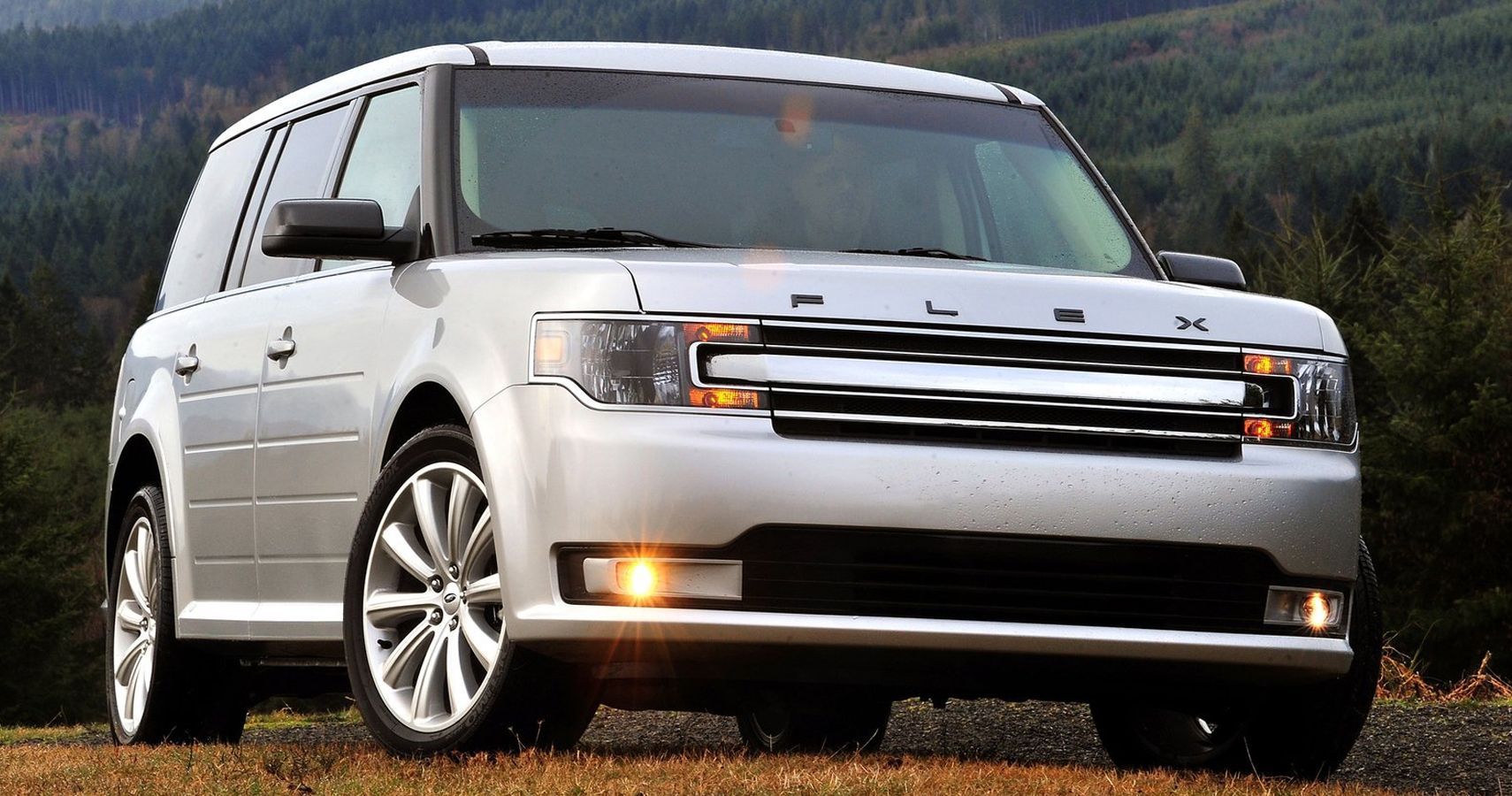
Inside, the Flex comfortably seats seven passengers, and with the ability to fold down the seatbacks as needed, it easily transitions to accommodate large amounts of cargo.
When equipped with the turbocharged engine, the Flex also offers a robust towing capacity of 4,500 pounds. Adding to its practicality, the SUV’s low ride height and expansive windows ensure excellent visibility and an open, airy feel for everyone on board.
However, if cutting-edge design is high on your list of priorities, the Flex may not meet your expectations. Its fuel economy trails behind many of its competitors, which have made significant improvements in efficiency over the years.
While advanced driver safety features are available, they are reserved exclusively for the highest trim level. Additionally, although the interior is highly functional, it lacks the modern styling and upscale materials that define many newer vehicles in the market.
Also Read: Top 10 Cars With Fuel-Saving Tech That Stay Reliable
5. Pontiac G8 (2008–2009)
The Pontiac G8 lived a tragically short life due to the brand’s untimely demise during GM’s 2009 restructuring. But under the hood, it shared DNA with Australian muscle cars think of it as the predecessor to the Chevrolet SS.
The G8 GT and especially the GXP, which featured a 6.2-liter LS3 V8, were full-blown performance sedans with aggressive styling and sharp handling. It’s a modern muscle car that deserves a second look.
The Pontiac G8 is built on GM’s global Zeta platform, originally developed by GM’s Australian subsidiary, Holden, for its Commodore sedan. This same platform also serves as the foundation for the 2009 Chevrolet Camaro.
While the Commodore and G8 share most of their mechanical components, the Pontiac stands out with a more cohesive exterior design that skillfully integrates the brand’s traditional performance-oriented styling without going overboard.
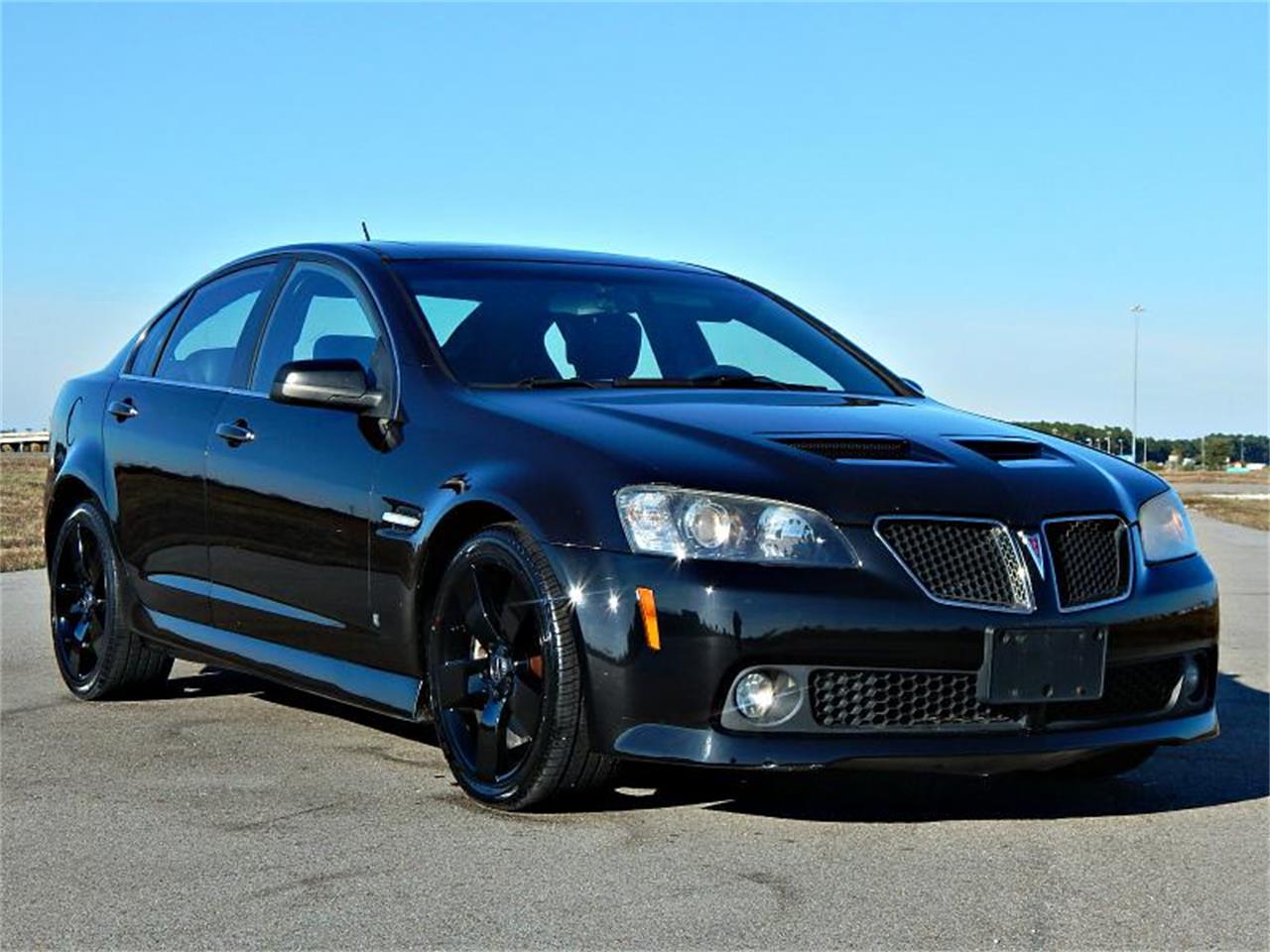
Sharing its roots with the highly regarded Commodore is no small feat, as that model has earned a strong reputation in Australia for blending speed, handling, and spaciousness at an attractive price. After time spent behind the wheel, it’s clear that the G8 has successfully inherited these traits without compromise.
The 2008 Pontiac G8 is sure to capture the hearts of performance enthusiasts, delivering on the brand’s long-standing promise of “driving excitement.”
Given its competitive pricing, sophisticated performance, and scarcity of direct rivals—the Dodge Charger and Chrysler 300 being the only other roomy, rear-wheel-drive, full-size performance sedans at a similar price—the G8 deserves serious attention.
However, as a pure family sedan, it does have its compromises. The wide center tunnel, necessary for the transmission and driveshaft, highlights why front-wheel drive continues to dominate when it comes to maximizing interior space.
6. Mazda RX-8 (2004–2011)
Rotary engines may be unconventional, but they have a loyal following and the Mazda RX-8 made the most of it.
Known for its high-revving 1.3-liter rotary engine and nearly perfect 50:50 weight distribution, the RX-8 was a joy to drive on twisty roads.
It also had rear-hinged half doors, offering surprisingly good access to the back seats. Yes, it requires more maintenance than a typical Mazda, but for driving enthusiasts, the payoff is worth it.
With the 2007 Mazda RX-8, the traditional boundaries between a sports car and a sport coupe become blurred. Sports cars are usually low to the ground, sleekly styled, and built to seat only two adults, with any rear seat serving primarily as extra cargo space or a spot for small children.
Sport coupes, on the other hand, are typically larger and designed to seat four or five full-size passengers. The RX-8 successfully merges the strengths of both categories, it’s a genuine sports car that can comfortably seat four adults.
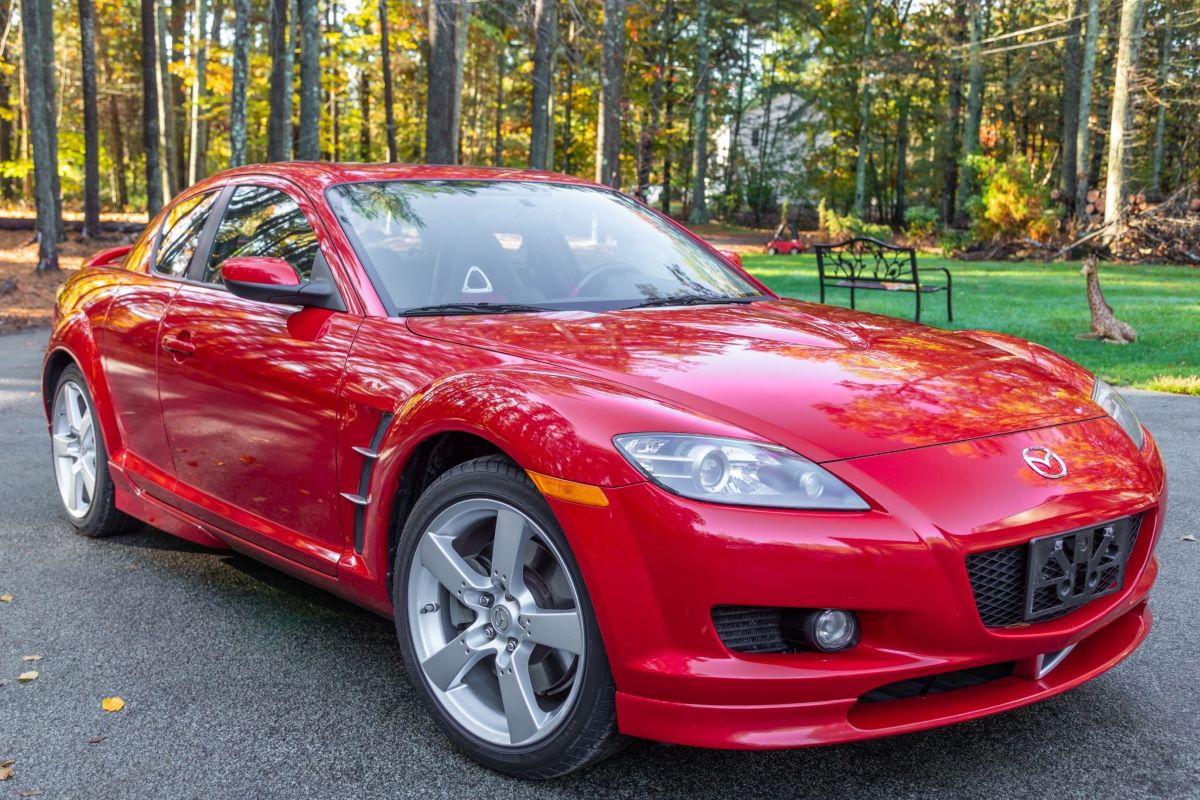
Adding to its uniqueness, it features a pair of pillar-less, rear-hinged doors that make accessing the surprisingly spacious backseat effortless. To top it off, the RX-8 holds the distinction of being the only production car in the world powered by a rotary engine.
The rotary engine has fascinated automotive enthusiasts for decades, and for good reason. It offers several advantages over a traditional piston engine, including high output from small displacement, the RX-8’s 1.3-liter rotary generates an impressive 232 horsepower, lighter overall weight, and fewer moving parts.
This compact and lightweight design allowed Mazda engineers to position the engine in an optimal location, resulting in a perfect 50/50 weight distribution between the front and rear wheels
. This balance, combined with a low center of gravity and a low hood line, not only enhances aerodynamics but also contributes to the RX-8’s sporty appearance. Weighing in at about 3,000 pounds, the RX-8 is 300–400 pounds lighter than most of its rivals.
Dynamically, it excels at delivering an exceptional blend of handling precision and ride comfort. However, despite its engineering brilliance, the rotary engine does have drawbacks—namely poor fuel efficiency and a torque peak that arrives high in the rev range.
7. Acura TSX Wagon (2011–2014)
Wagons never quite caught on in the U.S. like they did in Europe, which is a shame because the Acura TSX Sport Wagon is one of the best.
Combining the sharp handling of the TSX sedan with extra cargo space and Honda’s legendary reliability, the TSX Wagon is perfect for anyone who wants utility without resorting to an SUV. It’s also relatively rare, which adds to its appeal among savvy shoppers.
The 2012 Acura TSX remains one of Acura’s top-selling models thanks to its blend of sharp styling, engaging performance, upscale features, and excellent value.
Strengthening its position in the segment is the addition of the sport wagon, a recent introduction that broadens the TSX’s appeal. Buyers can choose between a 201-horsepower 2.4-liter four-cylinder engine or a more powerful 280-horsepower 3.5-liter V6, the same engine found in the higher-priced Acura TL.
The V6 version, in particular, serves as an ideal entry-level luxury option for young professionals looking to eventually move further into the luxury market.
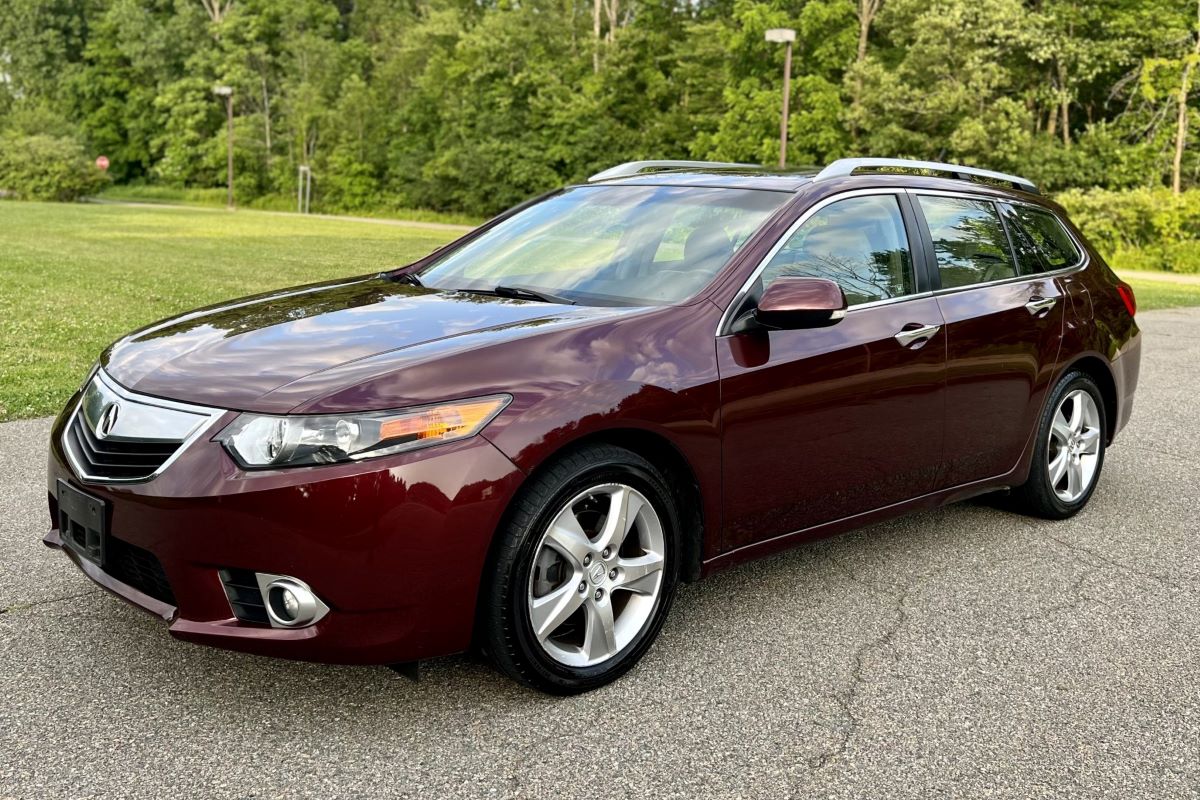
Built on the European Honda Accord platform, the TSX comfortably accommodates five passengers in its front-wheel-drive layout. For 2012, the sport wagon’s cargo space increases by 5.7 cubic feet, offering an impressive total of 66.2 cubic feet.
Enhancing its sporty character, a new package introduced this year brings unique interior upgrades, including distinctive red stitching on the seats, steering wheel, and shift knob.
Aluminum foot pedals further emphasize its athletic edge, complemented by silver-plated paddle shifters mounted on the steering wheel. Completing the look, a black headliner gives the cabin a more refined and polished appearance.
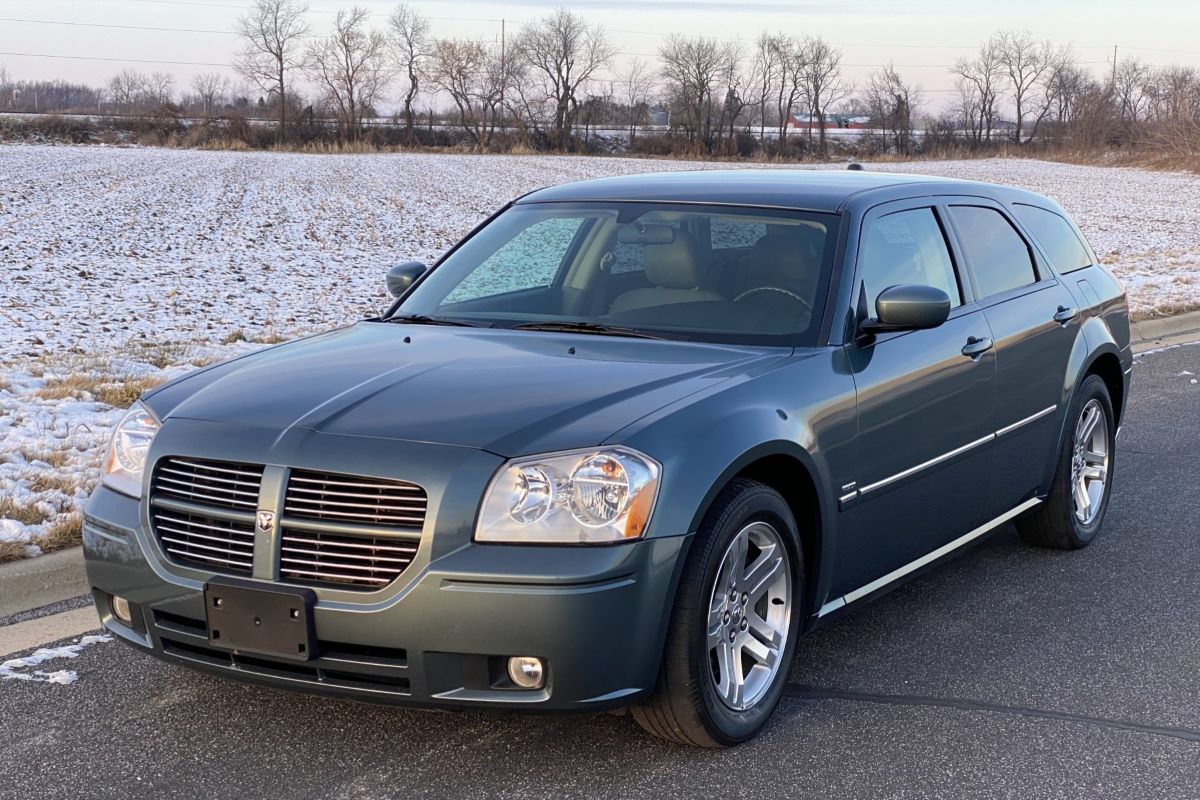
8. Dodge Magnum (2005–2008)
Before SUVs fully took over the American landscape, Dodge offered something a little different: the Magnum, a muscle wagon with attitude.
With the same chassis as the Chrysler 300 and available HEMI V8 power, the Magnum was both practical and powerful. While it wasn’t a huge sales success during its time, today it has a dedicated fanbase, especially the R/T and SRT-8 trims.
At the front, the 2005 Dodge Magnum sports a quad grille reminiscent of the Ram and Durango, yet it avoids looking overly trucklike. Standard 17-inch wheels, or 18-inch wheels with the V8 option, further enhance the Magnum’s commanding presence.
Similar in overall size to a Ford Taurus, the Magnum distinguishes itself with a longer wheelbase, a rear-wheel-drive layout, and components borrowed from the Mercedes E-Class, giving it superior ride and handling characteristics.
This extended wheelbase also provides extra passenger space, allowing the Magnum to lead its class in rear-seat legroom while still offering competitive head-, hip-, and shoulder room. Cargo capacity, however, is somewhat restricted to 27.8 cubic feet due to the wagon’s sloping roofline.
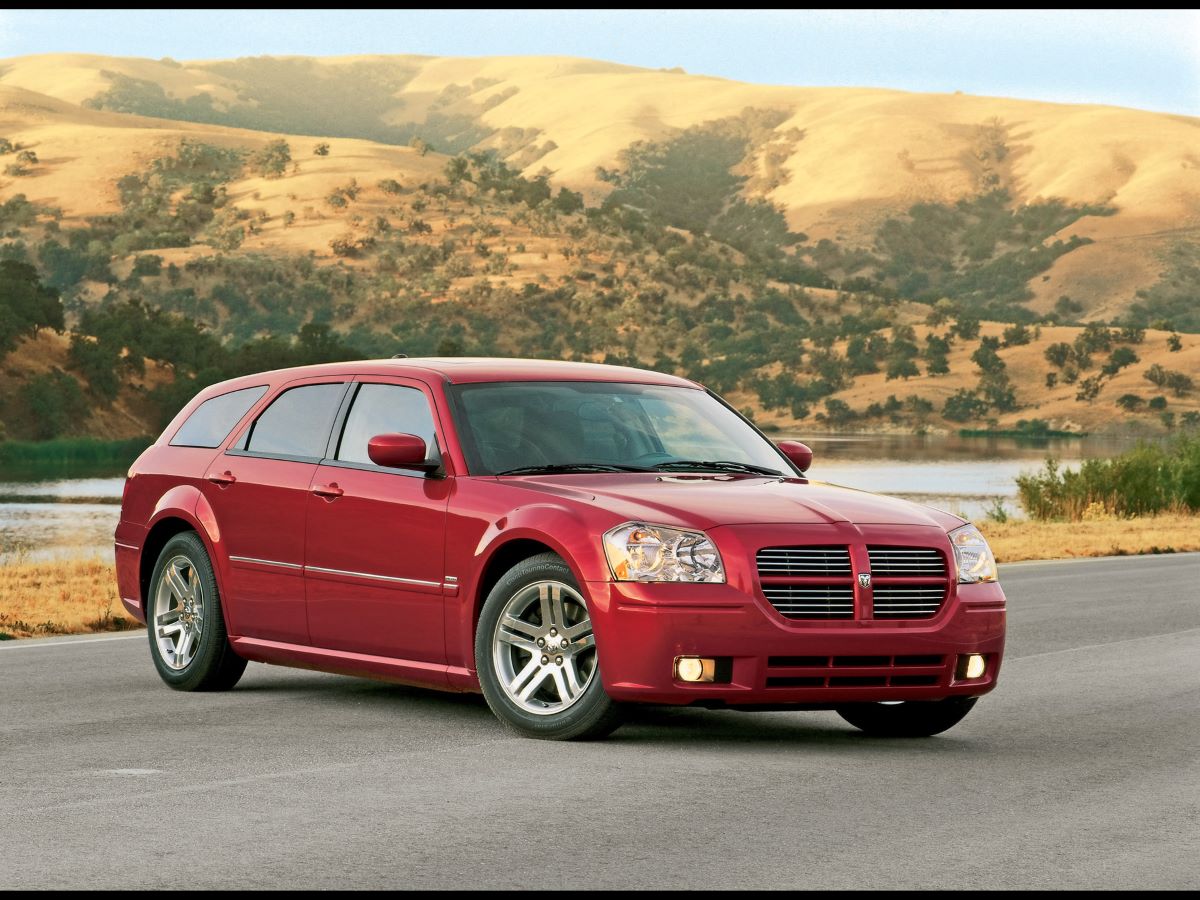
Under the hood, buyers have three engine choices: a 200-horsepower 2.7-liter V6, a 250-hp 3.5-liter V6, and, for those craving more performance, a 340-hp 5.7-liter V8.
With the Magnum’s base weight tipping the scales at 3,800 pounds, the Hemi V8 stands out as the most compelling option, although the 3.5-liter V6 is sufficient for most drivers.
Opting for the V8 also brings a five-speed automatic transmission, while the other engines pair with a four-speed automatic. To manage fuel consumption, the V8 utilizes Chrysler’s Multi Displacement System, which deactivates four cylinders during light driving conditions.
Inside, the Magnum’s cabin features a stylish two-tone design accented by faux brushed aluminum. White-faced gauges, each recessed in its own pod, emphasize the wagon’s sporty personality.
Available options include advanced safety features such as stability control, side curtain airbags, and self-sealing tires, along with a premium Boston Acoustics sound system for an enhanced audio experience. For buyers in colder regions, all-wheel drive becomes available starting in the fall of 2004.
9. Saturn Sky (2007–2010)
Saturn’s short-lived roadster, the Sky, was a breath of fresh air in a brand better known for bland commuter cars.
Sharing a platform with the Pontiac Solstice, the Sky Red Line variant featured a turbocharged 2.0-liter four-cylinder engine with rear-wheel drive, making it a genuine alternative to the Mazda MX-5 Miata.
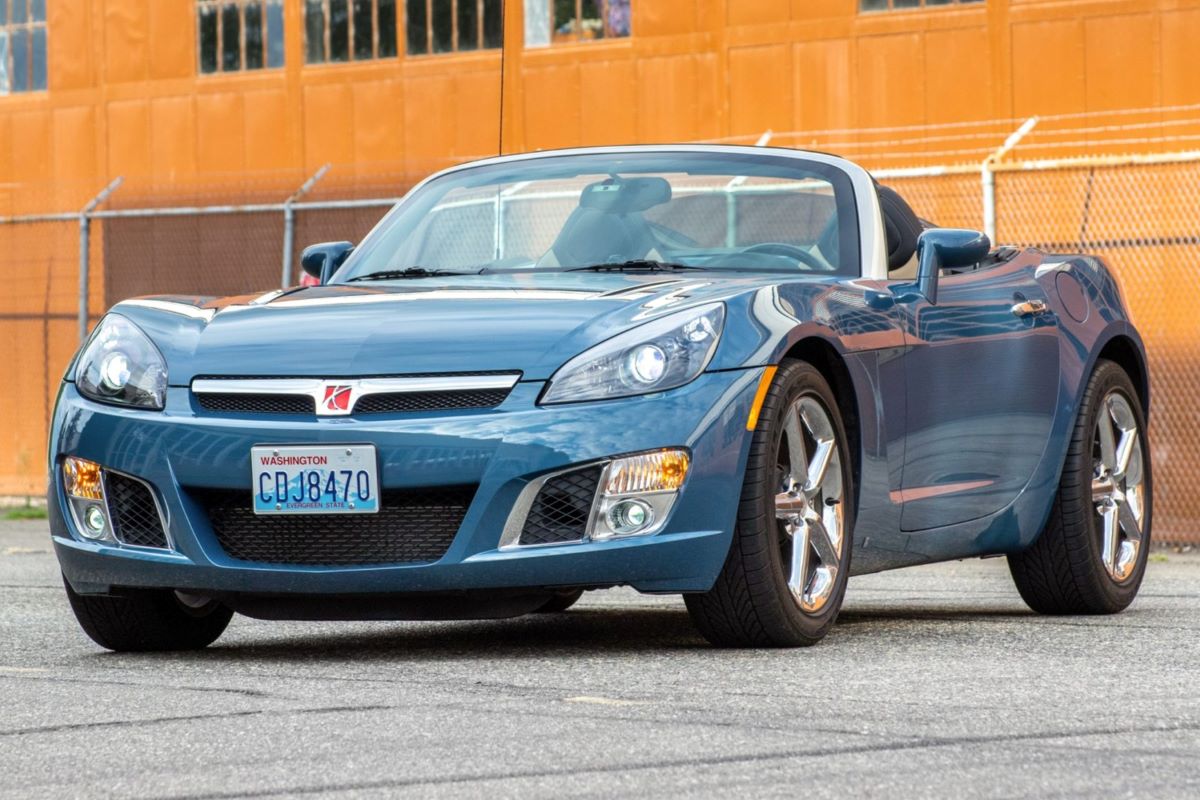
The Sky’s unique styling and rarity make it an attractive option for those looking for a fun, affordable convertible.
The actual planet Saturn is composed of molecular hydrogen, battered by 1,120 mph winds, surrounded by at least 62 moons, and encircled by its iconic icy rings.
The 2008 Saturn Sky, on the other hand, is defined by its classic roadster proportions, 18-inch wheels, attractive pricing, and an optional 260-horsepower turbocharged engine.
While the two share nothing in common beyond the name, they both possess an undeniable ability to capture attention with their striking looks, something the Sky manages effortlessly, without the aid of a telescope.
Although its mechanical sibling, the Pontiac Solstice, has generated plenty of excitement since its release, the Saturn Sky takes a slightly different approach. With a design that’s more refined and less flashy, the Sky looks less like a toy and more like a serious sports car.
10. Volkswagen Phaeton (2004–2006)
This one’s for luxury aficionados. The Volkswagen Phaeton was VW’s audacious attempt to compete with Mercedes-Benz and BMW.
It shared a platform with the Bentley Continental and could be had with a W12 engine yes, a twelve-cylinder.
While sales were disappointing due to its high price and VW badge, the Phaeton was overengineered in the best way possible. Today, it offers top-tier luxury for a fraction of its original cost if you can find one in good shape.
The 2005 Volkswagen Phaeton starts at $66,950 and brings a blend of luxury and performance to the sedan segment. Measuring 203.7 inches in length, 74.9 inches in width, and 57.1 inches in height, it offers a commanding presence on the road.
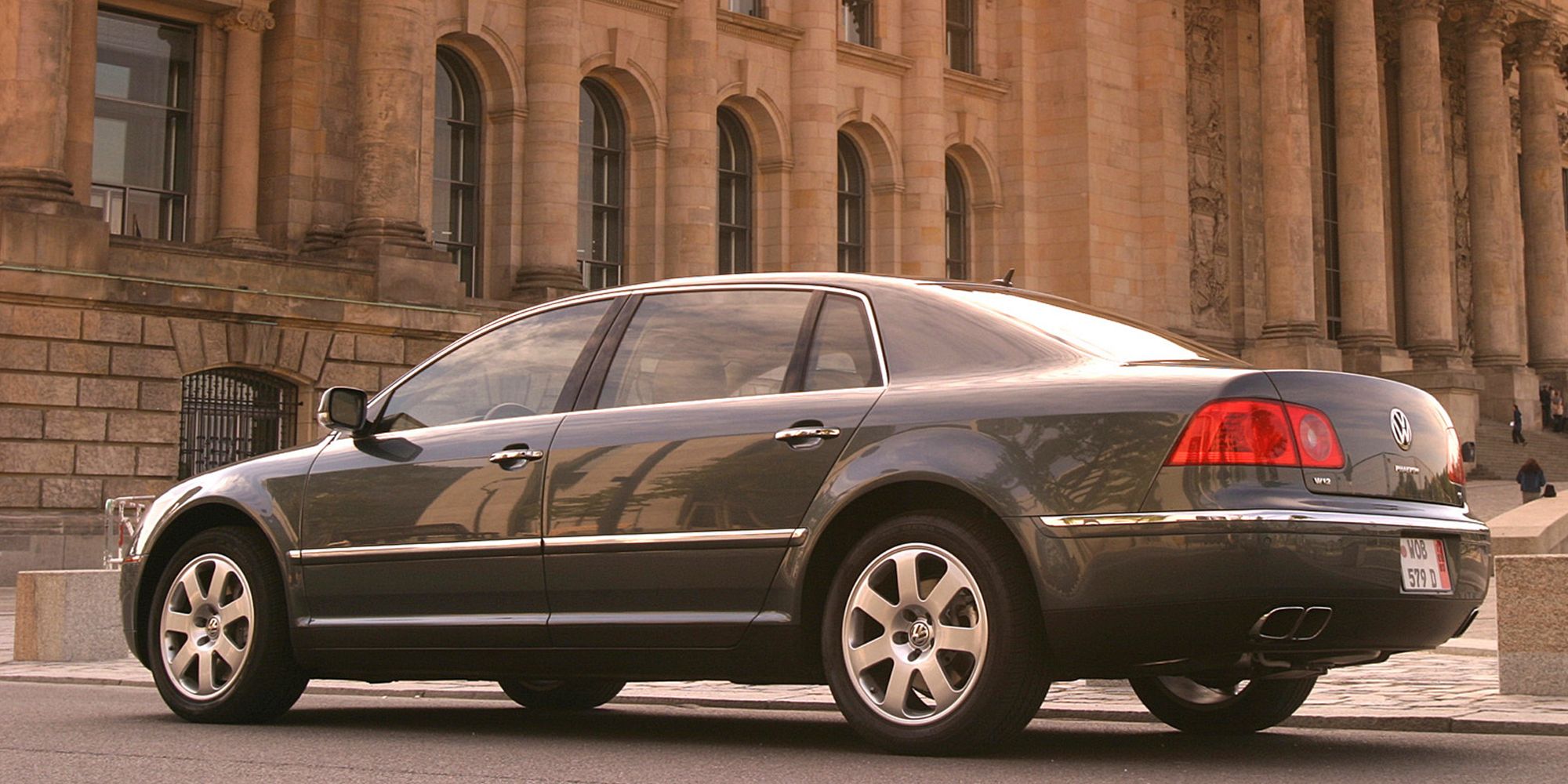
Although the wheelbase is unspecified, the interior is designed to comfortably seat four passengers, with generous dimensions such as 37.2 inches of front headroom, 38.1 inches of rear headroom, 41.7 inches of front legroom, and an impressive 43.1 inches of rear legroom. Shoulder room is also ample, offering 59.6 inches up front and 57.8 inches in the rear. Cargo capacity stands at 13.0 cubic feet.
Under the hood, the Phaeton is powered by a 4.2-liter V8 engine producing 335 horsepower at 6,500 rpm and 317 lb-ft of torque at 3,500 rpm. This engine is paired with an automatic transmission, driving all four wheels through an all-wheel-drive system.
Weighing in at 5,194 pounds, the sedan delivers a solid, stable ride. Fuel efficiency is rated at 16 mpg in the city and 22 mpg on the highway, requiring premium unleaded fuel.
While certain specifications like ground clearance, towing capacity, GVWR, payload capacity, and driving range are not provided, the Phaeton remains a high-end luxury sedan with a strong focus on comfort, power, and refinement.
Discontinued cars are often dismissed as relics of the past, but many still hold significant value, whether for their driving dynamics, reliability, or unique character.
With proper maintenance, these vehicles can serve as fantastic daily drivers, weekend toys, or collector’s items.
If you’re willing to hunt around and do your research, one of these models might just be the hidden treasure you didn’t know you needed.