
For decades, American automakers were often seen playing catch-up to their European and Japanese counterparts in categories like refinement, technology, and efficiency.
However, 2025 marks a significant turning point. Quietly but confidently, several American models have emerged as not only competitive but in many cases superior to their import rivals.
From muscle sedans to electric SUVs and practical crossovers, here are 10 American cars that outshine the imports in 2025.
1. Chevrolet Corvette E-Ray
While brands like Porsche and BMW offer hybrid sports cars with big price tags, the 2025 Corvette E-Ray delivers electrified performance without the six-figure cost.
Its combination of a naturally aspirated V8 and front-mounted electric motor produces blistering acceleration and all-weather capability.
With a sub-3-second 0-60 time and a price under $110,000, it outperforms many exotic European hybrids costing twice as much.
The E-Ray’s groundbreaking hybrid system blends a 6.2-liter V-8 from the Stingray, making 495 horsepower, with a 160-hp electric motor driving the front wheels.
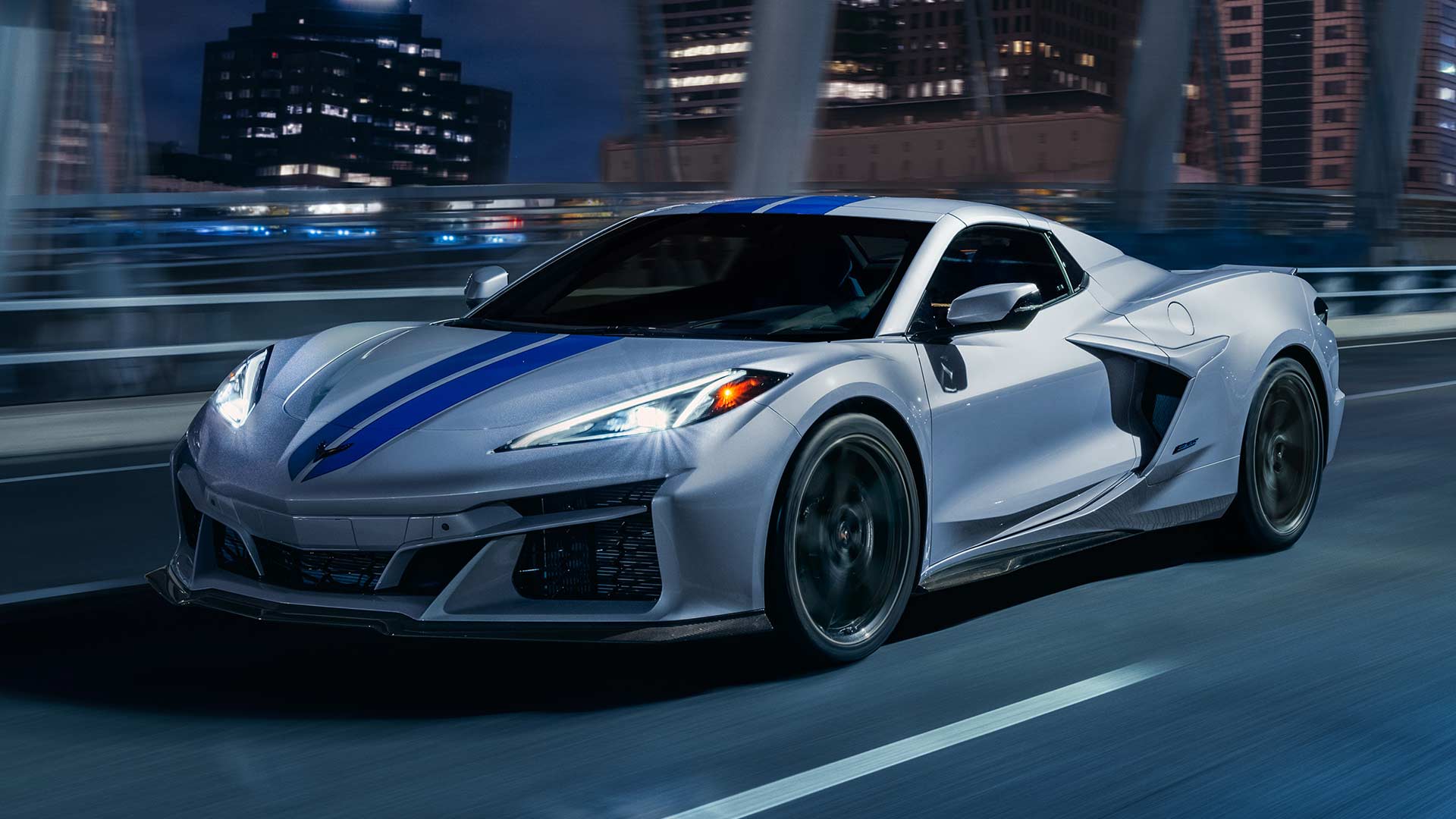
Together, they generate a formidable 655 horsepower sent to all four wheels through an eight-speed dual-clutch automatic. A compact 1.1-kWh battery allows for electric-only driving at speeds up to 45 mph in Chevy’s Stealth mode, perfect for sneaking around quietly over short distances.
Chevrolet emphasizes the benefits of all-wheel drive in winter conditions and backs it up by fitting the E-Ray with high-performance all-season tires as standard. Summer tires remain optional, and our test car came equipped with them.
Despite the added weight of the hybrid components, the E-Ray’s cornering prowess is nothing short of heroic, with the extra mass barely noticeable from behind the wheel on curvy roads.
Like the Stingray, it excels as both an everyday cruiser and a precision instrument for carving through twisty backroads. We proved its dual nature by letting it loose at Lightning Lap 2024.
Also Read: 10 Best Used Diesel Pickups That Go 300,000 Miles Or More
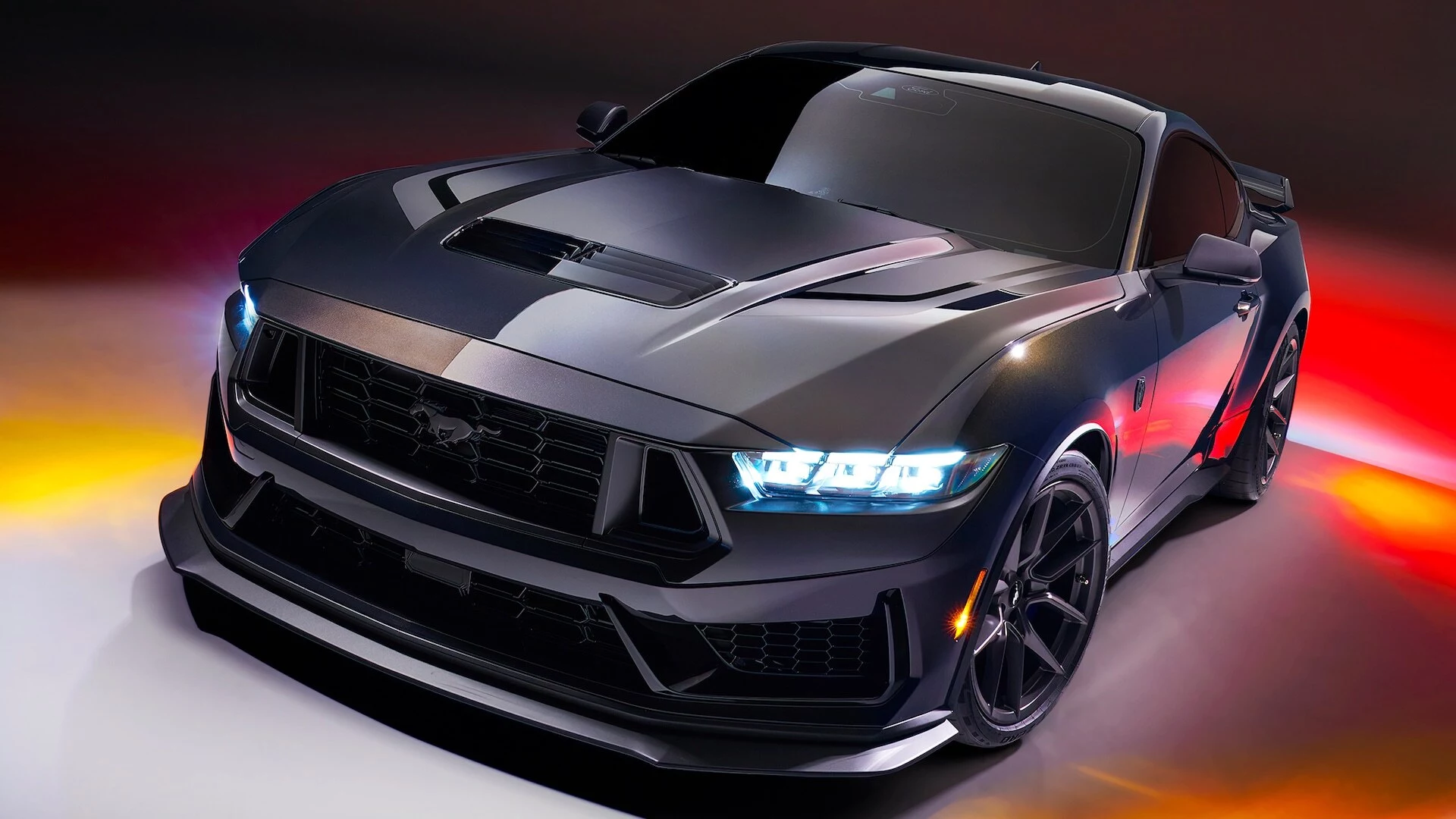
2. Ford Mustang Dark Horse
The 2025 Mustang Dark Horse isn’t just a throwback V8 pony car. It’s engineered with serious track capability, featuring adaptive suspension, Brembo brakes, and a 500-hp Coyote V8 that rivals BMW’s M2 in raw feel and performance.
While imports lean into turbocharged four-cylinders, the Mustang stays true to its heritage while evolving dynamically.
With the departure of the Dodge Challenger and Chevrolet Camaro, the Ford Mustang now stands alone as the last true muscle car on the market. Buyers can still choose between the turbocharged four-cylinder or the iconic 5.0-liter V8, with a wide range of trims to suit nearly every type of driver.
For 2025, Ford takes things to another level by introducing the Mustang GTD. This new variant borrows heavily from the Mustang GT3 race car, packing it with track-focused hardware such as a pushrod-actuated suspension, adjustable dampers, and a rear transaxle, a design that integrates the transmission and rear differential into a single compact unit.
To top it off, the GTD comes equipped with a blistering, supercharged 5.2-liter V8 that cranks out over 800 horsepower, making it an absolute monster on the racetrack.
3. Cadillac CT5-V Blackwing
Germany may dominate the luxury performance sedan segment, but the CT5-V Blackwing makes a powerful argument for buying American.
With a 668-hp supercharged V8 and a six-speed manual option, it’s a rare breed that balances old-school muscle with modern chassis refinement.
It undercuts the BMW M5 and Audi RS7 in price while offering visceral thrills they increasingly lack.
Modeled after the legendary German performance sedans, the CT5-V Blackwing delivers top-tier acceleration and handling while keeping its appearance refreshingly understated.
While it may not match its competitors in terms of refinement or sophistication, it compensates with an available manual transmission and an unmatched ability to thrill its driver in any setting. The Blackwing remains the most exhilarating Cadillac to drive in the brand’s history, and the updates for 2025 only make it more desirable.
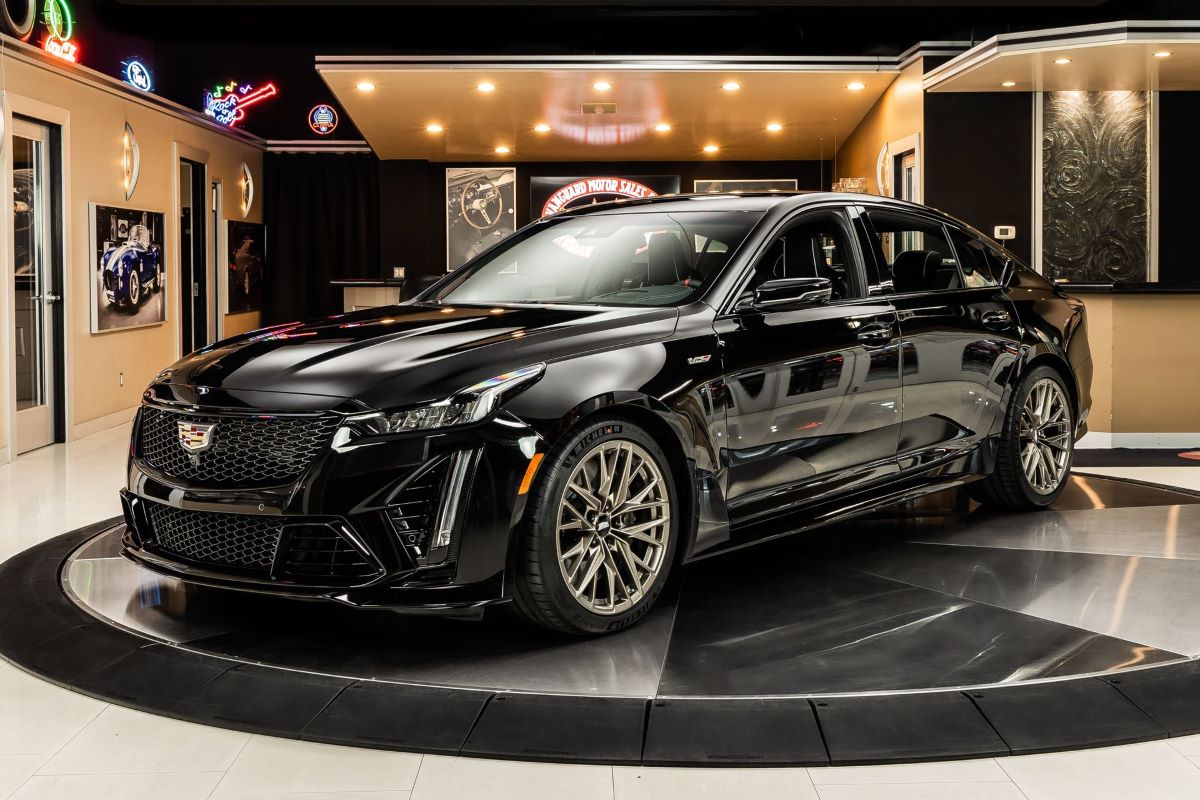
Cadillac has wisely preserved the core elements that make the Blackwing special, carrying over the hardware from the previous model year. However, the 2025 model introduces a new Precision package that enhances suspension, steering, and braking components, all engineered specifically for track use.
The exterior has also been refreshed, with a redesigned front end that abandons the old conservative styling for a more aggressive, head-turning look. Buyers can now opt for new carbon-fiber accents, ensuring the Blackwing commands attention even when parked at the valet.
Inside, Cadillac elevates the experience with a new 33-inch display that integrates digital instrumentation, a fresh Google-based infotainment system, and an improved optional performance data recorder—features that push the Blackwing’s cabin firmly into the modern era.
4. Tesla Model 3 Performance
Despite fierce competition from Hyundai, Kia, and Polestar, the 2025 Tesla Model 3 Performance remains the benchmark in its class.
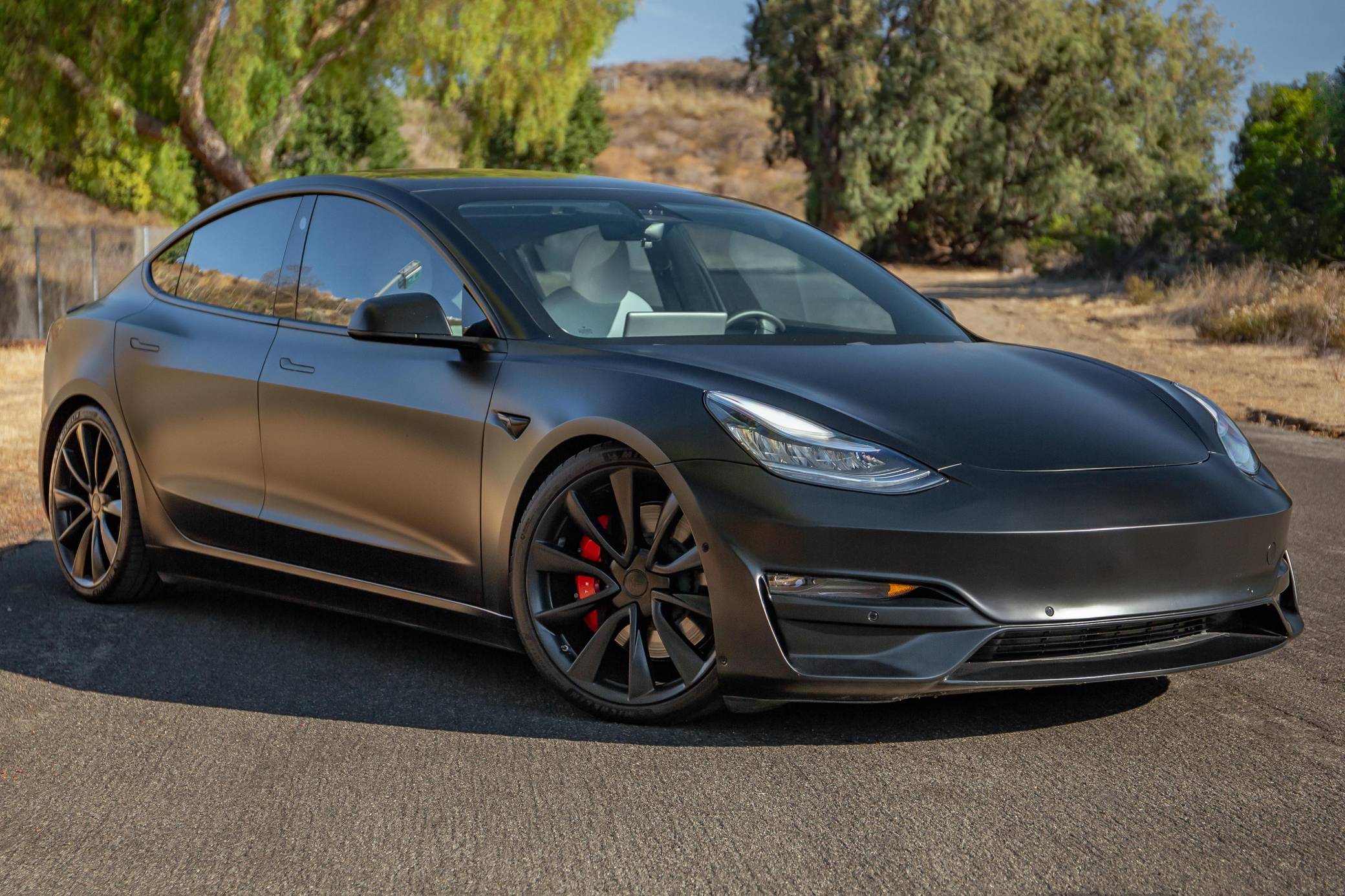
Recent updates include sharper styling, a more refined interior, and even better range. With over 500 hp, a 0-60 time near 2.9 seconds, and unmatched Supercharger access, it’s still the best all-around value in the segment.
Blistering acceleration has always been a hallmark of Tesla’s performance-focused models, and the latest Model 3 Performance keeps that tradition alive. Dual motors drive all four wheels, producing a combined 510 horsepower and 554 pound-feet of torque.
With a relatively light curb weight of 4046 pounds, this car rockets to 60 mph in a supercar-like 2.8 seconds and clears the quarter-mile in just 11.0 seconds at 125 mph. By the time you’ve registered the speed limit, chances are you’ve already doubled it.
Adding to the excitement, the acceleration punches you in the gut like a sack of bricks. MAs for the new adaptive dampers, they never fully relax. Even in their softest setting, the suspension keeps the car flat in corners without being overly harsh, yet it doesn’t quite reach the level of comfort offered by the single-motor Long Range version.
Some editors felt that while the steering and suspension are competent, they lack the confidence-inspiring feel found in rivals like the Porsche Taycan, giving the Model 3 Performance a somewhat clinical edge to its sporty demeanor.
Still, the M3P proves itself a capable handler. Equipped with Pirelli P Zero PZ4 summer tires, it posted a respectable 0.92 g on our skidpad. Its braking performance also won over the team, with strong stops requiring 163 feet from 70 mph and 338 feet from 100 mph.
Also Read: 5 American Engines That Outlast Imports and 5 That Reinforce Stereotypes
5. Jeep Grand Cherokee 4xe
Plug-in hybrids from Toyota and Volvo might be more efficient, but few can match the 2025 Jeep Grand Cherokee 4xe’s off-road chops.
It blends a 25-mile electric range with true 4×4 ability and trail-rated performance. For U.S. drivers who need luxury, utility, and capability, the Grand Cherokee quietly beats many soft-roaders from overseas.
The Grand Cherokee 4xe shares a nearly identical hybrid powertrain with the 2021 Jeep Wrangler 4xe. At the core is a turbocharged 2.0-liter four-cylinder engine producing 270 horsepower and 279 pound-feet of torque, working in tandem with two electric motors.
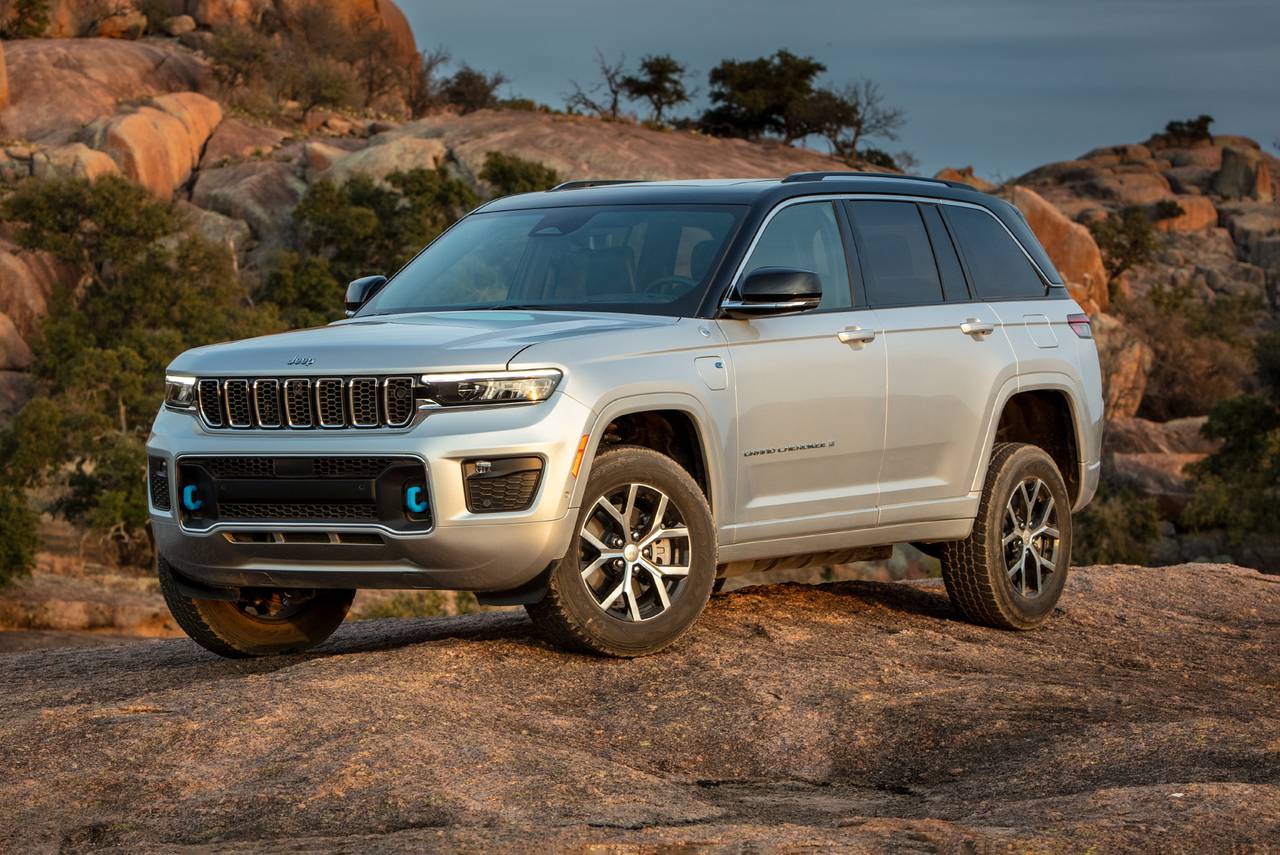
The first is a motor/generator replacing the traditional alternator, delivering 44 horsepower and 39 pound-feet of torque. The second, larger motor is mounted directly to the transmission and generates 134 horsepower along with 195 pound-feet of torque. Power is stored in a 17.3-kWh battery pack, of which 14 kWh is usable.
Together, this trio produces a combined output of 375 horsepower and 470 pound-feet of torque—figures that significantly exceed the standard Grand Cherokee’s 3.6-liter V6, which delivers 293 horsepower and 260 pound-feet. Thanks to a firm brake pedal, linear steering, and a composed ride, the Grand Cherokee 4xe carries itself with confidence on the road.
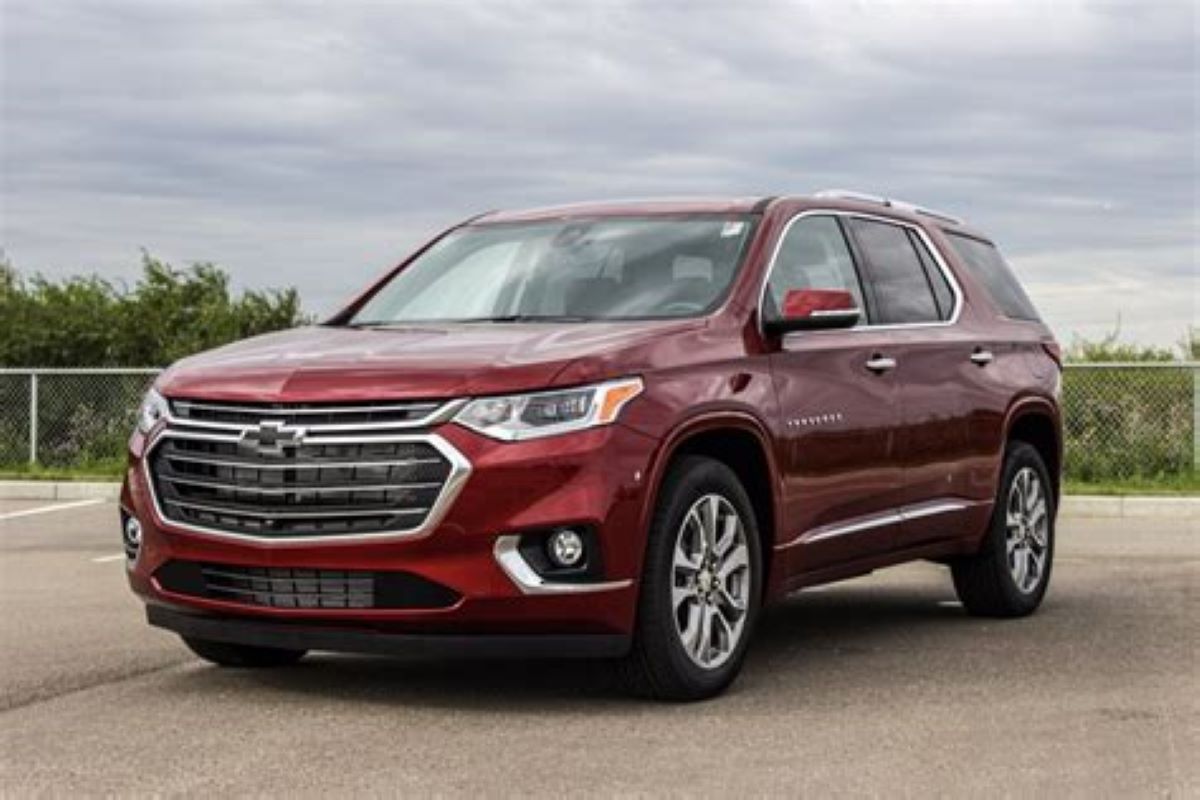
6. Chevrolet Traverse
Redesigned for 2025, the Chevy Traverse takes a bold, truck-inspired approach to the three-row crossover.
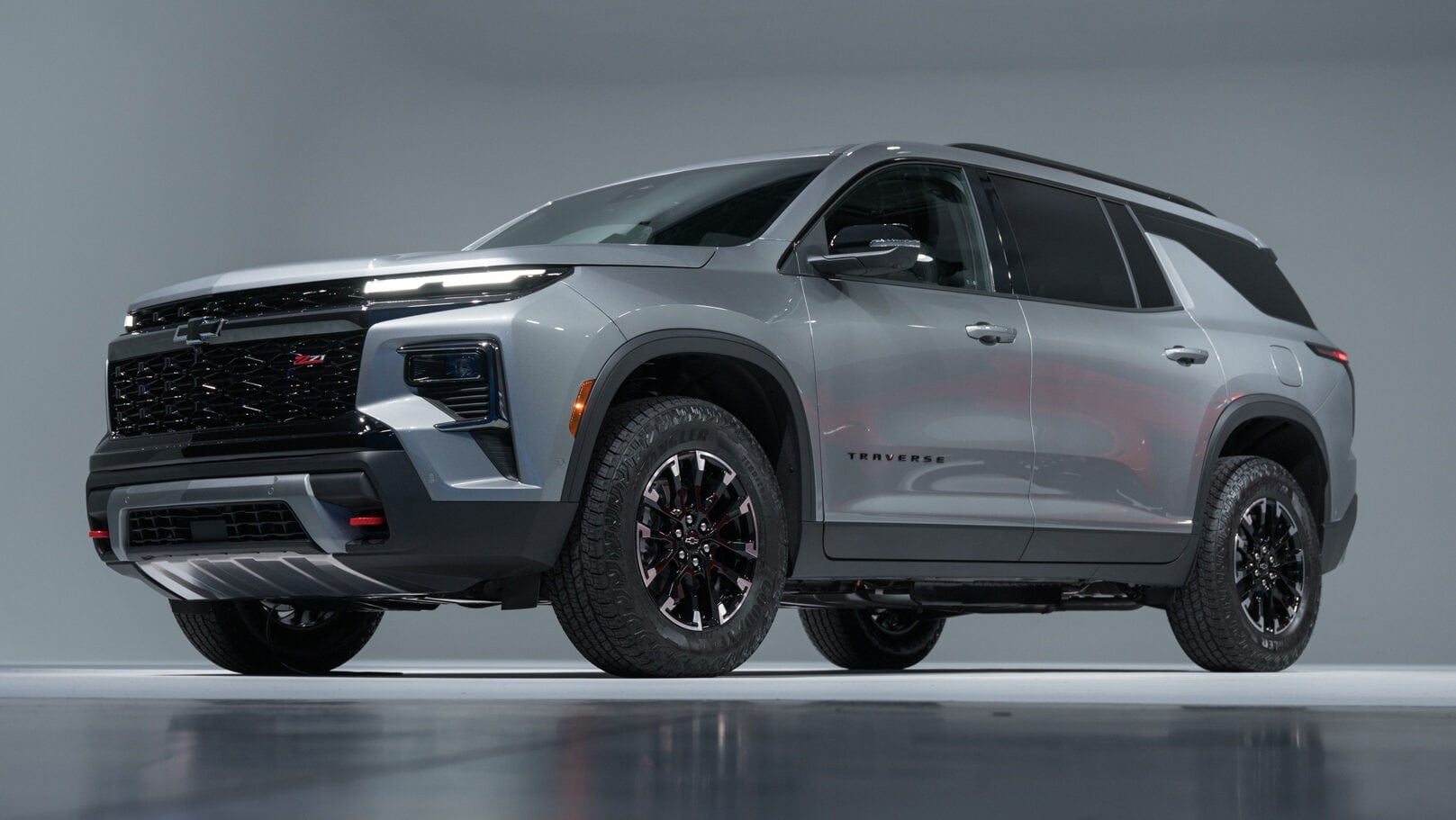
With more interior space, rugged new styling, and GM’s latest safety and infotainment systems, it surpasses stalwarts like the Toyota Highlander and Honda Pilot in cargo room and tech while coming in at a lower price point.
Every Traverse model comes equipped with a turbocharged 2.5-liter four-cylinder engine paired exclusively with an eight-speed automatic transmission.
Front-wheel drive is standard, while all-wheel drive is available as an option. For those seeking greater off-road capability, the upscale Z71 trim steps things up with a twin-clutch all-wheel-drive system, revised suspension damping, all-terrain tires, and terrain-specific driving modes.
During our test drive, the Traverse’s steering left us unimpressed, it feels slow and somewhat truck-like. Although it doesn’t deliver an engaging driving experience, its ride remains comfortable and well-suited for families.
The brake pedal is firm and confidence-inspiring, while the suspension does a commendable job of keeping body roll under control.
Acceleration is adequate, but the throttle response feels a bit sluggish. Push the turbo four hard and it emits some coarse noises and noticeable vibrations. In testing, our all-wheel-drive Traverse reached 60 mph in 7.3 seconds, a slower result than the previous V6-powered model managed.
7. Lucid Air Pure RWD
Lucid may not have the same brand cachet as Mercedes-Benz or BMW, but the 2025 Air Pure RWD proves it deserves a seat at the luxury table.
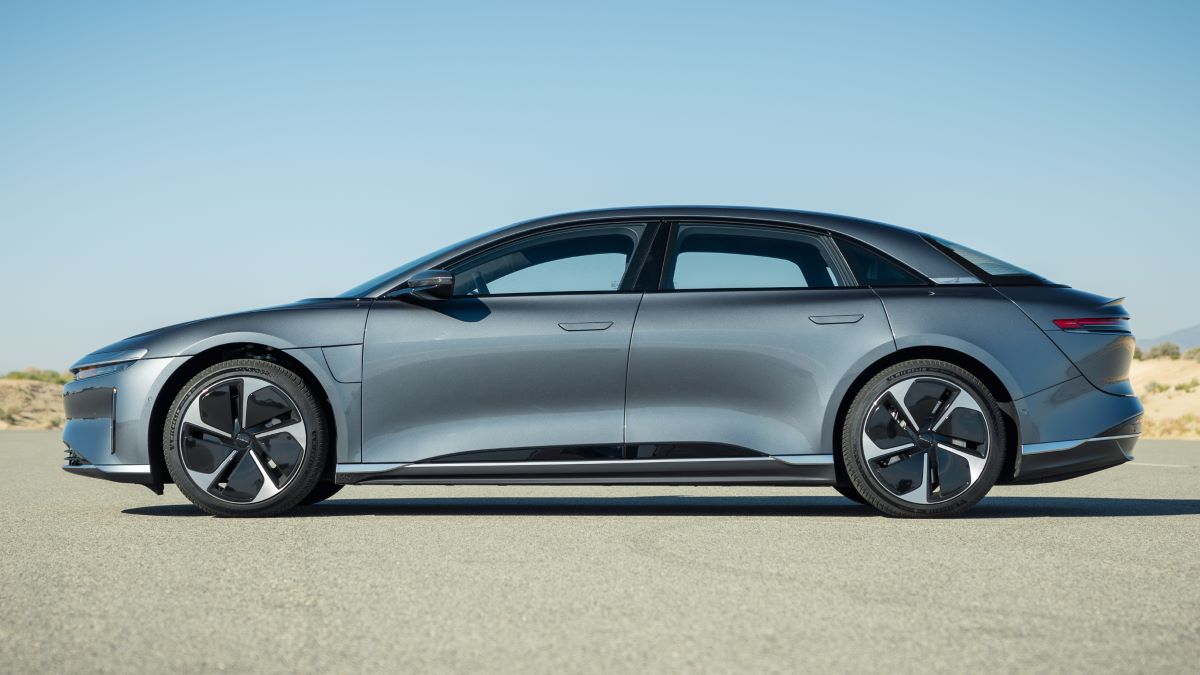
With over 400 miles of range, an airy cabin, and a minimalist design, it’s arguably more forward-thinking than the EQE or i5. Plus, it’s built in Arizona, offering American EV buyers a sleek alternative to imported options.
The 2025 Air is a fully electric luxury sedan from Lucid, a California-based EV manufacturer that entered the market only a few years ago. When it first debuted, the Air fell short of expectations for a luxury sedan, lacking the level of technology and build-quality refinement the segment demands.
Fortunately, Lucid has steadily addressed these shortcomings by lowering the price, adding more features, upgrading its technology, and boosting performance. Build quality has also improved notably as production has ramped up.
For 2025, Lucid takes the Air a step further by introducing additional standard features across all trims, upgrading the infotainment hardware for faster response times, and equipping the Pure and Touring models with an efficiency-enhancing heat pump—a component that was previously exclusive to the Grand Touring and Sapphire versions.
8. Chrysler Pacifica Plug-in Hybrid
While minivans are often overlooked, the Chrysler Pacifica Plug-in Hybrid remains a quiet champion. It offers up to 32 miles of all-electric driving perfect for daily errands and more versatility than most European or Japanese MPVs.
For families, it provides the ultimate mix of fuel savings, space, and convenience, outmatching the Toyota Sienna in real-world flexibility.
Among family minivans, the 2026 Chrysler Pacifica Plug-In Hybrid continues to stand out as the only model capable of driving solely on electric power, an advantage that neither the hybrid Toyota Sienna nor the Kia Carnival can match.
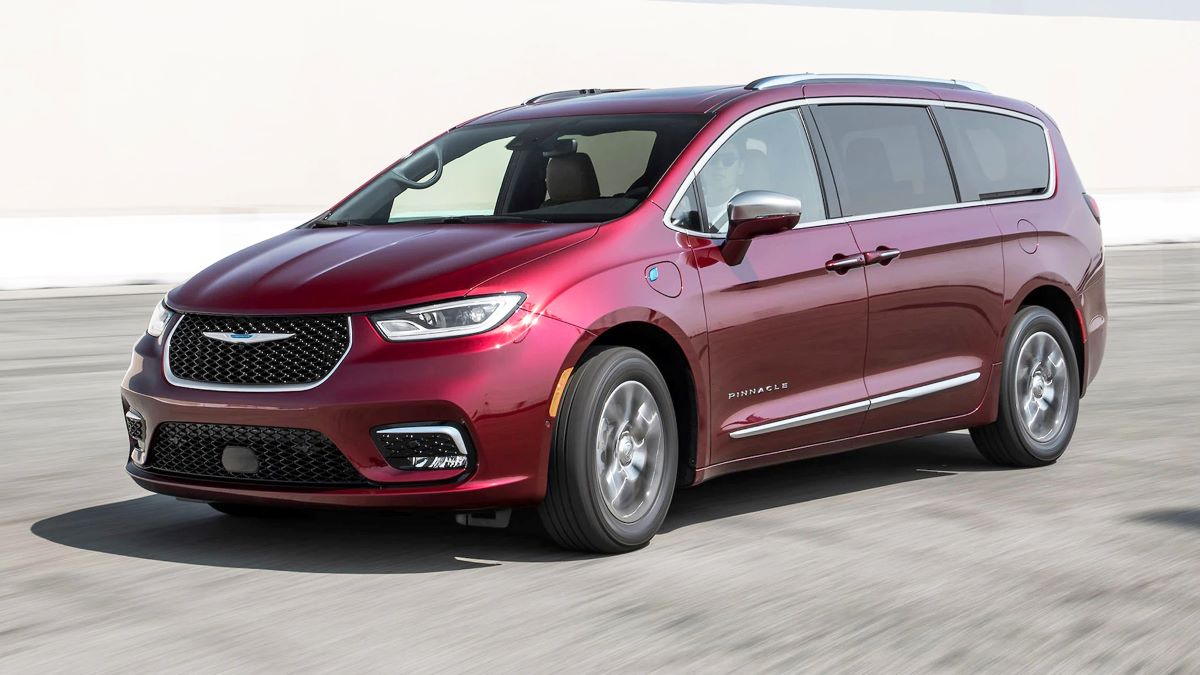
This minivan blends a plug-in hybrid powertrain with the practicality of three-row seating and ample cargo space, making it an adaptable option for everything from daily commutes to extended road trips. Originally launched in 2017, the Pacifica Hybrid underwent a major refresh in 2021 and enters 2026 with only minor updates.
For the 2026 model year, Chrysler debuts the Pacifica 100th Anniversary Edition. The last significant update came in 2021, when the Pacifica received fresh styling, upgraded technology, expanded active safety features, and additional trim levels.
9. Buick Envista
Buick might fly under the radar in the U.S., but the 2025 Envista shows that American brands can deliver affordable style.
Positioned against imports like the Mazda CX-30 and Hyundai Kona, the Envista offers upscale looks, a smooth ride, and modern tech all for under $25,000. It proves American value doesn’t have to mean boring.
SUVs with sleek, coupe-like rooflines typically command a premium, as automakers charge extra for their sportier design. That’s not the case with the 2025 Buick Envista, a stylish, subcompact fastback SUV that steps in to replace the bulbous Buick Encore as the brand’s entry-level model.
Designed to go head-to-head with subcompact SUVs like the Chevrolet Trax, Mazda CX-30, and Volkswagen Taos, the Envista looks like it should cost more than its rivals. Surprisingly, it undercuts both the Mazda and VW on price. While its racy profile suggests athletic performance, the driving experience tells a different story.
The Envista handles with poise, but at 3,137 pounds and powered by a tiny turbocharged 1.2-liter three-cylinder producing just 137 horsepower, acceleration is merely adequate up to around 50 mph. Built exclusively with front-wheel drive, the Envista is clearly aimed at the city streets, not the backcountry trails.
Where the Envista shines is in its interior space and value. Passengers benefit from a roomy cabin with a flat rear floor, and buyers get an impressive list of standard features.
Every model comes equipped with wireless Apple CarPlay and Android Auto, an 8.0-inch digital gauge cluster, an 11.0-inch infotainment screen, automatic high beams, and lane-keeping assist—all for under $25,000.
For 2025, the Envista adds standard remote start and rear parking assist to every trim level. A fresh color option, Aquamarine Blue Metallic, also joins the lineup. Beyond these tweaks, the Envista remains unchanged in its second year, following its 2024 debut as Buick’s new entry-level nameplate.
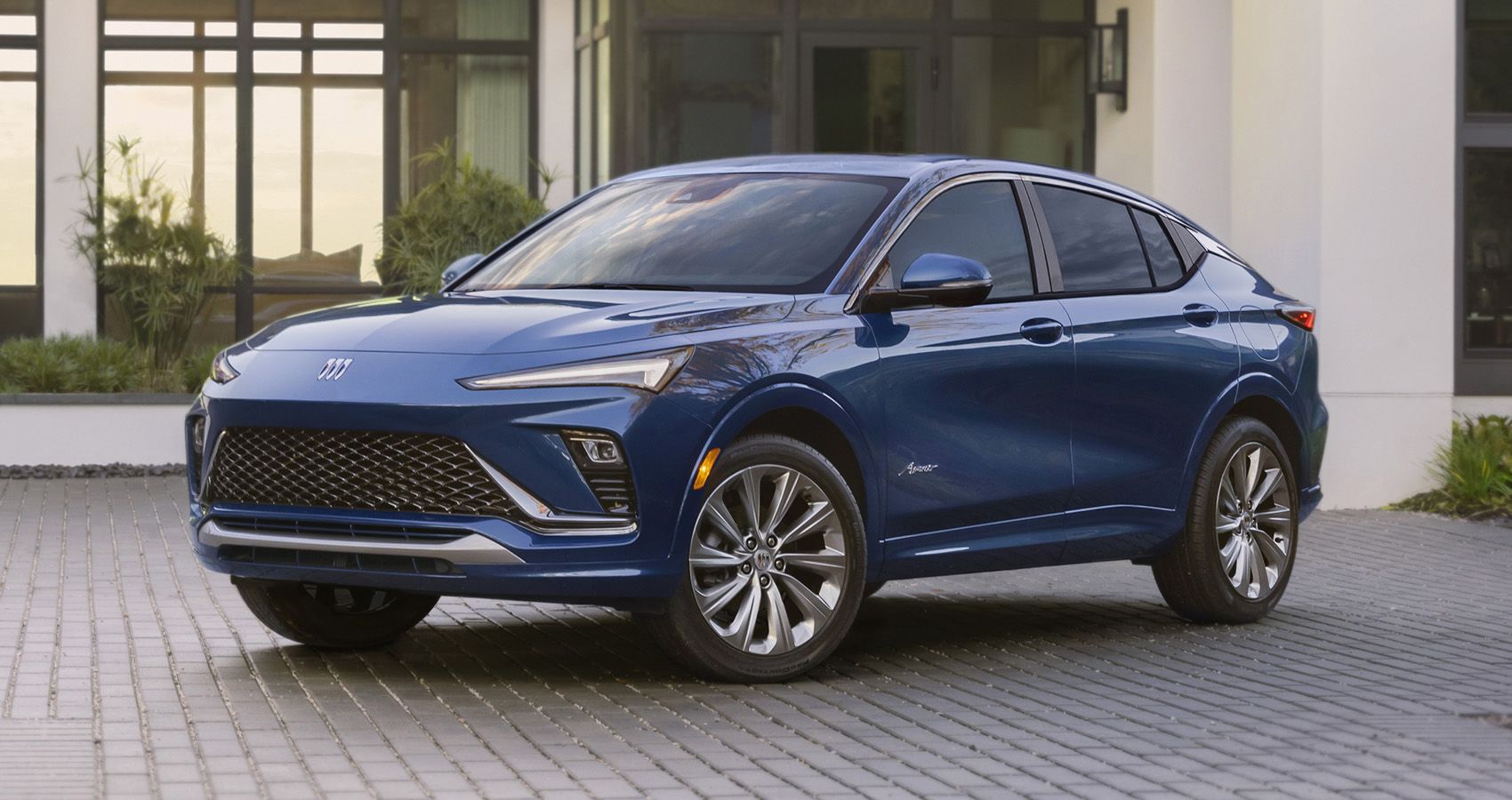
The upscale Avenir trim dresses things up with nickel-finished 19-inch wheels, a mesh grille, and other premium styling cues that make it look far more expensive than its price suggests. Unfortunately, no trim offers all-wheel drive or a more powerful engine.
Every Envista is powered by the same tiny turbocharged 1.2-liter three-cylinder engine that produces 137 horsepower. Power is sent to the front wheels through a six-speed automatic transmission, as all-wheel drive is unavailable.
Around town, acceleration feels peppy enough, but ask for more power, like during highway passes, and the engine’s response slows, with noticeable turbo lag that feels like the car taking a deep breath before moving with urgency.
The Envista isn’t built for speed or sharp handling, but it’s comfortable and quiet on the road. Steering is precise, the ride is well-controlled, and the brakes feel firm and reassuring.
In testing, the Envista reached 60 mph in 9.3 seconds. It hits 50 mph in 6.7 seconds, after which the engine runs out of steam.
Inside, the Envista offers generous space for four passengers, with the coupe-like roofline doing little to compromise rear headroom. While interior materials aren’t luxury-grade, they compare favorably to competitors like the Nissan Kicks and Mitsubishi Outlander Sport.
Tech and convenience are strong points, with a large glass dashboard panel that integrates both the digital gauge cluster and infotainment display. The top Avenir trim boasts the most upscale cabin in the lineup, though it still doesn’t compete with true luxury brands like Audi, BMW, or Mercedes-Benz.
Cargo capacity is equally solid, with 20 cubic feet of space behind the rear seats and 42 cubic feet with them folded. Payload is rated at 1,088 pounds.
10. Ford Maverick
Compact trucks are making a comeback, and the Ford Maverick owns this segment.
With a standard hybrid powertrain delivering over 40 mpg in the city and a base price around $25,000, no Japanese or Korean rival can touch its practicality and value.
It’s perfect for budget-conscious drivers who want versatility without the bulk of a full-size truck.
The days of automatically choosing an import for quality or technology are over. In 2025, American automakers are innovating boldly combining performance, value, and utility in ways that rival, and often surpass, foreign competition.
The Ford Maverick remains one of the smallest trucks on the American market, but for 2025 it packs in big updates that widen its already strong appeal. Don’t worry, its compact dimensions and budget-friendly price tag are intact, what’s new is the addition of more performance, more tech, and fresh styling across the board.
The most notable change is the introduction of optional all-wheel drive for the hybrid-powered model. Previously, this feature was exclusive to the EcoBoost versions, but now both available Maverick powertrains can be paired with AWD.
The 2025 Maverick continues to offer two engine options. The standard setup is a 2.5-liter four-cylinder paired with a hybrid system, producing a combined 191 horsepower and 155 lb-ft of torque. Around town, on the highway, and even on twisty mountain roads, the hybrid feels adequate, though it’s not particularly exciting.
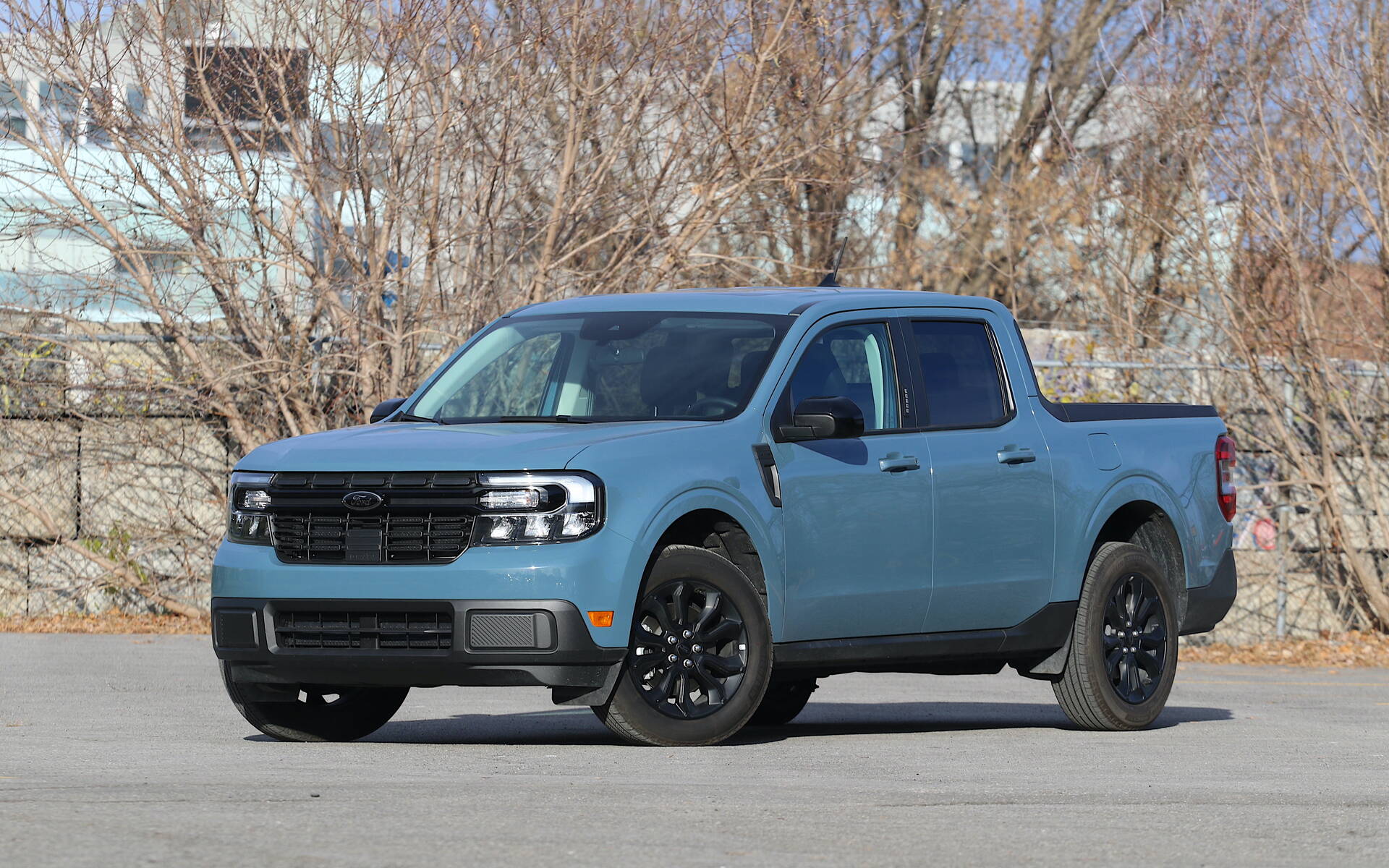
Full-throttle acceleration won’t thrill you, partly due to the droning nature of the CVT but it gets up to highway speeds quickly enough. The hybrid system’s ability to glide silently at low speeds adds a touch of serenity to daily driving.
The available turbocharged 2.0-liter engine, on the other hand, delivers a much livelier experience. Rated at 250 horsepower and 277 lb-ft of torque, it pairs with an eight-speed automatic transmission (or a seven-speed in the Lobo).
Initial reports suggested a drop to 238 horsepower due to emissions adjustments, but Ford confirmed the engine continues with the same 250-hp rating as before. Stomp the throttle, and the turbo engine responds with strong, eager power.
While the standard Eco, Slippery, and Normal drive modes feel tame, Sport mode sharpens throttle response, giving the turbocharged Maverick a more spirited personality. For those craving fun behind the wheel of a compact truck, this engine delivers — especially in the new Lobo.
Powered exclusively by the turbo 2.0-liter, the Lobo trim stole the spotlight at the 2025 Maverick launch. It sits lower than the standard truck, half an inch at the front and 1.12 inches at the rear, creating a more aggressive stance.
This drop, paired with the sleek Turbofan wheels and unique lower fascia, gives the Lobo a bold street presence. My only gripe? The Turbofan wheels only come in black. A bronze, gold, or white finish would make them pop even more.
But the Lobo isn’t just about aesthetics. It uses a specially tuned version of the Maverick’s torque-vectoring twin-clutch rear drive unit to enhance cornering performance.
The seven-speed automatic with paddle shifters replaces the standard eight-speed, adding to the driving fun. Upgraded radiators handle heat during spirited driving, while front brakes borrowed from the European Focus ST boost stopping power.
Ford’s launch event for the Lobo included an autocross course to highlight its handling, and the truck delivered. In the Lobo’s track-oriented drive mode, the rear end felt playful and eager.
By the second lap, it was easy to coax the truck into controlled slides by inducing a bit of front-end dive and easing the weight off the rear tires. A healthy jab of throttle mid-corner sent the rear rotating just enough for a hint of drift. After a few laps, drifting the truck through corners felt like second nature.
The 2025 Ford Maverick combines compact practicality with new tech and serious upgrades, while the Lobo trim brings a whole new level of excitement to the lineup. This small truck now offers something for just about everyone, from fuel-conscious hybrid buyers to performance enthusiasts.
Whether you’re seeking high-performance muscle, family comfort, or electric efficiency, there’s a U.S.-built option that can hold its own and then some.
These ten vehicles aren’t just good they’re redefining what it means to buy American.
