
As electric vehicles (EVs) gain traction in the U.S. market, more drivers are discovering the benefits of clean, quiet, and torquey electric driving.
But with cold weather being a fact of life across much of the country, especially in northern states like Minnesota, Michigan, and upstate New York, potential EV buyers are justifiably concerned about how these vehicles handle harsh winter conditions.
Battery efficiency drops in freezing temperatures, regenerative braking can behave differently on icy roads, and climate control demands can strain range. That makes winter performance a critical factor when choosing an EV.
Fortunately, a growing number of EVs are proving they can tackle snow, ice, and subzero temperatures with confidence. Here’s a look at 10 electric vehicles that have demonstrated strong winter performance in real-world testing, owner reviews, and third-party evaluations.
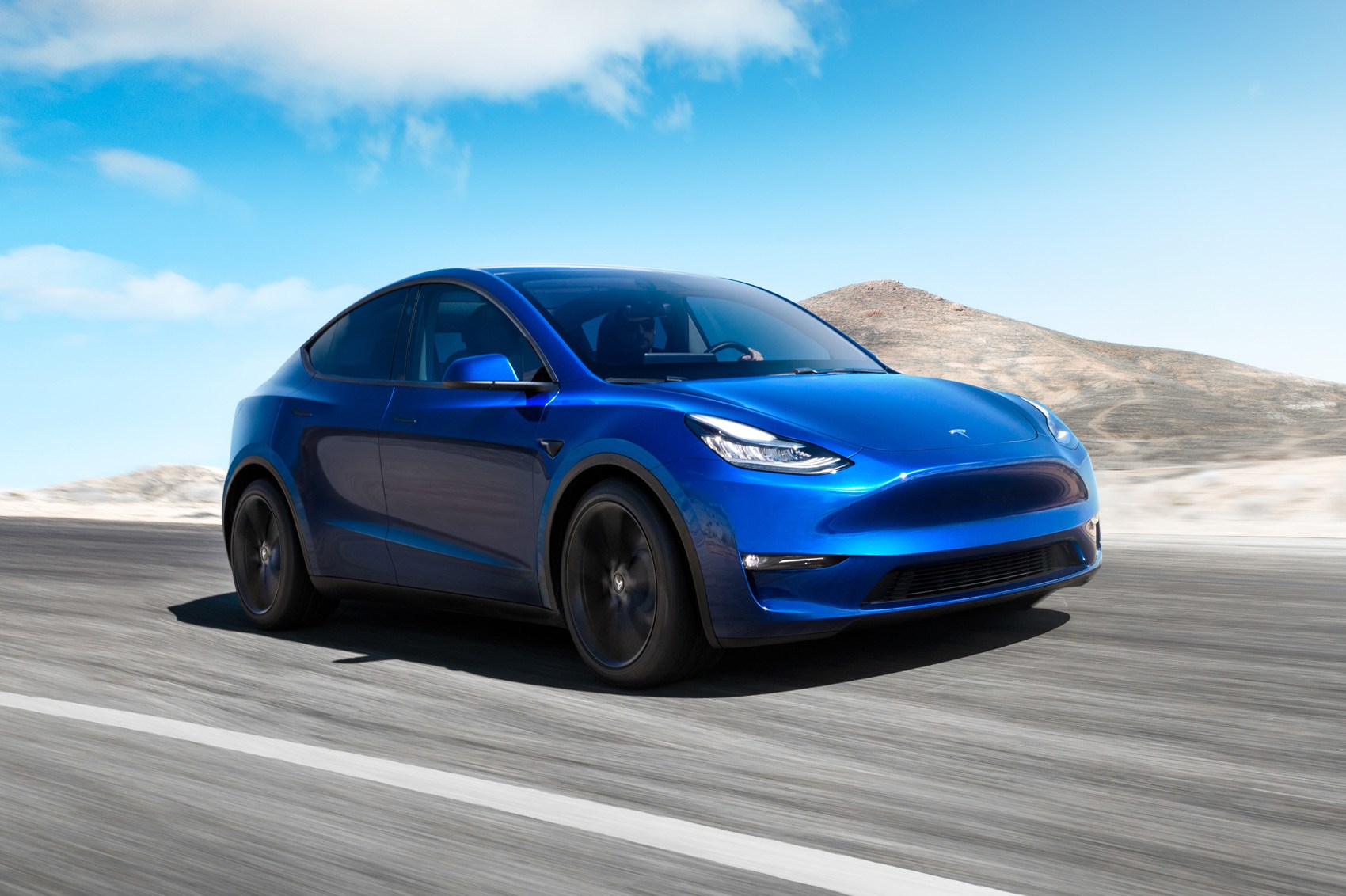
1. Tesla Model Y
The Tesla Model Y is a standout when it comes to cold-weather driving, thanks in part to its efficient heat pump system and AWD variants with dual motors. Tesla’s over-the-air updates continuously improve cold-weather behavior, including battery preconditioning and regenerative braking adjustments.
The Model Y also features a “Snow” driving mode that reduces throttle response and enhances stability. Owners in snowy climates frequently report dependable winter performance and solid range retention compared to many competitors.
A well-known presence on American roads after five years in production, the Tesla Model Y SUV continues to impress with its spacious cabin and solid driving range. Sharing its platform with the Tesla Model 3 sedan, the fastback-styled Model Y distinguishes itself by offering more cargo space and an available third row of seating.
For 2026, the Model Y receives a styling update that introduces new front and rear fascias as well as revised lighting elements. Interior updates include redesigned front seats aimed at improved comfort, a reimagined dashboard, and newly styled ambient lighting.
Still, the Model Y delivers undeniable electric performance strengths, including rapid charging capabilities, blazing acceleration in the Performance trim, and range estimates exceeding 300 miles per charge.
Tesla’s best-selling SUV has undergone a visual and functional refresh for the 2026 model year, bringing it more in line with its platform counterpart, the Model 3 sedan, which was updated for 2024.
The 2026 Model Y now features updated headlamps that are linked by a full-width light bar across the front. Interior upgrades mirror those found in the revised Model 3 and include higher-quality materials, enhanced cabin insulation, optional ventilated front seats, and a new rear-passenger display, among other refinements.
Despite being the entry-level trim, it comes generously equipped with features such as 19-inch wheels, a fixed glass roof, a power-operated rear liftgate, a 15.4-inch central display, power-adjustable front seats and steering column, dual-zone automatic climate control, blind-spot monitoring, lane-keeping assist, and a comprehensive 360-degree exterior camera system.
The rear-wheel-drive Model Y is powered by a single electric motor generating 295 horsepower. All-wheel-drive variants employ a dual-motor setup, one at each axle, which together produce 375 horsepower.
Given that the Model 3 Performance trim offers 510 horsepower, it’s plausible that a similarly powered Performance variant could soon join the Model Y lineup. Once we’ve had the opportunity to drive the updated 2026 Model Y, we’ll provide comprehensive performance impressions and test data.
Although we haven’t tested the 2026 Model Y yet, Tesla reports that the rear-wheel-drive version can sprint from 0 to 60 mph in 5.4 seconds, while the dual-motor AWD version does it in 4.6 seconds. We’ll update this section with verified results once our own testing is complete.
Tesla estimates that the rear-wheel-drive Model Y can travel up to 357 miles on a single charge when equipped with standard 19-inch wheels. Opting for the larger 20-inch wheels reduces the range to 344 miles.
The all-wheel-drive variant delivers a range of 327 miles with 19-inch wheels and 303 miles with 20-inch ones. According to Tesla, the Long Range RWD can gain up to 182 miles of charge in just 15 minutes, while the AWD model can recover 169 miles in the same time.
The Performance AWD trim receives a 104 MPGe rating. MPGe, or miles per gallon equivalent, is a metric used by the EPA to evaluate the energy efficiency of plug-in hybrid and fully electric vehicles. We’ll provide real-world MPGe results after we test the 2026 Model Y ourselves.
Unlike the larger Model X, the Model Y avoids the complexity of Falcon Wing doors. Its interior follows a minimalistic design philosophy, centered around a single large infotainment display mounted on a clean, button-free dashboard. A heavily tinted all-glass roof creates an open, airy cabin feel.
The seats are upholstered in synthetic leather, and standard amenities include a power-adjustable steering column, heated front seats, and dual-zone automatic climate control. The Model Y now comes exclusively in a two-row configuration, as Tesla has discontinued the optional third-row seats previously offered.
Also Read: 10 Affordable Cars That Still Hit 0–60 in Under 6 Seconds
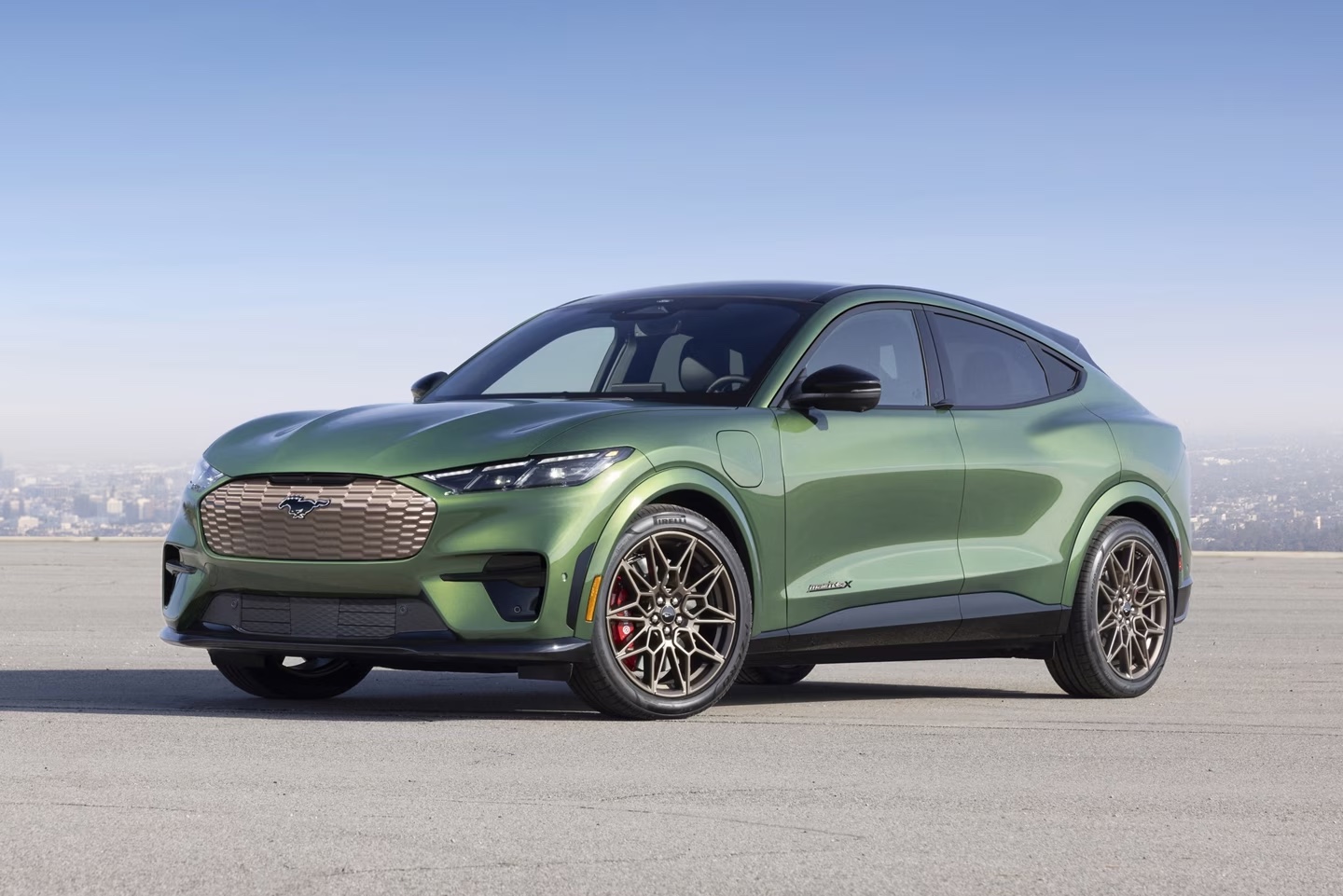
2. Ford Mustang Mach-E
The Ford Mustang Mach-E comes with optional dual-motor AWD, and its low center of gravity gives it excellent stability on slippery surfaces. The cabin heats up quickly, and newer models come equipped with a heat pump to enhance cold-weather efficiency.
Ford also includes a winter driving mode called “Whisper,” which modulates power delivery and traction control. Real-world reviews from owners in Canada and northern U.S. states affirm that the Mach-E is winter-ready.
The Mustang Mach-E garners acclaim for its lively driving dynamics. All-wheel-drive models deliver strong traction when exiting corners, while rear-wheel-drive versions provide moments of playful oversteer. The vehicle demonstrates responsive handling, although during highway driving, we noted unexpected levels of wind and road noise.
In the GT trim, performance tends to diminish under sustained, high-stress driving, but opting for the available Performance Edition package proves to be a worthwhile upgrade. Although no variant of the Mach-E offers enough ground clearance to fully meet SUV expectations, the Rally version still manages to offer plenty of fun off the pavement.
The vehicle’s range is average compared to rivals, though it should be adequate for the majority of drivers. Charging speed lags behind some competitors, which may be a drawback for those needing frequent top-ups on the go.
Most owners, however, will find the Mach-E’s cargo space and front trunk fairly generous for the segment. The cabin attempts to mirror Tesla’s minimalist aesthetic, but we believe the space could be utilized more effectively.
The same critique applies to the large 15.5-inch touchscreen, which doesn’t fully take advantage of its ample real estate. Another visually appealing but potentially problematic feature is the all-glass roof, which can allow excessive heat to build up in the cabin under direct sunlight, often requiring heavy use of the air conditioning system.
While the Mustang Mach-E is undoubtedly a competent electric SUV, it falls short of being a class leader. Competing models from Tesla and Hyundai offer faster charging capabilities and longer driving ranges.
The Mustang Mach-E is available with either rear-wheel or all-wheel drive, and buyers can choose between standard-range and extended-range battery packs.
The Select and Premium trims offer the most flexibility in terms of configuration. Driving range spans from 230 miles for AWD models with the standard battery to 320 miles for RWD variants equipped with the extended-range pack.
Both the GT and Rally models come standard with the larger battery and AWD system. The GT variant is rated for 280 miles of range, while the Rally version can travel up to 265 miles on a full charge.
Standard-range trims support fast charging at up to 110 kW, while extended-range versions can charge at rates as high as 150 kW. Using a public Level 3 fast charger, the battery can go from 10 to 80 percent in approximately 38 minutes. Charging with a Level 2 home setup to reach 100 percent takes roughly 12 to 14 hours.
Performance figures vary across the lineup. The standard-range RWD version produces 246 horsepower.
Lesser AWD models output 325 horsepower with the standard battery and 365 horsepower with the extended-range battery. The GT and Rally trims both top the charts at 480 horsepower
3. Subaru Solterra / Toyota bZ4X (AWD models)
Subaru’s first electric SUV, the Solterra, shares a platform with Toyota’s bZ4X, and both offer an EV version of Subaru’s symmetrical all-wheel drive.
Designed with winter in mind, the Solterra and AWD bZ4X models include X-Mode for better traction in snow and ice, and their ground clearance (over 8 inches) rivals traditional crossovers.
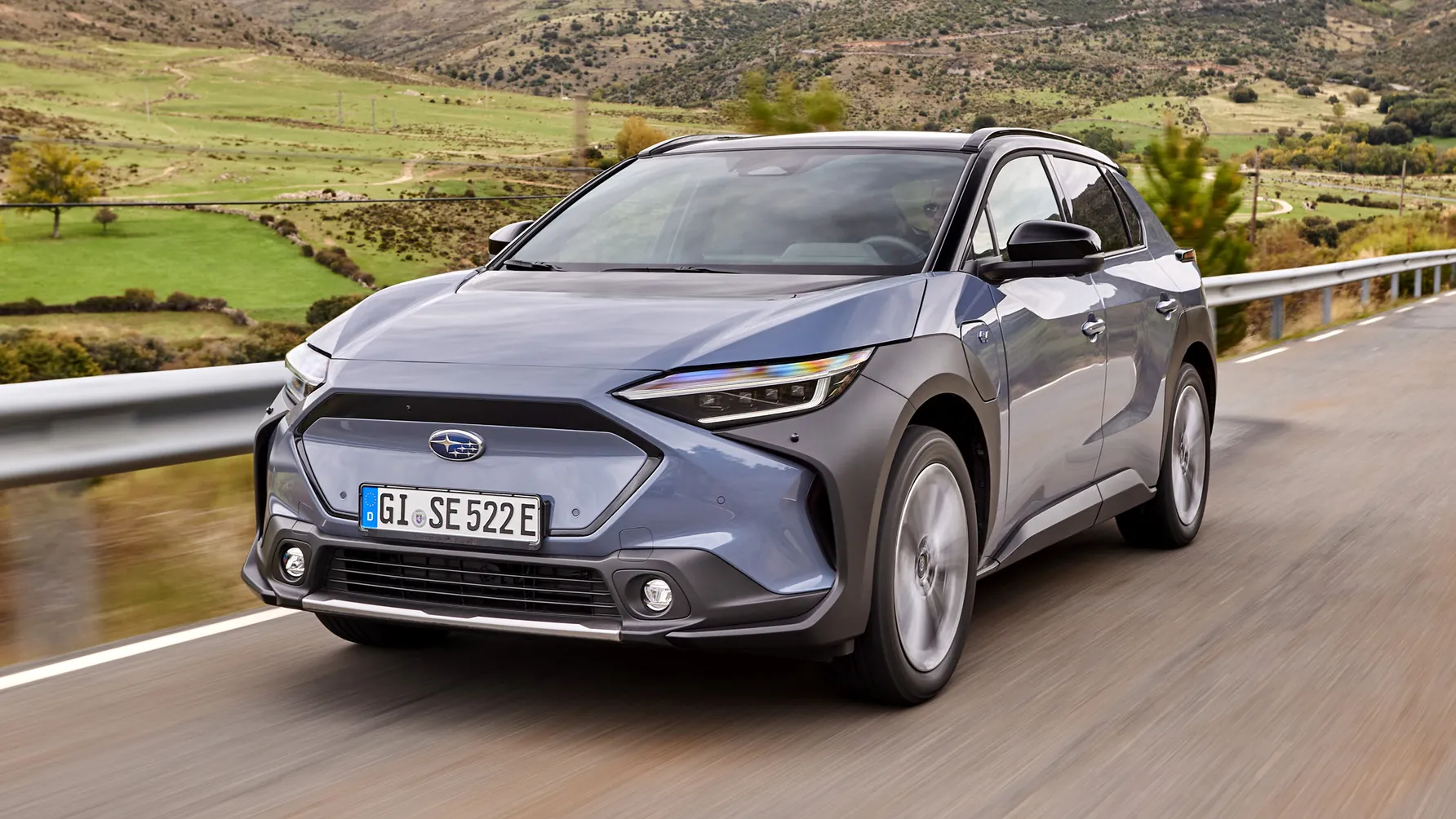
While range drops are still noticeable in the cold, the mechanical AWD and thoughtful winter features make both models reliable snow performers.
4. Hyundai Ioniq 5
The Hyundai Ioniq 5 is rapidly gaining popularity for its futuristic design and solid all-around performance, including in winter. The AWD version includes a heat pump and battery preconditioning, and Hyundai’s “Snow Mode” optimizes traction control and torque delivery.
Reviewers and users in colder climates have praised the Ioniq 5 for maintaining composure in ice and snow, although range loss in extreme cold is still a factor to consider.
The 2025 Hyundai Ioniq 5 largely maintains its place near the top of the mid-size electric vehicle segment in terms of range, driving dynamics, and features, going head-to-head with strong competitors like the Tesla Model Y, Ford Mustang Mach-E, and Volkswagen ID.4.
This refresh is nothing short of satisfying. Refined and improved for the new model year, the updated 2025 Hyundai Ioniq 5 introduces enhancements that drivers are sure to appreciate, without adding anything unnecessary. There’s no need for preamble, though the new off-road-inspired XRT trim certainly has its own story to tell.
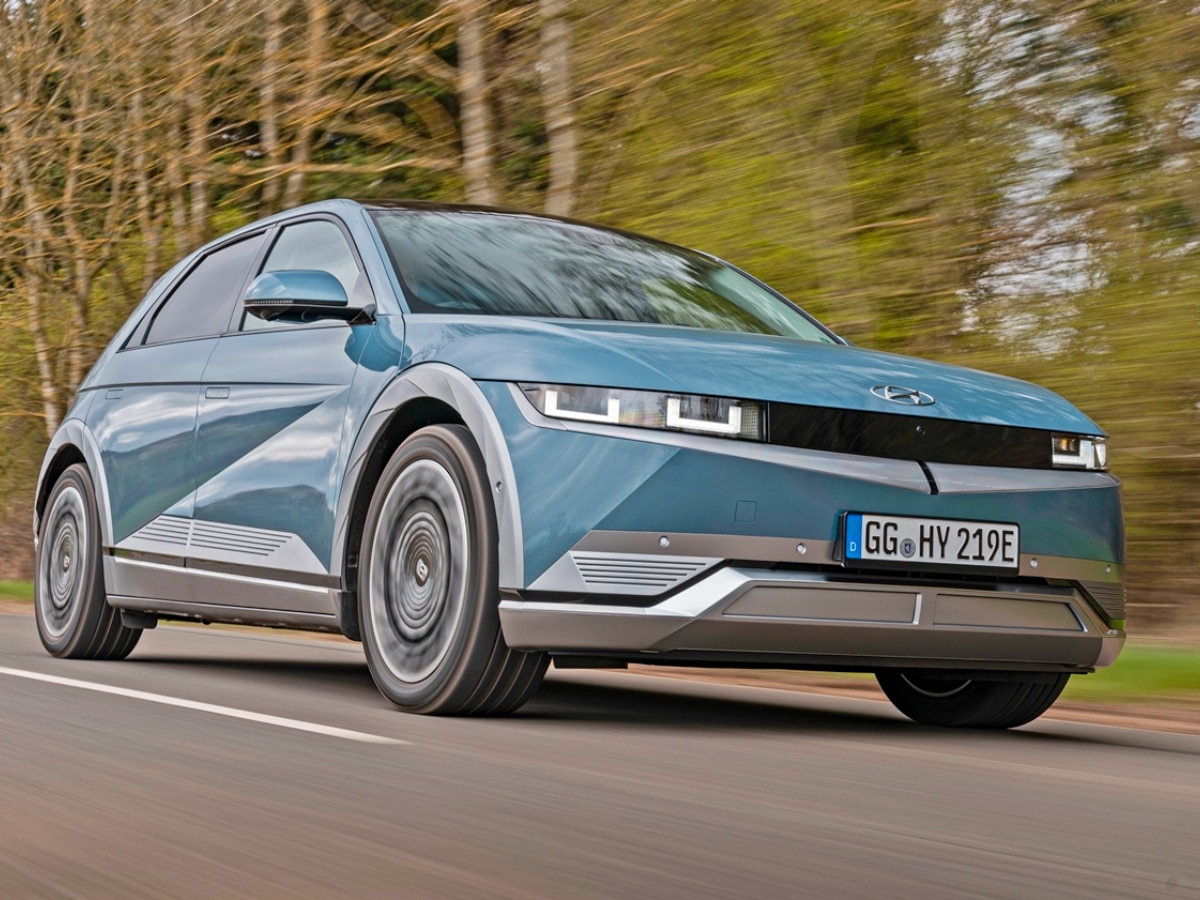
It’s evident that Hyundai paid close attention to customer feedback. At the top of the list, we now have a standard rear windshield wiper. While it may seem like a basic feature, it was conspicuously absent from previous model years, not even offered as an option.
That puzzling omission has finally been corrected. Alongside that fix, Hyundai also addressed some minor styling and aerodynamic details that evidently didn’t sit well with either the public or the design team.
The front fascia has been subtly reworked, a new rear roof spoiler has been added, and a new aero-blade-style wheel design debuts—all tasteful changes that preserve the Ioniq 5’s distinctive retro-futuristic, cyberpunk-inspired look.
5. Rivian R1T
If you’re looking for a winter workhorse, the Rivian R1T electric pickup delivers. Designed and tested for rugged, all-weather capability, the R1T includes a quad-motor AWD system that allows for precise torque vectoring, even in deep snow.
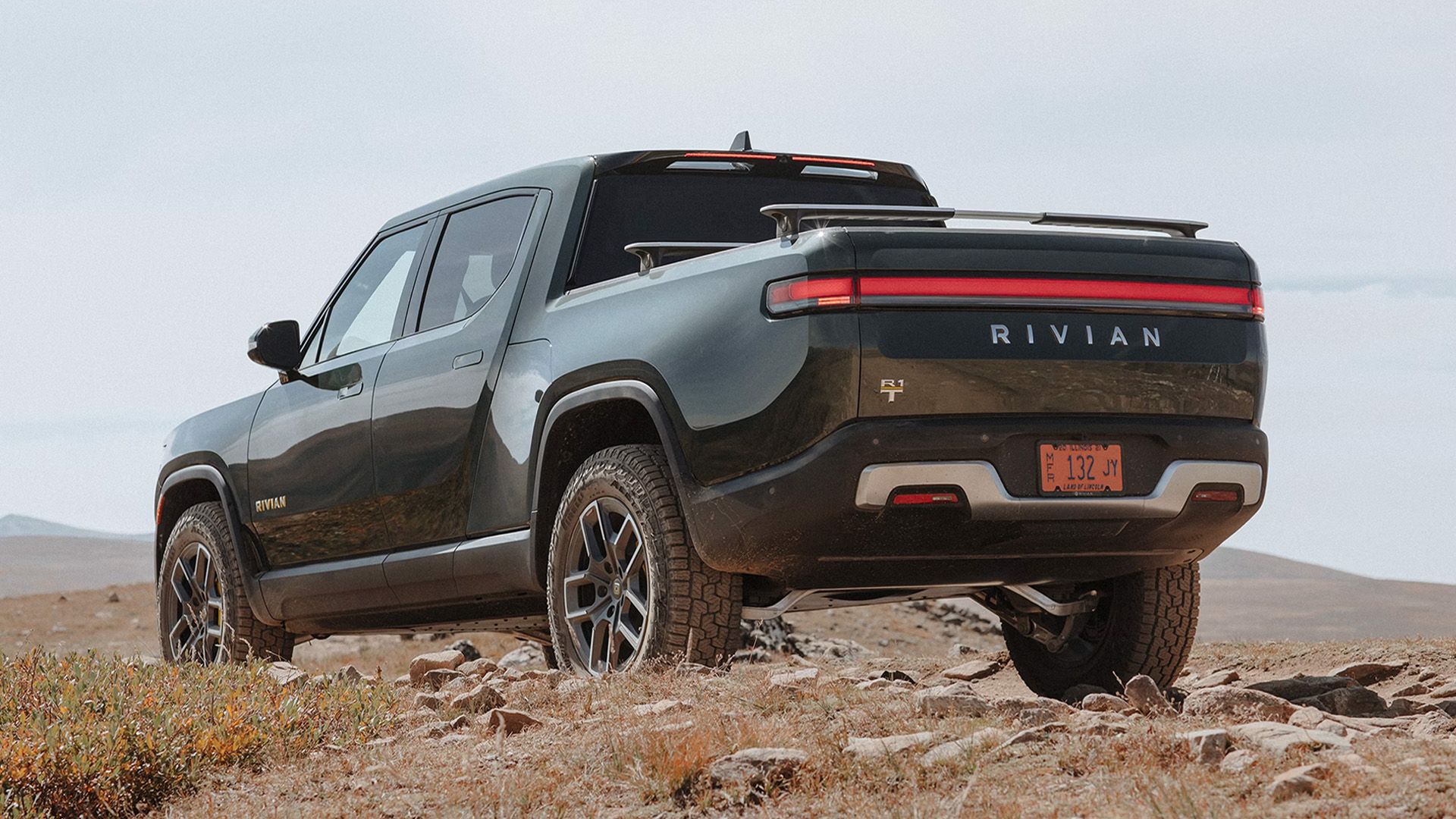
It also offers adjustable air suspension, allowing for higher ground clearance when tackling snow-packed roads or unplowed trails. Independent tests in Alaska and the Colorado Rockies confirm the R1T’s credibility in winter extremes.
6. Audi Q4 e-tron
The Audi Q4 e-tron delivers a refined and stable ride in winter thanks to its quattro all-wheel-drive system and well-tuned stability control.
Audi equips the Q4 e-tron with a heat pump to reduce range loss in cold weather and provides intuitive traction management that makes it feel more like a traditional luxury SUV in snowy conditions. Interior comfort and quick cabin warm-up times also earn it high marks among cold-weather EV options.
The base Q4 e-tron 45 is equipped with a single electric motor producing 282 horsepower, which powers the rear wheels. We have not yet had the opportunity to drive the Q4 e-tron with this configuration.
For those seeking all-wheel drive, the Q4 e-tron 55 and Q4 e-tron Sportback 55 feature dual electric motors, one on each axle, delivering a combined output of 335 horsepower.
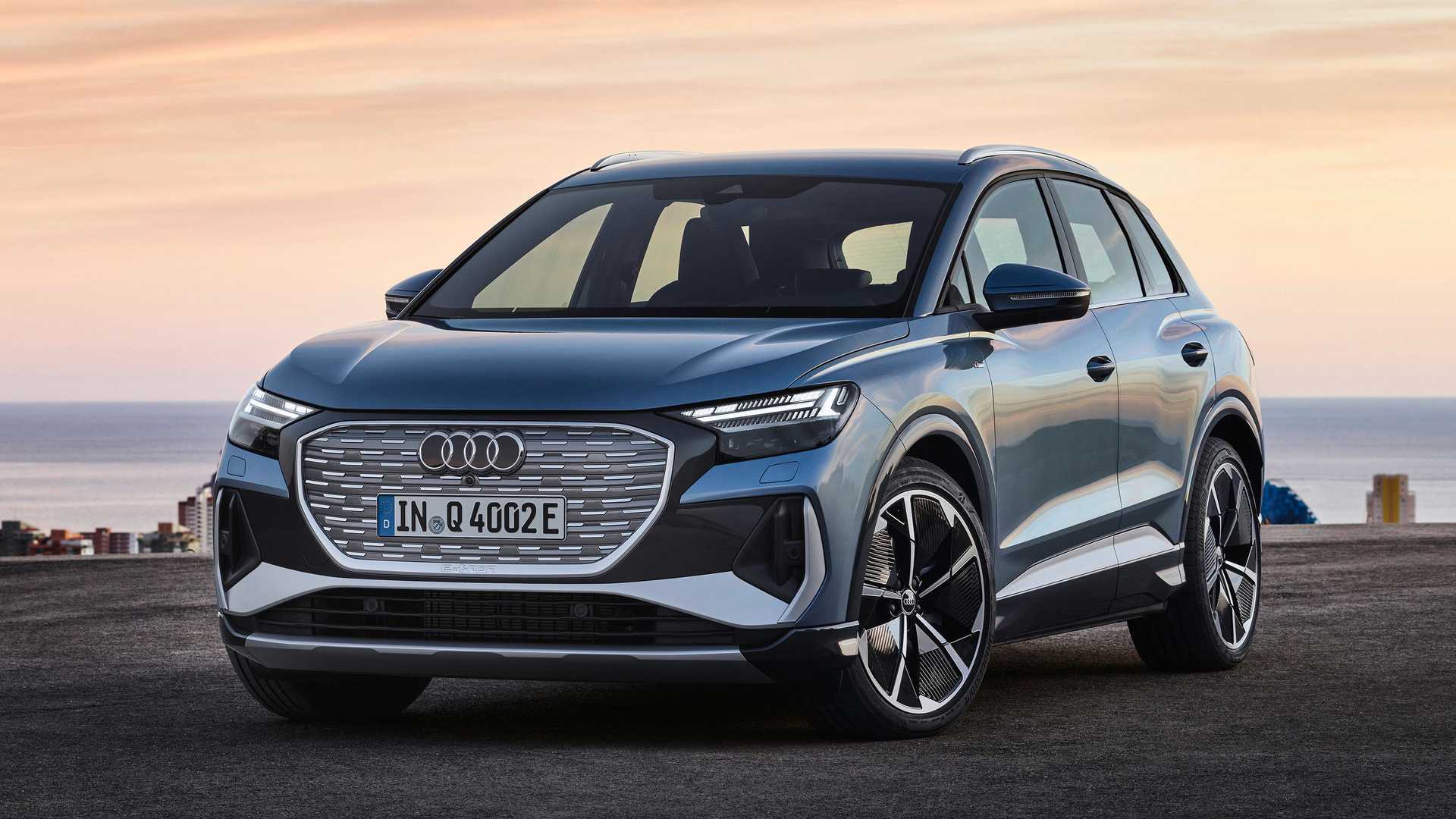
On the road, the Q4 e-tron exhibits refined manners, offering a smooth ride and commendable agility, aided by its compact turning radius. Audi has also recently enhanced the vehicle’s handling, resulting in more precise steering and improved stability through corners.
In our testing, the Q4 e-tron 55 accelerated from 0 to 60 mph in 5.0 seconds. Audi estimates that the single-motor Q4 e-tron 45 will make the same sprint in 6.2 seconds, though we have yet to independently verify this with a test
The Q4 e-tron is powered by a 77.0-kWh battery pack. When paired with the single-motor 45 powertrain, it achieves an EPA-estimated range of up to 288 miles per charge. The dual-motor Q4 e-tron 55 offers slightly less, with a maximum rating of 258 miles per charge.
In our real-world highway range test conducted at 75 mph, the Q4 e-tron Sportback 55 managed 220 miles. All variants now support fast charging up to 175 kW, and Audi claims a 10 to 80 percent charge can be achieved in just 28 minutes.
However, this is still slower than the Genesis GV60, which can reportedly complete the same charging session in just 18 minutes. In our own testing, the Q4 recharged from 10 percent to 90 percent in 36 minutes.
7. Volvo XC40 Recharge / C40 Recharge
Volvo’s EVs are built with Scandinavian winters in mind. The XC40 Recharge and its coupe-like sibling, the C40 Recharge, feature dual-motor AWD, a robust battery heating system, and an efficient climate control setup.

Heated seats, heated steering wheel, and remote cabin preconditioning are standard on many trims. These features help minimize winter range loss and ensure the car is ready to drive, even in the depths of January.
8. BMW iX
The BMW iX blends winter utility with luxury. With standard xDrive dual-motor AWD, the iX includes a heat pump and intelligent traction control. BMW’s engineers have developed cold-weather-specific software updates to improve range management and driving behavior on icy roads.
The iX also boasts excellent insulation, ensuring the cabin remains cozy even in subfreezing temperatures. Winter tire packages are widely available and recommended for optimal grip.
Two variants of the BMW iX are available, starting with the xDrive50, which features a dual-motor setup generating a combined 516 horsepower and standard all-wheel drive. For those seeking more power, the high-performance M60 model delivers an impressive 610 horsepower.
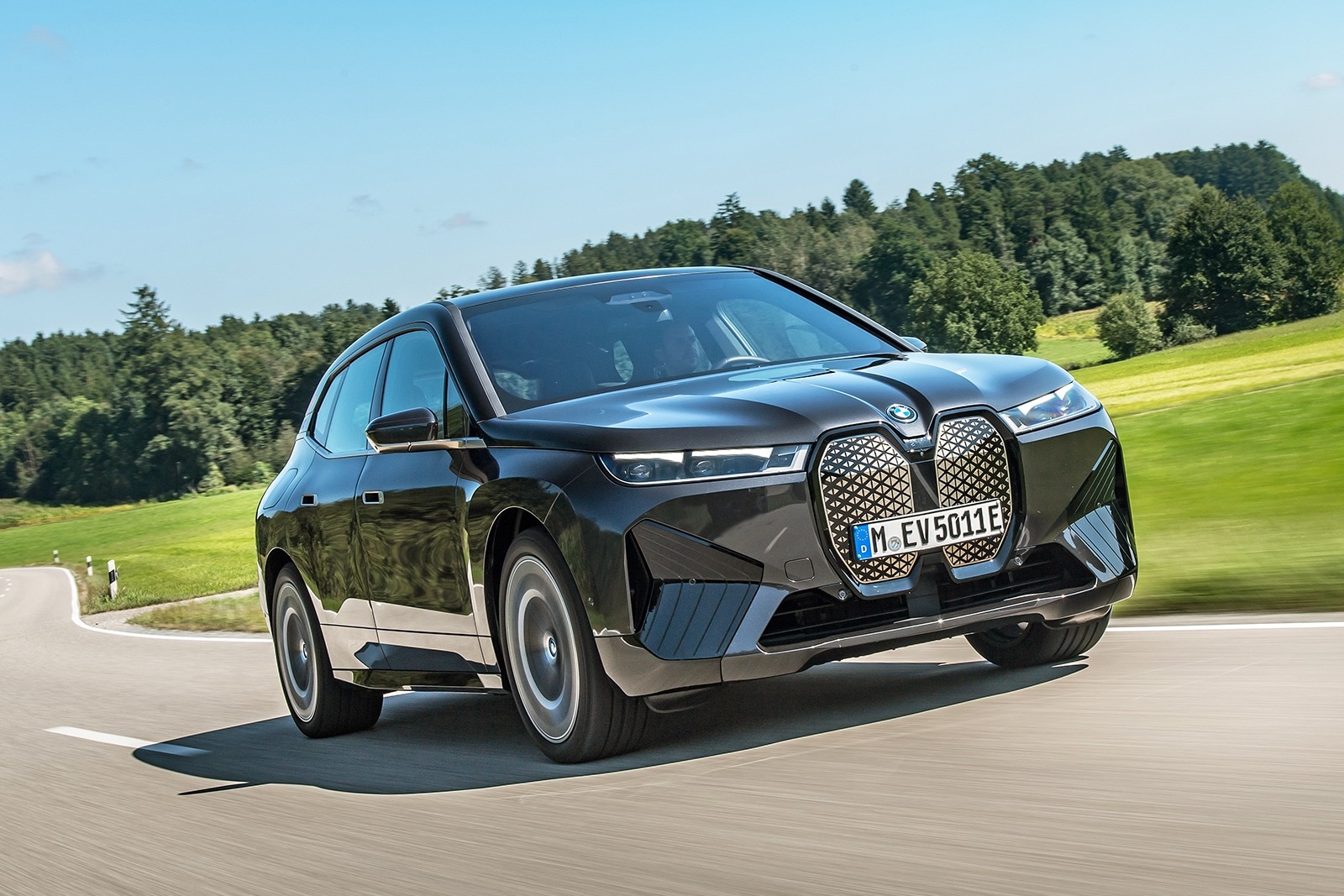
An adjustable air suspension system and rear-wheel steering are offered as options on the xDrive50 and come standard on the M60. During our first drive of the xDrive50, we found it to offer ample power, impressive energy efficiency, agile handling, and a smooth, composed ride.
Even in the M60, road noise is minimal, preserving the cabin’s serene environment. The M60 also benefits from stiffer front and rear anti-roll bars that reduce body roll, although this comes at the expense of a ride that isn’t quite as cushy as that of the xDrive50.
In our tests, the iX xDrive50 accelerated from 0 to 60 mph in a swift 4.0 seconds. The more potent M60 version hit 60 mph in just 3.2 seconds—only 0.1 seconds slower than the Rivian R1S, which produces a significantly higher 835 horsepower.
The iX is equipped with a substantial 105.2-kWh battery pack, and the EPA estimates it can travel up to 324 miles on a full charge.
When we conducted our 75-mph highway fuel economy test, the iX impressed us by achieving 290 miles of range—remarkably close to its EPA estimate, which is uncommon in highway conditions.
Even the 610-hp M60 model matched this figure in the same test. DC fast-charging is standard across the lineup, allowing the iX to recharge from 10 to 80 percent in just 35 minutes when connected to a 200-kW charger.
BMW has partnered with EVgo to offer a network of public charging stations for iX owners, although the SUV is also compatible with other major public networks and can be charged at home using a Level 2 charger.
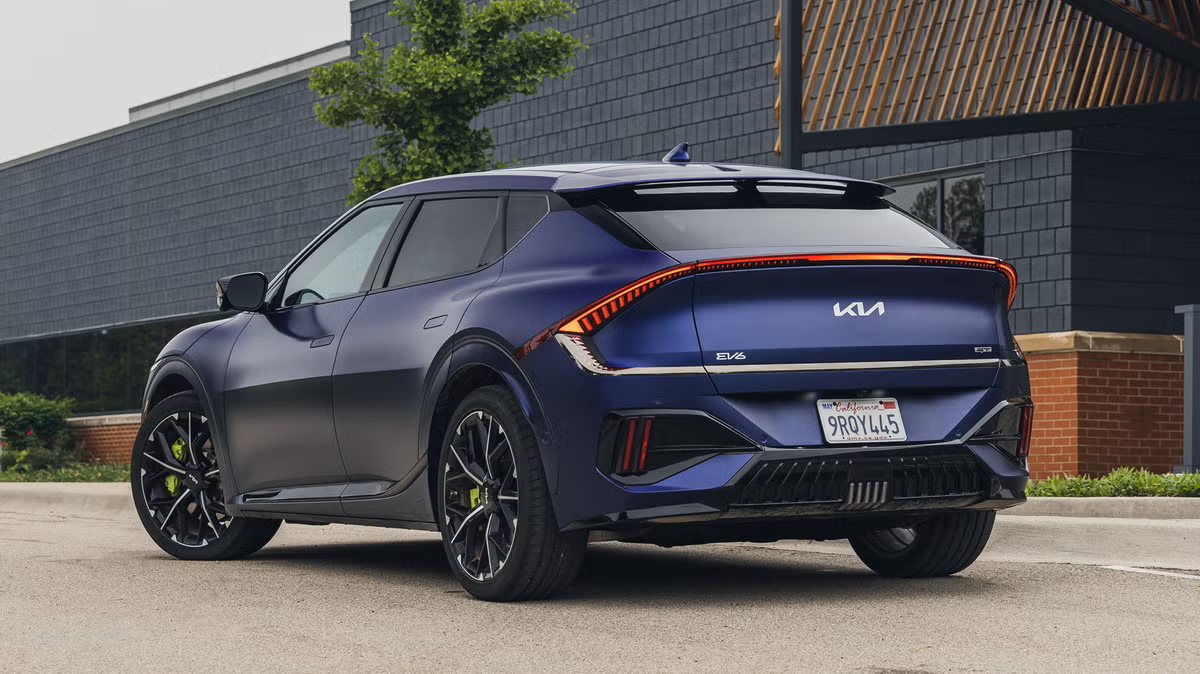
9. Kia EV6
Sharing a platform with the Hyundai Ioniq 5, the Kia EV6 offers similarly strong winter credentials. AWD variants come with a heat pump and battery conditioning, while drive modes allow for traction adjustments based on road conditions.
The EV6’s lower, sportier stance doesn’t hinder its winter prowess, and user feedback from northern U.S. and Canadian regions suggests it’s a reliable daily driver even during heavy snowfalls.
The EV6 receives a refreshed design for the 2025 model year, introducing several exterior and interior updates aimed at enhancing both style and functionality. On the outside, the EV6 now features a new headlamp design, a reworked front bumper, updated wheel designs, and subtle changes to the full-width taillamp.
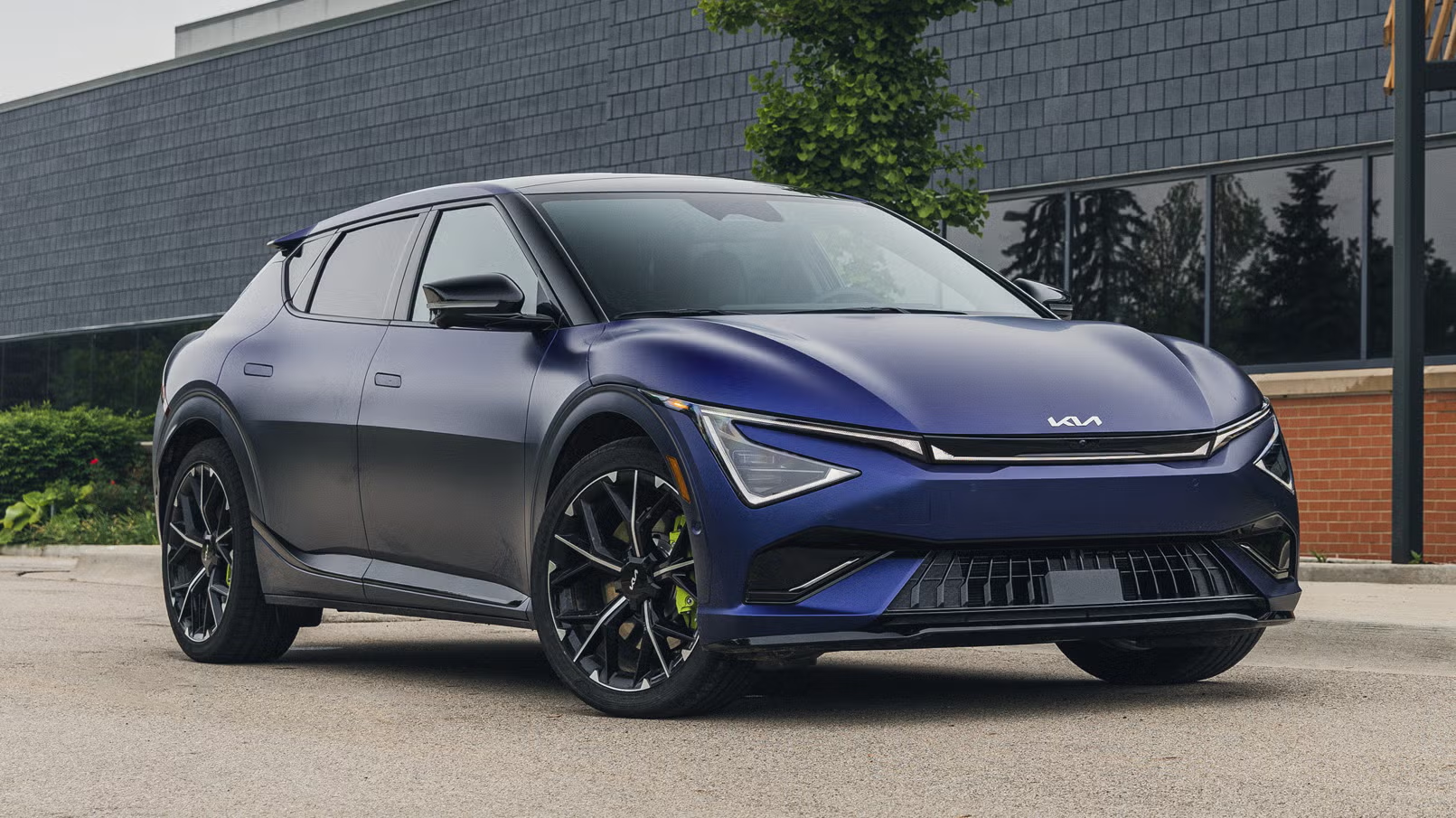
Inside, the cabin benefits from an upgraded panoramic infotainment system display, a redesigned steering wheel, and a new wireless smartphone charging pad. Wireless Apple CarPlay and Android Auto are now standard features, and buyers can also opt for a fingerprint-authentication system for added convenience and security.
Additionally, the EV6 receives a mechanical upgrade with a larger 84.0-kWh battery pack replacing the previous 77.4-kWh unit, resulting in a slight improvement in driving range.
While the 641-hp GT model offers impressive performance and is certainly appealing to driving enthusiasts, most electric vehicle buyers are likely to prioritize range and efficiency over raw speed. For those consumers, the dual-motor, all-wheel-drive Wind trim stands out as the best choice.
It not only provides all-weather traction but also delivers a combined 320 horsepower, which is significantly more than the single-motor version. Choosing the standard 19-inch wheels further helps preserve maximum driving range, making this trim both practical and well-equipped.
10. Chevrolet Bolt EUV (with Winter Tires)
While the front-wheel-drive-only Chevrolet Bolt EUV might seem less suited to winter driving, it earns a spot on this list due to its proven dependability with the right equipment, namely winter tires.
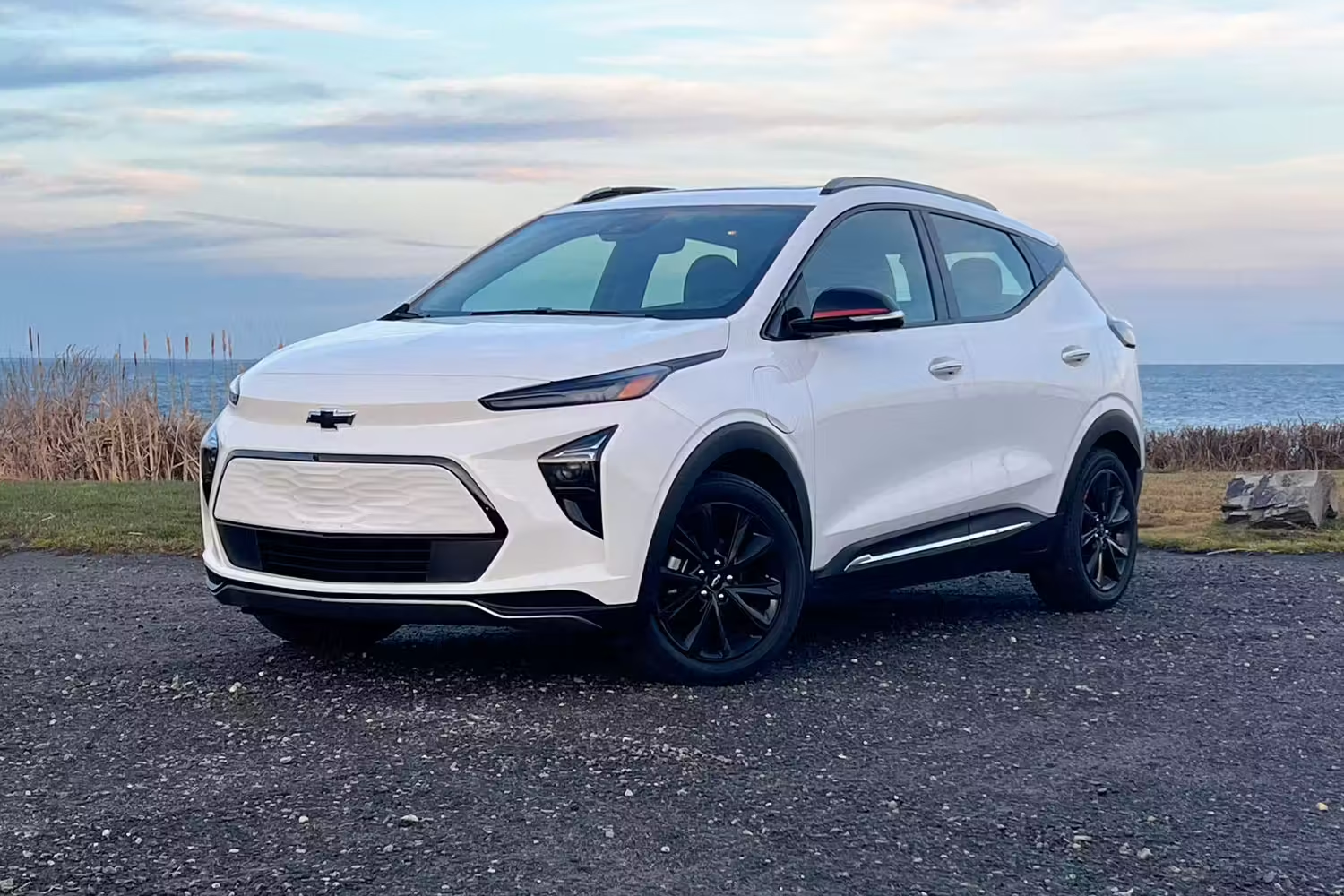
The Bolt EUV includes standard heated seats and steering wheel and can precondition the battery and cabin while plugged in. It’s affordable, efficient, and, with proper preparation, surprisingly capable in snow, especially for urban or suburban commuters.
Also Read: 5 Cars with Lifetime PCV Systems vs 5 with Clogged Vents Causing Sludge
Cold Climate Considerations
When choosing an EV for winter performance, here are a few key features to prioritize:
- All-Wheel Drive (AWD): Crucial for improved traction on snowy roads.
- Heat Pump: More energy-efficient than traditional resistive heaters.
- Battery Preconditioning: Allows the battery to warm up before driving, preserving range.
- Ground Clearance: Important in deep snow or unplowed roads.
- Heated Components: Seats, steering wheel, and mirrors improve comfort and safety.
Winter doesn’t have to be a barrier to electric vehicle ownership. The EVs listed above have demonstrated that, with the right technology and features, electric cars can be just as capable, if not more so, than their gas-powered counterparts in snow and ice.
As infrastructure, range, and battery technology continue to improve, EVs are becoming increasingly viable all-season vehicles across the United States. Whether you’re commuting through a Chicago snowstorm or taking a weekend trip to a mountain cabin in Colorado, these EVs are ready to go the distance, even when the temperature drops.
