
GMC has long been associated with rugged trucks and SUVs built to handle tough jobs and long hauls. However, not every GMC model lives up to that reputation once the miles start piling on.
Some models prove their worth, effortlessly crossing the 200,000-mile mark with minimal fuss, while others become a constant source of repairs and headaches long before they should. For U.S. buyers, whether you’re looking at a used GMC or considering keeping your current one for the long haul, it’s crucial to know which models stand the test of time, and which ones tend to crumble under pressure.
5 GMCs That Stay Solid at High Mileage
These models are the backbone of GMC’s reliability reputation. They have proven over years of use that they can handle high mileage with fewer issues, provided they are properly maintained.
2014–2018 GMC Sierra 1500
The 2014–2018 GMC Sierra 1500 stands out as one of the most dependable full-size pickups in its class. Built on the K2XX platform, this generation offers robust engines like the 5.3L and 6.2L V8s that can easily surpass 250,000 miles. Owners love its mix of power, durability, and lower-than-average rust issues, though the Active Fuel Management (AFM) system requires attention to prevent oil consumption problems.
While the latest Sierra keeps the boxy, no-nonsense appearance that has long defined GMC’s full-size pickups, the automaker has refined the styling to give it a more contemporary edge. The updates include a much larger grille, redesigned bumpers, and more sculpted sheet metal around the wheel wells, enhancing its road presence.
For buyers who frequently transport both passengers and cargo, there’s good news: the Sierra 1500 crew cab now comes with the option of a 6.5-foot cargo box, joining the previously available 5.75-foot version.
Inside the cabin, GMC has upgraded the materials used on the upholstery, dashboard, and door panels, giving the interior a more premium feel. Additionally, the truck now offers an available 8-inch touchscreen equipped with the brand’s IntelliLink infotainment system (GMC’s counterpart to Chevy’s MyLink) and full smartphone integration.
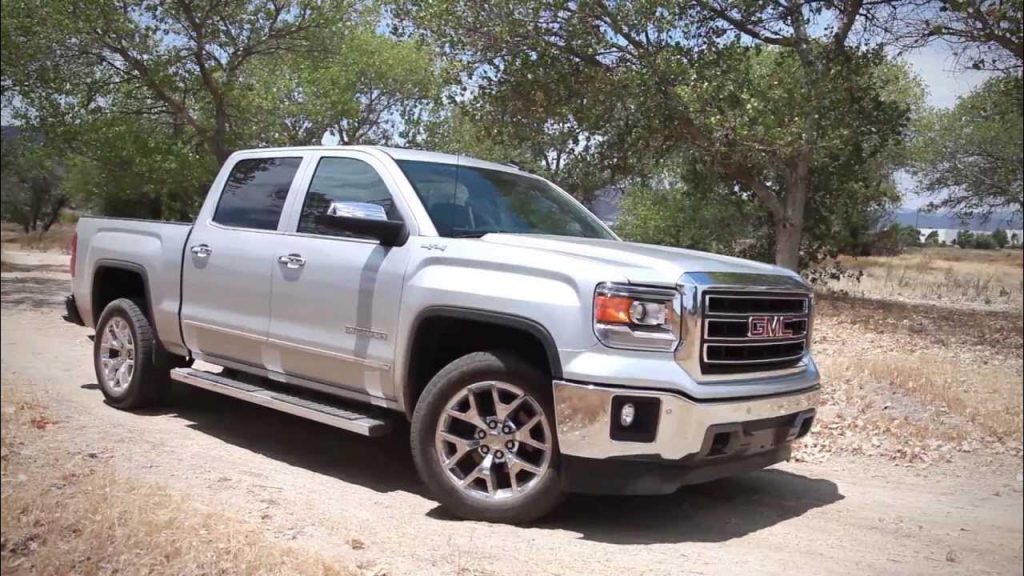
The 2014 GMC Sierra 1500 holds its own against long-standing competitors like the Ford F-150, Ram 1500, and Toyota Tundra. This is particularly evident now that GMC offers a V6 engine that delivers both strong performance and respectable fuel efficiency.
With so many capable options in the segment, choosing a full-size pickup may ultimately come down to which features you value most or even which design you prefer.
The standard engine for all trims except the SLT is a 4.3-liter V6 producing 285 horsepower and 305 lb-ft of torque. Like the other powertrains in the lineup, it pairs with a six-speed automatic transmission and can be configured with either rear-wheel or four-wheel drive.
When properly equipped, this engine allows the Sierra to tow up to 7,200 pounds. Fuel economy is also solid for a truck in this class, with GMC estimating 20 mpg combined (18 mpg city/24 mpg highway) for rear-wheel drive and 19 mpg combined (17 mpg city/22 mpg highway) when equipped with 4WD.
2015–2020 GMC Yukon XL
Another solid choice is the 2015–2020 GMC Yukon XL, essentially a stretched Sierra designed for families and heavy hauling. Built on a truck platform, this SUV handles wear and tear gracefully, with many examples reaching 200,000 miles and beyond.
The engines are resilient, and the transmissions (especially the 6-speed and 10-speed units) hold up well. The only caveats are minor electrical glitches and potential air suspension repairs on higher trims.
The Yukon’s naturally aspirated V-8 engines deliver power the traditional way, through sheer displacement. The larger 6.2-liter engine, derived from the Corvette, pairs exceptionally well with this hefty SUV, offering strong performance and a refined driving experience.
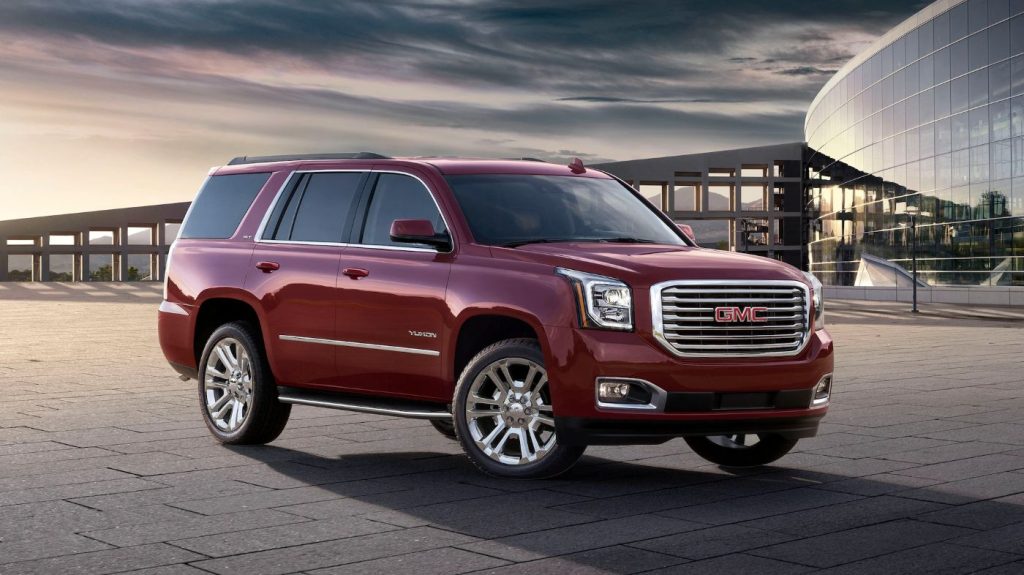
To complement its powertrains, GMC offers a modern 10-speed automatic transmission, bringing an element of contemporary engineering to the lineup. The standard setup for the Yukon is a 355-horsepower 5.3-liter V-8 coupled with a six-speed automatic transmission and rear-wheel drive. In the extended and heavier Yukon XL, acceleration is smooth, though not particularly brisk.
Regardless of which V-8 you choose, both engines are quiet and composed on the highway, and both can be equipped with a selectable all-wheel-drive system. Rear-wheel-drive models boast a towing capacity of up to 8,500 pounds, while all-wheel-drive configurations are rated for up to 8,200 pounds.
Despite its tall stance and considerable weight, the Yukon handles with more agility than expected when driven enthusiastically. Steering responses are on the slower side, yet the chassis reacts with a surprising degree of precision during spirited driving.
Also Read: 5 Cars With Best Long-Distance Comfort vs 5 That Sink After Hours
2016–2022 GMC Canyon
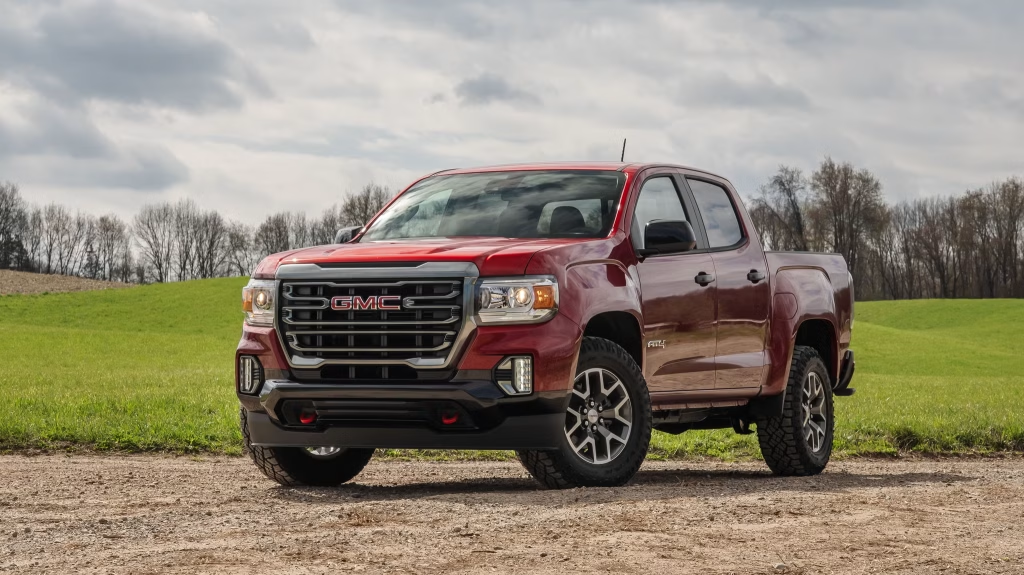
The 2016–2022 GMC Canyon may be a mid-size truck, but it punches above its weight in reliability. With its 3.6L V6 or the efficient 2.8L Duramax diesel, it offers excellent longevity and manageable upkeep. Timing chain issues in early 3.6L models can arise if oil changes are neglected, but otherwise, this is a low-drama pickup perfect for those who need utility without full-size bulk.
The Yukon’s naturally aspirated V-8 engines deliver power the traditional way, through sheer displacement. The larger 6.2-liter engine, derived from the Corvette, pairs exceptionally well with this hefty SUV, offering strong performance and a refined driving experience.
To complement its powertrains, GMC offers a modern 10-speed automatic transmission, bringing an element of contemporary engineering to the lineup. The standard setup for the Yukon is a 355-horsepower 5.3-liter V-8 coupled with a six-speed automatic transmission and rear-wheel drive. In the extended and heavier Yukon XL, acceleration is smooth, though not particularly brisk.
Regardless of which V-8 you choose, both engines are quiet and composed on the highway, and both can be equipped with a selectable all-wheel-drive system. Rear-wheel-drive models boast a towing capacity of up to 8,500 pounds, while all-wheel-drive configurations are rated for up to 8,200 pounds.
Despite its tall stance and considerable weight, the Yukon handles with more agility than expected when driven enthusiastically. Steering responses are on the slower side, yet the chassis reacts with a surprising degree of precision during spirited driving.
The base suspension on the test vehicle absorbed pavement imperfections with ease, maintaining composure and avoiding any unsettled behavior. On long stretches of highway, the Yukon delivered a ride as comfortable as many luxury sedans, effortlessly gliding over Michigan’s notoriously rough roads without transmitting harsh impacts to passengers.
However, Denali trims equipped with standard adaptive dampers—known as Magnetic Ride Control—offer a firmer, sharper ride that sacrifices some comfort for handling precision. Stopping power across the segment is generally comparable, as no large SUV in this class can truly “stop on a dime.” Even so, the Yukon’s brake pedal feels reassuringly solid, delivering consistent and stable responses during braking.
2010–present GMC Savana Van
If you’re after a workhorse, the 2010–present GMC Savana Van remains one of the most reliable options on the road. With its simple design and proven V8 engines (4.8L and 6.0L), this van thrives under fleet use and is easy to service. Rust is its biggest enemy, especially in northern climates, but its mechanical simplicity ensures it just keeps going.
As the GMC Savana reaches its 14th year without a major redesign, the age of this platform is becoming increasingly apparent. The issue is not so much with its styling or design, areas that are rarely priorities for a large, utilitarian workhorse but rather with its outdated features, mediocre fuel economy, and less refined road manners. In these aspects, newer full-size vans from Ford and Dodge have managed to surpass the aging Savana.
Although progress for the 2010 GMC Savana has been gradual, the model has undergone various upgrades throughout its lifespan. These include improvements to its engines, the introduction of available all-wheel drive, enhancements to its braking system and chassis, and a series of interior refinements.
For this model year, the Savana makes incremental gains with the addition of a new six-speed transmission, E85 flex-fuel compatibility, and a modest power increase for the 5.3-liter V8 engine.
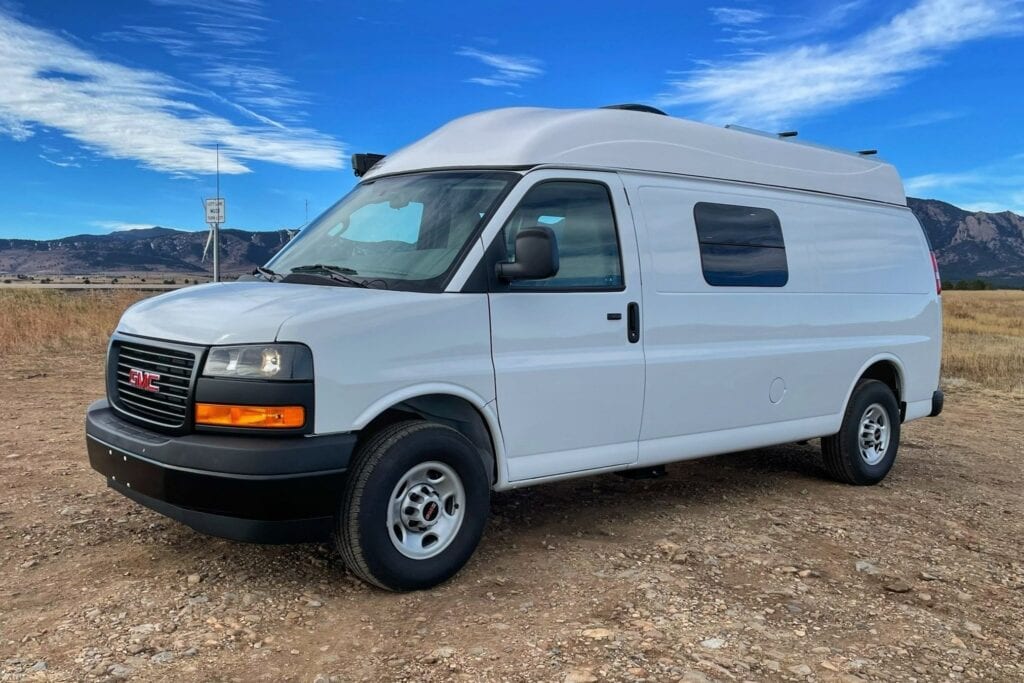
Despite its dated platform, the 2010 Savana retains its key strengths, the most significant being its cavernous interior that can seat up to 15 passengers. This makes it a highly practical choice for organizations such as companies, churches, and schools that need to move large groups of people and their cargo, without stepping up to an actual bus.
The challenge for the Savana is that these advantages are not unique. Its competitors offer similar benefits, with some going even further. The Ford E-Series, though also aging, provides modern amenities such as navigation, satellite radio, and a rearview camera.
Meanwhile, the Dodge Sprinter (soon to transition under the Mercedes-Benz name) boasts superior fuel efficiency, more refined driving dynamics, and an available tall-roof configuration. Nevertheless, where the Sprinter’s sophistication comes at a premium, the 2010 GMC Savana stands out by undercutting it by around $14,000, making it a more budget-friendly option for buyers who prioritize cost savings.
Also Read: Top 10 Cars With Easy-to-Clean Floors and Accessible Interiors
2016–2021 GMC Terrain (second generation)
Lastly, the 2016–2021 GMC Terrain (second generation) earns a spot for drastically improving on the reliability issues of its predecessor. The 1.5L turbo engine, while not the most exciting, holds up well with proper care, and the transmission is far more dependable than in the first generation. Regular oil changes and carbon buildup prevention are key to keeping this compact SUV running strong well past 150,000 miles.
For the 2021 model year, the GMC Terrain returns with only one significant update: the discontinuation of its optional 252-horsepower turbocharged engine. As a result, the Terrain is now offered with just a single engine choice, a 170-horsepower base four-cylinder that many drivers may find underwhelming.
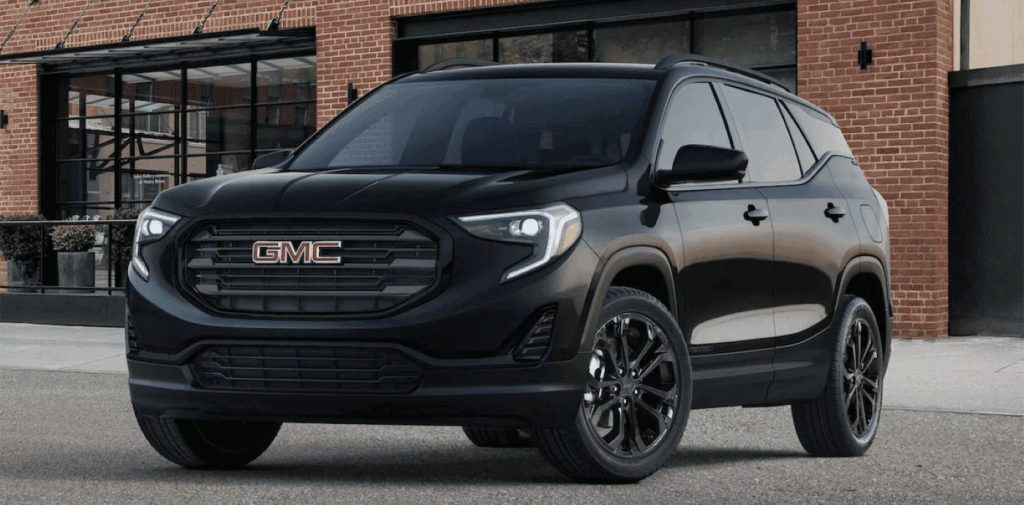
Apart from this change, the vehicle remains largely the same as it has been since the debut of its current generation a few years ago. This compact SUV shares much of its mechanical DNA with the Chevrolet Equinox, but it differentiates itself through distinctive styling cues and a slightly more refined interior. Beyond these differences, the Terrain is quite similar to its more affordable sibling from Chevrolet.
We appreciate the Terrain’s supportive and comfortable front seats, but in today’s crowded small SUV market, it faces stiff competition. Nearly every mainstream automaker offers a vehicle in this segment, and many rivals deliver a more compelling overall package.
5 GMCs That Start Falling Apart Too Soon
Not all GMCs have aged gracefully. These models have earned a reputation for costly breakdowns and design flaws that often show up before they hit high mileage.
2007–2012 GMC Acadia
At the top of the list is the 2007–2012 GMC Acadia, the first generation of this mid-size SUV. It quickly gained a reputation for catastrophic transmission failures, timing chain problems, and persistent electrical issues. Many owners report costly repairs before reaching 100,000 miles, making it one of the riskiest used GMCs to own.
The all-new 2007 Acadia marks GMC’s debut into the front-wheel-drive unibody segment, joining a fresh lineup of full-size crossover utility vehicles (CUVs) built on GM’s dedicated Lambda platform.
By utilizing a carlike body structure rather than a traditional truck-based frame, the Acadia manages to seat up to eight passengers while offering interior space and comfort more akin to a sedan than to GM’s larger SUVs. The lighter architecture—hundreds of pounds less than conventional SUV frames, not only enhances fuel efficiency but also gives the Acadia driving dynamics that feel far more carlike on the road.
Under the hood, both the SLE and SLT trims of the 2007 GMC Acadia are powered by a 275-horsepower 3.6-liter V6, paired with GM’s newly developed six-speed automatic transmission.
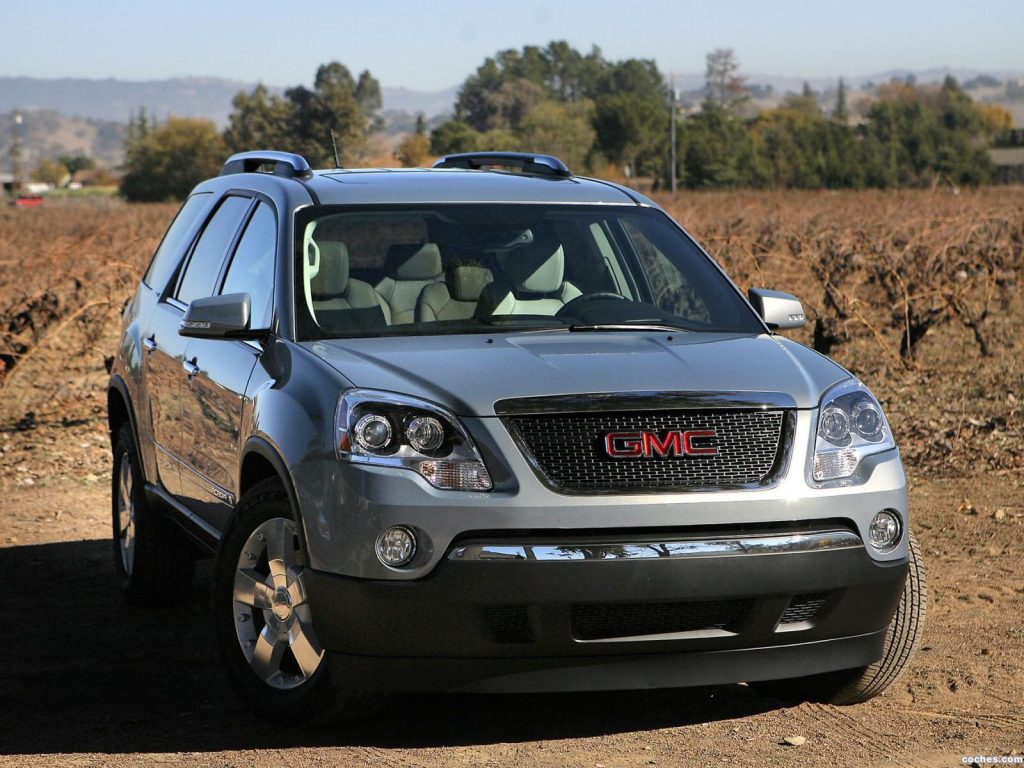
This powertrain combination is a significant upgrade, offering performance that most SUV drivers will find far superior to the older V6 or V8 engines mated to traditional four-speed automatics. Contributing to its modern driving character is the Acadia’s sleek, aerodynamic profile, which reduces wind noise and improves fuel economy at highway speeds.
The Acadia also boasts a long and wide stance, riding on a nearly 119-inch wheelbase. This design, combined with a fully independent coil-spring suspension, lowers the center of gravity, resulting in a smoother, more stable ride and handling that feels more responsive than any body-on-frame SUV.
The rear suspension employs a compact, isolated “H” design, which not only minimizes noise and vibration inside the cabin but also reduces intrusion into the floor pan. This clever setup allows the Acadia to deliver impressive passenger comfort and generous cargo space in both the second and third rows.
2010–2015 GMC Terrain (first generation)
Similarly, the 2010–2015 GMC Terrain (first generation) was plagued by the problematic 2.4L Ecotec engine, which is notorious for excessive oil consumption and piston damage. Even with diligent maintenance, this engine often fails prematurely, earning the early Terrain a spot on the “avoid” list.
On one hand, the 2010 GMC Terrain might appear to be a classic GM badge job, a straightforward Chevrolet Equinox clone sharing the same platform, features, and powertrains.
However, unlike many of its predecessors in this category, the Terrain proves to be a fundamentally solid vehicle, earning it a pass on the badge engineering stigma. In fact, both the Terrain and its Equinox counterpart seem poised to challenge the dominance that Honda and Toyota have long held in the small-to-midsize crossover SUV market.
The 2010 Terrain benefits from the same comprehensive updates introduced with the redesigned Equinox. Under its hood lies a robust base four-cylinder engine that delivers best-in-class fuel economy while maintaining competitive acceleration. For drivers seeking more power, an optional direct-injected 3.0-liter V6 is available, offering strong performance without compromising fuel efficiency.
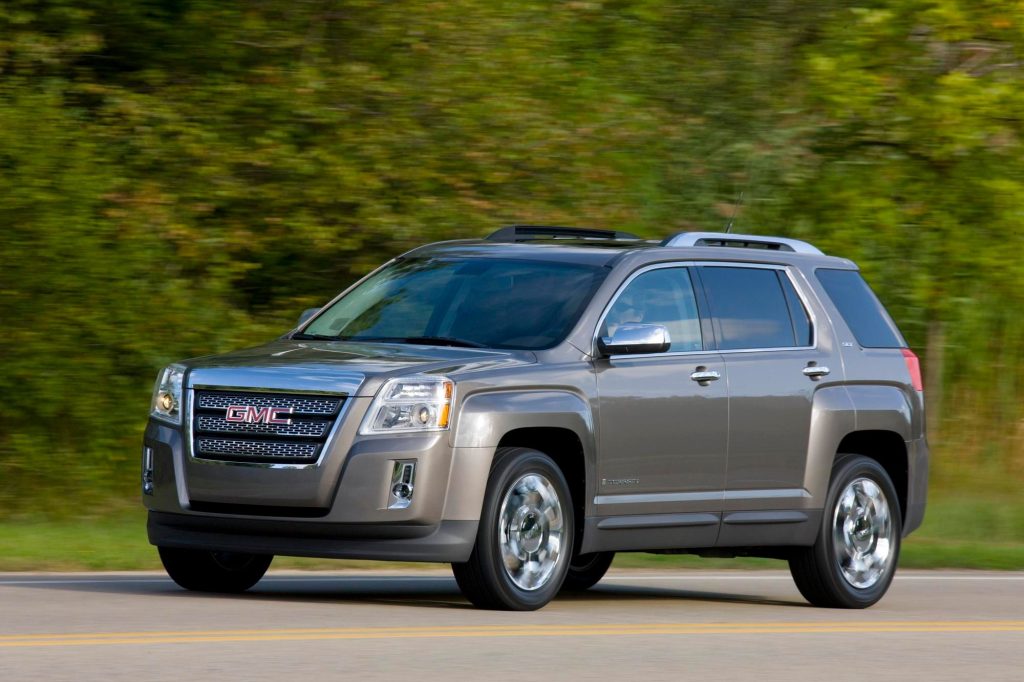
Inside, the Terrain features a stylish center stack and an appealing control layout that makes many rival cabins look bland and uninspired by comparison. Thanks to abundant acoustic insulation and an innovative noise-canceling system, the Terrain also stands out as one of the quietest compact crossovers available.
While the Terrain isn’t without shortcomings, its maximum cargo capacity falls short compared to some competitors, these drawbacks are minor when weighed against its overall strengths.
The 2010 GMC Terrain delivers nearly everything that buyers in this segment desire, making it a worthy contender to be cross-shopped alongside established rivals such as the Ford Escape, Honda CR-V, Mitsubishi Outlander, Nissan Rogue, and Toyota RAV4.
All 2010 GMC Terrain models come standard with a 2.4-liter four-cylinder engine producing 182 horsepower and 172 lb-ft of torque. For those seeking more muscle, a 3.0-liter V6 generating 264 horsepower and 222 lb-ft of torque is optional on all trims except the SLE-1. Both engines are paired with a six-speed automatic transmission, with front-wheel drive as standard and all-wheel drive available across the lineup.
2007–2014 GMC Yukon Denali
The 2007–2014 GMC Yukon Denali lures buyers with luxury but hides a host of long-term headaches. The upscale features, including the magnetic ride control and air suspension, become expensive liabilities as the miles add up.
Additionally, the 6.2L Vortec V8 suffers from AFM-related issues, leading to costly repairs for lifters and other components. After 120,000 miles, many Denali owners find themselves staring at repair bills that rival car payments.
If your primary reason for buying an SUV is to transport people comfortably, a lighter-duty crossover is probably the smarter choice. Plenty of crossovers offer three rows of seating, just like the Yukon. In fact, one of our top recommendations for a full-size crossover sits in the same showroom: the 2014 GMC Acadia. The Acadia not only seats up to eight passengers but also provides more cargo space than the Yukon.
However, if your needs include serious towing capability, up to 8,500 pounds, or off-road adventures, the 2014 GMC Yukon is an excellent option. Its chief competitor is the Toyota Sequoia, which delivers a similar blend of ruggedness and refinement.
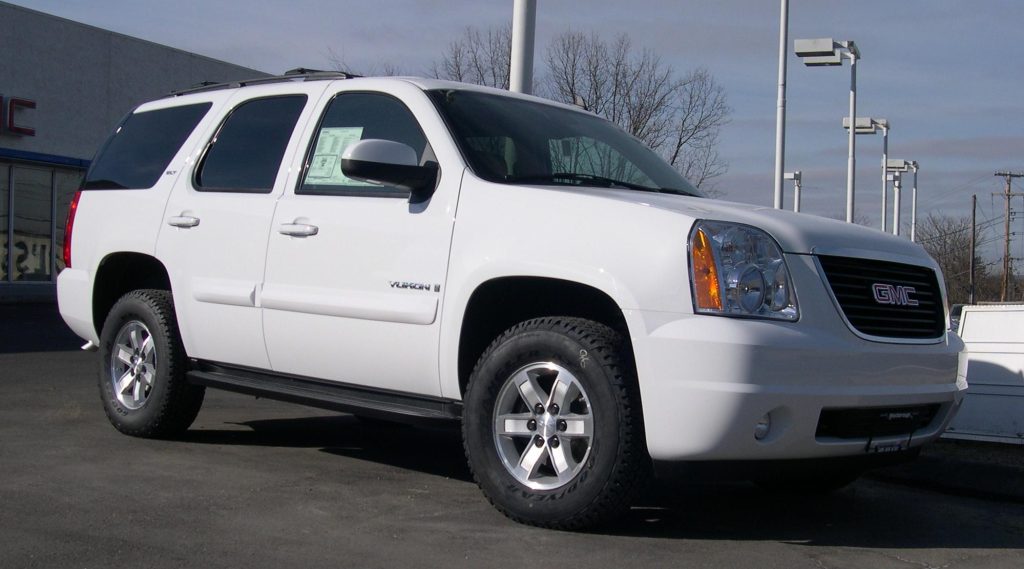
It’s also worth noting that a redesigned GMC Yukon is on the way for the 2015 model year, promising a more powerful and efficient V8 engine along with a stow-away third-row seat. For those determined to buy a large, traditional SUV before the redesign hits the market, the current Yukon remains an attractive pick for buyers who prioritize generous seating capacity and utility.
The 2014 GMC Yukon SLE and SLT trims come equipped with a 5.3-liter V8 that produces 320 horsepower and 335 lb-ft of torque. This engine is paired with a six-speed automatic transmission, and customers can choose between rear-wheel drive or a four-wheel-drive system featuring a two-speed transfer case with low-range gearing for demanding off-road conditions or heavy snow.
The GMC Yukon Denali steps up the performance with a 6.2-liter V8 delivering 403 horsepower and 417 lb-ft of torque. It also uses a six-speed automatic transmission with manual-shift capability. Rear-wheel drive is standard, while all-wheel drive is optional. However, the AWD system is not intended for extreme off-road use since it features only a single-speed transfer case.
2007–2013 GMC Sierra 1500
Another GMC with mixed reviews is the 2007–2013 GMC Sierra 1500. While its drivetrain can last if well-maintained, many examples suffer from severe frame rust, especially in northern states where road salt is common. AFM failures and hard-shifting transmissions are also reported, turning what could have been a great truck into an expensive project if neglected.
Much like an aging athlete who proves they’ve “still got it,” the 2013 GMC Sierra 1500 continues to hold its ground against newer, flashier competitors. Although it was last redesigned six years ago and now competes with fresher models from Dodge and Ford, the Sierra 1500’s core strengths keep it a worthy contender in the full-size pickup market.
When it comes to towing capability and a broad selection of trims and body styles, the GMC Sierra 1500 matches its rivals step for step. It also delivers a smooth, quiet ride with comfortable seating, making it an excellent choice for long road trips.
However, buyers seeking a no-frills work truck may notice that competitors offer more appealing interiors and stronger base engines. In particular, while other brands have significantly improved their base six-cylinder engines, the Sierra’s underpowered V6 remains unchanged and struggles to handle the truck’s weight effectively.
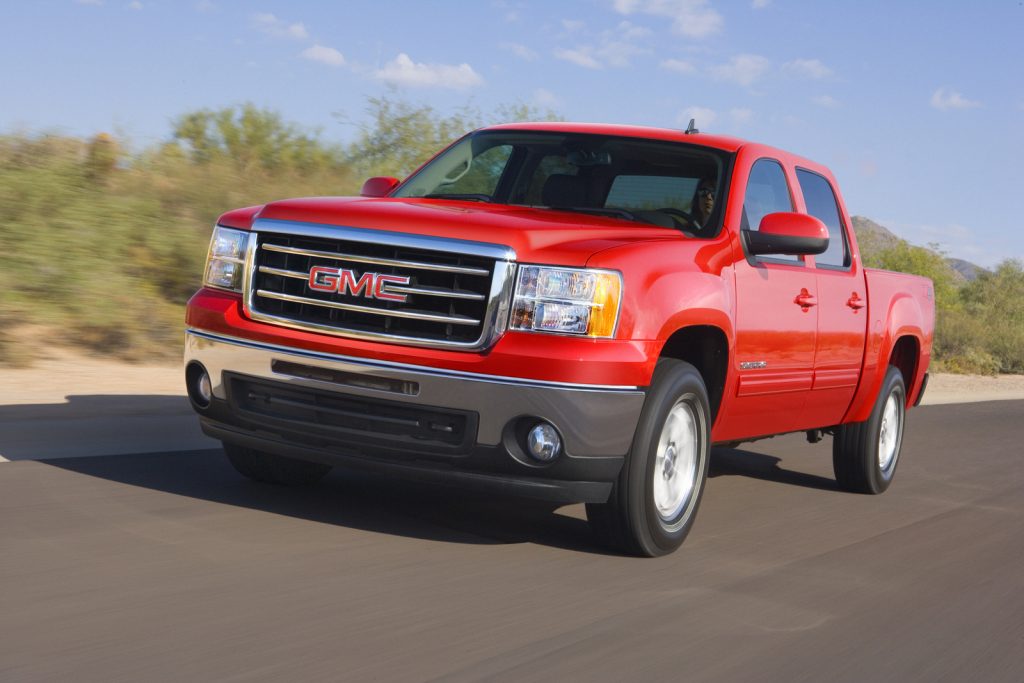
Cross-shopping reveals that the Ford F-150 brings more high-tech features, the 2013 Ram 1500 offers a more refined interior with an even smoother ride, and the 2013 Toyota Tundra crew cab provides more interior space. Yet, for many pickup shoppers, the 2013 GMC Sierra 1500 remains a well-rounded option that deserves serious consideration in this highly competitive segment.
The 2013 GMC Sierra 1500 offers four engine options. The Work trim comes with a standard 4.3-liter V6 generating 195 horsepower and 260 lb-ft of torque. Buyers can upgrade to a 4.8-liter V8 delivering 302 hp and 305 lb-ft, or a 5.3-liter V8 producing 315 hp and 335 lb-ft. The SLE trims come standard with one of the V8 options, while the SLT is equipped with the 5.3-liter V8 as standard.
A 6.2-liter V8, producing 403 hp and 417 lb-ft of torque, is available on select models and comes standard on the Denali. The larger V8s pair with a six-speed automatic transmission, while the 4.8-liter V8 and V6 are mated to a four-speed automatic.
2002–2009 GMC Envoy
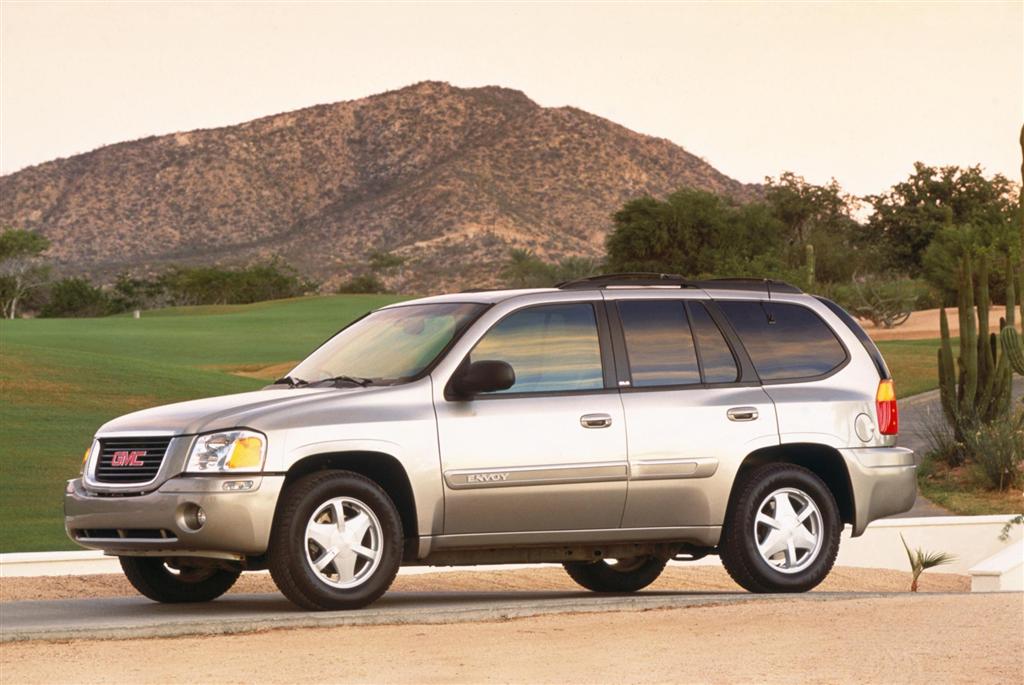
Finally, the 2002–2009 GMC Envoy closes out the list as an SUV that simply didn’t stand the test of time. Once marketed as a stylish alternative to larger trucks, the Envoy is now more commonly found on Craigslist with “needs work” in the description. Suspension failures, endless electrical gremlins, and weak transmissions often surface around the 100,000-mile mark, making it a poor choice for long-term ownership.
For 2004, the GMC Envoy sees several updates to its options list, enhancing both entertainment and convenience features. Among the new additions are XM Satellite Radio (along with an updated stereo to support it), a DVD-based navigation system, and adjustable pedals. These upgrades reflect GMC’s efforts to keep the Envoy competitive in a crowded SUV market.
There are also some minor equipment changes this year. On SLE models, the door trim has switched from cloth to vinyl, and the lumbar adjustment for the front seats is now a two-way manual control instead of the previous four-way design.
The cargo area no longer includes a power outlet, and the SLE badging has been removed from the B-pillars. Meanwhile, SLT trims benefit from a revised steering wheel for a refreshed feel.
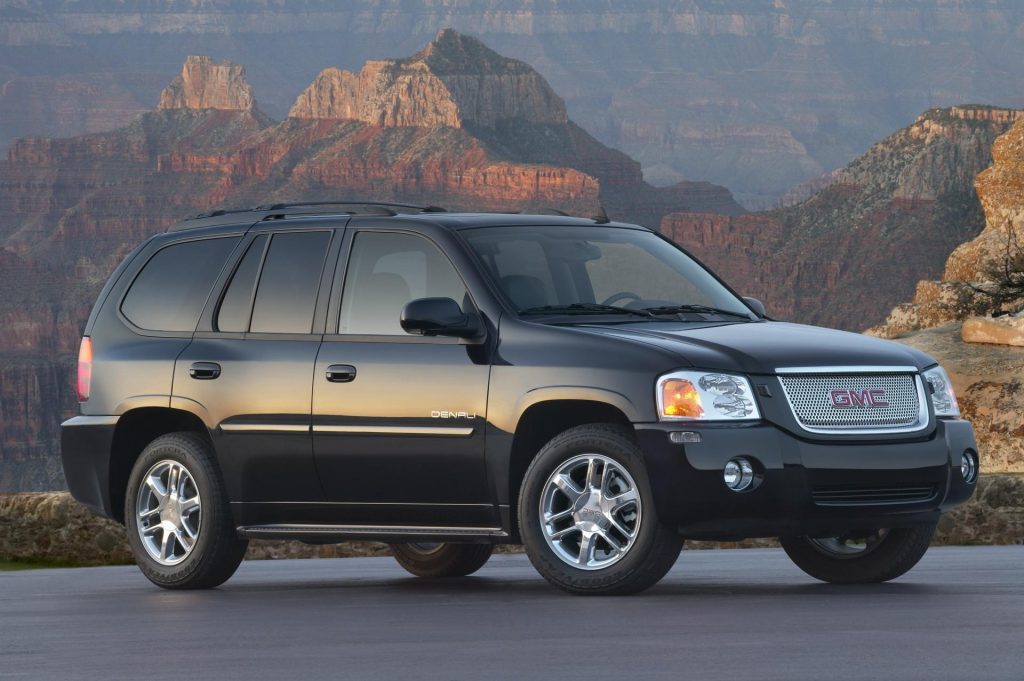
Lastly, a notable improvement for Envoys equipped with the optional rear-seat entertainment system is the ability to play DVD audio through the vehicle’s sound system, in addition to using wireless headphones. This small but practical enhancement improves the overall entertainment experience for passengers.
The difference between the GMCs that last and the ones that don’t often comes down to a few key factors. Engine design plays a huge role, with older direct-injection systems and early AFM setups leading to premature wear.
Transmission choice matters as well, with newer 6L80 and 10-speed units generally outlasting the older 4- and 5-speed versions. Maintenance history is critical; even the most reliable model can become a nightmare if neglected. Finally, build era matters—post-2014 GMCs tend to benefit from improved quality control and more reliable components.
GMC still produces some of the toughest trucks and SUVs on American roads, but the badge itself isn’t a guarantee of longevity. Models like the Sierra 1500 (2014–2018) and Yukon XL (2015–2020) prove they can handle high mileage with ease, while older models like the first-gen Acadia and Terrain show how quickly things can go downhill.
