
In the world of performance cars, premium fuel (usually 91 or 93 octane) is often seen as the standard. High-compression engines and turbocharged setups typically demand higher-octane fuel to prevent knocking and to maximize performance.
But for the cost-conscious American driver who still wants spirited performance without breaking the bank at the pump, there’s good news some well-engineered performance cars are tuned to run clean and efficiently on regular 87 octane gasoline.
Here’s a list of six performance-oriented vehicles that offer power and fun without requiring expensive premium fuel, making them practical daily drivers with a sporty edge.
1. Ford Mustang EcoBoost (2.3L Turbo I4)
Ford’s 2.3-liter turbocharged EcoBoost engine brings solid performance while remaining fuel-flexible. The engine is rated at 310 horsepower (or up to 330 hp in High-Performance Pack trims) and is tuned to operate safely and cleanly on 87 octane.
While it makes slightly more power on premium, the engine control systems are sophisticated enough to adjust timing and boost without damaging the engine or triggering a check engine light.
The EcoBoost Mustang delivers sub-6-second 0-60 times, good torque down low, and surprisingly decent fuel economy for a sporty coupe all on regular fuel, making it one of the most wallet-friendly performance cars to run.
As hot-rodders, our default choice has always been V8 engines. Because for more than 70 years, the eight-cylinder layout has been the tried-and-true formula for serious performance. And let’s be honest, the deep, throaty growl of a V8 is nearly impossible to top. Unfortunately, V8s are slowly disappearing from new cars, replaced by smaller engines fitted with power-adders like turbochargers.
Don’t get us wrong, we appreciate a good boosted engine as much as anyone, and there isn’t a hot-rodder out there who wouldn’t smile at the thought of a turbocharged Buick Grand National V6 from the 1980s.
But what happens when the engine gets even smaller? That’s exactly what we wanted to find out. So, when Ford offered us a 2024 Mustang EcoBoost equipped with a 2.3-liter turbocharged four-cylinder, we couldn’t resist. At the very least, we were happy it wasn’t electric.
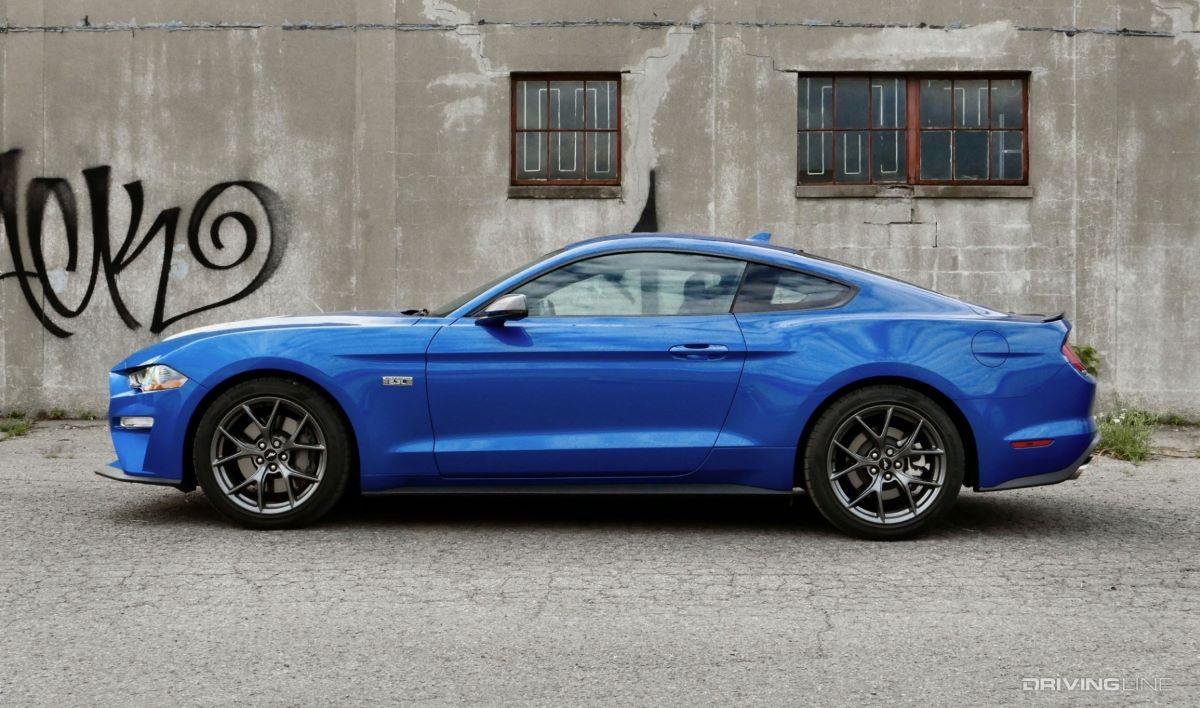
The Mustang Ford sent us checked all the right boxes. This 2024 convertible came with the 2.3-liter High Performance Package, big Brembo brakes, MagneRide suspension, and a silky 10-speed automatic transmission. The Grabber Blue paint was the cherry on top.
At first, hearing “2.3-liter” made us nervous, triggering memories of the underwhelming 88-hp four-banger in the old Mustang II. But this isn’t the 1970s anymore. Times have changed, and this modern 2.3-liter is turbocharged, cranking out 315 horsepower and 350 lb-ft of torque.
To put it in perspective, those numbers are nearly identical to what the LS1-powered fourth-gen Camaro delivered. With its twin-scroll turbo to minimize lag, direct port injection, and an electronic wastegate, this engine uses every trick in the book to extract solid power. There’s no manual option, so our test car had the 10-speed automatic.
Honestly, an eight-speed would’ve been plenty, as the ECU sometimes hunted for gears. Switching to manual mode with the paddle shifters fixed this on the track, but a proper manual would’ve been more engaging, especially once you learned to stay within the engine’s narrow torque band.
The High Performance Package is something we’d call a must-have. It includes 19-inch Pirelli P Zero tires, a 3.55 limited-slip rear differential, and a performance-tuned suspension.
On top of that, you get large Brembo six-piston front calipers, four-piston rears, and an electronic drift brake that’s perfect for showing off, as long as you don’t slide into something solid. Oddly, this package doesn’t add any horsepower.
During the highway run to Vegas for the first leg of the HOT ROD Power Tour West, the Mustang felt plenty powerful. Sure, 315 horsepower isn’t jaw-dropping by modern V8 standards, but the reduced nose weight from the smaller engine made the car feel nimble. Plus, if you keep it out of boost (easier said than done), it can nudge past 30 mpg on the highway.
The sound. While Ford did a respectable job tuning the exhaust, it simply doesn’t deliver that unmistakable V8 soundtrack. You’ll never mistake it for anything other than a turbocharged four-cylinder. As for competition, its only real rival would’ve been the Camaro 1LE four-cylinder, except that’s no longer a thing.
Once we hit the autocross in Vegas, the EcoBoost Mustang came alive. The suspension felt dialed-in, and with less weight over the front axle, turn-in was sharp and confidence-inspiring.
We generally dislike calling something a “momentum car,” but despite its solid 350 lb-ft of torque, the car did struggle to regain speed if you botched a corner (pro tip: don’t botch a corner). Steering was quick but didn’t provide much feedback. Even so, the handling was impressive, and once you adapted to the 2.3-liter’s power curve, it put down respectable lap times.
We also loved the Recaro seats, even if they were manually adjusted. Surprisingly, the EcoBoost Mustang ended up being more fun through the cones than we expected. In fact, some well-built EcoBoost Mustangs in the Optima series have gone head-to-head with, and often beaten, their V8-powered rivals.
Visually, we’re fans of the new 2024 Mustang’s styling. We especially loved the Dark Horse V8 variant we tested at Charlotte Motor Speedway, but even the EcoBoost version looks the part.
The dash screens can feel cluttered at first, but after tweaking the layouts, you’ll find one that works, especially when you’re focusing on not clipping cones or K-rails. The Grabber Blue paint sealed the deal for us, it’s a modern muscle car color done right.
Also Read: 5 Hidden Gem Convertibles vs 5 Popular Convertibles With Leaky Tops
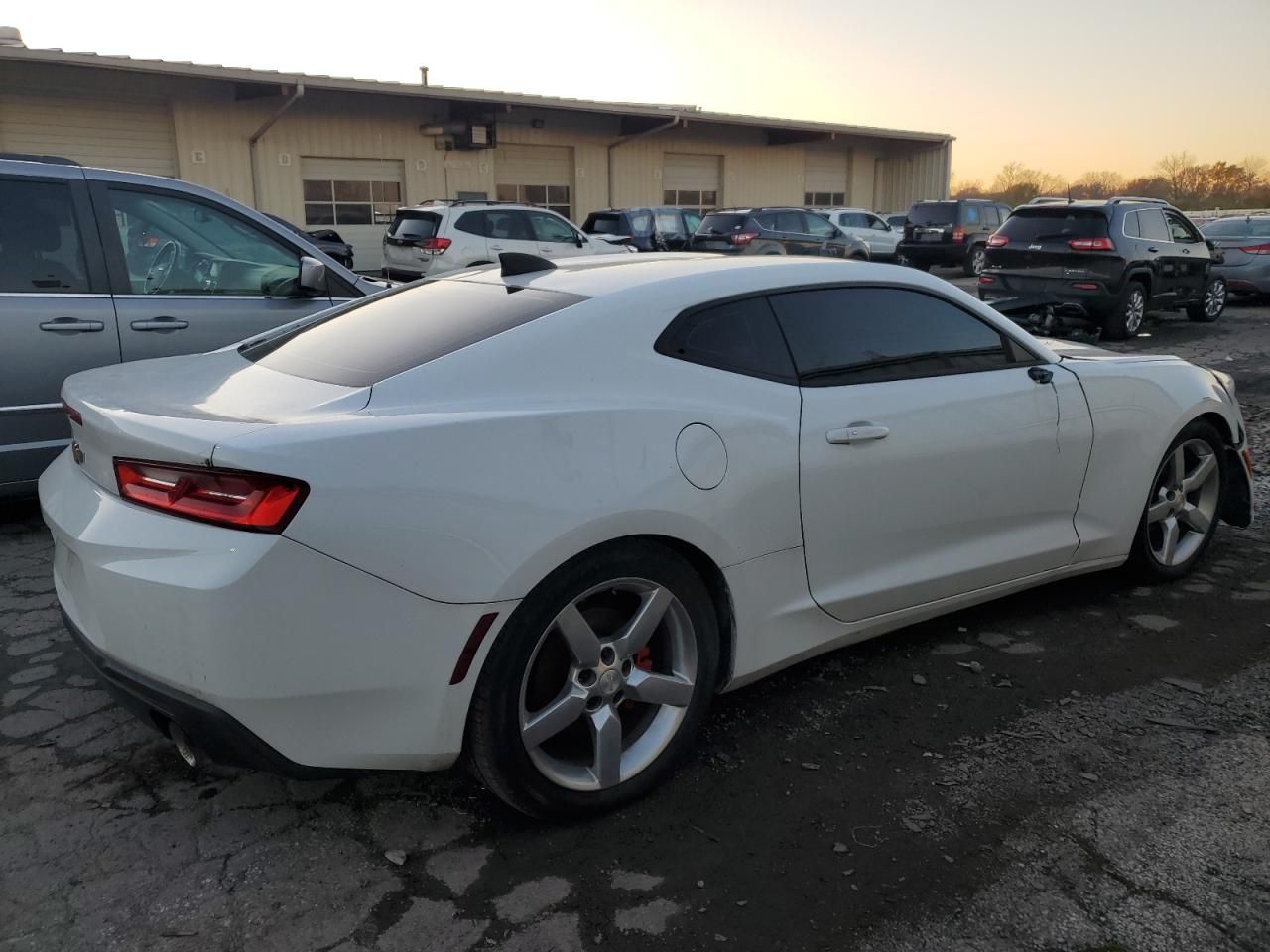
2. Chevrolet Camaro LT (2.0L Turbo I4)
The four-cylinder Camaro may not get the same respect as its V8 sibling, but it’s far from a slouch. Producing 275 horsepower and 295 lb-ft of torque, the 2.0L turbocharged engine is calibrated to accept 87 octane without excessive carbon build-up or spark knock.
It also features direct injection and modern knock-sensing technology that allows it to operate efficiently and cleanly with lower-octane fuel. For those who want classic American muscle aesthetics with more realistic fuel and maintenance costs, the turbo Camaro makes a compelling case.
I’ll admit, I was skeptical when Chevrolet invited Super Street, a magazine with a strong JDM focus, to test-drive the all-new 2.0-liter Camaro. While the Camaro lineup isn’t exactly what our core readers typically crave, this specific version isn’t something traditional American muscle fans are used to either.
Hardcore muscle purists might see this as sacrilege and start counting cylinders, but dismissing it outright would be a mistake. The small engine doesn’t hold back when it comes to performance. Chevy did its homework, and the 2016 Camaro 2.0L Turbo manages a 0–60 time of 4.5 seconds, the same as a 1970 Chevelle 454 SS.
You might think this setup goes against the age-old hot-rodding rule of power-to-weight ratios, but Chevy clearly thought ahead. The smaller engine contributes to a curb weight of 3,339 pounds, 390 pounds lighter than the 2015 V6 model. That weight savings makes a big difference. On track, the lighter chassis transforms the car into something unexpectedly agile.
During my laps at Spring Mountain Motorsports Ranch in Pahrump, Nevada, the Camaro stayed planted and flat through corners. Even with my limited track experience, the car made me feel like a hero. Its handling balance reminded me of a Scion FR-S, with sharp turn-in and poise, yet it never felt underpowered.
Off the track and onto public roads, the Camaro continues to shine. Acceleration on straights is quick and responsive, with only a hint of turbo lag. There are a few things I wish this 2.0L version borrowed from its pricier LT1 sibling, features like Active Rev-Match or a more upscale interior, but the driving experience still delivers.
While it doesn’t have the thunderous growl of a V8, nothing’s stopping an enthusiast from bolting on a straight pipe, upgrading the exhaust, or swapping in a bigger turbo to crank things up even further. In its current form, Chevrolet may have unintentionally created a car that can take down the FR-S and Miata while carving out its own place in the modern performance scene.
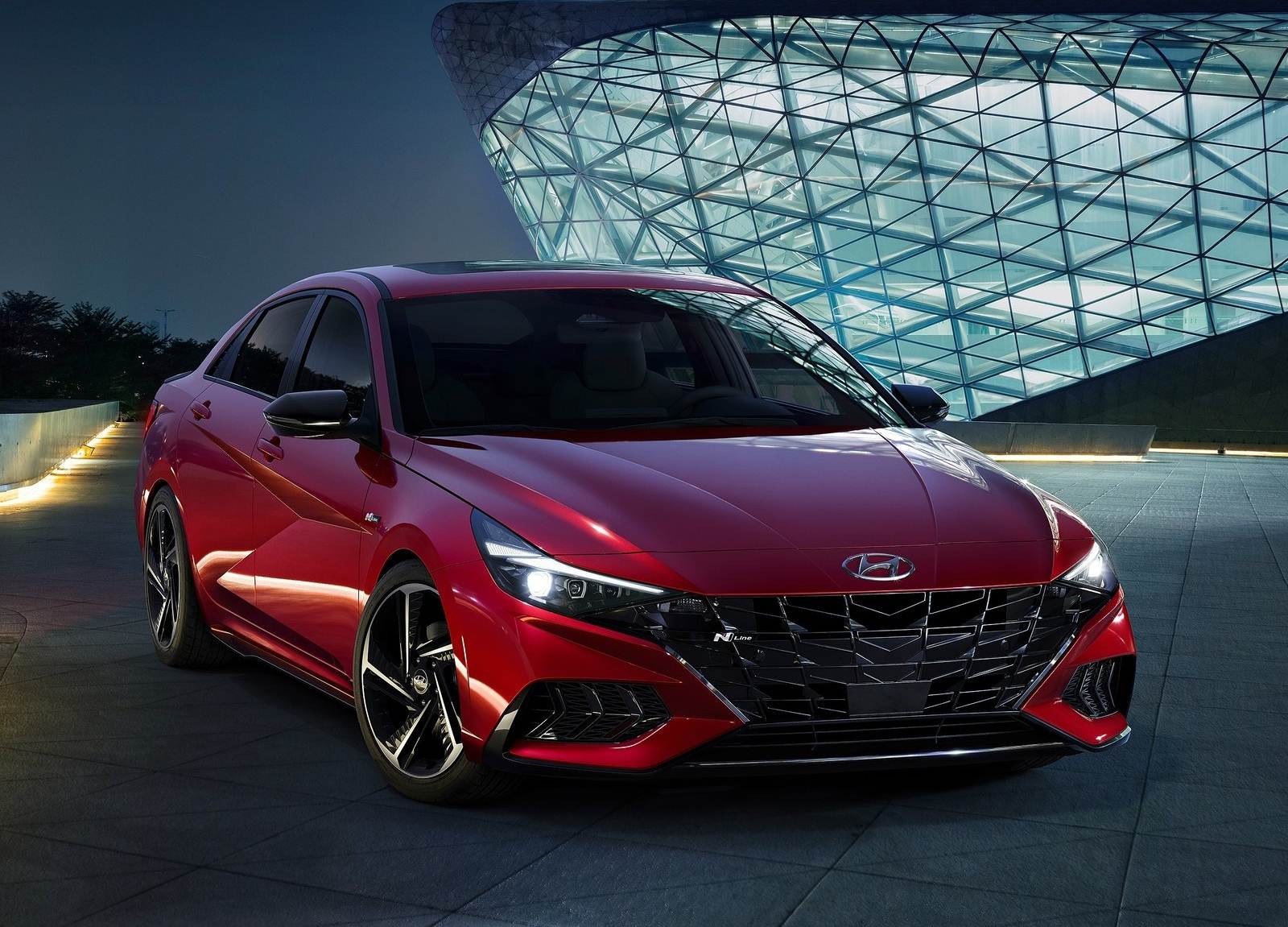
3. Hyundai Elantra N Line (1.6L Turbo I4)
Hyundai’s N Line offerings have been steadily gaining popularity, and the Elantra N Line provides a sportier driving experience without the full-cost burden of a dedicated performance car.
Its 1.6L turbocharged engine produces 201 horsepower and is engineered to run on 87 octane, thanks to Hyundai’s smart ignition and fuel control systems.
Despite being front-wheel-drive, the Elantra N Line offers agile handling, a solid dual-clutch transmission, and modern safety tech all while keeping fuel costs low. It’s a sporty commuter that doesn’t need premium to feel quick off the line.
You’ve probably heard about Hyundai’s N performance division by now, which made its U.S. debut with the 2019 Veloster N hatchback. Following that success, the Kona utility vehicle and the Elantra sedan were next in line to receive the high-performance treatment. Full tests of those versions are coming soon, but first, let’s talk about the 2021 Elantra N Line, a model designed to whet your appetite.
To clarify, an “N” badge alone indicates a full high-performance version, while “N Line” means a milder performance upgrade that borrows inspiration from the N division. It’s less aggressive mechanically, but significantly sportier than the standard Elantra—similar in character to the outgoing Elantra Sport.
The N Line exterior stands out with a redesigned cascading grille and a unique front fascia. Down the sides, you’ll find black sill extensions, while the rear gets an updated look with a new diffuser, integrated chrome exhaust tips, and a deck-lid spoiler.
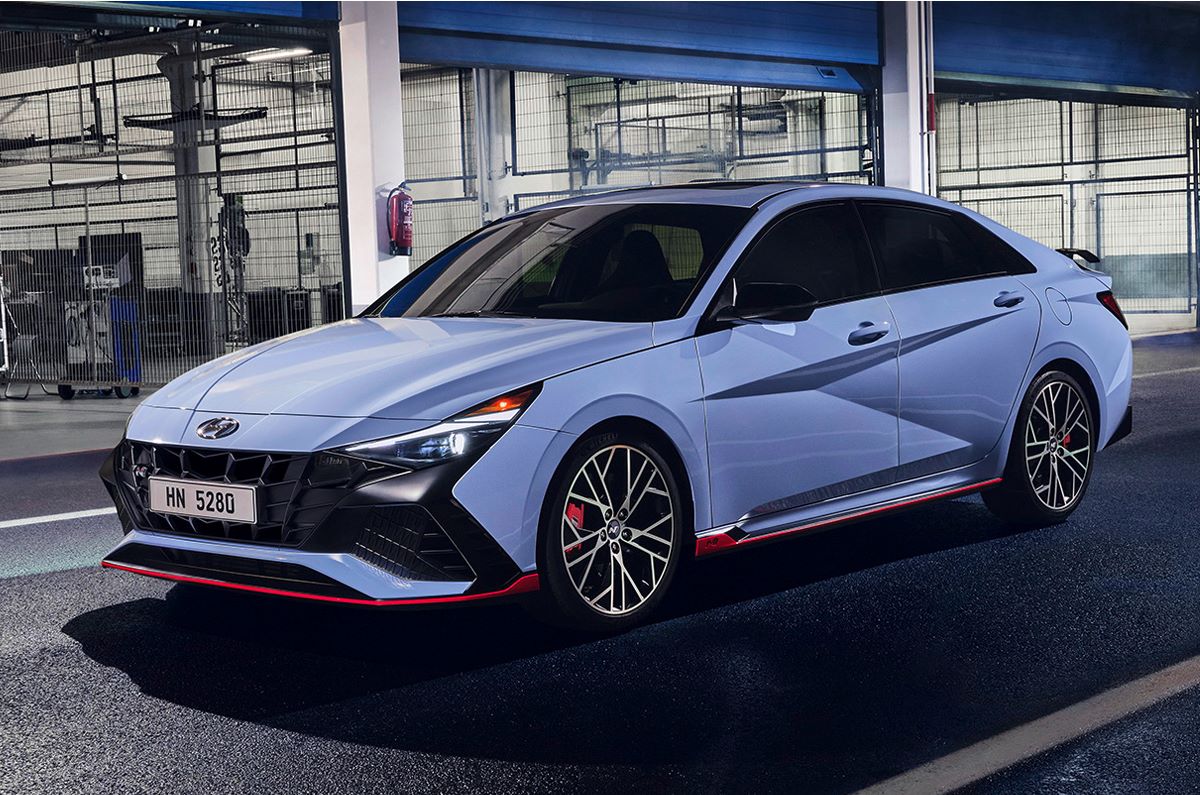
Black window trim, a standard sunroof, upgraded headlights, LED tail lamps, and new wheels complete the package. The 18-inch wheels come with all-season tires when paired with the 7-speed DCT, while the manual transmission version rolls on summer tires. Yes, Hyundai offers a 6-speed manual, a rare treat these days.
Both transmission options pair with a 1.6-liter turbocharged inline-four producing 201 horsepower and 195 lb-ft of torque. It’s not an overwhelming amount of power, but it’s 54 horses more than the base Elantra, boosting the fun factor without sacrificing day-to-day comfort.
Inside, the cabin receives sporty upgrades, including a perforated leather steering wheel, N Line sport seats with leather bolsters, a unique N Line gauge cluster, and plenty of red stitching accented by metal trim.
Hyundai didn’t stop at cosmetic enhancements. The N Line also gets meaningful chassis upgrades: stiffer engine mounts, firmer springs, thicker stabilizer bars, new shocks, a quicker steering ratio, and larger front brake rotors by an inch.
On the slalom, the Elantra N Line impressed. It darted through cones with sharp responses and excellent feedback through the steering wheel. Body roll was minimal, and understeer only appeared when pushed hard, and even then, it was easy to manage.
The clutch and gas pedal feel a bit soft and vague, making launches trickier than necessary. However, once the tach needle swings past 4,000 rpm, the engine comes alive, delivering power smoothly. The N Line hit 60 mph in 7.1 seconds, over a second faster than the naturally aspirated 2.0-liter Elantra.
The manual shifter is easy to row, and we managed a 15.3-second quarter mile at 90 mph. Braking performance was equally solid, with strong pedal firmness, great feedback, and fade-free stops from 60 mph in just 101 feet.
According to government ratings, the manual version delivers 25 mpg city, 34 mpg highway, and 28 mpg combined. In our tests, we averaged 26.8 mpg on regular fuel. Energy Impact Scores are slightly above average, with 11.8 barrels of oil consumed and 5.3 tons of CO2 emitted annually. In the Elantra lineup, the N Line sits just below the top Limited trim, starting at $25,105 for the manual and $26,205 for the DCT.
Tweener models often aim for balance, and in this case, that’s a good thing. Not everyone wants to wrangle a track-ready, stiff-clutched hot hatch for daily driving, but many of us crave a taste of performance without losing comfort. The 2021 Hyundai Elantra N Line nails that balance perfectly, offering sporty character with everyday livability.
4. Mazda3 Turbo (2.5L Turbo I4)
Mazda’s 2.5-liter turbocharged engine, found in the Mazda3 Turbo hatchback and sedan, offers a clever compromise: it produces 250 horsepower on 93 octane, but it’s fully capable of running on 87 octane with slightly reduced output (around 227 hp).
This dynamic fueling strategy lets owners choose how they want to drive economically or aggressively without risking engine damage or dirty emissions.
The engine features advanced knock control and variable valve timing to optimize combustion at lower octane levels. Even on regular gas, the torque-rich delivery and sharp throttle response remain satisfying, especially when paired with Mazda’s refined all-wheel-drive system.
Mazda now offers the base model of the Mazda 3 as both a sedan and a hatchback, whereas previously it was available only as a sedan. For 2025, all non-base trims gain embedded Alexa capability in the infotainment system.
The Carbon Edition is now available with the non-turbocharged engine and includes standard all-wheel drive, Polymetal Gray exterior paint, 18-inch black aluminum alloy wheels, gloss-black heated door mirrors, a red leather interior, and wireless device charging.
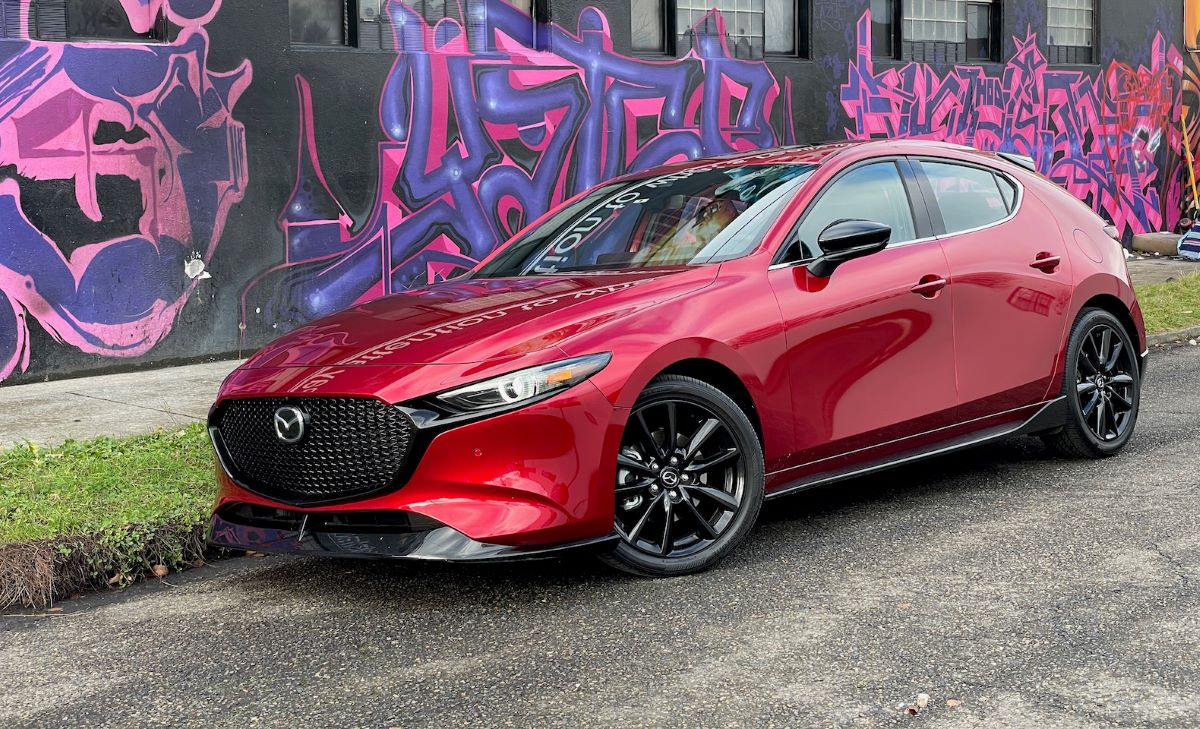
The 2025 Mazda 3 pricing starts at $25,385 for the base model and rises to $36,985 for the top Turbo Premium Plus trim. The trim lineup includes the Select Sport at $26,125, the Preferred at $27,525 (our recommended pick), the Carbon Edition at $30,595, the Premium at $31,285, and the Carbon Turbo at $33,285.
While the hatchback’s distinctive design is tempting, its bulbous rear end compromises visibility, making the sedan the more practical choice. Opting for the Preferred trim adds heated front seats and a power-adjustable driver’s seat with memory functions, enhancing comfort. For those wanting all-wheel drive, the Carbon Edition or any of the Turbo trims will meet that need, as AWD is standard on those models.
5. Toyota Camry XSE V6 (3.5L NA V6)
The Camry XSE V6 might be a sleeper in this list, but don’t overlook it Toyota’s 3.5-liter naturally aspirated V6 delivers a stout 301 horsepower and doesn’t require premium fuel.
This engine is engineered with Toyota’s hallmark reliability and emissions standards in mind, meaning it runs clean and smooth on 87 octane without carbon fouling or misfire risks.
The Camry XSE blends performance and practicality like few others in its class. It has strong straight-line speed, a sport-tuned suspension, and enough room to comfortably carry passengers all while sipping cheaper fuel and avoiding emissions headaches.
The newest generation of the Toyota Camry marks a complete overhaul of the brand’s popular daily driver, beginning with an all-new chassis built on Toyota’s New Global Architecture (TNGA).
This redesigned foundation enhances the vehicle’s driving dynamics and safety across the board. Externally, the Camry now flaunts a far more aggressive and athletic appearance compared to its predecessor, especially noticeable in the XSE trim I had the chance to drive.
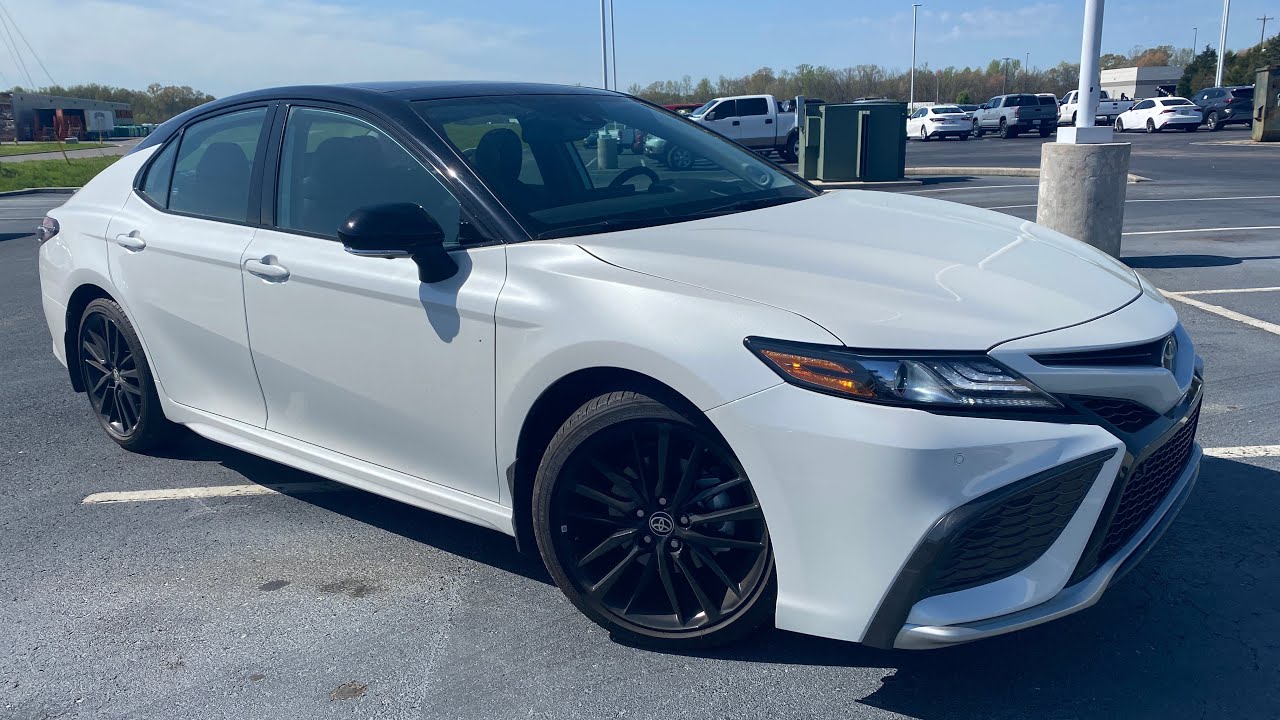
The XSE trim equips the Camry with bold, dynamic front-end styling, featuring a blackout grille and sharply pinched lines that naturally draw attention to Toyota’s signature “T” emblem. The grille is framed by bright LED headlights with a sporty smoked tint, complemented by a sculptural stacked-“L” design in the accent lighting.
At the rear, the sharp, angular design continues, echoed in the LED tail lights that appear to float above what seems to be the first-ever use of quad exhaust tips on a production Toyota. While those quad tips add to the car’s aerodynamic profile, don’t expect an aggressive roar to emerge from them, the Camry XSE remains impressively quiet despite its potent engine.
Under the hood, a naturally aspirated 3.5-liter V6 powers this sedan, delivering an impressive 301 horsepower—a significant increase from the 268 horses in the 2017 model. Pair this power with a reasonable curb weight of 3,572 pounds, and you’ve got a 2018 V6 Camry that is both lighter and more powerful than a Mustang GT from just ten years ago. That’s a clear sign of progress.
6. Honda Accord Sport 2.0T (2.0L Turbo I4)
Honda’s now-discontinued Accord Sport 2.0T trim remains a popular choice on the used market for good reason. Its 2.0-liter turbocharged engine, shared with the Civic Type R (albeit detuned), makes 252 horsepower and 273 lb-ft of torque.
While it can make slightly more power on premium, the engine management system ensures it runs clean and safe on 87 octane.
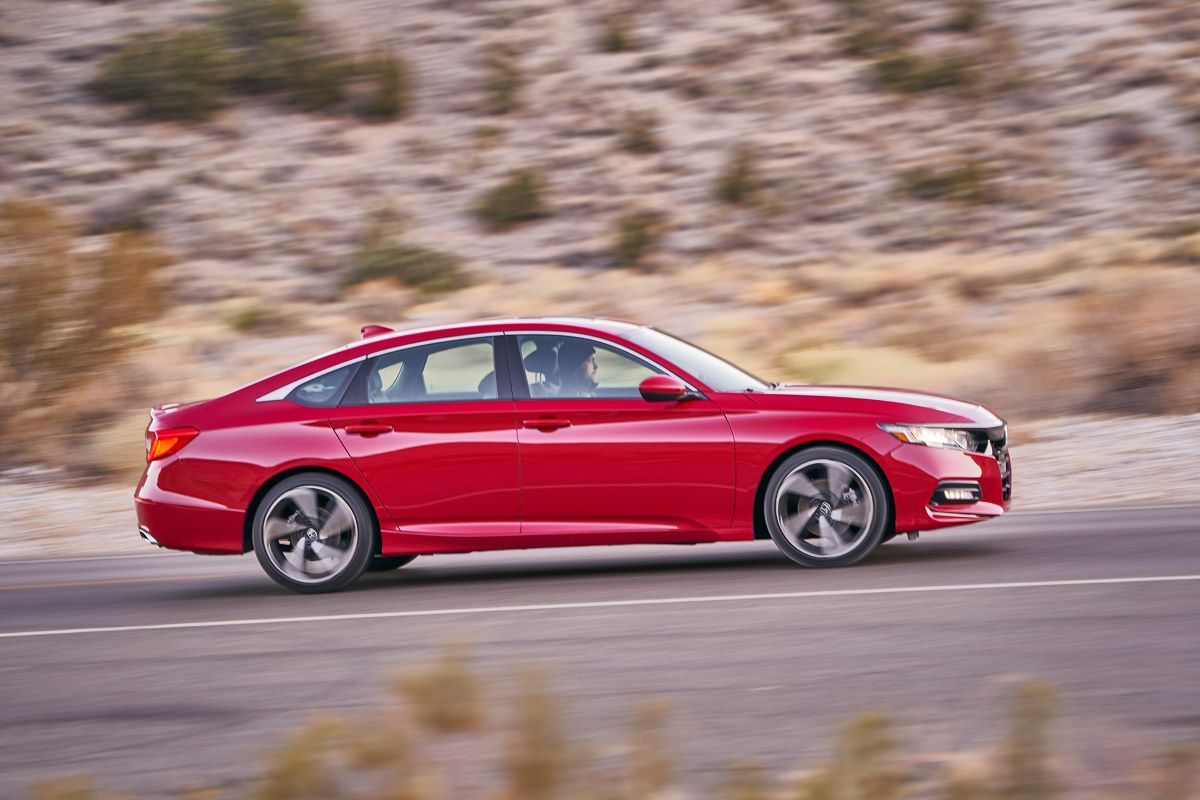
The Accord 2.0T delivers a near-luxury ride with muscle-car torque, a crisp 10-speed automatic transmission, and excellent emissions performance. For drivers looking for a fast and mature midsize sedan that won’t punish them at the pump, this Honda delivers.
Beneath the hood of the Accord Sport 2.0T lies a variation of the engine found in the Honda Civic Type R, giving this sedan acceleration that nearly matches the legendary hot hatchback.
While it’s not the elusive Accord Type R that enthusiasts dream about, the Sport 2.0T still lives up to its badge, at least for the most part, while delivering the well-rounded daily-driving traits that have made the Accord a consistent comparison test winner and the top-ranked midsize sedan. To see if it’s truly the trim to choose, we tested the 2021 Accord Sport 2.0T both on the track and out in the real world.
For 2021, Honda introduced subtle yet meaningful updates to the Accord lineup. The front end now features a wider grille and all-LED lighting, while the new Sonic Gray Pearl paint, borrowed from the Civic Hatchback, gives the car a stylish edge, as showcased on our test vehicle.
Every model now comes standard with Apple CarPlay and Android Auto, with wireless connectivity available on the EX, Sport, and Touring trims. Those higher trims also gain wireless charging and rear-seat USB ports.
Driver-assist systems have been refined, and every Accord now includes a rear-seat occupant reminder. Specific to the Sport 2.0T, throttle and brake calibrations have been tweaked to deliver faster response and improved control.
Acceleration has always been a strong point for the Accord, and the 2021 lineup is no exception. Models equipped with the smaller 1.5-liter turbocharged I-4 hit 60 mph in 7.2 seconds, while the Hybrid trims shave that time down to 6.7 seconds. The Sport 2.0T, however, is in a league of its own.
Under its hood, the 2.0-liter turbocharged I-4 churns out 252 horsepower and 273 lb-ft of torque. A 10-speed automatic transmission handles shifting duties, though many enthusiasts still lament the loss of the six-speed manual.
When you overlap the throttle to build boost, the Sport 2.0T rockets to 60 mph in just 5.5 seconds, only a tenth of a second behind the Civic Type R from our long-term test fleet. It completes the quarter-mile in 14.1 seconds at 100.4 mph, just two-tenths slower than the Type R. On the dragstrip, it easily leaves the discontinued Civic Si far behind.
High-performance doesn’t have to mean high-octane. Thanks to modern fuel injection, advanced knock sensors, and adaptive ECU tuning, these cars prove that it’s possible to enjoy serious driving thrills without the premium gas tax.
Whether you’re shopping new or used, the six options above provide a well-rounded mix of affordability, efficiency, and sporty driving character all while running clean on regular 87 octane.
