
For American drivers who spend most of their time navigating crowded urban streets, tight parking garages, and stop-and-go traffic, city-friendly cars are a must.
But all too often, compact urban cars feel cheap, underpowered, or like flimsy “toys” rather than serious vehicles.
Thankfully, several automakers offer city-sized cars that still deliver a solid driving experience, quality interiors, and enough power to handle more than just downtown errands.
Here’s a look at 7 cars that are perfect for city driving and don’t feel like you’re sacrificing substance for size.
1. Honda Civic Hatchback
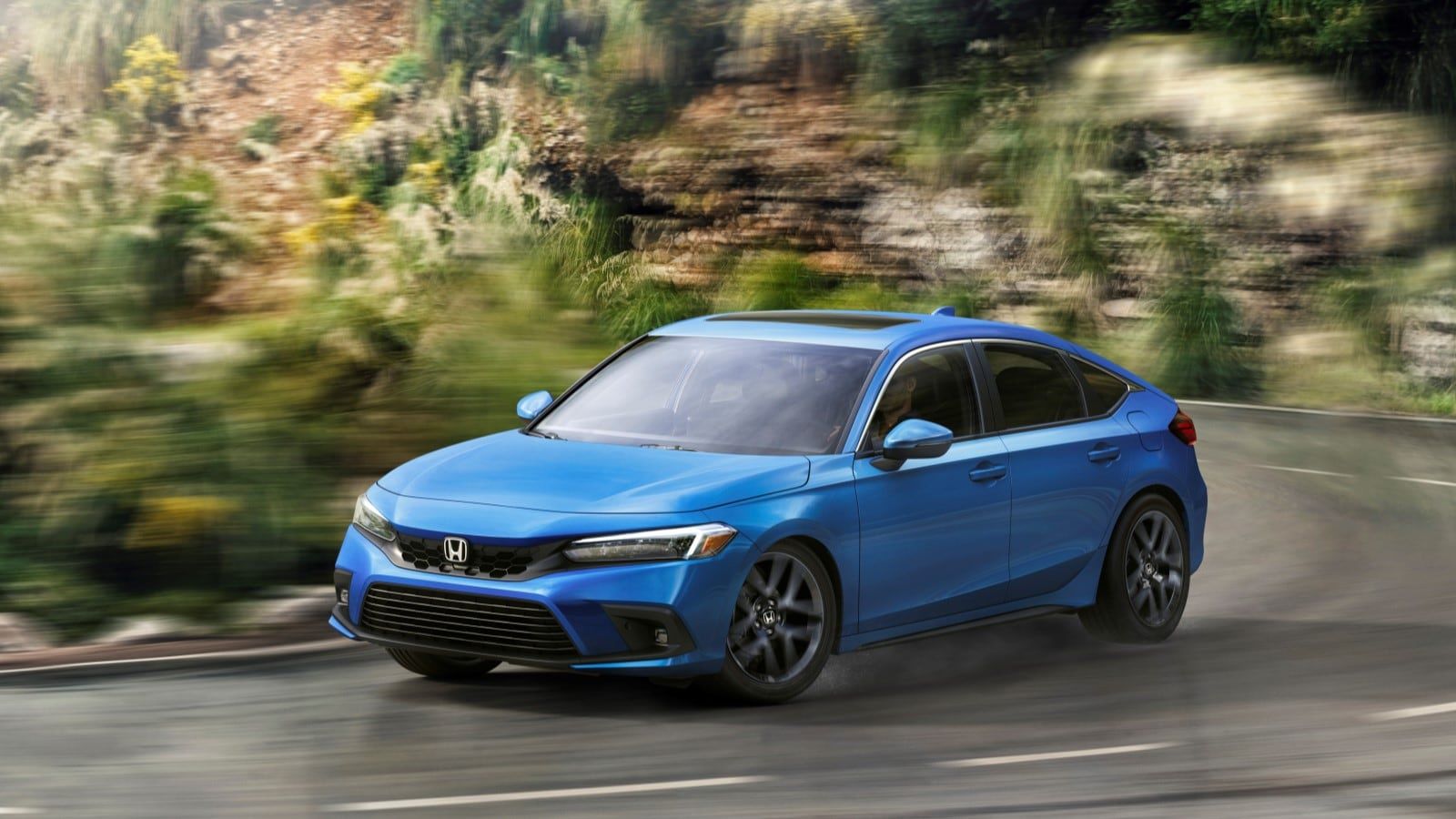
The Honda Civic has long been a favorite for urban drivers, and the hatchback version takes it a step further. Its compact dimensions make parking in tight city spots a breeze, but the Civic still feels planted and substantial on the road.
Ever since the Toyota Prius cemented itself in the mid-2000s as the dominant hybrid hatchback, Honda has been searching for a true competitor.
Previous efforts, such as the hybrid Civic sedans and the various versions of the hybrid-only Insight, never came close to matching the Prius’s long-running sales streak. For 2025, Honda is making another push, and this time there’s a key twist: the Civic Hybrid is finally available as a hatchback.
The hatchback carries over the sedan’s 200-horsepower hybrid powertrain, stylish design, and lively handling, while adding a bit more utility. Its overall shape isn’t drastically different from the sedan’s, but the cargo space is where the real gain is.
Behind the rear seats, the hatchback offers 25 cubic feet compared to the sedan’s 15-cubic-foot trunk, and folding the rear seats expands it even further. For reference, the Prius provides between 20 and 24 cubic feet under its hatch, depending on configuration.
Honda hasn’t yet put the hatchback hybrid through official performance testing, but it’s expected to match the sedan closely. The sedan reaches 60 mph in just 6.2 seconds and delivered 47 mpg in our 75-mph highway fuel economy test. In Sport Touring trim, the hatchback weighs just 37 pounds more than its sedan counterpart.
The EPA city rating is identical at 50 mpg, but the hatchback’s highway estimate of 45 mpg is 2 mpg lower, and its combined figure of 48 mpg is 1 mpg behind the sedan. Even so, the hatchback remains impressively efficient for its size and power.
There’s a price difference as well. The hatchback costs $1,200 more than the sedan, starting at $31,045 for the Sport trim and rising to $34,045 for the Sport Touring.
That’s certainly on the high side for a Civic, but it’s in line with where the Prius sits. And the Prius isn’t just an economy champ anymore, it’s now quick, agile, and stylish enough to earn a place on our 2024 10Best list.
This sets up a real contest between the two hybrids. Honda is counting on the Civic Hybrid to make up a major share of overall Civic sales, and with its combination of efficiency, performance, and everyday usability, it’s got a strong shot.
A direct head-to-head test will ultimately determine which one comes out on top, but for now, shoppers in the market for a fuel-efficient hatchback finally have two very solid choices.
Power comes from a DOHC 16-valve 2.0-liter Atkinson-cycle inline-four making 141 horsepower and 134 pound-feet of torque, paired with an AC motor rated at 181 horsepower and 232 pound-feet. Combined output is 200 horsepower and 232 pound-feet, fed through a direct-drive transmission.
At an estimated curb weight between 3,250 and 3,300 pounds, the hatchback is expected to hit 60 mph in 6.4 seconds and cover the quarter-mile in 15.1 seconds, with a top speed of 115 mph.
Measuring 179 inches long on a 107.7-inch wheelbase, it’s 70.9 inches wide and 55.7 inches tall, with 55 cubic feet of passenger volume up front and 44 cubic feet in the rear. Cargo space sits at 25 cubic feet. Fuel economy is rated at 48 mpg combined, 50 mpg city, and 45 mpg highway.
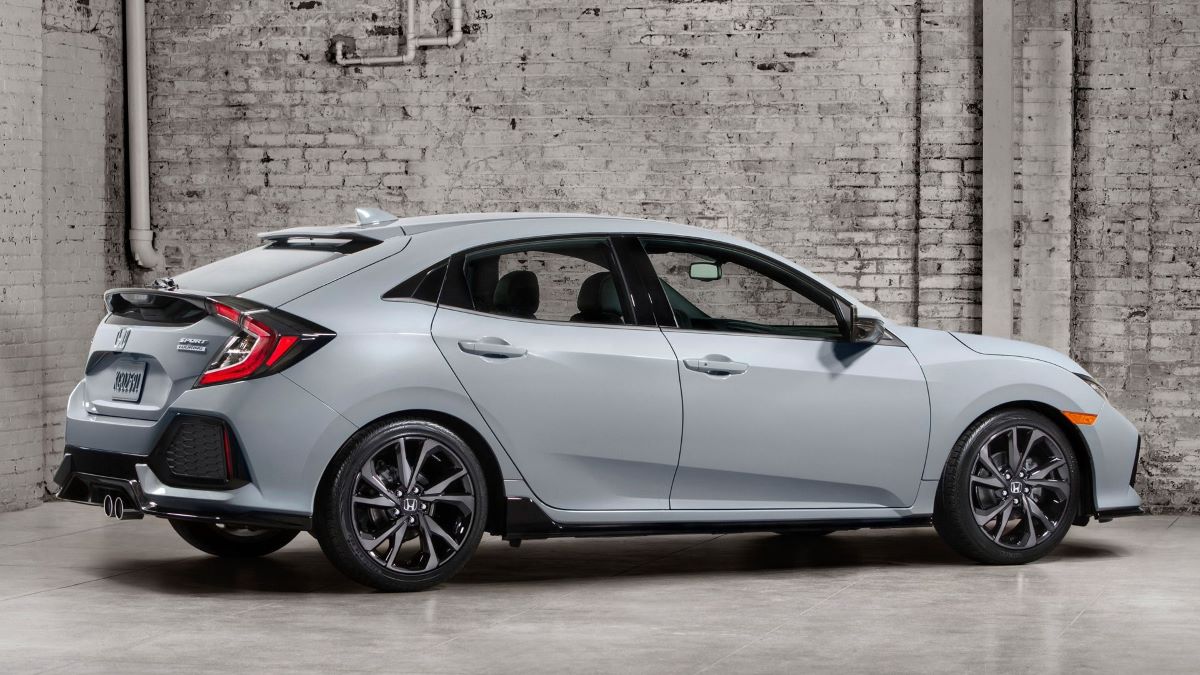
With a well-built interior, a surprisingly roomy rear seat, and up to 180 horsepower from its turbocharged engine, it never feels like a barebones commuter.
Plus, Honda’s CVT transmission is smooth, and available driver-assist features like adaptive cruise control and lane-keeping help reduce fatigue in traffic.
Also Read: 5 Hidden Gem Convertibles vs 5 Popular Convertibles With Leaky Tops
2. Mini Cooper Hardtop
Mini’s retro-modern styling is a head-turner, but the real appeal of the Mini Cooper Hardtop is how fun and composed it feels in urban driving.
Its short wheelbase and go-kart-like steering make navigating narrow streets effortless, and despite its size, the Mini doesn’t come across as cheap or fragile.
The 2025 Mini Cooper Hardtop arrives as a full redesign, marking a much bigger leap than the usual year-to-year updates. The styling is still unmistakably Mini, but the look has been refreshed to feel more modern while keeping the brand’s quirky charm.
For 2025, more power is also on tap, though purists may be disappointed to learn there’s no manual transmission available for this new generation.
Inside, the changes are even more noticeable. The centerpiece is a round 9.4-inch central display that handles both the gauge cluster and infotainment duties, running the latest Mini Operating System 9.
The cabin tech also includes a wireless charging shelf, roof-mounted projectors that can display customizable images on the dash pad, Mini’s Augmented View head-up display, and navigation with 3D visualization.
Looking back, the outgoing Mini Cooper was a fun but flawed little hatchback. Its retro-modern design and sharp, go-kart-like driving feel won us over, and the availability of a manual gearbox gave it real enthusiast appeal.
On the downside, the interior’s playful, circular-themed design wasn’t the most practical, with awkward ergonomics and outdated infotainment. The biggest complaint was its ride quality, which bordered on punishing and could easily turn off potential buyers.
The new model keeps the two-box silhouette and cheerful personality of its predecessor, but with some sharper detailing. The face is still cute and approachable, while the rear styling is sportier, with tauter, more pinched lines.
Inside, the redesign is equally playful, with that central round screen delivering crisp graphics and quick response times. Apple CarPlay integration works fine, though it leaves a noticeable amount of unused space on the display.
In our First Test of the Cooper S, we found the steering nicely weighted and the ride quality much improved, even on bumpier roads. It still felt brisk, but it no longer delivers the raw, hyperactive driving experience of earlier models.
The John Cooper Works model still offers the most engaging drive of the lineup, but its firmer suspension might be too stiff for daily use. Given the price, and with true hot hatches available for less, the Mini Cooper now makes the most sense as a style-driven choice.
Mini isn’t abandoning electrification. While the U.S. launch of the new Cooper EV has reportedly been delayed, the redesigned lineup will eventually include battery-powered options.
Globally, Mini is expected to offer an entry-level EV with 184 horsepower and a 40-kWh battery, as well as a more powerful 218-hp version with a 54-kWh pack and up to 240 miles of range. An all-electric John Cooper Works variant is also on the way, though it’s focused more on cosmetic upgrades than added performance.
For those sticking with gasoline, the lineup covers a wide range. The base model puts out 161 horsepower, the Cooper S uses a 2.0-liter turbocharged four-cylinder with 201 horsepower and 221 lb-ft of torque, and the John Cooper Works tops the range with 228 horsepower.
In testing, the Cooper S sprinted from 0 to 60 mph in 6.1 seconds. The traditional gear lever is gone, replaced by a toggle switch positioned below the central display, reinforcing Mini’s shift toward a sleeker, tech-driven interior.
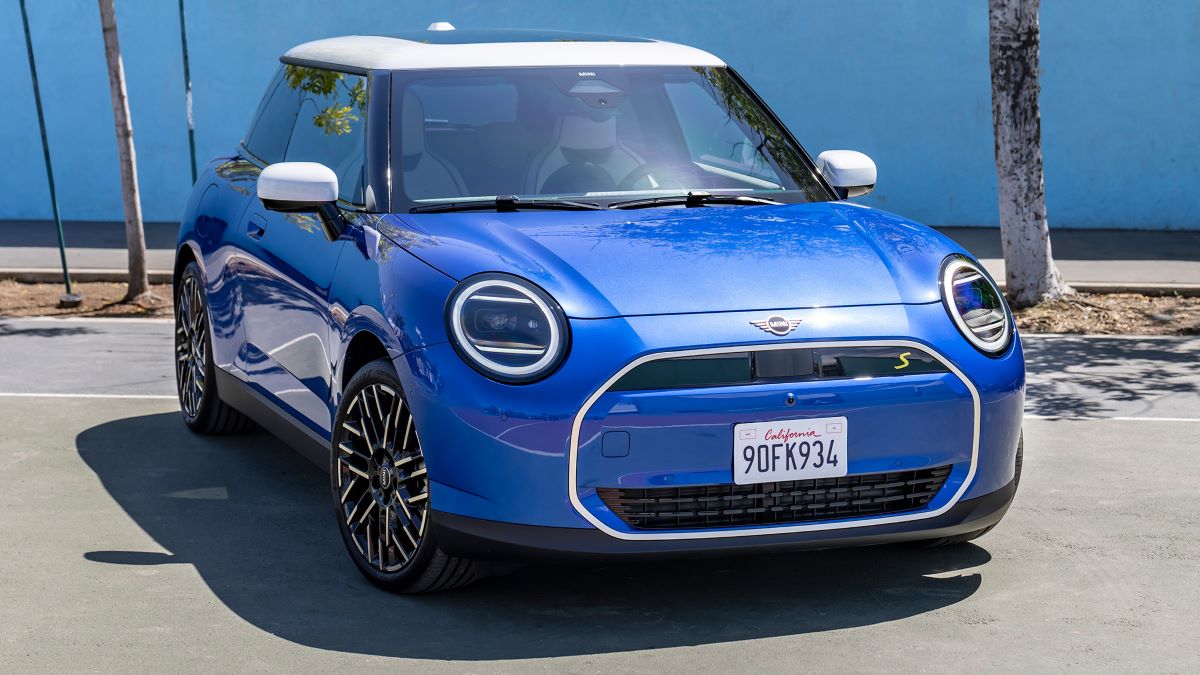
The interior boasts premium materials, and higher trims offer turbocharged engines with more than enough punch for merging on busy highways. It’s a small car that feels refined rather than toy-like.
3. Mazda3
Mazda is known for bringing upscale quality to mainstream segments, and the Mazda3 is a perfect example. Whether you choose the sedan or hatchback, the Mazda3 feels refined in ways that few compact city cars do.
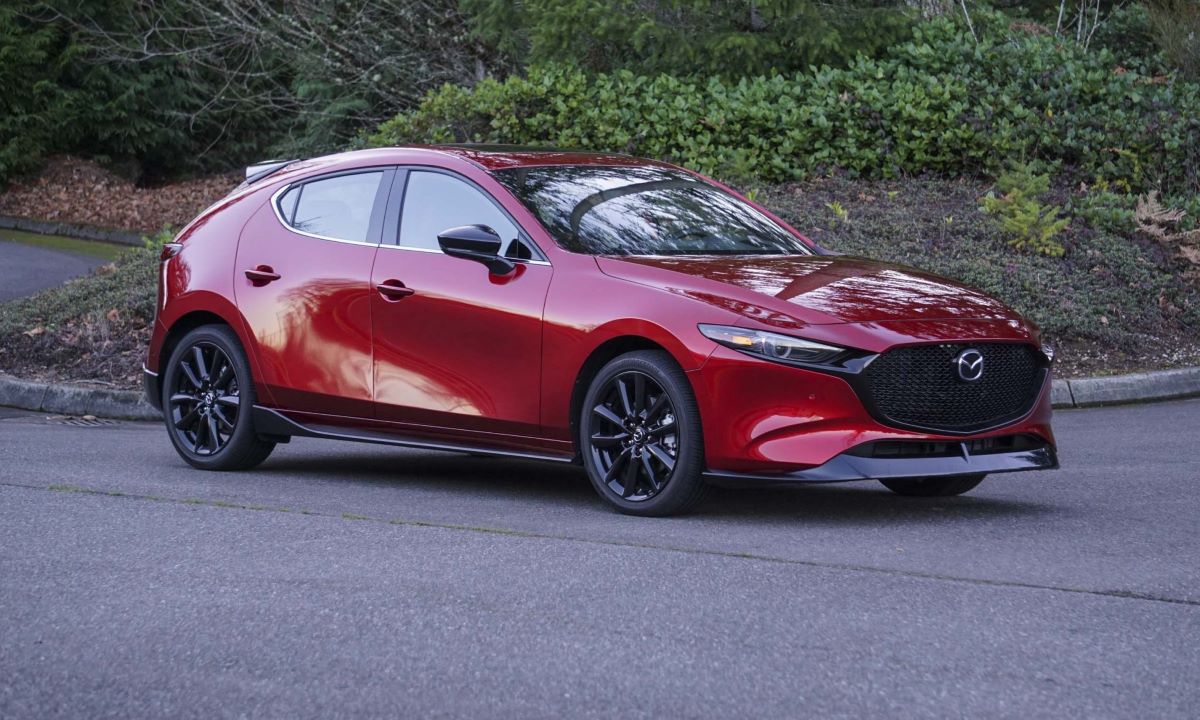
From its elegant design to its quiet, well-insulated cabin and responsive handling, the car feels like something from a more premium brand.
City drivers will appreciate the tight turning radius and excellent visibility, while the available all-wheel drive adds confidence in all weather.
With the midsize Mazda 6 now discontinued, the Mazda 3 is the last sedan standing in the brand’s U.S. lineup. Unlike many compact cars, the 2023 Mazda 3 is available with both front- and all-wheel drive, and it comes in a sleek hatchback body style as well.
There’s even a variant still offered with a manual transmission, a rarity in this segment. While Mazda’s pivot toward SUVs has reduced its traditional sedan and hatchback offerings, the 3 remains a standout for its design and breadth of configurations. Its main rivals include the Honda Civic, Toyota Corolla, and Hyundai Elantra.
For 2023, the Mazda 3 lineup sees a few notable changes. The base sedan’s 2.0-liter engine has been dropped, leaving only the 2.5-liter naturally aspirated and turbocharged four-cylinder options.
The naturally aspirated 2.5-liter now produces 191 horsepower, a 5-hp increase, while torque holds steady at 186 lb-ft. The turbocharged 2.5-liter returns unchanged, producing 227 horsepower (or 250 on premium fuel) and 310 lb-ft of torque (320 lb-ft with premium).
While Mazda’s pivot toward SUVs has reduced its traditional sedan and hatchback offerings, the 3 remains a standout for its design and breadth of configurations. Its main rivals include the Honda Civic, Toyota Corolla, and Hyundai Elantra.
For 2023, the Mazda 3 lineup sees a few notable changes. The base sedan’s 2.0-liter engine has been dropped, leaving only the 2.5-liter naturally aspirated and turbocharged four-cylinder options. The naturally aspirated 2.5-liter now produces 191 horsepower, a 5-hp increase, while torque holds steady at 186 lb-ft.
The turbocharged 2.5-liter returns unchanged, producing 227 horsepower (or 250 on premium fuel) and 310 lb-ft of torque (320 lb-ft with premium). Fuel efficiency has also improved slightly. For example, the front-wheel-drive hatchback now carries an EPA rating of 27 mpg city and 35 mpg highway, up from 26/34 mpg in 2022.
All-wheel-drive hatchbacks improve from 25/31 to 26/33 mpg. The six-speed manual transmission remains exclusive to the front-wheel-drive hatchback, while all other versions, including every AWD variant, use a six-speed automatic.
Among mainstream compact cars, this generation of the Mazda 3 ranks as one of the most refined in both design and driving manners.
From the outside, it looks like one of the most upscale models in its segment, and the minimalist interior design strikes a balance between premium style and functional simplicity. In our First Tests of the AWD sedan (2022) and AWD hatchback (2021), the ride proved comfortable and the handling secure, though competitors tend to better absorb larger bumps.
The turbocharged engine adds welcome urgency to the chassis, and while the steering is a bit numb, it’s still accurate and responsive. That said, enthusiasts shouldn’t expect the raw, aggressive personality of the old Mazdaspeed3, this is a more mature package.
4. Hyundai Kona
The Hyundai Kona bridges the gap between a hatchback and a compact SUV. Its small footprint makes it ideal for urban parking, but the elevated ride height and rugged stance give it an SUV-like feel.
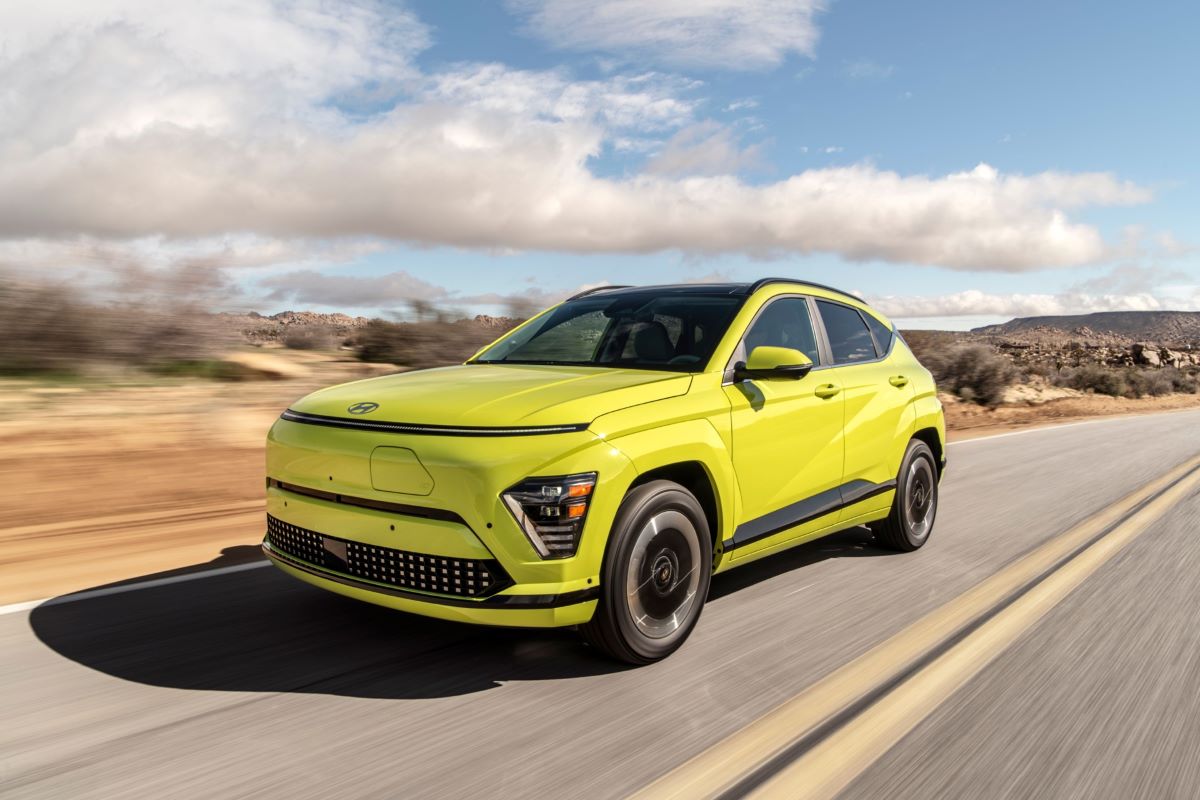
It doesn’t feel flimsy either the Kona offers a solid, composed ride, and in its higher trims, even delivers a turbocharged engine that makes it surprisingly quick.
The interior is well-equipped with intuitive tech and materials that don’t scream economy.
While the first-generation Kona charmed us with its playful driving personality, this more mature second-generation Hyundai crossover trades a bit of that liveliness for greater comfort and utility, without sacrificing too much in the way of performance.
Still offered with a choice of two four-cylinder engines, the Kona feels most at home when equipped with the available turbocharged 1.6-liter producing 190 horsepower, rather than the base 147-hp 2.0-liter.
We’re fans of the bold, Star Wars–helmet-inspired styling, and the interior strikes a smart balance between digital displays and physical controls. Tech features are plentiful, with a generous list of both standard and available options, and all-wheel drive can be added to any trim.
For 2025, the Kona lineup sees some changes following its full redesign in 2024. Hyundai has introduced a new N Line S trim, which sits just below the N Line.
This version skips certain features found in the higher trim, such as a premium audio system, adaptive cruise control, and a sunroof, but keeps the more desirable 190-hp engine. The SEL trim with the Convenience package has been rebranded as the SEL Convenience, now a standalone model.
Pricing for the 2025 Kona starts at $26,045 for the SE and tops out at $33,595 for the Limited. The SE and SEL come standard with the base 2.0-liter engine, but those seeking more punch should consider the N Line, which includes the turbocharged four-cylinder along with all the amenities from the SEL Convenience trim.
Under the hood, the base setup is a 147-hp 2.0-liter paired with a continuously variable transmission, while the upgraded 190-hp turbocharged 1.6-liter comes with an eight-speed automatic.
All trims can be optioned with all-wheel drive. Despite being larger than its predecessor, the second-generation Kona still handles with agility, though it has lost a touch of the on-road sharpness that made the first generation so engaging.
Also Read: 8 Best-Selling Cars by State and What They Say About Local Drivers
5. Volkswagen Golf GTI
The Volkswagen Golf GTI has long set the standard for the “hot hatch” segment, but even without pushing it to its limits, the GTI shines in the city.
It offers the maneuverability and size of a compact car with the driving dynamics of a sport sedan.
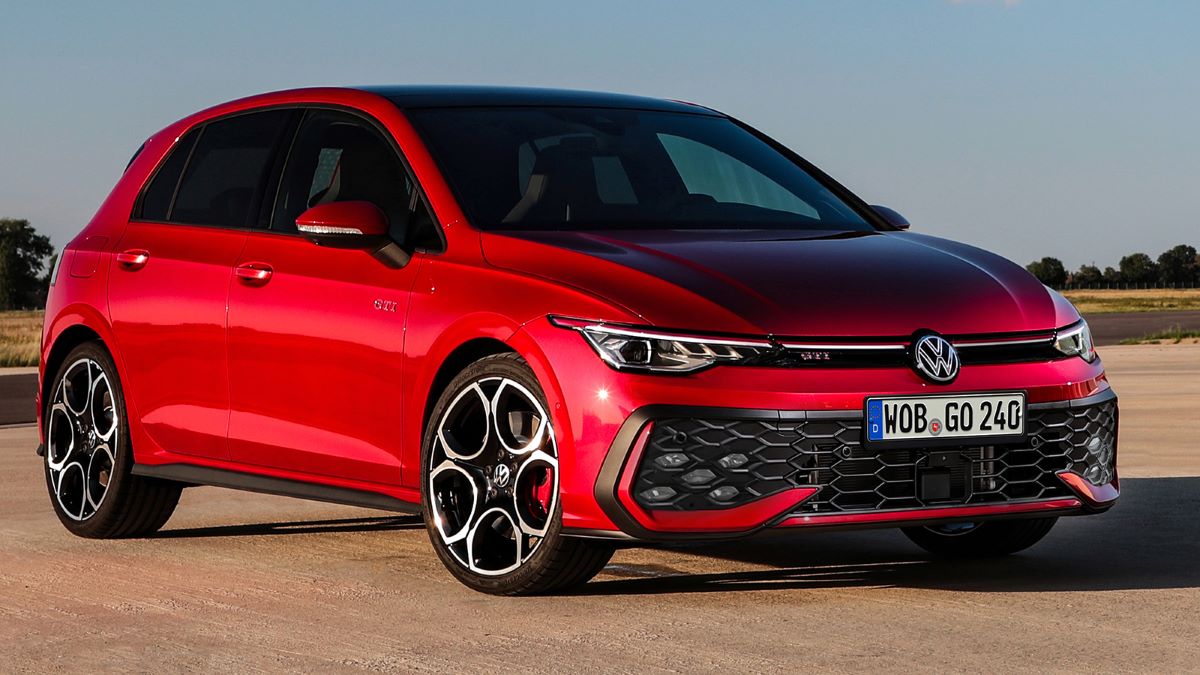
The GTI never feels cheap or barebones it’s solidly built, features a premium-feeling cabin, and comes with a punchy turbocharged engine that delivers responsive power without sacrificing daily comfort. For those who want a city car with soul, this is it.
The refreshed 2025 GTI arrives with a host of new tech upgrades, including a larger touchscreen, an improved voice assistant, and updated infotainment software. Volkswagen has also replaced the previously frustrating touch-sensitive steering-wheel controls with more user-friendly buttons, a welcome change.
On the outside, the GTI receives updated headlights and taillights, along with new wheel designs. Sadly, enthusiasts who want to row their own gears are out of luck, as the 2024 GTI 380 edition marked the final chance to buy a manual-transmission GTI.
Pricing for the 2025 Volkswagen Golf GTI ranges from $33,670 to $42,105 depending on trim and options. The lineup starts with the S at $33,670, moves up to the SE at $38,645, and tops out with the Autobahn at $42,105.
With the manual now gone and even the base S benefiting from a 10.9-inch infotainment screen, an updated operating system, and standard navigation, the entry-level model offers strong value. True, the Autobahn adds adaptive damping along with more performance and luxury touches, but the S captures the essence of the GTI spirit in its purest form.
Under the hood, the 2025 Golf GTI retains its turbocharged 2.0-liter inline-four, producing the same 241 horsepower as before. The sole transmission option is now a seven-speed dual-clutch automatic, which delivers rapid shifts but can’t quite match the engagement of the discontinued six-speed manual.
That said, the automatic GTI still provides plenty of driving enjoyment, thanks to its firm brake pedal and agile handling that makes winding roads a delight. In testing, the new model delivered the same entertaining character as before, though the steering could offer more feedback for dedicated track use.
In our performance testing, a 2025 GTI equipped with the dual-clutch automatic sprinted from 0 to 60 mph in 5.6 seconds. That’s faster than a Honda Civic Si but slightly slower than the Hyundai Elantra N.
We haven’t yet tested the automatic-equipped model on our 75-mph highway route, but the previous GTI S with the manual returned an impressive 37 mpg in that same test. We’ll update these figures when we put the latest version through its paces.
6. Toyota Corolla Hatchback
While the Toyota Corolla is known for its bulletproof reliability, the hatchback version adds a more engaging and stylish twist to the formula.
It’s compact enough for city driving but feels composed and solid over bumps and rough pavement.
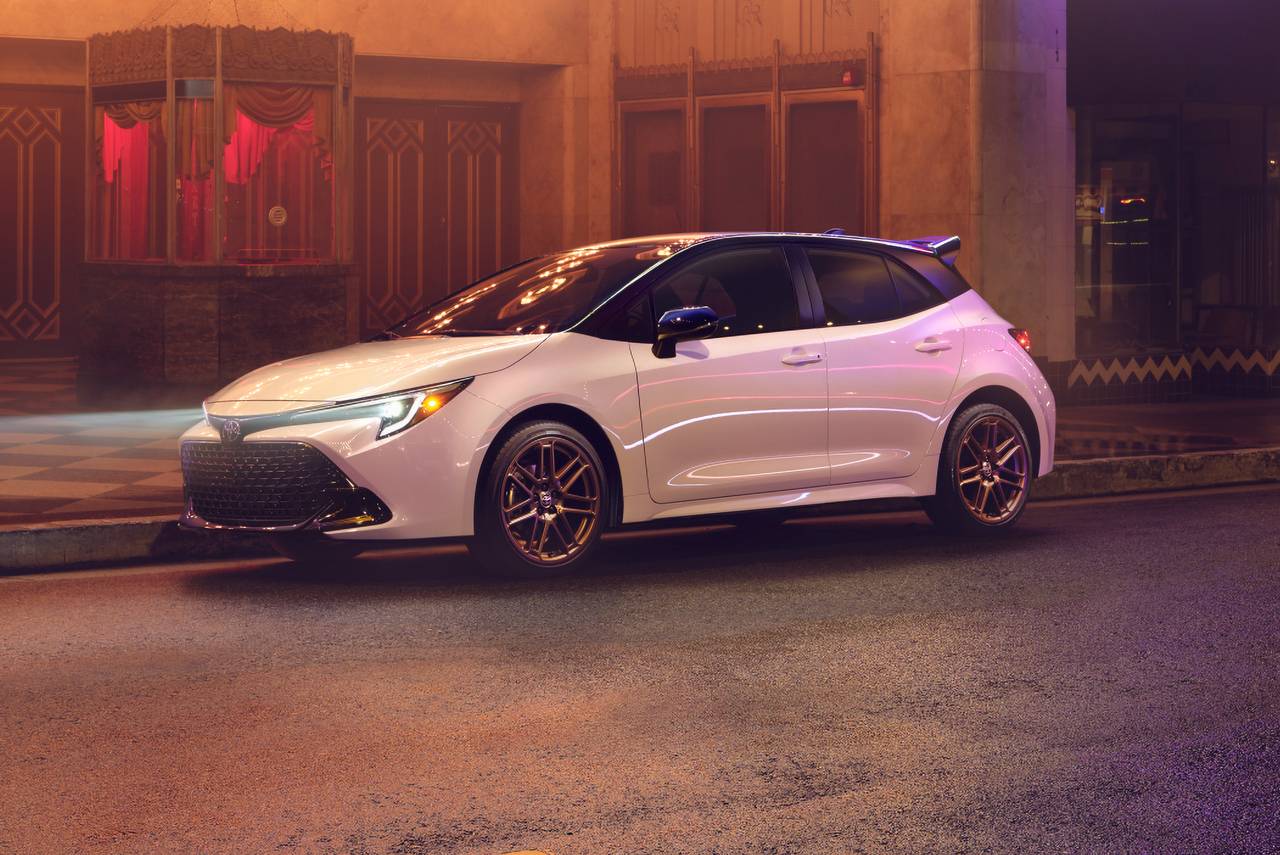
The cabin is modern and surprisingly upscale for its class, with an intuitive infotainment system and a standard suite of safety features.
Unlike older compact Toyotas, this model feels mature and well-made far from being a throwaway commuter.
Since its debut in 2019, the Toyota Corolla Hatchback has been a dependable, though not particularly thrilling, option in the compact hatchback segment. It’s always had plenty to like, but it’s rarely been the model that turns heads in its class.
For 2023, however, Toyota has given the Corolla Hatchback a series of updates designed to boost its appeal, including refreshed headlights and bumpers, along with upgrades to its in-car tech and driver-assistance features.
Leading the list of changes is a new infotainment system for the 8-inch center touchscreen. The system now benefits from a faster processor and crisper graphics, making it more responsive and visually appealing.
Wireless Apple CarPlay and Android Auto are now standard, eliminating the need for a cord to connect your smartphone. An improved voice control system also joins the mix, allowing drivers to perform more functions, such as adjusting stereo volume and cabin temperature, through spoken commands.
On the safety front, the 2023 Corolla Hatchback now comes with Toyota Safety Sense 3.0, the automaker’s latest suite of driver-assistance technologies.
According to Toyota, many of these systems, including forward collision warning and lane keeping assistance, have been refined for better detection accuracy and improved functionality, adding to the car’s everyday usability and peace of mind.
7. Kia Soul
The Kia Soul’s quirky shape makes it easy to overlook, but it’s one of the most practical urban vehicles on the market.
The boxy design translates to fantastic interior space and headroom, while the small footprint keeps it nimble in crowded streets.
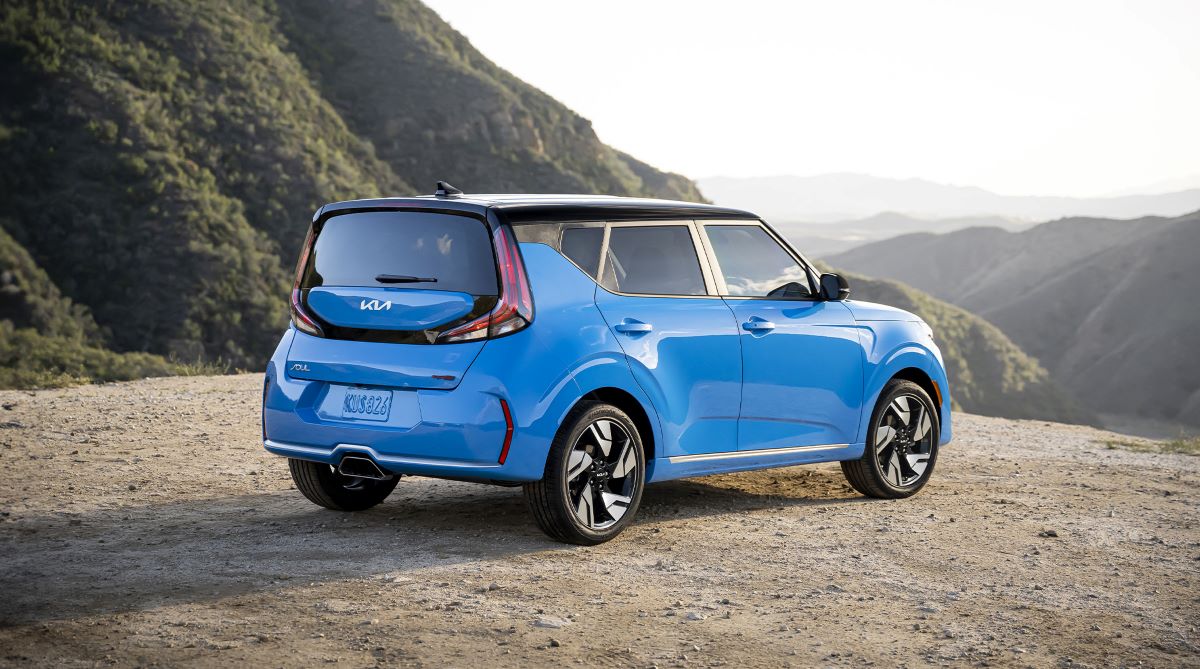
Importantly, the Soul feels more like a mini SUV than a toy car the suspension is well-tuned, the cabin is quiet, and the build quality holds up well.
The tech suite is also impressive for the price, including a large touchscreen and wireless smartphone integration.
Just because you live in a dense urban environment doesn’t mean you have to drive a car that feels cheap or disposable.
The best city cars combine compact size with quality, performance, and refinement offering the agility you need without sacrificing comfort or dignity.
The seven models above prove you can have a smart city car that still feels like a real car. Whether you prefer hatchbacks, crossovers, or sporty compacts, there’s a solid choice on the market that balances practicality with personality.
