
When you’re shopping for a U.S.-made SUV, one of the most underrated factors you should consider is the chassis feel. This is the backbone of the driving experience, shaping everything from stability in a crosswind to comfort on a pothole-ridden street.
In the simplest terms, a solid chassis is firm, planted, and confidence-inspiring, perfect for towing, off-road driving, or high-speed stability. A soft chassis, on the other hand, is tuned for plushness and smoothness, prioritizing ride comfort and cabin quiet over sharp handling.
Neither is inherently better; it all depends on your priorities. Below, we look at five U.S.-assembled SUVs that embody solid, planted performance, and five that are designed to deliver a softer, more indulgent ride.
5 U.S.-Made SUVs with Solid, Planted Chassis
If you want an SUV that feels like it was built to do a job, tow, haul, tackle rough trails, or simply stay composed when the road gets demanding, this section is for you. “Solid, planted” chassis aren’t about smug sportiness; they’re about predictable behavior, resistance to flex, and suspension and frame choices that prioritize control over coddling.
Expect firmer springs, sturdier subframes or truck-derived underpinnings, and steering that communicates weight and intent rather than pretending you’re driving a sofa. In short: these SUVs trade a little day-to-day pampering for long-term confidence.
Jeep Wrangler
Built in Toledo, Ohio, the Jeep Wrangler is the definition of solid. Its body-on-frame construction, solid axles, and heavy-duty off-road components give it the kind of durability and stability that inspire confidence on rough terrain.
The ride is firm and truck-like, especially on pavement, but that’s the price you pay for a chassis that shrugs off punishing trails and resists flex in challenging conditions. It’s the go-to choice for anyone who treats their SUV as a serious off-road tool rather than just a commuter car with chunky tires.
For 2021, Jeep added an unexpected twist to its lineup with the introduction of a Wrangler plug-in hybrid. Known as the Wrangler 4xe, this model pairs a turbocharged four-cylinder engine with hybrid components to produce an impressive 375 horsepower, along with approximately 22 miles of all-electric driving range.
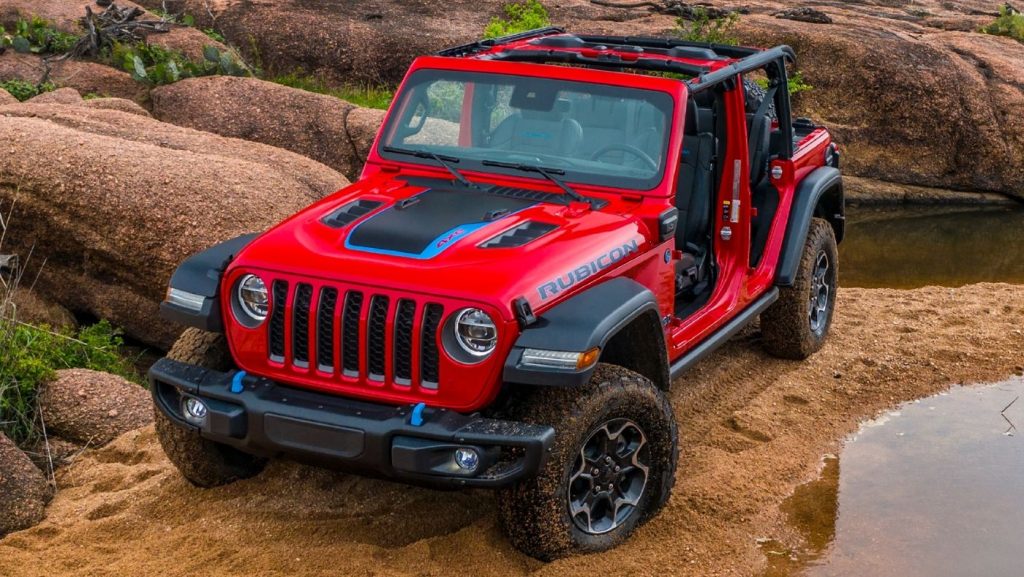
If that combination sounds a bit like magic, rest assured, the Wrangler 4xe still uses the familiar eight-speed automatic transmission and is even offered in the Rubicon trim.
On the opposite end of the efficiency spectrum, Jeep unveiled the Wrangler Rubicon 392. Under the hood lies a 6.4-liter (392-cubic-inch) V8 engine generating 470 horsepower. While it retains all the Rubicon’s renowned low-speed off-road prowess, this version injects a dose of muscle-car attitude, delivering thrilling speed and a commanding exhaust note.
The Wrangler’s battlefield is also becoming more competitive. In addition to its long-established rival, the Toyota 4Runner, it now faces the all-new Ford Bronco, a rugged SUV that, like the Wrangler, offers a removable top and doors for drivers who relish the freedom of open-air motoring.
Also Read: 12 Most Driven SUVs in America and How They Hold Up
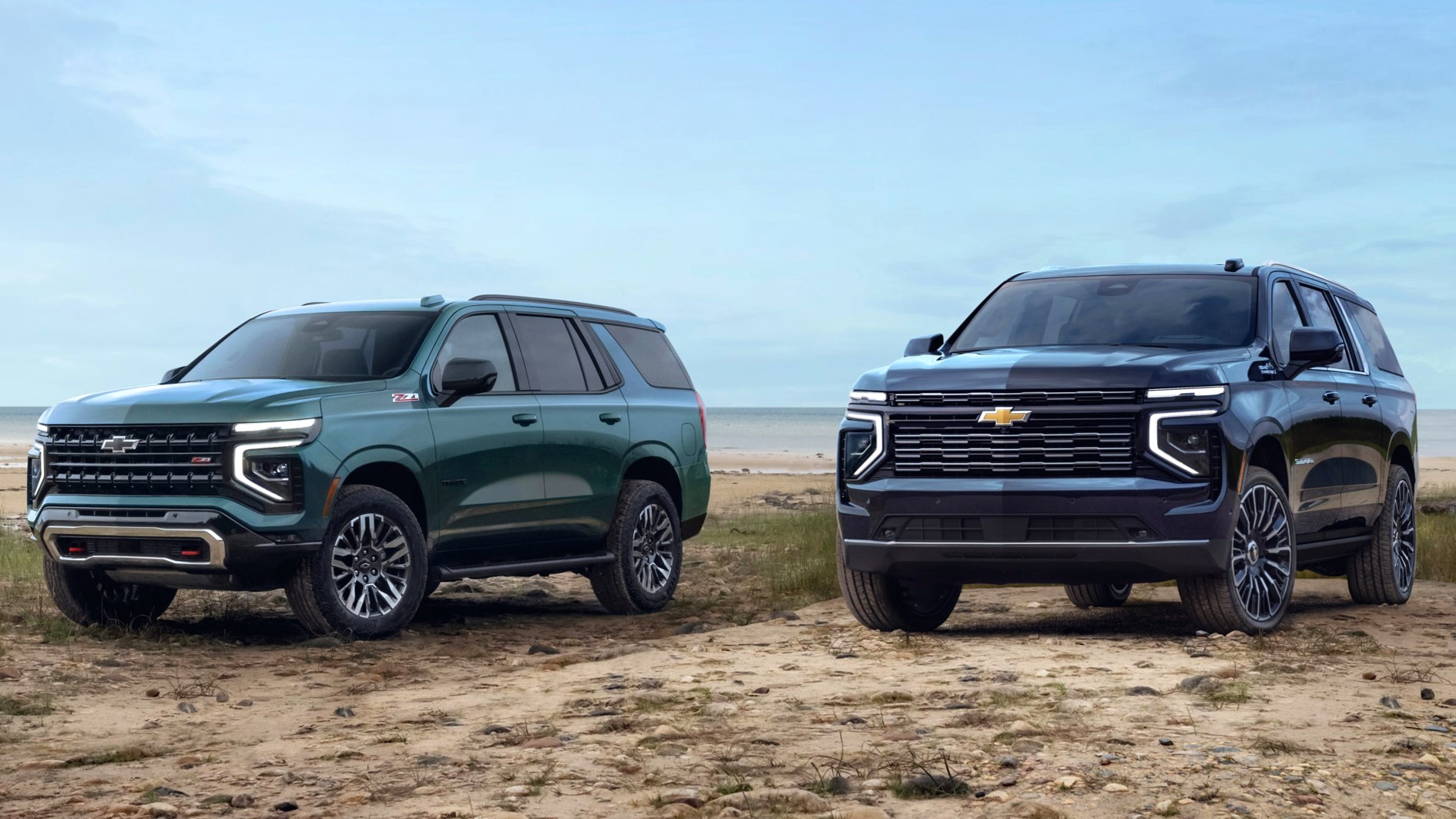
Chevrolet Tahoe / GMC Yukon
Assembled in Arlington, Texas, the Chevrolet Tahoe and GMC Yukon are textbook examples of how a truck-derived platform can give an SUV an unshakable feel. Built to haul people, gear, and heavy trailers, these full-size SUVs remain stable and composed even under demanding loads.
Their chassis tuning is about control, not cushiness, which means less wallow when towing or cornering at highway speeds. For families who regularly hitch up a boat, camper, or utility trailer, that stability is a major selling point.
For 2025, Chevrolet has given the Tahoe a refresh that includes updates to the front and rear styling, a redesigned dashboard, and several new features. The exterior changes are subtle enough that only true Tahoe enthusiasts (if such a group exists) might spot them at a glance.
The interior, however, shows a more noticeable transformation, with the new dashboard delivering a modern, tech-focused feel.

One key change is the relocation of the push-button shifter from the dashboard to the steering column, a move that not only feels more traditional but also frees up valuable space for a massive 17.7-inch touchscreen, now standard across all trims.
This new infotainment system runs on a Google Android-based platform, and unlike its setup in Chevrolet’s electric vehicles, it supports wireless Apple CarPlay and Android Auto.
Under the hood, the optional 3.0-liter turbodiesel inline-six has been upgraded, now producing 305 horsepower and 495 lb-ft of torque, up from its previous 277 horsepower and 460 lb-ft.
For the first time, this engine will be available in the Z71 trim starting in early 2025. Chevrolet has also made a 360-degree camera and adaptive cruise control standard equipment on every Tahoe, further enhancing both safety and convenience.
Ford Bronco
Manufactured at Ford’s Michigan Assembly Plant in Wayne, Michigan, the Bronco was designed with ruggedness in mind. Its beefy suspension, reinforced frame, and trail-focused engineering make it a solid performer when the pavement ends.
On-road, it’s firmer than a soft-riding crossover, but that firmness pays off with precision and confidence when navigating rocky climbs or uneven forest tracks. It’s a machine for weekend adventurers who value capability over the floating feel of a comfort-tuned SUV.
The Bronco skips the eight-cylinder route entirely, offering instead a standard 300-hp turbocharged 2.3-liter four-cylinder or an optional 330-hp twin-turbo 2.7-liter V-6. Both gas engines are paired with a 10-speed automatic transmission, though a seven-speed manual is available exclusively with the smaller four-cylinder.

While neither engine delivers a particularly inspiring exhaust note, every Bronco comes with four-wheel drive as standard. Up front, its independent suspension is notably more advanced than the Jeep Wrangler’s solid front axle, contributing to better on-road manners.
Buyers can also equip the Bronco with serious off-road hardware, including 35-inch mud-terrain tires, beadlock-capable wheels, electronic locking front and rear differentials, and a sway-bar disconnect system. In our initial drive impressions, the Bronco stood out for its on-road refinement.
Steering precision is superior to the Wrangler’s, and overall handling feels more composed. That said, models fitted with the largest tires and softest suspension do exhibit noticeable brake dive, and its body-on-frame construction is still apparent in certain situations.
Even so, the Bronco is far from a one-trick pony, it’s fully capable of tackling extremely challenging terrain. Both the two- and four-door versions carry a 3,500-pound towing capacity, matching that of the Wrangler.
Also Read: Top 10 Cars With Easy-to-Clean Floors and Accessible Interiors
Jeep Grand Cherokee
The Jeep Grand Cherokee, assembled in Detroit at the Jefferson North plant, balances refinement with sturdiness. It offers a substantial, planted feel in everyday driving, while AWD and trail-ready trims make it equally competent in challenging conditions.
Even though it belongs to the current generation that debuted back in 2011, this year’s Grand Cherokee remains one of the strongest contenders in the five-passenger midsize SUV segment.
One of its biggest strengths is sheer variety. With seven available trim levels and a wealth of options for each, the Grand Cherokee can be configured to suit a wide range of needs and budgets.
True to its heritage, the Grand Cherokee continues to excel off-road. Buyers can opt for one of several off-road suspension packages or go straight for the Trailhawk trim, designed specifically for tackling tough terrain.

For those more interested in on-road thrills, Jeep offers the high-performance SRT and the outrageous 707-horsepower Trackhawk, which can deliver supercar-like acceleration in an SUV body.
Across all these variations, the Grand Cherokee maintains a consistently high standard of interior quality and a solid foundation of utility. Whether your goal is to explore rugged trails, scorch the pavement at the drag strip, or simply shuttle the kids to school in comfort, there’s likely a Grand Cherokee in the lineup that fits the bill.
Its robust chassis resists flex under load, giving drivers confidence when towing, cornering, or dealing with uneven surfaces. This SUV works well for buyers who want a versatile daily driver that can still take on serious duties without feeling delicate.
Cadillac Escalade (Control-Tuned Trims)
Though the Escalade is often associated with luxury, certain trims are tuned for a more controlled ride that feels decidedly solid. Built in Arlington, Texas, it benefits from a truck-based architecture combined with magnetic dampers and suspension setups aimed at reducing body float.
These configurations deliver a stable, secure driving experience without sacrificing too much comfort, making them ideal for luxury buyers who still need real towing muscle and highway composure.
Cadillac’s largest SUV comes with two distinct powertrain options. The first is a 6.2-liter V-8 producing 420 horsepower, equipped with cylinder deactivation technology that can shut down half of its cylinders during cruising to conserve fuel.
The second choice is a turbo-diesel 3.0-liter inline-six, which appeals to buyers seeking improved fuel efficiency and strong low-end torque. Both engines are paired with a standard 10-speed automatic transmission, and shoppers can opt for either rear-wheel drive or all-wheel drive to suit their preferences.
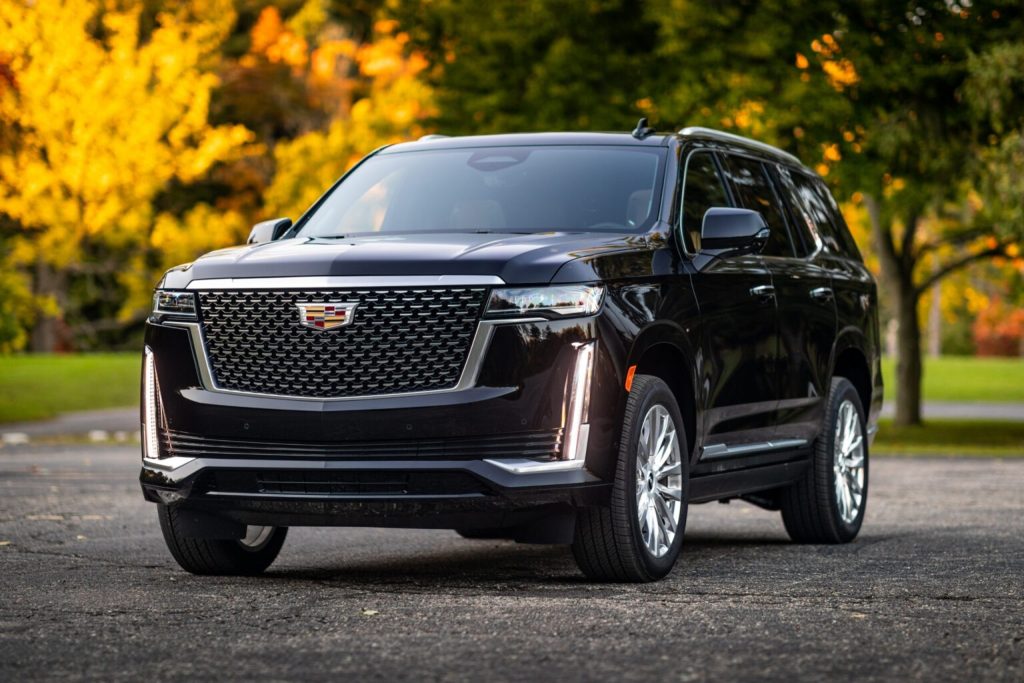
For 2021, the Escalade joins its corporate relatives, the Chevrolet Tahoe, Chevrolet Suburban, and GMC Yukon, in adopting an all-new platform that features an independent rear suspension, a major change aimed at delivering a smoother ride.
Higher-end trims go a step further, offering an air suspension combined with adaptive dampers that use computer-controlled shock absorbers to continuously adjust ride quality.
In performance testing, the long-wheelbase Escalade ESV equipped with the V-8 engine accelerated from 0 to 60 mph in just 5.9 seconds, an impressive feat for such a large, luxury SUV.
While the diesel variant lacks the polished sound of the V-8, its fuel economy and torque characteristics make it an attractive option for certain buyers who prioritize efficiency and pulling power over sheer refinement.
5 U.S.-Made SUVs with Softer, Comfort-Tuned Chassis
If your priority is peace of mind behind the wheel rather than hanging off the edge of every corner, this section is for you. “Soft, comfort-tuned” chassis are engineered to soak up potholes, mute road noise, and deliver a relaxed, long-haul experience for passengers, think cushioned springs, generous suspension travel, and cabin isolation that makes hours on the highway feel shorter.
These SUVs trade razor-sharp handling for serenity, which is perfect for family hauls, commuter miles, and anyone who values arriving rested over feeling every imperfection in the pavement.
Lincoln Aviator
Produced in Chicago, Illinois, the Lincoln Aviator is all about serenity. Its suspension is tuned to absorb imperfections in the road, while heavy sound insulation keeps the cabin whisper-quiet.
This approach sacrifices some cornering sharpness, but for long highway drives, it delivers a stress-free, cushioned experience. It’s perfect for buyers who want their SUV to feel more like a rolling luxury lounge.
Thankfully, the 2020 Aviator bears little resemblance to the short-lived version from the early 2000s. While it’s once again built on the Ford Explorer’s platform, this new generation stands apart with its own distinctive design inside and out, a wealth of standard features, and exclusive Lincoln touches.
In many ways, it feels more like a scaled-down Navigator than a rebadged Explorer, and that’s definitely a step in the right direction.
Inside, the Aviator offers a plush, upscale cabin with excellent noise isolation, making it a standout choice for long-distance cruising.
Under the hood, a robust turbocharged V6 delivers strong performance, and for those looking to blend power with efficiency, there’s also a plug-in hybrid variant that boosts output, improves fuel economy, and even offers a short all-electric driving range.
The main drawback comes in the form of pricing, which trends higher than average — especially once you start adding options.
Against well-established three-row luxury SUVs like the Acura MDX, Audi Q7, and Volvo XC90, the Aviator can seem like a pricier proposition. Still, if you’re seeking a compelling balance of versatility, power, and premium features, the 2020 Aviator is worth serious consideration.
Cadillac XT5 / XT6
Assembled in Spring Hill, Tennessee, the Cadillac XT5 and XT6 are designed with comfort in mind. Their cushioned suspensions and quiet cabins make them excellent for daily commuting and family trips.
Handling isn’t razor-sharp, but that’s by design; the goal is to isolate occupants from road imperfections. These are ideal for drivers who prize relaxation over sporty feedback.
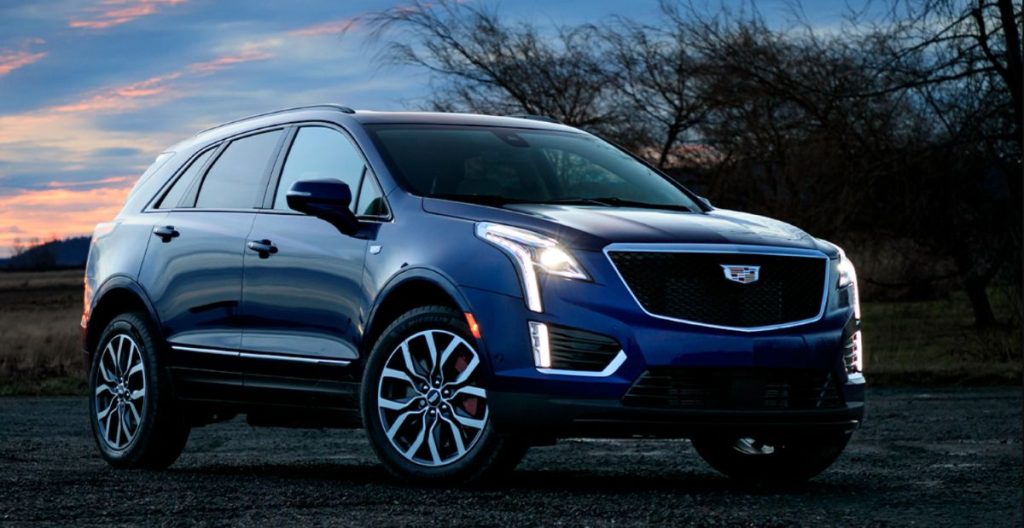
The Cadillac XT5, the brand’s midsize crossover SUV, is starting to show its age. This current generation first arrived for the 2017 model year, and in the years since, many of its competitors, such as the Lincoln Aviator and Mercedes-Benz GLE, have rolled out with more modern, updated designs.
Even so, Cadillac has managed to keep the XT5 relevant with a steady stream of updates. For 2021, one notable improvement is the addition of wireless Apple CarPlay and Android Auto functionality. This upgrade eliminates the need for a cable to connect your smartphone, making it easier and more convenient to access navigation, music, and other features on the go.
Buick Enclave
From Lansing, Michigan, the Buick Enclave delivers a smooth, floaty ride that’s well-suited to long-distance family travel. Its suspension soaks up bumps, and the interior remains calm and composed even over rough pavement.
While the Enclave may feel less agile than some competitors in quick maneuvers, its strength lies in making every mile comfortable for passengers.
When it first arrived for the 2008 model year, the Buick Enclave quickly carved out a place in the three-row crossover SUV market with its spacious cabin and smooth, quiet ride. The fully redesigned 2018 Enclave carries forward that legacy while aiming higher in terms of style, refinement, and technology.
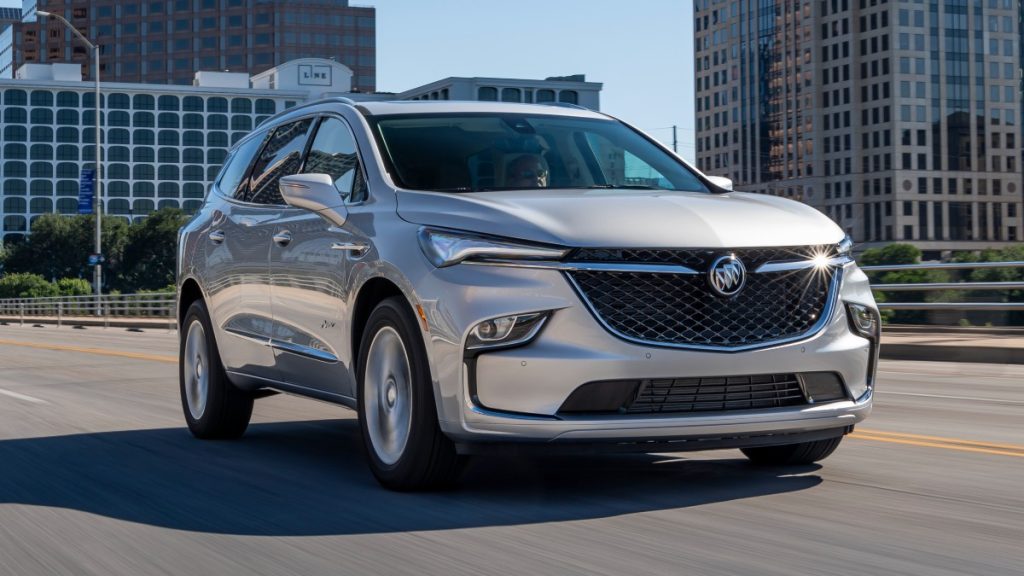
Under the hood, this updated model gets a more powerful 3.6-liter V6 engine producing 302 horsepower and 260 lb-ft of torque, giving it a noticeable performance boost.
That added power is complemented by a significant weight reduction, helping the Enclave feel more responsive on the road. The 2018 version is also slightly longer than before, translating into increased legroom for both second- and third-row passengers, a welcome upgrade for families and road-trip travelers.
While maximum cargo space is down slightly from the previous generation, the Enclave still offers a generous 97.6 cubic feet with the second and third rows folded, leaving plenty of room for gear, luggage, or bulkier items. The result is a three-row SUV that blends improved performance with the comfort and practicality buyers expect from the Buick name.
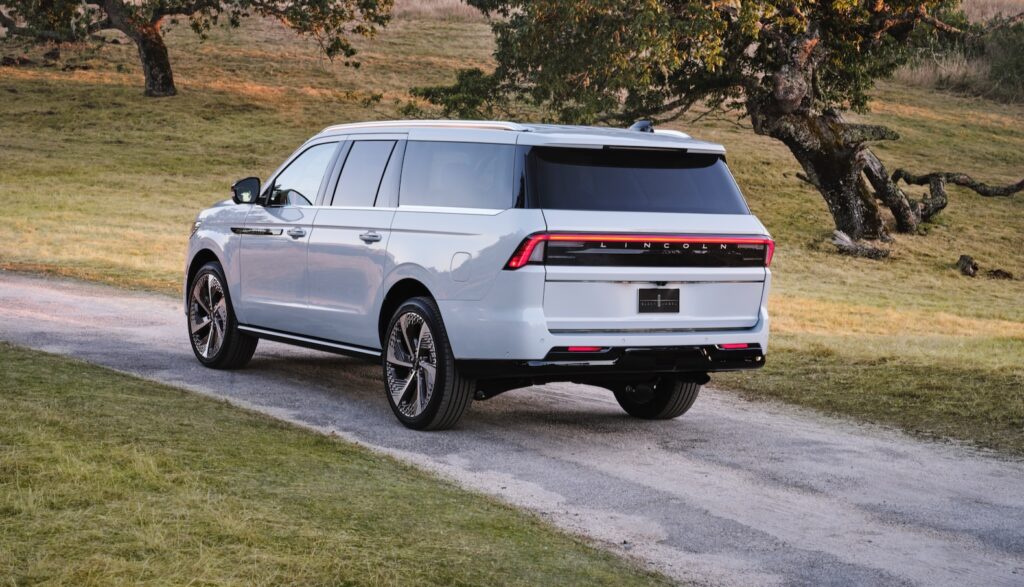
Lincoln Navigator
Built at Ford’s Kentucky Truck Plant in Louisville, the Lincoln Navigator leans heavily into luxury comfort. With air suspension and advanced damping systems, it glides over road imperfections, creating a pillow-soft ride.
This big SUV isn’t about sporty precision; it’s about making sure passengers arrive refreshed and unruffled, no matter the road conditions. The 2022 Lincoln Navigator isn’t an all-new model, but it arrives with a series of thoughtful updates that make it more refined and tech-savvy than before.
One of the most notable upgrades is the debut of Lincoln’s ActiveGlide system, a limited hands-free driving technology designed to take some of the strain out of long highway trips. Complementing that is a road-sensing camera that feeds data to the suspension, helping the SUV deliver an even smoother, more composed ride.
Rear passengers see the biggest leap in comfort and convenience. The second-row seats are now available with ventilation and an optional massaging function, elevating long-distance travel into a more luxurious experience.
A new fully digital control module in the rear allows passengers to manage seat adjustments and climate settings with ease. Entertainment gets a boost as well, with an upgraded rear-seat system that now supports Amazon Fire TV, giving passengers the option to stream or pre-download movies and shows.
Up front, the driver and passenger are treated to a larger central touchscreen, rounding out the Navigator’s blend of opulence, comfort, and cutting-edge tech.
Cadillac Escalade (Comfort-Tuned Trims)
Just as the Escalade has trims aimed at control, other configurations are tuned for plushness. These comfort-focused versions use adaptive suspension systems to create a cloud-like ride, prioritizing smoothness over chassis tautness.
They’re ideal for luxury owners who want the Escalade’s imposing presence and interior opulence paired with maximum ride comfort.
The Cadillac Escalade has long been the symbol of American full-size luxury SUVs, becoming a pop culture icon despite the Lincoln Navigator hitting the market a year earlier.
Since its debut in 1999 as little more than a rebadged GMC Yukon, the Escalade has evolved into its own distinctive flagship, and the fully redesigned fifth-generation 2021 model takes that transformation to its highest level yet.
It still shares its underpinnings with the Chevrolet Tahoe and GMC Yukon, but the latest Escalade feels more “baller” than ever.
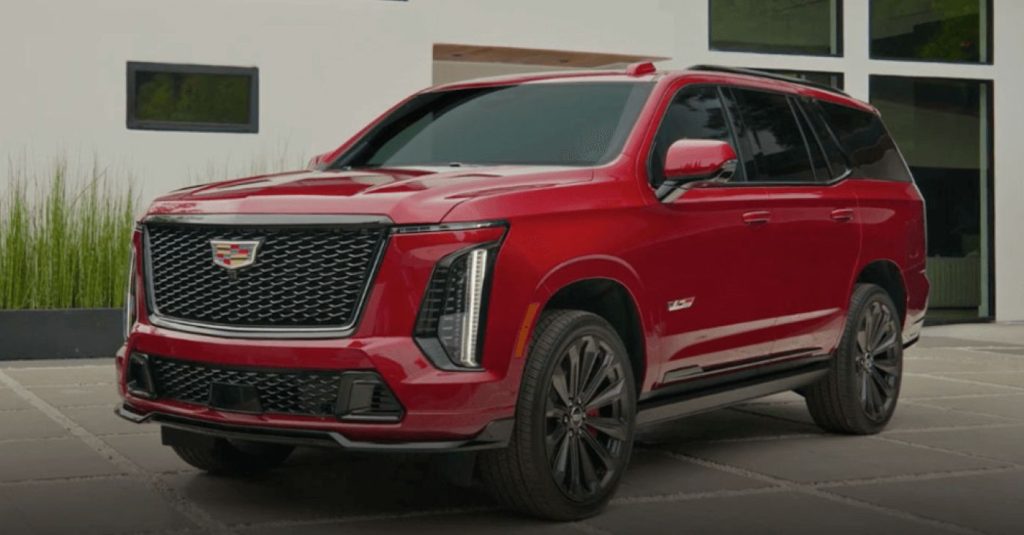
For 2021, Cadillac gave the Escalade all-new exterior styling, a tech-packed interior, a fully independent rear suspension, and, for the first time, a turbo-diesel engine option. The Super Cruise semi-autonomous driving system is now available, and buyers can opt for an astonishing 36-speaker audio system.
This redesign elevates the Escalade into true luxury territory, far removed from its earlier Tahoe-with-bling reputation, and competitive against Europe’s finest.
In fact, its performance in MotorTrend’s four-car three-row luxury SUV comparison was strong enough to earn second place, ahead of offerings from Mercedes-Benz and BMW.
Inside, the materials are exceptional, worthy of vehicles costing far more, and impossible to miss is the 38-inch curved OLED display spanning the front cabin. This setup consists of a 7.2-inch screen to the left of the steering wheel, a 14.2-inch digital gauge cluster, and a 16.9-inch main infotainment display.
Navigation can be enhanced with augmented reality overlays, and a head-up display is available. Wireless Apple CarPlay, Android Auto, and device charging are standard, as are built-in navigation and a 360-degree parking camera.
Higher trims add a digital rearview mirror. Audio ranges from a standard 19-speaker setup to the range-topping 36-speaker AKG system, one of the most impressive in the industry.
Passenger comfort is another highlight. The second and third rows are spacious and comfortable, with the third row particularly impressive for adult use.
Cargo space behind the third row measures 25.5 cubic feet, expanding to 72.9 cubic feet with it folded, and topping out at 121.0 cubic feet with both the second and third rows down. The extended-length Escalade ESV increases those numbers to 41.5, 94.1, and a cavernous 142.8 cubic feet respectively.
Performance comes from either the standard 6.2-liter V8 producing 420 horsepower and 460 lb-ft of torque or the optional 3.0-liter inline-six turbodiesel making 277 horsepower and the same 460 lb-ft. Both are paired with a 10-speed automatic transmission and offered with either rear-wheel drive or four-wheel drive.
If you regularly tow, drive off-road, or need absolute stability under heavy loads, a solid chassis will serve you best. It may ride firmer, but the payoff is confidence and control when conditions get challenging.
On the other hand, if your daily routine involves long commutes, family road trips, and mostly smooth highways, a soft chassis will make life more pleasant by keeping vibrations, bumps, and noise to a minimum.
And here’s a final tip: many modern SUVs now offer adaptive suspensions with adjustable modes. If you want the flexibility to switch between a firm, planted ride and a soft, cushy one, look for a model with this feature, it might just give you the best of both worlds.
