The Subaru Forester has long been celebrated for its rugged capability, family-friendly practicality, and standard all-wheel drive, making it a favorite among outdoor enthusiasts and daily commuters alike.
Over the years, the Forester has built a reputation for delivering comfort, safety, and durability in a compact SUV package. However, not every model year has lived up to this legacy.
While some versions have proven exceptionally reliable, capable of running well beyond 200,000 miles with proper maintenance, others have been plagued by costly mechanical failures and design flaws that left owners frustrated.
Understanding which years to buy and which to avoid can save drivers thousands of dollars in repairs and ensure a far better ownership experience.
In this guide, we’ll highlight five Subaru Forester years that are praised for their longevity, as well as five that suffered from recurring issues, helping buyers make the most informed decision possible.
5 Subaru Forester years That Go Forever
1. 2009 Subaru Forester
The 2009 Subaru Forester marked the debut of its third generation, introducing a comprehensive redesign that elevated the model’s appeal in the compact crossover SUV class.
With a longer 103-inch wheelbase, wider tracks, and a more SUV-like stance, the new Forester provided improved interior space, greater cargo capacity, and enhanced road stability.
Subaru also upgraded the suspension system, switching to a double-wishbone setup in the rear, which delivered a smoother ride while maintaining the Forester’s capability on rough terrain. This redesign allowed the Forester to shed its station-wagon-like image and compete more directly with top rivals such as the Honda CR-V and Toyota RAV4.
Under the hood, the Forester offered two engine choices: a 2.5-liter four-cylinder engine producing 170 horsepower and a turbocharged version generating 224 horsepower.
Both engines came standard with Subaru’s renowned all-wheel-drive system, making the Forester a standout for drivers in snowy regions or those who frequently traveled unpaved roads.
Transmission choices included a five-speed manual or a four-speed automatic, though the latter was considered outdated compared to competitors’ more modern gearboxes.
Fuel economy was competitive for the segment, with the base model returning 20 mpg city and 26 mpg highway, while the turbocharged XT achieved slightly lower figures due to its added power.
Safety was a strong point for the 2009 Forester, earning it the prestigious Top Safety Pick award from the Insurance Institute for Highway Safety (IIHS). Standard safety equipment included antilock brakes with brake assist, stability and traction control, front-seat side airbags, and full-length side curtain airbags.
These features, combined with solid crash-test performance, gave drivers and families added confidence behind the wheel. Importantly, this generation avoided many of the reliability issues that plagued earlier models, further boosting its reputation as a dependable used SUV choice.
Inside, the 2009 Forester saw significant improvements in comfort and practicality. The enlarged dimensions provided more rear-seat legroom and a wider cargo area more than five inches larger than its predecessor making it one of the most versatile options in its class.
The cabin design blended functionality with modern styling, offering a clean control layout and higher-quality materials. On the road, the Forester prioritized ride comfort over sporty handling, resulting in some body roll on winding roads but delivering excellent composure over bumps and ruts.
Ultimately, the 2009 Subaru Forester emerged as a well-rounded compact crossover: spacious, safe, capable, and refined, shedding its quirky past to become a serious contender in the SUV market.

2. 2010 Subaru Forester
The 2010 Subaru Forester carried over the third-generation redesign from 2009 while making small but meaningful improvements. It kept its reputation as a spacious, family-friendly compact SUV, thanks to its roomy interior, excellent visibility, and strong safety record.
Subaru addressed minor issues from the previous model year while keeping the Forester’s rugged, outdoorsy appeal intact. Features such as greenhouse-style windows gave drivers a commanding view of the road, while available amenities like a premium audio system, leather upholstery, and a sunroof enhanced its comfort and appeal.
With these updates, the 2010 Forester solidified its position as a well-rounded contender in the competitive small SUV segment.
Durability was one of the 2010 Forester’s strongest selling points. Owners frequently reported that, with regular maintenance, the vehicle could surpass 200,000 miles, a testament to Subaru’s engineering. Importantly, this model avoided many of the engine issues, such as head gasket failures, that plagued earlier Subaru vehicles.
Under the hood, the Forester offered two “boxer” four-cylinder engines: a naturally aspirated 2.5-liter with 170 horsepower and a turbocharged version producing 224 horsepower. The standard models came with a five-speed manual or a four-speed automatic, while the turbocharged XT trim was paired exclusively with the automatic.
Though the four-speed automatic was considered outdated compared to competitors, the Forester’s all-wheel-drive system and balanced power made it a versatile option for both city driving and off-road adventures.
Safety remained a highlight of the 2010 Forester, with top ratings across the board. Standard features included antilock brakes with brake assist, stability and traction control, side airbags for the front seats, and full-length curtain airbags.
The model performed exceptionally well in crash tests, earning five stars in government evaluations for both front and side impacts, along with “Good” ratings from the Insurance Institute for Highway Safety.
In addition, the Forester 2.5XT demonstrated strong braking performance, stopping from 60 mph in just 125 feet a competitive figure for its class. With these credentials, the Forester was one of the safest options available for families and outdoor enthusiasts alike.
Inside, the 2010 Forester combined functionality with improved comfort. While the cabin design was straightforward, fit and finish varied, and the base stereo system left much to be desired. The optional navigation system was also criticized for its awkward controls.
However, spacious seating and impressive cargo capacity more than made up for these shortcomings. Rear passengers enjoyed excellent legroom and a high seating position, while the cargo hold provided 33.5 cubic feet of space with the seats up and 68.3 cubic feet when folded.
Together with its smooth ride, crisp steering, and excellent maneuverability, the 2010 Subaru Forester proved to be a practical, durable, and safe compact SUV that continued to earn loyalty from drivers in all climates.
3. 2015 Subaru Forester
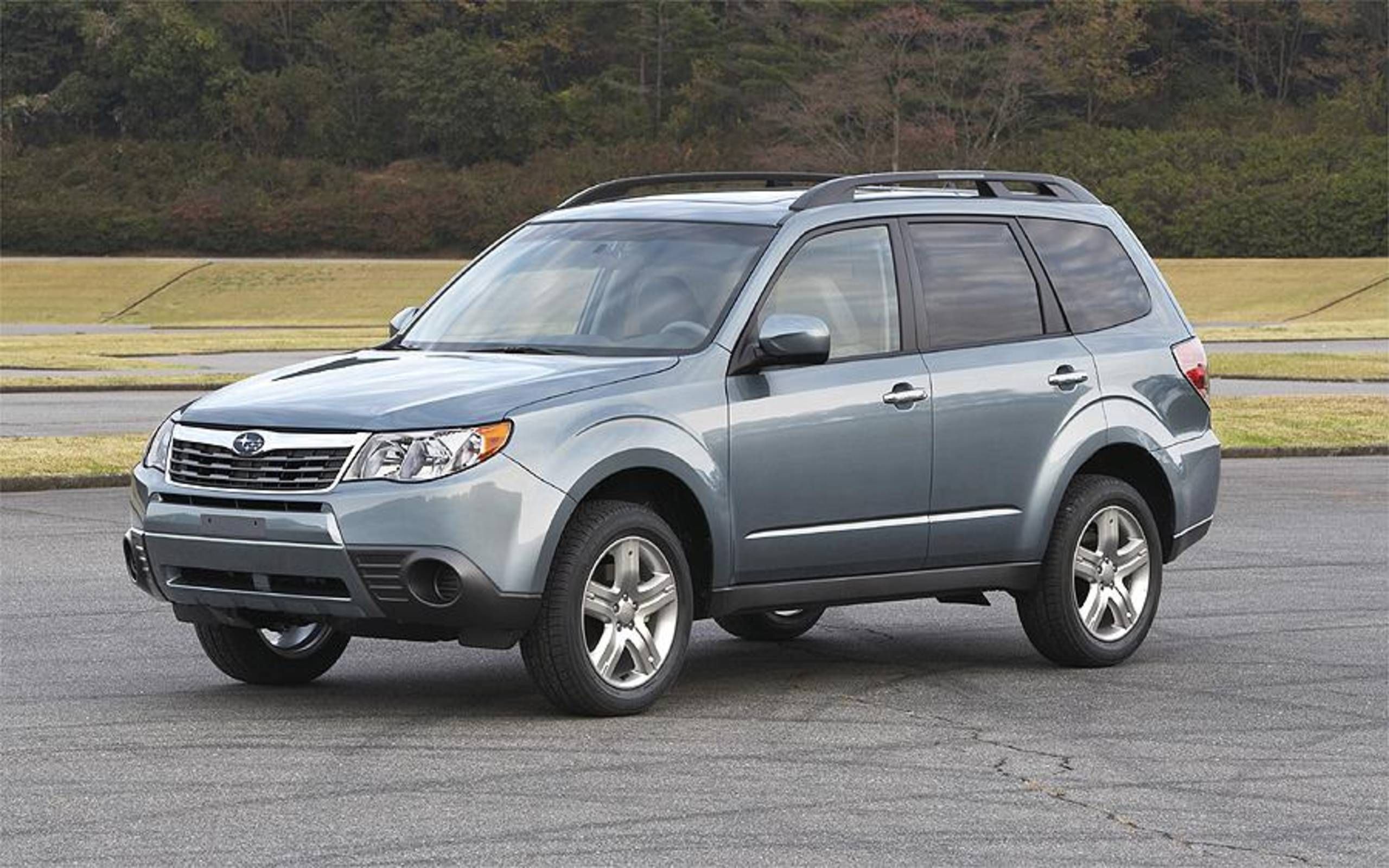
The 2015 Subaru Forester continued the fourth-generation design, improving reliability and addressing the oil consumption issues reported in some 2014 models. It retained the strengths that had already made it popular: a spacious interior, standard all-wheel drive, and strong fuel efficiency.
Subaru also made safety a higher priority, equipping every Forester with a rearview camera and offering the EyeSight Driver Assist system, which added advanced features like lane departure warning and automatic braking.
With its blend of dependability, comfort, and practicality, the 2015 Forester was especially appealing to families and outdoor enthusiasts.
Performance-wise, the 2015 Forester offered two distinct powertrains. The 2.5-liter four-cylinder engine produced 170 horsepower and was paired with either a six-speed manual or a continuously variable transmission (CVT).
The CVT models stood out for efficiency, returning up to 32 mpg on the highway an impressive figure for an AWD crossover. For drivers seeking more excitement, the 2.0XT trim came with a turbocharged 2.0-liter engine producing 250 horsepower and 258 lb-ft of torque, capable of accelerating from 0–60 mph in just 6.3 seconds.
While this model offered class-leading performance, its real-world fuel economy sometimes fell short of EPA estimates, and towing capacity remained limited at 1,500 pounds.
Safety was a cornerstone of the 2015 Forester’s appeal. Standard features included antilock disc brakes, stability and traction control, front side airbags, full-length curtain airbags, and a driver knee airbag.
The model earned a five-star overall crash-test rating from the NHTSA, along with near-perfect marks from the IIHS, which also awarded the EyeSight-equipped Forester a Top Safety Pick+ designation.
Braking performance was strong as well, with the turbocharged XT stopping from 60 mph in just 119 feet one of the better results in its segment. These credentials made the Forester one of the safest crossovers on the market at the time.
Inside, the 2015 Forester prioritized functionality over flash. The cabin design was simple and user-friendly, though the optional navigation system lagged behind competitors in graphics and ease of use.
What it lacked in style, however, it made up for in space and practicality. Rear passengers benefited from elevated stadium-style seating with excellent visibility and thigh support, while rear legroom rivaled that of some luxury sedans.
Cargo capacity was equally impressive, with up to 74.7 cubic feet of space beating even the class-leading Honda CR-V. The 2015 Subaru Forester combined efficiency, safety, and space in a package that remained one of the most well-rounded compact crossovers of its time.

4. 2016 Subaru Forester
By 2016, Subaru had polished the fourth-generation Forester into one of the most complete small SUVs on the market. Safety was a major highlight, with the EyeSight system becoming more widely available and adding lane-keeping assist and sway warning to its suite of driver-assist technologies.
These improvements, combined with excellent crash-test results, earned the Forester a Top Safety Pick+ rating from the IIHS.
Standard features such as a rearview camera and Subaru’s Starlink Safety Plus telematics system further enhanced driver confidence, while optional upgrades added remote services like stolen vehicle recovery and alarm notification. With safety firmly at the forefront, the 2016 Forester appealed strongly to families and daily commuters alike.
Performance remained a two-pronged offering. The base 2.5-liter four-cylinder engine delivered 170 horsepower and 174 lb-ft of torque, paired with either a six-speed manual transmission or a CVT.
This engine prioritized efficiency, with CVT-equipped models achieving an impressive 32 mpg highway, a notable figure for an AWD crossover. For buyers craving more excitement, the turbocharged 2.0-liter XT trim pumped out 250 horsepower and 258 lb-ft of torque, sprinting from 0–60 mph in just 6.3 seconds.
While both engines offered adequate towing capacity of 1,500 pounds, Subaru’s real strength was its off-road readiness, featuring generous ground clearance, hill descent control, and an available “X-Mode” traction system for dirt and snow.
Driving dynamics struck a balance between comfort and stability. The 2016 Forester’s revised suspension and added sound insulation created a quieter, smoother ride than previous models.
While its tall profile and soft suspension meant it wasn’t the most agile SUV on winding roads, the trade-off was a composed, confidence-inspiring drive over bumps, highways, and unpaved trails.
Steering remained precise and easy to manage, and the turbocharged XT model offered one of the quickest and most engaging powertrains in the class.
In braking tests, the turbocharged Forester 2.0XT performed strongly, stopping from 60 mph in just 119 feet well within segment standards. It delivered an everyday driving experience that balanced efficiency, performance, and off-road capability.
Inside, the 2016 Forester emphasized practicality and usability over luxury. Subaru introduced its Starlink infotainment system, bringing smartphone integration, apps like Pandora and iHeartRadio, and a touchscreen interface 6.2 inches on base trims and 7 inches on higher ones.
Rear passengers benefited from elevated stadium-style seating, excellent legroom, and great outward visibility thanks to the large windows. Cargo space was another standout feature, with 34.4 cubic feet behind the rear seats and a class-leading 74.7 cubic feet with them folded flat.
Even models with the panoramic sunroof offered generous capacity. While competitors like the Mazda CX-5 and Ford Escape provided sportier handling and more upscale interiors, the 2016 Subaru Forester distinguished itself with its unbeatable blend of safety, space, efficiency, and everyday usability.
5. 2017 Subaru Forester
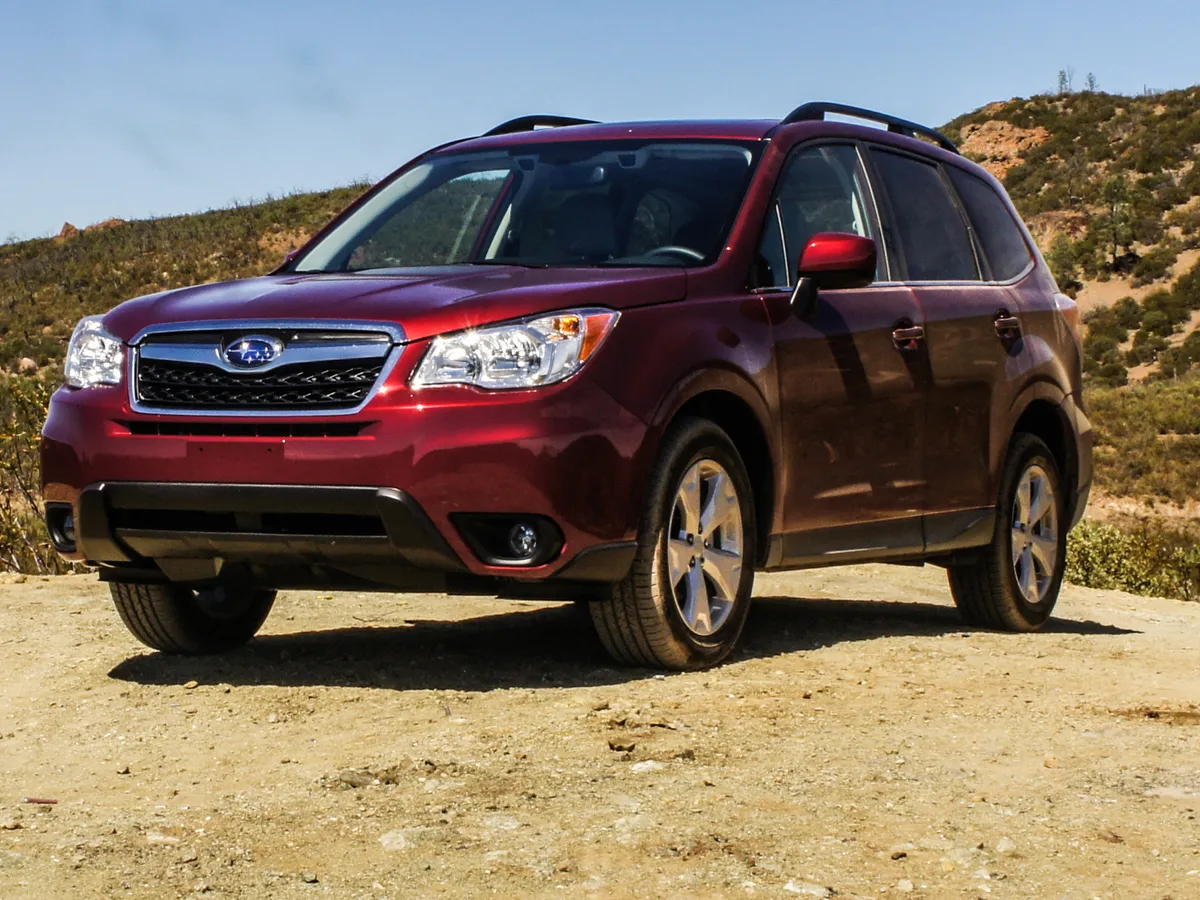
For 2017, Subaru refreshed the Forester with subtle styling changes and meaningful feature upgrades. A redesigned front fascia, updated headlights and taillights, and a new grille gave it a sharper look.
Inside, additional sound insulation and revised steering calibration improved comfort and drivability, while the Touring trim introduced an upscale Saddle Brown leather interior option.
Safety tech took a big leap forward. The enhanced EyeSight suite added lane-keep assist, blind-spot monitoring, rear cross-traffic alert, reverse automatic braking, and adaptive LED headlights with automatic high beams. These updates, combined with strong crash-test results, helped the Forester maintain its IIHS Top Safety Pick+ rating.
Performance remained familiar but capable. The standard 2.5L four-cylinder engine (170 hp) offered good fuel efficiency and standard AWD, while the turbocharged 2.0L XT (250 hp) became even more appealing thanks to newly added torque vectoring for sharper handling.
With up to 32 mpg highway and 8.7 inches of ground clearance, the Forester retained its reputation as a versatile all-rounder equally at home commuting or venturing off-road.
Inside, the Forester’s airy cabin and stadium-style rear seating delivered excellent visibility and comfort. Cargo space remained a highlight at 34.4 cubic feet (74.7 cu-ft with seats folded), outpacing many rivals. A new 7-inch Starlink infotainment screen improved graphics and responsiveness, though the lack of Apple CarPlay and Android Auto was a notable omission.
The 2017 Forester refined its strengths safety, utility, and AWD confidence while addressing prior weaknesses like cabin noise. Competitors such as the Honda CR-V and Mazda CX-5 offered more engaging road manners or modern tech, but the Forester continued to stand out as a practical, durable, and safe choice in the compact SUV segment.

Also Read: 5 Cars That Rarely Need Warranty Claims and 5 That Max Them Out
5 Subaru Forester Years That Break Early
1. 2003 Subaru Forester: Early Reliability Challenges
The 2003 Subaru Forester presented owners with a series of frustrating but somewhat basic issues that highlighted gaps in durability. One of the most persistent problems was door seal damage, which not only allowed excessive wind noise but also impacted the power windows.
Many drivers reported that their windows would not roll up properly, especially around the 80,000-mile mark, making this a significant inconvenience. The only reliable solution was to replace the entire door seal, an expensive and time-consuming repair that drivers felt should not have been necessary for a modern vehicle.
Another area of concern was the airbag system. The airbag warning light frequently illuminated, and in some cases, airbags failed to deploy during accidents. This problem was considered moderately severe, with many incidents occurring around 60,000 miles.
While these failures did not make the vehicle undrivable, they posed major safety risks. The 2003 Forester’s recurring problems reflected weak quality control in areas that directly affected safety, comfort, and convenience, leading to frustration for otherwise loyal Subaru drivers.

2. 2010 Subaru Forester: Expensive Engine Setbacks
By 2010, Subaru faced growing scrutiny over engine reliability, as the Forester became associated with one of the brand’s most notorious issues head gasket failures. At an average repair cost of $2,380, blown head gaskets ranked among the most expensive problems for owners.
This issue often appeared around 91,000 miles, causing significant financial strain and leading to reports of engine failure or sudden power loss. Other engine troubles included cold start noise, blown turbo engines, and diesel filter warnings.
Beyond engine troubles, drivers also reported failures in interior accessories, such as broken hatch arms, collapsing driver’s seats, and malfunctioning compass systems. Many of these interior issues surfaced around 64,000 miles and could only be remedied through complete replacement, sometimes at high cost.
While these problems did not affect safety to the same extent as airbags in earlier models, they compromised comfort and highlighted a decline in build quality. Altogether, the 2010 Forester left many drivers disappointed with its expensive maintenance requirements, proving costly in both engine and accessory repairs.
3. 2011 Subaru Forester: Rising Oil Consumption Issues
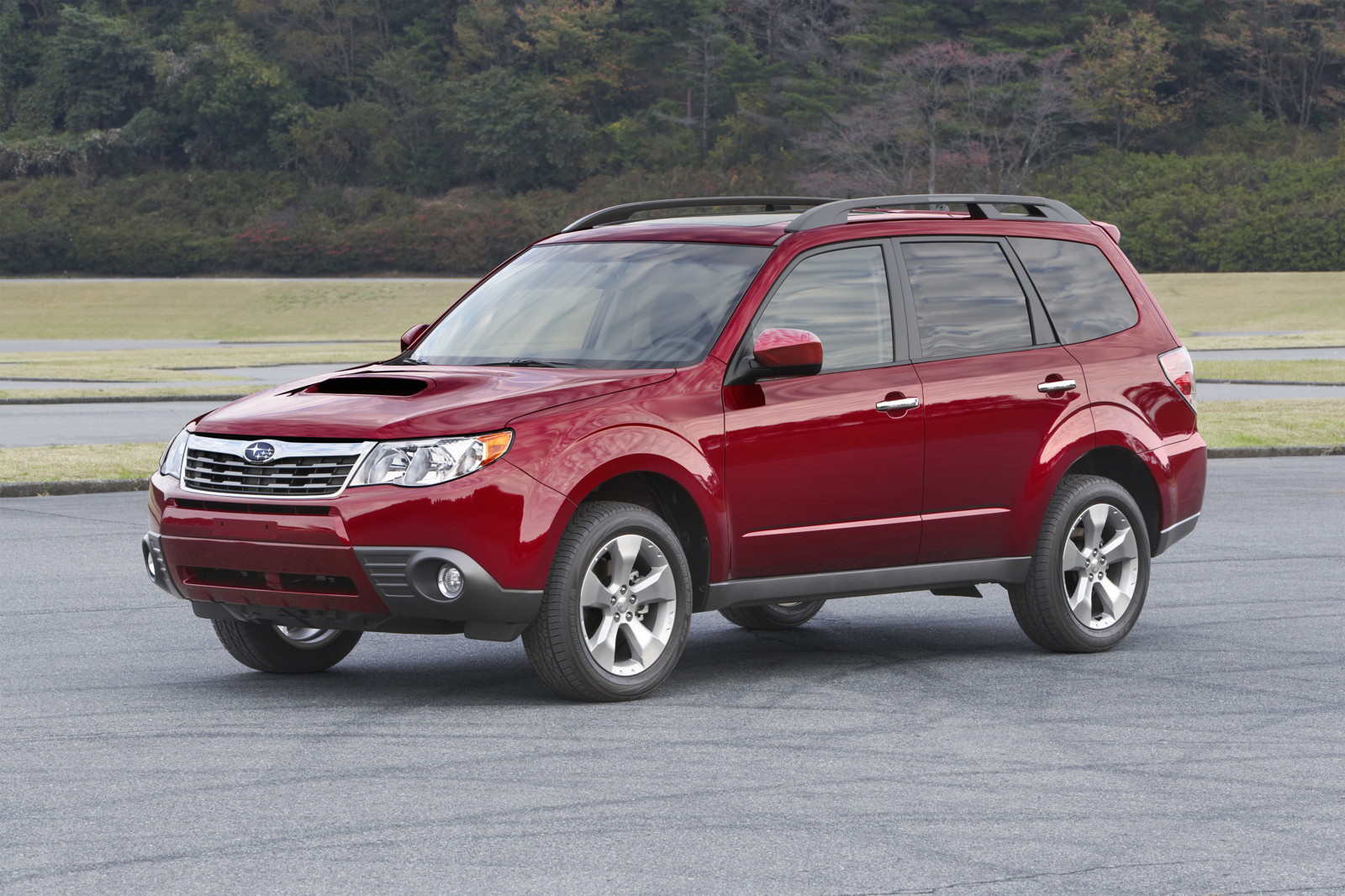
The 2011 Subaru Forester inherited some of the mechanical weaknesses of earlier models, most notably oil-related problems. Excessive oil consumption became a defining issue, with many owners reporting that their engines required constant refilling or even complete replacement.
On average, repairs cost $1,640, and the issue typically appeared around 46,000 miles far earlier than owners expected for such major failures. Alongside oil use, drivers faced oil leaks, burnt oil smells, and engine misbehavior such as stalling or unexpected acceleration.
These complications not only created safety risks but also contributed to significantly higher maintenance costs. Fuel efficiency also dropped in comparison to previous years, compounding consumer frustration.
Although Subaru had built a reputation for rugged vehicles suited to long drives and varied conditions, this model year revealed cracks in reliability, especially for daily commuting.
While some owners mitigated problems by closely monitoring oil levels and scheduling repairs quickly, others suffered engine breakdowns that required full replacements. In short, 2011 underscored Subaru’s growing struggle with engine consistency, fueling doubts about the Forester’s long-term dependability.

4. 2014 Subaru Forester: The Model Year to Avoid
Among all Subaru Forester generations, the 2014 model stands out as the one most frequently cited for its extensive mechanical failures. Engine breakdowns, excessive oil consumption, and suspension collapses made this model a source of frustration and expense for owners.
Broken coil springs were the most common suspension issue, usually appearing around 50,000 miles, and required replacements costing about $1,200. These problems often paired with transmission failures such as surging, gear slippage, rolling backward when parked, or being stuck in park.
Many of these transmission issues required dealer intervention, which, while partially covered under warranty, still created inconvenience and financial burdens. Electrical malfunctions further worsened the vehicle’s reputation. Owners frequently reported blown fuses, false dashboard warnings, and inconsistent system performance.
With so many simultaneous issues across major systems engine, suspension, transmission, and electrical the 2014 Forester became notorious as the model year to avoid.
Even with repairs, reliability often remained compromised, leaving drivers wary of Subaru’s engineering choices. For many, this model damaged the Forester’s reputation as a trusted family vehicle.

5. 2001 Subaru Forester: Mechanical Issues to Watch
The 2001 Subaru Forester is notorious for head gasket failures, a common problem with Subaru’s older Boxer engines. This defect often leads to coolant leaks, overheating, and potential engine damage, with repair costs sometimes exceeding $1,500.
Transmission slippage was another frequent complaint, causing rough shifting and sudden power loss during acceleration, which affected both safety and drivability. Rust also commonly developed on the undercarriage and suspension components, reducing the vehicle’s longevity.
While some units may have been repaired or restored, this model’s history of chronic engine, transmission, and rust problems makes it a risky choice for buyers seeking reliability and low maintenance costs.

The Subaru Forester stands out as a compact SUV that balances safety, utility, and all-weather confidence, making it a trusted choice for families and adventurers alike. Yet its long production history means that reliability has not always been consistent across the board.
Some editions represent the best of Subaru engineering, delivering dependable performance, comfort, and value over the long haul. Others have struggled with recurring issues such as engine troubles, transmission failures, or interior wear that compromise ownership satisfaction.
For buyers, the key is focusing on the Foresters that combine durability with practicality, while steering clear of those known for frequent repairs.
By choosing wisely, drivers can enjoy the confidence of a crossover that not only handles diverse driving conditions but also delivers years of reliable service, proving why the Forester remains one of the most respected names in its class.
Also Read: 10 Cars That Rarely Sit Unsold In The Lot Due To High Demand in 2025