

When conversations come up about the most trusted and most disappointing engines, the Inline-4 is always on the list. This type of engine has been used by many automakers for decades because of its balance of performance, affordability, and compact design.
From sedans to hatchbacks and even some SUVs, the Inline-4 has managed to find its way into different types of vehicles. People love it because it is lighter than bigger engines and can be serviced without too much stress.
At the same time, there are many versions of this engine, and some of them are built to last for hundreds of thousands of miles, while others do not even make it past a college student’s years of hard driving.
When you think about students, one thing is clear: they are often very hard on their cars. A college car is normally used for constant trips, weekend outings, food runs, and sometimes long drives back home. That kind of life puts extra strain on an engine.
Some Inline-4s are strong enough to take all of that punishment and keep moving like nothing happened, while others begin to fail long before graduation.
An engine that is truly reliable will handle poor maintenance, long hours of driving, and rough handling. Weak ones will show their flaws quickly with overheating, oil leaks, or complete failure.
5 Inline-4s That Last Forever

1. Toyota 2.4L 2AZ-FE
Toyota has always had a reputation for building strong engines, and the 2.4L 2AZ-FE is a good example. This engine was used in popular models such as the Toyota Camry, Toyota RAV4, and Scion tC.
For many drivers, this Inline-4 is remembered as one of the most dependable engines of the early 2000s. It combined decent horsepower with efficiency and low maintenance demands, making it perfect for people who wanted reliability without spending too much on repairs.
One of the strengths of the 2AZ-FE is its ability to take on high mileage. It is not unusual to see these engines crossing 250,000 miles with nothing more than basic oil changes and occasional tune-ups. That makes it a very good option for a student or a family car.
Even when treated roughly, the engine block and cylinder head are strong enough to handle the abuse. The timing chain setup also helps by reducing the cost and stress of replacement compared to a timing belt system.
Of course, no engine is without its issues. The 2AZ-FE had some reports of head gasket problems in earlier models, and oil consumption was also a complaint for certain years.
However, those problems were not common enough to damage the entire reliability of this engine. With proper maintenance, this Inline-4 will keep running smoothly even if the driver does not treat it gently.
College students who drive long distances or who tend to forget regular servicing can still depend on the 2AZ-FE to keep moving.
It is one of those engines that does not easily break down, and even when a problem comes up, the repair process is not as costly as compared of some newer engines. For that reason, it easily earns a place on the list of Inline-4s that last forever.

2. Honda K24
Honda’s K-series engines are widely respected, and the K24 stands out as one of the best Inline-4s the company ever made. This engine was fitted in cars such as the Honda Accord, Honda CR-V, and Acura TSX.
Drivers quickly noticed that it could handle both daily driving and performance upgrades without giving too many problems. That flexibility is part of why the K24 is regarded as a strong long-term choice.
Durability is one of its greatest features. These engines can often cross 300,000 miles if properly maintained. Even with regular abuse, they still deliver solid performance.
The K24 makes use of Honda’s VTEC system, which gives it both efficiency and extra power when needed. College drivers who want a balance between reliability and fun often find this engine to be the right choice.
Another advantage is the wide availability of parts. Honda engines are some of the easiest to service because aftermarket support is everywhere. If something breaks, getting a replacement part is not difficult or expensive.
This reduces downtime and makes it easier for students to keep their cars running. Mechanics also appreciate the K24 because it is simple to work on compared to more modern engines that are filled with electronics.
Of course, there are still some weaknesses. The K24 sometimes suffers from oil leaks and cracked engine mounts, especially when pushed too hard.
But these problems do not destroy its reputation. The main structure of the engine remains very strong, and even cars that are tuned for higher performance continue to hold up well.
For any student who needs a dependable Inline-4, the K24 is a safe bet. It is tough enough to survive years of hard driving and flexible enough to be used in different situations, from simple commuting to performance builds. Its track record has made it one of the most trusted Inline-4s of its era.
Also Read: 5 Engines That Rarely Fail Smog and 5 That Always Fail Tests

3. Mazda BP 1.8L
Mazda is known for producing fun cars, and the BP 1.8L engine proves that enjoyment does not have to sacrifice strength. This Inline-4 was fitted in the Mazda MX-5 Miata, as well as some other models.
It became popular because it combined light weight with a high-revving nature, which made driving feel exciting. Beyond performance, though, the BP engine also earned respect for lasting a very long time.
This engine is built on a solid cast-iron block, which is one of the main reasons for its durability. Unlike some aluminum-block engines that wear out faster under heavy stress, the BP can handle repeated strain without giving up.
Many Miata owners have driven these engines for hundreds of thousands of miles without needing a major rebuild. That kind of record shows that Mazda designed it with long-term performance in mind. College drivers who want something sporty but still dependable often look at cars with the BP 1.8L.
Even if the car is driven aggressively, the engine can handle it. Oil changes and cooling system maintenance are usually enough to keep it alive for years. It also does not suffer from major design flaws that could suddenly bring the engine to failure.
Another benefit is the tuning community that surrounds the Miata. Because the BP is so reliable, many people use it as a base for modifications. Turbocharging, supercharging, and other upgrades have been applied to the engine without causing immediate breakdown. That flexibility shows just how well-built it is.
When compared to some modern Inline-4s that barely last past 150,000 miles, the BP 1.8L stands tall. It proves that even small engines can survive heavy use, and it remains a trusted choice for students who want reliability mixed with fun.

4. Ford 2.3L Duratec
The Ford 2.3L Duratec engine made its way into several vehicles, including the Ford Focus, Ford Fusion, and even the Mazda6, since Ford and Mazda shared engineering.
This Inline-4 is respected for being simple, tough, and able to keep running long after many other engines have failed. For everyday use, it has shown itself to be one of Ford’s best four-cylinder designs.
One of the biggest strengths of the Duratec is its design simplicity. It does not rely heavily on complicated technology, which means fewer things can break.
That makes it perfect for students who may not have the money or time to handle expensive repairs. A properly maintained Duratec can reach 200,000 miles without major trouble, and many go even further.
The engine also has a strong bottom end, meaning it can take a lot of stress without breaking internal parts. This makes it more forgiving if the driver forgets oil changes once in a while or pushes the car too hard.
Unlike some modern turbocharged engines, the naturally aspirated Duratec does not deal with extreme heat that could shorten its life.
Of course, like every engine, there are issues. Some owners reported water pump problems and occasional oil leaks. But these are small problems compared to engines that regularly blow head gaskets or spin bearings. Once serviced correctly, the Duratec remains dependable.
For students, the main appeal of this engine is how low-cost it is to maintain. Replacement parts are easy to find, and mechanics are very familiar with it. Whether used in a sedan for commuting or in a compact car for weekend trips, the Duratec 2.3L has proven itself to be one of the Inline-4s that can last a lifetime of rough use.
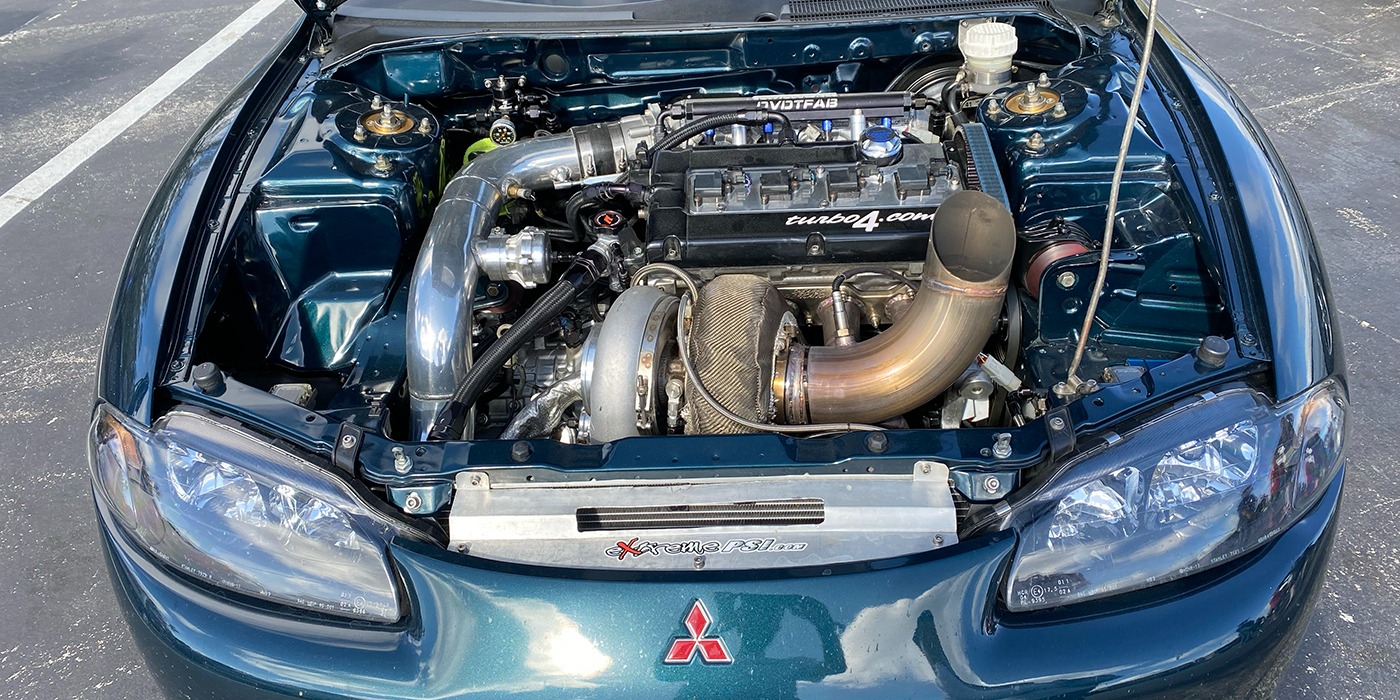
5. Mitsubishi 4G63
When talking about tough Inline-4s, the Mitsubishi 4G63 always comes up. This engine powers cars such as the Mitsubishi Eclipse and the Lancer Evolution. It became famous for its performance, especially in turbocharged versions, but it also has a reputation for being incredibly long-lasting if treated well.
The 4G63 is built with strength in mind. Its iron block can handle extreme levels of power, which is why many tuners push it to 500 horsepower or more. Even in stock form, it delivers dependable performance for hundreds of thousands of miles. This makes it perfect for drivers who want both power and reliability in one package.
For college drivers, the 4G63 offers a mix of fun and peace of mind. Even if the car is driven hard, the engine does not easily give up. Oil changes, good fuel, and a proper cooling system are usually enough to keep it alive. That makes it very different from weaker engines that fail after a few years of stress.
One of the reasons this engine has lasted so long in car culture is because of how forgiving it is. While some engines break after minor mistakes, the 4G63 can survive missed oil changes or aggressive driving for longer periods. Of course, abuse without end will eventually kill it, but it holds up much better than most Inline-4s.
For drivers who want an engine that can survive college life and still deliver strong performance years later, the 4G63 is among the best choices. It has earned its place as one of the Inline-4s that can truly last forever.
5 Inline-4s That Don’t Survive College

1. Chrysler 2.7L DOHC V6 (Shared Inline-4 Weakness)
Although Chrysler is known for its bigger engines, its smaller displacement versions have been a letdown. The 2.7L DOHC, though technically a V6, shared design issues that were also present in its Inline-4 relatives. These design flaws make it relevant to this list, because its performance and durability mirrored the struggles of Chrysler’s Inline-4 offerings.
The main problem with this engine was its oiling system. The oil passages were too narrow, which caused oil sludge to build up quickly. Once sludge starts, the engine starves for lubrication, leading to worn bearings, overheating, and sometimes complete breakdown.
For a student driver who often ignores oil change schedules, this design is a nightmare. A college car is often maintained on a budget, with cheaper oils and longer gaps between servicing.
On this Chrysler engine, those habits lead directly to early death. Many drivers reported catastrophic failure before the 100,000-mile mark, which is embarrassing compared to rivals from Toyota or Honda.
Another issue was the water pump, which was located inside the engine block. When it failed, coolant leaked into the oil, mixing fluids and damaging the bearings even faster.
Repairing this problem was expensive and time-consuming, which discouraged owners from fixing it. Many cars equipped with this engine ended up in junkyards far earlier than expected.
While Chrysler tried to market this engine as a modern and efficient option, its real-life performance showed otherwise.
For students or young drivers, it became a financial trap because one or two repairs could exceed the value of the car. This is why it belongs among the Inline-4-type engines that cannot survive college use.

2. Volkswagen 2.0L SOHC (Early 2000s)
Volkswagen is often associated with solid German engineering, but the early 2000s 2.0L SOHC Inline-4 damaged that image. Found in cars like the VW Jetta and Golf, this engine had a reputation for being sluggish, unreliable, and expensive to maintain.
For students who needed a car that could survive long drives and careless treatment, this Volkswagen engine was a poor choice.
The first problem is its low power output. Even when new, the 2.0L produced weak acceleration compared to competitors. For a young driver, that meant frustration on highways and during overtakes.
But the bigger issue was how quickly it developed mechanical problems. The engine frequently suffered from coil pack failures, oil leaks, and electrical issues.
Another weakness was its timing belt. Unlike timing chains that last longer, the belt required frequent replacement. If neglected, it could snap, leading to complete engine destruction.
Many student-owned Volkswagens did not survive past this point because the repair cost was too high. The oil consumption issue made things worse, as owners had to constantly check and top up oil, which was not practical for a busy student lifestyle.
Mechanics often complained about the design because simple repairs required extra labor. Compared to Japanese rivals, the Volkswagen 2.0L SOHC was both less reliable and more expensive to fix. Students who bought used Jettas or Golfs with this engine often ended up regretting their decision within a year or two.
Because of its weak power, constant oil burning, and high maintenance cost, this Inline-4 easily earns its place among engines that rarely survive college years.

3. Hyundai 2.7L Delta Inline-4
Hyundai has improved greatly in recent years, but older models showed many weaknesses. The Delta Inline-4 from the late 1990s and early 2000s is one example. While Hyundai marketed it as efficient and modern, it developed a reputation for being unreliable, especially under stressful use.
For students, the main issue was its poor durability. The Delta Inline-4 struggled with weak connecting rods and crankshaft bearings that wore out quickly.
Once that happened, the engine produced knocking sounds and soon failed. Many drivers reported failures well below 100,000 miles, which is unacceptable compared to Japanese engines that lasted much longer.
Another issue was oil sludge formation, similar to Chrysler engines. Poor oil circulation meant that students who skipped one or two oil changes often destroyed their engines without even realizing it. This was especially bad for college drivers who often drove long distances home or relied on their cars for daily trips.
Hyundai’s early electronics also caused headaches. Sensors frequently failed, and the check engine light became a constant companion. This made diagnosis and repair more expensive, especially for students who lacked the budget for repeated fixes.
Although Hyundai has since developed stronger and more reliable engines, the older Delta Inline-4 remains an example of why buyers were once cautious about the brand. It lacked the toughness required for student life and belongs firmly on this list of engines that rarely last through college.

4. Subaru EJ25
Subaru has a loyal customer base, but the EJ25 Inline-4 hurt its reputation in many ways. Found in popular models like the Subaru Impreza, Legacy, and Outback, this engine suffered from one problem that overshadowed everything else: head gasket failures.
Head gaskets are supposed to last a long time, but in the EJ25, they failed regularly, often before 100,000 miles. When that happened, coolant mixed with oil, leading to overheating, poor performance, and engine damage.
For a student who cannot afford constant repairs, this is a disaster. The cost of replacing head gaskets on a Subaru is high because of the engine’s design, and many cars ended up being abandoned rather than fixed.
Another issue was oil leaks from cam seals and valve covers. While not as catastrophic as the head gasket problem, they added to the maintenance burden. Students who bought older Subarus with the EJ25 often found themselves spending more on repairs than on actual tuition.
Even when the EJ25 ran properly, it was not the most durable Inline-4. Aggressive driving could quickly wear it out, and Subaru’s all-wheel-drive system placed additional strain on the engine. While it had good torque for its size, the reliability problems made it unsuitable for the long and careless driving patterns of college life.
Because of the frequent head gasket failures and high repair costs, the EJ25 is remembered as an engine that could not survive rough use. For students who bought Subarus expecting toughness, it often turned into a money pit.
Also Read: 5 Engines With Legendary Lifespans and 5 That Barely Make It

5. Chevrolet 2.2L Ecotec (Early Version)
Chevrolet’s Ecotec family of Inline-4s has improved with time, but the early 2.2L version was far from reliable. Found in cars like the Chevrolet Cavalier, Pontiac Sunfire, and even the Saturn Ion, this engine often disappointed its owners, especially young drivers.
The first issue was poor build quality. Many early Ecotec engines suffered from timing chain failures, which led to catastrophic damage if not replaced quickly.
For students who did not keep up with maintenance, this was a common problem. Once the timing chain snapped, the engine was usually beyond repair.
Another problem was oil consumption. Just like Volkswagen and Hyundai engines of the same period, the 2.2L Ecotec often burned oil at an alarming rate. Students rarely checked their oil levels, and as a result, many engines seized due to low lubrication.
Even when it was running well, the Ecotec 2.2L did not offer strong performance. It was underpowered compared to Japanese rivals, making it less appealing for highway use. The lack of power, combined with frequent mechanical issues, meant that students who bought these cars often traded them in quickly.
Mechanics also noted that certain parts, such as water pumps and ignition coils, failed too often. While repairs were possible, the frequency of breakdowns made the ownership experience frustrating. Cars powered by this engine were often cheap on the used market, but they also became worthless quickly once the engine failed.
Because of these weaknesses, the early 2.2L Ecotec is remembered as one of the worst Inline-4s for long-term use. For a student who just needs a reliable daily driver, it was the wrong choice. Inline-4 engines have been some of the most common powerplants in cars for decades, and their quality has varied widely.
On one side, you have engines like the Toyota 2AZ-FE, Honda K24, Mazda BP, Ford Duratec, and Mitsubishi 4G63, which have all proven that they can handle years of abuse and still keep moving. These engines are strong, simple to maintain, and trusted by mechanics everywhere.
On the opposite side, engines like Chrysler’s 2.7L, Volkswagen’s 2.0L SOHC, Hyundai’s Delta Inline-4, Subaru’s EJ25, and Chevrolet’s early 2.2L Ecotec showed just how badly things can go when engineering and durability are not prioritized.
These engines often failed under the kind of driving patterns that college students are known for, making them expensive mistakes for anyone seeking long-lasting value. When looking at Inline-4 engines, the lesson is clear.
A well-built four-cylinder can be the most dependable partner through years of stress, while a poorly designed one will leave its owner stranded. For students and young drivers, choosing wisely can mean the difference between a car that lasts throughout school and one that dies before finals week.
