For drivers who value affordability and dependability, the Toyota Yaris has often been a smart choice. Compact, fuel-efficient, and easy to maneuver, it has served as a practical option for commuters, city residents, and first-time car owners.
Yet, like many long-running models, the Yaris has had its ups and downs. Some years stand out for their durability, thoughtful features, and enjoyable driving character, while others have been marked by recalls or design shortcomings.
Choosing the right model year can make all the difference in securing a reliable vehicle that holds its value and delivers peace of mind. In this guide, we’ll highlight five of the most reliable Toyota Yaris years, each praised for their strong performance, fuel economy, and trustworthy engineering.
Whether you’re searching for an efficient daily driver or a budget-friendly hatchback, these Yaris models prove that small cars can still offer big rewards.
5 Toyota Yaris Years With Great Reliability
1. 2020 Toyota Yaris
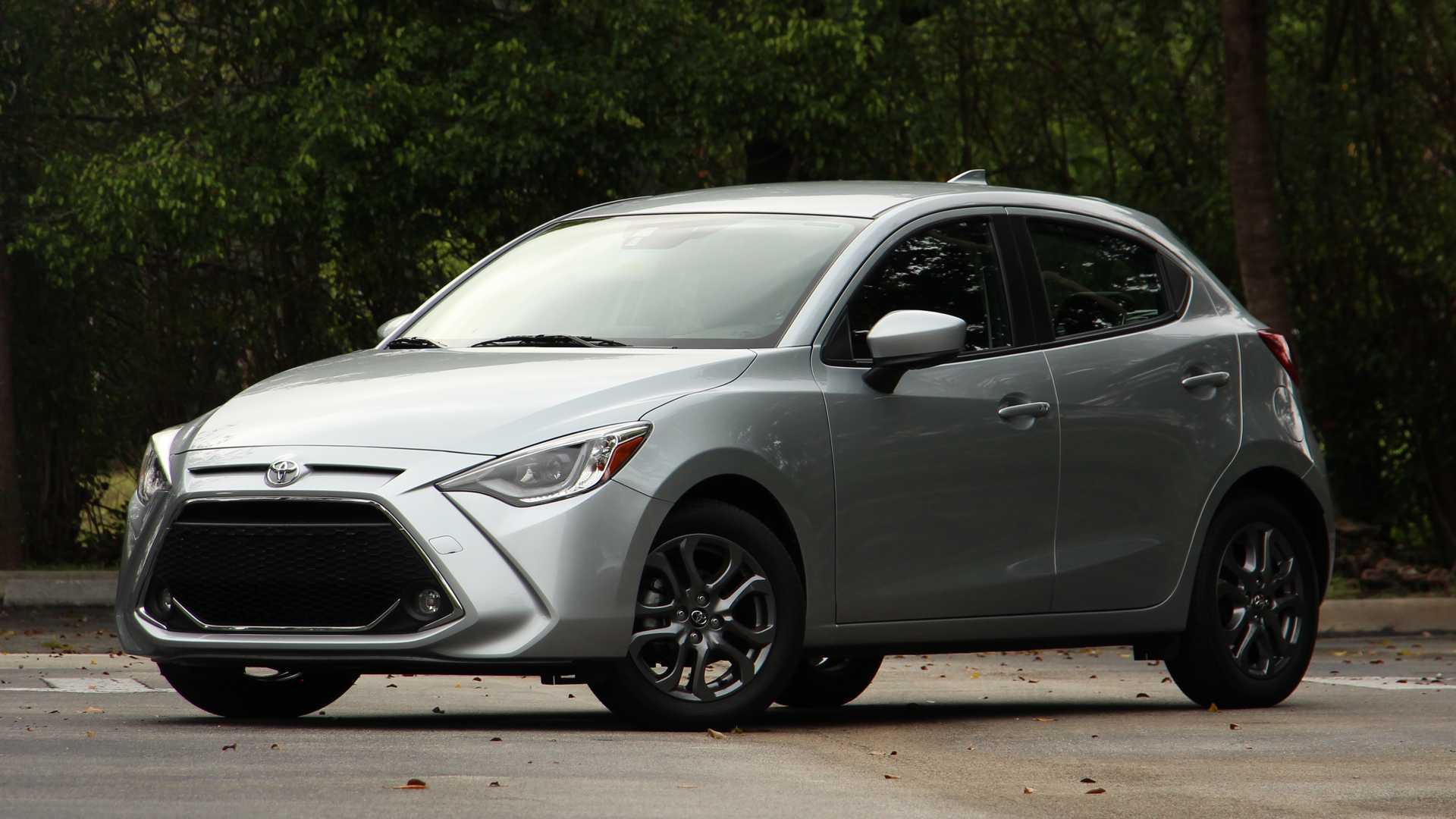
The 2020 Toyota Yaris occupies an interesting space in Toyota’s lineup, blending affordability with a touch of driving fun. Unlike most Toyotas, the Yaris owes much of its design and engineering to Mazda, borrowing heavily from the now-retired Mazda 2.
This unusual collaboration results in a vehicle that doesn’t quite resemble Toyota’s usual offerings, but the outcome is a compact sedan with polished styling, lively handling, and an efficient powertrain.
For 2020, the most notable upgrade is the addition of Apple CarPlay compatibility, further enhancing its appeal to tech-savvy drivers. Although it remains one of the least powerful vehicles in its class, the Yaris delivers more personality than expected at its modest price point.
Behind the wheel, the Yaris excels in agility rather than raw speed. Its 1.5-liter four-cylinder engine produces just 106 horsepower, which translates to a sluggish 0–60 mph time of just over 10 seconds. Yet, its quick and responsive steering, well-tuned transmission, and light chassis make it surprisingly fun on winding roads.
This playful nature is only somewhat tempered by its lack of grip and modest braking performance, both consequences of its economy-class tires.
Still, for daily commuting or spirited city driving, the Yaris delivers enjoyment in ways that many subcompact competitors cannot. On the downside, ride quality leans toward firm, and bumps and road imperfections are felt more directly than in some rivals.
Inside, the Yaris maintains a simple yet functional layout. Its cabin prioritizes ease of use, with intuitive controls and straightforward technology, now bolstered by Apple CarPlay.
Seating comfort is mixed; while lateral support is commendable for cornering, the absence of lumbar adjustment makes long commutes less pleasant. Interior space remains limited, particularly in the rear seats, which are best suited for short trips or smaller passengers.
Storage options are somewhat restricted, though the trunk offers a respectable 13.5 cubic feet of space, putting it on par with segment leaders. Safety features are minimal compared to newer rivals, with only a basic low-speed collision mitigation system included, highlighting Toyota’s focus on keeping costs low.
Despite its compromises, the Yaris performs well in two key areas: fuel efficiency and long-term value. Its EPA-rated 35 mpg combined is impressive, and real-world testing shows it can even exceed that estimate.
Toyota further enhances its value proposition with two years of free maintenance and roadside assistance, a benefit that outshines many competitors.
Although the Yaris lacks advanced driver aids and some modern conveniences, it compensates with solid build quality, fun driving dynamics, and an upscale feel not always found in budget-friendly sedans. For buyers seeking an affordable yet engaging daily driver, the 2020 Toyota Yaris proves that small cars can deliver big satisfaction.
2. 2019 Toyota Yaris
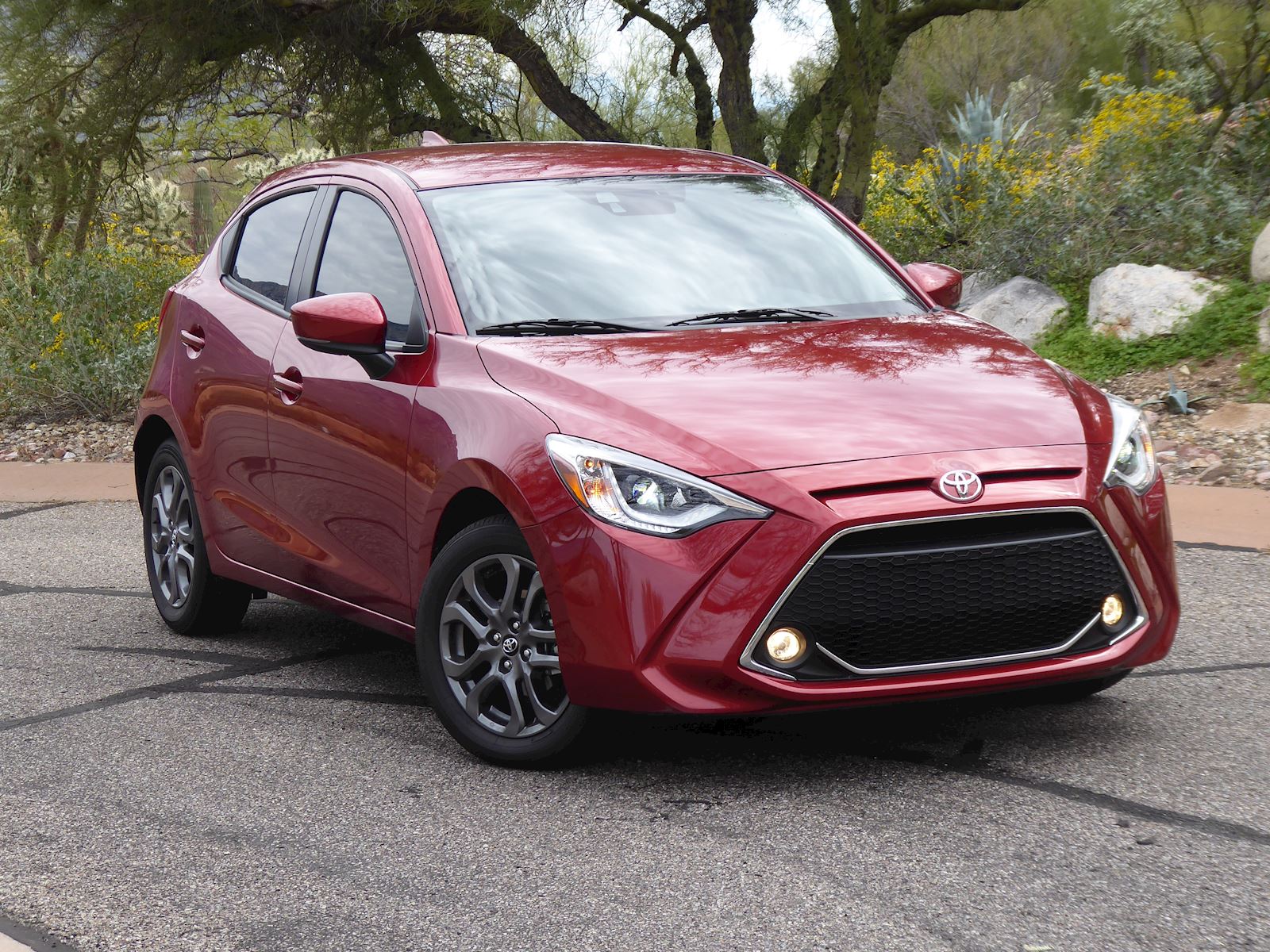
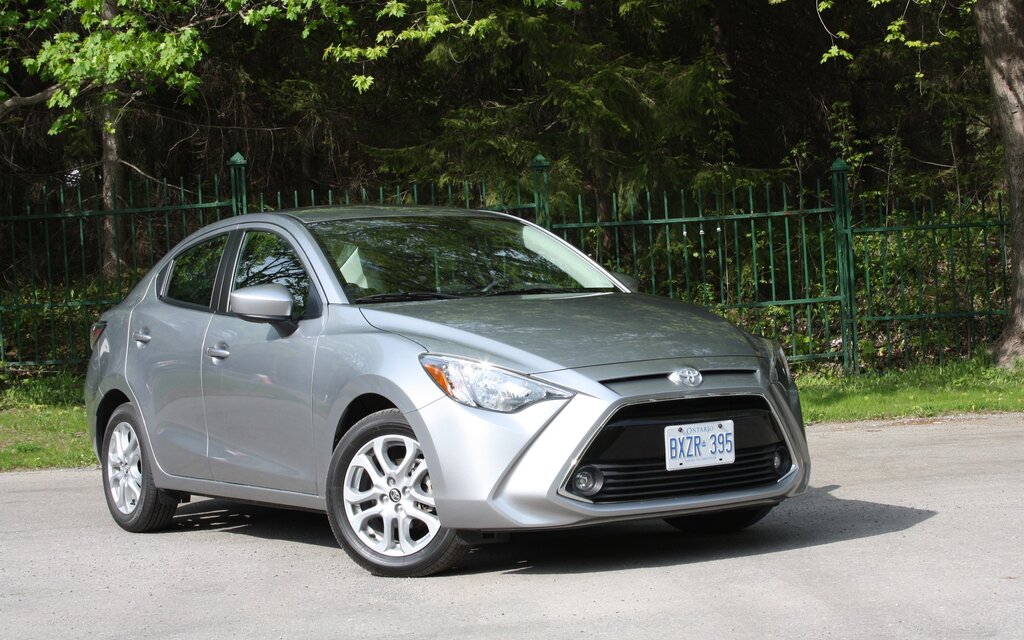
The 2019 Toyota Yaris is not the same as the hatchback of previous years. Instead, it takes the place of what was once known as the Yaris iA sedan, now renamed simply as Yaris.
Built on a Mazda platform and manufactured by Mazda, the Yaris sedan inherits many of Mazda’s strengths, including its engaging driving character and well-designed interior. Toyota has added its own touches, particularly in making many features standard that other automakers might reserve for higher trims.
Available in three trims, L, LE, and XLE, the 2019 Yaris offers refreshed styling front and rear, giving the sedan a slightly sharper look while keeping its affordability intact.
On the road, the Yaris proves to be surprisingly fun for a subcompact. Powered by a 1.5-liter four-cylinder engine producing 106 horsepower, it is undeniably slow by modern standards, needing just over 10 seconds to reach 60 mph.
Yet what it lacks in straight-line performance, it makes up for in nimble handling and precise steering. Its six-speed automatic transmission is smooth and responsive, contributing to the car’s playful feel, especially on city streets and twisty roads.
The low-grip tires add to the fun factor when cornering, though they do compromise braking ability compared with some competitors. While its speed leaves something to be desired, few cars in this segment deliver such an engaging driving experience.
Comfort inside the Yaris is modest but practical. The seats provide solid lateral support for cornering, though they lack lumbar adjustment, which makes longer drives less accommodating. Ride quality leans more toward firm, prioritizing handling over cushioned comfort.
Noise from the road and wind is noticeable at highway speeds, but the cabin remains free of rattles or vibrations, a positive mark for build quality in a budget car. The interior itself is simple yet functional, with controls that are intuitive and easy to operate.
Front seating offers reasonable space and adjustability, but the rear seats are cramped, limiting passenger comfort on longer trips.
Utility and technology reflect both strengths and shortcomings of the 2019 Yaris. Cargo space is competitive for the class at 13.5 cubic feet, though folding the rear seats creates an uneven load floor. In-cabin storage options are limited, with only a small glovebox and cupholders doubling as a center armrest substitute.
Tech offerings are basic but user-friendly, with a clean-sounding audio system, Bluetooth, two USB ports, and a 12-volt outlet. However, smartphone integration lags behind the competition, as Android Auto and Apple CarPlay have not yet offered features that would arrive with the 2020 model.
Advanced safety tech is also limited, with only a low-speed collision mitigation system included.
Despite these gaps, the 2019 Toyota Yaris stands out in its segment as an affordable sedan with Mazda-inspired driving fun and Toyota-backed practicality, making it a compelling choice for budget-conscious buyers who value personality over power.
3. 2018 Toyota Yaris
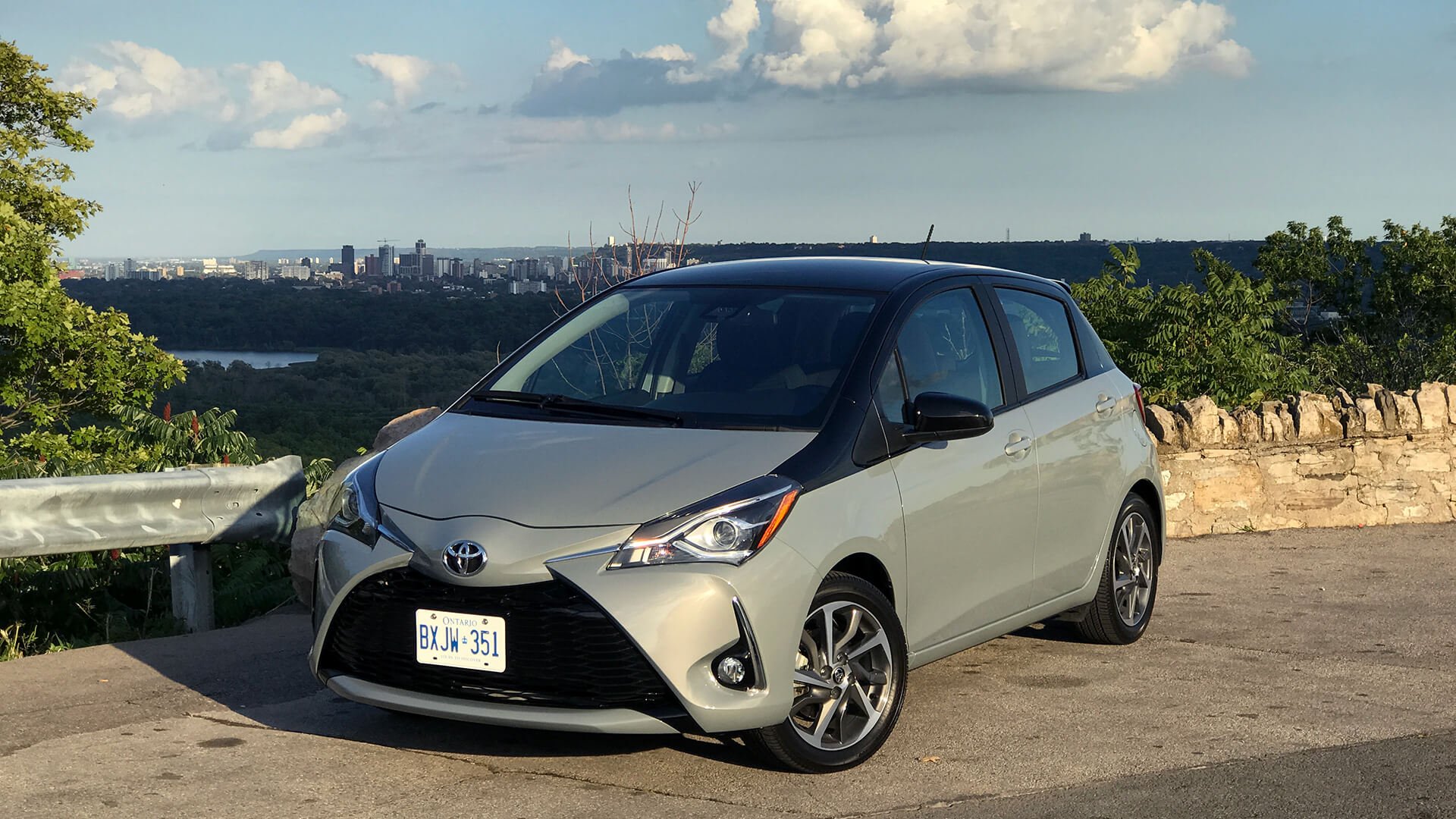
The 2018 Toyota Yaris hatchback received a styling refresh that gave it a sportier edge, while also improving interior consistency across trims. Available in both two- and four-door configurations, the Yaris continued to appeal to budget-conscious shoppers looking for a compact, easy-to-park vehicle with strong reliability credentials.
Its small size, rearview camera, and hatchback utility made it especially practical for urban living. Toyota also gave it an edge in safety by offering advanced driver assistance features such as lane departure warning, automatic high beams, and forward collision mitigation, which were not common in this segment at the time.
However, while the Yaris scored well on usability and safety, its performance and technology trailed behind competitors, leaving it better suited for those seeking simple transportation rather than excitement.
On the road, the Yaris struggled with outdated mechanicals. Its 106-horsepower engine paired with a four-speed automatic transmission limited both acceleration and drivability. Passing maneuvers and freeway merges required patience, with 0–60 mph times that were slower than most rivals.
The transmission, in particular, was a weak point, frequently hunting for gears and delivering harsh shifts. Despite these drawbacks, the Yaris had some redeeming qualities in handling.
Its small size and precise steering made it nimble in tight spaces, while braking and cornering remained predictable and stable. Still, compared with more modern subcompacts offering six-speed gearboxes and stronger engines, the Yaris felt dated and underwhelming in performance.
Interior comfort and quality were mixed. The Yaris offered tall doors and good visibility, making entry and exit simple, especially in tight parking areas. Its straightforward controls and physical buttons were easy to use, adding to its user-friendliness.
However, the lack of a telescoping steering wheel and limited seat support made it difficult to find a truly comfortable driving position, especially on long trips. Noise intrusion from wind, road, and engine was significant at higher speeds, often making freeway driving tiring.
Rear passenger space was tight, cargo capacity was limited to 15.6 cubic feet, and small-item storage options were sparse. Interior quality was another weak point, with mismatched plastics and a generally cheap feel compared with rivals.
Technology was an area where the 2018 Yaris fell noticeably behind. While it came with a touchscreen and basic Bluetooth connectivity, it lacked modern smartphone integration features such as Android Auto and Apple CarPlay, which were quickly becoming standard across competitors.
The infotainment screen also suffered from poor visibility in bright light, further hampering usability. On the upside, Toyota included a decent suite of driver aids for the class, including collision mitigation and lane departure alert, though blind-spot monitoring and parking sensors were unavailable.
The 2018 Toyota Yaris delivered strong safety, practicality, and affordability, but its outdated drivetrain, modest comfort, and weak tech made it less appealing for buyers wanting more than basic transportation.
4. 2017 Toyota Yaris
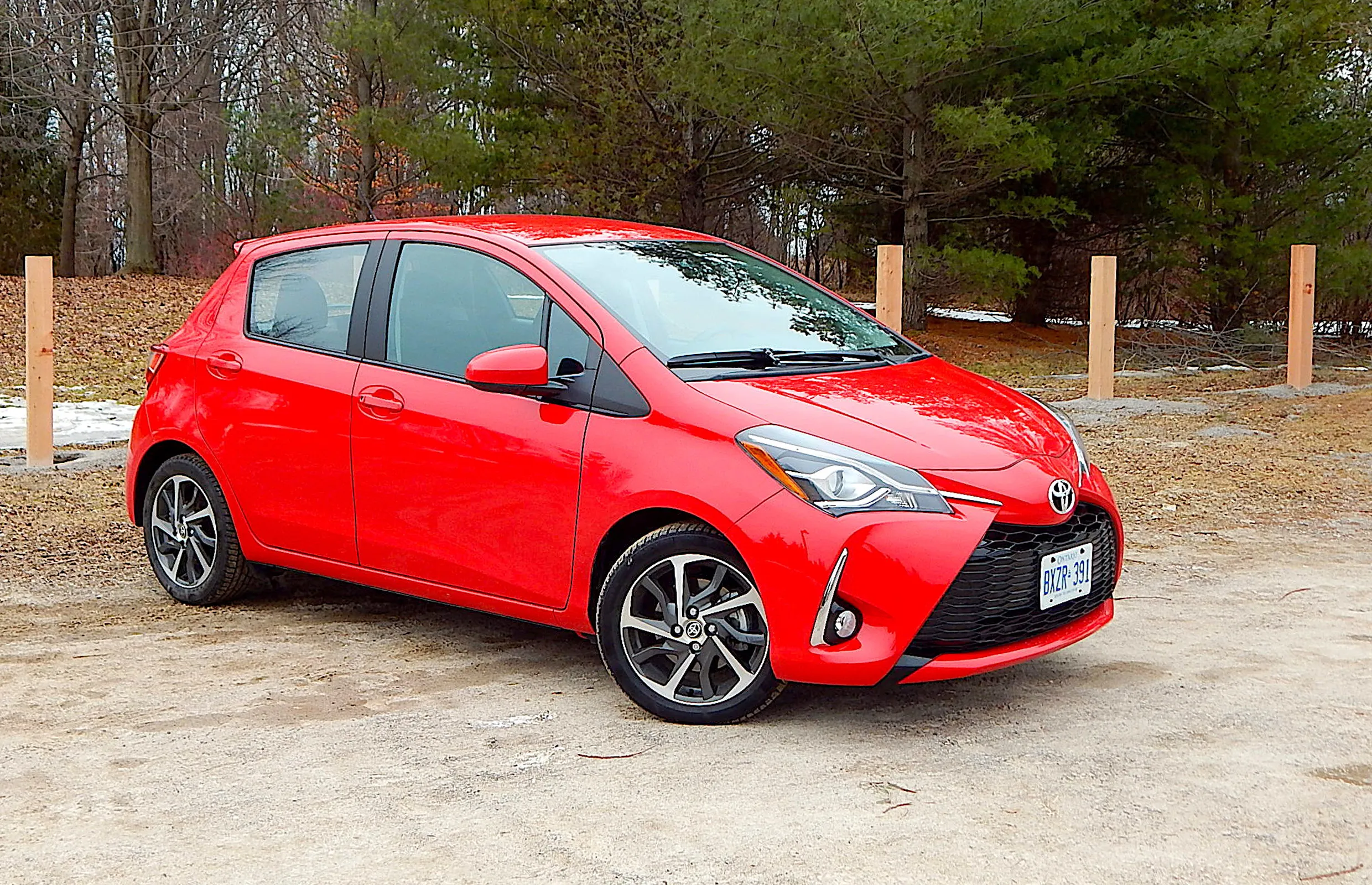
The 2017 Toyota Yaris entered the market with one key update: the inclusion of Toyota’s Safety Sense suite as standard across all trims.
This package added lane departure warning, automatic high beams, and forward collision warning with automatic emergency braking, making the Yaris one of the few subcompacts of its time to offer advanced driver aids at no extra cost.
For buyers prioritizing safety in an affordable, easy-to-park hatchback, this was a significant draw. However, while Toyota improved the Yaris’ safety credentials, it remained largely unchanged in other areas, leaving it behind rivals that offered better performance, comfort, and refinement.
Driving the 2017 Yaris revealed both strengths and weaknesses. The 1.5-liter four-cylinder engine delivered just 106 horsepower, which was below average for the segment. With the five-speed manual transmission, acceleration from 0–60 mph was about 9.5 seconds acceptable but not impressive.
Unfortunately, the available four-speed automatic transmission felt antiquated and further hampered drivability, making the manual the better option. On the positive side, the Yaris handled competently thanks to responsive steering and light weight, giving it agility in urban environments.
Braking was consistent and resistant to fade, while handling remained stable and secure. Still, the lack of power and outdated automatic transmission kept it from being as engaging as competitors like the Ford Fiesta or Honda Fit.
Comfort was another area where the Yaris fell short. The front seats were widely criticized for poor support, especially during longer drives, and the absence of a telescoping steering wheel left many drivers struggling to find an ideal position.
The ride itself was firm and less composed than rivals, with significant wind, road, and engine noise intruding into the cabin. While acceptable for short city commutes, highway trips quickly exposed their shortcomings.
Rear passenger space was slightly better than average for the class, with decent legroom, though headroom was compromised by the sloping roofline.
Inside, the Yaris emphasized utility over style, but even then, it lagged behind competitors. Materials felt cheap, with hard plastics dominating the cabin and mismatched finishes giving it a budget feel.
Cargo capacity was limited, and while entry and exit were easy thanks to wide doors and a tall roof, storage options were sparse. Visibility was a mixed bag; forward views were excellent, but large rear headrests and thick rear pillars reduced rearward visibility, and unlike most rivals, a rearview camera was not offered.
In the end, the 2017 Yaris appealed mainly to buyers who valued safety, fuel efficiency, and affordability over refinement. For those seeking personality, comfort, or practicality, stronger options existed in the segment.
5. 2016 Toyota Yaris
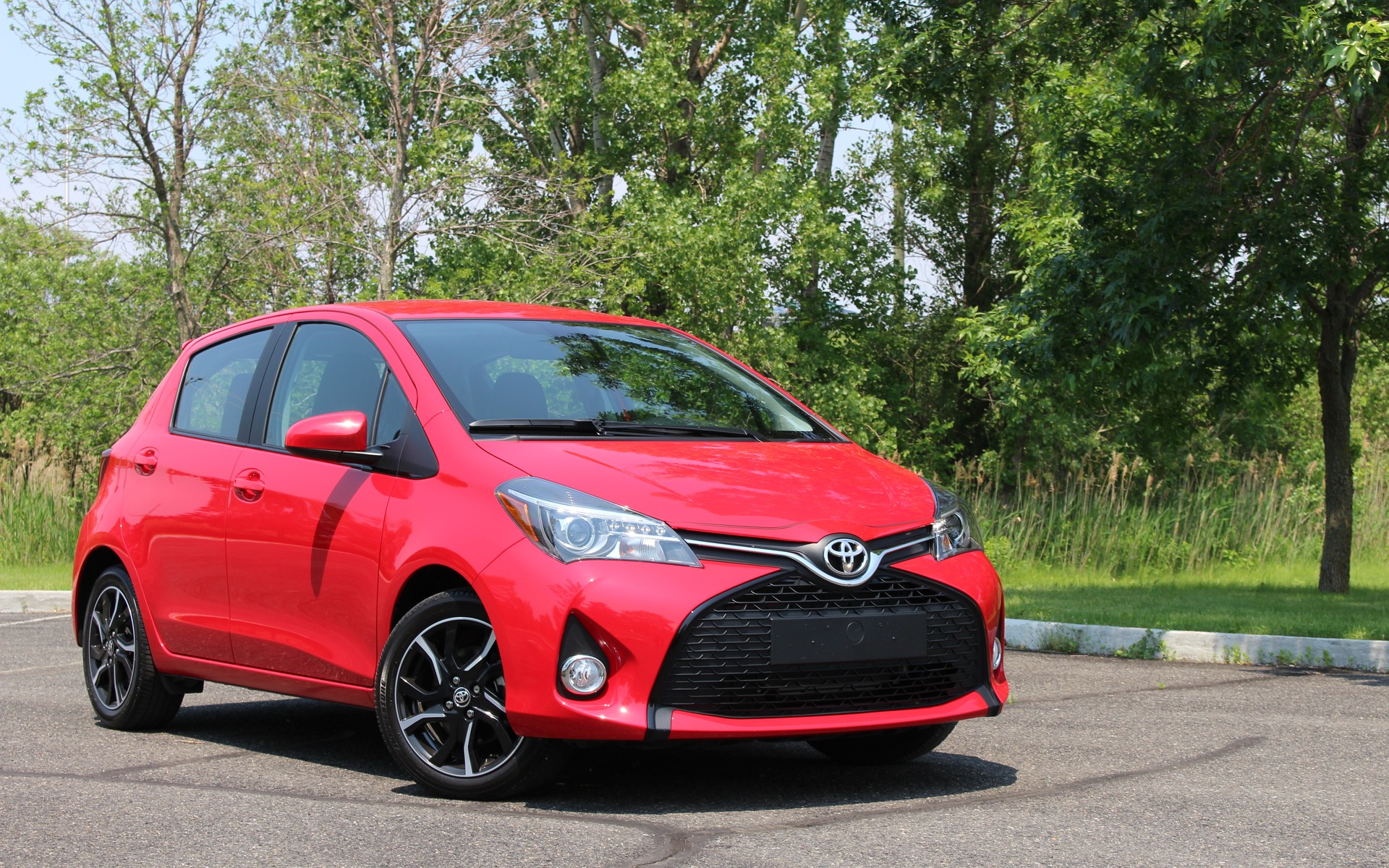
The 2016 Toyota Yaris carried over unchanged, continuing as a no-frills subcompact hatchback aimed at buyers seeking affordability, efficiency, and Toyota’s reputation for reliability.
Originally designed with European streets in mind, the Yaris emphasized compact size, maneuverability, and practicality, making it well-suited for city driving.
Despite its strengths, it found itself in a competitive field against models like the Honda Fit, Ford Fiesta, Hyundai Accent, and Kia Rio, many of which offered stronger performance, better interiors, or more advanced features.
While the Yaris stood out for including Toyota’s Entune infotainment system and an impressive array of nine standard airbags, its aging powertrain and modest interior held it back from being a class leader.
Performance in the 2016 Yaris was adequate but uninspired. Its 1.5-liter four-cylinder engine produced 106 horsepower, just enough to handle city commuting and highway cruising, though rivals offered more robust acceleration.
The five-speed manual transmission provided better control and efficiency, while the optional four-speed automatic felt outdated and sapped performance. In testing, the manual-equipped Yaris managed a 0–60 mph time of 9.5 seconds, while the automatic stretched that figure to 10.7 seconds.
Fuel economy was respectable, with up to 33 mpg combined for the manual and 32 mpg combined for the automatic, though still shy of the most efficient in the class. Handling was predictable and steady, with the SE trim adding rear disc brakes and larger wheels for a touch more responsiveness, but the Yaris never quite rose to “sporty.”
Inside, the Yaris delivered simplicity and functionality, though comfort and materials left room for improvement. The high-mounted front seats provided excellent outward visibility, but the lack of a telescoping steering wheel and firm padding made longer drives less enjoyable.
Rear passengers benefitted from surprisingly good legroom, though headroom was limited by the sloping roofline. Cargo space measured 15.6 cubic feet in the four-door model, which was useful but smaller than what rivals like the Honda Fit or Hyundai Accent offered.
The cabin’s abundance of hard plastics gave it a budget feel, even though fit and finish were generally solid. On the tech side, Toyota included a user-friendly 6.1-inch touchscreen with Bluetooth, HD radio, and USB connectivity, but the absence of Android Auto or Apple CarPlay integration placed it behind competitors quickly embracing smartphone compatibility.
Safety was a highlight for the 2016 Yaris, with nine standard airbags, stability and traction control, and active head restraints included on all trims.
In crash tests, it earned four out of five stars from the NHTSA and ‘Good’ scores in most IIHS categories, though its ‘Marginal’ rating in the small-overlap frontal test revealed a weakness compared to some rivals.
Braking performance was average, with the SE trim’s rear disc brakes performing better than the standard drum setup. Ownership perks added to its value proposition, with Toyota covering two years or 25,000 miles of scheduled maintenance at no cost, a rare offering in the subcompact segment.
Ultimately, the 2016 Toyota Yaris was a practical, dependable choice, but it lacked the refinement, performance, and versatility that made rivals more appealing to buyers seeking more than just basic transportation.
Also Read: 5 Cars with Climate Control That Works vs 5 That’s Just for Show
5 Toyota Yaris Years Poor Reliability
1. 2007 Toyota Yaris: A Year to Avoid
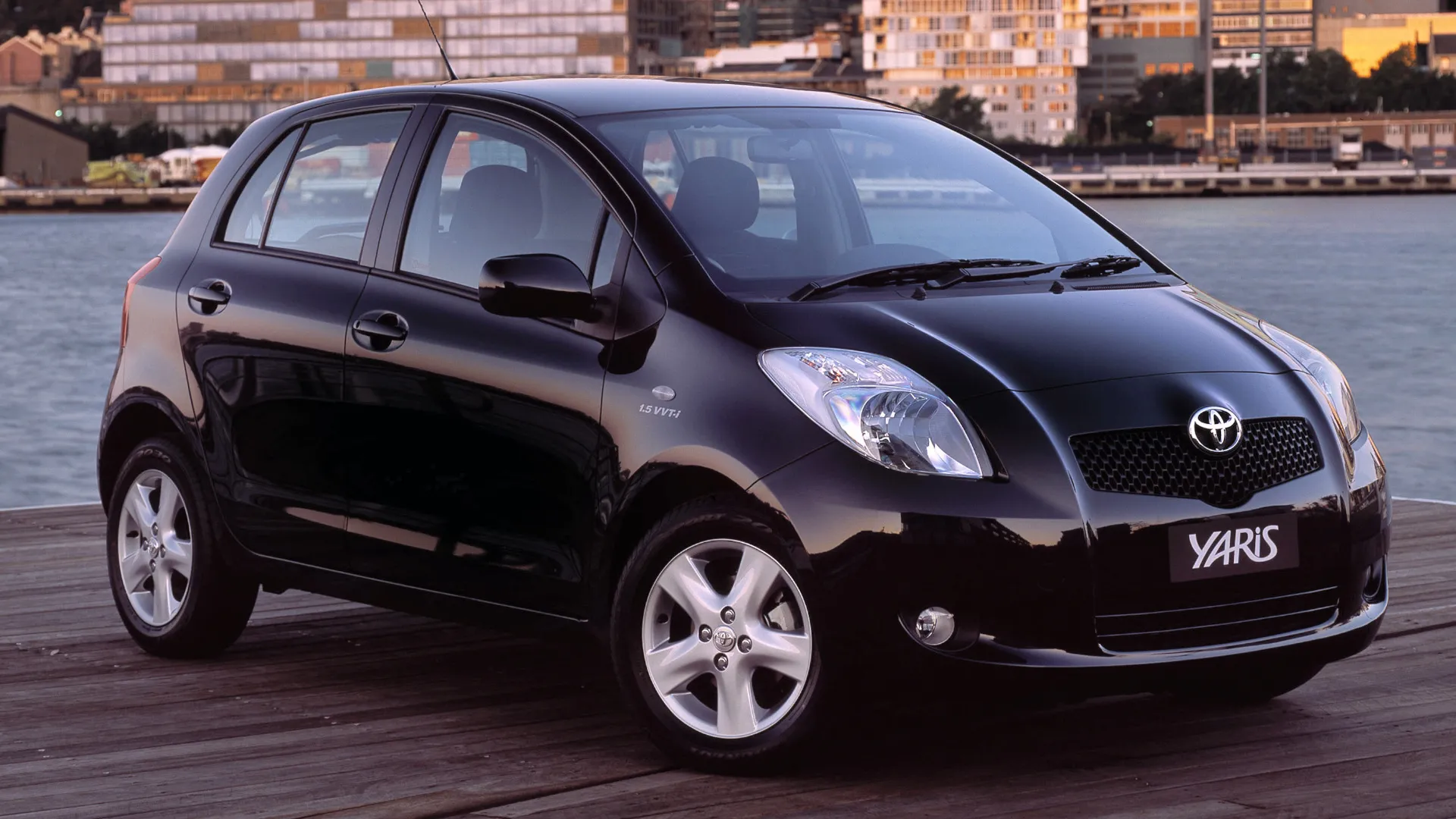
The 2007 Toyota Yaris holds the distinction of being one of the most problematic model years in the car’s history, with 399 NHTSA complaints and ten recalls. The most common issue reported by owners was premature peeling of the clear coat, often beginning on the roof and spreading down to the hood.
This occurred even among owners who diligently cared for their vehicles with clay bar treatments, polishing, and waxing. Beyond cosmetic frustrations, reliability problems also plagued this model year.
Several reports described check engine lights flashing without explanation, sometimes accompanied by sudden power loss. In one notable case, a driver on the highway reported that the accelerator stopped responding, causing the car to slow dangerously before regaining throttle function.
These issues often occurred at relatively low mileage, with some problems arising as early as 52,000 miles, which is concerning for a brand often associated with long-term dependability. Steering malfunctions also contributed to complaints, with incidents of stiff steering or unintended braking, raising serious safety concerns.
Combined with the well-documented issue of peeling paint exposing metal surfaces to rust, this model year earned a poor reputation. The 2007 Yaris is best avoided, as it blended both cosmetic and mechanical flaws that undermined Toyota’s reliability image in the subcompact segment.
2. 2008 Toyota Yaris: The Worst Model Year
If the 2007 Yaris was problematic, the 2008 model managed to be even worse in terms of severity, despite having fewer total complaints. CarComplaints.com dubbed it the worst Yaris year, mainly because its issues appeared at low mileage and carried more serious safety implications.
Much like its predecessor, the 2008 Yaris suffered from widespread reports of peeling paint and clear coat, with some owners forced to repaint entire sections of their car by 66,000 miles. Unfortunately, cosmetic concerns were overshadowed by dangerous mechanical issues.
One of the most alarming complaints involved sudden steering malfunctions at highway speeds. A driver described the steering wheel jerking to the left without input, causing the car to skid as though on ice before regaining control.
Such unpredictable behavior, while not extremely common, introduced significant safety risks that no compact car buyer should face. Airbag defects also raised red flags, as faulty inflators risked catastrophic failure and even injury during deployment. Toyota eventually issued multiple recalls between 2016 and 2019 addressing these inflators.
Combined with its cosmetic paint issues, sudden handling failures, and life-threatening airbag problems, the 2008 Yaris earned a reputation that significantly harmed consumer confidence. Buyers are strongly advised to avoid this year, as the potential repair costs and risks far outweigh any initial affordability benefits.
3. 2009 Toyota Yaris: Marked Improvement, but Still Flawed
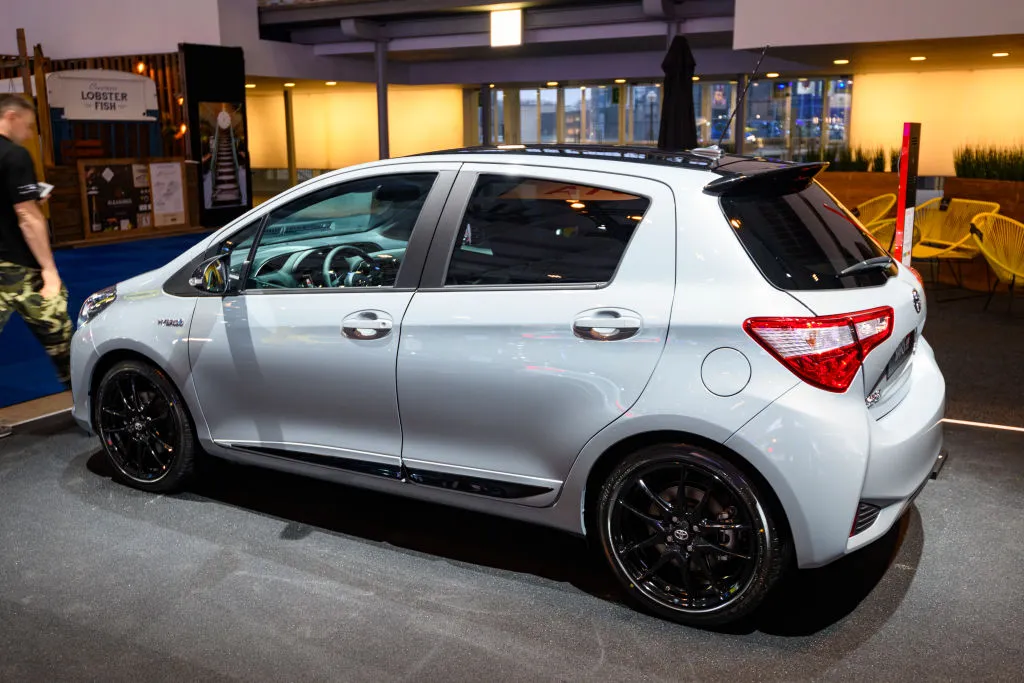
By 2009, Toyota managed to regain some ground with the Yaris, earning a “Seal of Awesome” from Car Complaints due to reduced serious issues compared to earlier models. However, the car was far from perfect. The infamous clear coat peeling persisted, though reports were less frequent than in 2007 and 2008.
For many owners, the cosmetic decline still created frustration, particularly since Toyota’s reputation often revolves around durability and long-term ownership value. Mechanical reliability improved, though not without its share of headaches.
One of the most common issues reported was excessive vibration, particularly noticeable when starting the engine. RepairPal attributed this to faulty or worn engine mounts, which required replacement to restore smooth performance.
Some automatic transmission variants also exhibited symptoms such as grinding noises, delayed shifting, or even a burnt smell, further affecting long-term dependability. Still, compared to its predecessors, the 2009 Yaris was a much safer bet.
Its handling remained predictable, and while performance was modest, it served well as an economical commuter.
Owners found fewer catastrophic issues, but minor nuisances like vibrations and paint quality still prevented it from standing alongside segment leaders such as the Honda Fit or Hyundai Accent. While a step in the right direction, the 2009 model still carried enough baggage to warrant caution.
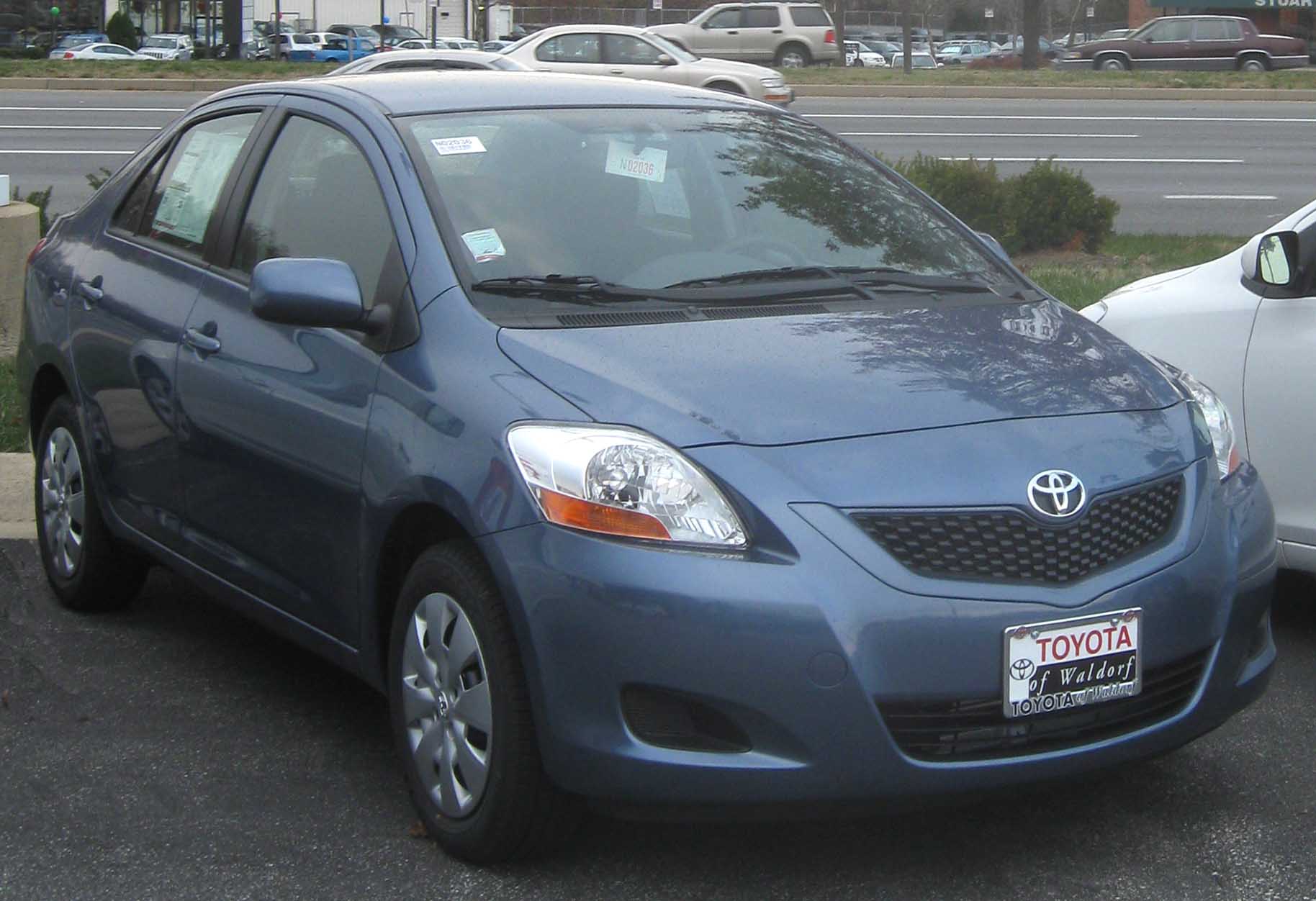
4. 2010 Toyota Yaris: Reliability Overshadowed by Recalls
The 2010 Toyota Yaris might appear reliable at first glance, but it still logged 139 NHTSA complaints and nine recalls. The most significant recurring issue involved the Electronic Power Steering (EPS) warning light, which would illuminate randomly, sometimes as early as 20,000 miles.
Owners were left confused, as the warning often appeared without a noticeable steering malfunction. In addition, the persistent paint and clear coat peeling issue carried over yet again, though in fewer cases compared to earlier years.
When left untreated, some owners even reported rust forming around exposed areas, amplifying repair costs. Transmission issues added another reliability concern, with error code P0713 signaling a faulty transaxle fluid temperature sensor, which often required replacing the wire harness.
Although not widespread, this repair could become expensive. Despite these flaws, the 2010 Yaris was generally more stable than its predecessors, offering acceptable daily performance and fuel efficiency. However, compared to other subcompacts on the market at the time, it lacked refinement, comfort, and modern features.
Minor but persistent issues such as EPS errors, vibration from engine mounts, and paint degradation kept it from being a truly worry-free choice. With plenty of other years offering fewer recalls and complaints, buyers are generally advised to skip the 2010 model.
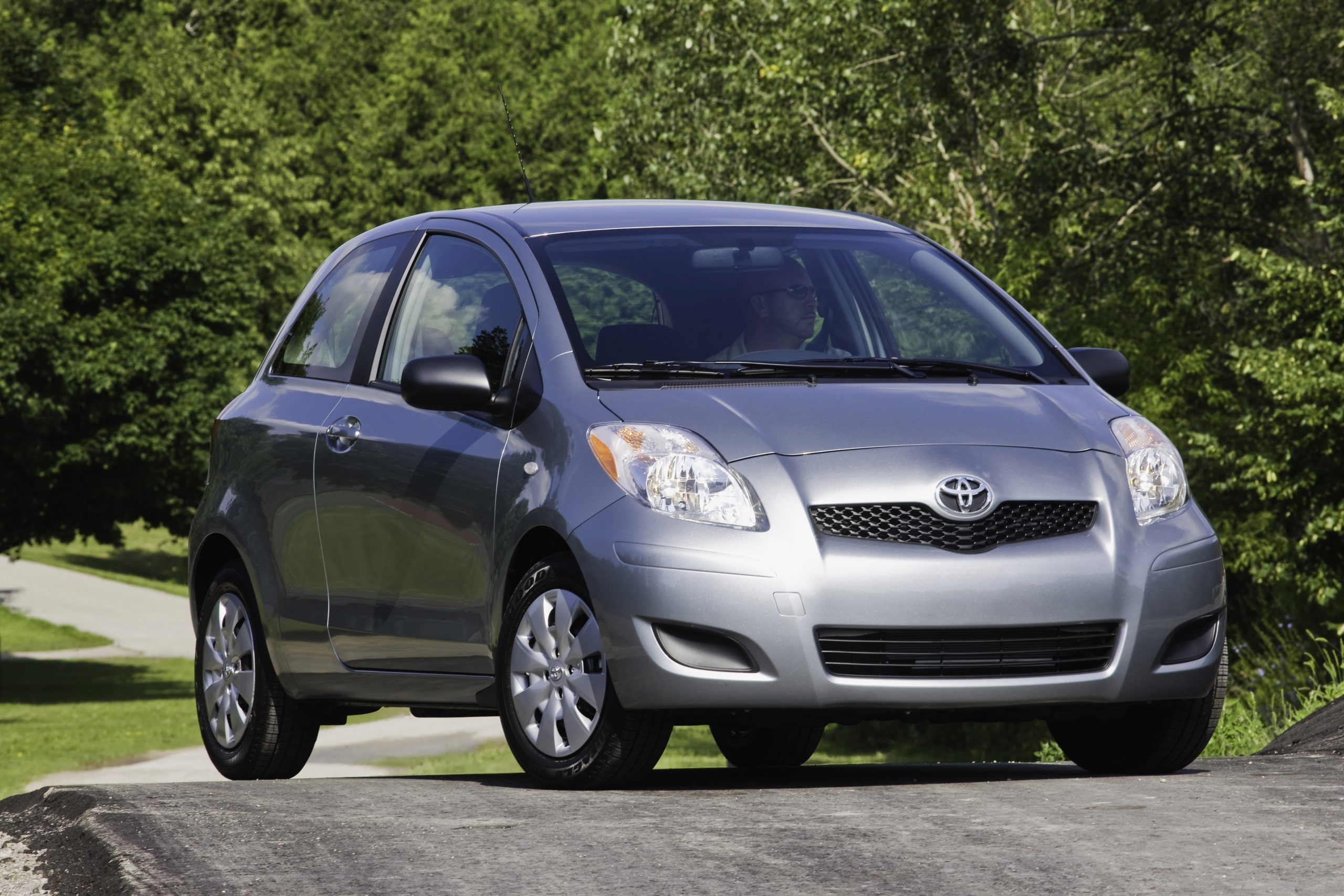
5. 2012 Toyota Yaris: Safer Bet with Minor Complaints
By 2012, Toyota had largely resolved many of the Yaris’ earlier troubles, making it one of the safer choices in the lineup. This model recorded just 54 NHTSA complaints and five recalls, a much lower figure than problem years like 2007 or 2008. The most frequent complaint was about uncomfortable seating.
Drivers, particularly taller ones, criticized the lack of lumbar support and firm padding, with some even reporting back pain during longer trips. While this was a significant comfort drawback, it did not impact reliability or safety.
Airbag performance, however, did cause concern, with multiple reports of airbags failing to deploy during crashes. While not as dangerous as the inflator failures of earlier years, the issue still represented a major safety gap.
On the positive side, the 2012 Yaris proved mechanically sound, with fewer reports of engine, transmission, or steering problems. Fuel efficiency remained strong, and owners found it to be an inexpensive, easy-to-maintain commuter car. Though some minor rattles and vibrations persisted, they were far less intrusive than in older models.
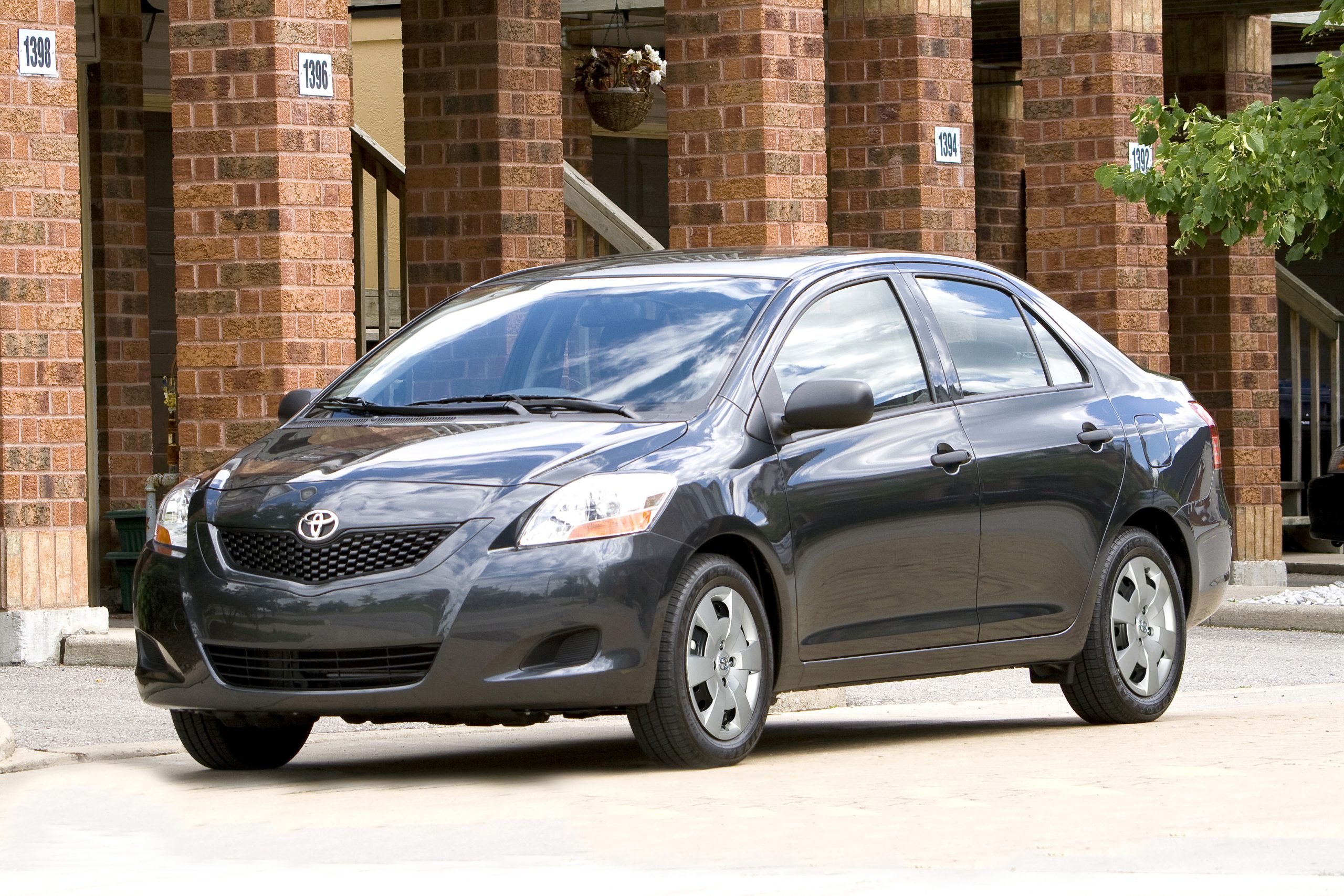
For budget-conscious buyers, the 2012 Yaris represented a return to form for Toyota, blending dependability and efficiency. Still, those prioritizing comfort or advanced safety features may find it lacking compared to newer rivals.
The Toyota Yaris has built a reputation as a no-nonsense car that delivers exactly what many drivers need: dependable transportation at an accessible price. Among the many model years released, the five highlighted here stand out as some of the most reliable, providing the right mix of efficiency, practicality, and confidence on the road.
While some earlier Yaris models struggled with recurring paint problems, steering concerns, or outdated equipment, these stronger years remind buyers that Toyota’s commitment to quality often shines brightest in simplicity.
For used car shoppers, selecting one of these dependable Yaris years can reduce the risk of costly repairs and ensure years of stress-free driving.
Whether you’re drawn to the tech-friendly 2020 sedan or the proven durability of the 2016 hatchback, each of these models demonstrates why the Yaris continues to be a trusted pick in the subcompact segment.
Also Read: 10 Cars With Tricky Seatbelt Buckles for Elderly Passengers