The Volkswagen Tiguan has carved out a unique niche in the compact SUV segment, blending European refinement with everyday practicality.
Since its debut in 2009, the Tiguan has seen its share of highs and lows, offering certain years that stand out for their performance, comfort, and technology, while others struggled with reliability and costly repairs.
For buyers considering a used Tiguan, knowing which model years are worth keeping and which are better avoided can make all the difference in long-term satisfaction and ownership costs.
Some years shine with premium interiors, sporty handling, and features that rival luxury brands, while others are plagued by persistent mechanical flaws. In this guide, we’ll highlight five Volkswagen Tiguan model years that represent the best of the lineup, along with five years that are known for recurring issues.
Whether you prioritize driving enjoyment, practicality, or dependability, this breakdown will help you choose the right Tiguan.
5 VW Tiguan Years Worth Keeping
1. 2014 Volkswagen Tiguan
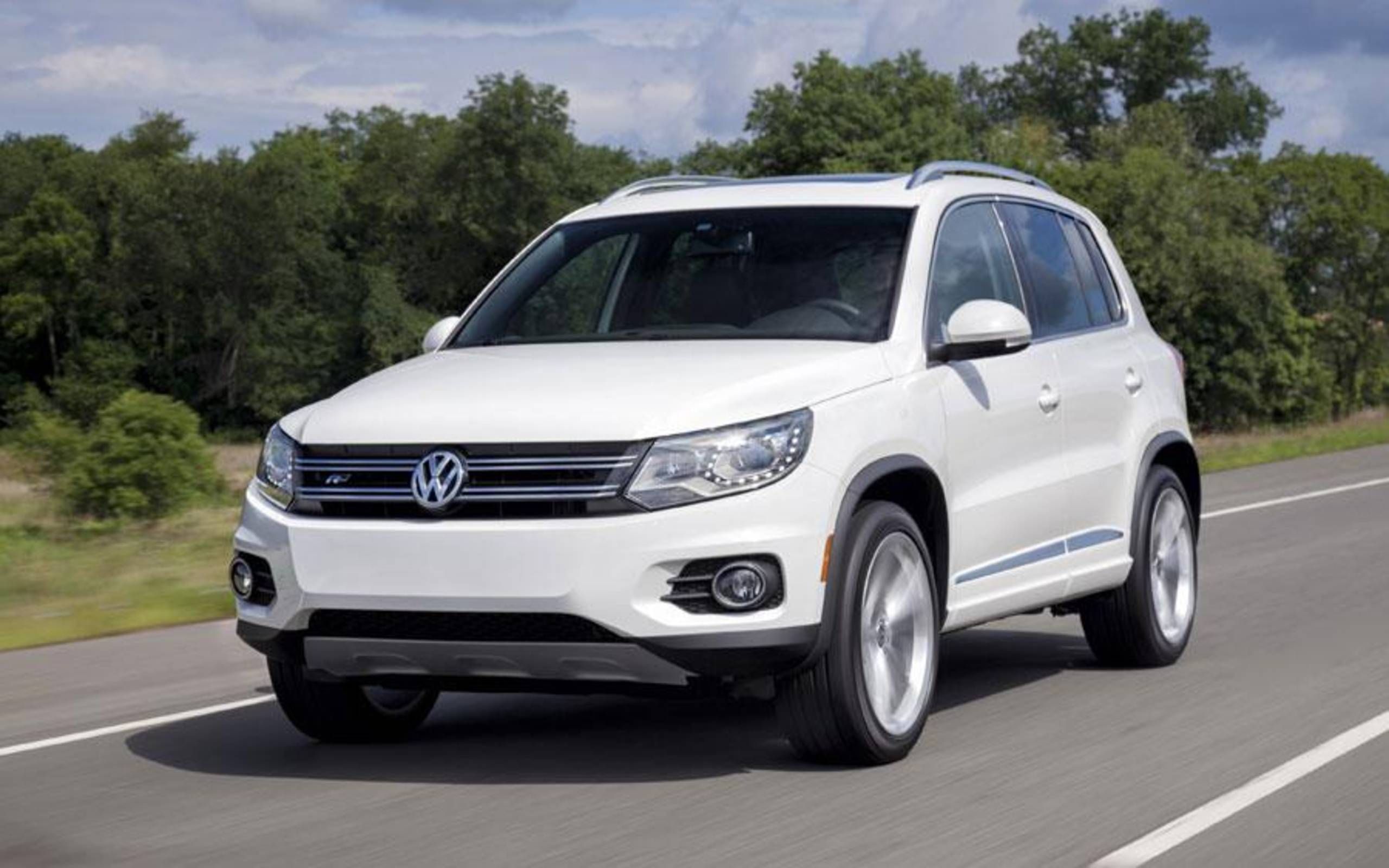
The 2014 Volkswagen Tiguan arrives with notable updates, including the debut of the sporty R-Line trim and the introduction of VW’s Car-Net telematics system. Despite being on the market for six years without a major redesign, the Tiguan continues to shine as a compact crossover with a refined, upscale character.
Unlike many older models that feel outdated, the Tiguan remains relevant and rewarding, particularly for buyers who seek a small SUV that delivers more than just practicality. Positioned above many entry-level crossovers, the Tiguan appeals to those willing to invest in premium driving comfort and European sophistication.
Performance remains one of the Tiguan’s greatest strengths. Under the hood, it carries a turbocharged 2.0-liter four-cylinder engine producing 200 horsepower and 207 lb-ft of torque.
Paired with either a six-speed manual or six-speed automatic transmission, it offers strong acceleration, with Edmunds testing showing a 0–60 mph sprint in 7.5 seconds quick for its class. Front-wheel drive is standard, while Volkswagen’s 4Motion all-wheel drive is available on most trims.
Fuel economy ranges from 21–23 mpg combined, which is competitive though not segment-leading. On the road, the Tiguan balances comfort and agility with a composed, quiet ride that still feels athletic in corners. Drivers who prioritize enjoyable handling will find the Tiguan one of the most satisfying compact SUVs.
The Tiguan enhances practicality with improved technology and safety features. Bluetooth connectivity is now standard, while upper trims gain iPod integration and the Car-Net telematics system.
Car-Net provides advanced functions such as crash notification, roadside assistance, remote access, stolen vehicle tracking, and geo-fencing. Safety equipment includes stability and traction control, antilock disc brakes, front side airbags, and full-length curtain airbags.
Crash tests delivered mixed but respectable results: government testing awarded four stars, while the IIHS gave “Good” scores in most categories, though the Tiguan earned a “Marginal” rating in the small-overlap front crash test.
Braking performance is average for the segment, stopping from 60 mph in 125 feet. These results place the Tiguan solidly in the safety-conscious category, even if not class-leading.
Inside, the Tiguan impresses with a clean, upscale cabin. Its dashboard design is simple yet refined, featuring high-quality materials and well-placed controls. Front seats provide supportive comfort and height adjustability across all trims, while the rear seats recline and slide for better passenger space.
Flexibility is further enhanced by a three-way split-folding rear seat and a fold-flat front passenger seat, allowing for versatile cargo arrangements.
However, cargo space remains a limitation: with 23.8 cubic feet behind the rear seats and 56.1 cubic feet when folded, the Tiguan trails rivals like the Honda CR-V and Toyota RAV4, both of which offer over 70 cubic feet.
For buyers prioritizing practicality, this may be a drawback, but for those valuing comfort and refinement, the trade-off feels justified.
Competition in the compact crossover segment is fierce, with alternatives such as the Mazda CX-5, Ford Escape, and Kia Sportage offering newer designs, stronger technology packages, or better pricing. Premium buyers might also consider the BMW X1, though it comes at a higher cost without additional cargo space.
Still, the 2014 Volkswagen Tiguan remains a standout choice for drivers who value European driving dynamics, a quiet and refined ride, and a premium interior feel.
While it may cost more and offer less cargo capacity than some rivals, the Tiguan delivers an engaging blend of comfort, technology, and sophistication, making it one of the most appealing compact crossovers of its time.
2. 2015 Volkswagen Tiguan
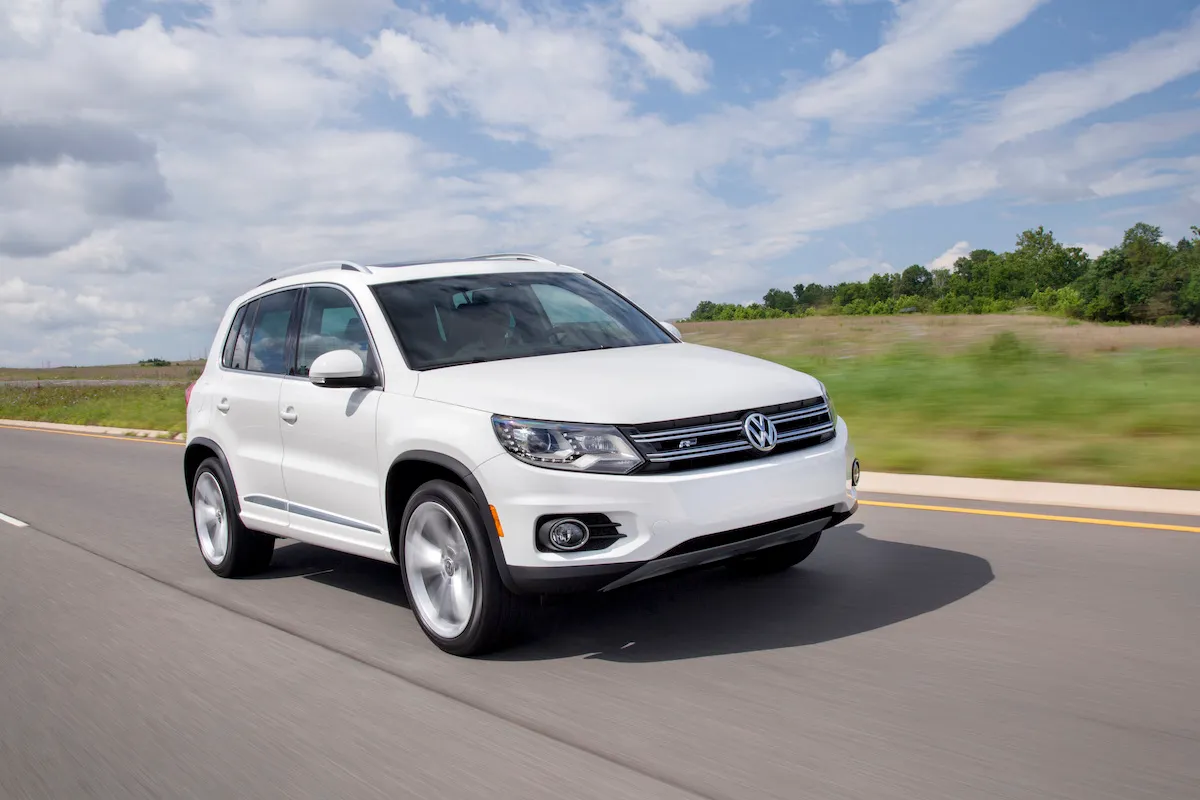
For 2015, the Volkswagen Tiguan lineup receives a few key updates that keep it competitive in the compact crossover segment. Standard features now include a rearview camera, a 5-inch touchscreen, VW’s Car-Net connected services, and an iPod cable.
The entry-level Tiguan S loses its manual transmission option, while the sporty R-Line trim adds a new rear bumper design. Despite being overdue for a full redesign, the Tiguan continues to impress with an upscale demeanor uncommon in its class.
Positioned as a bridge between mainstream and premium compact SUVs, the Tiguan appeals to drivers willing to pay more for refinement, exclusivity, and above-average performance.
The Tiguan is powered by a turbocharged 2.0-liter four-cylinder engine producing 200 horsepower and 207 pound-feet of torque, paired exclusively with a six-speed automatic transmission. Front-wheel drive comes standard, with Volkswagen’s 4Motion all-wheel drive available across the range.
In Edmunds testing, the Tiguan accelerated from 0–60 mph in 7.5 seconds, making it one of the quicker vehicles in its class. Fuel economy, however, is average at 23 mpg combined, regardless of drivetrain.
While it doesn’t lead in efficiency, the Tiguan excels in driving enjoyment. Its smooth power delivery, confident handling, and composed ride provide a distinctly European flavor, with the R-Line offering a firmer, sportier experience at the expense of some comfort.
Safety and technology see meaningful improvements in the 2015 model. All trims now come equipped with a rearview camera, in addition to standard traction and stability control, antilock disc brakes, front side airbags, and full-length curtain airbags.
VW’s Car-Net telematics system provides modern conveniences such as crash notification, stolen vehicle tracking, remote access, and parental controls through geo-fencing. Government crash tests rated the Tiguan at four out of five stars, earning five stars for side-impact protection but only three stars for frontal crash protection.
The Insurance Institute for Highway Safety awarded “Good” scores in most categories but a “Marginal” result in the small-overlap frontal test. Braking distances are slightly longer than average, with the Tiguan R-Line stopping from 60 mph in 130 feet.
Inside, the Tiguan distinguishes itself from mainstream rivals with a subtle, sophisticated cabin that emphasizes quality materials and a premium feel.
The firm, supportive front seats provide a high seating position and good visibility, while the standard 5-inch touchscreen manages infotainment, even if it feels dated and undersized by modern standards.
Rear passengers benefit from reclining seatbacks and up to six inches of fore-and-aft adjustment, though taller adults may find legroom tight. Cargo flexibility is supported by a 40/20/40-split rear seat and fold-flat passenger seat, allowing long items to fit without sacrificing passenger space.
Cargo space is limited to 23.8 cubic feet with the seats up and 56.1 cubic feet when folded, falling well below competitors like the Honda CR-V and Toyota RAV4, both of which offer more than 70 cubic feet.
While the Tiguan delivers premium features and strong performance, it faces tough competition. The Mazda CX-5 matches its fun-to-drive character while offering greater cargo space and efficiency.
The Ford Escape provides nimble handling, powerful engine options, and modern technology, while the refreshed Honda CR-V focuses on class-leading utility and value. The Tiguan’s main drawbacks remain its higher price, limited cargo capacity, and dated infotainment screen.
However, for buyers seeking a small crossover with European refinement, premium interior quality, and engaging road manners, the 2015 Volkswagen Tiguan remains a compelling option despite its age in a rapidly evolving segment.
3. 2016 Volkswagen Tiguan
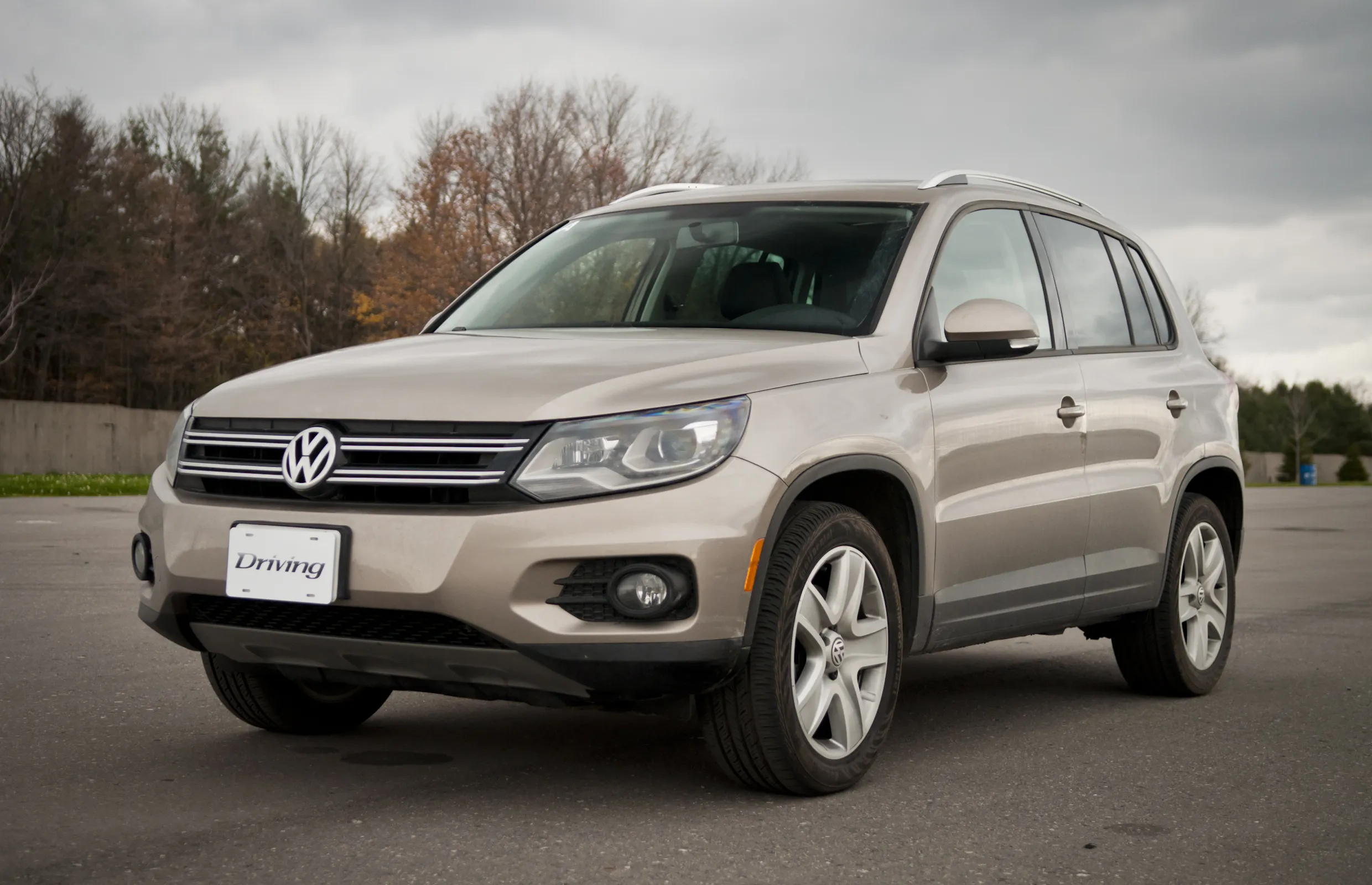
The 2016 Volkswagen Tiguan arrives with several new standard features, including heated front seats, V-Tex premium vinyl upholstery, keyless ignition and entry, and VW’s updated touchscreen interface. Interestingly, these additions come with a lower starting price, enhancing its value.
At the same time, the R-Line trim loses some equipment and is repositioned between the S and SE trims. Despite its age, this generation dates back to 2009; the Tiguan maintains its appeal by focusing on refinement, performance, and premium interior quality rather than pure utility.
While a full redesign is expected for the following year, the 2016 model continues to stand apart in the compact crossover class as a stylish but space-limited option.
Every 2016 Tiguan is powered by a 2.0-liter turbocharged four-cylinder engine producing 200 horsepower and 207 lb-ft of torque. This engine is paired with a six-speed automatic transmission and comes standard with front-wheel drive, with optional all-wheel drive available.
Acceleration is a highlight, with Edmunds recording a quick 0–60 mph time of 7.5 seconds, putting the Tiguan among the more energetic compact crossovers. However, the lack of alternative engine choices hurts its competitiveness, particularly as rivals offer more efficient options.
The Tiguan’s fuel economy sits at 23 mpg combined, adequate but unremarkable compared to segment leaders like the Mazda CX-5 or Honda CR-V.
In terms of safety, the Tiguan provides the basics but lags behind rivals in advanced driver-assistance systems. Standard equipment includes antilock disc brakes, stability and traction control, front side airbags, full-length curtain airbags, and a rearview camera.
Higher trims add VW’s Car-Net Safety and Security suite, offering crash notification, remote access, stolen vehicle tracking, and parental geo-fencing tools.
Crash test results are mixed: government testing awarded four out of five stars, with stronger side-impact protection than frontal-impact performance, while the IIHS gave “Good” ratings in most categories but only “Marginal” in the small-overlap frontal crash test. Braking performance also trails competitors, with a Tiguan R-Line needing 130 feet to stop from 60 mph, longer than the class average.
On the road, the Tiguan’s turbocharged engine delivers brisk and confident performance in nearly every scenario, complemented by a responsive and smooth-shifting transmission. Handling is secure and poised, with a ride quality that leans toward comfort rather than outright sportiness.
The R-Line model introduces firmer suspension tuning and larger wheels, which increase cabin harshness but provide a sportier feel.
The Tiguan excels at delivering a refined, quiet ride and a higher level of driving satisfaction than many mainstream rivals. However, buyers prioritizing fuel economy or high-tech driving aids may find competitors like the Ford Escape or Hyundai Tucson more appealing.
Inside, the Tiguan continues Volkswagen’s tradition of understated but high-quality interiors. The cabin design may not look cutting-edge compared to newer rivals, but its restrained layout, first-rate materials, and logical controls exude German refinement.
The driving position is high and commanding, with supportive front seats that enhance comfort on longer journeys. Rear passengers enjoy generous headroom and reclining seatbacks, but legroom is more limited than in class leaders.
Sliding rear seats help balance passenger and cargo needs, but cargo space remains a weak point at 23.8 cubic feet with the seats up and 56.1 cubic feet when folded.
This is far below competitors like the Mazda CX-5 or Honda CR-V and barely exceeds some subcompact SUVs. While the Tiguan’s practicality lags, its blend of refinement, comfort, and driving enjoyment ensures it remains appealing for buyers seeking European character in a small crossover.

4. 2020 Volkswagen Tiguan
The 2020 Volkswagen Tiguan continues in the second generation introduced in 2018, offering subtle updates that improve its appeal. New standard features include expanded driver safety technologies, VW’s Car-Net communication system, and on SEL trims, a heated steering wheel and automatic wipers.
One of the Tiguan’s most notable selling points remains its available third-row seat, a rare feature in the compact SUV segment. However, this third row is cramped and best reserved for children.
The Tiguan emphasizes comfort, utility, and technology, though it struggles to stand out against strong rivals such as the Honda CR-V, Mazda CX-5, and Subaru Forester, all of which offer more engaging performance or better practicality.
Performance is one of the Tiguan’s weaker points. Powered by a turbocharged 2.0-liter four-cylinder engine paired with an eight-speed automatic transmission, the Tiguan accelerates from 0–60 mph in 9.5 seconds, sluggish compared to competitors.
The transmission is criticized for clunky, unresponsive shifts, particularly at lower speeds, making maneuvers like unprotected left turns more challenging. Handling is adequate for daily driving but uninspiring, with noticeable body roll in tight corners.
Fuel efficiency is also middling: the all-wheel-drive model earns an EPA-estimated 23 mpg combined, though testing showed it could slightly exceed that figure in real-world driving. While acceptable, these numbers trail the efficiency of leading compact crossovers.
Where the Tiguan excels is in comfort. Front seats are supportive and well-bolstered, with the second row offering reclining seatbacks and ample adjustment to suit taller passengers. Ride quality is smooth, particularly on lower trims with smaller wheels, which absorb rough road impacts effectively.
Wind and road noise are minimal, enhancing cabin quietness, while the engine remains subdued during cruising. However, when pushed beyond 2,000 rpm, the engine becomes more vocal, and turbocharger noise is noticeable.
The optional third row compromises space but provides flexibility for families, reinforcing the Tiguan’s appeal as one of the more versatile compact SUVs.
The Tiguan’s interior earns high marks for spaciousness and usability. Large door openings and well-designed seating make ingress and egress easy, even for third-row passengers. Visibility is excellent thanks to thin pillars and large windows.
Material quality feels upscale for the segment, though some confusing button layouts, particularly on the steering wheel and digital instrument cluster, detract from ease of use. Volkswagen’s infotainment system remains one of the segment’s best, complemented by available premium Fender audio.
Apple CarPlay and Android Auto are standard, but some users reported occasional glitches. Driver assistance features such as adaptive cruise and lane-keeping assist are offered, but can be inconsistent in responsiveness compared to rival systems.
Practicality is another strong suit of the Tiguan. With the third row folded, cargo space is generous enough to accommodate multiple large suitcases, while sliding second-row seats and deep side pockets enhance versatility. Storage for smaller items is abundant throughout the cabin, with clever placements even in the third row.
Despite this utility, the Tiguan faces challenges with its value. Build quality shows signs of inconsistency, such as cabin rattles in low-mileage test vehicles, and its relatively high price, combined with average fuel economy, leads to higher ownership costs.
Volkswagen also reduced its warranty coverage for 2020, though it remains competitive. Ultimately, the Tiguan’s comfort, tech, and rare third-row option make it appealing for families, but its sluggish performance and lackluster efficiency keep it from being a class leader.
5. 2021 Volkswagen Tiguan
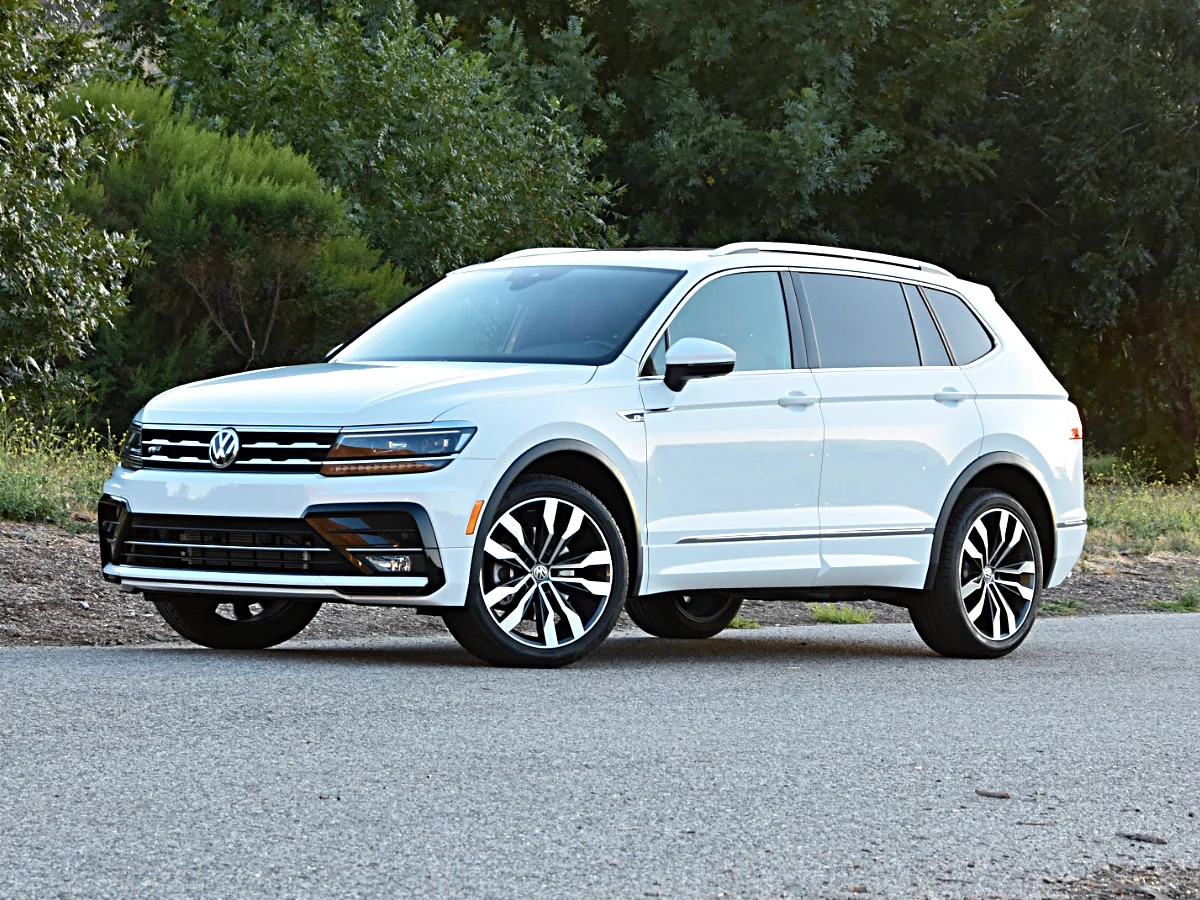
The 2021 Volkswagen Tiguan continues in the second generation introduced in 2018, bringing only minor changes but retaining its unique selling point: an optional third-row seat in a compact crossover. This feature is rare among rivals, with only the Kia Sorento, Mitsubishi Outlander, and Dodge Journey offering something similar.
For 2021, SE trims now come with adaptive cruise control as standard, while higher trims gain access to a new 8-inch infotainment touchscreen. While the Tiguan remains a tech-forward, spacious, and comfortable SUV, its underwhelming performance and fuel economy hold it back from being a class leader.
Performance continues to be the Tiguan’s weakest trait. The 2.0-liter turbocharged engine paired with an eight-speed automatic transmission delivers sluggish acceleration, with a 0–60 mph time of 9.5 seconds, slow for the segment.
The transmission often feels unresponsive, especially from a stop, making everyday maneuvers like unprotected left turns more difficult. Handling is safe but uninspired, with noticeable body roll when cornering.
Rivals such as the Mazda CX-5 and Toyota RAV4 offer more composed and engaging driving experiences. On the fuel economy front, the all-wheel-drive Tiguan earns 24 mpg combined, slightly better than the previous year’s rating but still less efficient than most competitors, especially those with base engines.
Comfort remains one of the Tiguan’s standout qualities. The front seats are well-cushioned and supportive, while the second-row seats recline and slide, making them accommodating for taller passengers.
The ride quality is plush, particularly on lower trims with smaller wheels, which absorb road imperfections more effectively. Road and wind noise are well suppressed, enhancing long-distance comfort. The third row, while cramped, provides flexibility for families who occasionally need the extra seating.
Engine noise is minimal during cruising, but becomes louder and more noticeable when accelerating hard, with some turbocharger whoosh entering the cabin. Comfort and ride refinement are strong advantages compared to rivals.
Inside, the Tiguan offers one of the roomiest cabins in the compact SUV class, especially with the optional third row folded down. Large door openings and excellent visibility make access and driving easy.
Materials feel upscale, though some interior rattles were noted even in low-mileage test vehicles, raising concerns about long-term durability. The infotainment system is a highlight, with crisp graphics and an intuitive interface, while the available Fender premium audio system adds extra appeal.
All trims come with Apple CarPlay and Android Auto. Driver assistance tech is plentiful but inconsistent: adaptive cruise is sometimes slow to react, and lane-keeping assist can make unnecessary corrections. Still, the technology suite positions the Tiguan as one of the more tech-savvy compact SUVs.
Practicality is another Tiguan strength. Behind the second row, cargo space is generous, while the sliding second row and deep side pockets add versatility. Storage solutions for smaller items are plentiful, including under-console trays and large door bins.
With the third row up, cargo capacity is tight but still ahead of most compact SUVs with a similar layout. Despite these positives, the Tiguan’s value is questionable. Its pricing is relatively high, fuel economy lags behind rivals, and interior rattles undermine its premium feel.
Although Volkswagen’s warranty is now shorter than before, it remains competitive in the segment. Ultimately, the 2021 Tiguan is best suited for families who need a compact SUV with optional third-row seating and solid tech, but those seeking better performance or efficiency may be happier with alternatives like the Honda CR-V, Mazda CX-5, or Subaru Forester.

Also Read: 5 VW Passat Years With Solid Builds vs 5 With Flaws
5 VW Tiguan Years To Avoid
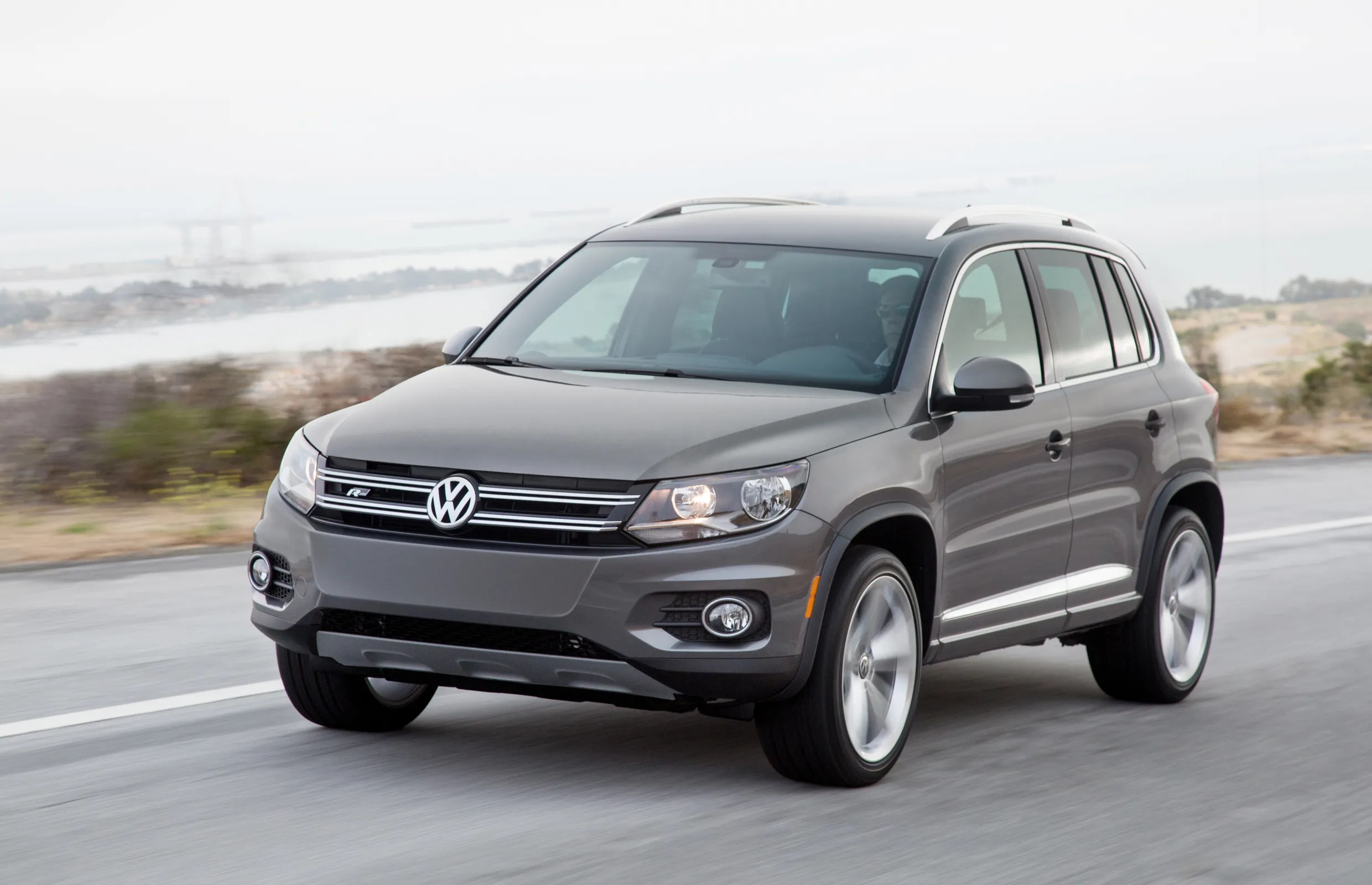
1. 2009 Volkswagen Tiguan: A Troubled Debut
The 2009 Volkswagen Tiguan stands out as one of the most problematic model years, with 345 complaints and three recalls recorded on CarComplaints.com. Owners reported serious issues with the engine, cooling system, and steering, but the most notorious problem was the faulty timing chain tensioner.
This component often became loose, disrupting engine timing and leading to severe mechanical failure. Many owners faced catastrophic breakdowns when the part wasn’t replaced in time, resulting in expensive repairs or engine replacements.
Cooling system failures were also common, with water pumps needing multiple replacements in short mileage intervals. Some reported replacing the pump as many as three times within 30,000 miles.
These recurring and costly problems left drivers frustrated, making the 2009 Tiguan one of the worst years to own. Despite its appealing design and European driving feel, poor reliability significantly hurt consumer trust in Volkswagen’s compact SUV during its launch year.
2. 2010 Volkswagen Tiguan: Persistent Engine Failures
The 2010 Tiguan showed some improvement in the number of complaints, but it remained far from trouble-free. CarComplaints logged 246 issues and two recalls, with owners citing engine, cooling system, and AC/heater malfunctions as the most troublesome areas.
Once again, engine reliability was the weakest link, with over 22 detailed complaints describing major engine failures. The high cost of repairs and the potential for dangerous breakdowns on the road made the situation worse.
Many drivers shared stories of frustration due to repeated trips to the mechanic and mounting repair bills. Cooling and air-conditioning problems were also frequent, adding to driver dissatisfaction.
While slightly less problematic than the 2009 version, the 2010 Tiguan was still plagued by serious mechanical shortcomings. Its persistent reputation for expensive engine troubles cemented its position as one of the Volkswagen Tiguan years to avoid, especially for buyers seeking long-term dependability.

3. 2011 Volkswagen Tiguan: Cosmetic Updates, Same Old Problems
Volkswagen attempted to refresh the Tiguan for 2011 with new headlights, a redesigned grille, and minor styling changes, but unfortunately, mechanical reliability still lagged far behind. CarComplaints recorded 292 complaints, three recalls, and four ongoing investigations, signaling persistent issues.
The most alarming problem was once again the defective timing chain tensioner, which continued to plague Volkswagen’s TSI engines. This flawed component often led to significant engine damage, requiring extremely costly repairs and, in some cases, full engine replacements.
Electrical failures and issues with windows and windshields were also frequently reported, further frustrating owners. According to CarProblemZoo, the early version of the timing chain tensioner was failure-prone, increasing the likelihood of catastrophic engine breakdowns.
While the facelift gave the Tiguan a more modern look, it did little to inspire confidence in its durability. Buyers expecting the 2011 model to resolve earlier reliability flaws were left disappointed by recurring mechanical failures.

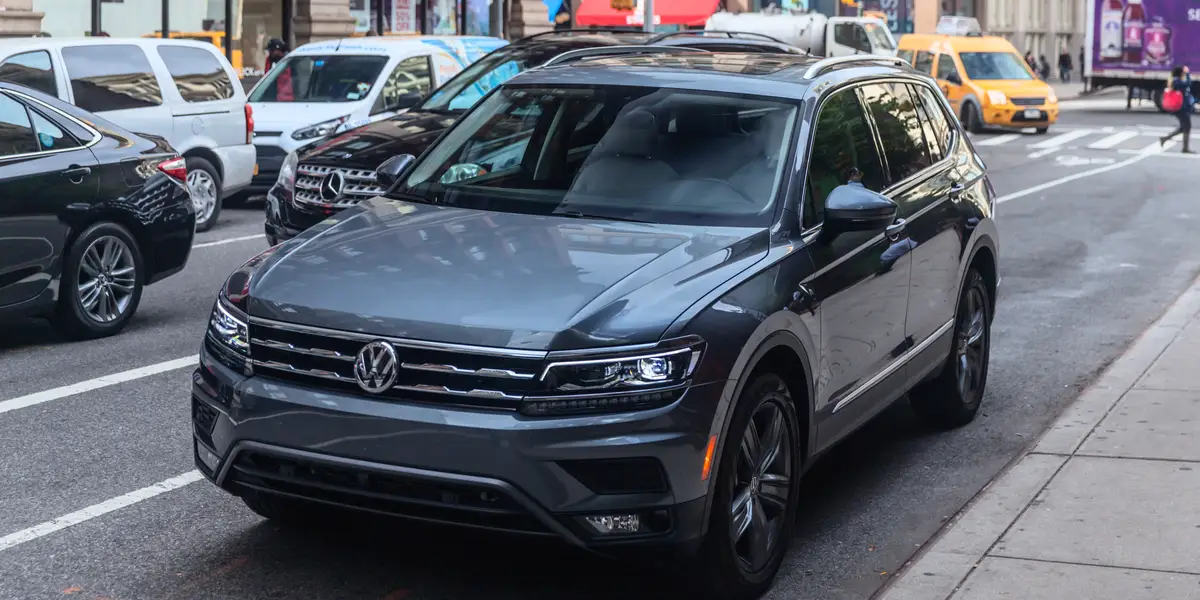
4. 2018 Volkswagen Tiguan: A Problematic Redesign
The 2018 Volkswagen Tiguan marked the start of the second generation, but instead of delivering a polished upgrade, it became one of the least reliable Tiguan years.
CarComplaints logged nearly 400 complaints along with 13 recalls, pointing to widespread issues. The most common problems involved premature brake wear, hesitation or stalling during acceleration, and excessive oil consumption.
Consumer Reports reinforced these concerns, giving the 2018 Tiguan a dismal reliability score of 1.0 out of 5. Major trouble areas included the engine, electrical system, climate controls, and power equipment.
The NHTSA also received 68 engine-related complaints, with owners frequently describing hesitation during quick acceleration, jerking at low speeds, and unexpected surges while driving.
With its combination of frequent recalls, costly repairs, and poor dependability ratings, the 2018 Tiguan stands out as a year to avoid for used buyers seeking a trouble-free compact SUV.
5. 2017 Volkswagen Tiguan: Improved but Still Flawed
The 2017 Volkswagen Tiguan marked an improvement compared to earlier models, but still struggled with key reliability issues. Consumer Reports again gave it a 1.0 out of 5.0 reliability rating, citing repeated problems in the engine, electrical systems, power equipment, and in-car electronics.
While it didn’t suffer from widespread catastrophic failures like the 2009–2011 models, it remained unreliable compared to competitors. Owners reported excessive carbon buildup in the engine, worn-out clock springs (leading to potential airbag failures), and abnormal grinding noises from various components.
These issues, though less severe than total engine breakdowns, still contributed to costly repairs and reduced consumer confidence. The 2017 Tiguan may be considered the most reliable of the troubled years, but its poor ratings and documented complaints mean it is still not an ideal choice.
Buyers looking for dependability were better off waiting for the fully redesigned 2018 model, which addressed many longstanding issues.
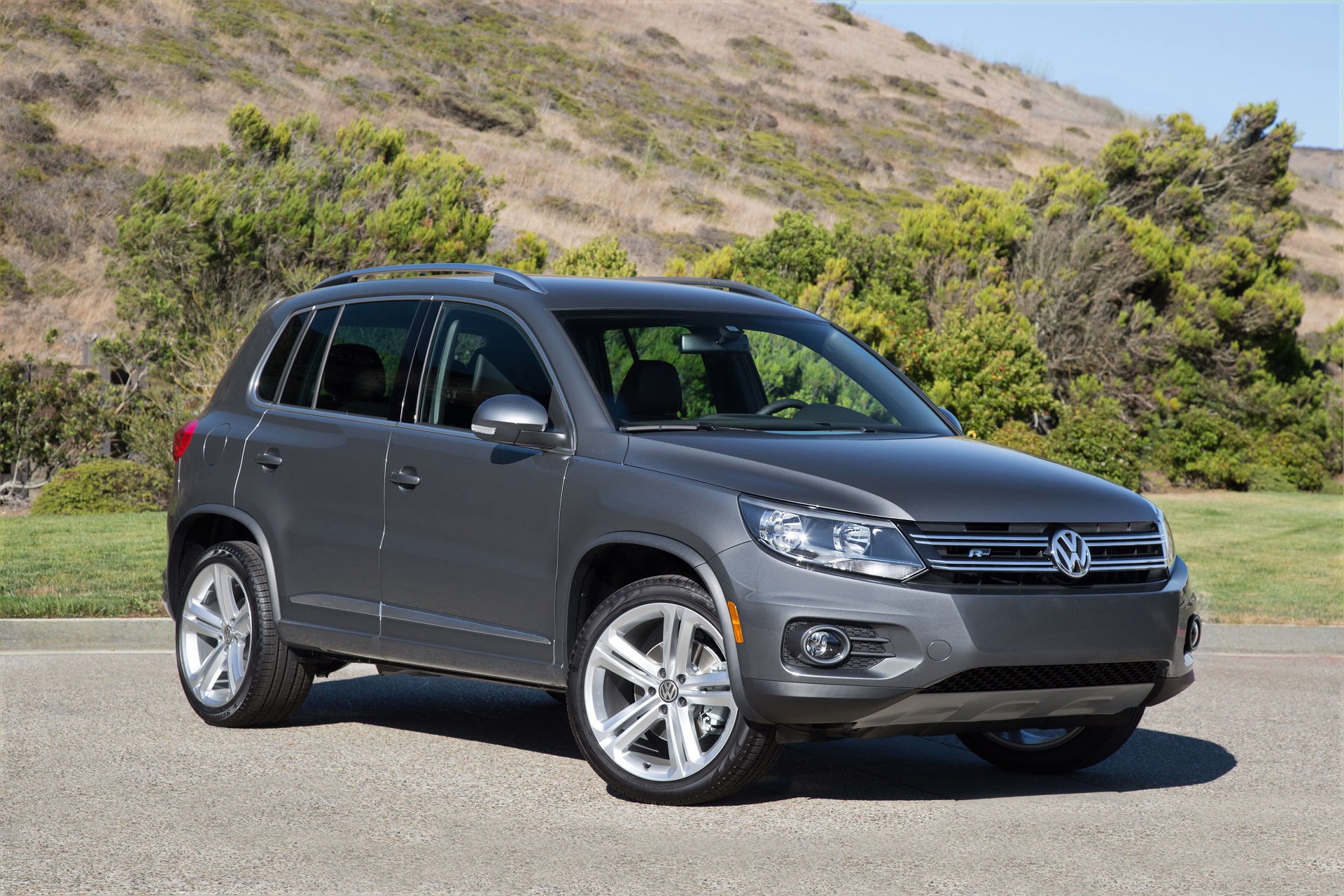
The Volkswagen Tiguan is a compelling choice for buyers who want a compact SUV with European character, refined interiors, and engaging road manners. However, as with many long-running models, some years stand out for the right reasons while others are best left behind.
The 2014–2016 models offer strong performance and upscale touches, while the 2020 and 2021 models bring modern technology and family-friendly versatility.
On the other hand, early Tiguans from 2009–2011 remain notorious for timing chain failures and costly engine problems, and even the 2016–2017 models faced disappointing reliability scores despite incremental improvements.
Ultimately, the Tiguan can be a rewarding SUV if you choose wisely, balancing its strengths in comfort and sophistication with an awareness of its weaker years.
By focusing on the model years worth keeping and avoiding the problematic ones, buyers can enjoy the Tiguan’s unique blend of style, refinement, and practicality without unwelcome surprises.
Also Read: 5 VW Passat Years With Solid Builds vs 5 With Flaws