Concept cars are where imagination meets engineering, pushing the limits of design, technology, and performance. From the two-wheeled 1961 Ford Gyron to the shape-shifting 2008 BMW Gina, these vehicles redefined what cars could be.
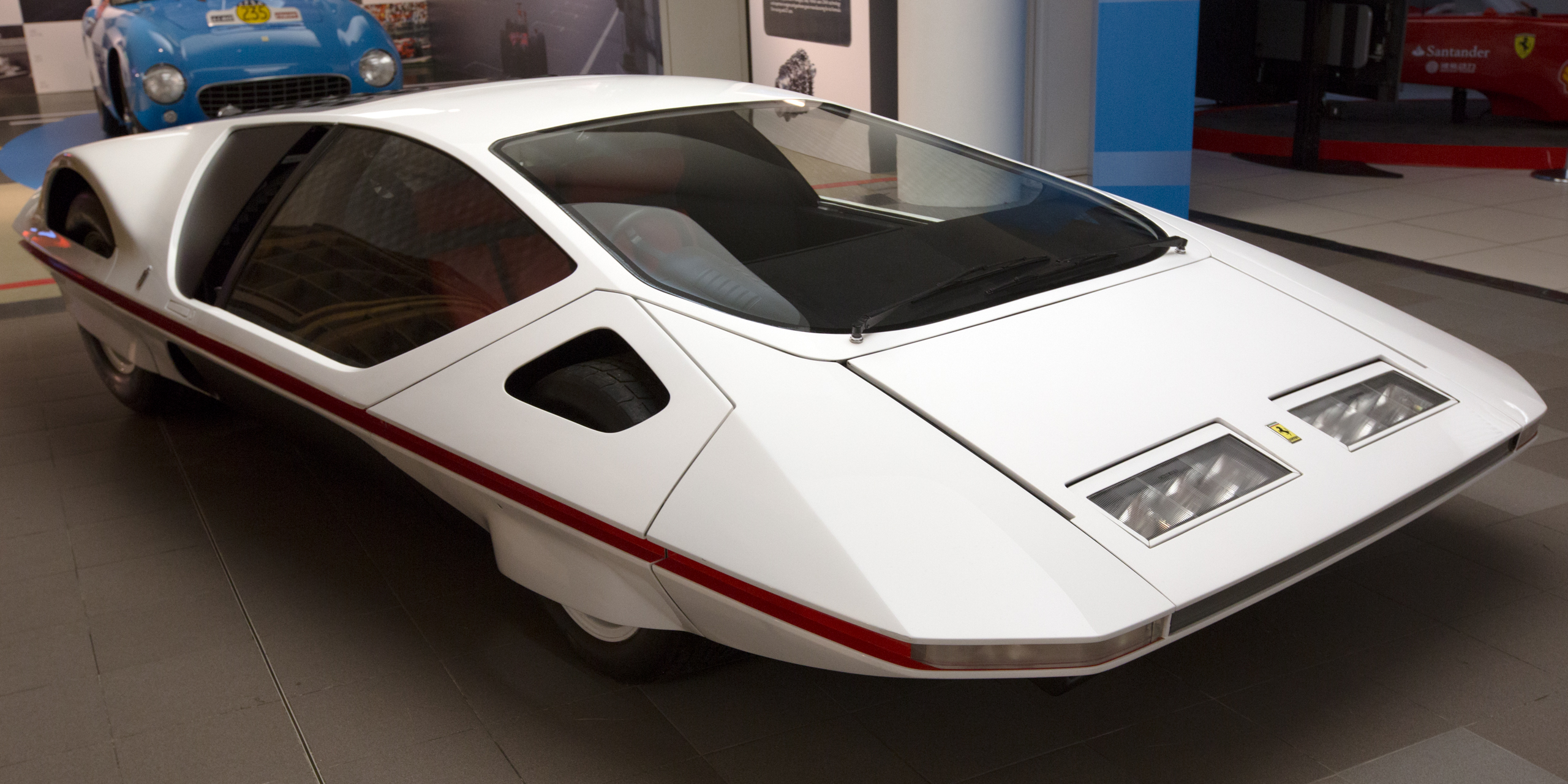
Some, like the Ferrari 512S Modulo and Aston Martin Bulldog, explored extreme speed and futuristic aerodynamics, while others, such as the Citroën Karin or Italdesign Machimoto, challenged conventional seating and mobility concepts.
Though they never reached production, these cars represent bold experiments that shaped the ideas behind future vehicles.
They capture the daring, creativity, and technical ambition of their eras, proving that automotive innovation is not just about functionality, it’s about imagining possibilities far beyond what the road currently allows.
1. 1961 Ford Gyron: The Two-Wheeled Gyrocar Experiment
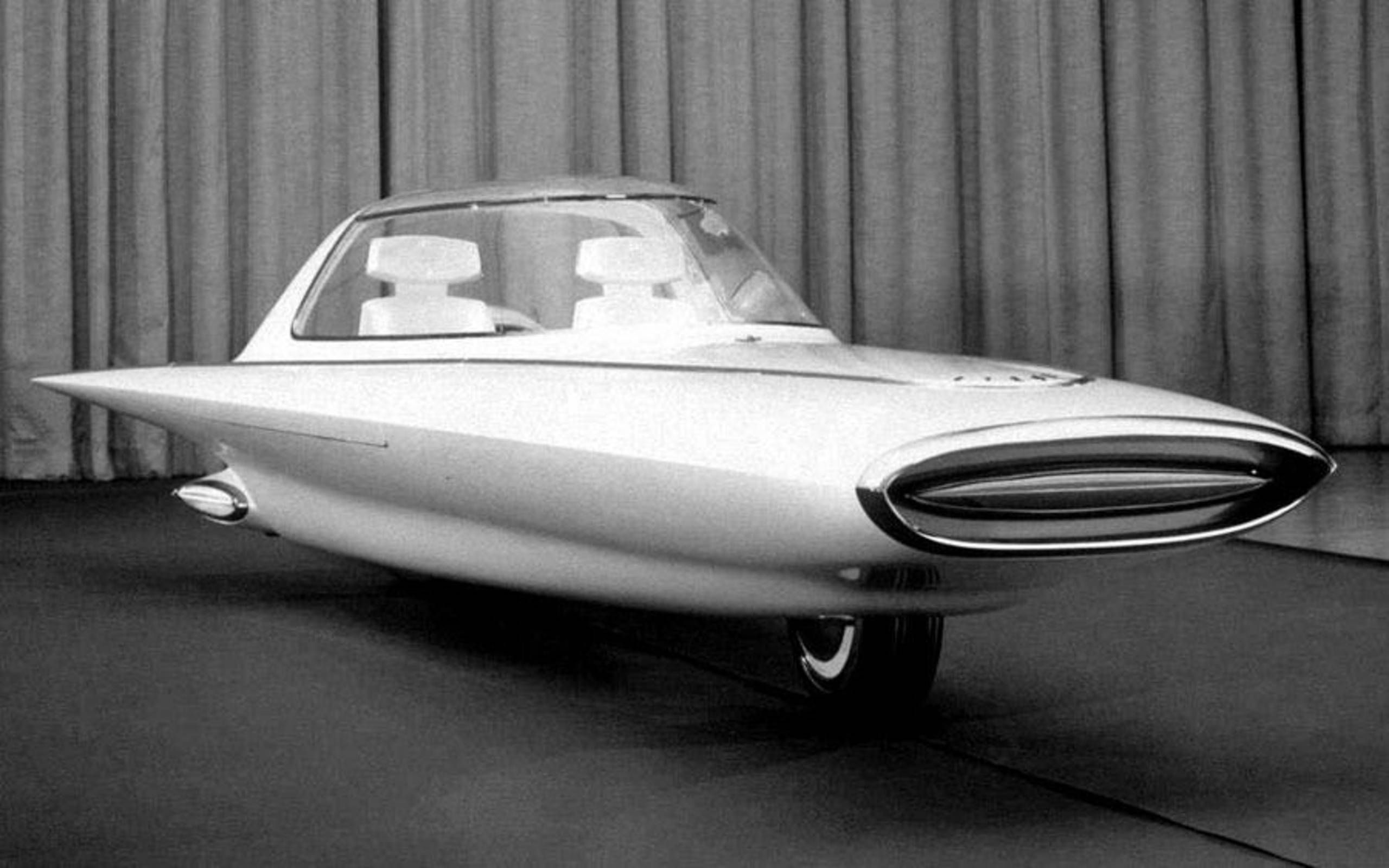
In the early 1960s, Ford Motor Company introduced one of its most futuristic and unconventional concept vehicles, the 1961 Ford Gyron, a two-wheeled gyrocar designed to balance using advanced gyroscope technology.
Unlike traditional cars, the Gyron had a closed cockpit, seating two passengers side by side, with either able to take control. At its core, it was more of a laboratory experiment and marketing tool than a production-ready vehicle.
The Gyron’s most distinctive trait was its reliance on gyroscopic stabilization to remain upright on just two wheels. When stationary, retractable stabilizing legs and small wheels supported the vehicle. The car was constructed from lightweight fiberglass and powered by a small electric motor that allowed a top speed of just 5 mph.
Steering was managed through a console knob controlling the front wheel, while the rear wheel provided propulsion. Inside, the cockpit featured a speed and direction dial, along with an early mobile communication device placed between the two seats.
Ford never intended the Gyron for mass production. Instead, it served as a showpiece of futuristic innovation, demonstrating the company’s ability to push boundaries in design and technology.
Like many of Ford’s experimental prototypes of the 1950s and 1960s, the Gyron was created for aerodynamic studies, marketing appeal, and public attention rather than practicality. Its sci-fi appearance, resembling a flying saucer on wheels, positioned it as a bold departure from ordinary sedans and muscle cars.
The Gyron made its public debut at the 1961 Detroit Auto Show, later moving to the Ford Rotunda, a popular exhibition hall. However, its legacy was cut short when the Rotunda was destroyed in a fire in 1962, taking the Gyron with it.
Only two non-functional prototypes survived. One resurfaced at a 2012 auction, fetching about $40,000, while the other found a home at the Petersen Automotive Museum in Los Angeles.
Although it never evolved beyond concept status, the Ford Gyron remains a symbol of daring automotive experimentation, showcasing the ambitious spirit of its era and Ford’s willingness to dream beyond convention.
2. 1970 Ferrari 512S Modulo: The Spaceship on Wheels
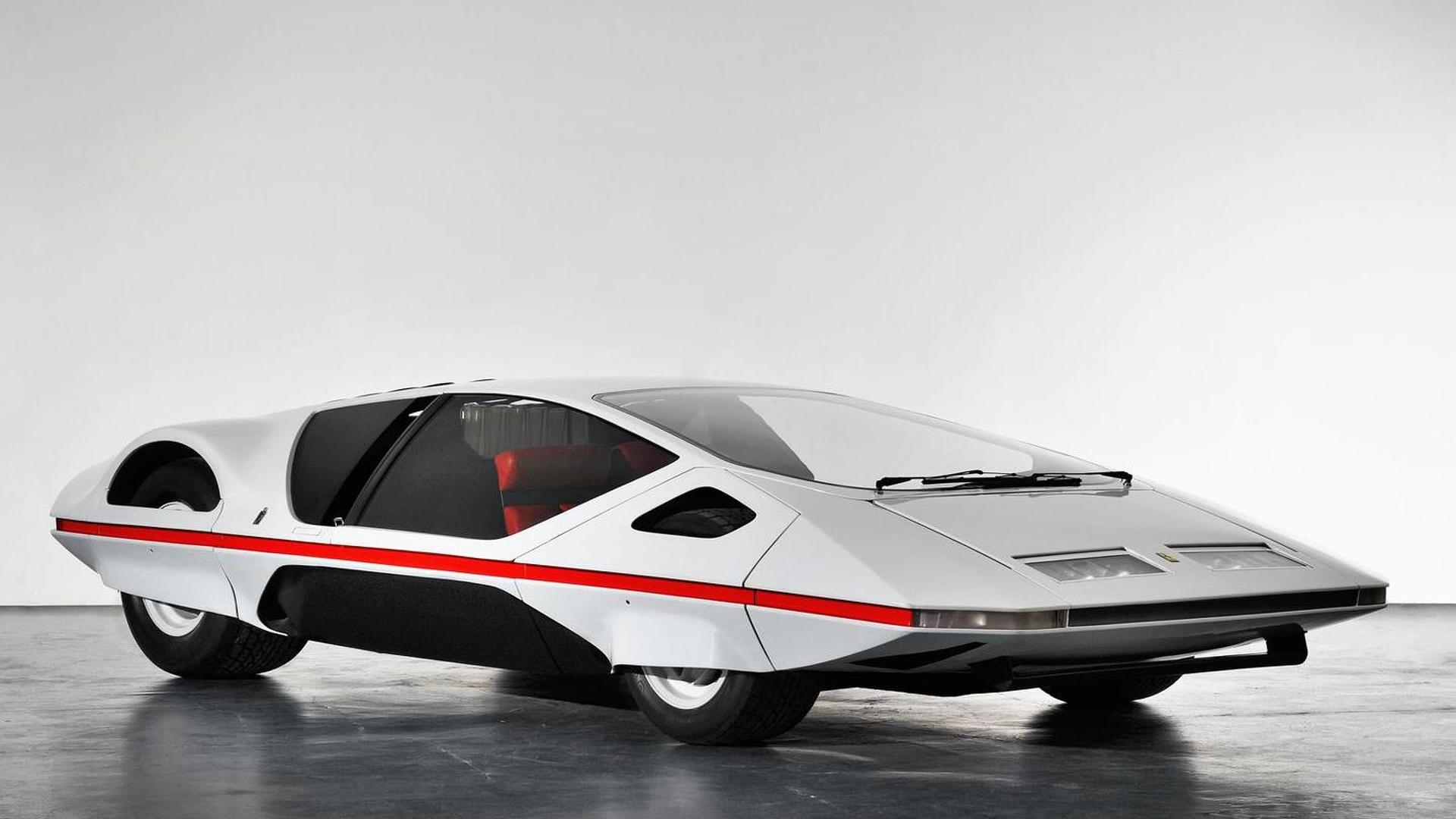
Making its debut at the 1970 Geneva Motor Show, the Ferrari 512S Modulo immediately transformed expectations of what a concept car could be. Designed by Paolo Martin of Pininfarina, the Modulo was a futuristic wedge-shaped supercar that resembled a spacecraft more than a traditional road vehicle.
Beneath its radical design, the Modulo carried the heart of a Ferrari 512S, a 5.0-liter V12 engine producing 550 horsepower, though it was never intended to be a practical or fully functioning car.
The Modulo began as a personal project of Paolo Martin in 1968, during his work on the Rolls-Royce Camargue. Frustrated by the conservatism of that project, Martin sketched an avant-garde design that was initially dismissed by Sergio Pininfarina as “too futuristic.”
Still, Martin persisted, working after hours to refine his vision. Fate intervened when Ferrari, struggling to sell all 25 required homologation units of the 512S race car, donated one chassis to Pininfarina. This gave Martin the platform to bring his radical concept to life.
The Modulo’s design language was extreme even by the bold standards of the 1970s wedge car era, rivaling contemporaries like the Lamborghini Countach. The car sat impossibly low, with minimal wheel articulation and barely enough cabin space for occupants.
Instead of doors, it featured a sliding canopy roof that moved forward to allow entry. The fiberglass-clad body featured integrated fenders and a rear deck pierced by 24 cooling holes that revealed the V12 engine beneath. Inside, Martin installed spherical, bowling ball-inspired controls, housing air vents and switches
Among its standout features were pop-up headlights hidden in the hood, a dramatic canopy-style roof, and striking wheel covers. The Modulo quickly gained recognition, winning 22 design awards and cementing itself as one of the most iconic concept cars ever built.
Despite its inherent impracticality, restricted steering, extreme ride height, and cramped seating, it represented the peak of Pininfarina’s creativity and Ferrari’s openness to experimentation.
Although conceived purely as a design study and showpiece, the Modulo did not fade into obscurity. It remained a star attraction at the Museo Pininfarina for decades. Some of its styling elements, such as the headlights, even influenced production Ferraris like the 365 GTB/4 Daytona.
Later, American collector James Glickenhaus acquired the Modulo and restored it to a drivable state, carefully preserving its originality while making it roadworthy. He continues to own the car, which remains in safe hands as a rare, functional piece of automotive history.
The Modulo’s story underscores the romance of automotive design. What began as Martin’s unendorsed side project evolved into one of Ferrari and Pininfarina’s most celebrated collaborations.
Though wildly impractical, the 512S Modulo has endured as a symbol of innovation, design courage, and the boundless imagination of its creators. Today, it stands not only as a masterpiece of concept car history but also as a testament to the era when automakers dared to dream without limits.
3. 1979 Aston Martin Bulldog: A Wedge-Shaped Supercar That Defied Limits
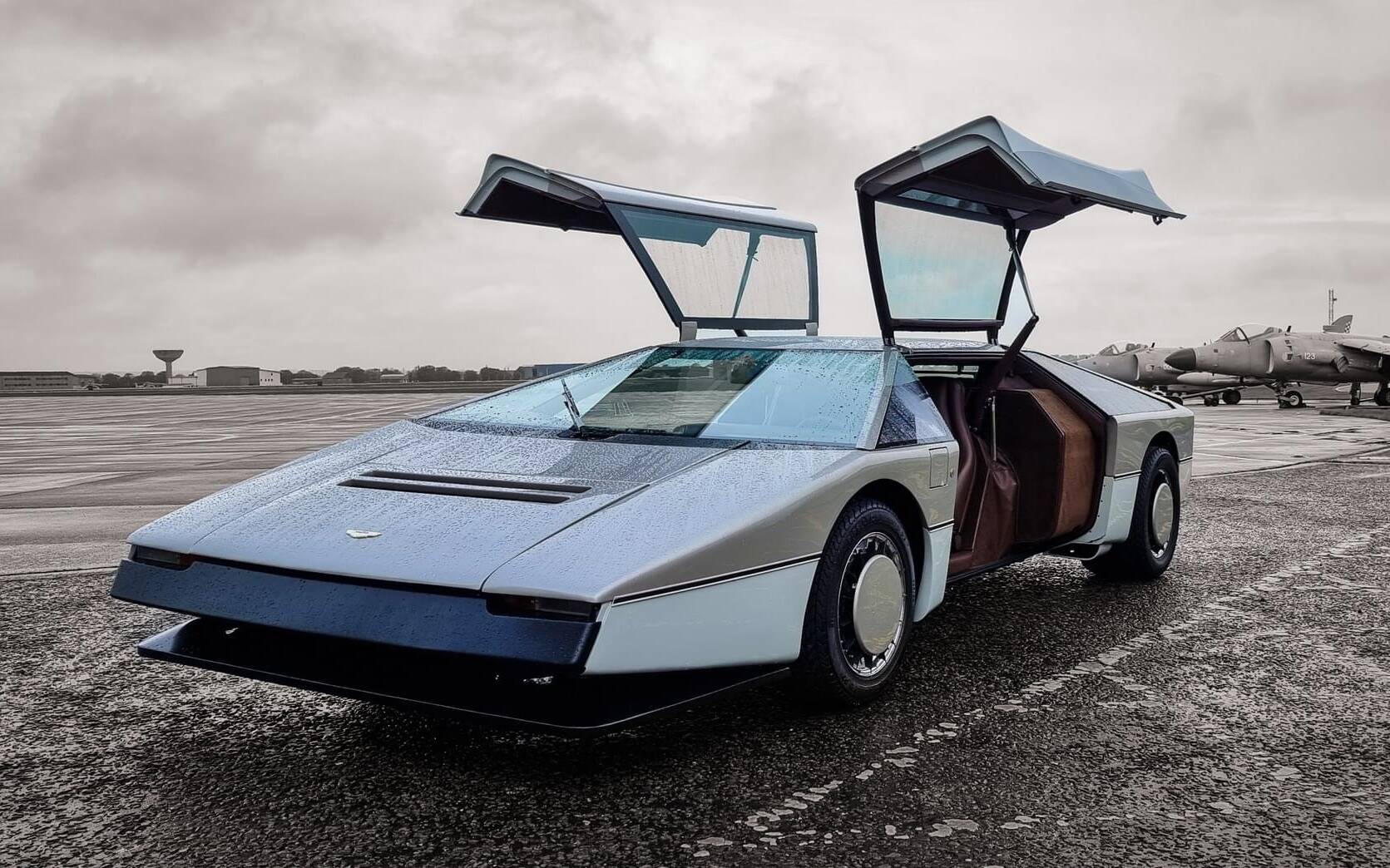
The 1979 Aston Martin Bulldog, also known as Project DPK901, was a bold attempt by Aston Martin to build the world’s fastest production car. Styled by William Towns, the Bulldog embodied the sharp, wedge-shaped design language of the late 1970s, echoing his work on the Aston Martin Lagonda.
Despite its radical promise, only a single Bulldog was ever produced, making it one of the rarest concept supercars in history.
At its core, the Bulldog was powered by a twin-turbocharged 5.3-liter V8 engine, also used in the Aston Martin DBS, but extensively modified to deliver around 600 horsepower and 500 lb-ft of torque.
Some sources even claimed the car’s true potential reached 700 horsepower, a figure that put it ahead of many modern supercars. Combined with a drag coefficient of just 0.34, Aston Martin projected the Bulldog could reach 237 mph, far surpassing the world speed record of 191 mph at the time.
Testing at the MIRA handling circuit in the U.K. confirmed the Bulldog’s potential when it achieved an indicated 192 mph, already faster than any road car available in the late 1970s. Acceleration was equally impressive, with a 0–60 mph sprint in just five seconds.
Measuring over 15 feet long, the Bulldog’s appearance was unapologetically extreme. It featured electro-hydraulic gullwing doors, a set of five pop-up headlights mounted centrally, and fully integrated body panels that gave it a futuristic, spaceship-like look. Its name came from the Scottish Aviation Bulldog aircraft, flown by Aston Martin’s managing director, Alan Curtis.
Inside, the Bulldog’s cockpit was equally advanced, with cutting-edge electronics for its time and a driver-focused layout that reinforced its experimental nature.
Despite its promise, the Bulldog’s journey was cut short. Financial struggles at Aston Martin meant the project was abandoned after a single prototype, which was sold in 1980 for about $169,000 (equivalent to around $650,000 today). The car slipped into private ownership and remained largely out of sight until it underwent an intensive 7,000-hour restoration in the 2020s.
In 2023, more than four decades after its debut, the Bulldog finally realized part of its original dream. At Campbeltown Airport in Scotland, it reached a verified 205.4 mph, breaking the 200-mph barrier and cementing its place in history.
The Bulldog remains a one-off marvel, a car that promised more than circumstances allowed. While it never reached production or achieved the full 237 mph goal, it showcased Aston Martin’s willingness to push boundaries and dream beyond convention.
Today, its legacy can be seen in the Aston Martin Valkyrie (AM-RB 001), a hypercar designed with Formula 1 technology by Adrian Newey. Just as the Bulldog stunned enthusiasts in 1979, the Valkyrie demonstrates Aston Martin’s continued pursuit of extreme performance.
The Bulldog stands as both a product of its time and a timeless symbol of ambition, a wedge-shaped supercar that dared to challenge the very limits of speed and design.
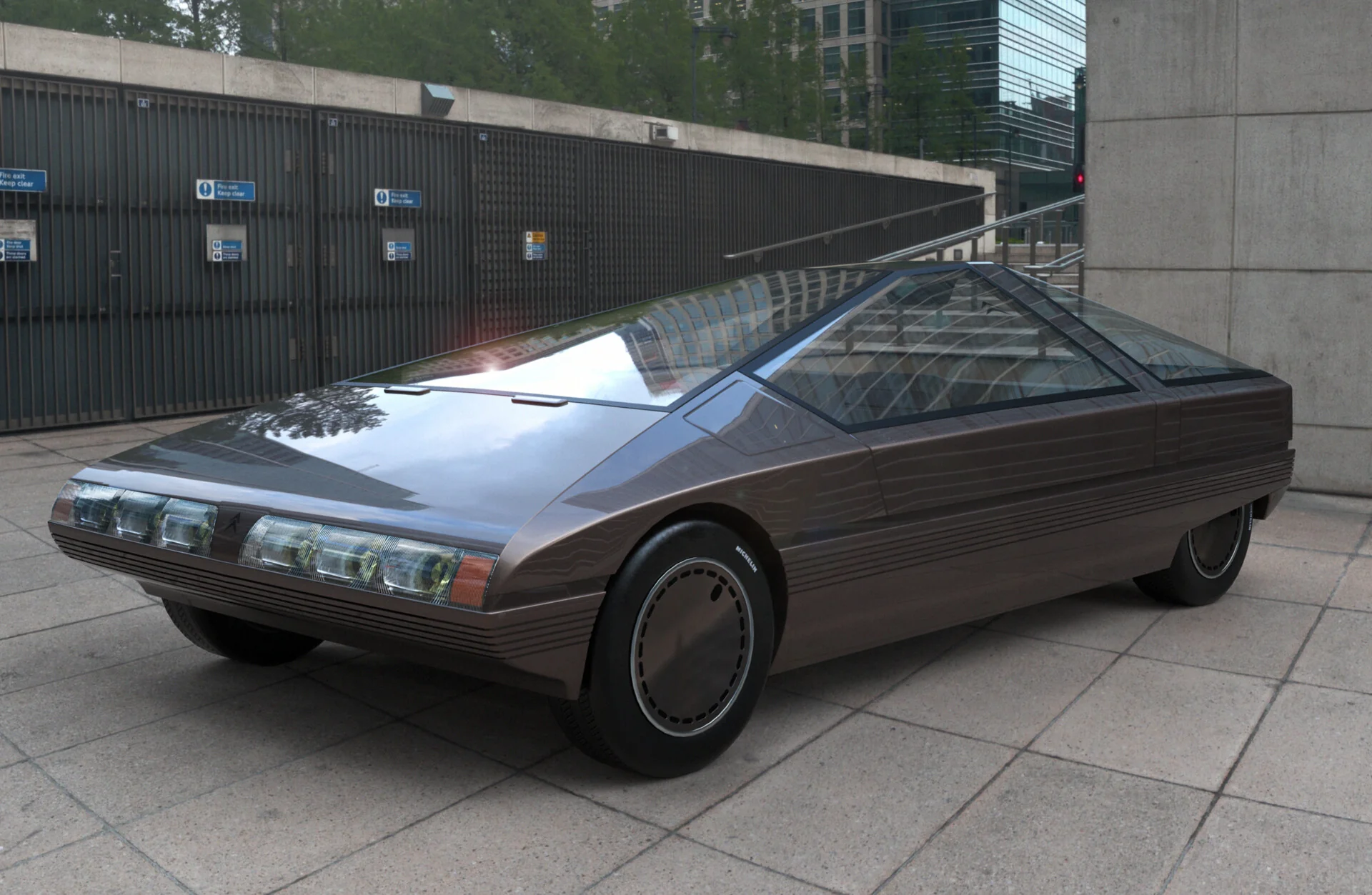
4. 1980 Citroën Karin: The Pyramid on Wheels
When Citroën introduced the Karin concept at the 1980 Paris Motor Show, it wasn’t because the company had a production-ready model. Instead, the Karin was devised as a last-minute marketing exercise to grab attention. Designed by Trevor Fiore, a British-born designer who had previously worked with TVR and Jaguar, the Karin turned heads with its bold, pyramid-like silhouette.
Karin’s body resembled a trapezoidal pyramid on wheels, unlike anything else at the time. With butterfly doors, covered rear fenders, and headlights borrowed from the Citroën SM, it appeared more like a futuristic art installation than a practical vehicle.
The sharp-angled form, glass-heavy surfaces, and compact dimensions (the roof was reportedly the size of an A3 sheet of paper) ensured that the Karin was both absurd and mesmerizing. Its name is derived from the Italian word carina, meaning “dear” or “darling,” though many considered it more bizarre than beautiful.
Inside, the Karin offered one of its most fascinating features: a three-seat layout with the driver positioned centrally, flanked by two slightly offset passengers. This configuration predated the legendary McLaren F1 by more than a decade, showcasing Citroën’s forward-thinking experimentation.
The dashboard was minimalist, but the steering wheel was packed with buttons controlling a range of real and imagined functions. Additional controls and small screens were hidden in the door panels, suggesting early ideas of infotainment and digital interaction.
The Karin even included a primitive onboard computer designed to monitor vehicle status and road conditions, decades before such technology became mainstream.
Although much of the Karin was theatrical, it wasn’t entirely without mechanical substance. Citroën equipped it with a four-cylinder engine, front-wheel drive, and its signature hydropneumatic suspension system, which gave the company’s cars their famously smooth ride. Still, performance wasn’t the focus; the Karin was never intended to be road-ready, and the engine played a minor role in the vehicle’s entire design.
Trevor Fiore, originally Trevor Frost, took on his mother’s Italian surname during his career to sound more exotic while working in Milan. By the time he joined Citroën in 1980, his role was to create showstopping concepts like the Karin and later the Xenia.
While Sergio Pininfarina or Bertone had built their reputations on influential designs, Fiore’s Karin was more of a whimsical one-off. After leaving Citroën in 1990, his work largely faded from prominence, but the Karin remains his most memorable creation.
Reactions to the Karin were polarized. Some saw it as a futuristic marvel, others as a geometric oddity that resembled a greenhouse on wheels. Critics joked that its vast glass surfaces were better suited for growing tomatoes, while others quipped that the seating arrangement made it ideal for a Frenchman to drive with his wife on one side and mistress on the other.
Ultimately, the Karin was never meant for production. It was a design exercise, a piece of showmanship to keep Citroën in the spotlight during a quiet product year. Yet, its influence lingers in subtle ways. The central driving position foreshadowed the McLaren F1, and its focus on digital controls anticipated the tech-driven cabins of modern cars.
The Citroën Karin remains a quirky yet significant reminder of the 1980s era of bold experimentation. Though it never made it beyond the show floor, the Karin demonstrated Citroën’s willingness to embrace the absurd, proving that sometimes even a last-minute idea can leave a lasting impression in automotive history.
5. 1986 Italdesign Machimoto: The Car-Motorcycle Hybrid
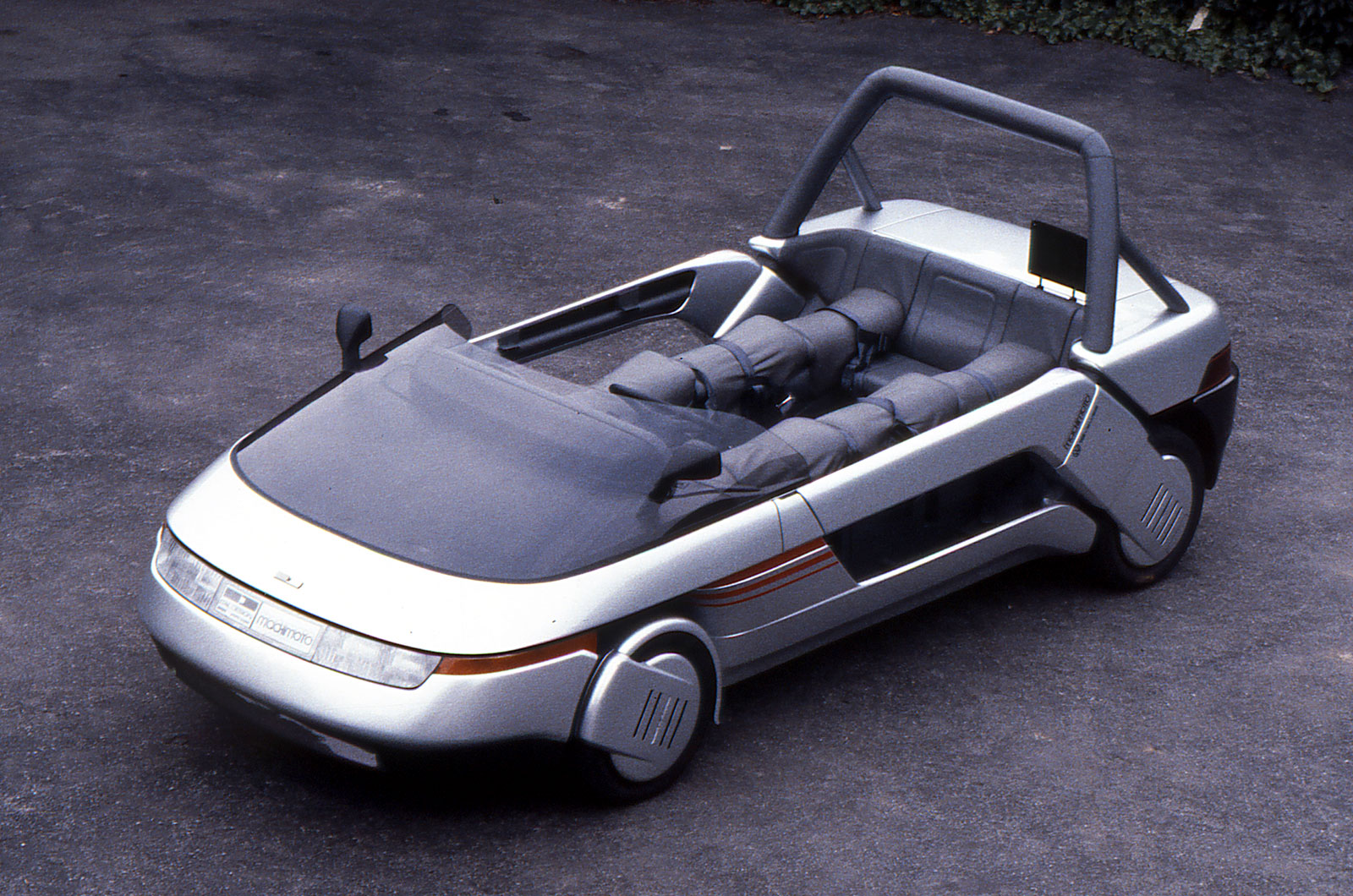
Debuting at the 1986 Turin Motor Show, the Italdesign Machimoto showcased one of Giorgetto Giugiaro’s most eccentric creations. Its name combined the Italian words machina (car) and motociclo (motorcycle), emphasizing its role as a hybrid concept that blurred the line between two- and four-wheelers.
Based on the Volkswagen Golf GTI platform, the Machimoto was less about performance and more about experimental design, offering a bold vision of shared, unconventional mobility.
The Machimoto’s most distinctive feature was its seating arrangement. Instead of a traditional cabin, it featured two tandem rows of motorcycle-style saddles accommodating six passengers.
If needed, three additional fold-out seats could be added, raising capacity to nine occupants each secured with individual lap belts. This setup demanded closeness between passengers, reinforcing the motorcycle inspiration.
The open-top design eliminated doors, replacing them with lateral protective bars for minimal side impact safety. A large roll cage at the rear further emphasized protection, although comfort and practicality took a back seat to creativity.
Giugiaro’s vision extended to the cockpit. The steering system offered dual modes: drivers could use it as a conventional car steering wheel, with handles tucked inside, or pivot the handles outward to mimic motorcycle handlebars. This flexibility reinforced the hybrid identity of the Machimoto, delivering an experience that was equal parts car and motorbike.
The interior also featured multiple gauges, futuristic for its time, and underscored the vehicle’s experimental flair.
Powering the Machimoto was a 1.8-liter, 16-valve inline-four from the Volkswagen Golf GTI, producing 139 horsepower. The engine was mounted at the front, sending power to the front wheels via a standard VW transmission. The wheelbase was slightly lengthened compared to the Golf, but much of the underpinnings remained familiar, making the Machimoto a fully drivable prototype.
Despite its modest output, the focus wasn’t speed but rather the novelty of design and the driving experience. The combination of proven mechanical components with avant-garde styling ensured the Machimoto was both practical enough to function and radical enough to stand out.
When first revealed, the Machimoto was met with astonishment. Some dismissed it as impractical or gimmicky, while others praised its inventive approach to personal mobility. Its futuristic silver body with red accents, combined with its UFO-like presence, even earned it a role in the 1996 sci-fi film “A spasso nel tempo.”
Although it never progressed to production, the Machimoto remains a celebrated curiosity. Nearly four decades later, it is remembered as a playful experiment that showcased Italdesign’s willingness to push boundaries and reimagine transportation. More than a car or a bike, it was an audacious vision that left a lasting smile on those lucky enough to ride it.
Also Read: 10 Cars That Survived Generational Abuse With Resilient Build Quality
6. 1995 Ford GT90: The “World’s Mightiest Supercar”
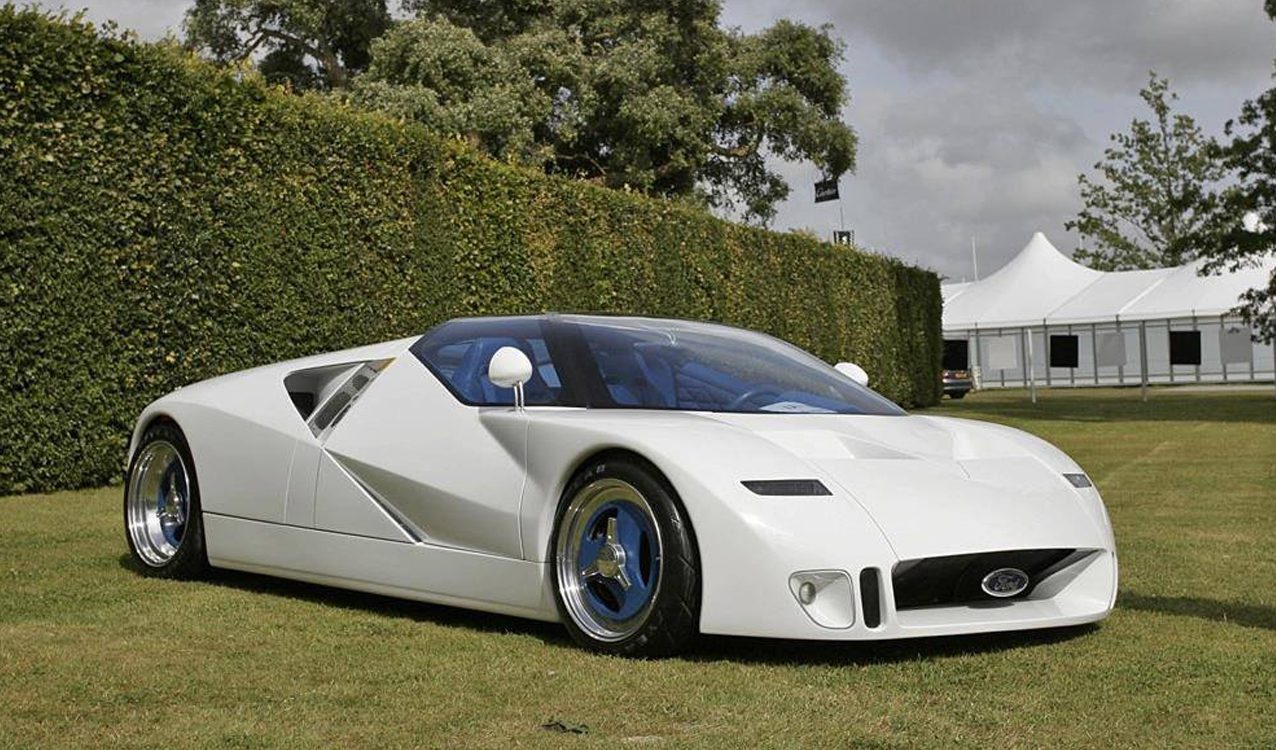
At the 1995 Detroit Auto Show, Ford presented the GT90 concept to showcase a bold new design and engineering vision. Marketed as the spiritual successor to the legendary GT40, the GT90 showcased radical styling and groundbreaking technology that earned it the nickname “the world’s mightiest supercar.”
Penned by designer James Hope, the GT90 introduced Ford’s “New Edge” design language, characterized by sharp, stealth-like lines and angular surfaces. This aesthetic later influenced mainstream models like the Mustang and Focus, but on the GT90, it looked otherworldly.
The body was made largely of carbon fiber over a monocoque chassis, weighing just 3,200 pounds. Its rear featured a distinctive triangular exhaust that got so hot it required ceramic tiles to prevent body damage. Inside, the cabin was as futuristic as the exterior: a violet-blue interior, diamond-patterned console, exposed gear linkage, and silver buttons gave it a sci-fi vibe.
Unlike traditional Ford muscle cars powered by V8s, the GT90 featured a bespoke quad-turbocharged 6.0-liter V12, essentially crafted from two modular V8 blocks fused together. The engine produced 720 horsepower and 660 lb-ft of torque, though Ford admitted it could have been tuned to deliver closer to 900 hp.
Performance claims were staggering: 0–60 mph in 3.1 seconds, 0–100 in 6.2 seconds, and a quarter mile in under 11 seconds. Ford also estimated a top speed of 235 mph, which would have made it one of the fastest cars in the world at the time.
Although its styling was pure Ford, the GT90 borrowed extensively from Jaguar’s XJ220, a result of Ford’s ownership of Jaguar in the 1990s. The double-wishbone suspension, chassis layout, and Ricardo five-speed manual gearbox came directly from the XJ220, though the Ford’s powerplant was far more ambitious.
Ford built a semi-functional prototype, and a handful of journalists, including Jeremy Clarkson and Motor Trend’s John McCormick, got behind the wheel. However, the prototype was detuned to around 400 hp with a top speed of only 40 mph. Clarkson later dismissed it as “horrid,” while McCormick criticized its “charmless stance” and awkward styling. These lukewarm reviews contrasted sharply with the GT90’s dazzling show presence.
At the time of its debut, the GT90 was valued at $3 million, an astronomical figure for any Ford, especially when compared to today’s most expensive Ford GT variant, the Mk IV, priced around $1.4 million. Though it never entered production, the GT90 lived on in pop culture, appearing in Need for Speed II SE and cementing itself in the imaginations of car enthusiasts.
Today, the lone GT90 resides at the Hajek Motorsports Museum, a reminder of Ford’s daring vision during the 1990s. While its driving dynamics fell short of expectations, the GT90 remains a celebrated concept for its bold design, extreme engineering, and status as one of the most radical supercars ever to wear the Blue Oval.
In June 2008, BMW revealed one of its most radical concept cars ever: the GINA Light Visionary Model. Built on the short-lived BMW Z8 roadster platform, the Gina wasn’t just a design study but a philosophical statement on the future of automotive design.
Gina discarded conventional metal body panels in favor of a flexible, waterproof textile skin stretched over an aluminum wire structure reinforced with carbon struts. This “spandex-like” covering could change shape on demand, allowing the car to alter its form depending on speed, driving conditions, or driver input.
The material could withstand extreme heat and cold without deteriorating and was translucent in certain areas, letting hidden taillights shine through.
Gina’s innovations extended beyond her skin. It featured butterfly doors, a hidden rear spoiler, and even concealed headlights that emerged from folds in the fabric. The hood could open along a seam to display the S62 V8 engine from the E39-generation BMW M5. Inside, the theme continued: the instrument cluster and steering wheel remained hidden until the driver pressed the start button, sliding into position in a theatrical reveal.
The mastermind behind the Gina was BMW’s controversial design chief, Chris Bangle. Conceived in 2001 and kept secret for over six years, the concept embodied Bangle’s belief that cars should go beyond fixed forms to express individuality and lifestyle.
He envisioned a future where cars could adapt their shapes to suit owners’ needs, a radical idea that influenced BMW’s “flame-surfaced” design language seen in models like the Z4 and 5 Series of the 2000s.
Although the Gina was never intended for production, it challenged traditional design principles and opened discussions on flexibility, creativity, and emotional connection in car design.
Its ideas inspired future BMW styling and remain a landmark in concept car history. More than a vehicle, the Gina was a provocative design manifesto, proving that even a supercar could bend quite literally to the will of its driver.
8. 2008 Audi R8 TDI Le Mans: A Diesel Supercar That Never Was
The Audi R8 has long stood as the German automaker’s only true supercar, celebrated for its sleek styling and naturally aspirated V8 and V10 engines. But in 2008, Audi attempted something radically different.
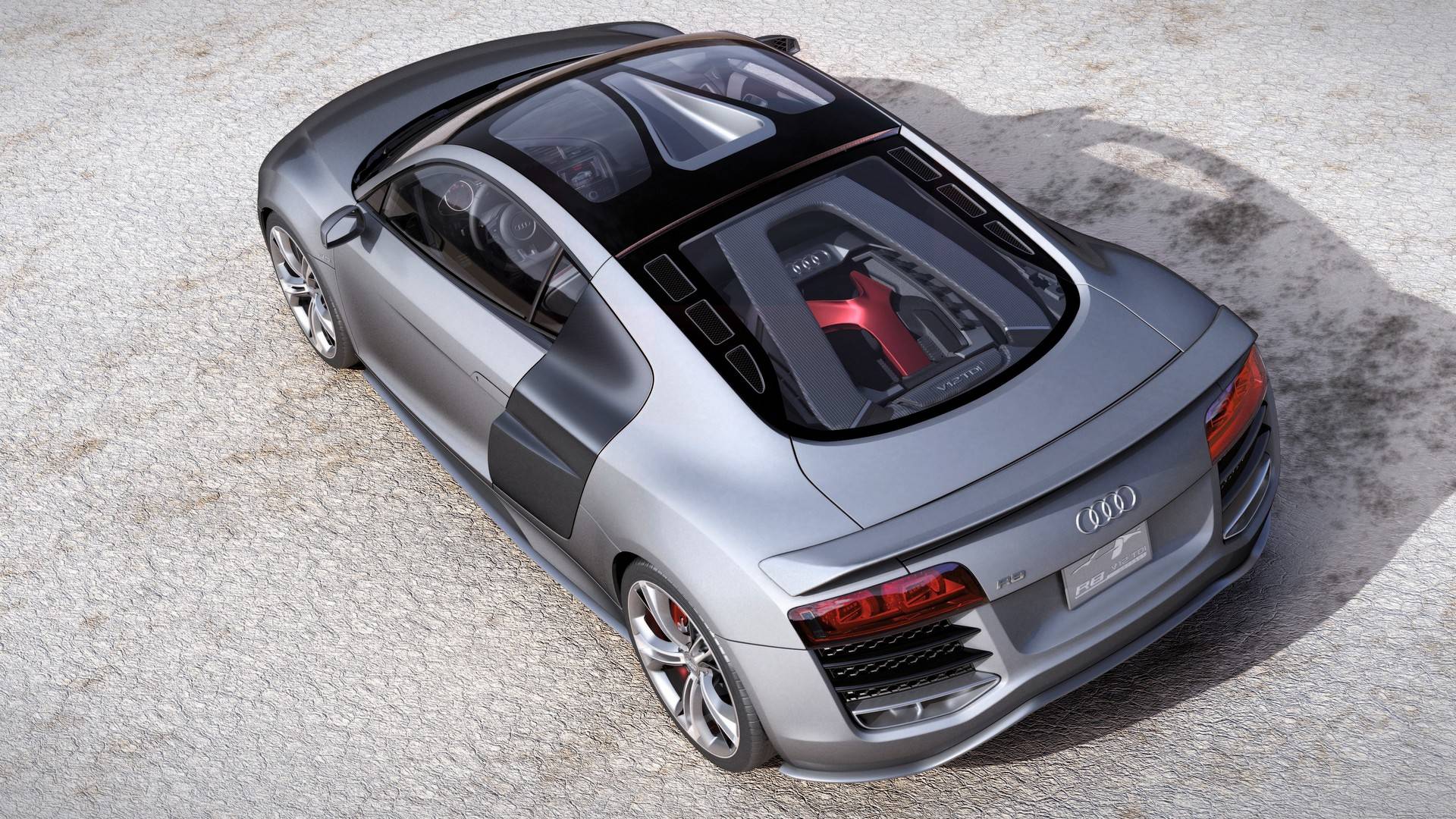
At the Detroit Auto Show, it revealed the R8 TDI Le Mans, a concept car that swapped high-revving gasoline power for a 6.0-liter twin-turbocharged V12 diesel engine inspired by Audi’s Le Mans–winning R10 race car.
The centerpiece of the R8 TDI Le Mans was its remarkable V12 TDI engine, capable of producing 500 horsepower and a colossal 738 pound-feet of torque.
Peak torque arrived at just 1,750 rpm, giving the concept explosive low-end power rarely seen in supercars of the era. Paired with a six-speed manual transmission, the car could sprint from 0 to 62 mph in 4.2 seconds and reach a top speed of 186 mph.
Audi engineers faced significant challenges fitting the diesel giant into the R8’s mid-engine layout. The firewall had to be moved forward by six inches, and the added weight of the engine made the concept roughly 440 pounds heavier than a production R8. To handle the heat generated, Audi even fitted ceramic shielding to protect the rear bodywork.
Visually, the R8 TDI Le Mans stood apart from its gasoline siblings. It wore a factory-wide body kit, a roof scoop, and an illuminated glass engine bay showcasing its V12 centerpiece.
Enlarged honeycomb grilles, carbon-fiber roof vents, an anodized aluminum splitter, and redesigned mirrors gave the car a more aggressive presence. Inside, the cabin received unique metallic accents and additional design flair, underscoring its one-off status.
Despite being a concept, the R8 TDI Le Mans was fully drivable. Journalists at the Sebring 12 Hours endurance race were given the rare chance to test it on a nearby airstrip.
While the car’s gearbox (borrowed from an Audi A4) and the fragile nature of the prototype limited top speeds, the experience was described as unforgettable. Unlike the clattering expected of diesels, the V12 emitted a refined whirring sound, enhancing its jet–fighter–like aura.
Although the R8 TDI Le Mans generated excitement, several factors prevented it from reaching production. The immense weight, complexity of packaging the engine, and need for a stronger transmission made it impractical. Additionally, growing environmental concerns and the Dieselgate scandal years later sealed the fate of high-performance diesels.
Still, Audi’s experiment highlighted diesel’s potential beyond fuel efficiency. With a theoretical 200 mph top speed and the possibility of delivering 25 mpg, the R8 TDI Le Mans hinted at a new kind of supercar, one combining endurance racing technology with everyday usability.
Today, the R8 TDI Le Mans remains a one-of-one concept, preserved as a fascinating “what if” in Audi’s history. It showcased the brand’s engineering ambition and willingness to experiment at the height of its Le Mans dominance.
While the world never saw a diesel-powered R8 in showrooms, the concept endures as a bold reminder of how far Audi was willing to push the boundaries of performance.
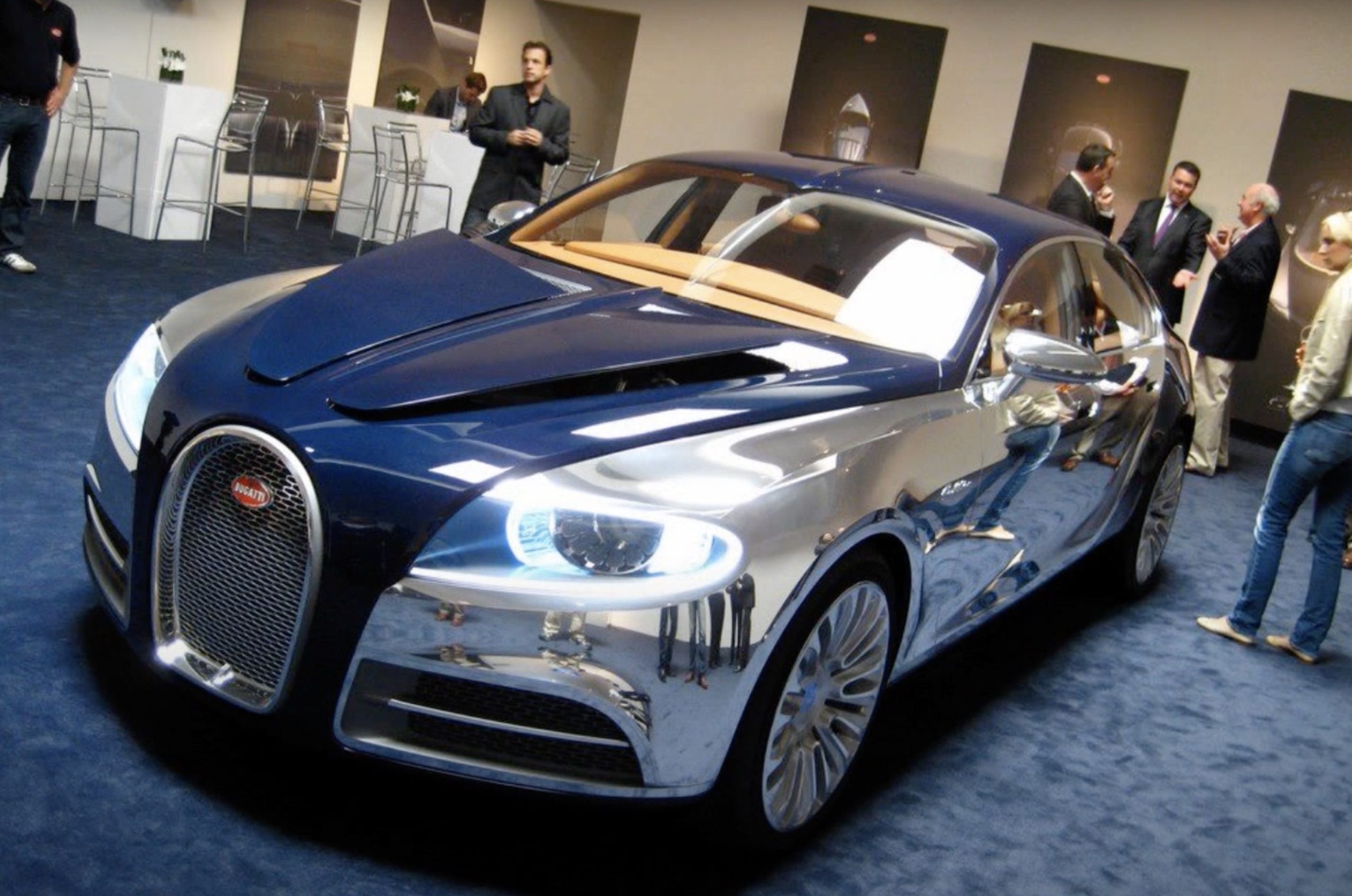
9. 2009 Bugatti 16C Galibier: The Four-Door Veyron That Never Reached the Road
When Bugatti concluded production of the Veyron, the question was how to follow up on one of the most ambitious automotive projects ever built. The answer, at least temporarily, was the 2009 Bugatti 16C Galibier, a luxury sedan that sought to blend Veyron-like performance with limousine refinement.
Presented privately to select clients and enthusiasts, the Galibier was envisioned as the world’s fastest and most powerful four-door car. Despite its potential, the project was cancelled in 2012, making it one of the brand’s most fascinating “what-could-have-been” models.
The Galibier’s design language echoed the Veyron, evident in its fastback-style roofline, two-tone bodywork, and prominent hood crease. It also honored Bugatti heritage, particularly the Type 57S Atlantic, through details like the split rear window and a flowing spine-like contour across the rear.
Unlike traditional three-box sedans, the Galibier adopted a hatchback form, controversial for the ultra-luxury market but chosen for aerodynamic and stylistic reasons.
Its dimensions reinforced its presence: more than 215 inches in length, over 80 inches in width, and fitted with 22-inch alloy wheels. The cabin combined classical luxury with modern technology, showcasing polished wood, supple leather, a floating center console, and advanced digital instrumentation.
A distinctive highlight was a bespoke Parmigiani watch mounted in the dashboard, designed to be removed and worn on the wrist.
Powering the Galibier was a front-mounted 8.0-liter W-16 engine, derived from the Veyron but using two-stage supercharging instead of four turbochargers. This configuration promised smoother power delivery, delivering between 800 and 1,000 horsepower along with immense torque.
All four wheels would be driven, though engineers were still evaluating whether to pair the motor with a dual-clutch gearbox or a conventional automatic designed for rapid shifts.
Performance targets placed the Galibier at the top of the luxury sedan hierarchy. Estimates suggested a top speed of 220 mph, making it significantly faster than rivals such as the Bentley Mulsanne or Rolls-Royce Phantom.
To manage its weight and output, Bugatti considered a carbon-intensive chassis structure, advanced suspension, and massive ceramic brakes. The concept already tipped the scales as a substantial machine, but further refinements were needed to improve cabin ergonomics and rear-seat accessibility.
Initially, Bugatti executives described the Galibier as their strongest and most refined proposal for a new model. Early reactions from wealthy clients were positive, and a production version was expected to cost between $1.2 and $1.5 million.
Yet by 2012, criticism emerged over changes to the car’s styling, which some argued had strayed from the elegant lines of the original design study. An influential critic from Austria was particularly vocal, claiming the car had become awkward and lost its identity.
At the same time, financial considerations weighed heavily. The Veyron itself was built at a loss, and a limited-production sedan offered little commercial justification. With Volkswagen Group executives and Bugatti leadership reconsidering the company’s direction, the Galibier was shelved in favor of pursuing the Chiron, a direct hypercar successor to the Veyron.
The Bugatti 16C Galibier remains a striking example of ambition curtailed by practicality. It promised to be the ultimate four-door performance car, a sedan capable of rivaling luxury icons while outpacing supercars.
Instead, it became a rare glimpse into Bugatti’s willingness to experiment beyond traditional boundaries. Though it never reached the road, the Galibier endures as a symbol of how even Bugatti must occasionally temper bold visions with reality.
10. 2020 Mercedes-Benz Vision AVTR: A Futuristic Approach to Mobility
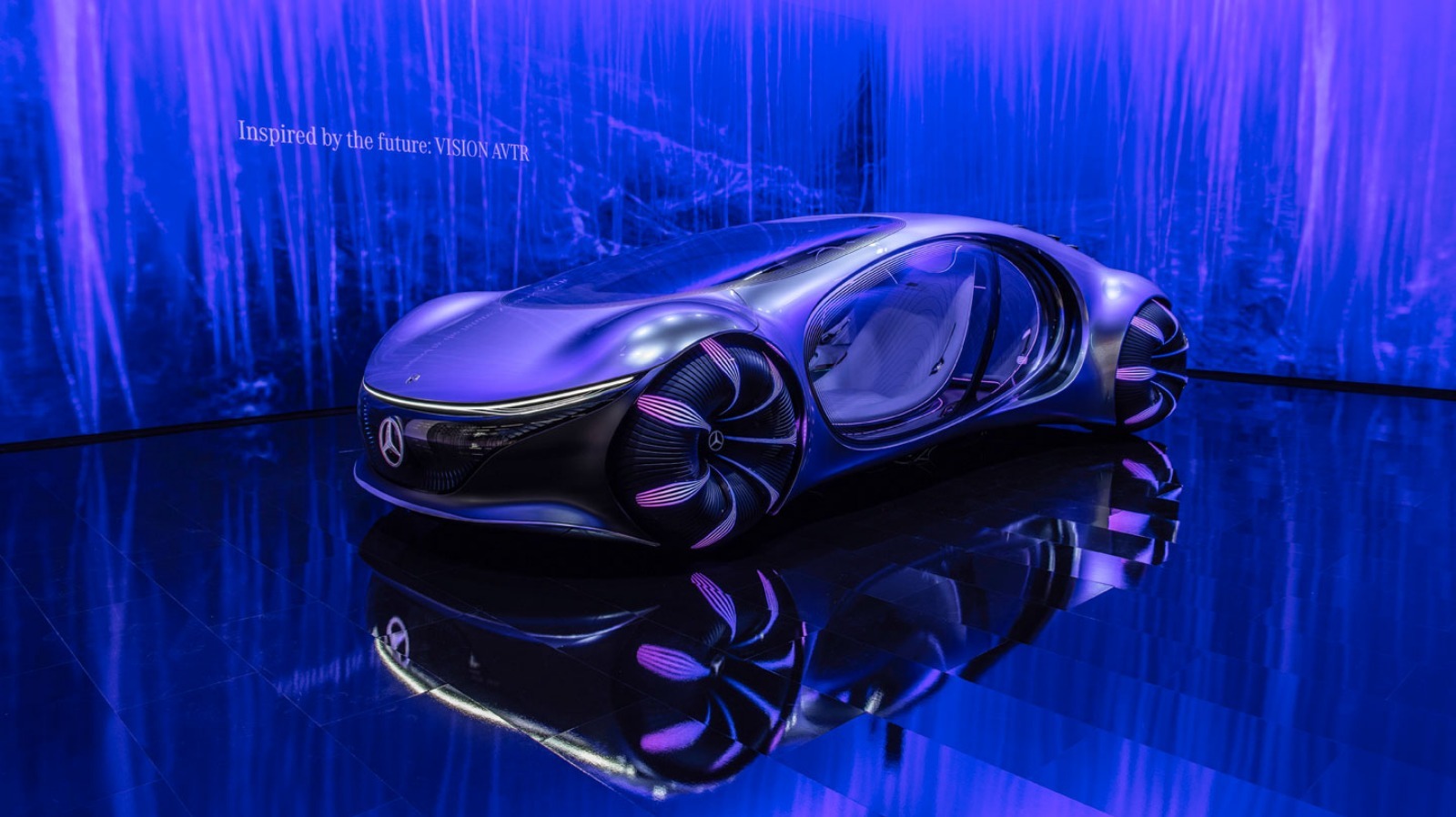
Mercedes-Benz has long been a pioneer in creating advanced concept vehicles, but the Vision AVTR represents one of the brand’s most radical designs. Introduced at the 2020 CES in Las Vegas, the car was developed in collaboration with Disney and inspired by the film Avatar.
Its name, AVTR, stands for Advanced Vehicle Transformation, reflecting its goal of redefining the relationship between humans, machines, and the environment.
The Vision AVTR challenges conventional automotive engineering with a graphene-based organic battery system, eliminating the need for rare metals while supporting sustainable energy solutions.
Its commitment to eco-conscious materials extends to the interior, which features vegan-friendly seating and a floor made of Karuun wood, a rapidly renewable material sourced from Indonesia. These choices merge luxury with environmental responsibility, demonstrating Mercedes’ focus on future-forward sustainability.
The Vision AVTR incorporates 33 bionic flaps on the rear, which move organically, enhancing its aerodynamic performance and creating a living, responsive appearance. Its innovative spherical wheels allow the car to move sideways up to 30 degrees, providing maneuverability beyond conventional vehicles.
Inside, the AVTR abandons the traditional steering wheel in favor of a central control element. The car recognizes the driver’s heartbeat and breathing to initiate operation. Hand gestures are used to interact with the vehicle, projecting menus and controls onto the driver’s palm. A massive curved display connects passengers to the outside world, enhancing immersion and interaction.
A groundbreaking aspect of the Vision AVTR is its Brain-Computer Interface (BCI), which reads neural activity to control vehicle functions. Electrodes on the back of the driver’s head detect brain waves and focus, allowing operations such as changing lighting, selecting navigation destinations, or adjusting entertainment systems without physical input.
Although still experimental, this technology demonstrates how cars can respond directly to human intent, with potential applications beyond mobility, including medical assistance for individuals with physical limitations.
The AVTR is more than a technological showcase; it represents a philosophy of harmony between humans, machines, and nature. Inspired by Avatar, the concept emphasizes organic aesthetics and sustainable design. Collaboration with Disney enhanced the creative vision, combining storytelling and cinematic design with cutting-edge automotive engineering.
While the Vision AVTR is not intended for production, its innovations are influencing the future of automotive design. By integrating organic batteries, sustainable materials, gesture-based controls, and brain-computer interface technology, the AVTR sets a new benchmark for what vehicles could become in the coming decades.
It demonstrates Mercedes-Benz’s dedication to pushing the boundaries of technology, design, and driver interaction, offering a transformative vision for mobility.
Even though these twelve concept cars never made it to production, their influence resonates across the automotive world. They inspire designers, engineers, and enthusiasts to think differently, blending art, technology, and performance in unexpected ways.
From the Mercedes-Benz Vision AVTR’s futuristic controls to the Audi R8 TDI Le Mans’ unconventional powertrain, each concept demonstrates the value of daring to dream beyond practicality.
These vehicles remain lasting symbols of innovation, showing that the boldest ideas often pave the way for the future of mobility and continue to shape car culture for generations.
Also Read: 5 Honda Sedans That Rarely Break vs 5 That Constantly Do