
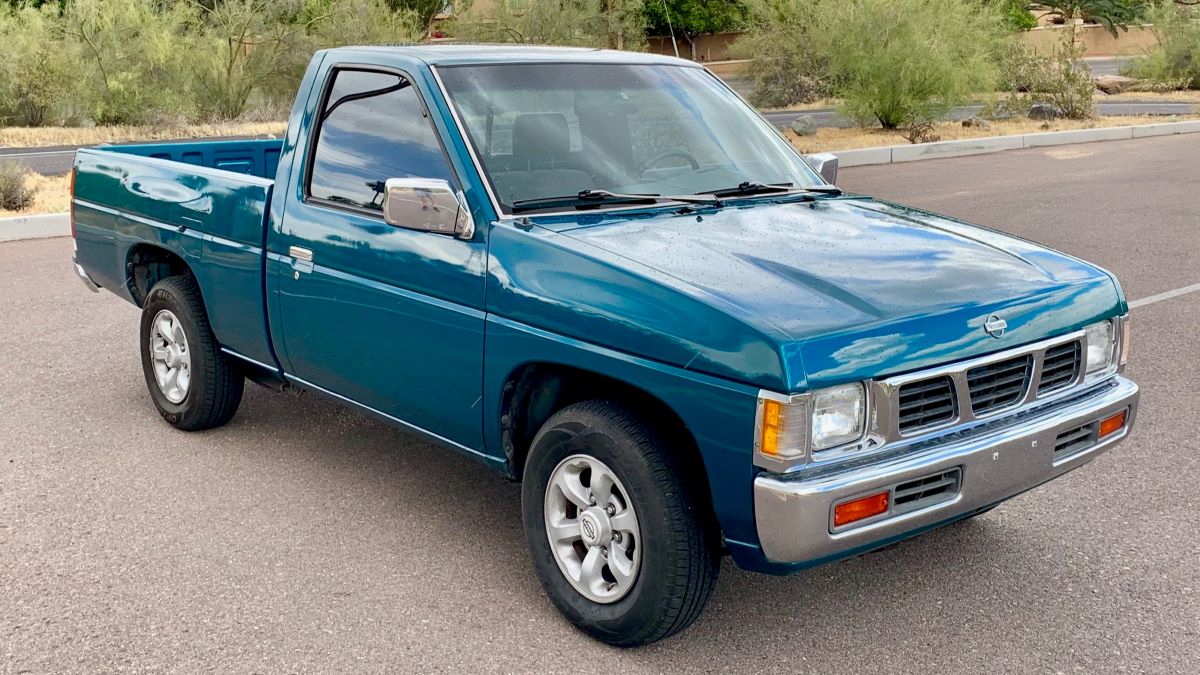
Pickup trucks have long been associated with toughness, hard work, and lasting dependability. Among them, certain models have earned a special reputation for holding their ground year after year, regardless of mileage or age.
These are the classics that still run strong, sometimes decades after rolling off the assembly line. While modern trucks often impress with advanced features and comfort, many owners continue to trust older models because of their simplicity, durability, and proven reliability.
Mechanics appreciate them too, since these trucks are usually easier to repair compared to today’s complex machines.
Classic pickups that are still on the road today share a few common qualities. They often have sturdy frames, engines designed with longevity in mind, and parts that can take a beating without giving up. Many of these models were originally built for farms, construction work, or long-haul use, so they were engineered with strength over style.
Yet, their endurance has become a source of pride among enthusiasts who maintain them with care or even restore them to their former glory. In some cases, owners pass them down through generations, making them part of family history as much as practical machines.
The value of these trucks goes beyond nostalgia. They continue to serve as reliable workhorses, hauling loads, towing equipment, or simply starting up every morning without hesitation.
Some models have even gained a cult following, with collectors keeping them alive through restoration projects and aftermarket parts. Others remain favorites among budget-minded buyers looking for dependable transportation that does not break the bank.
This list focuses on ten classic pickups that have stood the test of time. Each one represents toughness, simple design, and the kind of endurance that keeps them relevant even today.
Also Read: 10 Turbo Engines That Surprisingly Last Past 200K
1. Ford F-150 (1970s–1990s Models)
The Ford F-150 has been one of the best-selling trucks for decades, and part of that success comes from how durable the older models have proven to be.
Trucks from the late 1970s through the 1990s are especially respected for their ability to keep running long after the odometer has rolled over more than once.
They were built with sturdy frames, simple mechanical systems, and engines that could handle abuse, whether from farm use, construction work, or daily commuting in tough conditions.
One of the strongest qualities of these F-150s is their straightforward design. Engines like the 4.9-liter inline-six and the 5.0-liter V8 were not only powerful enough for hauling but also easier to repair than today’s technology-heavy motors.
Owners often share stories of trucks running smoothly after 300,000 miles, provided regular oil changes and basic maintenance were performed. Parts remain widely available and relatively affordable, making them accessible for do-it-yourself repairs or restoration projects.
Rust can be a concern in older F-150s, especially in regions with harsh winters, but many owners combat this with proper care.
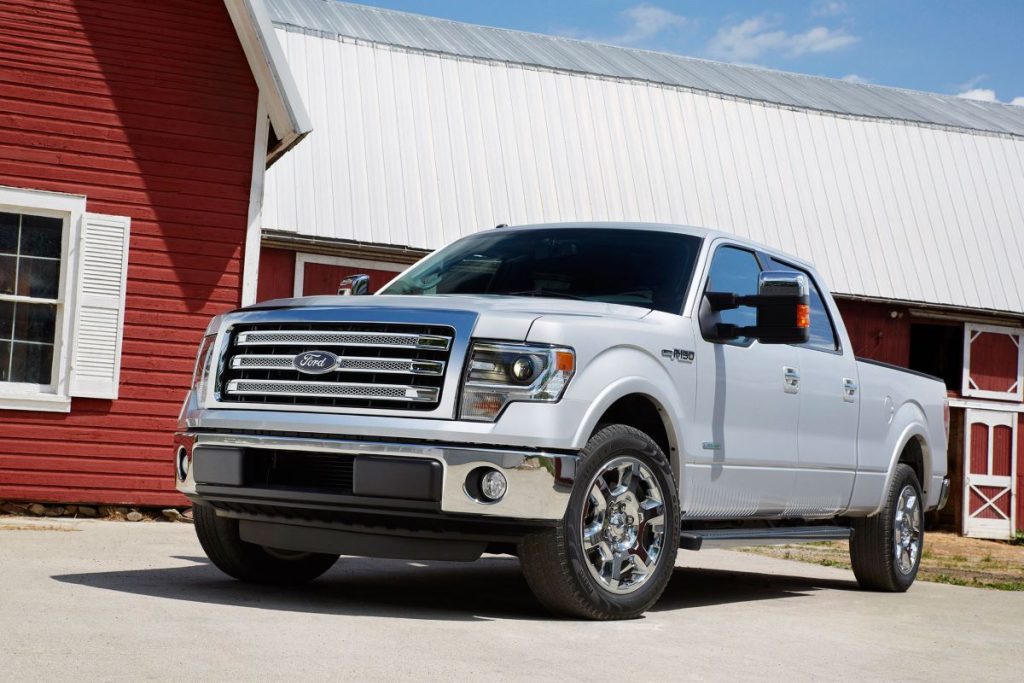
When maintained, the trucks continue to perform in ways that newer vehicles with more fragile electronics sometimes fail to match. Many still tow boats, pull trailers, or carry heavy loads without complaint, decades after leaving the factory.
The loyalty to these trucks is evident in how many remain on the road. For many families, an F-150 from this era has served as a first work vehicle, a trusted daily driver, and eventually a classic worth preserving.
Their combination of toughness, availability of parts, and straightforward engineering is what allows these older Ford F-150s to refuse retirement.
2. Chevrolet C/K Series (1960s–1990s)
The Chevrolet C/K pickup line is another example of a truck that has cemented its reputation as nearly indestructible.
Produced from the 1960s through the late 1990s, these trucks were known for strong drivetrains, durable frames, and engines that could run reliably even with hundreds of thousands of miles.
Many C/K models were bought as work vehicles and simply never left service, thanks to their ability to keep performing under demanding conditions.
One of the standout engines offered in these trucks was the Chevrolet 350 small-block V8. This engine became legendary for its balance of power, reliability, and ease of maintenance.
It was so successful that it found use not only in pickups but across Chevrolet’s entire vehicle lineup. Owners praise it for being forgiving to work on and capable of lasting well beyond 250,000 miles with proper upkeep. The combination of that motor with a rugged chassis created a formula that stood the test of time.
Unlike some modern trucks, which can feel overly dependent on electronics, the C/K pickups were built with mechanical simplicity in mind. This makes them more approachable for amateur mechanics and easier to restore.
Even if something breaks, parts are plentiful and aftermarket support remains strong. That has allowed many of these trucks to be rebuilt, keeping them on the road decades after their original release.
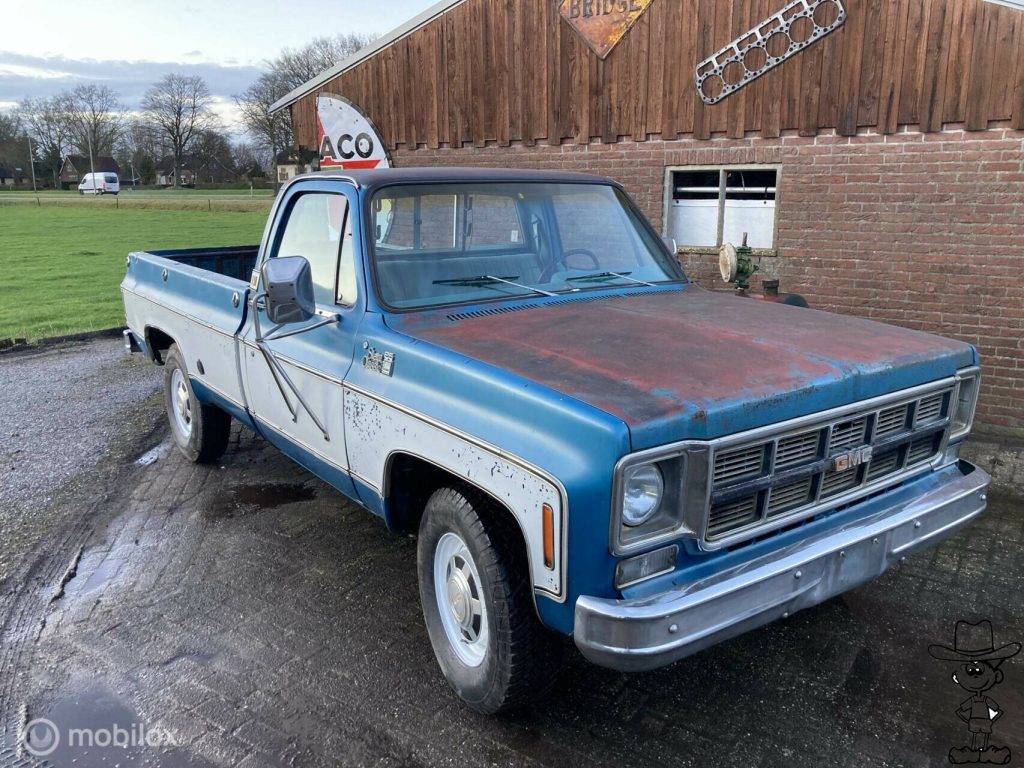
Appearance also plays a role in their appeal. The square-body style of the 1970s and 1980s has become iconic, inspiring a devoted fan base.
These trucks not only work hard but also hold value as collector pieces, often restored to pristine condition by enthusiasts.
Yet, it is their ability to remain useful as daily workhorses that truly defines them. The Chevrolet C/K Series continues to prove its toughness, showing why so many still run strong today.
3. Dodge Ram (1990s Models)
The Dodge Ram underwent a major transformation in the 1990s, and the models from this period are remembered not just for their bold styling but for their lasting dependability.
The second-generation Ram, introduced in 1994, combined aggressive looks with serious capability, making it a hit with buyers who wanted both presence and performance.
Beyond the styling, what truly set these trucks apart was their mechanical toughness, particularly in versions equipped with the Cummins diesel engine.
The 5.9-liter Cummins turbo-diesel earned the Ram a reputation as one of the longest-lasting trucks of its era. Known for producing massive torque and being built with commercial-grade durability, these engines often outlast the trucks themselves.
Many Rams with Cummins power have passed the 500,000-mile mark with proper care. Even gasoline-powered Rams from this era, such as those with the 5.2 or 5.9-liter Magnum V8s, proved reliable when maintained.
The solid front and rear axles gave these trucks strength for heavy towing and off-road work. Owners often bought them for hauling trailers, farm equipment, or construction loads, and the trucks delivered without hesitation.
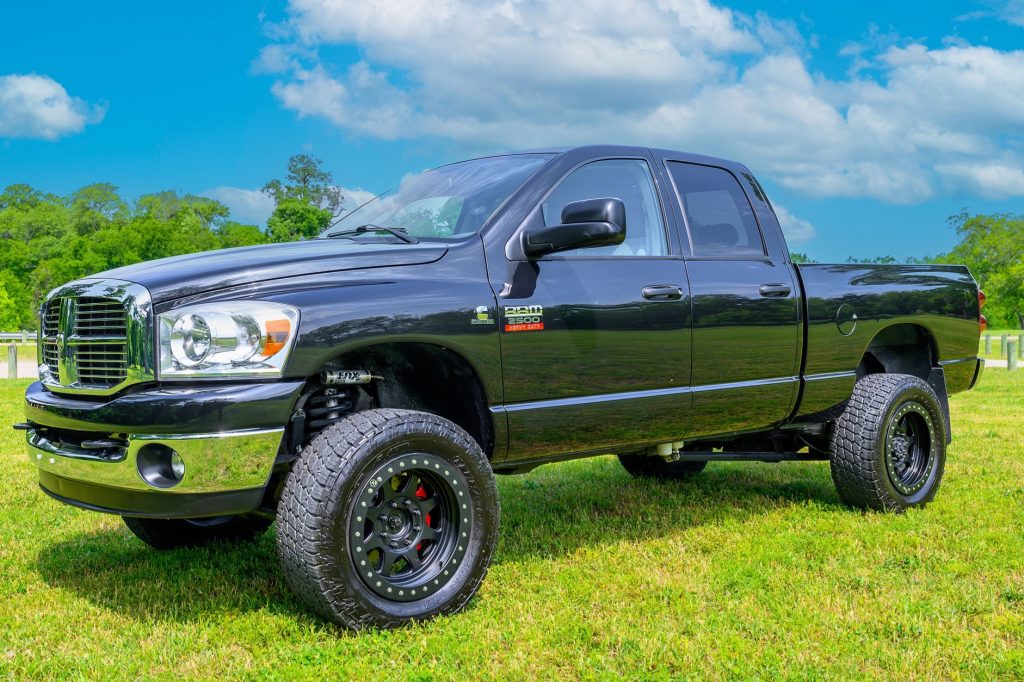
The Ram’s frame and suspension were also built with toughness in mind, giving it the ability to handle rough conditions for years on end.
Though interior quality was not always the strongest point, many owners overlooked that aspect because the trucks simply did their job day after day.
Enthusiasts today still seek out these models, especially those with diesel power, because they are proven survivors that can still perform demanding work.
The 1990s Dodge Ram represents a turning point in truck design but also stands as proof that functionality and strength can create a vehicle that refuses to fade away.
4. Toyota Hilux (1970s–1990s Models)
Few pickups have a reputation for toughness like the Toyota Hilux. Since the 1970s, this truck has earned legendary status for its ability to withstand punishment that would put many vehicles out of commission.
From farms in rural America to remote regions overseas, the Hilux became the go-to truck where reliability mattered more than anything else. Its name is often associated with rugged dependability, and countless stories exist of these trucks surviving conditions that seem almost impossible.
The Hilux was built with simplicity and durability at its core. Engines such as the 22R four-cylinder were known for their ability to keep running even with minimal maintenance. While not the most powerful motor, it provided consistent performance and remarkable longevity.
Many Hilux owners have reported trucks running well past 300,000 miles, with some pushing even further. The solid rear axle, strong chassis, and compact design gave the Hilux the ability to handle off-road terrain and heavy use with ease.
One reason the Hilux gained such a following is its worldwide availability. Farmers, contractors, and even military organizations adopted it for its resilience.
In some regions, these trucks are still actively used decades after production, proving their long-lasting nature. They became popular in harsh environments where other vehicles simply would not last.
Though small compared to American pickups, the Hilux earned respect not through size but through consistent durability. Parts availability, especially for older models, remains strong because of its widespread use.
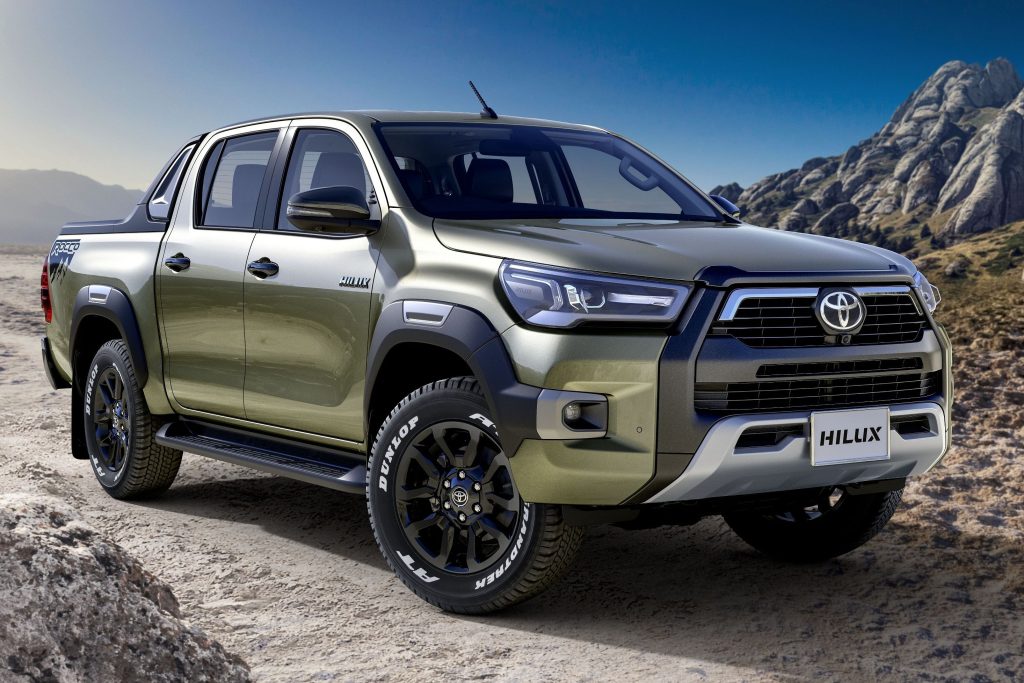
This allows owners to keep them running without much difficulty. The Hilux is more than just a classic pickup; it is a global symbol of resilience. The fact that many early models are still running strong today explains why it is often considered one of the most unbreakable trucks ever built.
5. Nissan Hardbody (D21, 1980s–1990s)
The Nissan Hardbody, officially known as the D21, became an icon of toughness in the 1980s and 1990s. Its nickname came from the double-walled bed design, which provided added durability for hauling and heavy-duty use.
Owners quickly learned that the Hardbody could take punishment without complaint, making it one of the most reliable small trucks of its time. It offered a blend of affordability, toughness, and straightforward design that still keeps many of them on the road today.
One of the standout features of the Hardbody was its engine lineup. The KA24 four-cylinder was especially well-regarded for being nearly indestructible.
It was simple to maintain, offered adequate power for the truck’s size, and had a reputation for surviving high mileage with little more than basic care. Many of these trucks have easily crossed 200,000 to 300,000 miles, often while being used for work purposes rather than light driving.
The Hardbody’s design was also a major strength. Its small size made it maneuverable, but the tough suspension and frame meant it could handle loads and rough terrain.
Many owners used them for farm work, construction, or as dependable commuter vehicles. Unlike some competitors, the Hardbody’s styling also aged well, and it remains popular among enthusiasts who restore or modify them today.
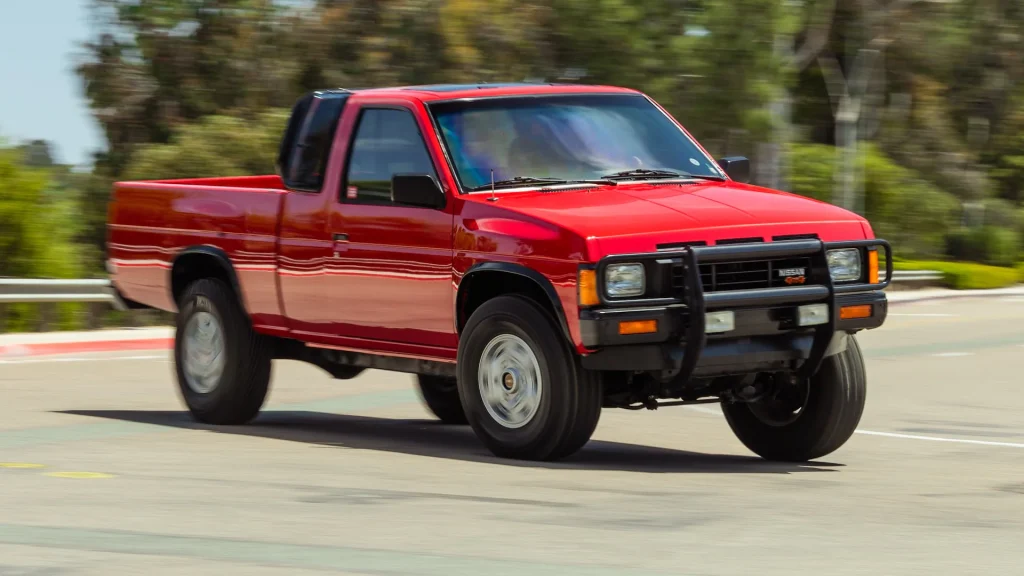
Even after decades, parts for the Hardbody remain available thanks to its popularity and Nissan’s wide reach. Enthusiasts appreciate that it can be repaired without breaking the bank, keeping these trucks alive in both original and restored forms.
While newer trucks may have more technology and comfort, the Nissan Hardbody remains a symbol of reliable, no-nonsense toughness. Its staying power has earned it a place as one of the most respected compact pickups of its generation.
6. GMC Sierra (1980s–1990s Models)
The GMC Sierra from the 1980s and 1990s shares much of its DNA with the Chevrolet C/K series but carved out its own reputation for reliability.
These trucks were built with the same rugged frames, strong drivetrains, and dependable engines that made their Chevrolet counterparts famous.
For many drivers, the Sierra represented a more refined version of the work-ready pickup while still retaining the strength and durability needed for heavy use.
A highlight of the Sierra during this era was its engine selection. The 5.7-liter V8, often referred to as the 350 small-block, became a workhorse that earned a reputation for running strong with minimal issues.
These engines were easy to repair, and replacement parts were widely available, making them accessible for both professional mechanics and owners who preferred to handle maintenance themselves. Many Sierras equipped with this engine are still running today, some with mileage well beyond 250,000.
The Sierra was versatile, used by farmers, tradespeople, and families alike. It had the strength to tow, haul, and endure tough workloads while offering slightly more comfort and features than the average work truck of its time. This balance made it appealing to buyers who needed both dependability and everyday usability.
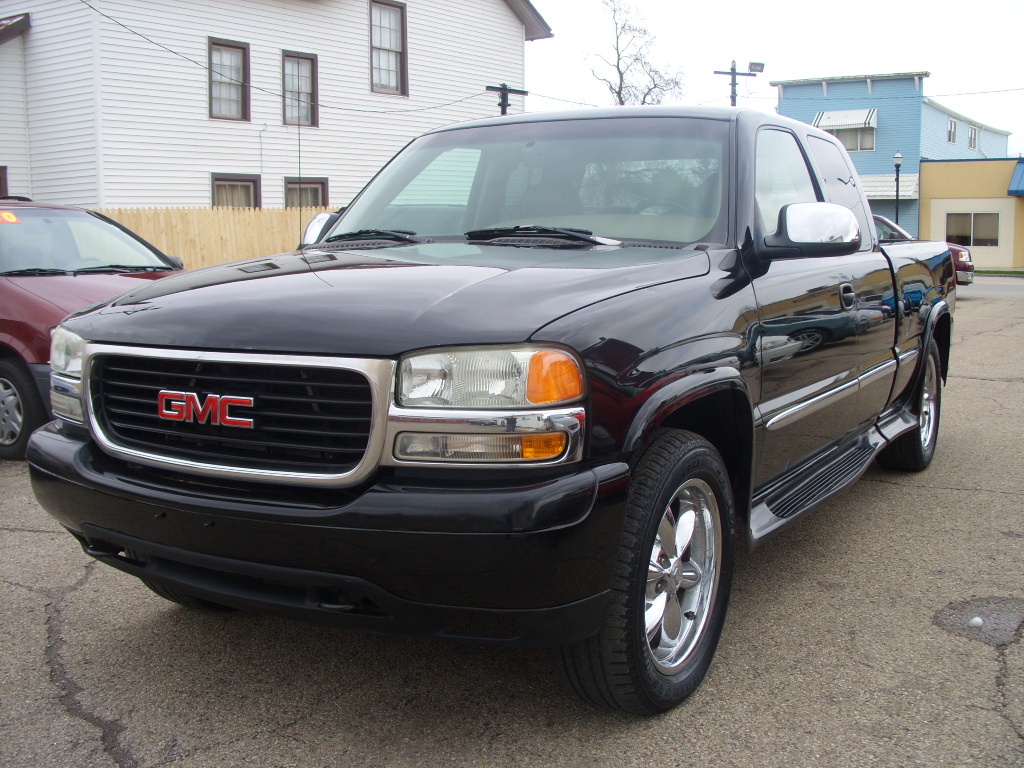
Rust could be an issue in certain climates, but trucks that were properly cared for often aged gracefully. Enthusiasts today value these models for their durability and straightforward design, and many are still on the road serving as daily drivers or weekend haulers.
With a strong community of owners and plentiful parts support, the GMC Sierra from this era continues to be a long-lasting pickup that refuses to quit. It remains a respected choice for those who value proven strength and timeless utility.
7. International Harvester Pickup (1960s–1970s)
Before International Harvester became known mainly for tractors and heavy equipment, the company also produced some of the toughest pickup trucks on the road.
The International Harvester pickups of the 1960s and 1970s may not have sold in the same numbers as Ford or Chevrolet, but they gained a reputation for being work-ready machines that seemed almost impossible to wear out. Farmers and contractors especially valued them for their rugged frames and reliable powertrains.
Engines like the International 304 and 345 V8s were overbuilt and designed to handle demanding conditions. These motors were not focused on speed but rather on producing steady torque that made them ideal for hauling and towing.
Many examples have survived decades of service without major engine problems, a testament to the brand’s emphasis on durability over flash. Even the four-wheel-drive systems were designed with farm and off-road work in mind, built to withstand continuous punishment.
While International eventually left the consumer pickup market, the trucks they built during this era remain a favorite among enthusiasts and collectors.
Their simple mechanical designs make them easier to maintain than many modern vehicles, and a surprising number are still found running on farms or in small towns.
Parts can sometimes be harder to locate compared to the Big Three brands, but the growing collector community has kept many sources alive.
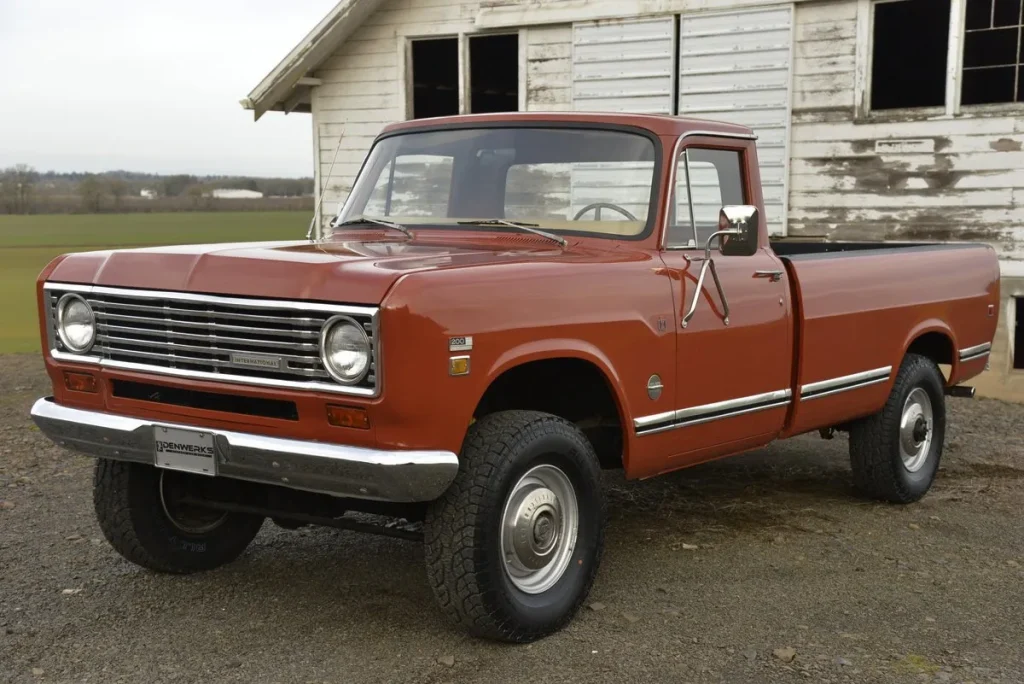
The design of these trucks reflected their purpose, with no unnecessary frills. They were meant to be tools, and that straightforward approach has given them staying power.
For those who own one today, the International Harvester pickup represents more than just an old truck. It embodies an era when durability and function were the top priorities. These trucks continue to run strong decades later, proving that International Harvester built machines meant to last.
8. Jeep Gladiator (1960s–1970s Models)
Long before the modern Jeep Gladiator returned to showrooms, the original versions from the 1960s and 1970s carved out a reputation as rugged workhorses.
Built on a strong frame and borrowing much of Jeep’s off-road heritage, the Gladiator of that era blended utility with toughness in a way that earned respect among truck buyers.
These pickups were often used in demanding environments, from construction sites to remote backroads, where their durability could truly shine.
The Gladiator offered a variety of engines, with both inline-six and V8 options available. While not the most powerful trucks of their time, they excelled in versatility and endurance.
Jeep’s experience with military vehicles influenced the design, giving the Gladiator an edge in reliability and off-road ability. Owners appreciated that these trucks could handle difficult terrain while still serving as everyday work vehicles.
One of the Gladiator’s most respected qualities was its four-wheel-drive system. Built with Jeep’s proven expertise, it allowed the trucks to go where many competitors struggled.
This made them especially valuable in rural areas and harsh climates. Stories of Gladiators working reliably for decades in tough conditions are common among long-time owners.
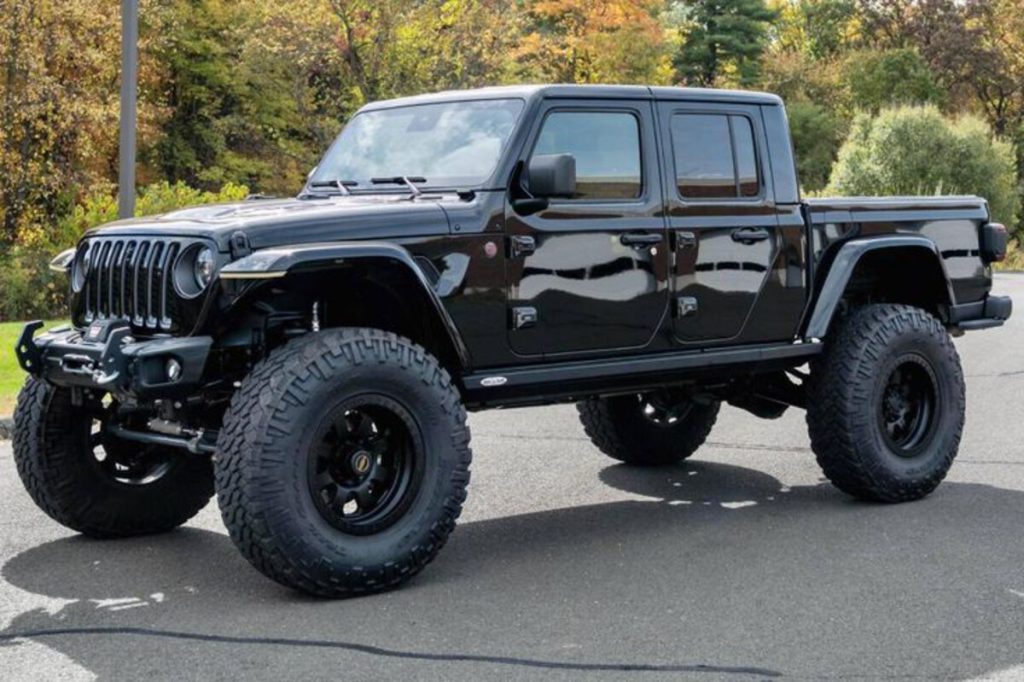
Although Jeep’s pickup presence faded for many years after the Gladiator line ended, the older models have remained part of the brand’s heritage. Enthusiasts often restore them, keeping them alive both for nostalgia and for their practicality.
While rust and parts availability can present challenges, the effort is often worth it for owners who appreciate the truck’s rugged build and connection to Jeep history. The original Gladiator remains a symbol of endurance, showing that Jeep’s reputation for toughness was not limited to its SUVs.
9. Ford Ranger (1980s–1990s)
The Ford Ranger of the 1980s and 1990s was a small truck with a big reputation for durability. Compact pickups became increasingly popular during this period, and the Ranger stood out for its ability to handle daily work while being affordable and reliable.
For many first-time truck owners, the Ranger was the introduction to pickup ownership, and it earned loyalty by proving it could last for hundreds of thousands of miles with proper care.
Engines like the 2.3-liter four-cylinder and the 4.0-liter V6 gave the Ranger a balance of efficiency and toughness. The four-cylinder was known for its simplicity and longevity, while the V6 provided extra power for towing and hauling.
Owners often praise these engines for running reliably past 200,000 miles, with many pushing even further without major rebuilds. The transmissions and drivetrains were also well-designed, contributing to the Ranger’s reputation as a no-nonsense workhorse.
One of the Ranger’s strengths was its practicality. Smaller than full-size trucks, it offered maneuverability while still providing a strong frame and dependable suspension.
This made it popular with tradespeople, outdoor enthusiasts, and families who needed utility without the size of a larger pickup. Its affordability and low maintenance costs also made it attractive, helping it gain a wide following.
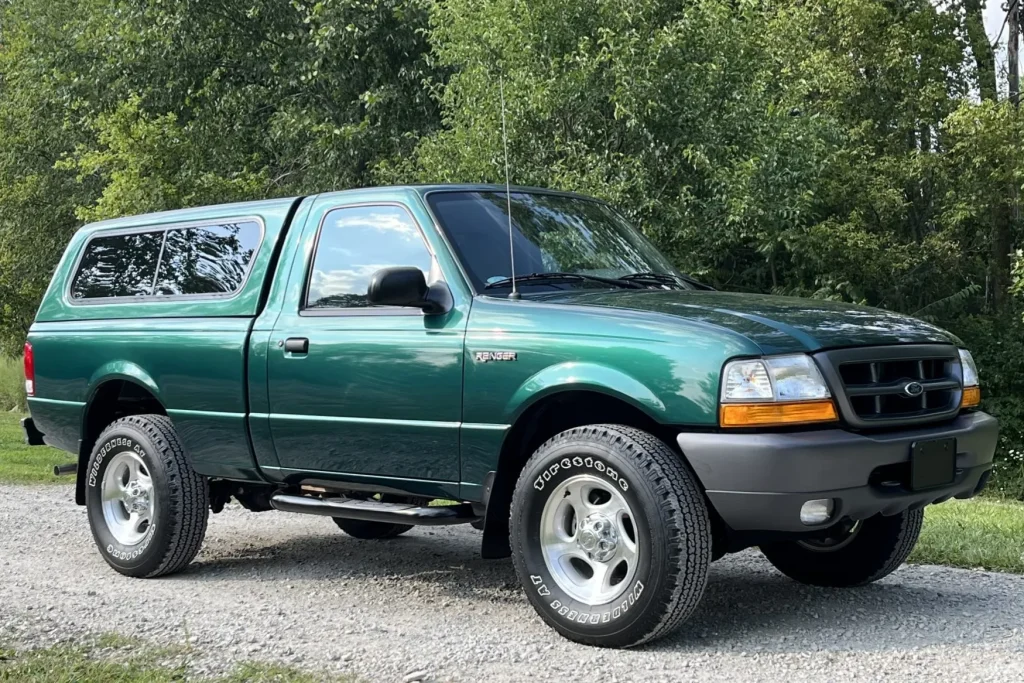
Even today, the older Rangers are common sights on the road. Their parts availability and straightforward design make them easy to repair and maintain. Collectors also value them for their role in shaping the compact truck market.
While newer versions of the Ranger have added modern features, the older models remain admired for their rugged simplicity and staying power. These trucks prove that a smaller pickup can still deliver toughness and long-term dependability.
10. Chevrolet S-10 (1980s–1990s)
The Chevrolet S-10, introduced in the early 1980s, was one of the first compact pickups designed by an American manufacturer. It quickly became popular for its size, versatility, and dependability.
Owners valued its ability to serve as both a practical work truck and a daily driver, and over the years, the S-10 developed a reputation for being a small but resilient machine that continues to hold its place among classic pickups.
The S-10 came with a variety of engines, but the 2.5-liter Iron Duke four-cylinder and the 4.3-liter V6 became the most respected for their reliability.
The V6, in particular, gave the S-10 impressive strength for its size, making it capable of towing and hauling well beyond what many expected from a compact truck. Both engines were easy to maintain and known for lasting far beyond the 200,000-mile mark with consistent care.
The truck’s design struck a balance between durability and everyday usability. Its smaller size made it convenient in urban areas, but the frame and suspension gave it toughness for serious work.
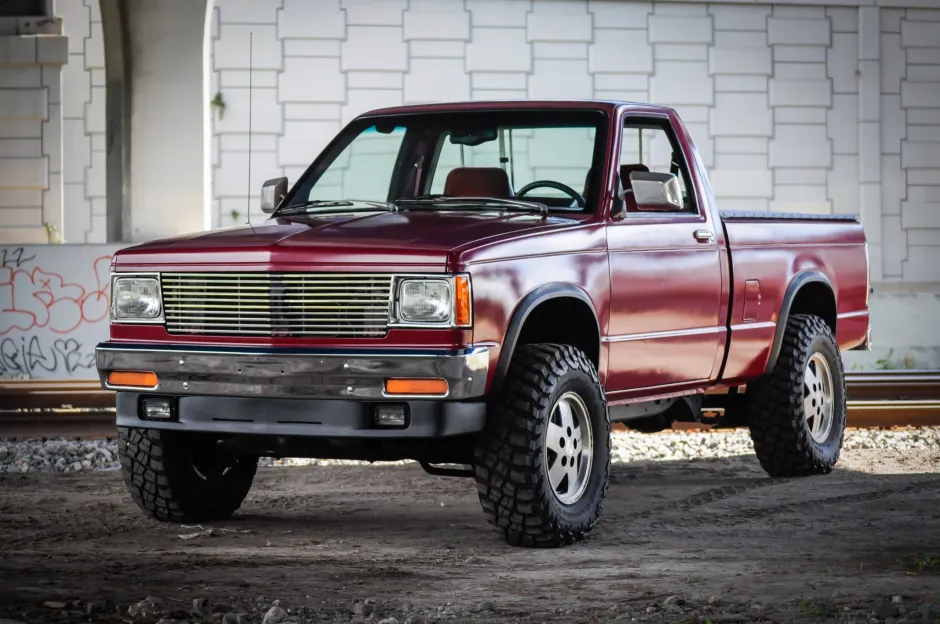
Many were used by small business owners, tradespeople, and outdoor enthusiasts who relied on them for consistent performance. Even after decades, it is common to find S-10s still in use for daily tasks, proof of their resilience.
Collectors and enthusiasts have also kept interest in the S-10 alive. Its straightforward design and abundance of parts make it a favorite for restoration or modification.
While compact trucks have evolved significantly since the 1980s, the Chevrolet S-10 stands as a reminder that toughness and simplicity are often the keys to long-lasting dependability.
It remains one of the most respected compact pickups of its generation, proving that small size does not mean short lifespan.
Also Read: 10 Jeep Models That Still Dominate Trails After 20 Years
