
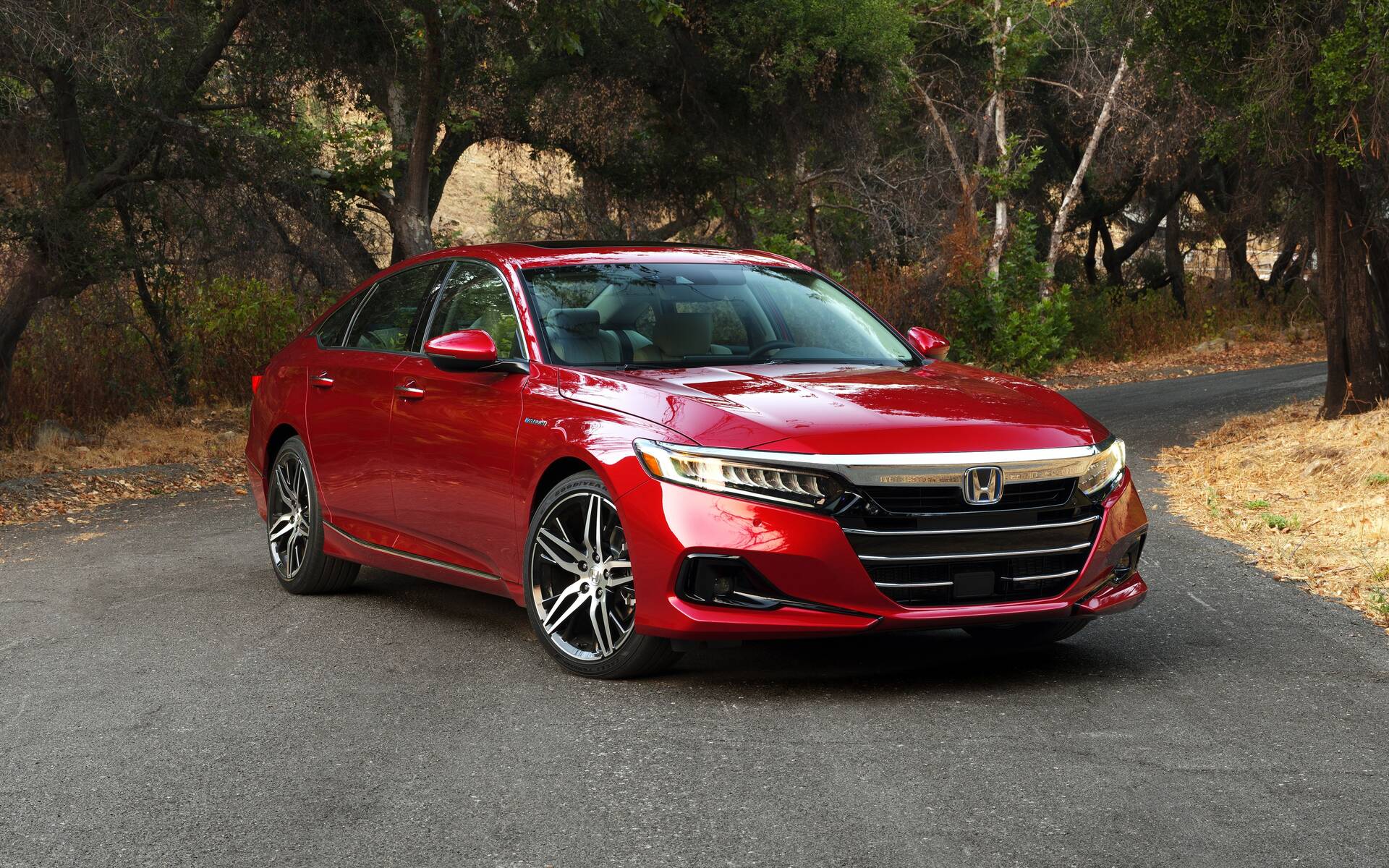
When it comes to reliability, the Honda Accord has long been one of America’s most trusted sedans. Since its introduction in the late 1970s, the Accord has consistently balanced practicality, comfort, and performance, earning a reputation for being a car that families, commuters, and even driving enthusiasts can rely on.
Its popularity in the U.S. stems from Honda’s focus on engineering excellence, fuel efficiency, and affordability. But perhaps most importantly, the Accord is a car that ages remarkably well.
With regular maintenance, many Honda Accords are capable of running well past 200,000 miles without major issues. In fact, there are specific model years that stand out for their long-lasting quality, dependable powertrains, and overall resilience on the road. Whether you’re shopping for a used vehicle or just curious about the Accord’s legendary reliability, these are 12 Honda Accord years that still run like new.
1. 1994 Honda Accord
The mid-1990s Accord models are often praised for their bulletproof engineering, and the 1994 Accord is no exception. Built during a time when Honda was laser-focused on durability, this model offered a well-balanced 2.2-liter engine that could easily last decades with basic maintenance.
Its simple electronics and straightforward design mean fewer problems compared to today’s tech-heavy vehicles. Many drivers still report 1994 Accords running smoothly after 300,000 miles, making it one of the most reliable cars of its generation.
The 1994 Honda Accord represented a major update to the company’s most popular model, designed to keep it strong in the fight against midsize competitors like the Ford Taurus. Compared with the previous generation, the new Accord was built slightly shorter yet wider, a revision that improved both its road stability and the sense of space inside the cabin.
Shoppers had three trim levels to consider, DX, LX, and EX, each structured to deliver a mix of practicality and desirable features. Safety also took a step forward, as antilock brakes became standard equipment on the EX and were finally made available on the LX and DX, a move that aligned with the growing emphasis on driver protection in the market.
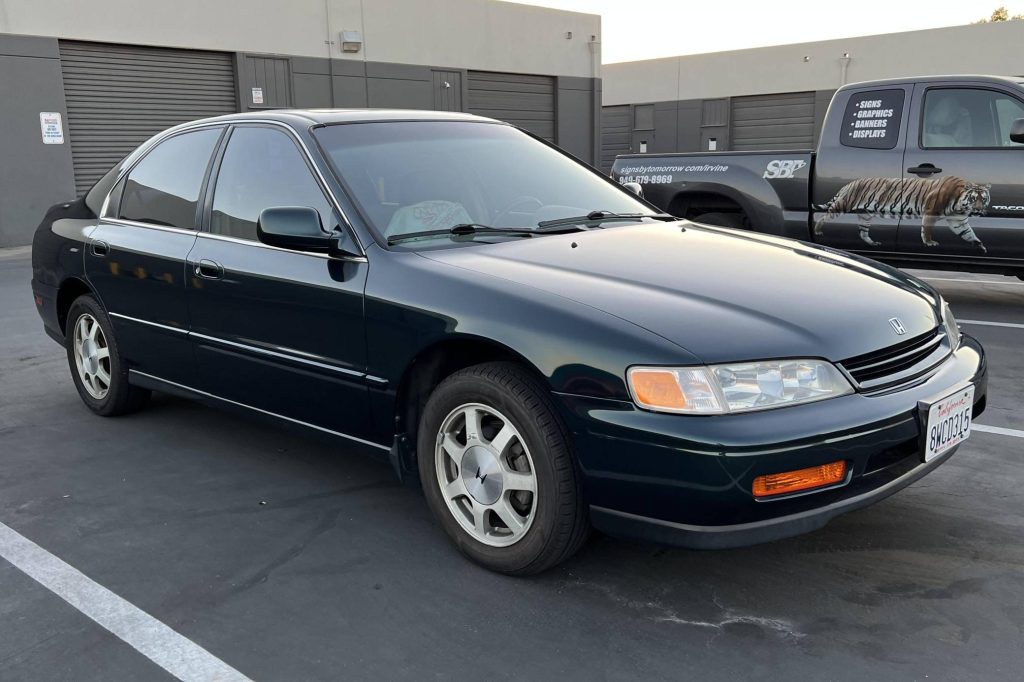
Power was also a highlight, with Honda rolling out a fresh range of engines that boosted horsepower across the lineup, giving the Accord stronger performance while still preserving the qualities of dependability and efficiency that buyers had come to expect. Altogether, these improvements reinforced the Accord’s reputation and helped it remain a top contender in the highly competitive midsize sedan class of the 1990s.
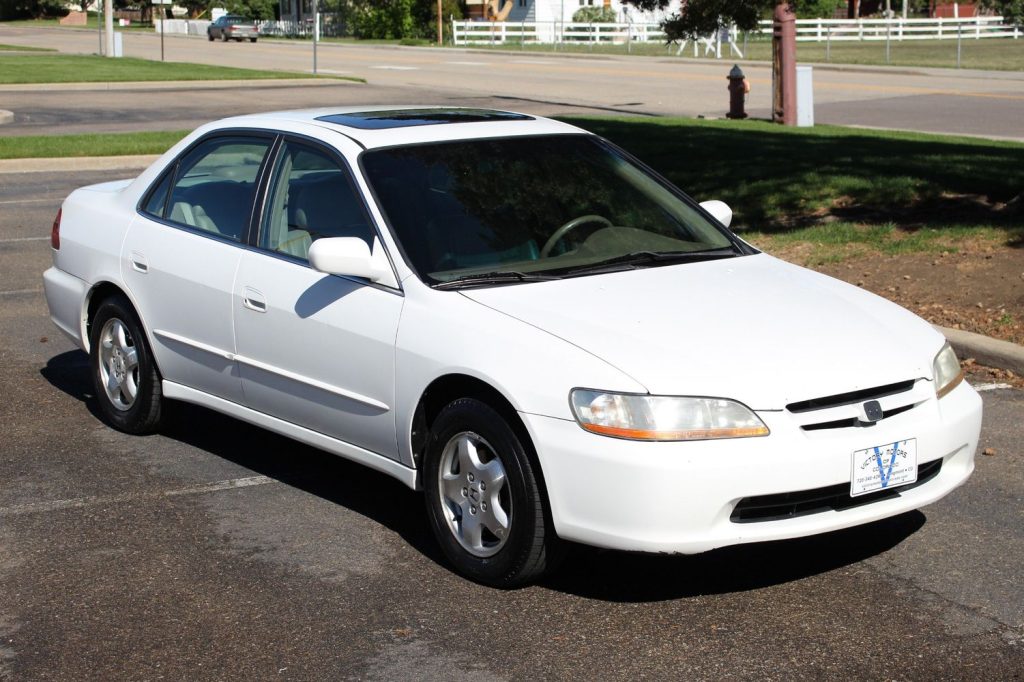
2. 1998 Honda Accord
The late ’90s brought a new level of refinement to the Accord. The 1998 model introduced improved safety features, a more spacious interior, and strong four- and six-cylinder engine options.
Known for its smooth ride and timeless styling, the ’98 Accord has proven itself to be a workhorse on American roads. Owners who keep up with oil changes and routine maintenance often find these cars run as if they just rolled off the showroom floor, even after more than two decades.
The Honda Accord has long held its reputation as the best-selling car among everyday retail buyers, appealing to customers who value consistency and dependability. When it comes to resale value, it outperforms most vehicles, often described as holding its worth better than some forms of currency.
While its initial purchase price may seem steep, the Accord proves itself to be a bargain in the long run. When factoring in maintenance, repair costs, and strong resale value, its overall cost of ownership comes out surprisingly favorable compared to rivals.
A major development arrived during the 1995 model year when Honda finally introduced a V6 option for the Accord sedan. Expectations were high, but the results were mixed.
Despite the extra cylinders, the V6 didn’t quite live up to the liveliness of some four-cylinder Accord versions. The reasons came down to additional weight, tire choices, and the mandatory automatic transmission, all of which contributed to a car that was slower and less agile than the five-speed Accord EX.
That changed by 1998, when Honda injected its VTEC technology into the V6, marking the company’s first use of the variable valve timing system in a six-cylinder engine. Although test drives were still pending at the time, expectations were high that this new powertrain would finally bring the excitement and responsiveness the Accord deserved.
Meanwhile, the Accord EX with the VTEC-equipped four-cylinder continued to shine. It stood out as a car that was quick, fuel-efficient, well-appointed, and most importantly, enjoyable to drive.
Beyond its driving dynamics, the Accord’s overall value made it even more appealing, buyers knew that ownership costs would eventually even out to nearly half of what the window sticker suggested. With its blend of practicality, performance, and affordability, the Accord cemented its role as the ultimate family sedan, or coupe, for American drivers.
3. 2003 Honda Accord
With the arrival of the seventh generation, Honda raised the bar with the 2003 Accord. Offering a refined cabin, an available V6 engine, and updated safety features, this model was a favorite among American families.
Its engines, particularly the 2.4-liter inline-four, are famous for their longevity. A properly cared-for 2003 Accord is still capable of handling long commutes and road trips without breaking a sweat, and many of these cars remain daily drivers today.
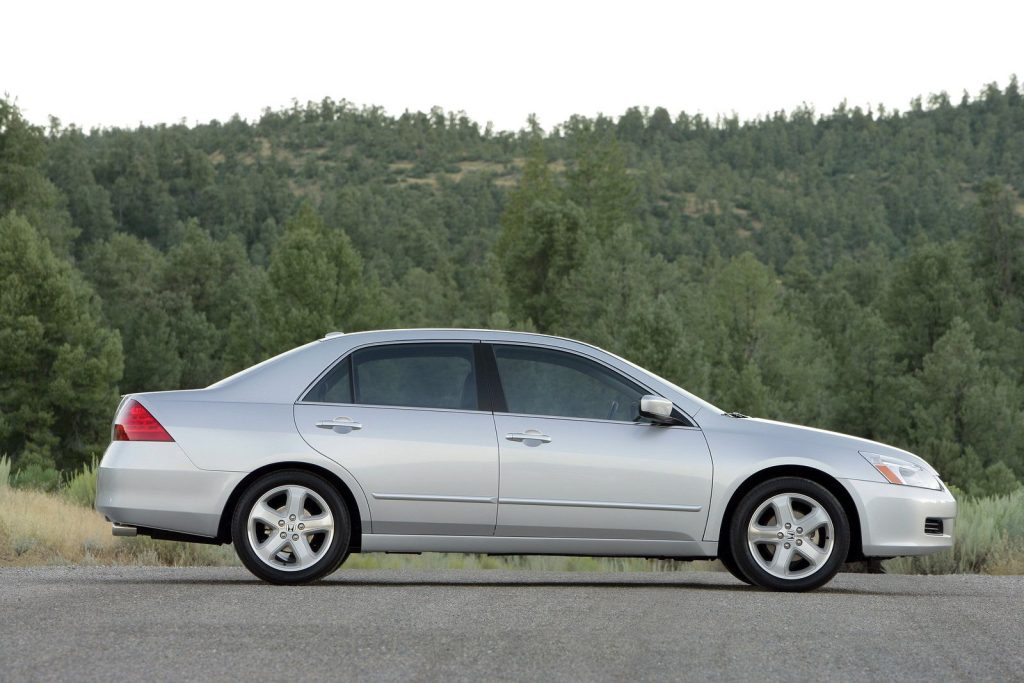
4. 2006 Honda Accord
The 2006 Accord is widely regarded as one of the best in terms of long-term value. It offered a strong blend of performance, reliability, and comfort. The available 3.0-liter V6 was smooth yet durable, and the four-cylinder option delivered excellent fuel economy. Many owners highlight the 2006 Accord as a car that feels tight and dependable even at high mileage, which is why it remains popular in the used market.
5. 2009 Honda Accord
By 2009, Honda had refined the Accord into a larger, more upscale vehicle without sacrificing its core dependability. The engines in this generation were built to last, with many hitting 250,000 miles or more with minimal issues. The 2009 Accord’s roomy cabin and solid build quality make it an ideal choice for anyone seeking a budget-friendly used car that doesn’t feel dated.
The current-generation Accord has grown significantly larger and softer with its latest redesign, altering its traditional character. At the same time, rivals have stepped up their game. When compared with the competition, the Accord now feels like the fourth-sportiest option, ranking behind the athletic Nissan Altima, the newly upsized yet nimble Mazda 6, and the underrated Ford Fusion and Mercury Milan twins.
Some familiar Honda shortcomings also remain, such as elevated road noise and a brake pedal that transmits noticeable vibration under heavy braking. In terms of powertrains, performance is competent but far from class-leading.
The EX’s upgraded 2.4-liter four-cylinder is smooth and enjoyable, but the standard engine feels only adequate. Meanwhile, the range-topping 3.5-liter V6, while strong on paper, lags behind several rival six-cylinder engines in real-world acceleration.
That said, the 2009 Accord still offers plenty of compelling strengths. Its most valuable asset remains its reputation for bulletproof reliability, something most competitors can’t match. The Accord has also grown to the point that the EPA now classifies it as a “large car,” a distinction reflected in its roomy cabin and one of the most spacious backseats available in the segment.
The center console, while cluttered with buttons, has an upscale design that echoes luxury sedans like the Infiniti M series. As expected from Honda, build quality is exceptional, and interior materials generally feel superior to those found in the Toyota Camry. On top of that, the Accord’s strong resale value continues to make it one of the smartest long-term investments in the family sedan market.
6. 2011 Honda Accord
The 2011 Accord is often considered a sweet spot for buyers looking for a modern, reliable sedan without the higher price tag of newer models. It featured Honda’s proven powertrains and updated safety technology while avoiding some of the infotainment complexity that newer cars bring. With proper maintenance, a 2011 Accord delivers a driving experience that feels surprisingly fresh, even over a decade later.
The Honda Accord remains one of the best-selling vehicles in North America, with both the sedan and coupe versions moving off dealer lots at a rate of more than 1,000 units per day. For 2013, the Accord underwent a complete redesign, receiving updates inside and out to keep it competitive in the highly contested midsize segment.
Although the latest Accord is slightly smaller than the model it replaces, it still offers class-leading space and comfort, making it one of the most accommodating options in its category.
The interior benefits from upgraded materials and a redesigned cabin layout, with technology and connectivity features that align with the expectations of modern buyers. Honda also made substantial mechanical improvements, resulting in a model that not only delivers strong performance but also stands out for its excellent fuel efficiency and sharp, precise handling.
One of the most significant changes for 2013 is the adoption of direct-injection technology in the standard 2.4-liter four-cylinder engine, enhancing both power and efficiency. This engine is now paired with a continuously variable transmission (CVT), replacing the traditional automatic.
While some drivers are wary of CVTs, Honda’s pairing is impressively smooth and responsive, offering a driving experience that feels natural while maximizing efficiency. In fact, the CVT-equipped Accord achieves an EPA-estimated 27 mpg in the city, 36 mpg on the highway, and 30 mpg combined ,remarkable fuel economy for a gasoline-powered midsize sedan, even surpassing the smaller Honda Fit.
Stylistically, the 2013 Accord represents a thoughtful evolution rather than a radical departure. The exterior appears leaner and less bulky than the outgoing design, while the interior adopts a cleaner, more intuitive look. Even the entry-level LX trim comes well-equipped with features like Bluetooth, USB connectivity, and Pandora smartphone integration.
Higher trims introduce HondaLink, an advanced connectivity system that brings Internet radio, social media, and cloud-based content to the cabin through iPhone and Android apps. Despite its tech-forward approach, the Accord remains practical, offering plenty of storage solutions and a spacious trunk to meet the needs of families and commuters alike.
7. 2013 Honda Accord
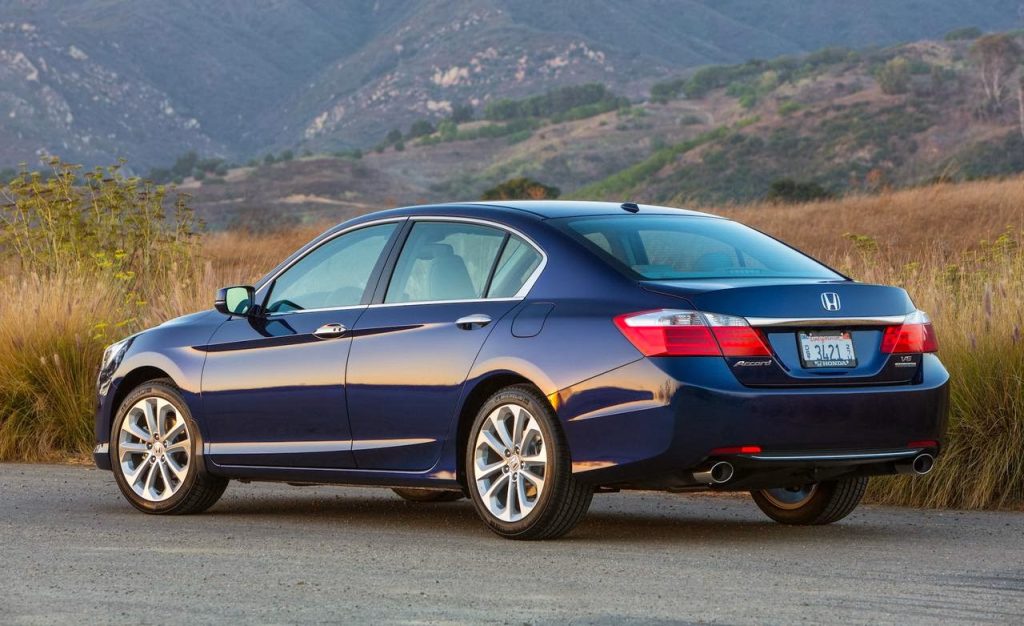
The 2013 Accord marked the debut of the ninth generation, bringing improved fuel economy and updated styling. It introduced Honda’s Earth Dreams engine technology, designed for better efficiency without sacrificing reliability.
The CVT automatic transmission raised some concerns initially, but models with the traditional manual or automatic gearboxes remain especially robust. Many 2013 Accords are still on the road today, serving their owners with the same dependability Honda is known for.
8. 2015 Honda Accord
The 2015 Accord balanced modern features with Honda’s trademark durability. By this time, the Accord was offering advanced safety options like lane departure warning and adaptive cruise control, while still retaining a reputation for mechanical resilience. Both the four-cylinder and V6 options continue to perform well long after passing 100,000 miles. This year is especially popular among used buyers looking for a car that feels modern but is priced affordably.
9. 2017 Honda Accord
The 2017 Accord is remembered as one of the last models of the ninth generation before a major redesign. It offered strong reliability, advanced technology, and comfortable interiors. Owners often report very few mechanical issues, with the four-cylinder engine being nearly indestructible when maintained properly. For buyers who want a late-model Accord that can still run like new, the 2017 is a smart pick.
As a family sedan, it shines with roomy accommodations for both passengers and luggage, while its range of options ensures broad appeal. With sedan and coupe body styles, three available engines, and even a hybrid variant, the Accord delivers choices that satisfy nearly every type of buyer in the crowded midsize segment.
The 2017 Accord carries over unchanged after receiving a comprehensive mid-cycle refresh in 2016. That update introduced a stiffer chassis for better handling, redesigned front and rear styling, larger wheel options for select trims, and expanded feature availability throughout the lineup.
The coupe gained a Touring trim at the top of its range, while Honda’s suite of driver-assistance technologies became available across all versions of the Accord, underscoring the model’s commitment to safety and modern convenience.
The Accord offers a diverse powertrain lineup to suit different driving preferences. The base 2.4-liter four-cylinder engine produces 185 horsepower in LX trims and 189 horsepower in the Sport, the latter benefiting from a high-flow, dual-exhaust system. A smooth six-speed manual transmission comes standard, with a continuously variable transmission (CVT) available as an alternative.
For those seeking more power, a 3.5-liter V6 delivers 278 horsepower and is offered in both sedan and coupe models, paired exclusively with a six-speed automatic transmission. On the efficiency side, the Accord Hybrid features a sophisticated setup that combines a 2.0-liter four-cylinder engine with two electric motors and a compact lithium-ion battery pack, striking a balance between performance and fuel savings.
No matter which configuration you choose, the Accord demonstrates composure and confidence on the road. It offers a more engaging driving experience than many competitors in its class, responding predictably and eagerly to driver input.
While it stops short of being a true sports sedan, it is well-suited for spirited driving when the mood strikes. The suspension provides a firm yet compliant ride, keeping the cabin comfortable even when the road surface is less than perfect.
The 2017 Honda Accord continues to prove why it has long been considered one of the most complete midsize cars on the market, blending practicality, performance, and value into a package that appeals to a wide audience.
10. 2018 Honda Accord
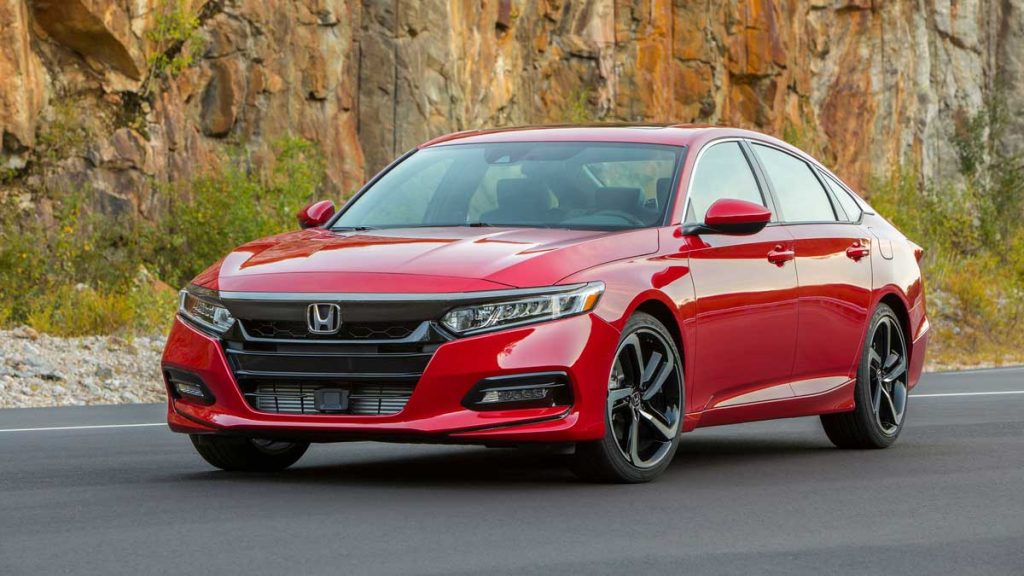
The 2018 model introduced the tenth generation of the Accord, featuring a bold redesign and turbocharged engine options. Despite the shift to smaller displacement engines, Honda engineered these powertrains for durability and efficiency.
The 1.5-liter turbo and 2.0-liter turbo engines have proven dependable, and the interior’s upscale design has helped these Accords age gracefully. Many owners still feel like their 2018 cars drive with the freshness of a brand-new sedan.
11. 2020 Honda Accord
By 2020, the Accord had cemented its reputation as a leader in the midsize sedan class. Known for its smooth ride, impressive fuel economy, and cutting-edge technology, the 2020 Accord continues to hold strong in resale value. Honda’s attention to build quality ensures that these models still feel as solid today as when they first hit the showroom, making them an excellent choice for used car shoppers.
It remains one of the most impressive family sedans on the market, delivering a blend of performance, comfort, and value that’s hard to match. Buyers can choose from three different powertrains, including a fuel-efficient hybrid, and both of the gasoline four-cylinder options can be paired with either an engaging six-speed manual transmission or a refined 10-speed automatic.
True to its heritage, the Accord offers graceful handling, an athletic chassis, responsive yet lightly weighted steering, and a balanced ride that makes every version enjoyable to drive.
On top of that, Honda equips every Accord with a suite of advanced driver-assistance features, such as automated emergency braking, lane-keeping assist, and adaptive cruise control. These qualities make the 2020 Accord not only the best-driving sedan in its class but also one of the best-equipped, cementing its status as a top recommendation for today’s car shoppers.
The 2020 Accord carries over unchanged from the 2019 model year. The current generation was fully redesigned in 2018, and aside from modest annual price increases, the Accord continues to offer the same impressive list of standard and optional features.
For buyers seeking the best balance of features and driving enjoyment, the Sport trim stands out as the sweet spot. It’s one of the rare family sedans still available with a six-speed manual transmission, and the gearbox is a joy to use with either engine.
Beyond the engaging stick shift, the Sport adds 19-inch wheels, a 12-way power driver’s seat, and a well-equipped infotainment system with Apple CarPlay and Android Auto, making it an excellent value.
The base engine is a turbocharged 1.5-liter four-cylinder producing 192 horsepower, a capable and efficient option for daily driving. Enthusiasts, however, will gravitate toward the 252-hp turbocharged 2.0-liter four-cylinder, which delivers robust acceleration and pairs beautifully with either the manual or Honda’s near-seamless 10-speed automatic transmission.
This engine offers enough low-end torque to spin the front tires in first gear, providing a level of excitement uncommon in the midsize class. For efficiency-minded drivers, the Accord Hybrid combines a four-cylinder gas engine with two electric motors, offering excellent fuel economy without sacrificing practicality.
The 2020 Accord’s chassis is one of its strongest attributes, engineered to encourage confident driving. It corners with minimal body roll and maintains excellent composure at higher speeds.
The steering, while light and class-appropriate, is precise and predictable, though some drivers might wish for more road feel. Ride quality is firmly controlled yet comfortable, striking a balance that makes the Accord feel equally at home on twisty backroads and long highway cruises.
The 2020 Honda Accord remains the benchmark for family sedans, combining efficiency, refinement, technology, and driving enjoyment in a package that continues to lead its class.
12. 2022 Honda Accord
The 2022 Accord represents one of the latest iterations of Honda’s formula for reliability and refinement. With its efficient engines, advanced safety features, and premium interior touches, this model year combines modern appeal with Honda’s tradition of longevity. Even though it’s still relatively new, early signs suggest that the 2022 Accord will hold up for decades, keeping the legacy of the nameplate alive.
Why the Accord Lasts So Long
Across generations, Honda has built the Accord with a focus on strong engines, quality materials, and user-friendly design. Unlike some automakers that rely heavily on flashy technology or complex systems, Honda prioritizes tried-and-true engineering. This approach helps Accords avoid many of the long-term mechanical headaches that plague other vehicles.
Routine maintenance, oil changes, timing belt replacements, brake servicing, goes a long way in keeping these cars running like new. Many Honda owners also point to the car’s relatively low repair costs compared to competitors, which makes it easier and more affordable to keep older Accords on the road.
The Honda Accord has earned its place as one of the most dependable sedans in American automotive history. From the bulletproof 1994 model to the modern 2022 edition, the Accord consistently proves that good engineering and smart design can create cars that last well beyond expectations. For drivers who want a vehicle that feels new even after years of use, these 12 Honda Accord model years are clear standouts.
