When electric vehicles first started gaining traction in the U.S. market, many automakers leaned on futuristic designs and cutting-edge technology to grab attention.
Touchscreens replaced buttons, over-the-air updates promised to keep cars fresh, and advanced driver assistance systems became central selling points.
While these innovations have certainly made EVs more exciting, they’ve also made them more complex sometimes to the point of becoming harder to maintain and more prone to glitches.
For many American drivers, the appeal of an EV isn’t just about tech but about long-term reliability and cost savings. EVs already have fewer moving parts than traditional gas-powered cars, but some models lean further into simplicity.
They prioritize straightforward engineering, durable components, and user-friendly features over flashy gimmicks. And in the long run, these are the EVs that often prove to be the most dependable, lasting well beyond their more complicated rivals.
Here are eight EVs built with simplicity in mind that tend to outlast their overly complex competitors.
1. Nissan Leaf
The Nissan Leaf has been on U.S. roads since 2010, making it one of the longest-running EVs available. Unlike newer EVs stuffed with oversized screens and high-end software systems, the Leaf’s cabin is refreshingly simple.
Its focus on practicality rather than luxury has helped it maintain a reputation for reliability. The Nissan Leaf once symbolized the early promise of mainstream electric cars, but by 2025, its appeal has started to fade.
The lineup offers two versions: the base Leaf S, with an EPA-estimated 149 miles of range, and the SV Plus, which stretches to just 212 miles. In an era when many EVs now exceed 300 miles on a single charge, these numbers feel dated.
Range anxiety isn’t the Leaf’s only drawback. The car still uses the CHAdeMO charging port, a once-common standard that’s now nearly obsolete.
Competing vehicles rely on CCS or the increasingly dominant Tesla-style NACS plugs, making public fast charging in the Leaf both inconvenient and slower compared to rivals. An adapter can help, but it doesn’t erase the issue.
Affordability remains the Leaf’s strongest branch to cling to. With its lower starting price, it continues to be one of the most budget-friendly EVs available.
However, buyers should factor in its limitations. At-home Level 2 charging takes about eight hours, and battery range naturally degrades by about 1–2% per year. That means the base model’s 149 miles could drop to around 127 miles after eight years.
Nissan does back the Leaf’s battery with an 8-year/100,000-mile warranty, and data suggests most packs will outlast the car’s useful life. Still, owners without home charging may find day-to-day use frustrating, public charging takes far longer than a quick gas stop, and installing a home 240V charger can cost upwards of $1,600.
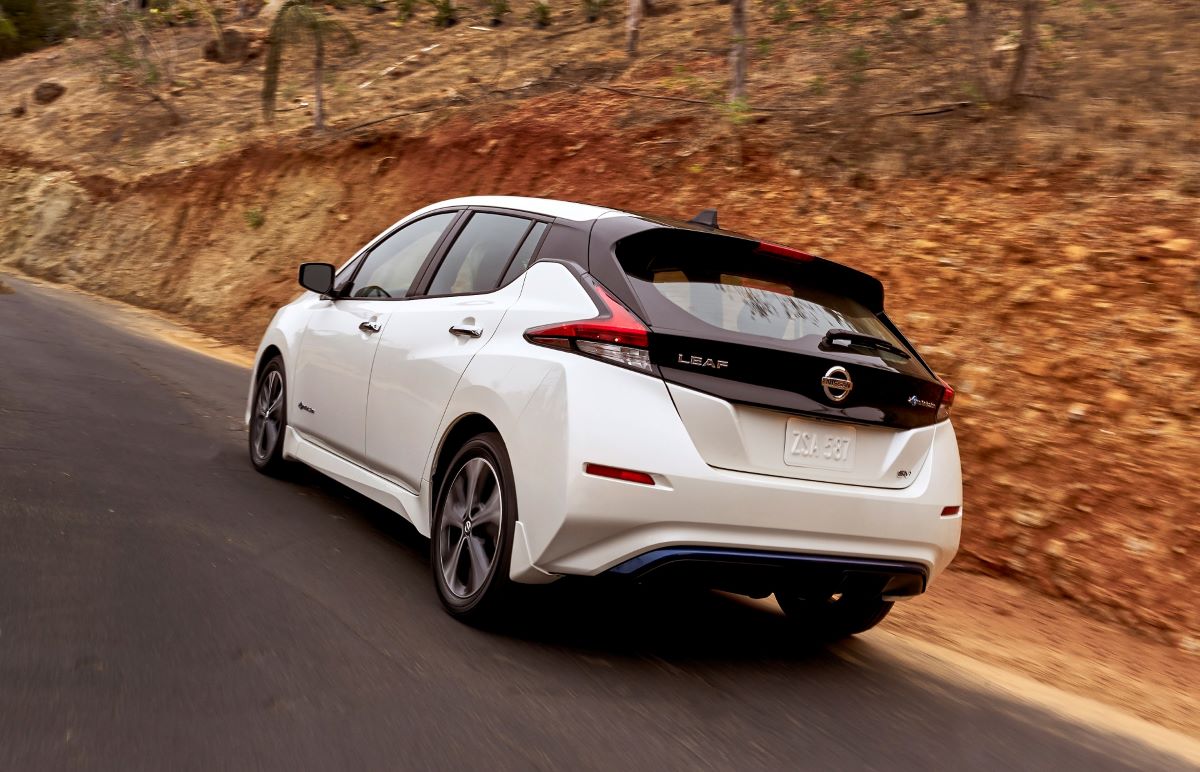
The Leaf’s relatively modest battery packs ranging from 40 kWh to 62 kWh don’t push the limits of EV engineering, which reduces stress on components.
Many early Leafs are still running strong today, especially in states with mild climates. For budget-conscious American drivers, it’s one of the few EVs that proves you don’t need bleeding-edge tech to enjoy decades of reliable performance.
Also Read: 5 Chevy Suburban Years That Outlast Rivals vs 5 That Fail Early
2. Chevrolet Bolt EV
General Motors hit the sweet spot with the Chevrolet Bolt EV by keeping the car straightforward. While it features a decent infotainment system, the Bolt avoids overcomplication by relying on physical controls alongside touch functions.
That balance makes it less prone to the electronic failures seen in EVs that lean too heavily on software.
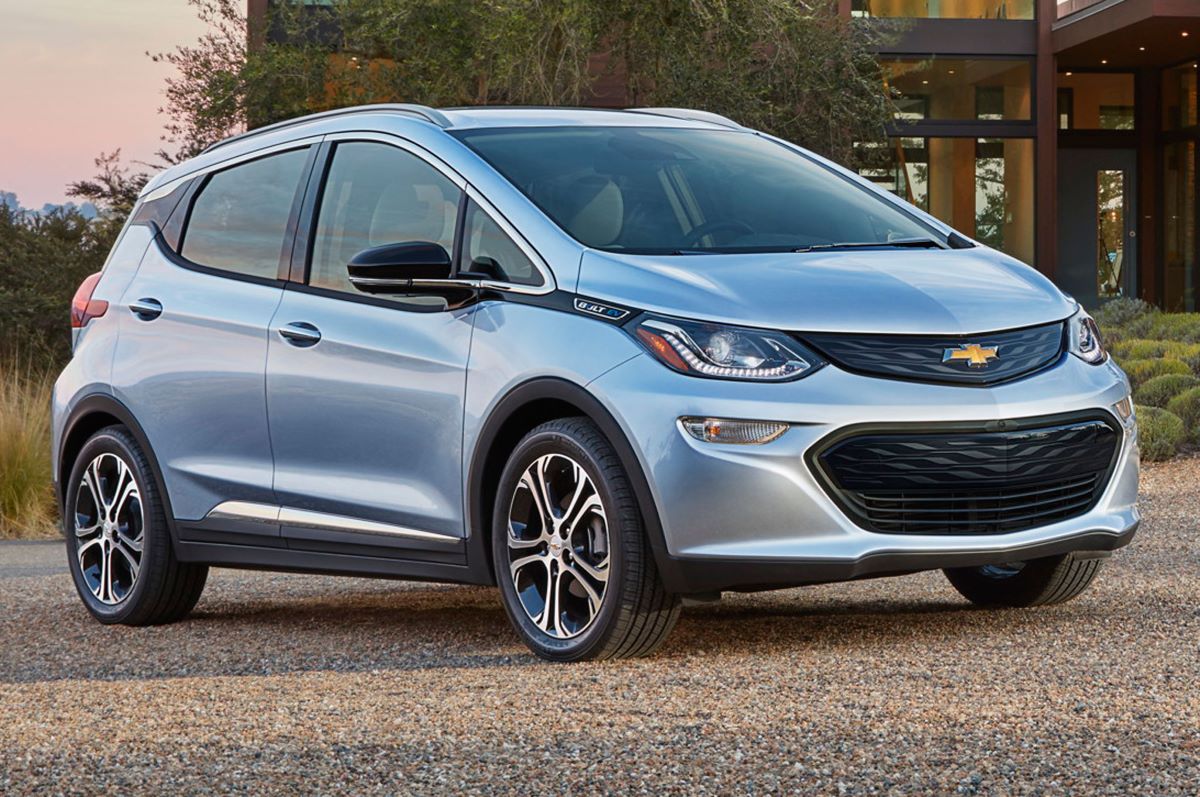
The Bolt’s electric powertrain is remarkably robust, and owners have reported battery packs lasting well beyond 100,000 miles without significant degradation.
With its compact size, affordability, and ease of use, the Bolt proves that an uncomplicated design can outlast many luxury EVs loaded with features that tend to break.
3. Hyundai Kona Electric
Hyundai kept things simple with the Kona Electric, essentially taking a proven gas-powered compact SUV platform and swapping in an electric drivetrain.
Instead of reinventing the wheel, Hyundai refined what already worked. The result is a vehicle with fewer quirks and fewer opportunities for failure.
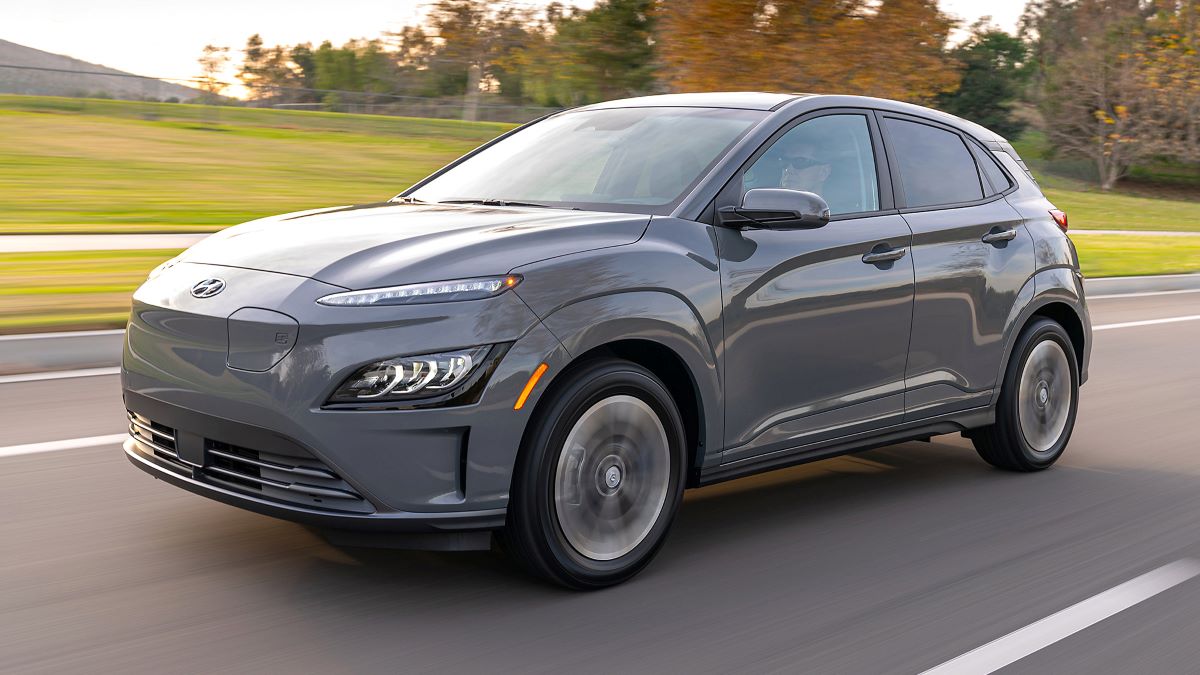
Its 64 kWh battery offers plenty of range without the complexity of oversized systems. Hyundai’s approach to blending practicality with efficiency has helped the Kona build a strong reputation for durability, especially in states where compact SUVs are popular daily drivers.
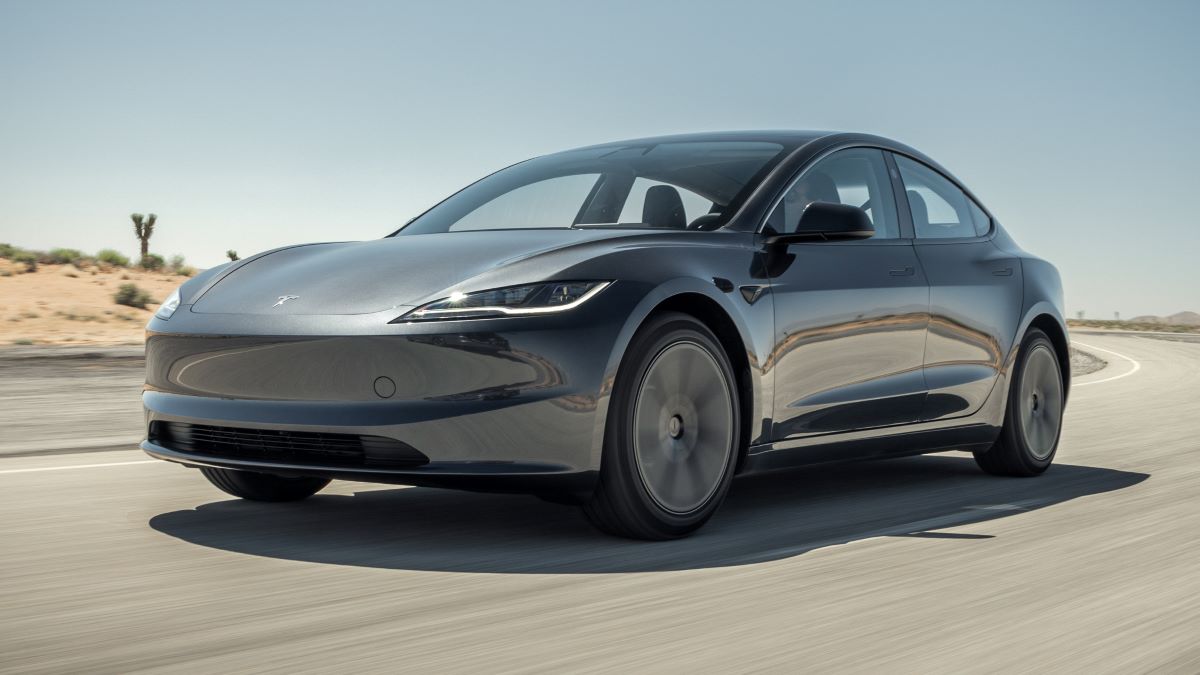
4. Tesla Model 3 (Base Trim)
Tesla is often associated with high-tech features, but the base Model 3 trim stands out for its relative simplicity compared to the more advanced Model S and Model X.
While it still uses a central touchscreen for most functions, it avoids some of the more failure-prone luxury hardware found in Tesla’s larger, more expensive vehicles.
The single-motor version is less complex than the dual-motor or performance trims, which reduces long-term maintenance issues.
Many owners have reported these base models holding up well even after years of heavy use, making the Model 3 one of Tesla’s longest-lasting offerings.
The Tesla Model 3 is the brand’s entry-level vehicle, an upscale compact sedan designed to make electric driving accessible to a broad audience. Introduced in 2017, it has played a pivotal role in normalizing EV ownership.
Unlike most automakers, Tesla doesn’t follow a typical yearly update cycle. Instead, improvements are rolled out when ready, like the faster infotainment processors added to the 2023 version.
Following the groundbreaking Model S, Tesla’s smaller four-door Model 3 lived up to expectations and quickly reshaped the compact luxury sedan market. With its futuristic design, impressive performance, and competitive pricing, it helped accelerate mainstream EV adoption.
While the base version was never quite as affordable as the long-hyped $35,000 promise, demand has been relentless, thanks in part to the Model 3’s speed, comfort, technology, and access to Tesla’s vast Supercharger network.
That said, Tesla continues to struggle with issues other automakers solved years ago. Build quality remains inconsistent, and driver-assist technology can be hit or miss, misaligned trim is one thing, but safety system malfunctions are far more serious. Buyers should keep this in mind.
Owning a Tesla also means becoming part of a cultural movement shaped by the company’s outspoken CEO, whose innovations, internet presence, and unpredictability influence the brand as much as the cars themselves.
The competition has also grown fiercer. In 2023, legacy automakers and startups alike are finally rolling out rivals that, in some cases, surpass the Model 3 in refinement or value. Still, these vehicles arguably owe their existence to the Model 3’s success, the EV market wouldn’t be where it is today without it.
The RWD version uses a 58-kWh battery with up to 170-kW charging capability, while dual-motor variants carry an 82-kWh pack that can charge at up to 250 kW.
Quick acceleration is a hallmark of the Model 3. The single-motor RWD model delivers 258 hp and 307 lb-ft of torque, good for a 0–60 mph time of 5.0 seconds in testing.
The Performance version ups the ante with 450 hp and 471 lb-ft, slashing the sprint to just 3.1 seconds. Track mode further enhances the driving experience by loosening stability control and allowing the driver to adjust torque distribution between the axles..
Enhanced Autopilot adds semi-automated driving features, while the controversial Full Self-Driving (FSD) package aims for hands-free capability. However, FSD has faced heavy scrutiny due to high-profile crashes and questions about its readiness for public roads.
The cabin is minimalist yet spacious, highlighted by a massive 15-inch central touchscreen that controls nearly everything, from navigation to climate. A small frunk supplements the sedan’s trunk, giving the Model 3 an edge in practicality compared to some rivals.
Tesla’s infotainment system is both futuristic and polarizing. While the lack of Apple CarPlay and Android Auto may deter some, the system’s intuitive design, video game capability, and over-the-air software updates make it one of the most advanced in the industry.
There’s speculation that the Model 3 could adopt Tesla’s steering yoke in a future refresh, as seen on the Model S and Model X. While innovative, the yoke has proven clumsy in everyday use and offers little real benefit, so many hope the Model 3 retains its conventional wheel.
The Tesla Model 3 remains one of the most important EVs ever built. Its speed, tech, and access to Superchargers keep it relevant, but quality issues, inconsistent driver aids, and rising competition mean it’s no longer the uncontested leader. For buyers seeking a stylish, quick, and innovative EV, it’s still a compelling option, just go in with eyes open.
Also Read: 10 Electric Vehicles Expected to Become Collector Items
5. Kia Soul EV
The Kia Soul EV has never tried to be a luxury car it’s always been about practical transportation with a fun, boxy design. That simplicity extends to its electric drivetrain, which has proven reliable over time.
The Soul EV avoids excessive driver-assistance features and focuses instead on providing straightforward, dependable commuting power.
Because Kia didn’t try to overcomplicate the Soul EV, it has earned a loyal following among drivers who value longevity over flashy tech. Many early models are still running strong, particularly in urban areas where simple charging and easy maneuverability matter most.
Since Kia discontinued the 39.2kWh Soul Urban, every Soul EV comes with the same 64kWh battery, giving you an official range of 280 miles.
When we ran a Soul EV Explore as a long-term test car it easily coped with a 235-mile commute, and it should be good for around 250 miles on a full charge in the real world.
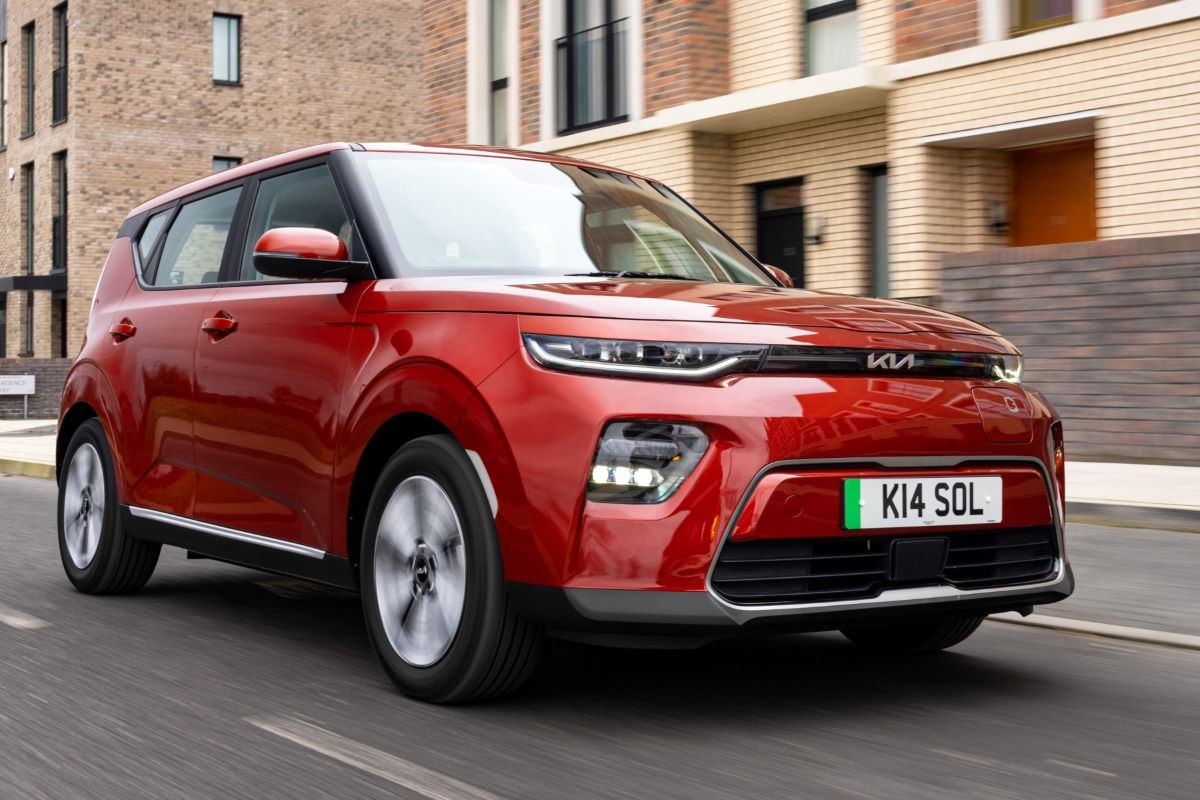
Every Soul EV has a 201bhp electric motor powering its front wheels, and that gives it more than enough performance for everyday driving. In fact, in our tests it managed 0-60mph in 6.5 seconds, beating the Niro EV on the same day (7.2 seconds).
You have to be careful how you deploy the power, mind, with the Soul easily spinning its front wheels off the line if you put your foot down too keenly.
The steering is quicker than you might expect, although you soon get used to it, and placing the nose in bends is easy. It’s not much fun on a winding country road, but then neither are the main electric SUV rivals.
The ride is a bit more pliant than in the Hyundai Kona Electric but the Soul is firmer than the Niro EV. That firmness helps it control body movements on undulating B-roads, but means the ride is a bit choppy at all speeds. It’s far from terrible, though.
With no petrol or diesel engine chugging away under the bonnet, the Soul EV makes fairly quiet progress, and the motor emits nothing more than a faint murmur when pushed. It’s quieter than the Kia Niro EV but there’s still some suspension thump at low speeds and wind flutter at 70mph.
The brakes are almost as progressive as those of any regular petrol or diesel car. That’s not something you can say of all electric cars.
Not that you’ll necessarily need to use the brake pedal very often, because if you ramp up the regenerative braking level, the Soul will slow itself surprisingly quickly as soon as you lift off the accelerator pedal. It has a similar effect to the engine braking you experience in a petrol car in a low gear.
6. BMW i3
At first glance, the BMW i3 doesn’t seem simple. Its quirky design and carbon-fiber-reinforced body were groundbreaking when it launched. But under the skin, the i3’s electric system is refreshingly straightforward, and it doesn’t burden drivers with endless layers of software.
The arrival of the new 2026 iX3 marked more than just another model launch for BMW. It signaled the beginning of the brand’s Neue Klasse era, setting the stage for 40 fresh or updated models expected by 2027.
Among the most significant will be the all-electric version of the 3-Series sedan, simply called the i3, which BMW has teased in camouflaged form ahead of its official debut next year.
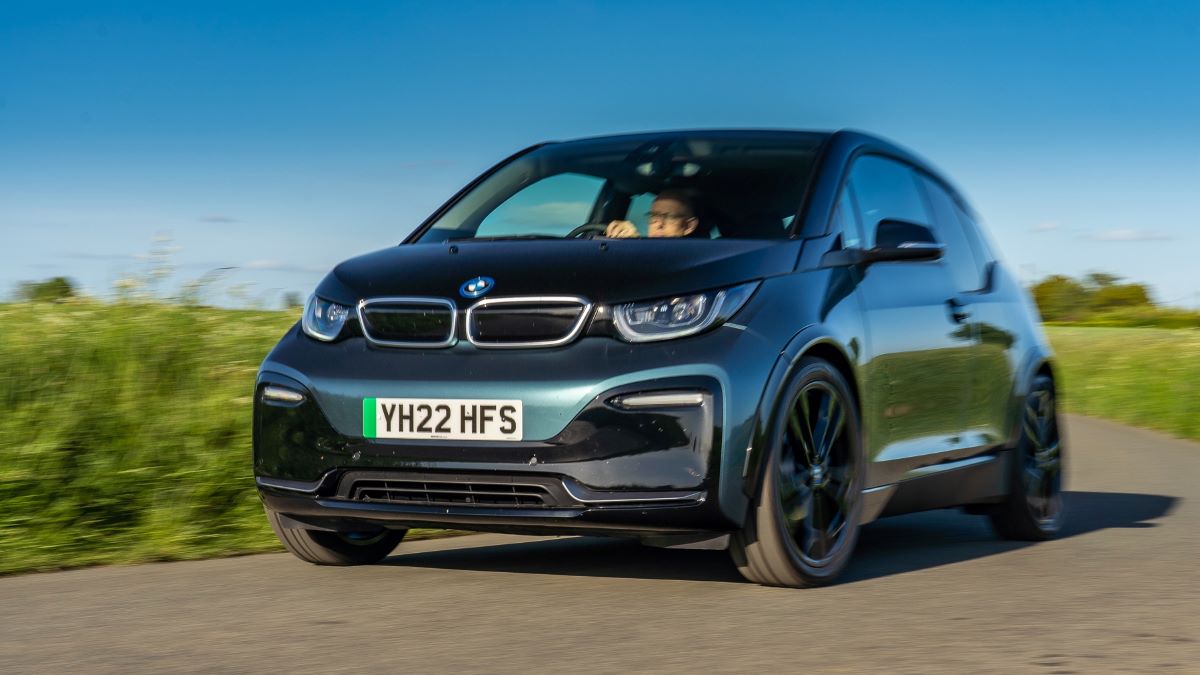
While BMW has already shown a similarly camouflaged prototype of the i3 earlier this year in China, the latest version appears to be a little closer to production.
The electric sedan is now fitted with the final LED headlights and taillights, and rides on a new set of alloy wheels. Overall, it looks like an evolution of the Vision Neue Klasse concept from 2023 with refined details.
The i3 also offered a range-extender gasoline engine option, which many U.S. buyers avoided to keep things purely electric.
That all-electric simplicity has proven durable, and many i3s are still on the road more than a decade after launch. Unlike BMW’s larger luxury EVs, the i3’s focus on efficiency over complexity has made it a sleeper in long-term reliability.
7. Ford Mustang Mach-E (Select Trim)
Ford’s Mustang Mach-E, especially in the entry-level Select trim, is a good example of a mainstream EV that doesn’t overwhelm buyers with features.
While higher trims add advanced tech and performance features, the base version keeps things simpler resulting in fewer electronic components that could fail over time.
Its electric powertrain has proven to be durable, and Ford’s strategy of building the Mach-E on a well-tested platform has paid off.
For American families looking for a dependable crossover-style EV, the Select trim offers a good balance of range, comfort, and long-term dependability.
While some might see it as controversial to attach the Mustang name to an electric crossover, Ford’s strategy of pairing an iconic badge with one of today’s most in-demand body styles is undeniably smart.
The Mach-E not only turns heads with its sleek exterior but also delivers a well-appointed cabin filled with cutting-edge tech, clever storage solutions, and ample passenger and cargo space. On the road, it feels agile and quick.
The GT Performance Edition rockets to 60 mph in just 3.7 seconds, beating the Mustang Mach 1, while long-range versions boast more than 300 miles of estimated driving range. Altogether, the Mach-E stands out as a groundbreaking EV that balances performance, practicality, and style.
Now in its second model year, and fresh off winning the first-ever EV of the Year award, the Mustang Mach-E receives updates that improve both capability and style.
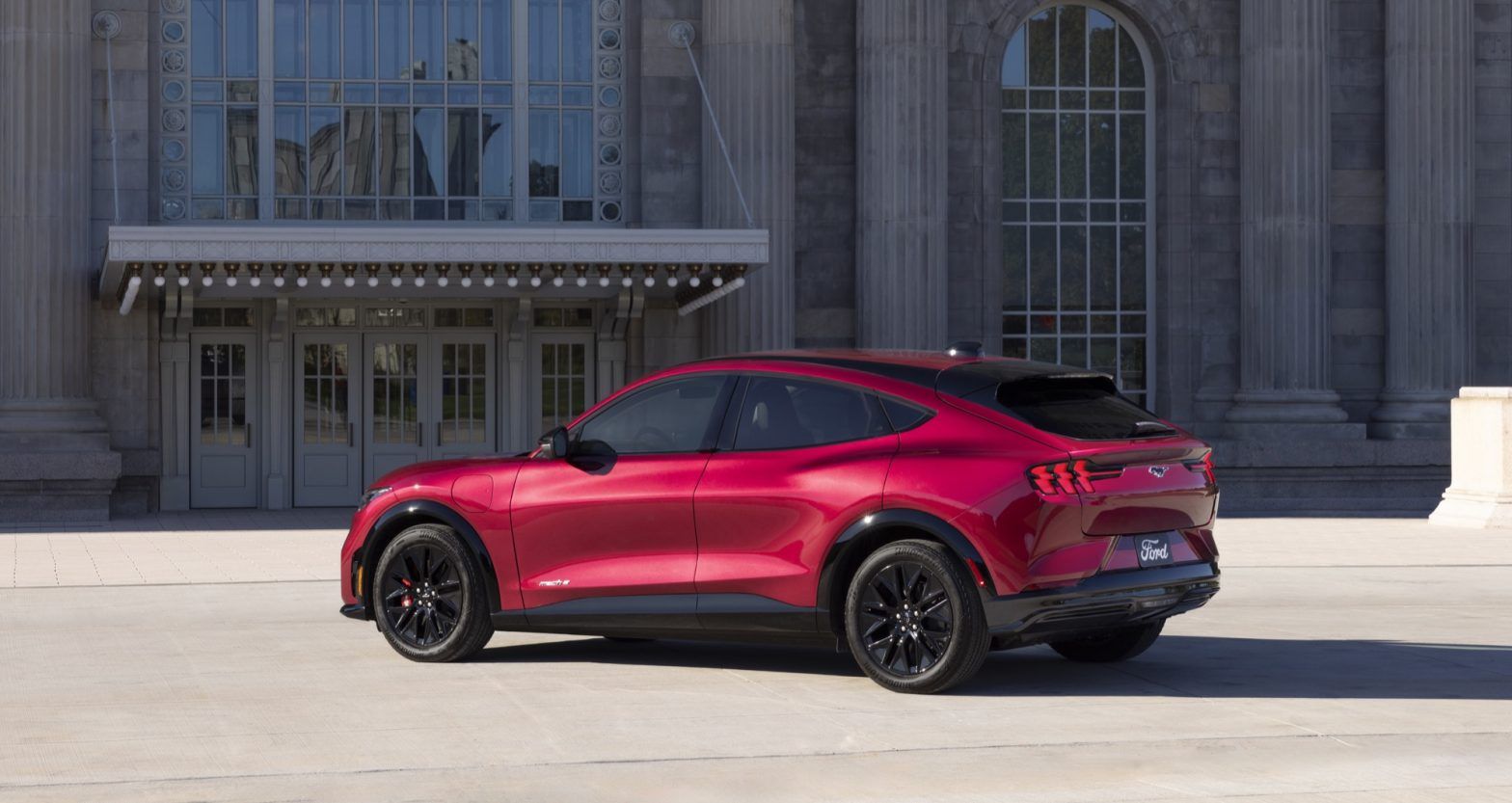
Ford has unlocked slightly more usable battery capacity, which should improve real-world range. The California Route 1 edition is now available with all-wheel drive and adds heated front seats plus a heated steering wheel as standard.
The GT gains a black-painted roof, while the new Ice White Edition package, exclusive to the Premium trim, brings a tri-coat Star White exterior accented by Oxford White details, including the 19-inch wheels and badges. Two standout paint colors, Grabber Blue and Cyber Orange, are now offered beyond just the GT models.
Our recommendation is the Premium trim, which strikes the best balance of range, features, and value. With the extended-range battery and rear-wheel drive, it’s rated for up to 305 miles, though we’d opt for the all-wheel-drive version, which trades some range (270 miles) for better traction.
The Premium also adds faster charging, 19-inch wheels, a Bang & Olufsen sound system, a panoramic sunroof, and a power liftgate, making it a more complete package than the base model.
Buyers can choose between a standard-range 70.0-kWh battery or an extended-range 91.0-kWh pack. Power comes from either a single rear-mounted motor or a dual-motor setup that provides all-wheel drive. In GT and GT Performance trims, the setup delivers 480 horsepower and up to 634 lb-ft of torque.
During testing, the GT Performance hit 60 mph in 3.7 seconds, though it fell slightly short of our high-performance expectations. Other trims offer between 266 and 346 horsepower and 317 to 428 lb-ft of torque. Wheel sizes span 18 to 20 inches, and adaptive dampers are available for those seeking a customizable ride.
In practice, the Mach-E delivers a smooth, quiet driving experience that surpasses most conventional crossovers. The extended-range all-wheel-drive model we tested proved quick and fun, though it lacks the visceral engagement of a traditional Mustang. Still, for an electric SUV, its refinement and ride quality are among the most impressive in its class.
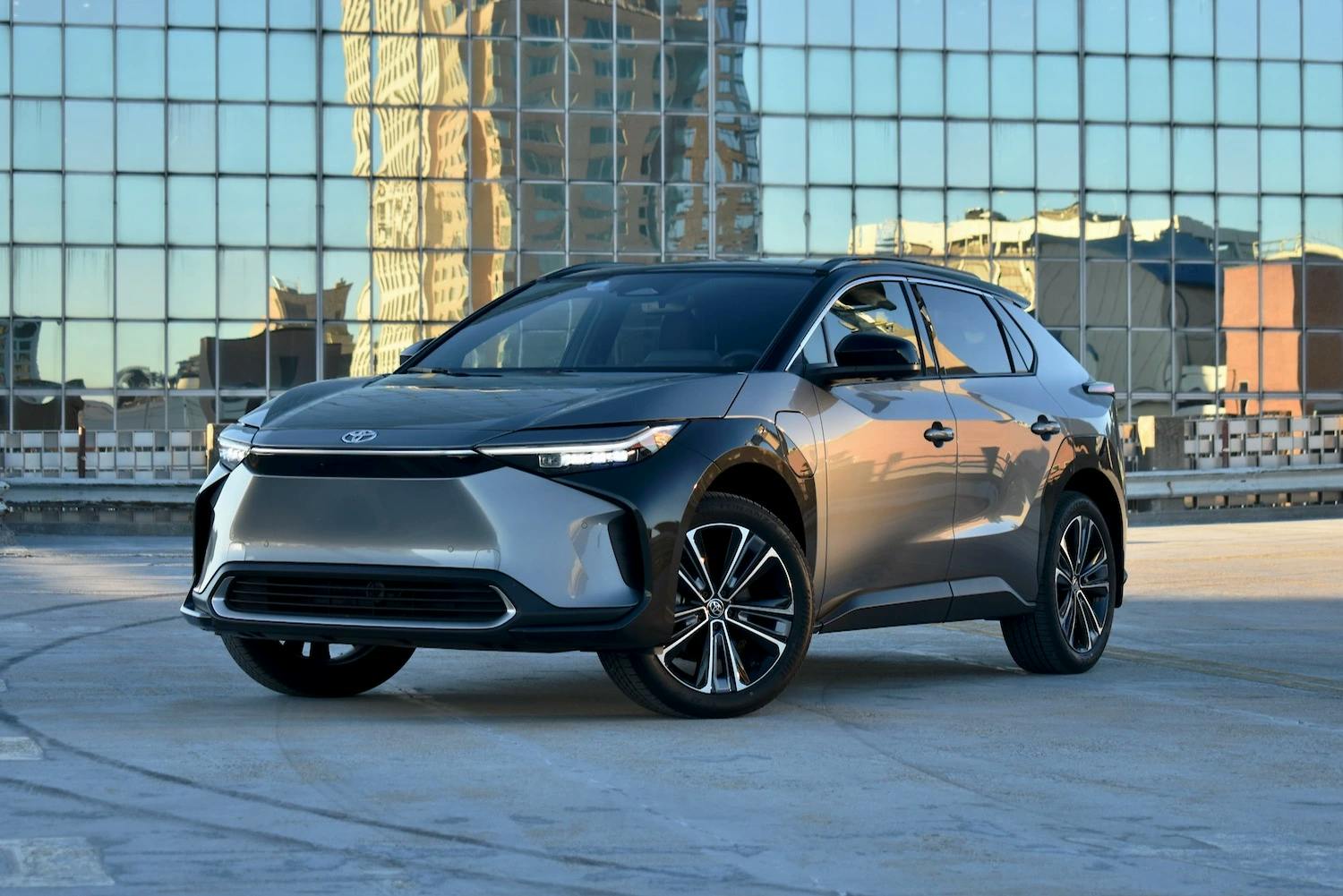
8. Toyota bZ4X
Toyota has a well-earned reputation for building cars that last, and the bZ4X is no exception. While it doesn’t boast groundbreaking range or headline-grabbing performance, it embraces Toyota’s philosophy of reliable simplicity.
Instead of chasing luxury EV brands, Toyota focused on creating a solid, durable electric SUV that will keep running without drama.
The bZ4X may lack the flash of a Tesla or Rivian, but its long-term durability is expected to shine as Toyota continues refining its EV technology. For U.S. buyers who value dependability over bells and whistles, the bZ4X is a safe bet.
As the EV market in the U.S. matures, a divide is becoming clear: some automakers are chasing high-tech complexity, while others are building durable, straightforward electric cars that prioritize longevity.
The 2023 Toyota bZ4X marks Toyota’s first mass-produced electric vehicle and, for now, is the only EV in its lineup. This small SUV is roughly the size of a RAV4 and shares much of its underpinnings with the all-new Subaru Solterra.
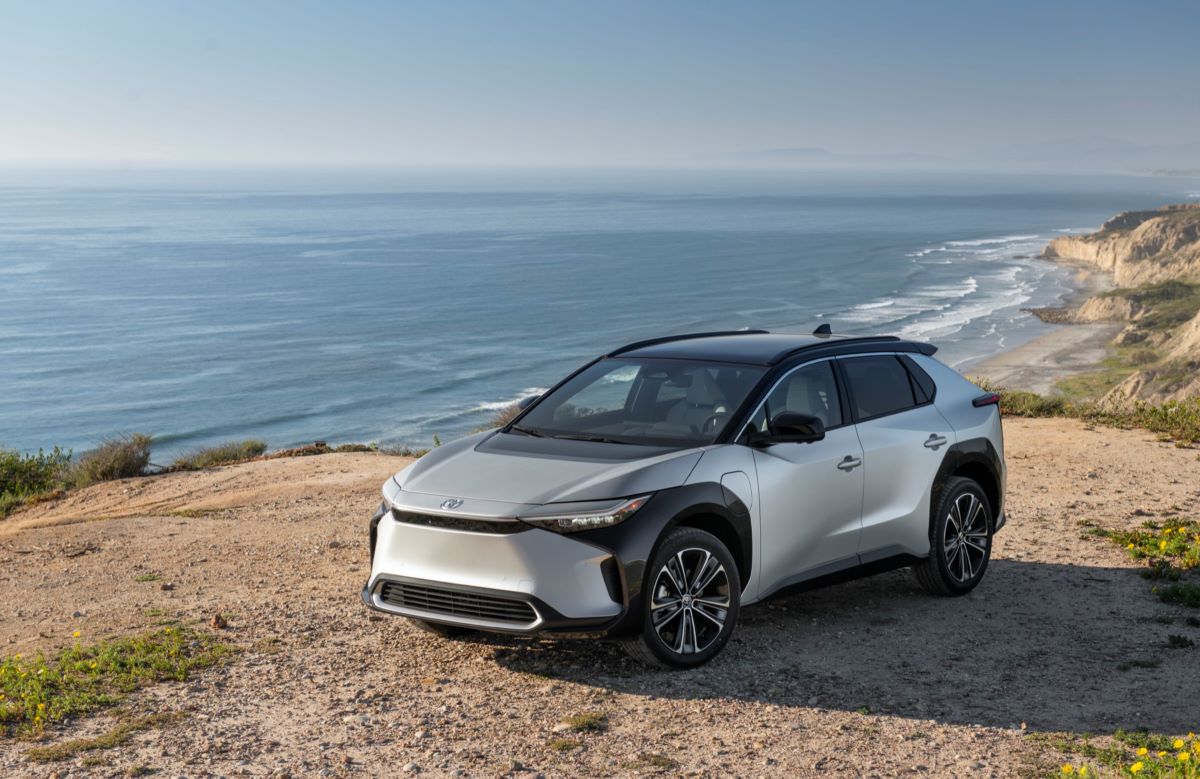
While it offers some appealing features, it doesn’t quite deliver the “home run” impact that many might have expected after Toyota’s long wait to enter the EV market.
The bZ4X produces 201 horsepower in the front-wheel-drive model and 214 hp with all-wheel drive. Neither figure is particularly remarkable, and its range is similarly modest.
Depending on the configuration, the EPA-estimated range is 222–252 miles. Real-world testing by Edmunds found the bZ4X’s actual range to be slightly disappointing compared to competitors, many of which can travel significantly farther on a single charge.
Toyota has aimed to make the bZ4X feel familiar to drivers accustomed to its conventional SUVs. It delivers a comfortable ride, with handling and steering that echo the RAV4’s experience. While not the most thrilling EV, it is predictable, stable, and easy to drive, which could appeal to buyers looking for a straightforward electric SUV.
The bZ4X comes well-equipped with standard technology and driver-assist features, enhancing both convenience and safety. Buyers can expect a suite of modern infotainment tools, as well as safety systems that are typical for contemporary Toyota vehicles.
If you want a small electric SUV that feels like a familiar Toyota, the bZ4X is a reasonable choice. It won’t wow you with range or performance, but it provides a comfortable, feature-rich EV experience in a recognizable package.
For drivers who see a car as a long-term investment, simplicity is often the smarter choice.
These eight EVs prove that less really can be more. Instead of overwhelming owners with fragile tech or overly complicated systems, they stick to the fundamentals robust batteries, reliable drivetrains, and user-friendly designs. And in the long run, that’s exactly what makes them outlast their more complex rivals.