
Police cruisers are not just regular cars with flashing lights. They are purpose-built machines that must withstand punishing duty cycles, long hours of idling, sudden bursts of acceleration, and constant wear from urban and highway patrol work.
To succeed in this demanding environment, a car needs more than just speed. It requires toughness, reliability, and a drivetrain capable of lasting far beyond the expectations of everyday vehicles.
Over the years, certain models have stood out as the backbone of law enforcement fleets. Some were chosen for their powerful engines, others for their durability, and many for their ability to handle high mileage without major breakdowns.
These cars often outlived their civilian counterparts, continuing to serve police departments long after regular drivers moved on to newer models.
In many developing nations and even in smaller towns in wealthier countries, these vehicles can still be seen in service, a testament to the rugged engineering behind them.
From American V8-powered sedans that became synonymous with highway patrols to imported models adapted for special duties, the variety of police cruisers shows how different regions prioritized reliability and performance.
Whether it was the ability to chase down suspects on wide highways, survive constant city traffic, or carry heavy equipment without complaint, these cars proved themselves under pressure.
This article highlights twelve cars that remain in use as police cruisers decades after their introduction. Their continued service reflects not only mechanical strength but also the legacy of trust they built with the officers who relied on them daily.
Also Read: 12 Cars That Still Sell High With 200K Miles on Them
1. Ford Crown Victoria Police Interceptor
No car is more closely tied to police service than the Ford Crown Victoria Police Interceptor, often called the “Crown Vic.” Produced between 1992 and 2011, it became the backbone of law enforcement fleets across North America.
Even after production ended, countless departments kept them in service because of their unbeatable combination of reliability, comfort, and low operating costs.
At the heart of its success was the 4.6-liter Modular V8 engine. It was not the fastest engine on the market, but it was incredibly durable and capable of running hundreds of thousands of miles with routine maintenance.
Paired with a four-speed automatic transmission and rear-wheel drive, the drivetrain was simple, rugged, and easy to repair. Police mechanics praised how straightforward it was to service, making it ideal for departments with limited budgets.

The Crown Vic also had a full-frame construction, which made it safer in crashes and able to handle the heavy-duty suspension upgrades required for pursuit work.
Its spacious interior allowed officers to carry equipment comfortably, while the massive trunk could store everything from radios to weapons.
Even today, retired Crown Vics are bought by smaller towns and private security firms because parts are cheap and plentiful.
Its reputation for toughness has given it near-legendary status, and in many regions, these cars continue to serve as daily patrol vehicles long after most sedans of their era disappeared from the roads.
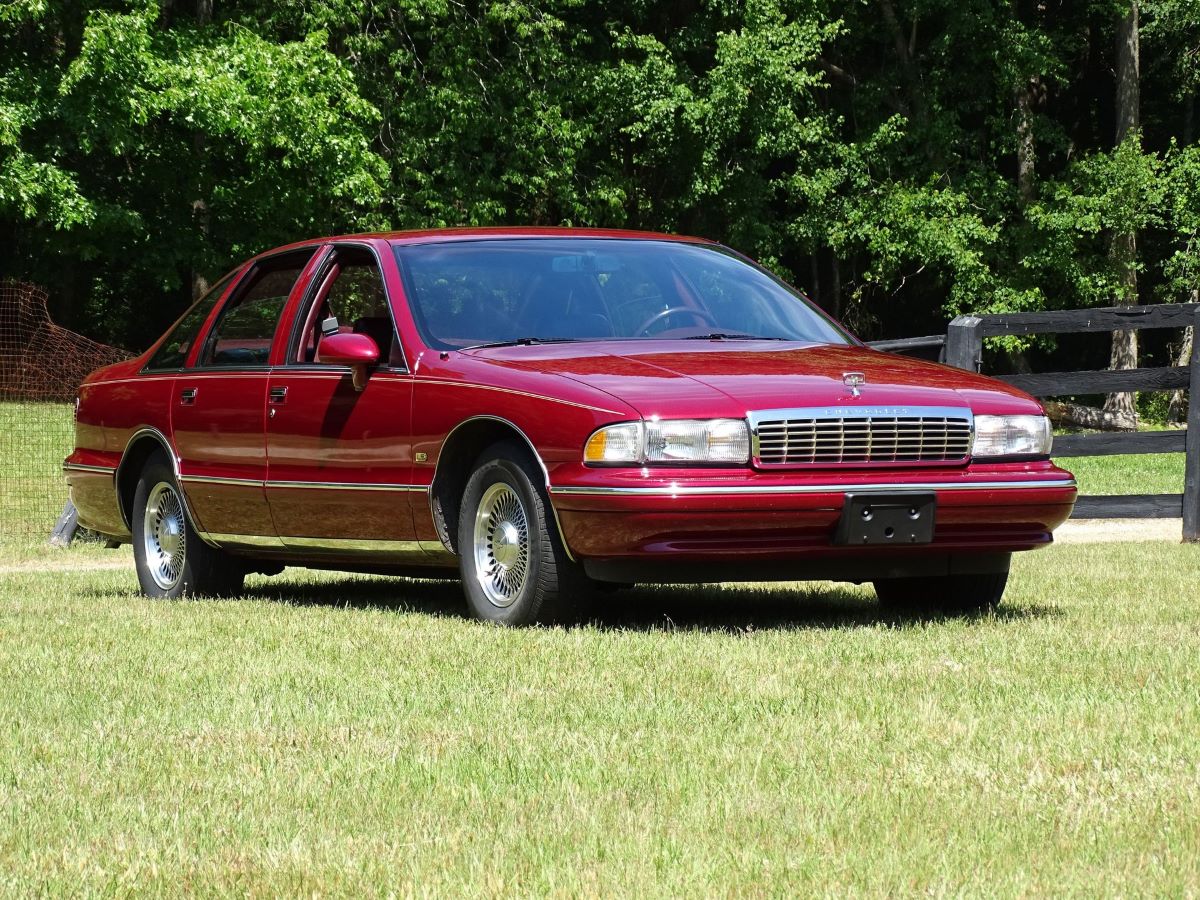
2. Chevrolet Caprice (1991–1996)
The Chevrolet Caprice of the early 1990s became a favorite among police departments for its combination of power and reliability.
When equipped with the 5.7-liter LT1 V8, the same engine found in the Corvette of that era, the Caprice had the speed and acceleration needed for highway patrols. At the same time, its sturdy drivetrain allowed it to withstand the grueling stop-and-go demands of city policing.
This Caprice generation featured body-on-frame construction, which made it capable of taking the abuse of daily patrol work. Police versions came with upgraded suspension, heavy-duty brakes, and cooling systems designed to handle constant idling and long shifts.
Officers appreciated how well the car balanced power and comfort, offering enough space for passengers and gear while still performing like a pursuit vehicle.
One reason the Caprice stayed in service for so long was its reliability. Departments that held onto them often reported that they could easily reach 200,000 to 300,000 miles with proper care.

Even after General Motors stopped production in 1996, many units remained in service for years because they were simply too dependable to replace immediately.
Today, some smaller agencies and international police forces still use retired Caprices. Their mix of American V8 strength and old-school durability keeps them running even decades after they left the showroom.
For many officers who drove them, the Caprice was one of the most respected cruisers of its time.
3. Dodge Diplomat (1977–1989)
Before the Crown Vic dominated, the Dodge Diplomat was one of the most common police cars on American streets.
Produced between 1977 and 1989, it served thousands of departments, particularly during the 1980s. Its popularity came from its reliability, affordability, and Chrysler’s willingness to adapt the car to police needs.
The Diplomat was equipped with a range of engines, but the 318-cubic-inch V8 was the most common in patrol units.
This motor was simple, dependable, and easy to maintain. It lacked the raw power of some competitors, yet it had enough strength for city and suburban patrol work. Some highway versions even received larger V8s for better performance.
Another advantage was its size. The Diplomat was smaller than full-size sedans like the Caprice, making it more maneuverable in urban environments. Police departments valued this, especially in cities where quick handling was as important as top speed.

Its rear-wheel-drive setup and durable suspension allowed it to take the punishment of curbs, potholes, and long shifts without frequent breakdowns.
Many Diplomat cruisers lasted well beyond their expected service life. Even after being retired from major city departments, they often found second lives in small towns or with sheriff’s offices that appreciated their low cost and easy maintenance.
Though it has largely disappeared from active service today, in some regions abroad and in rural areas, a few Diplomats can still be found carrying out patrol duties decades later.
4. Plymouth Gran Fury (1982–1989)
The Plymouth Gran Fury became a staple of police fleets during the 1980s, particularly in the United States. Sharing its platform with the Dodge Diplomat, it was part of Chrysler’s M-body lineup and became popular with departments that valued affordability and mechanical toughness.
The Gran Fury was typically fitted with Chrysler’s 318-cubic-inch V8, an engine that proved reliable and easy to service.
Police packages included upgraded cooling systems, suspension, and brakes, which allowed the car to handle the stresses of pursuit driving and constant idling. While it was not the fastest cruiser of its time, it earned respect for being durable, simple, and capable of logging high mileage.
Officers liked its size, which struck a balance between maneuverability in tight city spaces and the comfort needed for long patrols.

Like the Diplomat, it was rear-wheel drive, making it straightforward to repair and maintain. Its body-on-frame construction meant it could absorb damage that might sideline a unibody car.
When Chrysler discontinued the M-body platform in 1989, many police departments held onto their Gran Furys rather than switching to newer models immediately. Smaller towns and county agencies in particular kept them running for years.
Even today, a few examples remain in service internationally, their rugged drivetrains still performing decades after they first hit the road.
5. AMC Matador (1971–1978)
The AMC Matador was a surprising but significant part of American police fleets in the 1970s. It became especially famous thanks to its use by the Los Angeles Police Department, which ordered thousands of them during the decade.
At a time when AMC was a smaller automaker compared to Ford, Chevrolet, and Chrysler, the Matador managed to carve out a reputation for being a solid patrol car.
Most police Matadors were equipped with AMC’s 360 or 401 cubic-inch V8 engines. These motors gave the car the performance needed for both city and highway duties.
While AMC’s smaller size meant that parts availability was sometimes limited, the engines themselves were sturdy and capable of long service lives under tough conditions.

Officers praised the Matador for its handling, which was considered better than some of its larger rivals. Its size made it well-suited for urban patrols, while the heavy-duty suspensions in police models helped it withstand rough treatment.
Although the Matador was discontinued in 1978, many police departments continued to use them into the early 1980s. Smaller municipalities held onto them longer because of their affordability and the fact that they remained serviceable well past their production years.
Today, surviving Matador police cars are rare, but some departments in developing regions reportedly used them long after they disappeared from American roads.
6. Chevrolet Impala (2000–2016 Police Models)
The Chevrolet Impala made a strong return to police fleets in the early 2000s when GM produced a dedicated police package. Unlike the older, full-sized Caprice, the Impala was a front-wheel-drive sedan, but departments still embraced it because of its practicality and reliability.
Police versions of the Impala were equipped with the 3.8-liter V6 engine, known for its durability and strong torque. It was not as powerful as the V8s in some competitors, but it delivered solid performance and impressive fuel economy for a cruiser.
The transmission was designed to handle the demands of pursuit driving, while upgraded suspension and braking systems gave it the toughness needed for daily duty.

The Impala also offered a roomy cabin, making it a comfortable patrol car for long shifts. Its front-wheel-drive layout made it better suited for snowy or wet climates, a factor that appealed to departments in northern regions.
Though GM eventually phased out the Impala in favor of the Caprice PPV and other models, many agencies kept them in service because they proved dependable.
Even years after production stopped, smaller police forces and municipalities continued to use retired Impalas for patrol duties, highlighting their staying power as police vehicles.
7. Chevrolet Caprice PPV (2011–2017)
The Chevrolet Caprice PPV (Police Patrol Vehicle) was introduced in the early 2010s, bringing back the Caprice name after years of absence.
Built on GM’s Australian Holden Commodore platform, it was rear-wheel drive, spacious, and purpose-built for law enforcement. While production ended in 2017, many departments continue to use these cars today.
Under the hood, the Caprice PPV offered a 6.0-liter V8 engine producing over 350 horsepower.
This gave it the speed and power needed for highway pursuits, while the drivetrain was engineered to handle long-term heavy use. Some departments also opted for the V6 model, which balanced fuel efficiency with reliability.
Police versions came with reinforced suspensions, upgraded brakes, and heavy-duty cooling systems.
These enhancements made them durable enough to withstand the constant idling and hard driving that police work demands. Officers also appreciated the spacious interior, which provided room for equipment and comfort during long shifts.
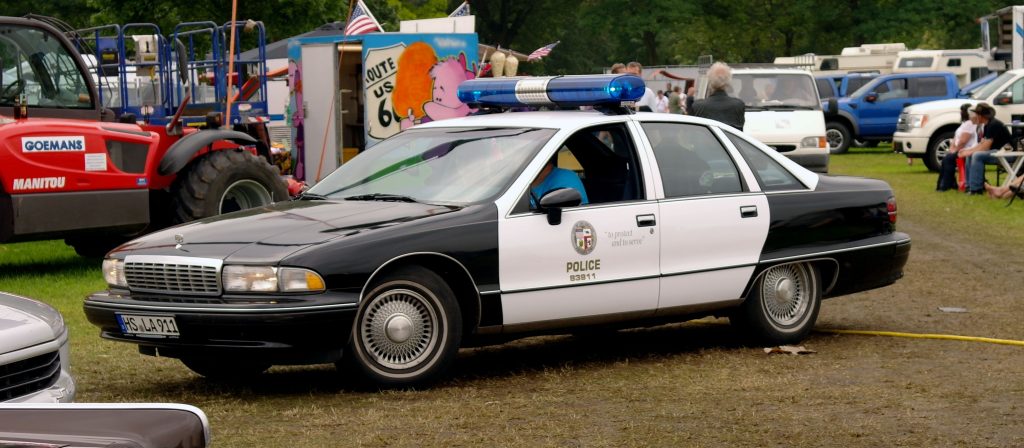
Even though production was relatively short-lived, the Caprice PPV quickly earned respect as one of the most capable modern cruisers. With GM no longer offering a full-size sedan for police use, many agencies held onto their fleets rather than switching to SUVs.
Today, smaller towns and even some larger departments still rely on them, showing how well the car met the needs of police service.
8. Dodge Charger Pursuit (2006–Present)
The Dodge Charger Pursuit has become one of the most recognizable police cars of the modern era. First introduced in 2006, it remains in production today and continues to be a favorite among departments across North America.
Its bold styling, rear-wheel-drive platform, and powerful engines made it an ideal replacement for older sedans like the Crown Vic.
Police models of the Charger are available with V6 or V8 engines. The 5.7-liter HEMI V8 is especially popular, offering over 370 horsepower and giving the car strong acceleration for highway pursuits. The drivetrain was designed to handle police use, with heavy-duty transmissions and upgraded cooling systems.

The Charger Pursuit also features reinforced suspension, brakes, and stability systems to withstand the stresses of police duty. Departments value its balance of performance and reliability, while officers appreciate the modern safety technology included in recent models.
Even though many agencies are shifting toward SUVs, the Charger remains a common sight in fleets. Its blend of power, handling, and durability has allowed it to stay in service for nearly two decades, proving its place among the most dependable police cruisers still active today.
9. Nissan Patrol (1980s–Present in Some Regions)
While American sedans dominate many police fleets, the Nissan Patrol has long served as a trusted police vehicle in regions such as the Middle East, Africa, and Asia.
Known for its rugged off-road capability and bulletproof drivetrain, the Patrol has been used by law enforcement for decades in areas where durability is more important than speed.
The Patrol was available with a range of inline-six and later V8 engines, all designed to handle extreme conditions. Its four-wheel-drive system and heavy-duty suspension made it capable of traveling over rough terrain, something essential for rural and desert policing.

Police departments favored the Patrol not just for its toughness, but also for its ability to carry heavy loads of equipment and officers.
It could handle long patrols in harsh climates without breaking down, which gave it a reputation as one of the most reliable off-road police vehicles.
Even today, in countries where rugged terrain is part of daily life, older Patrols remain in active service. Their long-lasting engines and simple mechanical design make them easy to repair, ensuring they stay useful decades after leaving the factory.
10. Toyota Land Cruiser 70 Series (1980s–Present in Select Regions)
The Toyota Land Cruiser 70 Series has been serving police and security forces worldwide for decades. While it was discontinued in many markets, it continues to be produced in regions such as the Middle East, Africa, and parts of Asia, largely because of its proven reliability.
Police departments in remote areas still favor it due to its unmatched toughness and ability to operate where modern SUVs might fail.
Equipped with durable diesel or gasoline engines, the Land Cruiser 70 is designed to last under punishing conditions.
Its body-on-frame construction, simple mechanics, and robust drivetrain allow it to handle extreme heat, rugged mountains, and desert environments.
Unlike many newer vehicles filled with sensitive electronics, the 70 Series can often be repaired with basic tools, making it highly practical for police agencies with limited resources.
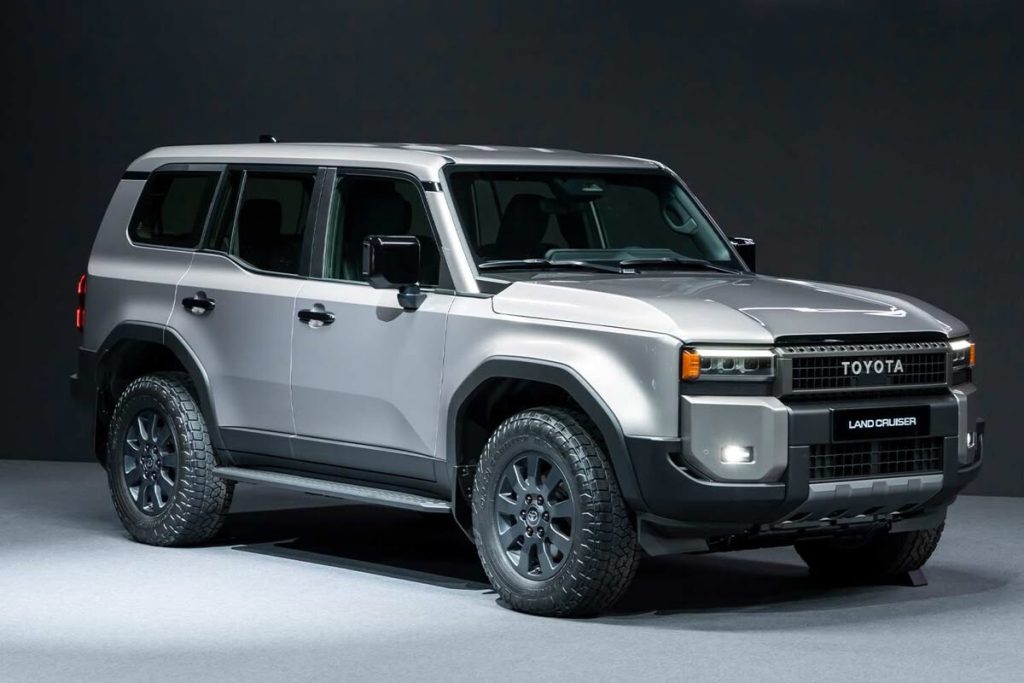
For law enforcement, the vehicle’s off-road capability is one of its strongest assets. It can carry officers and equipment into remote areas where roads may not exist, and its suspension system is built to withstand rough use over long periods. Many forces rely on it for rural patrols, border security, and high-risk operations.
The Land Cruiser 70 has earned a reputation as nearly indestructible, which explains why it remains a common sight in police service across different continents.
While newer models exist, the continued presence of older 70 Series Land Cruisers highlights their place as one of the most dependable long-term patrol vehicles ever built.
11. Mercedes-Benz W124 (1984–1995)
The Mercedes-Benz W124 is another classic that continues to see police duty in some parts of the world. Produced between 1984 and 1995, the W124 was one of the most solidly engineered sedans Mercedes ever built.
Known for its bulletproof engines and overbuilt components, it earned respect from both private owners and government fleets.
Many police departments in Europe adopted the W124 during its production years, especially the station wagon versions that provided ample cargo space for equipment.
The engines, ranging from inline-fours to inline-sixes and even diesels, were known for lasting hundreds of thousands of miles without major issues. Its strong suspension and rear-wheel-drive setup made it stable and reliable under constant duty.
What sets the W124 apart is its longevity. Even after 30 to 40 years, some of these vehicles remain in use as backup patrol cars or in smaller towns with limited budgets.

The car’s mechanical simplicity compared to modern vehicles allows it to be maintained easily, and parts are still widely available due to its global popularity.
The W124 symbolizes a time when police cruisers were expected to be practical, durable, and long-lasting. Its continued use today underscores the trust that departments still place in this legendary Mercedes sedan.
12. Jeep Cherokee XJ (1984–2001)
The Jeep Cherokee XJ may be best remembered as a family SUV, but it also served widely as a police vehicle, especially in rural areas of North America and overseas.
Its rugged design, four-wheel-drive capability, and compact size made it ideal for departments that needed versatility rather than just speed.
Powered by the iconic 4.0-liter inline-six engine, the Cherokee XJ built a reputation for reliability.
This engine could easily surpass 250,000 miles with basic maintenance, which made it perfect for police work. Its strong drivetrain and durable suspension handled both highway pursuits and off-road patrols, particularly in small towns and mountainous regions.
Police versions of the Cherokee were equipped with upgraded electrical systems to handle radios and lights, along with reinforced cooling to manage extended idling. Officers valued its practicality, as the interior offered enough space for equipment without being too large to maneuver in tight spaces.
Even decades after production ended in 2001, some Cherokee XJs remain in active police service, particularly in communities that prioritize reliability over modern technology.
Their continued use is a testament to how well Jeep engineered the XJ and why it remains one of the most respected classic utility vehicles ever adapted for law enforcement.

Police departments worldwide have long relied on vehicles that combine reliability, endurance, and performance under demanding conditions.
From American icons like the Ford Crown Victoria, Chevrolet Caprice, and Dodge Diplomat to international stalwarts such as the Toyota Land Cruiser 70 Series, Mercedes-Benz W124, and Jeep Cherokee XJ, each cruiser earned its place through durability and adaptability.
These cars were not only built for high-speed chases but also for long patrols, heavy idling, and rugged terrain. Their engines and drivetrains proved capable of lasting far beyond typical expectations, which explains why many are still active decades after production ended.
Together, these 12 vehicles highlight how engineering strength and practical design created police cruisers that remain dependable even today.
Also Read: 12 American Pickups That Rarely Break Their Suspension
