

Hitting one million kilometers (around 621,000 miles) is no small feat for any vehicle. Most cars are considered well-worn by the time they cross 200,000 miles, and many don’t even make it that far without requiring major repairs. Yet, some vehicles defy the odds.
Thanks to exceptional engineering, durable powertrains, and loyal owners who maintain them properly, a select group of cars, trucks, and SUVs have proven they can keep rolling long after the odometer spins past the point most vehicles retire.
For American drivers, the idea of keeping a car for decades until it hits such astronomical mileage might sound unusual, but across the globe, stories of vehicles crossing the one-million-kilometer threshold are becoming legendary.
These “unbreakable” machines are celebrated not just for their longevity but for their reliability under grueling conditions, whether it’s hauling cargo, surviving harsh climates, or simply serving as daily commuters for generations of owners.
Here are 10 unbreakable vehicles that are known for crossing the 1M km milestone and still running strong.
1. Toyota Land Cruiser
The Toyota Land Cruiser is the poster child for extreme durability. Built to withstand punishing terrains in Africa, Australia, and the Middle East, the Land Cruiser regularly racks up astonishing mileage figures. Owners have reported examples crossing 1M km with little more than routine maintenance.
Its rugged frame, torquey engines, and bulletproof four-wheel-drive system make it a favorite for explorers, humanitarian missions, and families who need a vehicle that simply won’t quit. For many, the Land Cruiser is less of a car and more of a lifelong partner.
Toyota gave the Corolla a full redesign last year, transforming this traditionally capable but somewhat uninspiring small sedan into a model with a much-needed boost in style. The update allowed the Corolla to retain its hallmark comfort and efficiency while adding a fresher and more appealing look.
For 2021, changes are minimal, with the most notable addition being the new Apex Edition. This trim introduces a sportier edge to the Corolla lineup, thanks to its upgraded suspension and the option for grippy summer performance tires, both of which enhance handling and make the drive more engaging.
Overall, the Corolla continues to deliver its dependable blend of comfort and practicality, but now with an extra dash of personality.
The Land Cruiser’s truck-based design naturally brings a bit of body roll when cornering, but it still delivers smooth handling and soaks up bumps with ease, keeping passengers comfortable on the road.
Staying true to its heritage, the SUV shines both on paved streets and rugged terrain, making it just as capable for everyday driving as it is for rock-crawling adventures.
Powering every model is the turbocharged i-Force Max hybrid system, which pairs a 2.4-liter turbocharged engine with an electric motor to produce 326 horsepower and 465 pound-feet of torque.
Standard four-wheel drive and an eight-speed automatic transmission complete the setup, offering plenty of muscle for daily use along with more low-end torque than the previous generation. While acceleration doesn’t feel especially quick or forceful under heavy throttle, the system provides a strong balance of efficiency, power, and capability.

Also Read: 9 Best Vehicles That Survive Multiple Generations of Owners
2. Honda Accord
The Honda Accord has long been known as a safe bet for buyers seeking a reliable midsize sedan. While most Accords retire after a few hundred thousand miles, there are stories of well-maintained models reaching over 1M km and still functioning as daily commuters.
Part of this longevity comes from Honda’s meticulous engineering of its four-cylinder engines, which are designed to be efficient yet incredibly durable. Accords also tend to be treated gently by their owners, adding to their chances of surviving such high mileage.

3. Mercedes-Benz W123
Few vehicles embody durability like the Mercedes-Benz W123, built between 1976 and 1986. Many diesel-powered examples have surpassed 1M km, particularly in taxi fleets around the world. The W123 was engineered during an era when Mercedes overbuilt its cars, often to standards far beyond what was financially necessary.
The result is a machine that, with basic maintenance, can keep running practically forever. It’s no surprise that countless W123s are still on the road decades later, wearing their million kilometers like a badge of honor.
The Mercedes W123, produced from 1976 to 1985, remains one of the most legendary models in the Mercedes-Benz lineup and a benchmark in automotive history.
Available as sedans, coupes, and station wagons, the W123 represented a major leap forward in design and engineering, broadening the brand’s offerings while strengthening its reputation for unmatched durability and quality.
Arriving at a time when demand for stylish yet dependable family vehicles was on the rise, the W123 struck the perfect balance.
Built with robust construction and forward-thinking engineering, it introduced improved safety systems and placed a strong emphasis on passenger comfort. Buyers were immediately drawn to its refined interior, advanced features, and reliable performance, making it a commercial success and expanding Mercedes-Benz’s reach in the global market.
A defining trait of the W123 is its enduring quality. Decades later, many models are still on the road, proving the vehicle’s resilience and engineering precision.
Its fusion of luxury, safety, and lasting performance helped establish Mercedes-Benz as a brand synonymous with long-term value, elevating its vehicles beyond simple transportation to assets worth holding on to.
The W123’s influence continues to echo in modern automotive design and Mercedes-Benz’s core philosophy. Its legacy is celebrated not only for the way it shaped expectations of durability and refinement but also for setting standards that rival manufacturers still aim to match.
More than just a car of its era, the W123 stands as a timeless symbol of innovation, leaving a lasting imprint on the automotive industry and affirming Mercedes-Benz’s place at the forefront of engineering excellence.

4. Toyota Hilux
The Toyota Hilux has become legendary for its toughness, famously surviving brutal torture tests and still driving afterward. This small pickup is particularly beloved in Australia, South America, and Asia, where it’s used as a workhorse in the harshest conditions.
Owners have routinely reported Hilux models crossing the 1M km threshold, still hauling loads and conquering rough roads. Its simple mechanics, reliable diesel engines, and no-nonsense design make it one of the most unbreakable vehicles ever made.
Toyota has responded to the growing demand for high-spec, well-equipped pickups by introducing models with stronger, motorway-ready engines that maintain power even beyond 50 mph. Alongside the familiar 2.4-liter engine, buyers now have the option of a more robust 2.8-liter unit, providing extra muscle for long hauls and heavy-duty use.
At the top of the range, the cabin feels far removed from a traditional workhorse, featuring heated leather seats, an automatic gearbox, and Toyota’s latest touchscreen system with full smartphone integration. The brand has even added LED lighting and a premium JBL audio system, proving that long days on the farm can be accompanied by powerful sound and modern tech.
Additional features elevate the experience further, with offerings such as a panoramic view monitor for easier maneuvering, an auto-dimming rearview mirror, and dual-zone air conditioning for added comfort.
On top of that, Toyota has equipped the lineup with practical digital features, including automatic service reminders, e-call, and remote diagnostic capabilities. Impressively, many of these advanced touches are included even in the standard version, showing just how far the pickup has evolved from a simple work tool into a versatile and tech-savvy vehicle.

5. Volvo 240
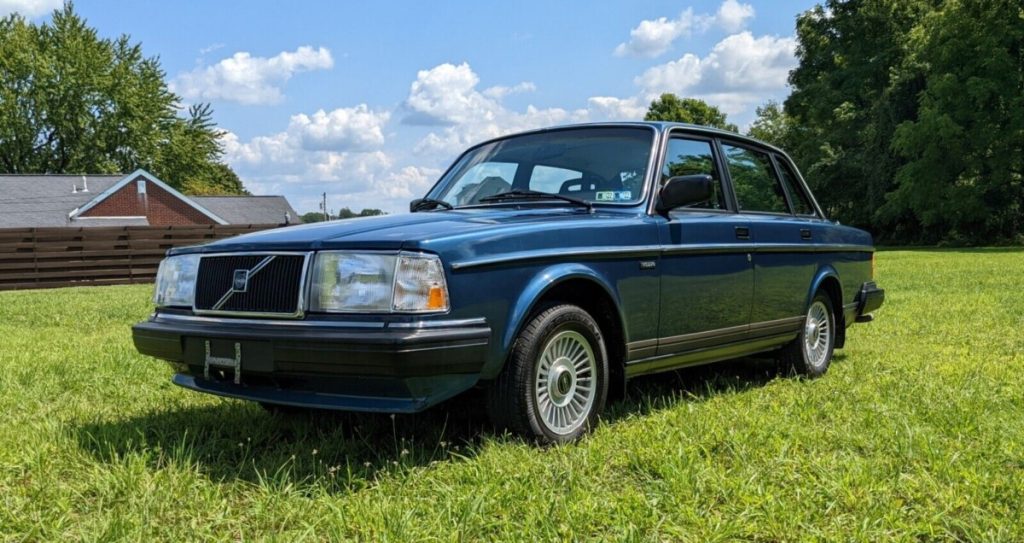
The Volvo 240 may not be glamorous, but it’s one of the most reliable cars ever built. Known for its boxy design and safety-first approach, the 240 also came with incredibly durable “Redblock” engines.
These engines, paired with robust transmissions, helped countless Volvos reach and exceed 1M km. In fact, it’s not uncommon to see old 240s still serving as daily drivers in the US and Europe. Its mix of durability, simplicity, and easy-to-source parts has made it a legend among long-lasting vehicles.
Volvo Cars revealed the 240 to the world in 1974, a model that quickly became iconic for its classic angular design.
While some might dismiss it as ‘boxy,’ this aesthetic choice was far from arbitrary. The elongated hood and rear were not just cost-efficient but deliberate design decisions to enhance passenger safety.
These features allowed for the integration of innovations like crumple zones and large bumpers, specifically engineered to absorb the kinetic energy of collisions, thereby providing greater protection for occupants.
While it wasn’t built to be a head-turner, the 240’s flat surfaces were ingeniously designed to maximize interior space. This design provided ample legroom for both the driver and passengers, along with a large boot, making the 240 a family favorite.
This focus on human-centric design truly paid off. The 240 series enjoyed immense popularity, boasting a remarkable production span of 19 years, ending in 1993. During this period, it sold an impressive 2.8 million units. Even after production ceased, the 240 series remains highly regarded and sought after to this day.
The Volvo 240 series is an iconic representation of practicality, durability, and innovation. Its legacy continues to shape modern automotive design, reflecting Volvo’s commitment to move in a personal, sustainable, and safe way.
As we celebrate the 50th anniversary of the Volvo 240, we honor its lasting impact on the automotive industry and its enduring place in the hearts of Volvo cars enthusiasts worldwide.
6. Ford F-Series (Especially the F-250 & F-350)
In the US, few vehicles work harder than Ford’s F-Series trucks. Built to tow, haul, and endure jobsite abuse, heavy-duty models like the F-250 and F-350 are often pushed to their limits daily. Despite the strain, many of these trucks have been documented running past 1M km.
Diesel variants, particularly those with the 7.3-liter Power Stroke engine, are especially famous for their longevity. With routine oil changes and diligent upkeep, these trucks have proven capable of surviving decades of work and hundreds of thousands of miles.

7. Lexus LS400
When Toyota launched the Lexus brand in the late 1980s, it introduced the LS400, a full-size luxury sedan engineered to rival the best from Europe. What set it apart, however, was its uncanny reliability. Powered by the nearly indestructible 1UZ-FE V8 engine, the LS400 has been known to surpass 1M km with minimal issues.
Owners praise its build quality, smooth ride, and longevity, with many examples still gliding quietly down highways today. The LS400 didn’t just prove Lexus could compete, it proved a luxury car could also be unbreakable.
In the late 1980s, Japanese automakers had already earned a reputation for producing dependable economy cars, but many skeptics doubted whether they could truly compete in the luxury segment. Toyota set out to silence those doubts with the creation of its new Lexus brand, and the LS400 became the perfect answer.
The car arrived with a restrained design, some even called it too subtle, that carried hints of the Mercedes W126. Under the hood sat a 250-horsepower 4.0-liter V-8, and every inch of the vehicle reflected meticulous build quality.
Instead of the flashy chrome and faux wood trim common in Detroit’s offerings, or the austere functionality of German interiors, the LS400 welcomed buyers with a warm, leather-clad cabin where everything felt both premium and practical. While it wasn’t a particularly thrilling car to drive, it projected an unmistakable sense of dignity, refinement, and dependability.
The first-generation LS saw only minor updates over its initial run. In 1993, Lexus implemented several customer- and dealer-driven improvements, including new paint colors, subtle trim updates, and adjustments to the suspension, steering, brakes, wheels, and tires, all designed to enhance driving dynamics.
By 1995, Lexus unveiled the first full redesign of the LS, though at first glance the changes were barely noticeable. The wheelbase was stretched by 1.4 inches, translating to 2.6 extra inches of rear-seat legroom, but the overall styling remained remarkably consistent with the outgoing model.
A more visible refresh arrived in 1998, when the LS400 received updated styling and technical upgrades. The addition of variable valve timing boosted the V-8’s output to 290 horsepower, and a new five-speed automatic replaced the previous four-speed unit.
As a result, 0–60 mph acceleration times dropped by nearly 1.5 seconds, dipping into the low six-second range. A groundbreaking feature at the time was the inclusion of a GPS navigation system with CD-ROM-based maps.
The debut of the third-generation LS in 2001 brought a name change to LS430, highlighting its new 4.3-liter V-8 engine. While horsepower remained at 290, torque climbed from 300 to 320 lb-ft, giving the car more responsiveness. The LS’s familiar boxy profile remained, but styling cues leaned more toward the Mercedes W140 S-Class.
The LS430 also introduced a number of advanced technologies, including adaptive cruise control that used lasers to track the distance and speed of vehicles ahead, along with the LexusLink telematics system. Lexus also expanded the lineup with a sport-oriented Touring model, further diversifying the car’s appeal.

8. Chevrolet Suburban
As one of the longest-running nameplates in American automotive history, the Chevrolet Suburban has built its reputation on durability and practicality. Families, businesses, and even government fleets have relied on the Suburban to move people and cargo for generations.
Older models, especially those equipped with simple small-block V8s, have been known to cross 1M km. The Suburban’s large size and heavy-duty construction help it endure years of long-distance driving, making it a legend among high-mileage American vehicles.
The Chevrolet Suburban holds the distinction of being the longest-running nameplate in the United States, with continuous production since 1935. Now in its 12th generation, the Suburban remains a top choice for buyers who need maximum space, capability, and strength beyond what a three-row crossover can offer.
Known for its impressive passenger and cargo-hauling capacity, as well as its strong towing abilities, the Suburban continues to deliver on practicality and performance. With optional engine upgrades, it provides plenty of power for demanding tasks, though its massive size means finding parking can be a challenge.
For 2025, the Suburban undergoes a significant refresh, similar to the updates seen on its sibling, the Chevrolet Tahoe. Among the most notable changes is the introduction of a much larger 17.7-inch infotainment display that replaces the old 10.2-inch unit.
This screen, with built-in Google Maps and Google Assistant, modernizes the cabin and declutters the center stack by reducing the number of physical buttons. Performance improvements also arrive with the optional turbodiesel inline-six engine, which now delivers an additional 28 horsepower and 35 lb-ft of torque, and is newly available on the rugged Z71 trim.
Chevrolet has also expanded the Suburban’s standard safety and driver-assist technologies for 2025. Buyers now benefit from a 360-degree camera system, rear cross-traffic automatic braking, adaptive cruise control, and an automatic parking feature.
On higher trims, GM’s Super Cruise hands-free driver assistance system is offered across the lineup, with the exception of the entry-level LS and the off-road-oriented Z71. These updates ensure that the 2025 Suburban continues to combine size, comfort, and cutting-edge technology, reinforcing its role as one of the most capable and versatile large SUVs on the market.

9. Volkswagen Beetle (Classic Air-Cooled Models)
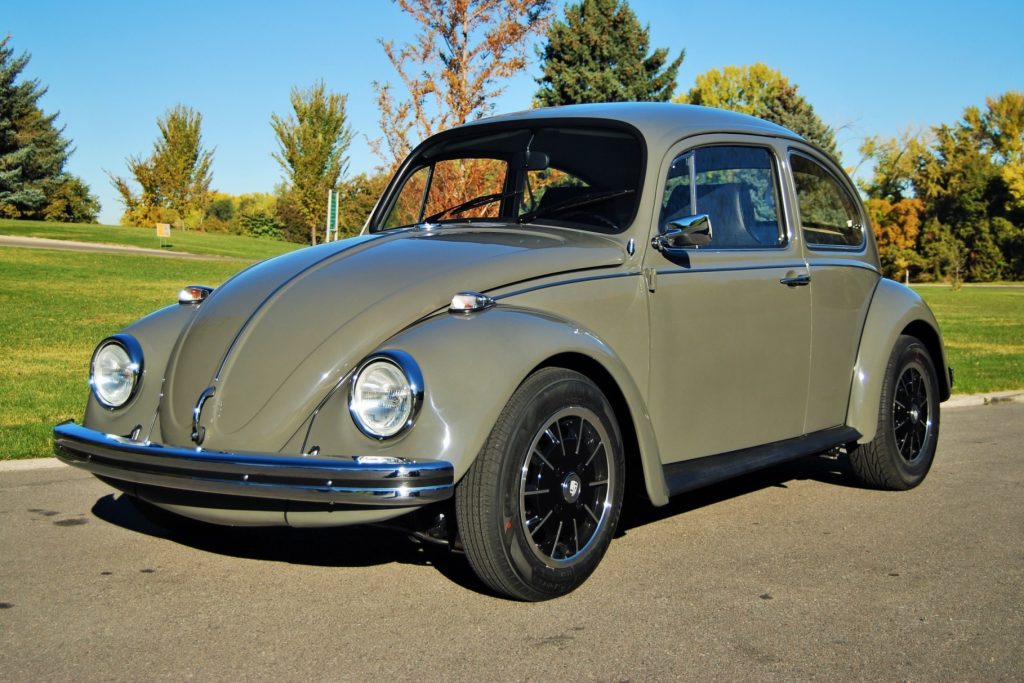
The original Volkswagen Beetle wasn’t just a global icon, it was also one of the most reliable cars of its era. Its simple air-cooled engine was easy to maintain, and owners could often perform repairs with basic tools. This simplicity translated into extreme longevity, with many Beetles passing the 1M km mark.
While not fast or luxurious, the Beetle’s unbreakable nature made it a trusted companion for millions of people worldwide. Today, surviving high-mileage Beetles stand as proof of the car’s lasting legacy.
The Volkswagen Type 1, later known worldwide as the Beetle, originated around 1935 when Ferdinand Porsche was tasked by his then employer. While Porsche is often credited as the designer, the core concept actually dates back to 1925 and is attributed to Hungarian engineer Béla Barényi.
Following World War II, the Allies took control of Volkswagen and revived production in 1945, quickly bringing the Wolfsburg plant in northern Germany back to life.
Throughout the 1950s, the Type 1 gained global popularity, with its presence becoming especially prominent on American roads during the 1960s counterculture movement.
By 1972, its impact was undeniable as production numbers surpassed the legendary Ford Model T, reaching more than 15 million units. In 1978, production in Germany officially ended as Volkswagen shifted focus to newer front-wheel-drive models like the Golf.
However, the Beetle’s story didn’t end there. Manufacturing continued in countries such as Australia, Brazil, Mexico, and Nigeria, ensuring the model’s survival well beyond its European retirement. Ultimately, the last Beetle rolled off the line in 2003, closing the chapter on one of the most iconic and enduring cars in automotive history.
10. Toyota Prius
While many dismiss hybrids as complicated, the Toyota Prius has proven otherwise. Since its introduction, the Prius has shocked skeptics with its ability to rack up hundreds of thousands of miles without major failures.
Taxi fleets in cities like Vancouver, New York, and San Francisco have reported first- and second-generation Prius models crossing the 1M km milestone while still operating reliably. Toyota’s hybrid system, designed with simplicity and durability in mind, helped the Prius earn its spot among unbreakable vehicles.
Reaching one million kilometers is a rare accomplishment, but it’s not impossible when the right vehicle meets a dedicated owner. From the rugged Toyota Land Cruiser to the understated Honda Accord, these vehicles have shown that durability isn’t always about flashy engineering, it’s about thoughtful design, robust components, and maintenance-friendly systems.

For American buyers considering a vehicle known for longevity, these examples offer reassurance that with the right choice, a car or truck can become more than just transportation, it can be a lifelong companion.
While most drivers won’t see 1M km on their own odometers, knowing these unbreakable vehicles are capable of such feats proves that reliability, when engineered correctly, truly stands the test of time.
