

When pickup owners talk about dependability, conversations often revolve around engines, transmissions, or frames. Yet, one of the most overlooked components is the differential.
The differential plays a vital role in transferring power to the wheels, and when it fails, repairs can be costly and time-consuming.
Not all trucks are created equal in this area, some models are designed with stronger axles, better lubrication systems, and proven gear sets that rarely need attention, even after years of hauling or off-road use.
For American truck buyers who want assurance that their ride can handle high mileage without differential headaches, certain pickups stand out as champions.
Here are 12 pickups known for rarely requiring differential work, offering owners peace of mind and long-term value.
1. Toyota Tacoma
The Toyota Tacoma has earned its reputation for bulletproof reliability, and part of that comes from its stout rear differential setup. Many Tacomas exceed 250,000 miles without differential repairs, thanks to conservative gearing and durable housing.
Off-road trims like the TRD Pro use locking differentials designed to endure punishment, making this midsize pickup a leader in mechanical longevity.
As a midsize pickup, the 2025 Toyota Tacoma stands as the smallest truck in the automaker’s lineup, positioned beneath the full-size Tundra.
For those who find the Tundra either too large or too costly, the Tacoma may be the ideal alternative. It is well-suited for handling medium-size loads and is also capable of towing a midsize travel trailer or boat with ease.

A strong emphasis has been placed on off-road ability for this new Tacoma, with trims such as the TRD PreRunner, TRD Off-Road, TRD Pro, and Trailhunter each being designed to tackle specific terrain types. On the other hand, the Tacoma is equally at home when used for everyday driving around town, offering versatility beyond its rugged appeal.
Full-size trucks have grown substantially in the past decade, often surpassing what most buyers truly require. The Tacoma brings things back to a more practical scale, offering easier handling and greater efficiency. At the same time, it delivers ample capability for both work and recreation.
The engines introduced for the 2024 model year have broadened the Tacoma’s potential, with the standard turbocharged four-cylinder and the i-Force Max hybrid powertrain delivering far more power compared to the outgoing generation, while also improving fuel economy.
Also Read: 9 Best Vehicles That Survive Multiple Generations of Owners
2. Ford F-250 Super Duty
Built with heavy-duty work in mind, the Ford F-250 Super Duty comes equipped with axles and differentials designed to tow and haul without complaint.
The Dana axles used in many F-250s are famous in off-road circles for their resilience. With regular fluid changes, these trucks rarely need differential overhauls, even when subjected to commercial duty.
The 2026 Ford F-250 arrives with a handful of updates across the lineup, joining the F-350 as part of Ford’s F-Series Super Duty family.
One aspect that hasn’t changed is the powerhouse under the hood, as the Super Duty trucks continue to offer the 500-hp Power Stroke diesel engine that produces an incredible 1,200 lb-ft of torque. Competition in the heavy-duty truck segment remains tough, with the F-250 going head-to-head against the Ram 2500 Heavy Duty, Chevrolet Silverado 2500HD, and GMC Sierra 2500HD.
Among the updates for 2026, Ford has introduced a Lariat Premium package for Lariat Crew Cab 4WD models equipped with the 7.3-liter gas V-8.
This package bundles together an array of useful features, including Co-Pilot360 2.0 driver-assist technology, running boards, power-sliding tinted glass with a defrost feature, Pro Trailer Hitch Assist, Pro Trailer Backup Assist, and Trailer Reverse Guidance.
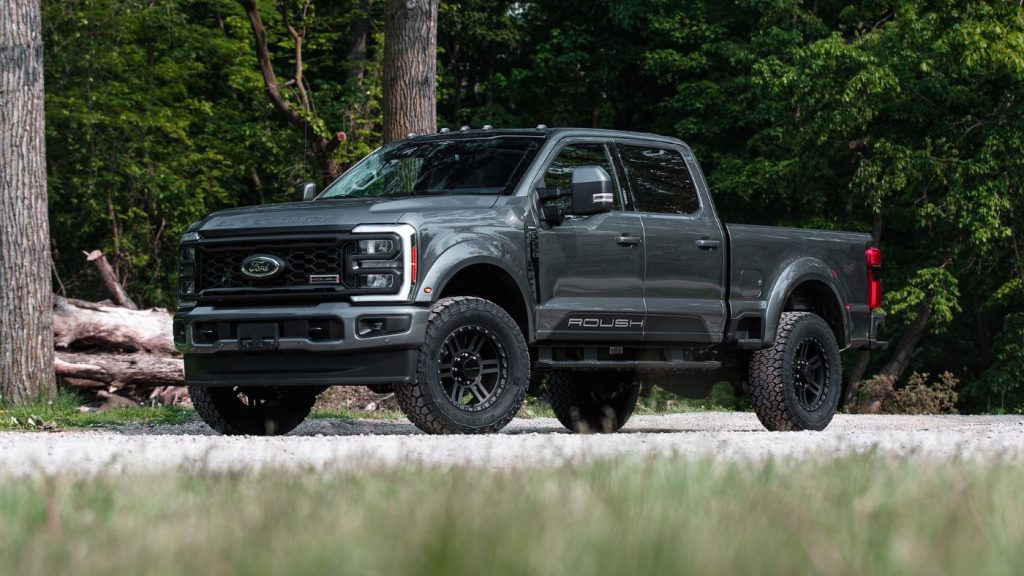
The SuperCab Short Box configuration also returns this year, bringing back the 148-inch wheelbase paired with a 6.5-foot short box, giving buyers more flexibility to find the setup that best meets their needs. Additionally, the Tremor model is now available with a diesel engine, expanding its appeal even though the Tremor variant of the Super Duty has not always been the most praised trim.
On the exterior, the STX Appearance package has been added for F-350 Dually models. This appearance bundle features body-color bumpers, a painted grille, special badging, and a few subtle interior updates to elevate the truck’s look. Inside, Ford now offers a Ford Connectivity package that is available as a one-time, seven-year purchase option, giving buyers an extended way to stay connected.
The 2026 Ford F-250 Super Duty remains a solid choice, though it still stops short of being a truly outstanding one. For buyers who want imposing looks and the sheer capability to match, the F-250 certainly delivers.
However, those who also prioritize a smoother, calmer ride to and from the jobsite or need a truck that is easier to maneuver in tighter spaces may find that other brands offer alternatives better suited to those needs. Heavy-duty truck shoppers are encouraged to also consider the established competition from Ram, Chevrolet, and GMC, which continue to bring strong contenders to the segment.
3. Chevrolet Silverado 1500
Chevrolet’s Silverado 1500 balances everyday usability with rugged dependability. Its differential assemblies are known for lasting the life of the truck, especially in models with the G80 locking rear differential, which automatically engages when traction is lost.
This system has proven to be one of the most reliable factory locker designs, requiring little to no repair over decades.
For 2022, Chevrolet introduces a number of significant updates to the Silverado. Every trim level now features a restyled front end, though only the LT trim and higher benefit from a completely redesigned interior. These upgraded models feature improved cabin materials, a more contemporary design, a 12.3-inch digital gauge cluster, and a massive 13.4-inch touchscreen infotainment system.
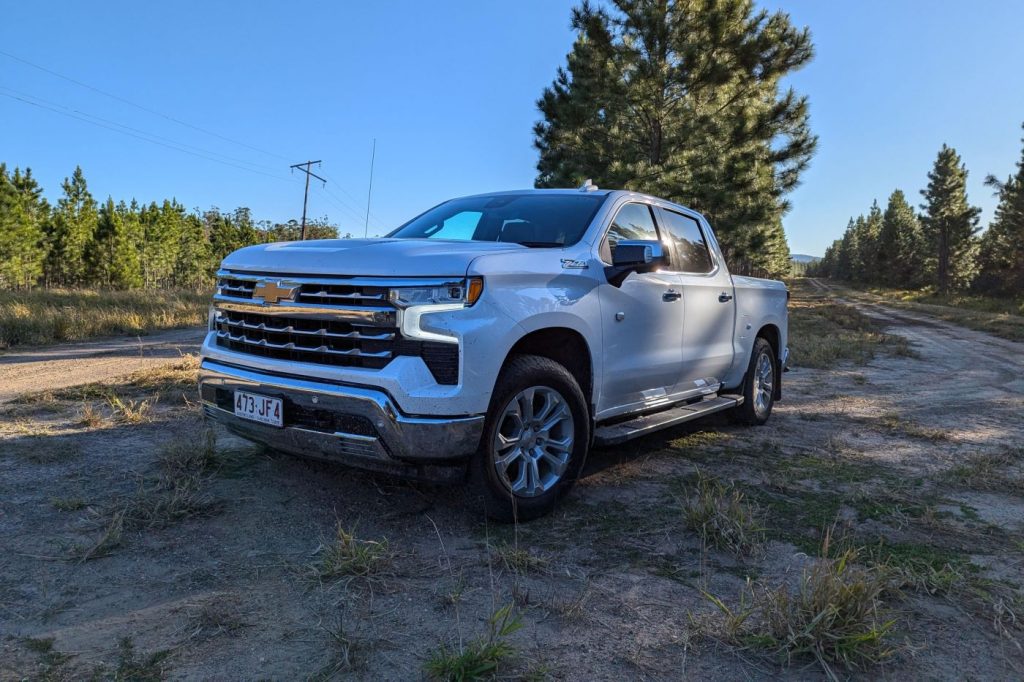
Additionally, all Silverado models now come standard with most of the brand’s active safety technologies, while the range-topping High Country trim can be optioned with GM’s Super Cruise, the brand’s hands-free driving technology.
While the Silverado lineup may not include anything quite as extreme as the Ford F-150 Raptor or Ram 1500 TRX, Chevrolet does add the ZR2 off-road variant, which is reviewed separately.
Chevy’s pricing for the 2022 Silverado 1500 begins at $34,845 for the Work Truck model and extends up to $61,495 for the fully loaded High Country, depending on trim level and options.
The lineup is broad, with the Work Truck and Custom trims designed for tradespeople and budget-conscious buyers, while the LT and above deliver more refinement. The LT is particularly appealing because of its upgraded interior, and it’s the trim we would recommend.
For maximum utility and comfort, we would opt for the crew cab with the standard-length bed to balance cargo capacity and passenger space. Under the hood, our preference would be the 5.3-liter V-8, which provides better performance than the diesel option while also being more affordable.
Choosing the V-8 also unlocks access to the Z71 Off-Road package, which adds a suite of hardware upgrades that make tackling dirt trails and muddy paths far easier and more enjoyable. It’s also worth noting that Chevrolet is simultaneously selling pre-facelifted 2022 Silverados, labeled as “LTD” models, which are priced lower than the refreshed versions.
When it comes to performance, the Silverado 1500 offers a wide selection of engines to suit different needs. Options include a turbocharged four-cylinder, two distinct V-8s, and a 3.0-liter Duramax diesel inline-six.
Among these, the 420-hp 6.2-liter V-8 stands out as the quickest, launching the Silverado High Country we tested to 60 mph in just 5.4 seconds. The smaller 355-hp 5.3-liter V-8 isn’t far behind, managing the sprint in 6.1 seconds.
The updated turbocharged 2.7-liter four-cylinder is particularly noteworthy, now delivering 420 pound-feet of torque, which enhances its towing performance. The diesel-powered variant is the slowest in terms of acceleration, but it compensates with impressively smooth and quiet operation.
Regardless of engine choice, every Silverado we have driven feels more agile than its size suggests, with surprisingly responsive handling and a brake pedal that inspires confidence with its firm feedback.
For drivers seeking a more rugged half-ton option, the Silverado Trail Boss offers the ideal setup. It comes equipped with a 2.0-inch lift, aggressive off-road tires, and additional hardware enhancements designed to make exploring rough terrain both easier and more entertaining.
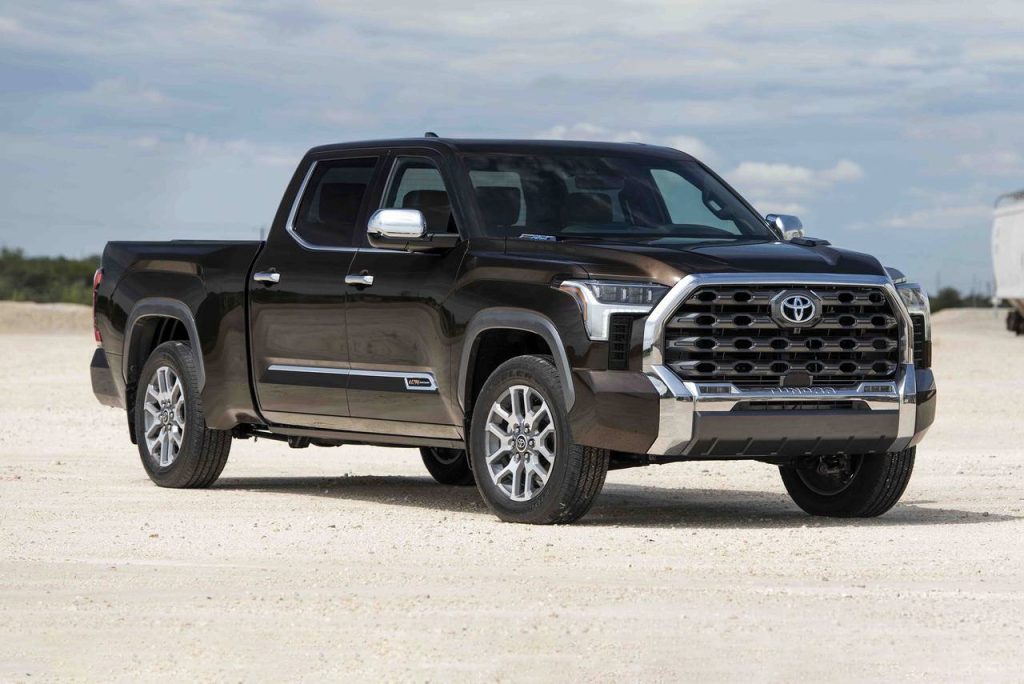
4. Toyota Tundra
The Toyota Tundra may not be the most fuel-efficient full-size pickup, but it excels in mechanical durability. Its rear differential is oversized for the truck’s weight class, meaning it rarely faces the strain that leads to failures in rivals.
Many owners report going beyond 300,000 miles without a differential issue, a testament to Toyota’s engineering priorities.
5. Nissan Frontier
Often overshadowed in the midsize market, the Nissan Frontier quietly delivers exceptional drivetrain toughness. Its simple yet reliable differential setup doesn’t rely on overly complex electronics, reducing failure points.
Older Frontiers from the early 2000s are still running with original differentials, proving how resilient these trucks are.
For 2025, Nissan has given the Frontier a light refresh that updates both style and features. The exterior now wears a revised grille and front bumper, while the PRO-X and PRO-4X trims receive redesigned wheels. A bold new paint option called Afterburn Orange has also been added to the lineup.
Inside, buyers can now opt for a larger 12.3-inch infotainment touchscreen, which comes with newly standard wireless Android Auto. The truck also gains a new 360-degree exterior camera system, a standard tilt-and-telescoping steering wheel, and two-way power lumbar adjustments for the driver’s seat on SV, PRO, and SL trims.
Towing capacity has been increased as well, with the Frontier now able to handle up to 7,150 pounds. In terms of versatility, the six-foot long-bed configuration is now available on all models except the base S trim. Nissan has also bolstered the list of standard driver-assistance features by including lane-departure warning, automatic high-beam headlights, and adaptive cruise control.
Pricing for the 2025 Nissan Frontier starts at $33,745 for the entry-level S trim and climbs to $43,505 for the top SL trim, with several models in between, including the SV at $36,085, the PRO-X at $40,165, and the PRO-4X at $43,465.
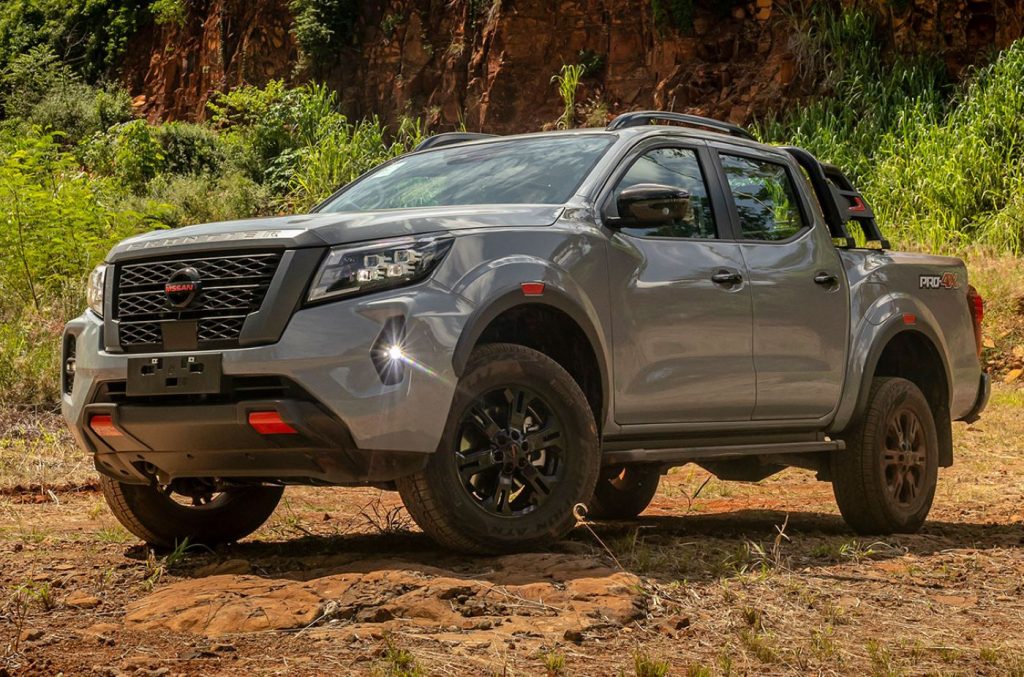
Among these options, we believe the SV trim strikes the best balance between features and overall value. For our ideal build, we would choose the crew cab for its larger interior and pair it with four-wheel drive. This setup includes a 12.3-inch touchscreen with wireless Apple CarPlay and Android Auto, along with a six-way power-adjustable driver’s seat.
To maximize convenience and safety, we would also add the available Convenience and Technology packages, which bring adaptive cruise control, blind-spot monitoring, rear cross-traffic alert, rear automated emergency braking, heated front seats and steering wheel, a trailer hitch, LED lighting for the cargo bed, and a spray-in bed liner.
Under the hood, every Frontier is powered by a naturally aspirated 3.8-liter V-6 that produces 310 horsepower and 281 pound-feet of torque. This engine is paired with a nine-speed automatic transmission and can be configured with either rear- or four-wheel drive. In our driving impressions, the V-6 provided smooth and adequate power delivery.
Behind the wheel of the off-road-oriented PRO-4X model, we found that the truck was capable and willing to handle rugged terrain, though it still falls short of the more specialized Jeep Gladiator in extreme off-road ability.
Nevertheless, the Frontier’s updated steering, which is quicker and more direct than before, combined with chassis enhancements, makes the truck feel more refined, composed, and responsive during everyday driving.
Also Read: 9 Steps That Help a Dodge Ram 1500 Last Forever
6. Ram 2500 Heavy Duty
The Ram 2500 is a favorite for towing enthusiasts, and part of its strength comes from its rear differentials built to handle massive torque.
Equipped with beefy American Axle Manufacturing (AAM) components, the Ram 2500 has one of the most reliable heavy-duty axle setups on the road. Owners hauling fifth-wheel trailers or running diesel powerplants rarely report failures in this department.

7. Honda Ridgeline
While some purists don’t consider the Ridgeline a “real truck,” its unique unibody design and car-like driveline layout contribute to reliability.
Its rear differential is part of Honda’s AWD system, which has been refined for decades. Unlike traditional pickups, it faces less extreme torque loads, which allows the Ridgeline to avoid the common wear-and-tear issues seen in heavy-duty trucks.
The Honda Ridgeline takes a different path than many of its midsize pickup truck rivals, steering clear of the trend toward oversized proportions and heavily rugged off-road variants.
Instead, it focuses on delivering capability and versatility in a more reasonably sized and highly usable package. Built on the unibody platform it shares with the Honda Pilot SUV and Odyssey minivan, the Ridgeline is offered exclusively as a four-door crew cab with a five-foot bed.
Power comes from a single V-6 engine paired with standard all-wheel drive, providing brisk acceleration and smooth performance. On the road, the Ridgeline rides and handles more like a car than a truck, giving it superior comfort compared to its body-on-frame competition.
While it may not deliver the same rugged image as those rivals, its livability and practicality set it apart. Recognized as one of the best options in the segment, the Honda Ridgeline has secured a place on the Editors’ Choice list for 2025.
In terms of rankings, the Ridgeline places sixth among the best midsize pickup trucks. Leading the category is the Ford Ranger Raptor, starting at $57,965, followed by the Ford Ranger at $35,245, the Toyota Tacoma at $33,185, the Chevrolet Colorado at $33,595, and the GMC Canyon at $40,095.

The Honda Ridgeline, with a starting price of $41,645, slots just behind these models. Buyers can easily compare the Ridgeline with its closest competitors using the available side-by-side comparison tool.
For 2025, the Honda Ridgeline carries over unchanged from the previous model year. Pricing starts at $41,645 for the base Sport trim and rises to $48,245 for the top-tier Black Edition. The mid-level RTL trim, priced at $44,475, is our recommended choice because it balances desirable features with strong value.
The RTL includes heated front seats, a leather-trimmed interior, power-adjustable front seats, and a power-sliding rear window, making it the sweet spot of the lineup. For those seeking extra ruggedness, the TrailSport trim is available at $46,875, while the Black Edition sits at the top with its premium touches.
This segment of midsize pickups is dominated by body-on-frame trucks that emphasize towing strength and off-road capability, but the Ridgeline appeals to buyers who want something different: a pickup that prioritizes comfort, refinement, and efficiency. While higher trims are outfitted with the most advanced features, the Ridgeline stands out across the board for its approachable and user-friendly nature.
Under the hood, every 2025 Ridgeline is powered by a 280-horsepower 3.5-liter V-6 engine that produces 262 pound-feet of torque. This engine is paired with a nine-speed automatic transmission and standard all-wheel drive. The powertrain delivers smooth and responsive performance, particularly when accelerating hard.
On the road, the Ridgeline’s carlike manners become immediately apparent, thanks in part to its coil-sprung independent rear suspension, a setup that distinguishes it from competitors like Chevrolet, GMC, Jeep, and Ford, which rely on leaf springs and solid rear axles.
The result is a composed and comfortable ride, minimal body lean in corners, and excellent absorption of small bumps. Steering is electrically assisted, direct, and confidence-inspiring.
Even the TrailSport trim, with its knobby General Grabber all-terrain tires, remains quiet and composed on pavement. Those tires did not negatively affect handling or performance; in fact, skidpad results were barely impacted, and braking distances improved compared to earlier Ridgeline models we tested.
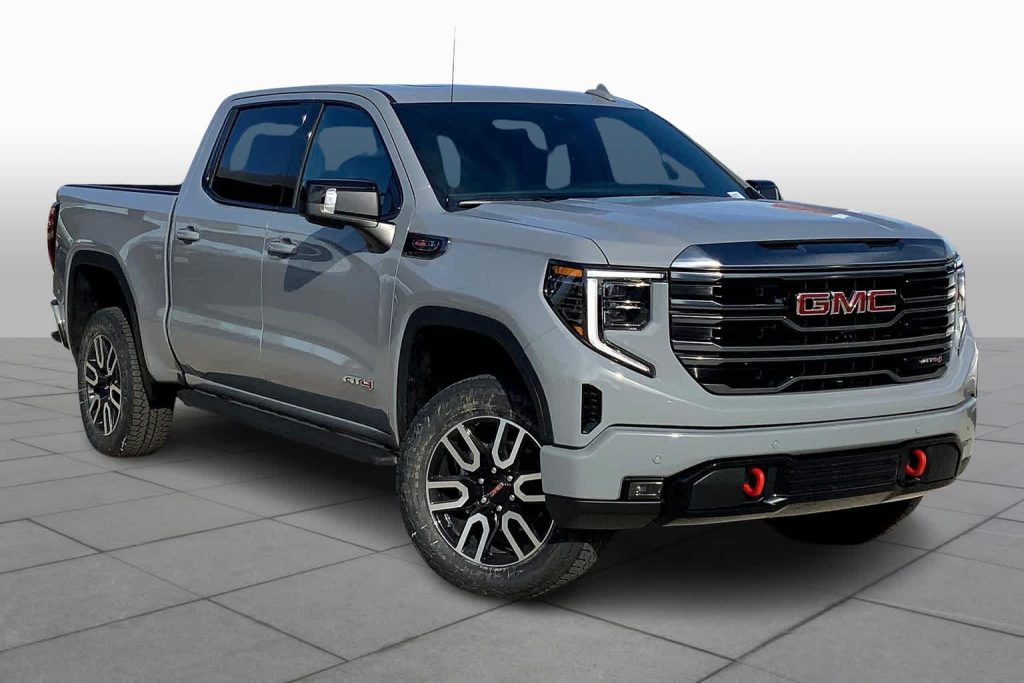
8. GMC Sierra 1500
Sharing much of its DNA with the Silverado, the GMC Sierra 1500 enjoys the same bulletproof G80 differential option.
The Sierra also benefits from consistent quality in assembly, and owners often praise its ability to maintain smooth, quiet operation in the rear axle well past 200,000 miles. This makes it a smart buy for those who prioritize peace of mind.
9. Jeep Gladiator
The Jeep Gladiator, though relatively new, draws on the Jeep Wrangler’s off-road heritage. Its Dana 44 axles with locking differentials are built to withstand extreme off-road use.
These components are battle-tested on trails like Moab and Rubicon, which means the average owner using it for light hauling or commuting won’t stress the system enough to cause failures.
The Jeep Gladiator is powered by a 3.6-liter V-6 engine that delivers 285 horsepower and 260 pound-feet of torque, paired with a standard eight-speed automatic transmission.
Every Gladiator comes equipped with a five-foot truck bed, which Jeep claims contributes to improved ride and handling. Having tested several examples ourselves, we can confirm that, despite Jeep’s assertion, the Gladiator drives very much like the Wrangler it is based on.

On paved roads, the steering can feel imprecise, and the ride becomes busy when traveling over uneven surfaces. Still, these traits are part of the character that defines the Gladiator, reinforcing its identity as both a functional pickup truck and a highly capable trail machine.
What matters most to Jeep loyalists is the wealth of off-road hardware that the Gladiator offers. This includes extensive skid plates for underbody protection, rock-crawling axle ratios for serious off-pavement adventures, and the ability to ford through water up to 31.5 inches deep.
The Gladiator also benefits from impressive ground clearance along with favorable approach and departure angles, both of which enhance its ability to traverse rugged terrain. These elements combine to make the Jeep Gladiator not just a pickup, but a genuine tool designed for exploration and off-road mastery.
10. Dodge Dakota
The now-discontinued Dodge Dakota was a pioneer in the midsize segment, and it came with surprisingly durable differential setups.
Known for being slightly overbuilt compared to rivals of its era, many Dakotas from the early 2000s are still running original differentials today. This has made the Dakota a cult favorite among used pickup enthusiasts.

11. Chevrolet Colorado ZR2
Among midsize trucks, the Colorado ZR2 stands out for its advanced off-road engineering. Equipped with front and rear electronic locking differentials, the ZR2 uses high-quality components that rarely require major service.
Owners often push these trucks hard off-road, yet failures are uncommon, proving how well GM designed the system for durability.

12. Ford Ranger (Classic Models)
Older Ford Rangers, particularly those from the 1990s and 2000s, are renowned for their bulletproof simplicity. Their differentials were straightforward, robust, and easy to service, which means they rarely failed. Even today, high-mileage Rangers can be found with original rear ends still going strong, a rarity in the pickup world.

Differentials may not get the same attention as engines or transmissions, but they are critical for the longevity of a pickup truck. The models on this list have proven that smart engineering and robust components can keep trucks running strong without expensive rear-end repairs.
Whether you’re shopping for a heavy-duty workhorse like the Ram 2500, a midsize legend like the Tacoma, or a unique entry like the Honda Ridgeline, these pickups all share one thing: their differentials are built to last.
