
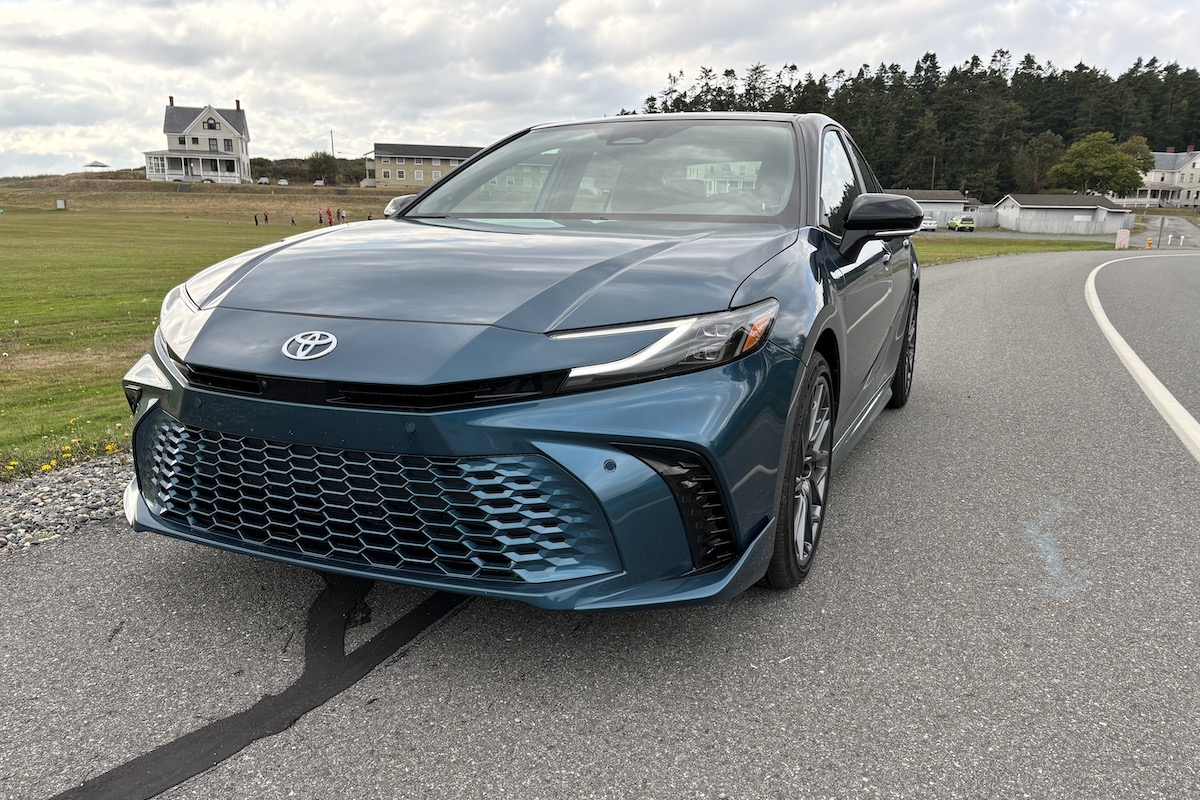
The Toyota Prius remains the poster child of hybrid reliability. First introduced to the US in 2000, it has consistently proven that hybrids can be both efficient and durable.
Toyota engineered the Prius with a conservative hybrid system, and its battery packs regularly exceed 150,000 miles before showing signs of wear.
Replacements are far cheaper today than in the early 2000s, with many independent shops offering reconditioned packs. Beyond the hybrid system, routine maintenance is straightforward and inexpensive, making the Prius one of the least worrisome vehicles to own long-term.
Hybrids That Are Easy To Repair
Hybrid cars often get a reputation for being complicated and expensive to maintain, but not every model fits that stereotype. Some hybrids are built with simplicity and practicality in mind, making them surprisingly easy to repair and keep on the road.
Whether it’s widely available parts, straightforward engine layouts, or proven reliability, these hybrids prove that owning an electrified vehicle doesn’t have to mean higher repair bills or specialized service every time something goes wrong.
In this article, we’ll take a look at the hybrids that stand out for their ease of maintenance and repair.
Toyota Prius
One standout is the Toyota Prius. As one of the longest-running and most popular hybrids on the market, the Prius benefits from decades of refinement and a vast support network.
Replacement parts are easy to find, independent shops know how to work on them, and even major repairs like battery replacements have become more affordable over time. It’s a hybrid that proves eco-friendly driving doesn’t have to come with repair headaches.
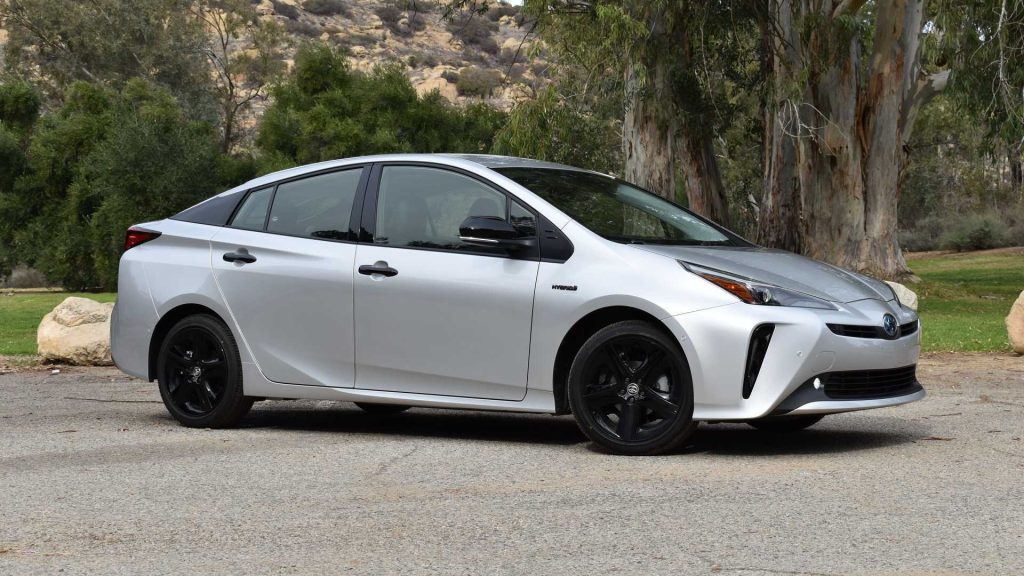
Toyota’s once awkward-looking hybrid has transformed into a sleek, attention-grabbing standout. Previous Prius models were more utilitarian than exciting, but this newest generation has completely changed that perception.
The Prius received a major redesign in 2023, debuting bold exterior styling, upgraded handling, enhanced tech features, and, as always, exceptional fuel efficiency. For 2025, the Toyota Prius carries over largely unchanged, with the addition of a new Nightshade Edition package.
This special version adds darkened details such as black badges, front door handles, door sills, and a shark-fin antenna. It also comes with projector lamps that display the Prius logo and 19-inch black-finished wheels.
Exterior paint choices include Wind Chill Pearl and Midnight Black Metallic. Inside, the Nightshade Edition is outfitted with a black interior accented by gray stitching. All other Prius trims remain the same as the 2024 lineup.
Also Read: 5 Hybrids That Are Cheaper To Maintain vs 5 That Cost A Fortune
Honda Accord Hybrid
Honda has had mixed results with hybrids, but the Accord Hybrid stands as one of its most dependable. Unlike Honda’s early Integrated Motor Assist system, which was more fragile, the Accord Hybrid uses a more robust two-motor setup that has proven reliable since its 2014 redesign.
Because the Accord is one of America’s most popular sedans, parts availability is excellent, and maintenance costs are low compared to rivals.
Owners consistently report high mileage with minimal hybrid-related issues, making it a practical choice for those who want a balance of efficiency and durability.
For 2023, it secures the award once again, showcasing overall excellence wrapped in what may be the most elegant design ever applied to Honda’s long-standing family sedan.
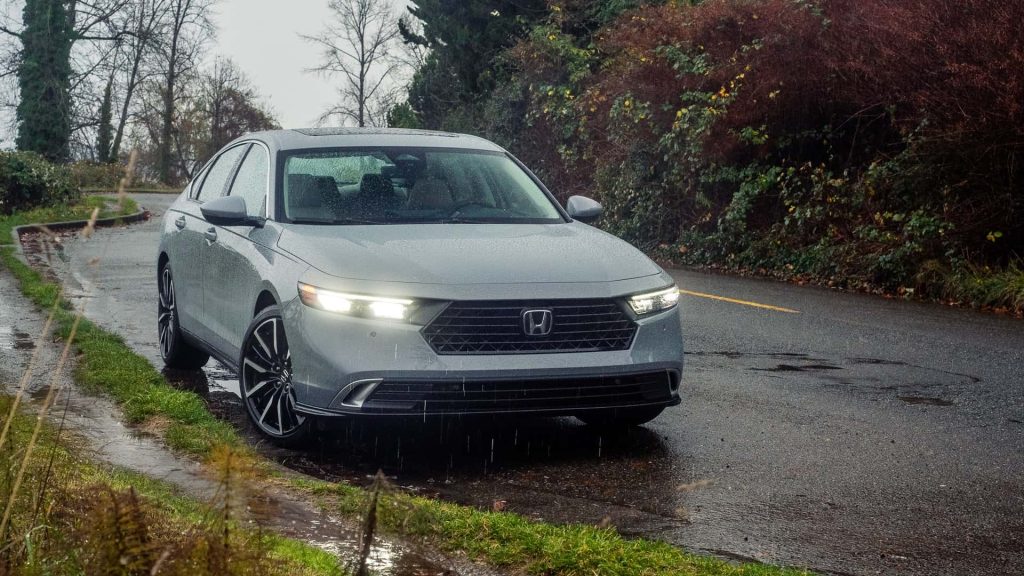
The 2023 Accord is fully redesigned, and Honda has placed greater emphasis on hybrid powertrains for this generation.
All trims except the two entry-level models, LX and EX, come standard with a new 204-hp four-cylinder hybrid system, which is essentially the same setup found in the CR-V.
The LX and EX trims continue with the familiar 192-hp turbocharged 1.5-liter four-cylinder engine, paired exclusively with a continuously variable automatic transmission (CVT).
Inside, Honda designers have elevated the cabin by borrowing design cues from the latest Civic, CR-V, and HR-V, such as the honeycomb-pattern dash trim that cleverly conceals the air vents, as well as a floating rectangular infotainment screen mounted on top of the instrument panel.
Tech updates include a new standard digital gauge cluster and an available 12.3-inch infotainment display with wireless Apple CarPlay and Android Auto integration.
Toyota Camry Hybrid
The Camry has long been one of the most trusted sedans in the US, and the hybrid variant continues that tradition. Toyota essentially took the proven reliability of the Camry platform and added a hybrid system that has shown few weak points.
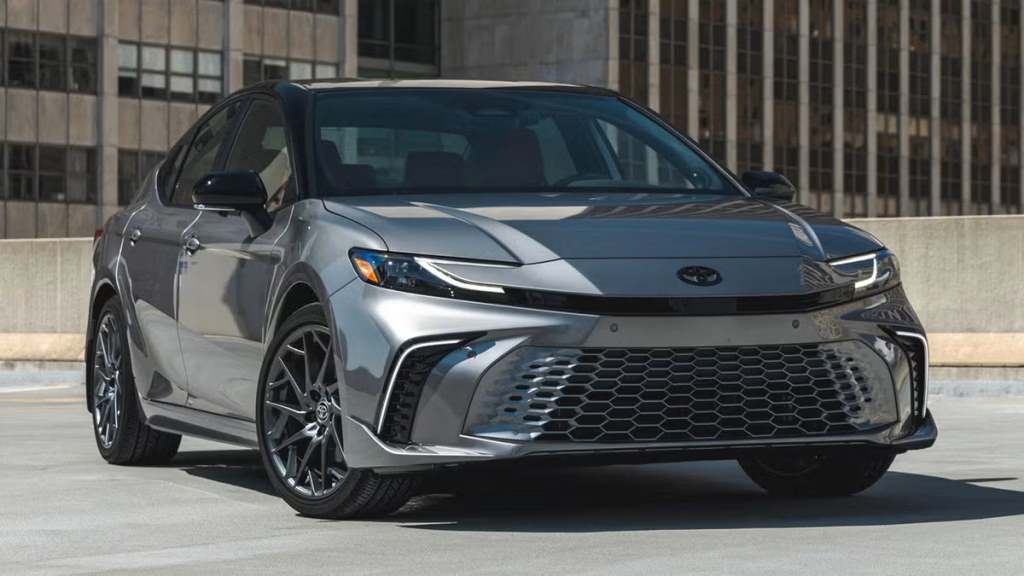
The hybrid battery in particular has demonstrated impressive longevity, and Toyota’s widespread dealer network ensures quick, affordable access to replacement parts. For families who want a hybrid without taking on unexpected financial risks, the Camry Hybrid is a safe bet.
Also Read: 10 Best Electric SUVs That Are Built for Longevity
Ford Escape Hybrid
While Ford has had its ups and downs with hybrids, the Escape Hybrid has been a bright spot. First launched in 2005, it quickly built a reputation for durability, with many early models crossing the 200,000-mile mark without significant hybrid-related repairs.
The current generation continues that trend, pairing decent fuel economy with robust engineering. Because the Escape is a volume seller in the US, repairs tend to be more affordable than rare or niche hybrids, giving American families confidence in long-term ownership.
The Ford Escape Hybrid receives a freshened look for 2023, giving the SUV a more refined and upscale presence. Updates include redesigned grilles, bumpers, and hood, with the Ford badge now positioned in the center of the grille.
Ford has also restructured the lineup, replacing the SE, SEL, and Titanium trims with new ST-Line and Platinum options. The plug-in hybrid (PHEV) is now available in only one configuration and sits at the premium end of the model range.
Every Escape Hybrid now transitions from the Sync 3 system to the more advanced Sync 4 infotainment interface, which allows for over-the-air updates.
A larger 13.2-inch infotainment screen is available, while all trims now include an 8.0-inch digital gauge cluster as standard, with an upgraded 12.3-inch version offered on select models.
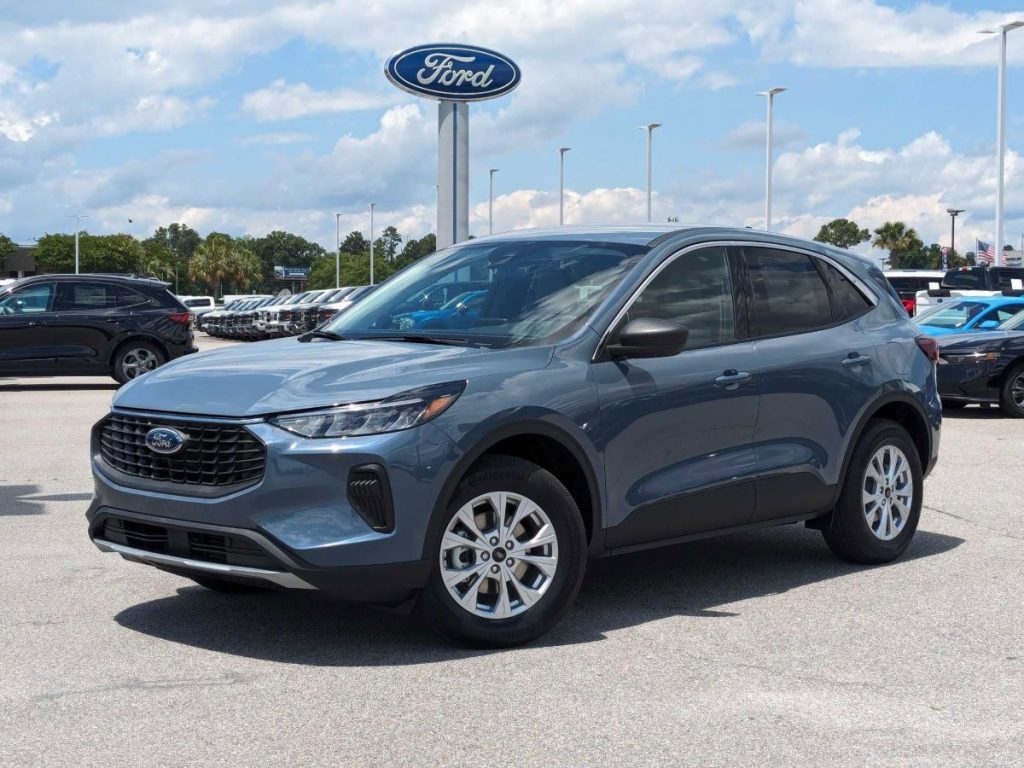
Both hybrid powertrains see slight reductions in output this year, with the standard hybrid losing 8 hp for a total of 192 and the plug-in hybrid dropping 11 hp to 210. Despite these adjustments, overall performance remains largely unaffected.
Among these, the mid-level ST-Line Select trim offers the best balance of value and features. It includes significantly more standard equipment than the base ST-Line, such as dual-zone automatic climate control, a power-adjustable driver’s seat, an onboard Wi-Fi hotspot, heated front seats, SiriusXM satellite radio, and other conveniences.
In order to compete with rivals like the Honda CR-V Hybrid and Toyota RAV4 Hybrid, Ford equips the Escape Hybrid with two electrified powertrains.
The standard setup pairs a 2.5-liter four-cylinder engine with two electric motors for a combined 192 horsepower. It comes standard with front-wheel drive and a continuously variable automatic transmission (CVT), while all-wheel drive is optional.
The plug-in hybrid version uses a more powerful electric motor to produce a combined 210 horsepower, though this configuration is available exclusively with front-wheel drive.
Both versions deliver capable but uninspiring handling, so driving enthusiasts won’t find much excitement on winding roads. That said, buyers focused on a smooth, comfortable ride for daily commutes will find the Escape Hybrid well-suited to their needs.
Lexus RX Hybrid
Luxury hybrids often carry a reputation for sky-high repair bills, but the Lexus RX Hybrid is a surprising exception. Sharing many components with Toyota hybrids, the RX benefits from Toyota’s engineering expertise while delivering the refinement of a luxury SUV.
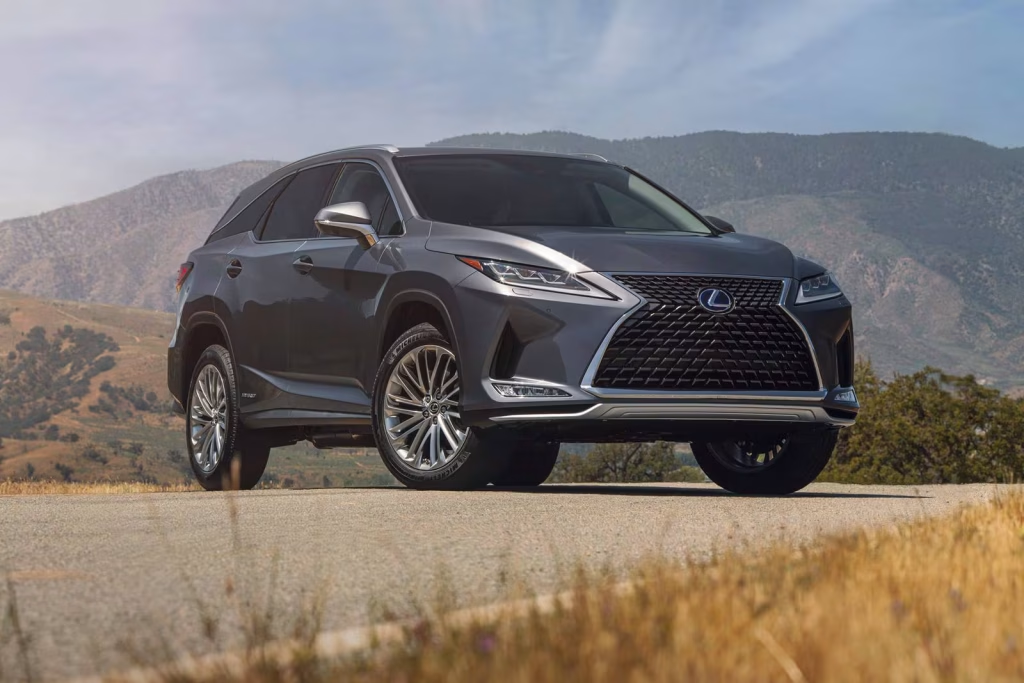
Its hybrid batteries and powertrains are notably reliable, and Lexus owners consistently rank it high in dependability surveys.
While routine maintenance costs are slightly higher due to luxury branding, the RX Hybrid avoids the catastrophic repair risks seen in some European luxury hybrids.
Hybrids That Will Bankrupt You in Repairs
Hybrid vehicles are often praised for their fuel efficiency and eco-friendly appeal, but not all of them are a safe bet when it comes to long-term ownership costs.
Some models come with complicated systems, pricey parts, and repair bills that can leave your wallet hurting. From failing battery packs to unreliable components that aren’t cheap to replace, these hybrids can quickly turn into money pits once the warranty runs out.
In this article, we’ll highlight the hybrids that are most likely to drain your bank account in repairs, so you’ll know which ones to steer clear of.
Chevrolet Tahoe Hybrid
GM’s attempt to hybridize the massive Tahoe SUV seemed like a good idea on paper, but in reality, it created a nightmare for long-term owners. The two-mode hybrid system was complex and expensive to repair, and replacement battery packs cost thousands of dollars.
With relatively poor fuel economy gains compared to the standard Tahoe, the cost-benefit ratio was never favorable. Today, used Tahoe Hybrids often sell for cheap, but buyers quickly learn that even minor hybrid repairs can eclipse the vehicle’s value.
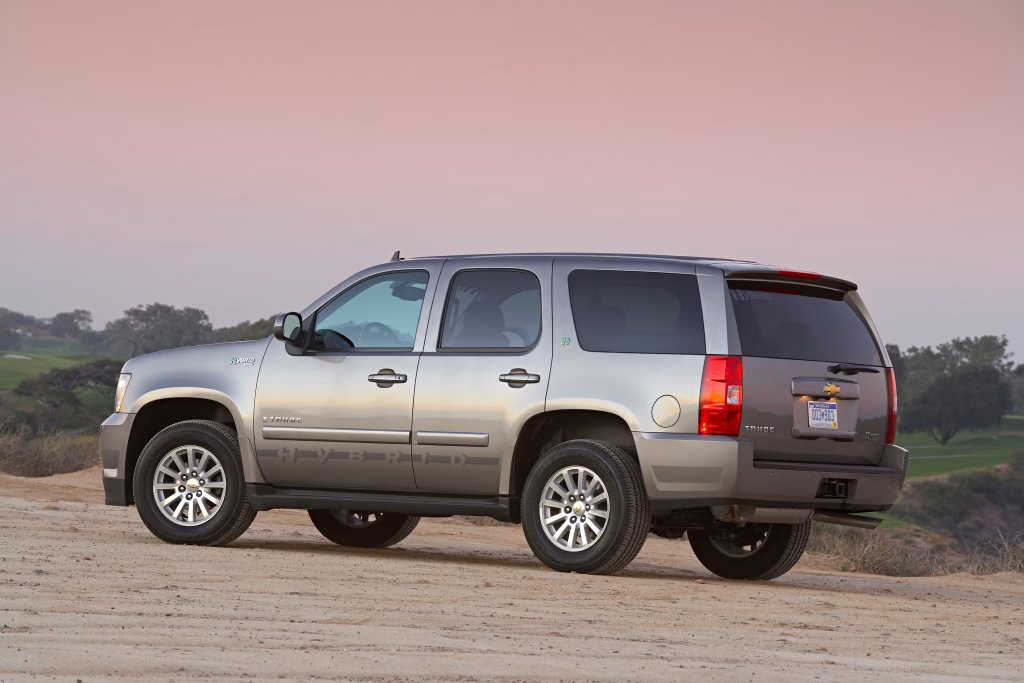
The Chevrolet Tahoe had long been a leader in the full-size SUV market in the U.S., and GM worked to maintain that position by rolling out the third generation in 2007.
Sharing its foundation with the Silverado pickup, the Chevrolet Tahoe was closely related to its siblings, the GMC Yukon and Cadillac Escalade.
This refreshed lineup brought with it significant exterior and interior updates along with more advanced powertrains, which helped push the big SUV ahead of rivals like the Ford Expedition and Toyota Sequoia.
Designers put in the effort to refine the bold front fascia, particularly the crossbar grille where the Chevrolet badge sat prominently.
For this generation, the headlight design shifted from the two-tier lamp arrangement to a single, larger unit. The hood was styled with dual power bulges, a subtle nod to the V8 engine beneath it.
Inside, the Tahoe could easily be mistaken for a premium vehicle when properly equipped.
GM offered basic versions with cloth seats, while higher trims featured leather upholstery, wood trim on the dashboard and door panels, power-operated second-row seating, and a touchscreen navigation system.
To enhance passenger comfort, rear-seat occupants had access to a ceiling-mounted folding TV screen. The third row was designed with flexibility in mind, it could be removed in the seven-seat layout to create more cargo space when needed.
Fuel efficiency was also a highlight, as the Tahoe delivered best-in-class economy thanks to its cylinder deactivation system. Even with a 6.0-liter V8 powering the hybrid model, the Tahoe managed to achieve 10.2 L/100 km (23 mpg-US) on the highway.
BMW Active Hybrid
BMW dipped into the hybrid market with models like the ActiveHybrid 7, a luxury sedan designed to blend performance with efficiency. Unfortunately, the result was an overly complex system prone to expensive failures.
Hybrid batteries and control modules often fail well before expected, and repair costs can easily run into the thousands.
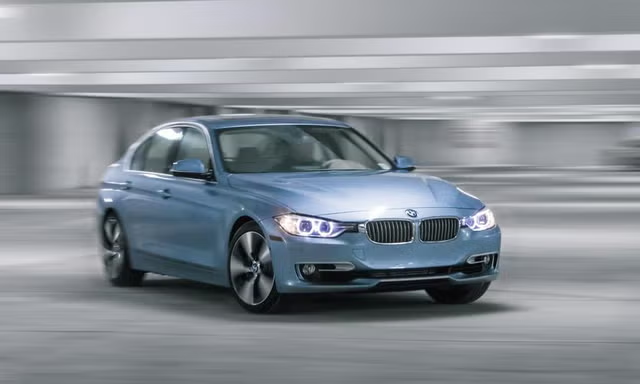
Unlike Toyota or Honda, BMW doesn’t have the same reputation for hybrid longevity, and American owners frequently discover that fuel savings are wiped out by maintenance costs.
Nissan Pathfinder Hybrid
Nissan briefly offered a hybrid version of its Pathfinder, but it quickly became one of the least reliable models in the lineup. Owners reported frequent issues with the hybrid system, and Nissan discontinued the model after only a short run.
Because so few were sold, parts availability is poor, and mechanics familiar with its unique setup are rare. That combination makes repairs both difficult and expensive, turning the Pathfinder Hybrid into a cautionary tale.
The Nissan Pathfinder has long struggled to match the popularity of segment leaders such as the Toyota Highlander, Kia Telluride, and Honda Pilot, yet this latest generation stands as one of the strongest versions to date.
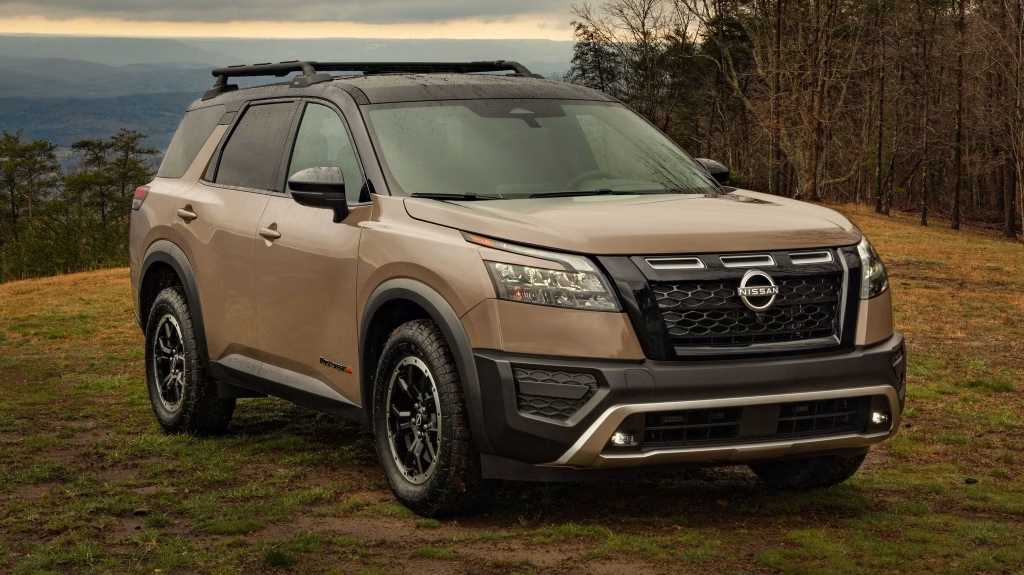
Redesigned in 2022, the Pathfinder adopted a bolder, more squared-off appearance, complete with slimmer headlights and prominent badging, giving it far more personality than the softer, rounded design it replaced.
The changes weren’t just skin-deep, either. With a towing capacity of up to 6,000 pounds, around 1,000 more than many competitors, the Pathfinder adds real capability to its rugged look. Inside, it provides a spacious and adult-friendly third row, a feature not all rivals can boast.
Cadillac Escalade Hybrid
The Cadillac Escalade Hybrid tried to blend American luxury with hybrid technology, but like its Tahoe cousin, it was plagued by complexity. Its two-mode hybrid system proved to be both unreliable and difficult to service, leaving many owners with staggering repair bills.
Considering the Escalade already commands higher-than-average maintenance costs, the added hybrid system only worsened the financial burden. For anyone seeking a luxury hybrid SUV, Lexus or Toyota options are far safer investments.
The Cadillac Escalade has long stood as the brand’s flagship, its sheer size and bold design embodying an unapologetically American approach to luxury.
Although it shares its foundation with the Chevrolet Tahoe, Suburban, and GMC Yukon, the Escalade distinguishes itself as a true rival to premium large SUVs such as the Lincoln Navigator, Jeep Grand Wagoneer, and Mercedes-Benz GLS-class.
What sets it apart is Cadillac’s emphasis on cutting-edge technology and upscale features. The cabin showcases wood, leather, premium fabrics, and satin-finished metals, while a sweeping curved display doubles as both the digital gauge cluster and infotainment hub.
Advanced driver-assistance features are also available, including Cadillac’s excellent Super Cruise, which blends adaptive cruise control with hands-free driving capability.
Under the hood, buyers can opt for a robust 6.2-liter gasoline V-8 or a torque-rich diesel inline-six. For 2023, Cadillac introduces the all-new high-performance Escalade V, which brings staggering horsepower to the lineup.
Whether this hi-po model can balance brute strength with finesse remains to be seen, but considering the dynamic excellence of Cadillac’s Blackwing sedans, optimism is warranted.
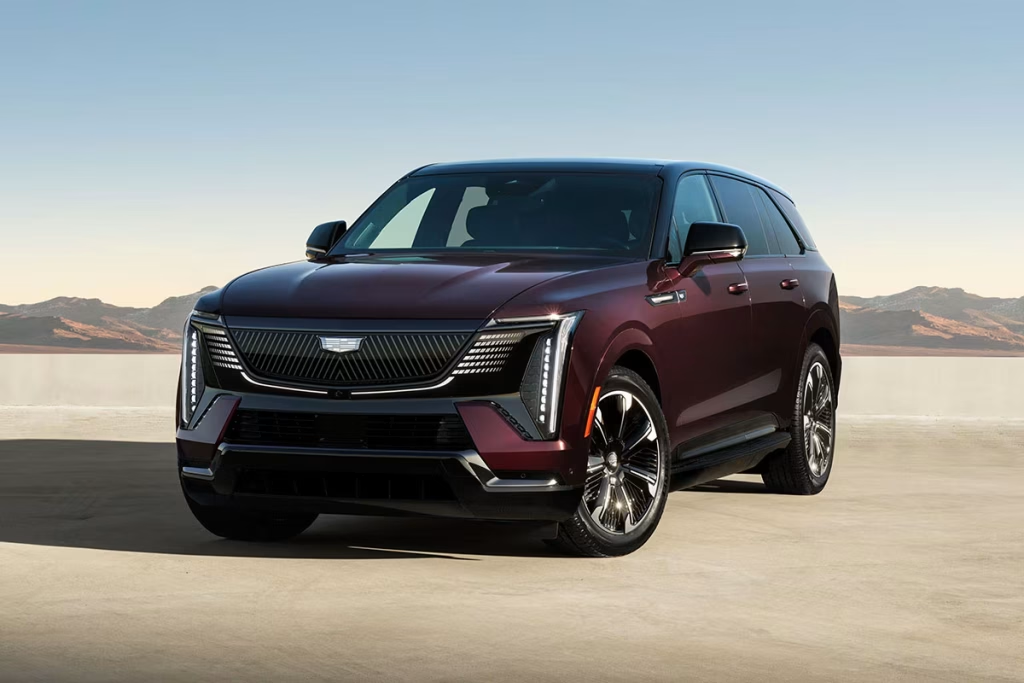
The highlight this year is the debut of the first-ever Escalade V. Likely powered by a 682-hp version of the supercharged 6.2-liter V-8 from the award-winning CT5-V Blackwing, the Escalade V pairs blistering performance with an aggressive, blacked-out look.
Standard equipment includes all-wheel drive, six-piston Brembo brakes with red calipers, and a retuned air suspension for sharper handling. Priced from $149,990, the V becomes the new flagship of the lineup.
For the best mix of features, the Premium Luxury Platinum trim is a standout choice, adding semi-aniline leather, 16-way massaging front seats, soft-close doors, and a 36-speaker AKG audio system.
It also includes self-parking capability, a head-up display, and adaptive cruise control. For thrill-seekers, there’s only one choice: the V.
The standard Escalade comes with a 6.2-liter V-8 making 420 horsepower and featuring cylinder deactivation to improve efficiency.
A 3.0-liter diesel inline-six is also offered, delivering 277 horsepower and a hearty 460 lb-ft of torque. Both engines pair with a 10-speed automatic transmission and offer rear- or all-wheel drive.
The switch to an independent rear suspension provides more third-row legroom than the previous generation, and higher trims add air suspension with adaptive dampers.
Performance is impressive across the lineup. In testing, the long-wheelbase Escalade ESV with the V-8 reached 60 mph in 5.9 seconds. While the diesel prioritizes efficiency over speed, the new Escalade V changes the game.
Its supercharged 6.2-liter V-8 generates 682 horsepower, launching the massive SUV to 60 mph in just 4.3 seconds during testing. Beyond its raw speed, the V thrills with a deep, resonant exhaust note and commanding presence.
Hyundai Sonata Hybrid (First Generation)
While Hyundai has dramatically improved its hybrid offerings in recent years, the first-generation Sonata Hybrid (2011–2015) was riddled with problems. Owners frequently complained of premature battery failures, electrical glitches, and transmission issues tied to the hybrid system.
Repairs often required dealership intervention, which drove costs up significantly. Later generations of the Sonata Hybrid have been far more dependable, but those early models remain a financial risk for anyone considering a used purchase.
Hybrids can be a smart investment, offering fuel savings and environmental benefits without the range anxiety of full EVs. However, as the American market has shown, not all hybrids are created equal.
The eighth generation of the Hyundai Sonata made its debut at the 2019 Shanghai Auto Show, creating anticipation among U.S. customers who finally saw it unveiled at the New York Auto Show in April of the same year.
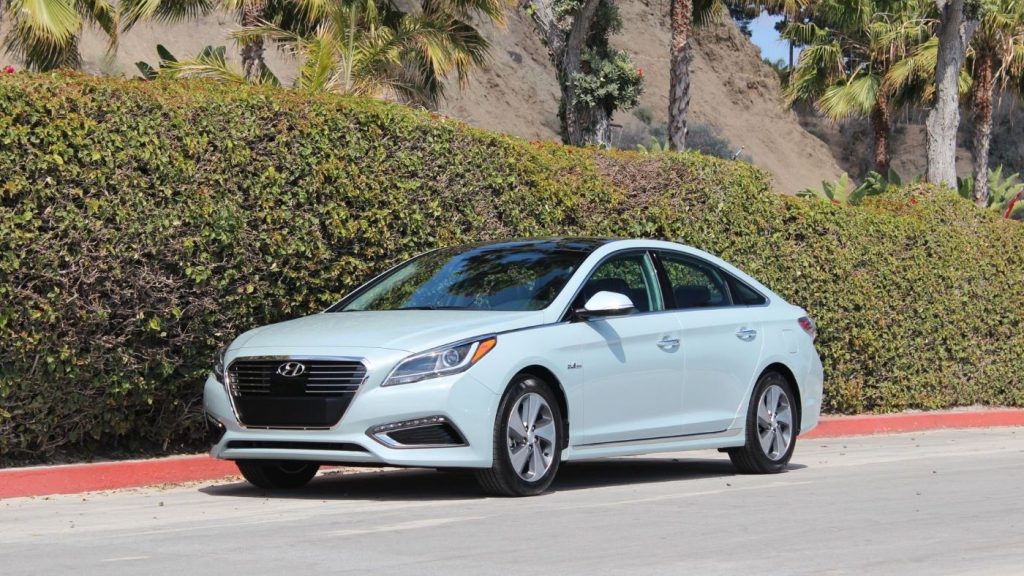
With mid-size sedan dimensions but interior space classified by the EPA as full-size, the eighth-generation Sonata proved to be a practical choice for families seeking a comfortable and well-equipped vehicle.
Beyond its modern design, which clearly targeted younger buyers, the 2020 Sonata came loaded with advanced features and technology aimed at enhancing everyday usability.
Hyundai offered the sedan in four trim levels, SE, SEL, SEL Plus, and Limited. Interestingly, the lower trims came with more powerful engines than the upper trims, though they delivered less torque overall.
While the previous two generations of Sonata were styled under Hyundai’s “Fluidic Sculpture” design philosophy, this iteration introduced a fresh approach called Sensuous Sportiness.
The brand’s designers aimed to balance sportiness with elegance. At the front, a shell-shaped grille with horizontal slats took center stage, flanked by sharp-edged LED headlights softened with rounded corners.
These were underlined by slim daytime running lights, while elongated LED strips stretched along the hood, flowing into chrome accents that continued rearward.
From the side, the car’s sleek, low-slung silhouette echoed the look of a fastback coupe. Hyundai reduced its height by 30 mm (1.2 inches) and extended its length by 45 mm (1.8 inches).
Character lines ran along the upper and lower sections of the doors, flowing into the rear quarter panels, adding a sculpted effect.
Wheel sizes ranged from 16 to 18 inches depending on trim, while eight exterior colors were offered, one of which was exclusive to the SEL Plus.
At the rear, C-shaped taillights with three aerodynamic fins on each side not only stood out visually but also helped reduce drag.
Inside, the Sonata placed emphasis on features valued most by families. The SE and SEL trims used a combination of analog gauges paired with a 3.5-inch or 4.2-inch display, while higher trims came equipped with a 12.3-inch fully digital instrument cluster.
The Limited trim even added a head-up display for extra convenience. In the center stack, an eight-inch infotainment touchscreen came standard, with a larger 10.25-inch version included on the SEL Plus and Limited.
For the first time, Hyundai replaced the traditional gear shifter with console-mounted transmission buttons, giving the cabin a more modern layout. Rear passengers enjoyed space for three adults, though the middle occupant’s legroom was restricted by the central tunnel.
A standout new feature was the digital key, which allowed owners to use compatible Android smartphones in place of a traditional key fob.
Under the hood, buyers could choose between two gasoline engines: a naturally aspirated 2.5-liter for lower trims or a 1.6-liter turbocharged unit for higher trims.
Regardless of engine choice, every 2020 Sonata came with an eight-speed automatic transmission with manual override, known as SHIFTRONIC.
Though the turbocharged 1.6-liter produced less peak horsepower than the 2.5-liter, it delivered more usable torque across a wider rev range, making it the more flexible performer of the two.
Models like the Toyota Prius, Honda Accord Hybrid, and Ford Escape Hybrid prove that hybrids can deliver low maintenance costs and long-term dependability.
On the flip side, vehicles such as the Chevrolet Tahoe Hybrid and BMW ActiveHybrid 7 demonstrate how complexity and poor design can lead to crippling repair bills.
For US drivers weighing their options, the key is to look for hybrids with strong track records, wide parts availability, and manufacturer reputations for durability. Otherwise, the money saved at the gas pump may quickly disappear in the repair shop.
