
Hidden deep inside your engine, the head gasket doesn’t get much attention, until it fails. When it does, coolant leaks, oil mixes where it shouldn’t, and your once-reliable ride becomes a money pit.
For US car buyers, especially those planning to hold onto vehicles well past the warranty years, understanding which models excel in gasket reliability is critical. Some cars shrug off 300,000 miles without issue, while others struggle to make it to 120,000 without needing a major repair.
Cars That Laugh at Head Gasket Woes
Head gaskets: the automotive Achilles’ heel that has ruined the reputation of otherwise solid engines and drained wallets for decades. For many car owners, a blown head gasket is a dreaded, expensive nightmare. But not all cars are created equal.
Some engines shrug off overheating, high mileage, and daily abuse without so much as a hiccup.
In this article, we highlight the vehicles that laugh in the face of head gasket woes, cars that combine reliability, smart engineering, and durability to keep you on the road without the fear of catastrophic engine failure.
Toyota Corolla
If there’s one car that defines reliability for American drivers, it’s the Toyota Corolla. With millions sold across decades, its engines are engineered with simplicity and longevity in mind.
Overheating, the main culprit in gasket failures, is rare thanks to conservative design and bulletproof cooling systems. This explains why Corolla owners regularly post odometer photos north of 250,000 miles. It’s the definition of “buy it, drive it, forget about it.”
For those prioritizing safety over sporty performance, the 2019 Toyota Corolla offers an affordable and dependable choice.
The compact sedan comes equipped with standard driver-assistance features, strong crash-test scores, and class-leading rear-seat legroom. However, driving excitement is not its strong suit.
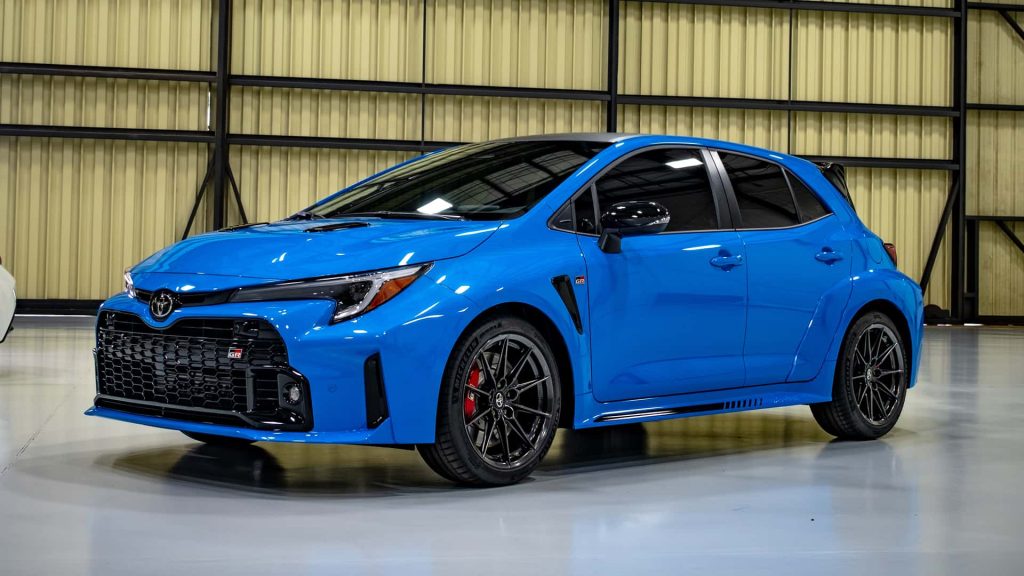
The standard powertrain pairs a modest four-cylinder engine with a continuously variable automatic transmission (CVT), while an optional six-speed manual adds a touch of thrill to an otherwise subdued front-wheel-drive setup.
Beyond its below-average fuel economy and interior quality that lags behind some competitors, the 2019 Corolla remains a reliable staple for drivers who simply want to reach their destination.
On a brighter note, the entirely redesigned 2019 Corolla hatchback is built on a brand-new platform, signaling the start of the next-generation models.
The 2019 Corolla carries over without any major changes. This generation has been around for several years, though Toyota gave both the exterior and interior a light refresh in 2017.
That same year, every Corolla received the automaker’s full suite of driver-assistance technologies.
While the sedan continues unchanged for now, a completely new Corolla hatchback debuted in 2019 on a separate platform. Additionally, an all-new 2020 Corolla sedan is now available, though we have not yet tested it on the track.
Also Read: 12 Best Hyundais That Are Outlasting Their Reputation
Honda Civic
The Honda Civic isn’t just efficient; it’s a car built to last. Its naturally aspirated four-cylinder engines are legendary for shrugging off abuse, road trips, and years of commuting.
Civic owners who keep up with routine coolant and oil checks rarely face gasket drama, which is why these cars remain a staple on American highways long after their rivals have retired to scrapyards.
Honda might as well have sent its engineers on a yearlong vacation to Tahiti instead of tasking them with updating the 2019 Civic.
This generation has earned top marks since its debut three years ago, and nothing else this year comes close to threatening its crown. Yet, here we are, and the Civic has returned even better than before.
Starting with styling, the 2019 Honda Civic gets a refreshed front end. The update is subtle, giving the car a slightly sleeker, less imposing appearance.
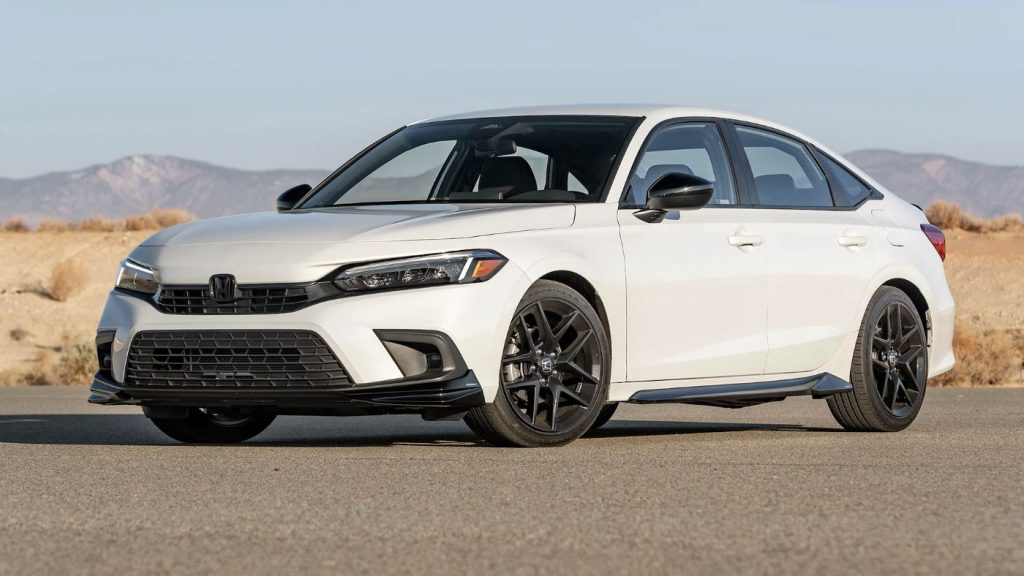
Inside, the infotainment interface has been updated, bringing back a volume knob, a small but meaningful addition that addresses one of last year’s biggest complaints.
Additionally, all Civic trims now include extra features from the Honda Sensing suite, which comes standard.
This bundle offers adaptive cruise control, forward collision mitigation, and lane departure warning with lane-keeping assist. The Civic already stood out among competitors, and this expanded safety equipment further strengthens its advantage.
Of course, there are a few competitors worth considering, such as the sporty Mazda 3, the all-weather Subaru Impreza, and the value-oriented Kia Forte.
Yet, the 2019 Honda Civic remains the benchmark. It delivers the most complete blend of features, comfort, and driving enjoyment available in a small sedan today.
Lexus RX
Luxury vehicles often come with delicate engineering and expensive repairs, but the Lexus RX is the exception. Borrowing Toyota’s proven V6 engines, the RX pairs comfort and refinement with nearly bulletproof reliability.
Head gaskets almost never appear on repair logs, making it one of the smartest buys for US families who want luxury without the looming specter of a four-figure repair bill.
The 2019 Lexus RX 350 stands out as one of the most attractive choices in the luxury crossover SUV segment.
Part of the RX’s appeal comes from this broad range of configurations, but it also benefits from a long list of standard features, such as adaptive cruise control, dual-zone automatic climate control, and leather upholstery.
Buyers can further enhance their RX with high-end options, including a 12.3-inch center display screen, a 15-speaker stereo system, and a panoramic sunroof.
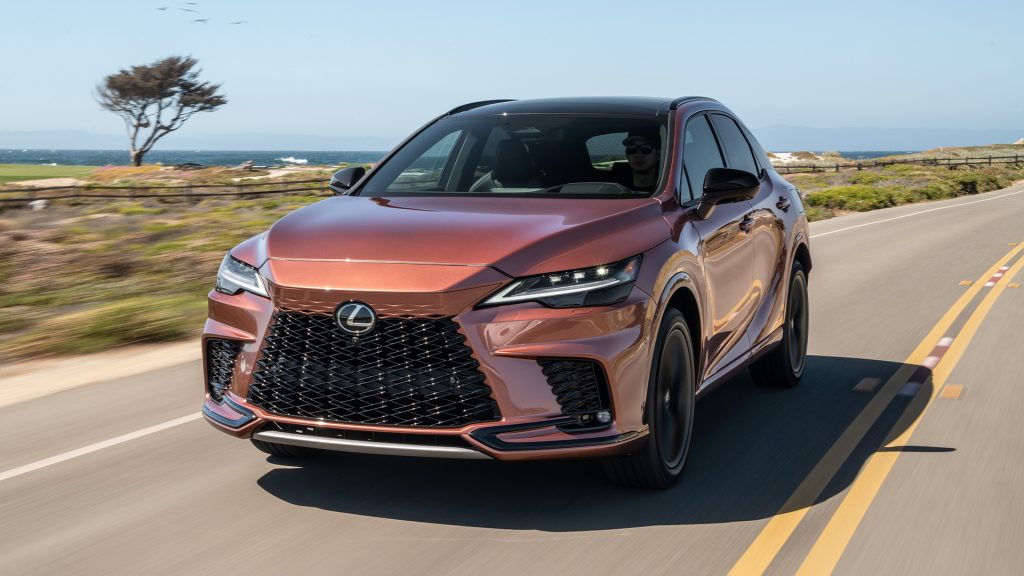
Comfort is a key part of the RX’s appeal. The front seats are well-suited for long drives, and highway noise is minimal. Combined with a modern, well-built cabin, strong value, and Lexus’ well-earned reputation for reliability, the RX 350 has significant curb appeal.
That said, the RX is not without its drawbacks. The optional infotainment system can be cumbersome and difficult to navigate, which may be distracting on long trips.
Additionally, while the RX 350 offers generous space, the slanted rear roofline limits cargo capacity for larger items. Overall, however, these issues are minor, and they wouldn’t deter us from recommending the 2019 RX 350. A test drive is highly encouraged.
Toyota Camry
Few cars have earned their reputation the way the Toyota Camry has. Whether it’s hauling families, commuting hundreds of miles per week, or even serving in rideshare fleets, the Camry delivers reliability in spades.
Its engines have one of the lowest head gasket failure rates in the midsize sedan class, giving buyers peace of mind that their investment will outlast most rivals.
Fresh off a redesign last year, the Camry offers a spacious, fuel-efficient ride, equipped with a long list of standard safety features and a variety of options to suit different tastes.
As has long been the case, the Camry is available with either a four-cylinder engine or a more powerful V6, and there’s also the efficient Camry Hybrid. On the highway, it delivers a comfortable and compliant ride.
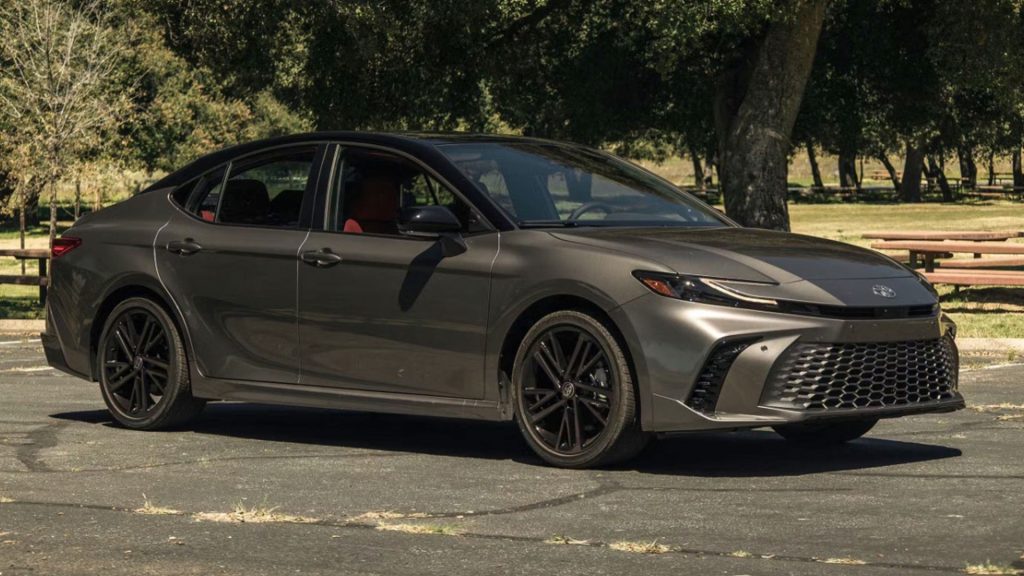
Toyota also offers two sportier trims that add a touch of personality to the Camry. Inside, the cabin is straightforward yet packed with features, particularly in the upper trim levels, and there’s a wide array of options to choose from.
The 2019 Toyota Camry proves itself to be a highly capable midsize sedan. It’s reasonably priced, offers modern features, and is exceptionally easy to drive.
For anyone seeking a bit more space and refinement than a compact sedan provides, the Toyota Camry is a strong contender.
Honda Accord
The Accord has long been the Civic’s bigger sibling, spacious, comfortable, and just as dependable. Its engines, particularly the four-cylinders, almost never suffer from gasket breakdowns, and even the V6 models perform better than many domestic competitors.
Countless US owners have happily pushed their Accords past the 250,000-mile mark without ever hearing the dreaded words “head gasket replacement.”
No segment has undergone more recent updates than the midsize-sedan class, and nearly every model has been refreshed or redesigned in the past year, including the Honda Accord
The Accord’s all-around excellence makes it difficult to single out one feature that sets it apart. Practically speaking, it delivers in spades: the trunk is massive, and the cabin offers ample space.
On the tech front, it’s equally impressive. Many advanced safety features come standard, and every model except the base LX includes Apple CarPlay and Android Auto.
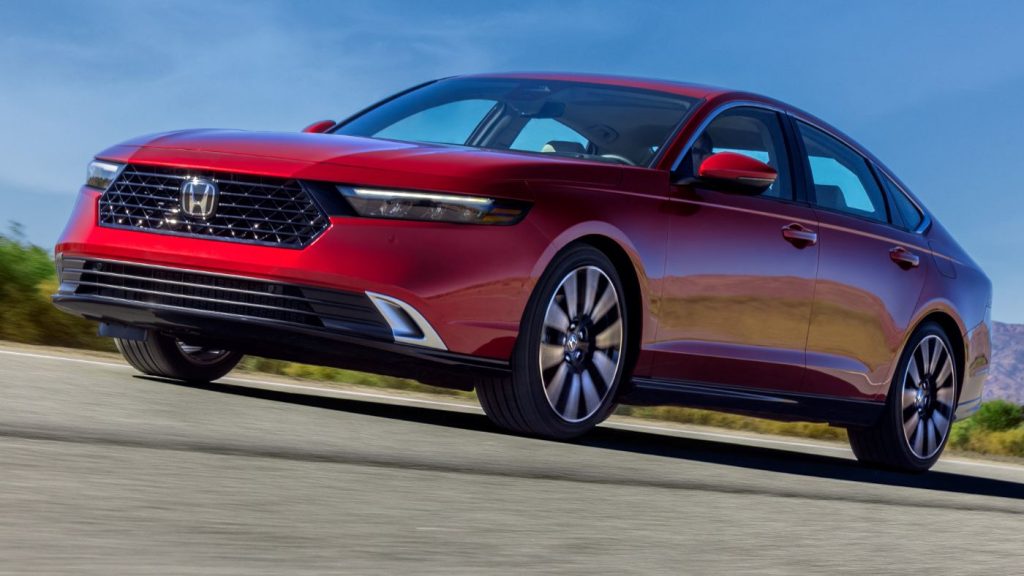
The Accord also keeps the fun-to-drive character of previous generations, particularly when equipped with the larger engine and Touring-exclusive adaptive dampers.
While the segment is full of strong contenders, the 2019 Honda Accord stands out as the best combination of value, practicality, and driving enjoyment.
After receiving a redesign in 2018, the 2019 Honda Accord remains largely unchanged for the 2019 model year.
For 2018, the Accord is offered in several trims: LX, Sport, EX, EX-L, and Touring, all of which come standard with the 1.5-liter turbocharged four-cylinder engine.
The 2.0-liter turbo-four is available in the Sport, EX-L, and Touring trims, while the hybrid powertrain is offered in the base Hybrid, EX Hybrid, EX-L Hybrid, and Touring Hybrid trims.
The top-of-the-line Touring trim is packed with features, including a head-up display, heated and ventilated front seats, heated rear seats, a wireless phone charger, Near Field Communication for compatible Android devices (for Bluetooth pairing and media transfer), Wi-Fi hotspot capability, automatic LED headlights, LED fog lights, interior ambient lighting, a traffic sign recognition system, a 10-speaker premium audio system, an 8.0-inch touchscreen, a navigation system, and the Honda Sensing suite of driver-assist safety technologies.
The 2018 Accord’s engines carry over into 2019. The standard 1.5-liter turbo-four produces 192 hp, while the optional 2.0-liter turbo-four delivers 252 hp. The available hybrid powertrain generates a combined 212 hp.
The 2.0-liter turbo pairs with a 10-speed automatic, while the 1.5-liter turbo and hybrid come with a CVT; both non-hybrid engines are also available with a six-speed manual.
Fuel economy ranges from an impressive 47/47 mpg city/highway for the Accord Hybrid to 22/32 mpg for the 2.0-liter turbo with either the six-speed manual or 10-speed automatic.
Also Read: 12 Diesel Engines Still Popular With Collectors
Cars Prone to Head Gasket Failure
Not every engine is built to last, and some have earned a notorious reputation for head gasket failure. These mechanical weak points can lead to costly repairs, overheating, and even total engine replacement if ignored.
In this article, we dive into the cars most prone to head gasket problems, vehicles where owners should be especially vigilant about maintenance, cooling systems, and early warning signs to avoid becoming part of an expensive repair story.
Subaru Outback
Beloved across America’s northern states for its all-wheel drive, the Outback seemed perfect for harsh winters.
Unfortunately, late 1990s and early 2000s models came with boxer engines that often leaked coolant and oil through the head gaskets. Many owners faced repairs before 120,000 miles, which tarnished Subaru’s reliability reputation until later redesigns.
Enter the 2019 Subaru Outback. It combines the shape and driving dynamics of a wagon with the added capability typically associated with an SUV.
The Outback offers two engine options: an efficient 2.5-liter flat four-cylinder producing 175 horsepower, or a 3.6-liter flat-six with 256 hp. Both engines deliver power to Subaru’s active all-wheel-drive system via a continuously variable automatic transmission.
Standard features this year include Subaru’s EyeSight driver-assist system and a sharp touchscreen compatible with Android Auto and Apple CarPlay.
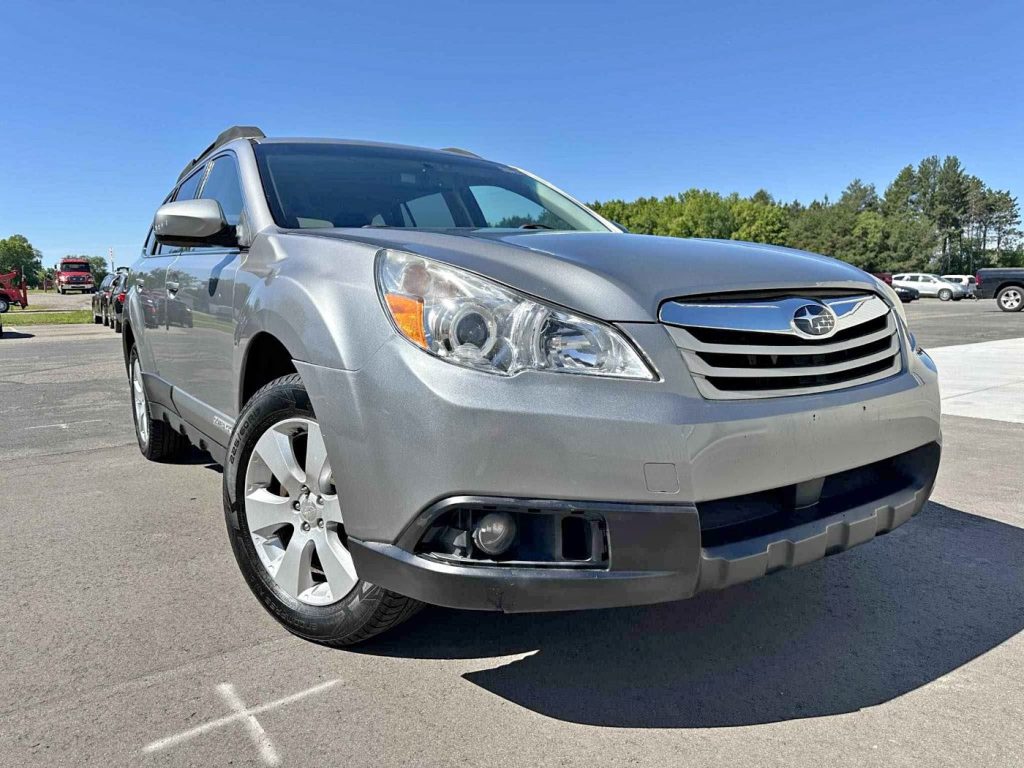
Coupled with swing-out roof rack crossbars, generous cargo space, and increased ground clearance, the Outback proves to be a practical choice for recreational activities.
That said, the Outback’s tall stance and smooth ride come with trade-offs. It doesn’t inspire confidence in sporty driving, and its high ground clearance causes noticeable roll and pitch during cornering and braking.
Still, these compromises are a small price to pay for a vehicle that blends the best traits of an SUV and a wagon. For anyone seeking a capable, versatile crossover, the Subaru Outback deserves a closer look.
Dodge Neon
Marketed as a budget-friendly compact, the Neon was supposed to be Dodge’s answer to the Civic and Corolla. Instead, it became infamous for blown gaskets and weak build quality.
Many Neons barely hit 100,000 miles before their owners were faced with repair bills higher than the car’s value. For many, it symbolized why cheap up front doesn’t always mean cheap in the long run.
The 2019 Dodge Neon is essentially a rebadged Fiat Tipo, having been introduced to the Mexican market in 2016.
While there were occasional rumors about a U.S. launch, those hopes ended when the Big Three largely exited the sedan segment in America. In Mexico, however, where sedans remain popular and sales are strong, the Neon has found a niche.
During a recent visit to Mexico City, I had the opportunity to drive the Neon, and despite its economy-car status, its compact footprint and roomy interior make it a favorite among Mexican buyers. The Neon is imported from Turkey and shares its platform with the Fiat 500X and Jeep Renegade.
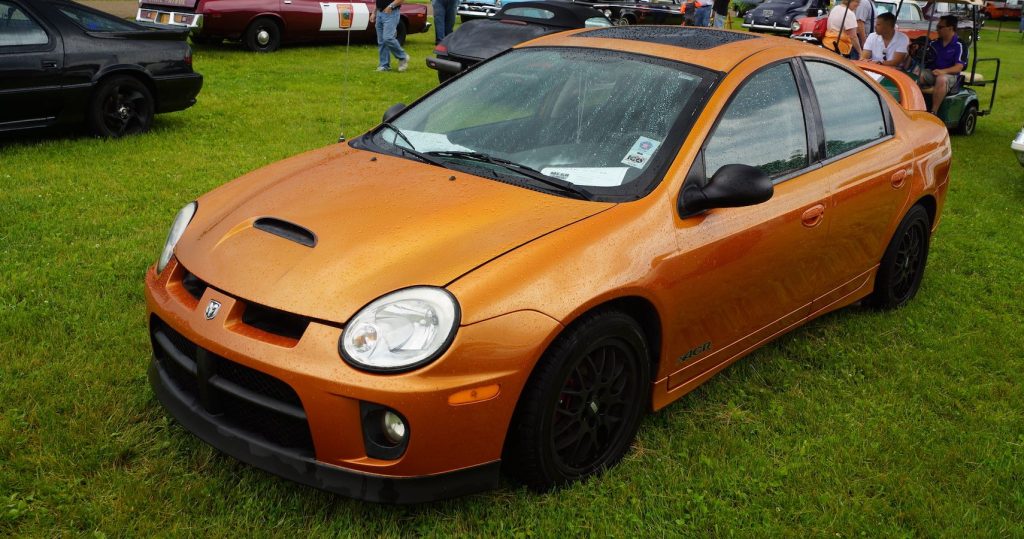
With Dodge’s signature grille and subtle design cues reminiscent of the now-discontinued Dodge Dart, the Neon sports a more conventional and less aggressive look.
Dimensionally, it sits between subcompact and compact sedans, appealing to buyers seeking extra space at an affordable price.
The Neon’s spacious interior and budget-friendly pricing are clear highlights, though a stronger engine would enhance the driving experience.
We tested the more potent of the two available options, the naturally aspirated 1.6-liter E-torQ engine delivering just 110 hp and 112 lb-ft of torque, which proved underwhelming, especially for urban driving.
At over 7,300 feet in Mexico City, the Neon struggled on uphill stretches. Its six-speed automatic transmission offered some help in manual mode, but the power deficit was immediately noticeable.
Beyond its modest performance, the transmission generally shifted smoothly at appropriate RPMs, though downshifts were sluggish.
The body exhibited noticeable roll on twisty roads, yet the suspension absorbed rough pavement surprisingly well, and the cabin ride was quieter than expected.
Chrysler Sebring
On paper, the Sebring seemed like an affordable way to enjoy top-down driving. In reality, its engines and electronics made it one of the least reliable cars of its time.
Head gasket failures were common, often arriving alongside transmission issues, leaving many owners to give up rather than throw good money after bad.
The midsize Chrysler Sebring comes in both sedan and stylish convertible forms. The Sebring sedan replaced the Cirrus, a Chrysler model introduced in 1995. When the Cirrus was redesigned in 2001 and rebranded as the Sebring, it gained more powerful engines and sharper, updated styling.
However, the midsize sedan segment has evolved significantly, with rivals now bigger, faster, and more luxurious than ever. What was once crisp styling on the Sebring now appears dated.
While the sedan’s nimble handling and affordable price might appeal to budget-conscious buyers, the 2006 Chrysler Sebring lags behind most competitors in nearly every area. For better value in a midsize sedan, consider alternatives like the Chevrolet Malibu, Ford Fusion, or Hyundai Sonata.
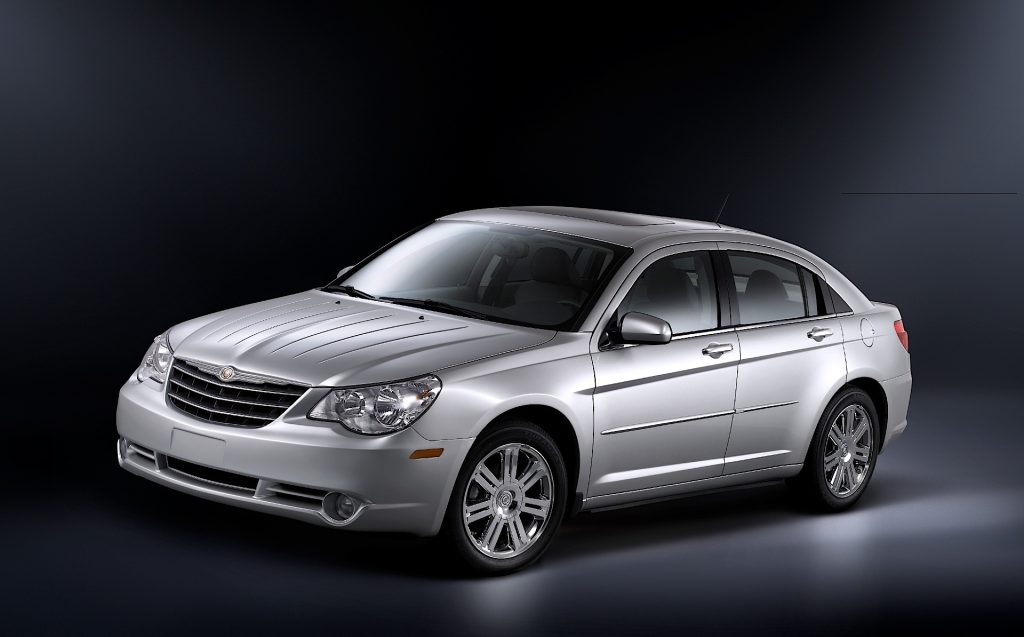
The Sebring convertible, first introduced in 1996, was largely based on the Cirrus. Known for its roomy passenger space and generous luggage capacity, the convertible has been a popular choice for buyers seeking top-down driving in a practical two-door vehicle.
Redesigned in 2001, the Chrysler convertible adopted a more refined, conservative look while maintaining the comfort of the previous generation. The Sebring convertible remains a reasonable option for families wanting a drop-top experience, but it falls short for performance enthusiasts.
Acceleration is sluggish even with the V6, and handling limits are modest. In this regard, Chrysler’s PT Cruiser convertible is a better option, offering more power, improved handling, and a larger backseat.
Both the Sebring sedan and convertible offer two engine choices: a 2.4-liter inline four-cylinder producing 150 horsepower and 160 lb-ft of torque, and a 2.7-liter V6 rated at 200 hp and 190 lb-ft of torque. Both engines are paired exclusively with a four-speed automatic transmission.
Pontiac Grand Am
With sporty looks and a budget-friendly price tag, the Pontiac Grand Am was popular in the late 1990s. But its 3.4-liter V6 was notorious for leaking coolant into the oil due to gasket breakdowns.
Once this happened, costly engine damage followed. For many owners, the Grand Am lived up to its name only in repair costs.
The 1999 Pontiac Grand Am Coupe demanded attention, and it earned it, not just for its styling, but for its performance as a sporty, two-door vehicle.
This was the final generation of the Grand Am, a nameplate that had appeared and disappeared from Pontiac’s lineup over the years. The 1999 model also marked the last car to roll off the line at Lansing’s old Fisher Body plant.
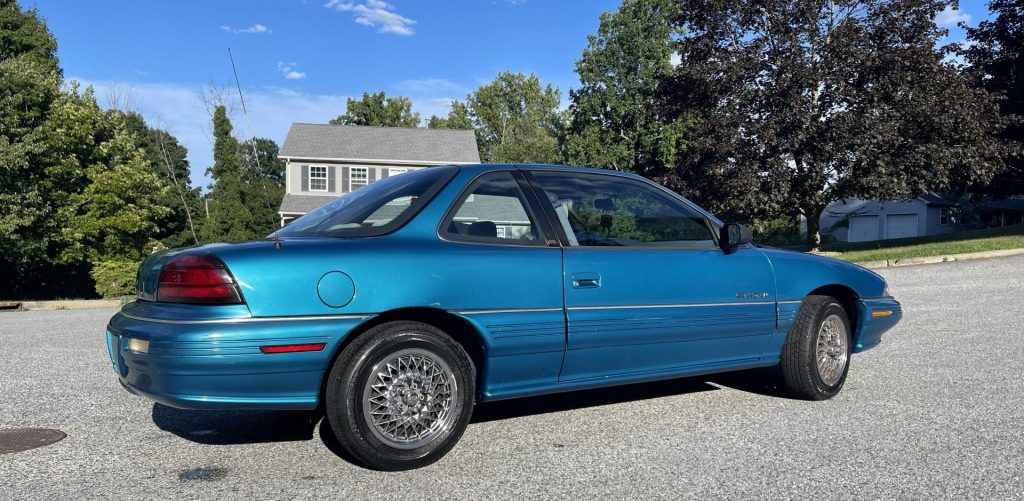
It represented a notable evolution in the model’s history, featuring independent suspension on all four corners and a lineup of lively engines.
The Grand Am showcased a front fascia with tear-shaped headlights and a ram-air hood grille at the front, bearing the Pontiac badge on a vertical slat. The car featured a wide cooling grille, flanked by two round fog lights set into the lower section of the wrap-around plastic bumper.
The two-door design gave the car a more aggressive stance, emphasized by its wider doors and triangular rear side windows.
A short, curved-edge trunk contributed to the impression of a compact vehicle. While slightly shorter than its predecessor, the wheelbase was actually a few inches longer.
Inside, Pontiac offered velour-upholstered seats depending on the trim level. The front bucket seats appeared carried over from a standard car, lacking the sporty feel expected in a coupe. Rear seating was tight, barely accommodating two passengers.
The dashboard featured a double-curved instrument cluster directly in front of the driver, with two large dials for the speedometer and tachometer, accompanied by two smaller gauges.
Under the hood, the 1999 Grand Am offered buyers a choice of two gasoline engines: a 2.4-liter four-cylinder and a 3.4-liter V-6.
Chevrolet Malibu
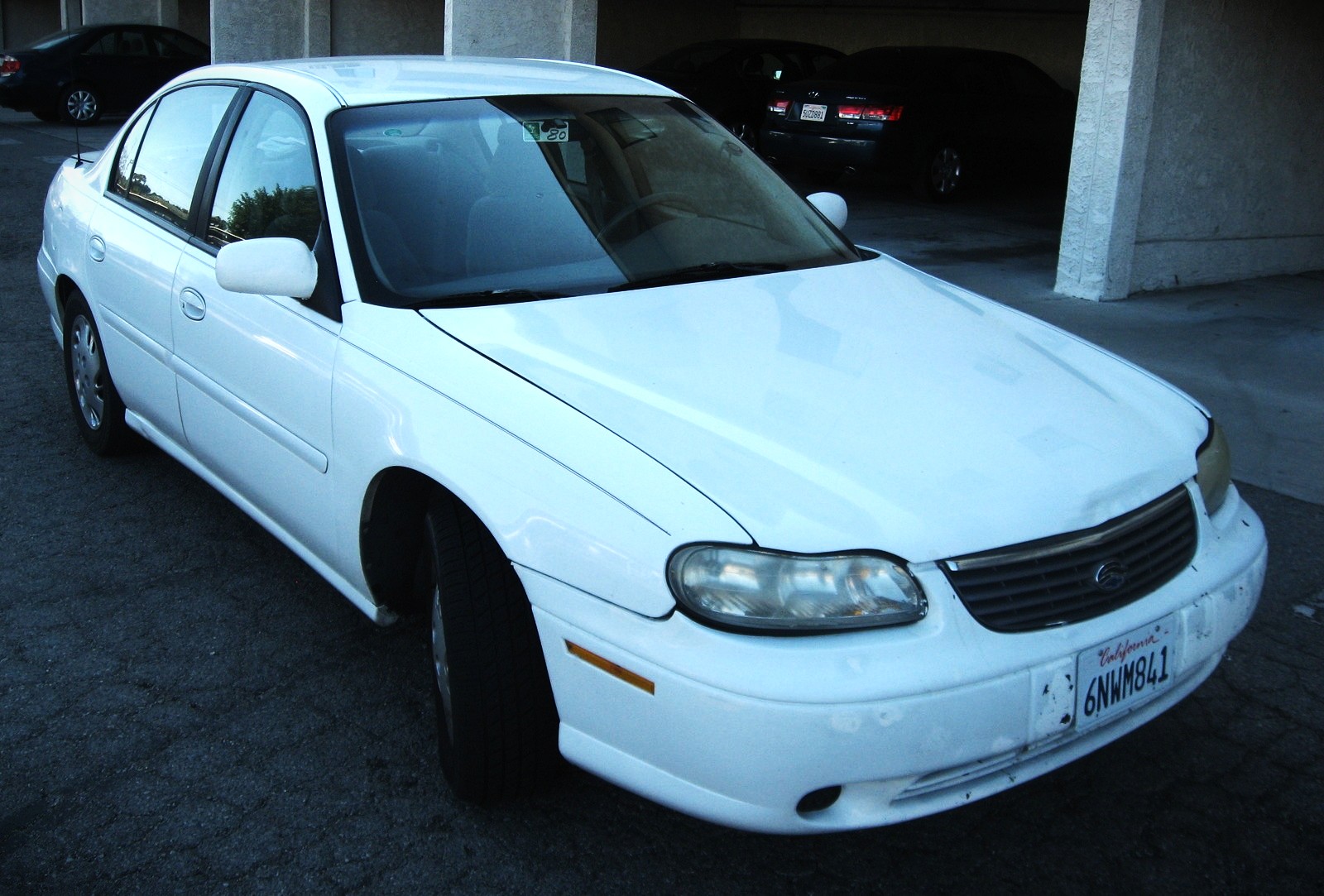
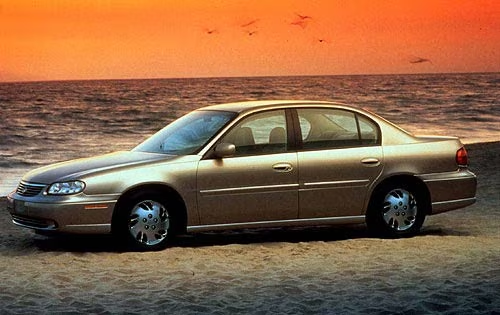
Before GM reinvented the Malibu in the 2010s, the earlier models earned a poor reputation. Along with failing intake manifold gaskets, head gasket issues were common, sometimes striking before the 100,000-mile milestone.
For families who bought Malibus expecting a low-maintenance ride, the reality was often disappointment and early trips to the mechanic.
For US car shoppers, the lesson is clear: not all engines are created equal. Cars like the Toyota Corolla, Honda Accord, and Lexus RX show that smart engineering can keep gasket problems at bay for decades. Meanwhile, vehicles such as the Dodge Neon and Pontiac Grand Am prove that one weak component can destroy a car’s long-term value.
When shopping the used market, buyers should always research specific engine histories, not just the brand name. Avoiding a model known for gasket trouble can save thousands of dollars—and just as importantly, keep your car running smoothly long after the payments are finished.
